Showing posts with label Christians. Show all posts

Wednesday, July 8, 2026

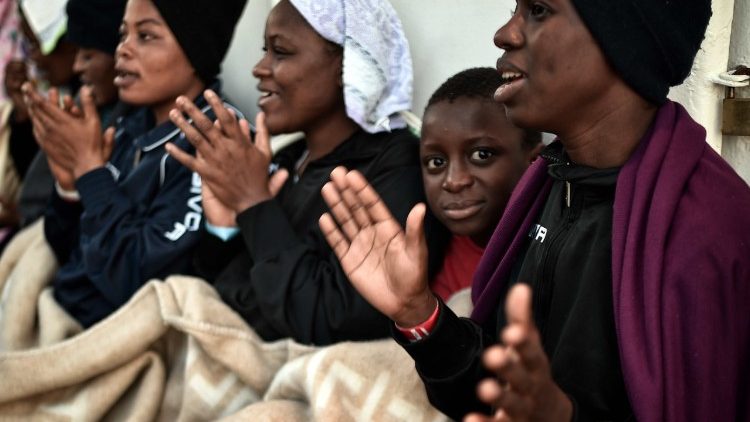
Iraqi youth gather to celebrate their Christian faith


Pope to Iraqi youth: Be Christ's light and hope in a wounded world

Pope Leo XIV encourages young Iraqi Christians gathered in Ankawa to become missionaries of faith, love and hope, urging them to be Christ's light and peacemakers in a land marked by conflict and instability.

Vatican News

As young people from across Iraq gather in Ankawa, in the Archeparchy of Erbil, for their annual Youth Meeting from 8 to 11 July, Pope Leo XIV is encouraging them to embrace their vocation as missionaries of hope, urging them to become "Christ's light" in a country that continues to experience the consequences of war and instability.

In a video message to the gathering, dedicated this year to the theme Mission, the Pope reminds participants that they have an indispensable role in the life of the Church today.

"The Church has a vital mission to serve the world by sharing the light of Christ," he says, encouraging the young people to help "shape the Church — and the world — in the years to come."

Recalling a conviction he has expressed previously, Pope Leo emphasizes that "young people are not only the future of the Church, but also the present." And recognizing the difficult reality many Iraqi Christians continue to face, the Pope acknowledges that witnessing to the Gospel is often demanding.

"It is not always easy to be a light in the world," he says. "You are called to radiate this light in a situation that has often been marked by war and instability."

Do not be afraid

Even so, he urges them not to lose heart.

"Do not be afraid! And do not think that you are alone in this task. I am with you; the Church is with you. Place your trust in Jesus," Pope Leo says.

Using the image of light as the guiding thread of his reflection, he highlights three qualities that should shape every Christian disciple: faith, love and hope.

First, he explains, light enables us to see. Faith, therefore, is not simply a response to life's hardships but "the recognition of reality and living in the truth," allowing believers to see the world, others and themselves through God's eyes. He encourages the young people to bear witness through the way they live so that others, too, may discover the truth and meaning they seek.

The Pope then reflects on light as warmth, a sign of God's love. Authentic mission, he says, begins not with activity but with a personal encounter with Christ nurtured through daily prayer and the sacraments, especially Reconciliation and the Eucharist.

Ground your roots in God's love

"Ground your hearts in the solid foundation of God's love for you," he urges. "Discover the heart of Christ, and do not be afraid to build your lives upon him."

Only by remaining rooted in that love, he explains, will they be able to share "the warmth of God's love and the reconciling power of his grace" with those around them.

Finally, Pope Leo XIV presents light as a symbol of growth and hope. In a region longing for reconciliation, he says, young Christians are called to become builders of peace.

"You are particularly called to be peacemakers, to unite those around you, and to instil in others the hope of a future marked by lasting peace."

Although they cannot always control the circumstances in which they live, he reminds them, they can always choose to allow "the peace of Christ to rule" in their hearts, becoming signs of the hope that comes from the Risen Lord.

Concluding his message, Pope Leo entrusts the young people to the maternal care of Mary, Mother of the Church, encouraging them to trust in God's loving plan for their lives.

"Never doubt the goodness of God," he says. "Do not be afraid of the plan the Lord has for each of your lives," recalling the promise of the prophet Jeremiah that God desires "to give you a future with hope."

Friday, May 15, 2026

Rededicate coming to a National Mall near you (Washington D.C.)


Rededicate 250 touts a star-studded prayer bash with politicians, Christian celebrities

(RNS) — But a new poll finds many Americans aren’t comfortable mixing religion and politics.


Kathryn Post and Yonat Shimron

May 14, 2026

(RNS) — Bishops, evangelical influencers, Cabinet members and an actor who plays Jesus are a few of the speakers and performers scheduled to participate in “Rededicate 250,” the Trump administration’s daylong prayer celebration happening on the National Mall this weekend.

Advertised as a “rededication of our country as One Nation Under God” and a “once in a lifetime national moment,” the Sunday event is intended to reflect on the faith of America’s founders and to appeal to God to bless and guide the nation. It’s an initiative of Freedom 250, a White House-backed, public-private campaign staging patriotic events to celebrate the nation’s 250th birthday (not to be confused with the bipartisan America 250 efforts). Supporters welcome the event as a tribute to America’s roots, while critics say the Christian-saturated, MAGA-heavy festival casts an exclusionary vision of America’s past and present. Americans United for Separation of Church and State suggested the event advances Christian nationalism rather than religious freedom.

The rally has inspired both supportive and oppositional pre-events, the former led by activist and worship leader Sean Feucht, and the latter spearheaded by the Interfaith Alliance and a cadre of progressive religious leaders.

In recent days, a handful of Christian celebrities have been announced as Rededicate 250 participants. Grammy-winning Christian musician Chris Tomlin, known for the hits “Holy Forever” and “How Great Is Our God,” will headline the event. Jonathan Roumie, the Catholic actor, influencer and star of the hit Jesus show “The Chosen,” was recently added as a speaker.  Roumie has spoken at the March For Life and starred in a Super Bowl ad. He will be joined by evangelical influencer, podcast host and “Duck Dynasty” alum Sadie Robertson Huff, who built a ministry platform catered to women and has over 5 million Instagram followers.

Other listed speakers include many of President Donald Trump’s closest friends and allies, most of them conservative Christians. Prominent political figures include House Speaker Mike Johnson (a Southern Baptist); Defense Secretary Pete Hegseth (who worships in churches linked to the Communion of Reformed Evangelical Churches); and Secretary of State Marco Rubio (a Catholic). Trump is expected to send a recorded video message.

Of the 19 faith leaders currently listed, 18 are Christian, and most are evangelical. Among them are the Rev. Franklin Graham, president and CEO of the Billy Graham Evangelistic Association; Pastor Samuel Rodriguez, president of the National Hispanic Christian Leadership Conference; Pentecostal preacher and White House faith office senior adviser Paula White-Cain; and Pastor Robert Jeffress, who leads First Baptist Church in Dallas.

Bishop Robert Barron, who leads the Diocese of Winona-Rochester, Minnesota, and Cardinal Timothy Dolan, who recently retired from his position as bishop of the Archdiocese of New York, both Catholic, are also scheduled speakers.

The only non-Christian religious leader currently listed is Rabbi Meir Soloveichik, who leads Congregation Shearith Israel in New York City and serves on Trump’s Religious Liberty Commission.

According to organizers, the speaker list is still being finalized.

If Trump’s religious revival is meant to encourage a fusion of Christianity and government, a new Pew Research poll released Thursday (May 14) shows Americans are not buying it. Although more than half of Americans say religion plays a positive role in society, they do not want their government to stop enforcing separation of church and state.

The poll, taken in April among 3,592 U.S. adults, shows that those views have barely budged over the past few years. Eight of out 10 Americans say religious congregations should not support candidates in elections. And two-thirds say churches and other houses of worship should keep out of political matters. 

As for Christian nationalism, the poll shows, it is far from popular.

Only 17% of Americans think the government should declare Christianity the official religion of the U.S., a slight jump over 2024 when 13% said so. Generally, the idea of Christian nationalism remains more negative than positive: 31% view it unfavorably, 10% view it favorably and the rest don’t know enough or don’t have an opinion.

“To the extent that President Trump has a rally that explicitly espouses Christian nationalism, he’s not going to get very far beyond, perhaps, the people at the rally,” said John Green, professor emeritus of political science at the University of Akron. “There are people that have that view, but they’re a very small minority, even within the Republican Party.”

The poll also found 52% of U.S. adults think “conservative Christians have gone too far in trying to push their religious values in the government and public schools.” It had a margin of error of plus or minus 1.9 percentage points.

Feucht, the activist and musician, and Pastor Mark Driscoll, who were previously rumored to be Rededicate 250 participants, will instead be hosting a concert at Washington, D.C.’s Sylvan Theater. In a video this week, Feucht said Driscoll would join him at Saturday’s concert, which he described as a “four-hour revival meeting” that’s part of the battle for the “soul of America.”

Several groups have come out against Rededicate 250. The Council on American-Islamic Relations called for organizers to expand the speakers list to better reflect the nation’s diverse religious landscape.

“Muslims have been present in significant numbers in the country since the colonial era,” the advocacy organization said. “Inviting speakers who represent many faiths projects the strength of our religious liberty.”

Americans United for Separation of Church and State said the event advanced Christian nationalism rather than religious freedom, and on Friday, a group of progressive faith leaders — including the Rev. Paul Raushenbush, president and CEO of the Interfaith Alliance; Rabbi Jonah Pesner, director of the Religious Action Center of Reform Judaism; and the Rev. Adam Russell Taylor, president of Sojourners — will host a virtual press briefing that argues Rededicate 250 misrepresents how America’s founders approached religious tolerance. 

As a counterpoint to the Rededicate event, Interfaith Alliance said it will team up with protest artist Robin Bell to project pro-religious freedom messages, including “Democracy NOT Theocracy” and “Reject Christian Nationalism, on the walls of the National Gallery of Art on Thursday evening.

“Instead of leaning into the incredible tapestry of American religion, they’re really only highlighting a thin slice of American religiosity and elevating it into a primary role and a privileged role, one could argue, with government funding,” Raushenbush said. “Unfortunately, it feels more like a political rally than a religious one.”

Thursday, September 4, 2025

From Gaza: "it's truly inhumane" and "there will be no Christians left"


Fr. Ibrahim Faltas describes the crisis in Gaza and BethlehemFr. Ibrahim Faltas describes the crisis in Gaza and Bethlehem (AFP or licensors)

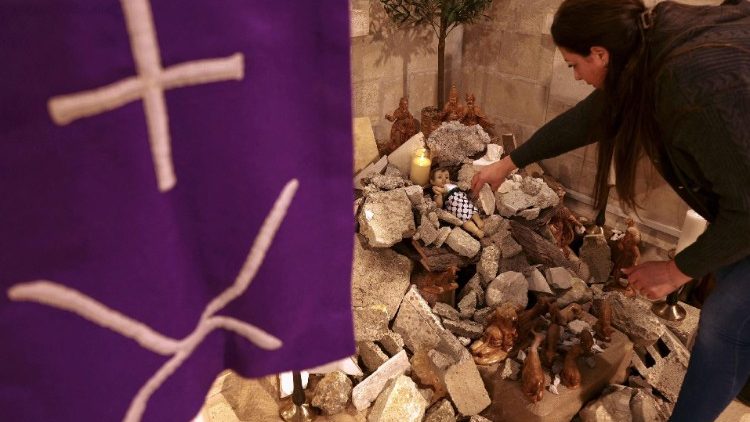
Fr. Faltas on Gaza: ‘It’s truly an inhumane situation'

During a visit to Italy, Franciscan friar Ibrahim Faltas illustrates the terrible situation the people of the Holy Land region are living in, and warns that if things continue as they are, “there will truly be no Christians left.”

By Kielce Gussie

“The situation in Gaza is terrible”, Fr. Ibrahim Faltas, a Franciscan friar of the Custody of the Holy Land, said during a visit to Italy during which he participated in several events, including a meeting with the Mediterranean Youth Council.


Speaking to Toscana Oggi—a weekly Italian publication—Fr. Faltas reflected on the current situation in Gaza.

Deprived of everything

“People continue to die – from hunger, thirst, and the heat,” he said, calling the situation inhumane. And poignantly, the Franciscan priest asked two questions: “Where is the international community? Where are human rights?”

On 1 September, Fr. Faltas explained that schools were reopened throughout the Holy Land, in Bethlehem and Jerusalem. However, in Gaza, children have been out of school for two years.

“They are deprived of everything — education, healthcare. There are no doctors, no medicine”, he said, adding that even playing is impossible for these children. They “have known nothing but war, fleeing, hiding, destruction, and rubble.”


Fr. Faltas during a visit to Rome in 2024

However, Fr. Faltas stressed, the humanitarian crisis is not limited to Gaza: “Bethlehem has become an open-air prison.” He pointed out that with the checkpoints closed, people who used to work in Israel pre-war with daily work permits are now unable to do so. They cannot work or leave. People whose livelihoods depended on tourism have not worked in two years.

The Christian community in Bethlehem is also suffering as some 185 families have left, that's more than 700 people, Fr. Faltas explained. He warned that “if things continue like this, there will truly be no Christians left.”

A strong gesture of hope

In the midst of the horrors of war, Fr. Faltas also recounted an act of hope and solidarity. In June, the bishops from Tuscany made a pilgrimage to Jerusalem and Bethlehem, which the Franciscan priest described as “courageous” and an important, impactful gesture for the Christians living in the region. He shared that the bishops’ visit “gave hope to the people there: "Everyone appreciated the visit – people still remember it.”

Tuesday, June 10, 2025

A 10-year PEW Report shows Muslim faith growing, the rise of "nones" and Christianity not keeping pace with world population


Christian communities continue to flourish in Sub-Saharan AfricaChristian communities continue to flourish in Sub-Saharan Africa  (AFP or licensors)

The changing face of faith: Pew report on global religious landscape 2010-2020

The just-published report issued by the Pew Research Centre on its findings on how the world’s religious landscape has evolved over the past decade highlights demographic growth, shifting affiliations, and rising secularism. It notes that Christians remain the world’s biggest religious group, although Muslims are growing fastest.

By Linda Bordoni

In a world marked by rapid social, cultural, and demographic shifts that affect the landscape of religion, the Pew Research Centre’s latest report provides a comprehensive overview of how religious affiliations and demographics have transformed over the past decade, from 2010 to 2020.

A growing and diversifying population

The report highlights that the global religious population has grown significantly over the last ten years, from approximately 5.9 billion in 2010 to nearly 6.9 billion in 2020. This increase is largely driven by demographic trends in regions such as sub-Saharan Africa, where high birth rates and vibrant religious communities continue to flourish. The expansion of the Muslim population, which rose from 23.2% to 24.1% of the world’s total, underscores the growing importance of Islam on the global stage. Meanwhile, while Christianity remains the largest faith, encompassing about 31.2% of the world’s population, it lags behind by not keeping pace with global population growth.

It is interesting to note that Christians are the world’s most evenly distributed group with a large presence in many regions, and that the vast majority of Muslims around the world are younger than 50; Buddhists, on the other hand, are older than other religious groups.

Shifts and divergences across continents

Despite overall growth, the report also paints a picture of divergence across continents. Europe, in particular, continues to experience a decline in religious identification, with a notable rise in those who consider themselves religiously unaffiliated—sometimes called “nones.” This group now accounts for roughly 17% of the European population, reflecting broader trends of secularization and changing social attitudes. North America, while still maintaining high Christian adherence, has seen a modest increase in secular and non-religious identities, signaling a shift in how faith is experienced and expressed.

Emerging trends and movements

The decade has also witnessed the rise of vibrant religious movements, especially within Christianity. Pentecostal and evangelical communities have expanded rapidly in Africa and Latin America, fueling a renewed energy within these traditions. In many regions, migration and globalization have contributed to increased religious diversity, fostering a more pluralistic society. Conversely, some areas have experienced religious revivals, with traditional practices gaining renewed importance amidst rapid social change.

The rise of the religious “Nones”

One of the most notable trends is the growth of those who identify as having no religious affiliation. Globally, this group is expanding, particularly in developed nations, as secularization continues to influence social attitudes. This shift, the Pew Research Centre notes, poses profound questions for religious institutions and policymakers about the future role of faith in public life.

In conclusion, the Pew report highlights that our world is becoming both more diverse and more complex in terms of religious identity. As populations grow and shift, so too do how people find spiritual fulfilment and engage with their communities, calling on the Church and faith communities worldwide to give renewed impetus to dialogue and to foster deeper understanding of the spiritual landscape in order to better meet its needs.