reflections, updates and homilies from Deacon Mike Talbot inspired by the following words from my ordination: Receive the Gospel of Christ whose herald you have become. Believe what you read, teach what you believe and practice what you teach...
Vatican liturgy chief says Pope Leo will not overturn Latin Mass restrictions
Cardinal Arthur Roche, prefect of the Dicastery for Divine Worship and the Discipline of the Sacraments, is pictured in a 2022 file photo. (OSV News/Reuters/Marko Djurica)
by Justin McLellan
Vatican City — July 30, 2026
The head of the Vatican's liturgy office said that Pope Leo XIV will not be peeling back restrictions on celebrating the pre-Vatican II Latin Mass put in place by his predecessor in 2021, dashing the hopes of traditionalist Catholics seeking a reversal of the controversial decree.
"Pope Leo is not going to change Traditionis Custodes," said Cardinal Arthur Roche, prefect of the Dicastery for Divine Worship and the Discipline of the Sacraments, referencing Pope Francis' 2021 restrictions on the pre-Vatican II Latin Mass in an interview with the English Catholic magazine The Tablet published July 29.
Traditionis Custodes created new norms for the celebration of the pre-Vatican II Latin Mass, which follows the 1962 Roman Missal, declaring that priests must request permission from their bishop to celebrate that form of the Mass and that communities attached to the liturgy must celebrate it at designated locations apart from ordinary parish churches.
Publicly, Leo has not spoken at length on the issue, but Roche told The Tablet that the pope is "not going back to Summorum Pontificum" — the 2007 decree issued by Pope Benedict XIV that allowed priests to celebrate Mass from the 1962 missal.
Some Catholics have turned greater access to the old form of the Mass into a rallying cry for a church that rejects modernity, turning the liturgy into a flashpoint between more traditionally minded Catholics and those advancing a Vatican II vision of the church marked by greater participation of the laity.
Yet in the interview, Roche, who was appointed by Pope Francis to his current post in 2021 less than two months before Traditionis Custodes was published, appeared to state that the current conditions in no way marginalize Catholics with an affinity for the pre-Vatican II Mass.
"It’s interesting. When I meet with groups who want the antecedent liturgy, and I say: 'Well, the Holy Father has given you that, so what’s the problem?' they can’t answer," the cardinal said. "But then they go away and say, 'We’re still being persecuted.' In what way persecuted? Why is the band still playing a tune that is discordant with the life of the Church?"
The Vatican last year granted two U.S. dioceses temporary dispensations from enforcing Traditionis Custodes, and Leo allowed U.S. Cardinal Raymond Burke to celebrate a pre-Vatican II Latin Mass in St. Peter's Basilica, spurring hope among traditionalist Catholics that the American pope would soften restrictions on the old form of the liturgy.
Yet under Leo's leadership, the Vatican has not changed its official position that the reformed liturgy remains the sole expression of the Latin-rite Mass.
In January, a text authored by Roche, who at 76 is past the retirement age for cardinals, was distributed at a meeting of the world's cardinals which said that Francis "pointed the way to unity" with the restrictions he imposed on the old form of the liturgy and wrote that "there ought to be only one rite for celebrating the Mass."
Speaking to The Tablet, Roche said that Vatican II expressed the need for the church be more missionary in its focus, "and that to prepare people to be missionary, the very central core of the life of the Church, which is the Eucharist, has to nourish people in a different way."
He said the Mass today offers Catholics more spiritual nourishment than the 1962 Mass.
"The abundant diet of scripture that is now given through the celebration of the Mass and the sacraments is something that wasn’t available to use before, but it is now," he said. Whereas the old form of Mass portrayed the priest as acting on behalf of the congregation, the cardinal said that "in fact, when the Mass is being celebrated, because the baptized people are a priestly people, they too are celebrating with the priest," as emphasized in the reformed liturgy.
A Statement from Archbishop Checchio on the SSPX Excommunications
July3,2026
by Archbishop James Checchio
Having heard that the Priestly Fraternity of Saint Pius X consecrated four new bishops this week against the explicit will of our Holy Father, Pope Leo XIV, and with disregard of his public cries for unity and his prior request for them to not proceed with the consecrations, I was truly disheartened. Whenever there is division in the Church, the entire body of Christ is affected. “If one part of the body suffers, all the parts suffer with it,” (1 Cor. 12:26)
In response, the Dicastery for the Doctrine of the Faith has issued a very strong decree detailing the excommunication of all the bishops involved in the illicit consecrations. Moreover, the decree detailed that any clergy and lay faithful who continue to adhere to the schism of the SSPX also incur the penalty of excommunication. While this sounds like a strong penalty, we must always remember that excommunication is not intended to be permanent but is a charitable call to repentance and reconciliation.
This is particularly pertinent to the people of the Archdiocese of New Orleans given that there are two SSPX Chapels located within the archdiocese. Of note, the decree stipulates that all clergy of the SSPX from this day forward are to be held as schismatics until they repent and are reconciled to the Body of Christ. Thus, the sacraments that they celebrate are henceforth illicit, and more significantly, the absolutions they offer in the Sacrament of Penance and the Marriages they witness are invalid. This is especially noteworthy because while Pope Francis had previously extended the faculties for these two sacraments to the priests of SSPX, the DDF has noted that they can no longer validly celebrate them.
This is a significant moment in our Church’s history, and it is especially a time for us to unite in prayer for our brothers and sisters in the SSPX. Prayer and renewed unity are the only answers to division. I know there to be many faithful and sincere people in the archdiocese who attend liturgical celebrations in the SSPX. Their commitment to traditional values and their emphasis on strong family lives are very commendable. But now, more than ever, they need our prayers that they do not follow in the footsteps of those bishops who have placed themselves outside the Barque of Peter.
I want to offer a word of encouragement and invitation to those members of the SSPX who so dearly love the Traditional Latin Mass but who also wish to be in full communion with the Roman Catholic Church, both clergy and lay faithful. You most certainly have a place here in the Archdiocese of New Orleans. To the priests who serve in these chapels, my prayers and openness to you are united to the Sacred Heart of Jesus’ desire that we may be one. To the lay faithful who attend liturgies in these chapels, as well, I beg you to seek the counsel of priests of our Archdiocese as you discern the Lord’s call to abide in communion with Peter and the Church Christ founded. We have several locations that offer the Usus Antiquior of the Roman Rite, and I am confident you can and will find a home if you wish. I have already visited one of these communities for Sunday Mass and will visit another in the coming weeks. The people are inspiring and I am sure you will find them so too. Please, come and be reconciled to God.
Our Holy Father Pope Leo, in his opening address to the cardinals at the most recent consistory said, “I need your support: strong, explicit, and public.” My brothers and sisters, this also applies to all of us as members of the Body of Christ. Our support of the Holy Father must be strong, explicit, and public. We've known this truth from the beginning of our Church: Ubi Petrus ibi ecclesia—where Peter is, there is the Church.
Pray for those who are hurt or confused by these most recent occurrences, pray for the clergy and all lay faithful of the SSPX that they might seek to be reconciled to Christ and His Church, pray for unity among all Christians, pray for unity in our own Archdiocese, and especially, join me in praying for our Holy Father Pope Leo XIV. Please pray for me too, and know of my love, prayers and gratitude for you all!
ST. PAUL, Minn. (AP) — With incense wafting to an elevated pulpit and 13 altar boys looking on, the priest at the Church of Saint Agnes preached about merging old Catholic customs with fidelity to the Vatican this week — as Pope Leo XIV tackled a major challenge from a traditionalist breakaway group.
“Our Catholic faith is a living tradition, and there is a difference between being rooted and being stuck,” the Rev. John Ubel said in homilies Sunday at English-language and Latin Masses.
Since the Second Vatican Council modernized the liturgy more than 60 years ago, celebrating Mass in the traditional Latin Rite that preceded those reforms has become a lightning rod of the theological, cultural and increasingly partisan divides among Catholics.
The conflict made global headlines when Leo declared Thursday that one traditionalist group — the Society of St. Pius X, founded to reject the Council’s reforms and celebrate exclusively the old Latin Mass — had formally broken with the Catholic Church.
While the Latin Rite was not the cause of the rift, the acrimony and the lingering suspicion that all those who like it are ultraconservative rebels is an open wound at Saint Agnes, which isn’t affiliated with SSPX and has the church’s permission to celebrate Mass in Latin.
“For all who are attached to Tradition, I pray that they seek to maintain full ecclesial communion with our Holy Father, Pope Leo XIV,” Ubel said Thursday.
A congregation continues to pray for unity
Saint Agnes, a historic church founded for German-speaking immigrants in what’s now a diverse, central neighborhood in Minnesota’s capital, offers one traditional Latin Mass per weekend, with the archbishop’s permission. It also has a modern version of the Mass in Latin and four in English.
“I believe that Saint Agnes is an example where the different forms of Latin Mass, and English, peacefully coexist, and, in many ways, I think it’s a model for how the church can respect various liturgical traditions and do so in full charity,” Ubel said in Sunday’s homilies.
Peter Draganowski, a 15-year-old incoming sophomore at Saint Agnes’ school, has been an altar boy at both English and Latin services for years. He prefers the latter despite the extra preparations and rituals.
“It’s really not hard, it just has a lot more moving parts,” he said in the parish hall as hot dogs and doughnuts were served after Sunday’s first English Mass. “The sacred mysteries deserve that beauty.”
The archbishop of St. Paul and Minneapolis, Bernard Hebda, expressed hope that local Catholics who had been attending SSPX chapels would now turn to approved services.
“We are blessed that the same traditional Eucharistic liturgy beloved by those who have worshiped with the SSPX in the past continues to be celebrated in six locations throughout the Archdiocese,” Hebda said in a statement. “I am confident that those who prefer the Traditional Latin Mass could find a home here.”
Latin Mass supporters are a small but vocal group
In addition to being celebrated in Latin, the old rite Mass diverges from standard services in other ways: The prayers are different and longer, the priest celebrates at the altar with his back to the congregation, and Communion is given out only on the recipient’s tongue, instead of in the hand, while kneeling at the altar rail. The priests also wear shorter “Roman-style” vestments and a black biretta hat.
Very few U.S. Catholics regularly attend Sunday Mass in the “extraordinary form” that predates the Vatican II reforms of the 1960s, according to Stephen Cranney, a lecturer at Catholic University of America in Washington, and co-author of an upcoming book on the Latin Mass in the United States.
He estimates that 510 such Masses are celebrated on Sundays in the United States, where there are more than 16,000 active parishes. The U.S. Conference of Catholic Bishops and Georgetown University’s Center for Applied Research in the Apostolate said they don’t track the data.
Most American Catholics he surveyed who like this Mass say they do so because of the elaborate esthetics, the deeper sense of reverence, and the continuity with centuries of tradition, Cranney said. Only a small percentage said they oppose the Vatican II reforms, let alone support defying the pope, he added.
But the challenge has remained over the decades for popes that the threat of schism, or a rupture within the church, might lurk behind a preference for a more solemn liturgy.
“How do you … try to be accommodating to the people who might prefer the traditional Latin Mass while not giving fuel to the fire of people that want to split off?” Cranney said.
Two popes have taken different approaches
Leo’s two predecessors tried different approaches. In 2007, Pope Benedict XVI upheld the validity of the Latin Rite and urged priests to offer such a Mass if their parishioners demanded it.
But Pope Francis cracked down on the practice in 2021-23, requiring individual bishops to give their approval for celebrating the traditional Mass and to determine if the faithful who wanted it had accepted the Vatican II reforms. He also restricted the use of parish churches for these services.
Francis said he acted because the old Mass had become a source of division in the church — although Vatican documents leaked last year after his death suggested most bishops actually had expressed general satisfaction with the practice.
Last fall, Leo allowed a U.S. cardinal to celebrate the old Latin Mass in St. Peter’s Basilica in Vatican City, which many traditionalists saw as an encouraging sign.
In the year since his election, Leo has spoken often of the need for unity. On Tuesday, before the SSPX consecrations, he again pleaded with the society not to proceed. Once they did, however, the Vatican warned the faithful to stop going to the society’s Masses, declaring “those who adhere formally” to the society are considered themselves schismatic and excommunicated.
“Not a competition” – Minnesota traditional Catholics hope to model a way forward
Parishioners at Saint Agnes said they were saddened by the schism and would continue to pray for a united church.
Nell O’Leary Alt, who grew up in the parish, said her family attends both Latin Masses, as well as English services.
As a mother of five children aged 5 to 16, she joked that she initially found the silent moments of the traditional Latin Mass intimidating, with nothing to cover the fussing and giggling of her growing family in the pews.
But they love the Latin worship: “It’s the same the saints knew all through the ages.”
Tom Graff, another “cradle Catholic” at the church who chants in the choir, said he’s drawn to the rites’ solemnity. But this week’s events highlight the importance of what he teaches his four children, about not falling into the trap of believing one form of worship is superior to another.
“I can appreciate both the ordinary and the extraordinary forms of Latin Mass, and Schubert’s Tantum Ergo as well as On Eagle’s Wings,” Graff said, referring to a centuries-old and a modern Christian hymn. “It’s about the holy sacrifice of Mass, regardless of the parish or the type of liturgy.”
Ubel believes having multiple Mass options is about inclusion rather than division.
“It’s not a competition to see who’s more Catholic,” he said.
Pope writes to French Bishops on education, abuse, and liturgy
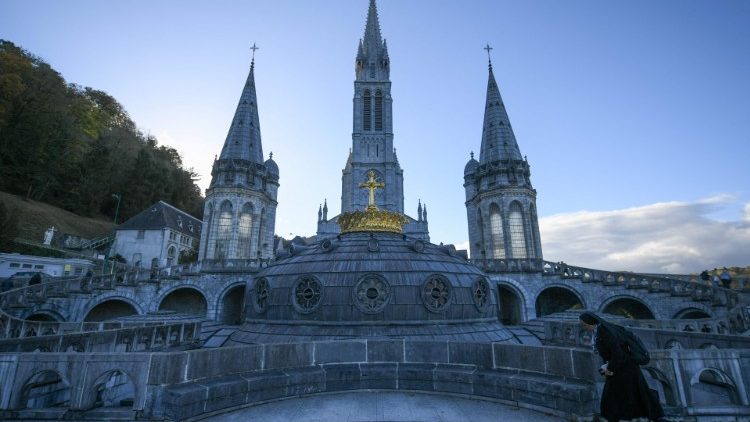
Pope Leo XIV sends a message to the French Bishops’ Conference for its Spring Plenary Assembly in Lourdes, encouraging the Bishops to defend Catholic education, remain steadfast in confronting abuse, and reflect on ways to welcome communities attached to the Vetus Ordo.
By Jean-Charles Putzolu
At the opening of their Spring Plenary Assembly, the Bishops of France were greeted by Pope Leo XIV in a message signed by Cardinal Secretary of State Pietro Parolin.
Education, abuse and liturgy formed the three central themes of the letter addressed to the bishops. These same themes will guide their discussions over four days at the Marian shrine in Lourdes.
Defending Catholic education
Amid ongoing public concern over recent abuse scandals in educational institutions, Pope Leo XIV acknowledged “a climate of growing hostility," but urges perseverance in defending Catholic education.
In particular, he called for its Christian identity—it's very “raison d’être”—to be safeguarded “with determination,” while continuing to promote openness and respect for the convictions of all.
Abuse: mercy for all
The second issue the Bishops are addressing is the abuse of minors. The Church in France has carried out sustained efforts to confront the crisis, especially since the creation of the Independent Commission on Sexual Abuse in the Church (CIASE) on February 8, 2019, just weeks before the Vatican meeting convened by Pope Francis.
At that meeting, Pope Francis had stressed the Church’s “duty to listen attentively” to the “stifled, silent cry” of victims.
Echoing this, Pope Leo called on the French Bishops to continue listening to and caring for victims, highlighting the need for long-term prevention measures and for extending God’s mercy to all.
On this point, the Pope added that “priests guilty of abuse should not be excluded from this mercy but should be the subject of your pastoral reflection.”
At the same time, he offered the Bishops words of encouragement and renewed his trust in them, acknowledging that many have been “deeply affected” by the consequences of abuse committed by some of their fellow clergy.
Liturgy and the Tridentine Mass
Finally, the Pope addressed an issue to which he is “particularly attentive”: the growing number of communities attached to the Vetus Ordo (the celebration of the Mass in Latin according to the liturgy in use before the Second Vatican Council).
In this regard, Pope Leo XIV expressed concern that this situation could open “a painful wound within the Church regarding the celebration of the Mass,” which he described as “the very sacrament of unity.”
If the Church is a mother who cares for her children, he said, she must heal wounds and learn to look upon others “with renewed understanding and greater sensitivity."
He therefore invites the Bishops, with the help of the Holy Spirit, to seek “concrete solutions” that will generously include those sincerely attached to the Vetus Ordo, while remaining faithful to the directions of the Second Vatican Council.
Clear signs of hope
While acknowledging the “difficult times” facing the Church, Pope Leo XIV also pointed to “signs of hope and of God’s presence in people’s hearts.” One such sign is the significant rise in the number of catechumens over the past ten years.
The number of candidates who will receive baptism at the Easter Vigil on April 4 will be announced shortly by the French Bishops’ Conference, but the upward trend appears set to continue into 2026. There were 17,800 catechumens in 2025, and the figure could exceed 20,000 this year.
This reflects a renewed spiritual interest, though one that must be seen in the wider context of more than two decades of declining baptism requests.
Pope Leo faces crisis as breakaway Catholic group rejects Vatican talks
The group said it needs the new bishops as a matter of survival to minister to its faithful
In a letter to the Vatican’s doctrine chief, the Society of St. Pius X said the Holy See's threat of sanctions and schism if it goes ahead with the 1 July ceremony "is hardly compatible with a genuine desire for fraternal exchanges and constructive dialogue." (AP)
In a letter to the Vatican’s doctrine chief, the Society of St. Pius X said the Holy See's threat of sanctions and schism if it goes ahead with the 1 July ceremony "is hardly compatible with a genuine desire for fraternal exchanges and constructive dialogue."
The SSPX, as the group is known, celebrates the old Latin Mass and was created in opposition to the Second Vatican Council, the 1960s meetings that modernized the Catholic Church and allowed for the celebration of Mass in the vernacular.
The SSPX broke with Rome in 1988, after its founder, Archbishop Marcel Lefebvre, consecrated four bishops without papal consent, arguing that it was necessary for the survival of the church’s tradition.
The Vatican promptly excommunicated Lefebvre and the four other bishops, and the group today still has no legal status in the church.
In the decades since that original schismatic act with Rome, the group has continued to grow, with schools, seminaries and parishes around the world.
It counts 733 priests, 264 seminarians, 145 religious brothers, 88 oblates and 250 religious sisters – a Catholic reality that poses a real threat to the Vatican because it represents a parallel church.
Earlier this month, the SSPX announced it planned to consecrate four new bishops on 1 July, since there are only two left from the original group. The SSPX said it needs the new bishops as a matter of survival to minister to the SSPX faithful, whose numbers have grown around the world.
The threat of a new consecration ceremony has created the first tangible crisis for Leo, who has sought to pacify relations with Catholic traditionalists that worsened under Pope Francis.
While the SSPX is out of communion with the Holy See, plenty of Catholic traditionalists who are loyal to Rome but sympathetic to the SSPX plight are watching how Leo handles the challenge.
In a bid to head off the crisis, the Vatican’s doctrine chief Cardinal Víctor Manuel Fernández invited the SSPX superior, the Rev. Davide Pagliarani, to the Vatican for talks Feb. 12. He proposed a theological dialogue on Vatican II, but only if the SSPX suspends the planned consecration ceremony.
In a letter to Fernández posted on the SSPX website Thursday, Pagliarani recalled that he had proposed precisely such a dialogue in 2019 and received no reply. He said doctrinal talks now were impossible under such conditions, and that regardless they will never agree on Vatican II.
“Indeed, the hand extended to open the dialogue is unfortunately accompanied by another hand already poised to impose sanctions,” he wrote. “There is talk of breaking communion, of schism, and of ‘serious consequences.’”
With no hope for doctrinal agreement, Pagliarani asked instead for the Vatican to exercise charity, given the number of Catholic faithful who attend SSPX churches.
“The society is an objective reality: it exists,” Pagliarani wrote. “This same society asks you only to be allowed to continue to do this same good for the souls to whom it administers the holy sacraments.”
Pope Leo sees role as one of building bridges, avoiding polarization
A new biography of Pope Leo, “Leo XIV: Citizen of the World, Missionary of the 21st Century,” contains the full text of the interview granted by the Holy Father to Elise Ann Allen, covering a wide range of topics, including the tragedy of Gaza, the Church’s policy on China, the role of women, the Church’s welcome of those who identify as LGBTQ+, the clerical abuse crisis, the financial situation of the Holy See, artificial intelligence, and fake news.
By Salvatore Cernuzio
In his first full interview since his election, Pope Leo responded to questions on topics as diverse as the quest for peace in Ukraine and “terrible situation in Gaza”; to the role of women in the Church and the Church’s relationship with the LGBTQ+ community; to the clerical abuse and the reform of the Roman Curia.
The interview was granted to Elise Ann Allen for her biography of the Holy Father, León XIV: ciudadano del mundo, misionero del siglo XXI (“Leo XIV: Citizen of the World, Missionary of the XXI Century”), which published Thursday with Penguin Peru. Allen is a senior correspondent for CruxNow.com, an independent online Catholic news site, which published the full text of the interview with Pope Leo in a series of articles also released on Thursday.
The role of the papacy
Asked about how he sees the papacy, Pope Leo highlighted the “pastoral part” of his new role, especially the “outreach to people of all ages.” “I appreciate everyone, whoever they are, what they come with, and I listen to them… So, there’s an aspect of being pastor of the universal Church that I think is very significant, and I think one of the things people appreciate is that,” he said.
He said does not feel overwhelmed by the decisions that will need to be taken in the coming months and years, while acknowledging that internal Church governance is a big part of his role as pope.
What is new, he said, is his role as a world leader. “I’m learning a lot about how the Holy See has had a role in the diplomatic world for many years,” he said. “I’ve always tried to stay up on the news, but the role of pope is certainly new to me.” Here, too, he said, “I’m learning a lot and feeling very challenged, but not overwhelmed.
The tragedy of Gaza
One of the first questions for the Pope concerned the situation in Gaza. Even though there has been some pressure on Israel from the United States, and despite some “very clear statements” recently from President Trump, the Pope said, “there has not been a clear response in terms of finding effective ways to alleviate the suffering of the people, the innocent people in Gaza, and that is obviously of great concern.”
The Pope highlighted the needs of Gazans, and especially the children of the enclave. “They're going to need a lot of help, medical assistance as well as humanitarian aid to really turn that situation around, and right now it still looks very, very grave,” he said. “It’s just so horrible to see the images that we see on television, hopefully something will turn this around.”
Pope Leo worried aloud about growing numb to the pain. “That’s a sort of a human response,” he said, “because you can only stand so much pain.” Human beings, and especially Christians, must not grow numb and must not ignore the situation, he said. Instead, “somehow, we have to continue to push, to try and make a change here.”
The word “genocide”
Concerning the use of the word “genocide” with regard to the tragedy of Gaza, which is “being thrown around more and more,” the Pope emphasized that “officially, the Holy See does not believe that we can make any declaration at this time about that.”
He explained, “There's a very technical definition about what genocide might be, but more and more people are raising the issue, including two human rights groups in Israel have made that statement.”
Relations with China
Staying in the realm of geopolitics, Pope Leo was also asked about “another global actor,” China. He said that “in the short term, I will continue the policy that the Holy See has followed for some years now,” adding that he “in no way” pretends “to be wiser or more experienced” than his predecessors.
For some time now, he said, he has been “in ongoing dialogue” a number of Chinese people with various perspectives, and he is trying “to get a clearer understanding of how the Church can continue the Church’s mission, respecting both culture and the political issues,” while also “respecting a significant group of Chinese Catholics who for many years have lived some kind of oppression or difficulty in living their faith freely, and without taking sides.”
At the same time, he admits, “It’s a very difficult situation.”
U.S. politics
Asked about the significance, “on the geopolitical level,” of being the first Pope from the United States, Pope Leo responded by saying, “First of all, I hope that it will make a difference eventually with the bishops of the United States.”
With regard to “some of the things that have been said” about the U.S. episcopate and the relationship between the Church and politics,” the Pope said, “The fact that I am American means, among other things, that people cannot say, as they did with Francis, ‘he does not understand the United States, he simply does not see what is happening.’”
However, Pope Leo stated clearly, “I don’t plan to get involved in partisan politics.”
With regard to the relationship with President Donald Trump, the Pope expressed his opinion that “it would be much more appropriate for the leadership in the Church within the United States to engage him, quite seriously.” However, he said, “if or when there were specific issues” where it was possible to engage with Trump, “I would have no problem doing so.”
Pope Leo mentioned, as an example, Francis’ letter, issued near the end of his pontificate about the treatment of migrants, saying, “I was very happy to see how the American bishops picked that up, and some of them were courageous enough to go with that.” He explained, “I think that approach, in general, is a better approach, that I would engage with the bishops primarily.”
He later acknowledged that “the United States is a power player on the world level,” and said, “we have to recognize that, and sometimes decisions are made more based on economics than on human dignity and human support, but [we have to] continue to challenge and to raise some questions” to determine the “best way” to respond.
The Pope noted that Trump himself had recently stated that a meeting between the two was not on the agenda, but added, “his brother’s a nice guy” – a reference to Pope Leo’s older brother Louis, who was received in the Oval Office a few days after the Conclave. “One of my brothers has met him and has been very open about his political viewpoints,” Pope Leo confirmed.
Later in the interview, he speaks about his brother again, when describing his relationship with his family. He said he and his brothers, Louis and John, “are still very close, even though one is far on one end politically, we’re in different places.”
The abuse crisis in the Church
A large part of the conversation is dedicated to the “crisis” of clerical sexual abuse in the Church. Pope Leo acknowledged that it is a “real crisis,” saying “victims must be treated with great respect and with an understanding that those who have suffered very deep wounds because of abuse, sometimes carry those wounds for their entire life.
Pope Leo cites statistics showing that “over 90% of people who come forward and make accusations” are “authentic victims.” In other words, they do not make things up.
However, he said, “there have also been proven cases of some kind of false accusations,” and some priests have had their lives “destroyed because of that.” An accusation “does not take away the presumption of innocence,” the Pope insisted, adding, “So, priests have to be protected, or the accused person has to be protected, their rights have to be respected.” Still, he recognized, “even saying that at times is cause of greater pain for the victims.”
In any case, he continued, citing the “very good insight” of Francis, “the issue of sexual abuse cannot become the centre focus of the Church.” After noting that the “vast majority” of people committed to the Church have never abused anyone, he continued, “We can’t make the whole Church focus exclusively on this issue, because that would not be an authentic response to what the world is looking for in terms of the need for the mission of the Church.”
The Church’s approach to the LGBTQ+ community
The Pope was also asked about two of the “hot-botton” issues that arose in the Synod on Synodality: the role of women in the Church’s approach to the LGBTQ+ community.
With regard to the latter, Pope Leo explained that he does not have “a plan at the moment,” but added that he does not want “to continue to polarize or promote polarization in the Church.”
Pope Leo said he embraces Francis’ message of welcome to all, “todos, todos, todos.” “Everyone’s invited in,” he said, “but I don’t invite a person in because they are or are not of any specific identity. I invite a person in because they are a son or daughter of God. You’re all welcome, and let’s get to know one another and respect one another.”
Referring to the the Declaration Fiducia supplicans: On the pastoral meaning of blessings, Pope Leo emphasized that the document “basically says, of course we can bless all people, but it doesn’t look for a way of ritualizing some kind of blessing because that’s not what the Church teaches.”
He acknowledges that some people “want the Church doctrine to change, want attitudes to change.” However, he said, “I find it highly unlikely, certainly in the near future, that the church's doctrine in terms of what the church teaches about sexuality, what the Church teaches about marriage, [will change].”
Pope Leo notes that he has already spoken about marriage, “as did Pope Francis when he was pope, about a family being a man and a woman in solemn commitment, blessed in the sacrament of marriage.”
The role of women in the Church
Nor does he think the Magisterium will change the Church’s position on the ordination of women. Specifically with regard to the possibility of ordaining women as deacons, the said, “I, at the moment, don’t have an intention of changing the teaching of the Church on the topic.”
At the same time, Pope Leo said, “I hope to continue in the footsteps of Francis, including in appointing women to some leadership roles at different levels in the Church's life, recognizing the gifts that women have that can contribute to the life of the Church in many ways.”
The financial situation of the Holy See
Concerning the financial situation of the Holy See, Pope Leo said, “I don’t know how I’m going to handle it yet, but I’m getting some clear ideas.”
He points to several specific issues, including the 60 million euro profit reported by the Administration of the Patrimony of the Apostolic See (APSA) in their 2024 financial report.” At the same time, he noted concerns about the pension fund for Vatican employees (“that must be looked at”) and how the Covid crisis affected the Vatican Museums, “one of the most significant sources of income for the Vatican.”
Pope Leo warned, however, that “we must avoid the kinds of wrong choices that were made in recent years,” mentioning the purchase of a building in London that became the centre of a court case that attracted “great publicity.” “How many millions were lost because of that!” the Pope lamented.
At the same time, he noted the “significant steps” already taken during Francis’s pontificate to impose a new system of checks and balances. However, he added, “I’m not saying we can relax and say the crisis is over. I don't think the crisis is over, I think we have to continue to work on this, but I'm not losing sleep over it, and I think that it's important that we communicate a different message.
Curia reforms
On the topic of the reform of the Roman Curia, Pope Leo noted that, “as in any human organization, there are positive things and there are things that need to be improved,” highlighting in particular the importance of “continuing to break down or transform the isolated manner in which each dicastery works.” He expressed concern about a kind of “silo mentality,” which at times has led to a lack of dialogue and communication, and has sometimes been a “great limitation and harm for the governance of the Church.”
The Latin Mass
Pope Leo also responded to the question of the “Traditional Latin Mass,” saying “part of that issue, unfortunately, has become – again, part of a process of polarization – people have used the liturgy as an excuse for advancing other topics. It’s become a political tool, and that’s very unfortunate.”
He acknowledged that he has not yet been able “to really sit down with a group of people who are advocating for the Tridentine Rite,” but said, “there’s an opportunity coming up soon, and I’m sure there will be occasions for that.” He added, “But that is an issue that I think also, maybe with synodality, we have to sit down and talk about.”
Fake news and Artificial Intelligence
Beyond the ecclesial sphere, the interview with Pope Leo also addressed issues including the prevalence of “fake news”, which he calls “destructive;” and the issue of artificial intelligence.
Concerning the latter, the Holy Father worried about “extremely rich people who are investing in artificial intelligence” while “totally ignoring the value of human beings and of humanity.”
“I think the Church has to speak up there,” he said, in which “extremely wealthy people” are investing, while completely ignoring “the value of human beings.” “If the Church doesn't speak up, or if someone doesn't speak up about that – but the Church certainly needs to be one of the voices here – the danger is that the digital world will go on its own way and we will become pawns, or left by the wayside.”
Asked about the problems of so called “deep fakes,” Pope Leo recalled being asked for permission to create an “artificial Pope” so that anyone could have a personal audience with the pontiff. “I said: ‘I’m not going to authorize that,’” and added, “If there’s anybody who should not be represented by an avatar, I would say the Pope is high on the list.”
Vatican News - English Section staff reporters contributed to this report. The full text of the interview, broken up into several articles, can be found on the Crux website, www.cruxnow.com.