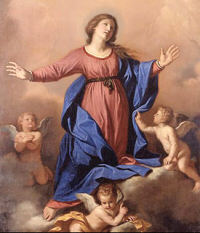
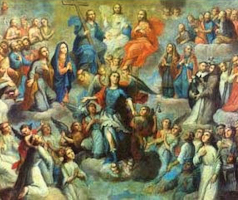
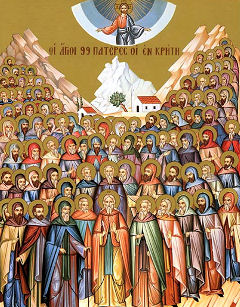
Showing posts with label Holy Days of obligation. Show all posts

Wednesday, December 31, 2025

New Year's Day indeed is a Catholic Holy Day of Obligation


Why is New Year’s Day a holy day of obligation?

A person wearing 2026 glasses watches as organizers of the upcoming ball drop on New Year's Eve perform a confetti test in New York City's Times Square Dec. 29, 2025. (OSV News photo/Adam Gray, Reuters)


Q: If the church’s new year begins on the first Sunday of Advent, then why is the secular New Year’s Day (Jan. 1) a holy day of obligation?

A: You are correct that the church’s liturgical new year begins usually in late November with the first Sunday of Advent, and you are likewise correct that in the United States and for the universal church in general, Jan. 1 is a holy day of obligation (see Canon 1246 of the Code of Canon Law).

But January 1 is not a holy day of obligation because of the civil new year, but because it is the feast of Mary, the Mother of God.

Recognizing Jesus’ divine nature and Mary’s role in Jan. 1 solemnity

“Mother of God” — also known by the theological Greek term “Theotokos,” or “God-bearer” — is an ancient title for Our Lady which not only references her own great dignity, but further points to deeper Catholic teachings on Jesus’ identity and the nature of the most Holy Trinity.

Although this title had been in use among the Christian faithful long before then, formal endorsement of the practice of calling Mary the “Mother of God” is most closely associated with the Council of Ephesus in the year 431 A.D. Among other things, the Council of Ephesus refuted the Nestorian heresy.

The Nestorian heresy is named after the fifth-century bishop Nestorius, who argued that Mary should be considered the mother of only Jesus’ human nature, because to say that she was the mother of Jesus’ divine nature would seem to imply that she herself was divine.

Nestorius preached against the use of the term “Theotokos” in favor of the title “Christotokos,” or “mother of Christ.” However, this was problematic because it undermined the church’s doctrine on the “hypostatic union,” or the teaching that Jesus has two natures — a divine and a human nature — fully “united in the one person of God’s Son” (See the Catechism of the Catholic Church, 481).

To make a long story short, the Council of Ephesus formally declared Nestorius a heretic. The council clarified that because Jesus’ two natures were distinct but not separated into different persons, and since Mary was the mother of the person of Jesus in His human nature, she was also the mother of Him in His divine nature. Hence, she can, in this specific sense, rightly be called the “mother of God”: not because Mary was herself the source of Jesus’ divinity, but because she bore to the world the man who was also God.

Marian solemnity celebrated in octave of Christmas

It’s fitting that in our current calendar we observe the solemnity of Mary, the Mother of God on the eighth day after Christmas. In our Catholic liturgical tradition, especially important feasts like Christmas and Easter are celebrated for eight days. This is called an “octave,” and it gives us the space to fully ponder the mystery of faith being celebrated, often in its many various nuances and facets.

The fact that we commemorate Mary as the Mother of God in the octave day of Christmas reminds us, as the Catechism puts it, that “the Incarnation is therefore the mystery of the wonderful union of the divine and human natures in the one person of the Word” (CCC 483).

On a side note, there is one Catholic custom that is specifically tied to the civil celebration of the new year. Provided the other usual conditions for obtaining an indulgence are met, Catholics can earn an indulgence on Dec. 31 if they devoutly pray or chant the “Te Deum” prayer.

This is an ancient hymn of thanksgiving which today is most often prayed as part of the Liturgy of the Hours on Sundays and major feast days but is to be prayed on Dec. 31 as a way to thank God for the blessings and graces of the past year. Similarly, a Catholic can earn a second indulgence on Jan. 1 for praying the “Veni Creator Spiritus,” a prayer asking for the Holy Spirit’s light and guidance.

Jenna Marie Cooper, who holds a licentiate in canon law, is a consecrated virgin and a canonist whose column appears weekly at OSV News. Send your questions to CatholicQA@osv.com.

Friday, August 15, 2025

Pope Leo XIV celebrates Mass for the Assumption in Castel Gandolfo


Pope Leo: Mary’s song, the Magnificat, strengthens our hope

During Mass in Castel Gandolfo for the Solemnity of the Assumption of the Blessed Virgin Mary, Pope Leo XIV marvels how Mary's 'yes' gives hope to us today, saying we celebrate the Paschal Mystery of Jesus, which changed the course of history.

By Deborah Castellano Lubov 

"Mary’s song, Magnificat, strengthens the hope of the humble, the hungry, the faithful servants of God." 

Pope Leo XIV gave this reminder during the Mass for the Solemnity of the Assumption of the Blessed Virgin Mary at the Pontifical Parish of Saint Thomas of Villanova in Castel Gandolfo on 15 August 2025.

The Holy Father began his homily by observing that although today is not Sunday, "we celebrate in another way the Paschal Mystery of Jesus, which changed the course of history."

READ POPE LEO XIV'S FULL HOMILY HERE

"In Mary of Nazareth," he continued, "we recognize our own history: the history of the Church, immersed in the common lot of humanity. By taking flesh in her, the God of life and of freedom has conquered death.


Pope Leo XIV celebrates Mass for the Solemnity of the Assumption of the Blessed Mother   (@Vatican Media)

The Pope recalled that on this Solemnity we contemplate how God overcomes death, yet never without us. "His is the Kingdom, but," he explained, "ours is the 'yes' to his love that can change everything." 

On the Cross, the Pope said, Jesus freely uttered that “yes” which would strip death of its power—the death that still spreads wherever our hands crucify and our hearts remain imprisoned by fear and mistrust. On the Cross, trust prevailed; so did love, which sees what is yet to come; and forgiveness triumphed.

That 'yes' still lives

The Pope recalled to those present in the parish that Mary was there by the Cross united with her Son. 

"In our day, we are like Mary whenever we do not flee, whenever we make Jesus’ 'yes' our own. 

"That 'yes,'" Pope Leo marveled, "still lives and resists death in the martyrs of our time, in witnesses of faith and justice, of gentleness and peace. Thus this day of joy becomes also a day that calls us to choose—how and for whom we shall live."

The Pope went on to remember how we listened to the Gospel passage on the Visitation, in which Saint Luke recorded "a decisive moment" in Mary’s vocation.  

Magnificat

As "we celebrate the crowning moment of her life," Pope Leo said, "It is beautiful to recall that day." 

While he observed that "every human story, even that of the Mother of God, is brief on this earth and comes to an end," he went on to reflect, "Yet nothing is lost. When a life ends, its uniqueness shines even more clearly." 

The Pope explained that Mary's Magnificat radiated the light of all her days, and that the surprising fruitfulness of barren Elizabeth confirmed Mary in her trust, for "it anticipated the fruitfulness of her 'yes,' which extends to the fruitfulness of the Church and of all humanity whenever God’s renewing Word is welcomed." 


God breaks through our despair

Reflecting on Friday's Solemnity, the Holy Father highlighted that the Resurrection enters our world even today.

"The words and choices of death may seem to prevail, but the life of God breaks through our despair through concrete experiences of fraternity and new gestures of solidarity," and "prior to being our final destiny, the Resurrection transforms—in soul and body—our dwelling on earth."

Hence, the Pope reflected, "Mary’s song, Magnificat, strengthens the hope of the humble, the hungry, the faithful servants of God."  

God's Word continues to be brought to light

Pope Leo reassured that despite something seeming impossible, God’s Word continues to be brought to light.  

"When bonds are born, with which we confront evil with good and death with life," he said, "we see that 'nothing will be impossible with God' (Lk 1:37)."

Pope Leo recalls poor and persecuted Christian communities

The Pope warned against when self-reliance prevails and consciences are dulled. "Instead of letting the old world pass away, one clings to it still, seeking the help of the rich and powerful, which often comes with contempt for the poor and lowly."

However, Pope Leo acknowledged, the Church lives in her fragile members, and she is renewed by their Magnificat.  

"Even in our own day, the poor and persecuted Christian communities, the witnesses of tenderness and forgiveness in places of conflict, and the peacemakers and bridge-builders in a broken world, are the joy of the Church," he reaffirmed, saying, "They are her enduring fruitfulness, the first fruits of the Kingdom to come."  

Let us be converted by their witness

Recalling that many of them, like the elderly Elizabeth and the young Mary, are women, "Paschal women, apostles of the Resurrection," Pope Leo implored, "Let us be converted by their witness!"

Addressing the faithful, Pope Leo stressed that "when in this life we 'choose life,' "we are right to see in Mary, assumed into heaven, our own destiny."

"She," the Pope continued, "is given to us as the sign that the Resurrection of Jesus was no isolated event, no mere exception."  

Mary: wondrous union of grace and freedom

Mary, the Pope said, is that wondrous union of grace and freedom, which urges each of us to have trust, courage, and participation in the life of God’s people," especially as she says, “He who is mighty has done great things for me” (Lk 1:49).

With this in mind, Pope Leo said, "may each of us know this joy and proclaim it with a new song. Let us not be afraid to choose life!" 

Even if "it may seem risky and imprudent.  Many voices whisper: “Why bother? Let it go. Think of your own interests,” he said; such suggestions are "voices of death," and we instead "are disciples of Christ." "It is His love that drives us—soul and body—in our time."

Pope Leo concluded by stressing that only when we, as individuals and as the Church, no longer live for ourselves, life spreads and life can prevail.

Thursday, August 14, 2025

The Solemnity of the Assumption of Mary; August 15th; a Holy Day of Obligation


Ordinary Time: August 15th

Solemnity of the Assumption of the Blessed Virgin Mary


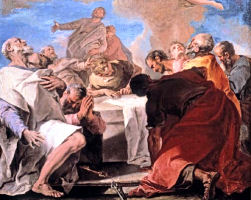
Today the Church celebrates the Solemnity of the Assumption of the Blessed Virgin Mary, a Holy Day of Obligation. On November 1, 1950, Pius XII defined the dogma of the Assumption. Thus he solemnly proclaimed that the belief whereby the Blessed Virgin Mary, at the close of her earthly life, was taken up, body and soul, into the glory of heaven, definitively forms part of the deposit of faith, received from the Apostles. To avoid all that is uncertain the Pope did not state either the manner or the circumstances of time and place in which the Assumption took place—only the fact of the Assumption of Mary, body and soul, into the glory of heaven, is the matter of the definition.

The Assumption
Now toward the end of the summer season, at a time when fruits are ripe in the gardens and fields, the Church celebrates the most glorious "harvest festival" in the Communion of Saints. Mary, the supremely blessed one among women, Mary, the most precious fruit which has ripened in the fields of God's kingdom, is today taken into the granary of heaven.
—Pius Parsch, The Church's Year of Grace

The Assumption is the oldest feast day of Our Lady, but we don't know how it first came to be celebrated.

Its origin is lost in those days when Jerusalem was restored as a sacred city, at the time of the Roman Emperor Constantine (c. 285-337). By then it had been a pagan city for two centuries, ever since Emperor Hadrian (76-138) had leveled it around the year 135 and rebuilt it as Aelia Capitolina in honor of Jupiter.

For 200 years, every memory of Jesus was obliterated from the city, and the sites made holy by His life, death and Resurrection became pagan temples.

After the building of the Church of the Holy Sepulchre in 336, the sacred sites began to be restored and memories of the life of Our Lord began to be celebrated by the people of Jerusalem. One of the memories about his mother centered around the "Tomb of Mary," close to Mount Zion, where the early Christian community had lived.

On the hill itself was the "Place of Dormition," the spot of Mary's "falling asleep," where she had died. The "Tomb of Mary" was where she was buried.

At this time, the "Memory of Mary" was being celebrated. Later it was to become our feast of the Assumption.

For a time, the "Memory of Mary" was marked only in Palestine, but then it was extended by the emperor to all the churches of the East. In the seventh century, it began to be celebrated in Rome under the title of the "Falling Asleep" ("Dormitio") of the Mother of God.

Soon the name was changed to the "Assumption of Mary," since there was more to the feast than her dying. It also proclaimed that she had been taken up, body and soul, into heaven.

That belief was ancient, dating back to the apostles themselves. What was clear from the beginning was that there were no relics of Mary to be venerated, and that an empty tomb stood on the edge of Jerusalem near the site of her death. That location also soon became a place of pilgrimage. (Today, the Benedictine Abbey of the Dormition of Mary stands on the spot.)

At the Council of Chalcedon in 451, when bishops from throughout the Mediterranean world gathered in Constantinople, Emperor Marcian asked the Patriarch of Jerusalem to bring the relics of Mary to Constantinople to be enshrined in the capitol. The patriarch explained to the emperor that there were no relics of Mary in Jerusalem, that "Mary had died in the presence of the apostles; but her tomb, when opened later . . . was found empty and so the apostles concluded that the body was taken up into heaven."

In the eighth century, St. John Damascene was known for giving sermons at the holy places in Jerusalem. At the Tomb of Mary, he expressed the belief of the Church on the meaning of the feast: "Although the body was duly buried, it did not remain in the state of death, neither was it dissolved by decay. . . . You were transferred to your heavenly home, O Lady, Queen and Mother of God in truth."

All the feast days of Mary mark the great mysteries of her life and her part in the work of redemption. The central mystery of her life and person is her divine motherhood, celebrated both at Christmas and a week later (Jan. 1) on the feast of the Solemnity of Mary, Mother of God. The Immaculate Conception (Dec. 8) marks the preparation for that motherhood, so that she had the fullness of grace from the first moment of her existence, completely untouched by sin. Her whole being throbbed with divine life from the very beginning, readying her for the exalted role of mother of the Savior.

The Assumption completes God's work in her since it was not fitting that the flesh that had given life to God himself should ever undergo corruption. The Assumption is God's crowning of His work as Mary ends her earthly life and enters eternity. The feast turns our eyes in that direction, where we will follow when our earthly life is over.

The feast days of the Church are not just the commemoration of historical events; they do not look only to the past. They look to the present and to the future and give us an insight into our own relationship with God. The Assumption looks to eternity and gives us hope that we, too, will follow Our Lady when our life is ended.

In 1950, in the Apostolic Constitution Munificentissimus Deus, Pope Pius XII proclaimed the Assumption of Mary a dogma of the Catholic Church in these words: "The Immaculate Mother of God, the ever-virgin Mary, having completed the course of her earthly life, was assumed body and soul into heaven."

With that, an ancient belief became Catholic doctrine and the Assumption was declared a truth revealed by God.
—Excerpted from Fr. Clifford Stevens in Catholic Heritage

Patronage: fish dealers; fishmongers; French air crews (proclaimed in 1952); harness makers; France (proclaimed in 1922); Guatemala; India; Jamaica (proclaimed in 1951); Malta; Paraguay (proclaimed in 1951); Slovakia; Acadians; Cajuns; east Africa (proclaimed on 15 March 1952 by Pope Pius XII); south Africa (proclaimed on 15 March 1952 by Pope Pius XII); Maryland, USA; Cistercian Order; Cistercians; Catholic Action in Italy. 

Saturday, December 7, 2024

Why December 8th is not the Immaculate Conception this year, and, yes, still have to go to Mass twice


Immaculate Conception on an Advent Sunday: When to go to Mass?


A firefighter in Rome pays tribute to the Blessed Virgin Mary by laying a wreath of fresh flowers at her statue atop a column near the Spanish Steps at dawn on Dec. 8, 2023. | Credit: Daniel Ibanez/CNA


By Francesca Pollio Fenton

This year, the solemnity of the Immaculate Conception, which is a holy day of obligation, falls on the Second Sunday of Advent. So, are Catholics obligated to go to Mass twice? The answer is yes.

The solemnity of the Immaculate Conception is celebrated each year on Dec. 8. Since this year the solemnity falls on the Second Sunday of Advent, its observance is “transferred” to Monday, Dec. 9, because a Sunday in Advent takes liturgical precedence.

In the past, the obligation to attend Mass on a transferred holy day of obligation was not transferred along with the feast day when it fell on a Monday. Yet the Vatican has directed that the solemnity of the Immaculate Conception will henceforth be observed as a holy day of obligation no matter what day it falls on or is transferred to.

This change comes after the Vatican responded to a query from the U.S. Conference of Catholic Bishops (USCCB). Earlier this year Bishop Thomas Paprocki, the chairman of the USCCB’s Committee on Canonical Affairs and Church Governance, wrote to the Vatican seeking clarification on whether an obligation transfers when the feast itself is transferred.

The Vatican’s Dicastery for Legislative Texts responded in a letter to the Springfield, Illinois, bishop stating that the feasts in question “are always days of obligation … even when the aforementioned transfer of the feast occurs.”

Archbishop Filippo Iannone, the prefect of the Dicastery for Legislative Texts, told Paprocki that “the feast must be observed as a day of obligation on the day to which it is transferred.”

This change does not impact a Catholic’s normal obligation to attend Mass every Sunday, meaning the faithful have the opportunity to attend Mass twice in the next few days — for the Second Sunday of Advent and for the solemnity of the Immaculate Conception.

Here are some different options to fulfill both obligations:

  • A Mass on Saturday evening (after 4 p.m.) and a Mass on Monday

  • A Mass on Saturday evening (after 4 p.m.) and a Mass on Sunday evening (after 4 p.m.)

  • A Mass on Sunday morning/early afternoon (before 4 p.m.) and a Mass on Sunday evening (after 4 p.m.)

  • A Mass on Sunday morning/early afternoon (before 4 p.m.) and a Mass on Monday

  • A Mass on Sunday evening (after 4 p.m.) and a Mass on Monday

The solemnity of the Immaculate Conception was established by Pope Pius IX in 1854 with the papal encyclical Ineffabilis Deus. In this encyclical, Pius IX defined the long-held belief by the Catholic Church that Mary was conceived free from original sin.

Mary was granted this extraordinary privilege because of her unique role in history as the mother of God. That is, she was preserved free from all stain of original sin from the very moment of her conception.

The Catechism of the Catholic Church explains that “to become the mother of the Savior, Mary ‘was enriched by God with gifts appropriate to such a role.’ The angel Gabriel at the moment of the annunciation salutes her as ‘full of grace.’ In fact, in order for Mary to be able to give the free assent of her faith to the announcement of her vocation, it was necessary that she be wholly borne by God’s grace” (No. 490).

“Through the centuries the Church has become ever more aware that Mary, ‘full of grace’ through God, was redeemed from the moment of her conception,” the catechism states. “That is what the dogma of the Immaculate Conception confesses, as Pope Pius IX proclaimed in 1854” (No. 491).

Friday, November 22, 2024

In the United States this year; why so much confusion about the Solemnity of the Immaculate Conception


Dioceses vary on holy day of obligation for Immaculate Conception feast

byGina Christian


An image of the Immaculate Conception depicting a crowned Mary is seen in the Chapel of the Choir in St. Peter's Basilica at the Vatican May 30, 2023. (CNS photo/Lola Gomez)


Following the Vatican’s clarification in September on the Immaculate Conception solemnity, several U.S. bishops have dispensed the faithful from the obligation to attend Mass that day this year, while fellow bishops in other dioceses have upheld the requirement.

The solemnity of the Immaculate Conception, which commemorates Mary’s preservation from original sin from the moment she was conceived, is observed annually Dec. 8 as a holy day of obligation.

However, this year the feast coincides with the Second Sunday of Advent, which in the ranking of liturgical celebrations takes precedence. As a result, the observance of the solemnity has been transferred to Dec. 9.

The Vatican’s Dicastery for Legislative Texts affirmed that the obligation to attend Mass on the solemnity of the Immaculate Conception still stands. In a Sept. 4 letter of clarification to Bishop Thomas J. Paprocki of Springfield, Illinois — who chairs the U.S. Conference of Catholic Bishops‘ canonical affairs and church governance committee — the dicastery said that “the feast must be observed as a day of obligation on the day to which it is transferred.”

The letter caught a number of dioceses off guard, given that the USCCB had in prior years interpreted such transfers as excluding the obligation.

Dispensations from obligation

As a result, several bishops — whose dioceses had already published their annual liturgical instructions noting Mass attendance would not be required Dec. 9 — invoked a provision in canon law, the Catholic Church’s primary legislative text, enabling them to “suppress” certain holy days of obligation to accommodate the pastoral needs of their areas.

Cardinal Blase J. Cupich of Chicago issued an Oct. 22 decree, a copy of which was obtained by The Pillar, stating that “the obligation linked to the Feast of the Immaculate Conception, which has been transferred to Monday, Dec. 9, 2024, is hereby suppressed in the Archdiocese of Chicago.”

The Archdiocese of Philadelphia reported that Archbishop Nelson J. Pérez had similarly dispensed the faithful from the obligation to attend Mass on Dec. 9 in its “parishes, institutions, and religious communities,” citing “the shortness of time to instruct the faithful” on the Vatican’s September directive, and “to ease their consciences over properly observing this obligation.”

In his decree of dispensation, Bishop W. Shawn McKnight of Jefferson City, Missouri, noted that with the 2024 liturgical instructions already printed, “there is a grave possibility that some Catholics may choose not to attend Mass wrongly thinking there is no obligation. Some Catholic faithful may be scandalized by the lack of participation of other Catholics or may have a disturbed conscience having received conflicting information from official Catholic sources.”

In addition, said Bishop McKnight, “our diocese is rural with many of our parish priests serving multiple parishes. Since the offering of Vigil Masses will not be possible for the holy day this year, and with the canonical limitation of a priest celebrating no more than three Masses on a day of precept, the scheduling challenges only add to the difficulty imposed by this obligation.”

Among other dioceses in which the feast will not be a holy day of obligation are the Archdiocese of St. Paul and Minneapolis; the Diocese of Lansing, Michigan; the Diocese of San Jose, California; and the Diocese of Scranton, Pennsylvania.

Some dioceses retained the obligation

However, some U.S. bishops have retained the solemnity as a holy day of obligation, including Bishop Michael F. Burbidge of Arlington, Virginia; Bishop Edward C. Malesic of Cleveland; Bishop James R. Golka of Colorado Springs, Colorado; and Bishop James D. Conley of Lincoln, Nebraska.

Despite the dispensation, the Archdiocese of Philadelphia noted on its website that “Archbishop Pérez encourages the faithful to observe the solemnity of the Immaculate Conception, patroness of the United States, by attending the celebration of Mass as possible, to pray the rosary or engage in another devotion in honor of the Blessed Mother.”

The mystery of Mary’s sinless conception, which the faithful have honored in some form from at least the seventh century, was officially proclaimed as doctrine by Pope Pius IX in his 1854 apostolic constitution “Ineffabilis Deus.”

Monday, November 4, 2024

Vatican sends message to U.S. Catholics: go to Mass on Holy Day of Obligation


Vatican: Holy days of obligation not dispensed if transferred to a Monday


Kate Quiñones

The Vatican has clarified that Catholics in the United States must still attend Mass on holy days of obligation even when they are transferred to Mondays or Saturdays, correcting a long-standing practice in the U.S. Church.

In its complementary norms, the U.S. Conference of Catholic Bishops (USCCB) stipulates that when certain feast days fall on a Saturday or Monday, the obligation to attend Mass on that day is “abrogated.”

Dec. 8 is typically a holy day of obligation celebrating the solemnity of the Immaculate Conception, but this year the feast day lands on a Sunday in Advent. As a result, the USCCB transferred it to Monday, Dec. 9, according to the 2024 USCCB liturgical calendar. 


In its complementary norms the USCCB does not list the Immaculate Conception as a solemnity to which the abrogation normally applies. Nevertheless, the bishops’ calendar this year stated that “the obligation to attend Mass … does not transfer” to Monday, Dec. 9.

Yet the Vatican’s Dicastery for Legislative Texts, in a Sept. 4 letter to Springfield, Illinois, Bishop Thomas Paprocki, stated that all of the feasts in question “are always days of obligation … even when the aforementioned transfer of the feast occurs.” 

Paprocki, the chairman of the USCCB’s Committee on Canonical Affairs and Church Governance, had in July written to the Holy See seeking clarification on whether an obligation transfers when the feast itself is transferred.

Archbishop Filippo Iannone, the prefect of the legislative text dicastery, told Paprocki that “the feast must be observed as a day of obligation on the day to which it is transferred.” 

Iannone noted in the letter that certain feast days are established by canon law as days of obligation. These “must be observed” and “the canon does not provide exceptions,” he noted in the letter.

Iannone clarified that if someone is unable to attend Mass for a “grave cause” such as illness or caring for an infant, then they are excused, as “no one is bound to the impossible.” 

Several U.S. dioceses are already stipulating that Mass attendance is obligatory on that day. The Archdiocese of Boston lists the day as obligatory on its website. The Archdiocese of Cincinnati website cited the Vatican’s clarification in making the announcement.

The Diocese of Youngstown, Ohio, also cited the Vatican’s clarification that the obligation transfers with the feast day. 

Multiple other archdioceses confirmed to CNA that the day would be treated as obligatory, including Portland, Oregon; Las Vegas; Miami; Atlanta; St. Louis; Denver; Oklahoma City; and Seattle.

Cardinal Daniel DiNardo of the Archdiocese of Galveston-Houston, meanwhile, granted a dispensation for the feast day given the “short notice” of the change. 

DiNardo noted that “many parishes and families already have in place the schedules for Advent and Christmas, and that this will cause confusion due to the short notice of this change.”

He urged the faithful, however, to “make a special effort to attend Mass on Dec. 9 even though there is no obligation to do so this year.”

The Diocese of Tulsa in Oklahoma also granted a dispensation, a spokesman told CNA. 

The USCCB 2024 liturgical calendar had not been updated with the change at the time of publication. The USCCB did not respond to queries on the matter.

Thursday, October 31, 2024

All Saints Day, November 1, 2024


Ordinary Time: November 1st

Solemnity of All Saints

Other Titles: All Saints Day

facebook sharing button Share
twitter sharing button Tweet
linkedin sharing button Share
pinterest sharing button Pin
email sharing button Email
sharethis sharing button

MASS READINGS

November 01, 2024 (Readings on USCCB website)

PROPERS [Show]

COLLECT PRAYER

Solemnity of All Saints: Almighty ever-living God, by whose gift we venerate in one celebration the merits of all the Saints, bestow on us, we pray, through the prayers of so many intercessors, an abundance of the reconciliation with you for which we earnestly long. Through our Lord Jesus Christ, your Son, who lives and reigns with you in the unity of the Holy Spirit, God, for ever and ever.

show

Recipes (16)

show

Activities (13)

show

Prayers (7)

show

Library (6)

show

Blog & Podcasts (6)

» Enjoy our Liturgical Seasons series of e-books!

Today is the Solemnity of All Saints. The Church celebrates all the saints: canonized or beatified, and the multitude of those who are in heaven enjoying the beatific vision that are only known to God. During the early centuries the Saints venerated by the Church were all martyrs. Later the pope set November 1 as the day for commemorating all the Saints. We all have this "universal call to holiness." What must we to do in order to join the company of the saints in heaven? We "must follow in His footsteps and conform [our]selves to His image seeking the will of the Father in all things. [We] must devote [our]selves with all [our] being to the glory of God and the service of [our] neighbor. In this way, the holiness of the People of God will grow into an abundant harvest of good, as is admirably shown by the life of so many saints in Church history" (Lumen Gentium, 40).

"This perfect life with the Most Holy Trinity—this communion of life and love with the Trinity, with the Virgin Mary, the angels and all the blessed—is called "heaven." Heaven is the ultimate end and fulfillment of the deepest human longings, the state of supreme, definitive happiness" (CCC 1024).

Remember to pray for the Faithful Departed from November 1 to the 8th.


All Saints Day
During the year the Church celebrates one by one the feasts of the saints. Today she joins them all in one festival. In addition to those whose names she knows, she recalls in a magnificent vision all the others "of all nations and tribes standing before the throne and in sight of the Lamb, clothed with white robes, and palms in their hands, proclaiming Him who redeemed them in His Blood."

The feast of All Saints should inspire us with tremendous hope. Among the saints in heaven are some whom we have known. All lived on earth lives like our own. They were baptized, marked with the sign of faith, they were faithful to Christ's teaching and they have gone before us to the heavenly home whence they call on us to follow them. The Gospel of the Beatitudes, read today, while it shows their happiness, shows, too, the road that they followed; there is no other that will lead us whither they have gone.

According to various authors including Father Francis X. Weiser, SJ, the "Commemoration of All Saints" was first celebrated in the East. The feast is found in the West on different dates in the eighth century. The Roman Martyrology mentions that this date is a claim of fame for Gregory IV (827-844) and that he extended this observance to the whole of Christendom; it seems certain, however, that Gregory III (731-741) preceded him in this. At Rome, on the other hand, on May 13, there was the annual commemoration of the consecration of the basilica of St. Maria ad Martyres (or St. Mary and All Martyrs). This was the former Pantheon, the temple of Agrippa, dedicated to all the gods of paganism, to which Boniface IV had translated many relics from the catacombs. Gregory VII transferred the anniversary of this dedication to November 1.

Highlights and Things to Do:

  • Visiting a cemetery and praying for the faithful from November 1 through November 8 will gain a plenary indulgence that can be applied only to the souls in Purgatory. On other days, this work gains a partial indulgence. See the green section below for indulgence requirements.
    • Listen to the Catholic Culture Audiobook: St. John Henry Newman—Use of Saints’ Days read by James Majewski.
    • Spend a little time after Mass thanking God for all the unnamed saints, some of whom could be our own relatives.
A Guide to Plenary Indulgences for the All Souls' "Octave", November 1-8
Visiting a Cemetery: An indulgence, applicable only to the Souls in Purgatory, is granted to the faithful, who devoutly visit a cemetery and pray, even if only mentally, for the departed. The indulgence is plenary each day from November 1-8; on other days of the year it is a partial indulgence.

Visiting a Church on November 2: A plenary indulgence, applicable only to the souls in purgatory, is granted to the faithful who, on All Souls' Day (or, according to the judgment of the ordinary, on the Sunday preceding or following it, or on the solemnity of All Saints), devoutly visit a church or an oratory and recite an Our Father and the Creed.


Praying for the Faithful Departed: A partial indulgence, applicable only to the souls in purgatory, is granted to the faithful who,

  • devoutly visit a cemetery and at least mentally pray for the dead;
  • devoutly recite lauds or vespers from the Office of the Dead or the prayer Eternal rest. (Manual of Indulgences, fourth edition, 1999)

Indulgence Requirements:

  • To gain a plenary indulgence, in addition to excluding all attachment to sin, even venial sin, it is necessary to perform the indulgent work and fulfill the following three conditions: sacramental Confession, Eucharistic Communion, and prayer for the intention of the Sovereign Pontiff.
  • A single sacramental confession suffices for gaining several plenary indulgences, but Holy Communion must be received and prayer for the intention of the Holy Father must be recited for the gaining of each plenary indulgence.
  • The three conditions may be fulfilled several days before or after the performance of the prescribed work; it is, however, fitting that Communion be received and the prayer for the intention of the Holy Father be said on the same day the work is performed.
  • The condition of praying for the intention of the Holy Father is fully satisfied by reciting one Our Father and one Hail Mary. A plenary indulgence can be acquired only once in the course of the day, a partial indulgence can be acquired multiple times.
  • If a visit to a Church or an oratory is required to obtain an indulgence attached to a particular day, this may be accomplished from noon of the preceding day until midnight of the particular day.