Showing posts with label Transitional Deacons. Show all posts

Saturday, February 24, 2024

Papal advice for those preparing for ordination to the Priesthood


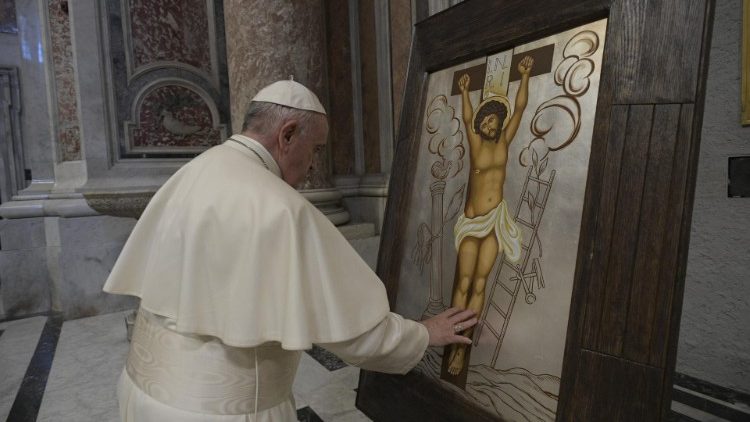
Pope Francis (archive photoPope Francis (archive photo  (Vatican Media)

Cooperation and service at heart of priestly ministry, says Pope

In an address to deacons preparing for the priesthood in the diocese of Rome, Pope Francis highlights faithful cooperation, service to the People of God, and the guidance of the Holy Spirit as key aspects of priestly ministry.

By Christopher Wells

In an address prepared for deacons preparing for priestly ordination, Pope Francis reflected on three aspects of priestly ministry highlighted in the rite of ordination: faithful cooperation with the Bishop, service to the people of God, and guidance by the Holy Spirit.

Although a scheduled meeting was postponed on account of the Pope’s health, the Holy Father’s remarks were published on Saturday by the Holy See Press Office.

Faithful cooperators

Pope Francis reminded them, first of all, that the Church does not ask them primarily to be leaders, but to be cooperators with the Bishops. Priests, he said, are called to be witnesses to the “mystery of communion” that is the Church, especially through fraternity, fidelity, and docility.

In short, he said, priests are meant to be members of a choir, “not soloists”; brothers in the presbyterate and priests for all, not only for a particular group.

Serving the people of God

The second aspect of priestly ministry, the Pope said, is service to God’s people. He noted that the priesthood is rooted in the diaconate, which does not cease after priestly ordination. Priests, he said, are called to be conformed to Jesus, who “did not come to be served, but to serve.”

This service, he continued, cannot be an abstraction, but must be concrete: “To serve means to be available, to renounce living according to one’s own agenda, to be ready for God’s surprise… it is a constant attitude of acceptance, compassion and tenderness.”

Guidance by the Holy Spirit

Finally, Pope Francis insisted that priests must always give “primacy” to the Holy Spirit, who will descend upon them. “If this happens,” he said, “your life… will be oriented to the Lord and by the Lord, and you will truly be ‘men of God’.”

This comes through a “daily anointing” from Jesus “when we stand in His presence, when we worship Him, when we are intimate with His Word.” And this, in turn, the Pope said, “enables us to intercede before Him for the Holy People of god, for humanity, for the people we meet each day.”

Pope Francis concluded his remarks by thanking Rome’s transitional deacons for their “yes” to God, and asking them to pray for him every day.

Sunday, May 21, 2023

5 Transitional Deacons ordained Saturday in New Orleans at St. Louis Cathedral


Servant-leadership is at heart of the diaconate


Pictured above: Receiving the Book of the Gospels during their May 20 ordination to the transitional diaconate are (from left): Deacons Austin Dean Barr, Jorge Eduardo Gomez, Cuong Minh Tran, Paul Oyie and Lawrence Wumya. (Photos by Frank J. Methe and Cheryl Dejoie-Methe, Clarion Herald; additional photos from the day can be viewed on the Clarion Herald’s Facebook page)

By BETH DONZE
Clarion Herald

As five seminarians took their first big step toward becoming priests through their ordination to the transitional diaconate, Jesus’ cautionary words about the humility expected of the clergy – recorded in St. Matthew’s Gospel – echoed through the recesses of St. Louis Cathedral at their May 20 Mass of Ordination.

“You know that the rulers of the Gentiles lord it over them, and the great ones make their authority over them felt. But it shall not be so among you,” Jesus tells his apostles, warning them to not get caught up in any feelings of superiority or clericalism that might arise in their leadership of God’s people.

“Just so,” Jesus goes on to say in the Gospel, “the Son of Man did not come to be served but to serve and to give his life as a ransom for many.”

The calling of transitional deacons to be humble and holy servant-leaders was the joyful theme of the Mass, with the following ordinands promising to conform themselves to the “image of Christ”:

Deacons Austin Dean Barr, Jorge Eduardo Gomez and Cuong Minh Tran will serve as deacons – and, ultimately as priests – for the Archdiocese of New Orleans; Deacons Paul Oyie and Lawrence Wumya were ordained to serve as future priests in the Archdiocese of Tororo in Uganda and the Diocese of Yendi in Ghana, respectively.

Pathways to service

During the homily, Archbishop Gregory Aymond told the men that their reception of Holy Orders and promises to serve those on the margins as ministers of charity meant that they were saying, as Jesus did, “‘I come to serve, and not to be served.” The archbishop encouraged the new deacons to say a prayer at the end of each day: “Jesus, I come to serve and not to be served – how well did I do today?”

Archbishop Aymond said the five candidates had heard “Jesus whispering to their hearts and saying, ‘Come follow me. I need you.’” Yet, despite having embraced the same vocation, their journeys of discernment were unique, the archbishop observed:

• For Deacon Barr, a lifelong parishioner of St. Anselm Church in Madisonville, a three-day retreat combining silence, adoration and prayer ignited his vocation to the priesthood when he was a freshman at the University of Louisiana in Lafayette. That experience, which shifted his career plans away from becoming an occupational therapist, invoked in him “a divine feeling of really being loved.” Deacon Barr began discerning a potential priestly calling through daily Mass, confession and eucharistic adoration. Deacon Barr will spend his four-month transitional diaconate internship at St. Dominic in New Orleans.

• The trauma, at age 12, of seeing his twin brother Miguel get struck by a car in a near-fatal accident jump-started the prayer life of Miami-raised Deacon Gomez. He began praying the rosary for the first time, discovering “an intimate peace” and the lifting of his fear and anxiety. The gift of a youth Bible from a Catholic priest – and the priest’s suggestion to read the Gospel of St. Matthew and the Acts of the Apostles – led to Deacon Gomez’s more active participation in his church parish as an altar server, youth group and St. Vincent de Paul member. In college, when Deacon Gomez learned that the Archdiocese of New Orleans was in need of priests who could speak both English and Spanish, he answered the call. He has been assigned to St. Margaret Mary in Slidell for his transitional diaconate internship. 

• Deacon Tran’s path to Holy Orders began at age 7, while attending the home Masses celebrated by his visiting uncle, a Catholic priest based in Texas. His vocation was nurtured in his hometown of Marrero – at St. Agnes Le Thi Tranh Church, Visitation of Our Lady Elementary School and Archbishop Shaw High School. Deacon Tran gained vocational clarity when Archbishop Aymond held up his late pastor’s chalice and asked the congregation, “Who will follow in his footsteps?” Deacon Tran’s vocation was further bolstered on a visit to his priest-uncle, during which he accompanied his uncle on visits to the sick and was exposed to the priest’s daily schedule of adoration, Mass and the Liturgy of the Hours. Deacon Tran will serve his transitional diaconate internship at St. Catherine of Siena in Metairie.

• Ugandan-born Deacon Oyie’s yearning to serve the church surfaced in 2014, during a 150-mile pilgrimage to the Shrine of St. Charles Lwanga and the 22 Ugandan Martyrs. Deacon Oyie has been assigned to St. Benilde in Metairie for his transitional diaconate internship.

• The strong Catholic marriage modeled by his parents, along with his mother’s continued faithfulness after being widowed in 2017, inspired Deacon Wumya’s vocation to the priesthood while growing up in a predominantly Muslim community in Ghana. Deacon Wumya was touched by the sight of villagers having to bless themselves with ashes on Ash Wednesday, due to the shortage of Catholic priests in his homeland. He will spend his transitional diaconate internship at St. Joseph Church and Shrine in Gretna.

Rite explained

The archbishop told the congregation that during the forthcoming Rite of Ordination, he would pray over the candidates, lay hands in them and call on the power of the Holy Spirit to consecrate them into the office of the diaconate – just as Jesus’ apostles did when they realized they needed men of great faith and humility who were willing to assist them at the altar and serve needs in the community. 

“Two thousand years later, we do exactly the same thing. Priests and bishops today need co-workers,” Archbishop Aymond said, thanking the five ordinands for answering “a radical yes” to God’s calling to serve the church.

After the five men were called to the foot of the sanctuary, Father Colm Cahill, director of vocations for the Archdiocese of New Orleans, testified that each had been “found worthy” of being ordained to the diaconate by those who had formed them in seminary and in the community.

Next, the five Elect promised Archbishop Aymond to be deacons of “humble charity” as they assisted priests and the Christian people; to be proclaimers of the faith in word and deed; and to embrace the gift of celibacy as a sign of – and aid to – their singular  focus on Christ and his church.

Because one of their diaconate responsibilities will be to lead the community in prayer, the ordinands promised to gird themselves in the daily praying of the Liturgy of the Hours “with and for the people of God” and “for the whole world.” Each also pledged obedience to their episcopal leaders, both present and future.

“May God, who has begun the good work in you, bring it to fulfillment,” the archbishop prayed.

As a sign of their submission to God’s will and to invoke the help of God and the saints in carrying out their service to “all the troubled and afflicted,” the ordinands prostrated themselves on the sanctuary floor as the Litany of Supplication was sung. After rising to their feet, they kneeled before Archbishop Aymond, one at a time, for a silent laying on of hands.

The archbishop recited the Prayer of Ordination, which alluded to the ancient roots of the diaconate. In the early days of the church, the apostles, guided by the Holy Spirit, appointed “seven men of good repute” to help them in daily ministry and at the eucharistic table, so that priests could devote themselves more fully to prayer and preaching of the word.

Calling on the Holy Spirit, Archbishop Aymond prayed that “every evangelical virtue” would flourish in the new deacons – unfeigned love, concern for the sick and poor, unassuming authority, innocence and spiritual discipline – and that their imitation of Christ would encourage others to do the same.

As outward signs of their new leadership roles, the deacons were vested with the stole and dalmatic. Each received a leather-bound Book of the Gospels, while being instructed by Archbishop Aymond to “believe what you read, teach what you believe and practice what you teach.”

Hands-on internships

In July, the newly-minted transitional deacons will begin a four-month internship at their assigned church parish, followed by a final semester of study at Notre Dame Seminary in anticipation of their ordination to the priesthood in June 2024.

The internships will give the transitional deacons hands-on experience in being prayer leaders, assisting the priest at Mass, taking Communion to the sick and dying, baptizing, witnessing marriages and burying the dead.

Each deacon took time after the Ordination Mass to reflect on what they had experienced:

• Deacon Barr, 26, said one of the most “emotional” moments of the day took place early on, when he saw his friends and family in the pews during the entrance procession. As a deacon-intern at St. Dominic, “the thing I’m most looking forward to is helping Father (Wayne Paysse) with the liturgies – doing adoration, benediction,” he said. “And it will be interesting to learn how a big and thriving parish like St. Dominic runs.”

• The bilingual gifts of Deacon Gomez, 27, will be called on to serve the growing Hispanic community at St. Margaret Mary. He said he felt all the saints in heaven “cheering us on” during the Litany of Supplication, including the support of his favorite saint, St. Josemaria Escriva – the  20th-century Spanish priest who founded Opus Dei. “St. Josemaria was the one who always promoted the universal call to holiness that reminds all of us to be saints,” Deacon Gomez said.

• Deacon Tran, 24, said he is looking forward to putting his seven years of seminary academics into action, especially his new opportunities to preach homilies and lead Scripture and sacramental seminars as a deacon-intern at St. Catherine of Siena. While lying prostrate on the cathedral floor during the Litany of Supplication, he said he felt “an outpouring.” Emptying oneself, noted Deacon Tran, “is the symbolism of the whole diaconate – celibacy, giving up my whole life for the people of God.”

• Deacon Oyie, 27, and Deacon Wumya, 33, will return to their respective Catholic communities in Africa following their graduation from Notre Dame Seminary and ordination to the priesthood in 2024.

Deacon Oyie said he wants to be a “sign of hope” when he ultimately becomes a priest for the Archdiocese of Tororo, Uganda. As a deacon-intern at St. Benilde, he hopes to focus on families. “The family is the beginning of everything in the (wider) family of the church – everything starts from there," he said.

Deacon Wumya, a future priest for his native Diocese of Yendi, Ghana, said he could sense “something moving in me” during the Litany of Supplication and the laying on of hands. “I’m going to dedicate myself as a minister of service – that’s my identity; that’s what I’ve been called to do,” he said, looking ahead to his diaconate internship at St. Joseph Church and Shrine on the Westbank. 

New responsibilities

Archbishop Aymond told the deacons that they were taking on a “three-fold” ministry:

• As ministers of charity, they are expected to actively seek out where the church “needs to go” by ministering to those on the margins, such as the poor, the sick, those hurt by racism, prisoners on death row and immigrants seeking a new life.

“I like to say that the deacon is called to be (the church’s) conscience,” summed up the archbishop.

• Secondly, deacons are to be “the voice of Christ” through their teaching and preaching of the Word. Archbishop Aymond reminded them to proclaim the Gospel “with great enthusiasm and integrity,” and to teach not their “own message,” but God’s, through prayerful preparation of their homilies.

• The deacons’ other role involves assisting the priest at Mass and with the sacraments, distributing holy Communion to the sick and dying, baptizing, witnessing marriages and burying the dead. 

“All these things you will do in the name of Christ,” Archbishop Aymond told the new deacons, encouraging them to find strength in their promises of daily prayer, obedience and chastity – “so you not only preach the Gospel, you are the Gospel; you are the Good News!”
Wednesday, May 17, 2023

Westbank man and Shaw graduate (my alma-mater) to be ordained Transitional Deacon for Archdiocese of New Orleans


Uncle modeled the priesthood


Cuong Minh Tran

Age: 24

Home parish: St. Agnes Le Thi Thanh, Marrero

Diaconate internship: St. Catherine of Siena, Metairie

***

By BETH DONZE
Clarion Herald


Cuong Tran was fairly certain he wanted to be a priest from age 7, drawn in by the at-home Masses celebrated by his visiting uncle-priest, Mother of the Redeemer Father John Tran.

“It was a very powerful feeling,” said Tran, 24, recalling the intimate liturgies held at his paternal grandparents’ West Bank home. “My uncle would come hang out with us, and then you’d see him at the house Masses with the chasuble on and having the respect of everyone. It was Jesus, right there in the living room!

“My uncles and aunts would always tease me and my cousins about who would join the priesthood. I was always the one who said, ‘I’m not joking! I’d like to be a priest!’”

Parish priest mentored him

Other than one post-Katrina year split between South Dakota – the home of his maternal grandparents – and Texas, Tran grew up in Marrero, graduating from Visitation of Our Lady Elementary School and Archbishop Shaw High School.

Although he was an altar server at St. Agnes Le Thi Thanh Church beginning in third grade and helped out at the parish’s school of religion as an older teen, Tran said six years of tutelage from his late pastor, Father Joseph Van Pham Tue, had the biggest impact on his vocation. Father Tue would patiently explain salient points of the faith to young Tran during quiet moments such as when the two were driving to the cemetery to assist at funerals.

“He wouldn’t water things down; he would say everything is about unity in the Catholic faith,” Tran said, recalling one of those unifying threads of faith taught to him by Father Tue.

“The priest always brings holy water with him, because even the burial place is blessed,” Tran said. “He was a good teacher. He had a lot of heart, too. He would hear confessions before Mass, and Mass would sometimes be about five or 10 minutes late because he wouldn’t allow the (confession) line to be stopped.”

At Shaw’s freshman orientation, when a teacher asked Tran what he wanted to do with his life, he wasn’t afraid to respond “Become a priest!” in front of his peers. Leadership roles in the band (as a saxophonist), Quiz Bowl, Mu Alpha Theta, chess club and peer ministry helped him overcome his shyness, and he explored his vocation at the residence of Shaw’s Salesian brothers and priests.

“I began attending their 5 a.m. (daily) Mass, but that only lasted two weeks,” Tran said, smiling. “But it exposed me to morning prayer.”

The 2013 Funeral Mass of Father Tue, his priestly mentor, brought him some vocational clarity.

“Archbishop Aymond held up (Father Tue’s) chalice and he said, ‘Who will follow in his footsteps?’ That was a very powerful thing for me,” Tran said. “In that moment, I realized this is what it means to be a priest – to give over your life.”

Still, as Tran neared his 2016 graduation from Shaw and applied to St. Joseph Seminary College in Covington (“St. Ben’s”), “it was a scary feeling,” he admitted.

“There was so much uncertainty because I had good grades, I had a 33 on the ACT,” he said. “So, should I try to get a full ride (to a traditional four-year college) and then join seminary after that as a backup plan, in case it doesn’t work out?”

Requesting “a sign from God,” Tran spent a “Come and See” weekend at St. Ben’s and dated for six months. His “sign” finally came when his mother gave him a plane ticket to Amarillo, Texas, to spend two weeks with his Uncle John, the priest.

“That was very fruitful, because I was actually living with my uncle, whereas before, I would only see him (in Louisiana) when he was on vacation. I could see him on the job, in the intense life of prayer,” he said.

Tran joined his uncle for eucharistic adoration, the Liturgy of the Hours and daily Mass, and accompanied him on home and hospital visits to the sick, waiting in another room while confessions were being heard.

“There were 20 people waiting for confession in the hallway of the hospital and he left me with them! I would stand there awkwardly, and I didn’t know what to say,” he recalled. “Seeing him interact so easily with people really came from prayer – his ability to relate to people in those emergency situations.”

Jesus lends a hand

Four happy years at St. Ben’s led Tran to enter Notre Dame Seminary, where wearing a clerical collar meant he was expected to assist in the day-to-day life of the wider archdiocese. Tran’s seminary years also introduced him to the closely-knit fraternity of local Vietnamese-American seminarians and priests, who gather at a layperson’s home on Friday nights to enjoy open house-style food, conversation and pastoral support.

During his upcoming internship as a transitional deacon at St. Catherine of Siena Parish, Tran is looking forward to putting his seven years of seminary academics into action, especially his new opportunities to preach homilies and lead Scripture and sacramental seminars.

Bolstering him through it all is the moment when St. Peter is asked by Jesus to take a “leap of faith” – to walk on water. When Peter takes his eyes off of Jesus, he begins to sink.

“There’s that beautiful image at St. Patrick’s Church on Camp Street where you see Jesus’ hand grasping for Peter,” Tran said. “Seminary, lots of times, feels like that. ‘Where am I going? I’m going down (in the water).’ Then, there’s that moment in prayer where God says, ‘I got you!’”

Originally from Miami he will be ordained a Transitional Deacon for the Archdiocese of New Orleans


God comforted me in trauma


Watching two cars hit and almost kill his 12-year-old twin brother Miguel while he ran home from school was the day Jorge Gomez experienced the power of prayer. Gomez, originally from Miami, Florida, will be ordained a transitional deacon for the Archdiocese of New Orleans on May 20 at St. Louis Cathedral.

Alone at the hospital before his mother, Sayda, a housekeeper and devout Catholic, arrived, a traumatized Gomez took his mother’s advice to pray when moments in life scare him.

“I began to pray the rosary on my own for the first time,” he said. “I may have forgotten the order of the prayers, but at that moment of prayer, I had encountered an intimate peace. My fear and anxiety started to go away.”

Gomez recalled bargaining with God to save Miguel.

“I told the Lord, ‘I will do anything you want if you don’t take away my brother. If this is you interacting with me, please don’t take Miguel,’” Gomez said. “I heard a loud voice saying, ‘Come to me.’ It was so loud, and I thought it was the doctors or nurses screaming it out, but none of them were there. … It shook me. That sense of peace brought a reassurance that everything would be OK.”

Within a month, his brother fully recovered.

“God works miracles, and that was one of them,” he said.

He brought the experience to a priest at St. Michael the Archangel Catholic parish and was told, “Jorge, it sounds like God was asking you to get to know him.” The priest handed him a youth Bible and said to start reading the Gospel of Matthew and the Acts of the Apostles.

“It was an immersion of the Word that deepened my relationship with the Lord,” he said.

Gomez then dedicated his life to the parish across the street from his house, becoming an altar server, youth minister and St. Vincent de Paul Society member. His youngest brother, Elbertt, now 18, remains an altar server.

After high school, Gomez entered St. John Seminary in Miami, but he and the faculty realized he was too young and he went to college for two years, thinking he might be a teacher or philosopher. Yet, the call to the priesthood remained.

In his quest for a diocese that needed a bilingual (Spanish/English) priest, former seminary classmate, Father Dan Darmanin, now pastor of St. Margaret Mary in Slidell, recommended that he study at Notre Dame Seminary in New Orleans.

“I’ve been here almost seven years, and it’s been a wonderful experience,” Gomez said, “Even though it’s a big city, it really is a small town. ... People love their priests in the South, and I pray that I am able to dedicate myself to them wholeheartedly.”

Seminary formed him
Gomez is grateful for his seminary education that formed him to be “Christ the Man … who displays virtue by word and action, but also follows the Lord’s will … and cooperates with his grace.

“In seminary, you learn gradually to be that humble, kind, holy priest for the people of God because they really do deserve it.”

The seminary also encourages seminarians to be critical thinkers, using the knowledge of philosophers who help better articulate the “truths of the faith.”

Gomez also has learned liturgy by being master of ceremonies at the seminary, and he enjoys preaching, crediting the seminary’s homiletics teachers, Dominican Father Phillip Powell and Father Kurt Young.

“Their methods of preaching, the art of it and turning minds and hearts to God are wonderful,” Gomez said.

He loves sharing the tradition and communion of the saints since “we’re all called to be saints through the ordinary circumstances of our lives” and admires Opus Dei founder St. Josemaria Escriva for being “a priest who had a deep love for the Lord reflected in his life as he catechized the faithful. He was a great teacher, preacher and spiritual master.”

Since losing his mother 18 months ago at age 58, Gomez gained empathy for grieving families. He overcame her death and continued seminary studies through prayer, grace and the comfort and support of family, friends, priests and Archbishop Aymond.

“That helped me move forward,” he said. “My brothers told me my mom would want me to continue to be a Catholic priest.”

Gomez is assigned to St. Margaret Mary, his home parish that’s in need of a Spanish-speaking priest for its growing Hispanic community. His Spanish fluency will help Father Darmanin by preaching at Spanish Masses. He knows Father Darmanin will challenge him in many ways.

“I want to be a good spiritual father, always caring for the people, finding out their spiritual needs by listening to them and using different ways to bring them close to the Lord,” he said.

Gomez expects his brothers, family and friends from Miami at ordination Mass.

“The Lord has called me this far in life, and I’ll be thinking about all the people who have helped me along the way and also my mom,” Gomez said. “I hope she is watching front row and center – seeing one of her sons becoming a deacon.”

cbordelon@clarionherald.org

Local Northshore area man to be ordained a Transitional Deacon this Saturday for the Archdiocese of New Orleans


Retreat transformed my life


By Peter Finney Jr.
Clarion Herald

Austin Barr, a lifelong parishioner of St. Anselm Parish in Madisonville, grew up in Mandeville and later moved with his family a mile down the road to Madisonville. He attended Mandeville High School, which had a large number of Catholics among its coed student body of 2,000.

But, until Barr went to the University of Louisiana (UL) in Lafayette to study kinesiology – he had thought he might one day become an occupational therapist like his mom – he had never been on an extended Catholic retreat.

“When I was in high school, I think our confirmation retreat was a daylong thing, but I had never done an intensive retreat,” Barr recalled.

What happened over the next three days of silence, adoration and prayer at the retreat hosted by Our Lady of Wisdom, UL’s Catholic Student Center, transformed his life. For the first time in his life, he felt God probing him to consider the priesthood.

“It was three days of silence, and it was called a spiritual boot camp,” Barr said. “It was a very powerful experience on the retreat. It was personal prayer, adoration and just an experience of God’s love, just the divine feeling of really being loved. The call came almost immediately after that, but it took some time because it came and then I didn’t really know what to do with that.

“It was first and foremost an affirmation of love, that I was loved. And then it was like, ‘Oh, that feels good,’ and then it was, ‘You’re loved, and you were created to be a priest.’ It didn’t bring any fear or nervousness or anxiety. That came later when I started looking more in depth into what that entailed.”

Active in his faith

Barr had remained very active in his faith as a teenager. Even at his public high school, he recalled former principal Bruce Bundy allowing time during morning announcements for students to engage in quiet reflection.

“We would have moments of silence, moments that were kind of prayer when major things were going on in the world or in our community,” Barr said. “Most of my closest friends were Catholic, and a lot of them went to Mary Queen of Peace, which was right across the street.”

The church on the UL campus had a welcoming rhythm for study and even offered a 9 p.m. Sunday Mass to accommodate students’ busy schedules.

“But in my freshman year, the faith wasn’t necessarily the most animating principle of my life,” Barr said. “As I got more involved in going to Mass and hearing the preaching, through the invitation of friends, I learned more and more. Daily Mass became more of a regular occurrence. Confession, adoration and the sacramental life became a bigger deal for me.”

Barr said his experience at Our Lady of Wisdom, which was directed for 11 years by Father Bryce Sibley, nurtured and strengthened his faith. In 2022, Father Sibley left Our Lady of Wisdom to become a professor of moral theology at Notre Dame Seminary.

“He followed me here,” Barr said jokingly of the priest who had counseled him about considering the seminary.

It took about two years from the initial “call” on his freshman retreat for Barr to begin acting on the possibility. He had told some close friends that he was considering it, and his ongoing spiritual conversations with Father Sibley and Father René Pellessier helped confirm it.

He contacted Father Kurt Young, then the vocations director of the Archdiocese of New Orleans in January 2018, and enrolled eight months later.

As his ordination to the transitional diaconate approaches, Barr said he has a sense that he is following God’s will.

“My closest friends who really know me well have just noticed within me a kind of joy building up,” he said.

Even though the prospect of preaching is a bit “nerve-wracking,” Barr said he is looking forward to delivering his first real homilies.

“It’s not necessarily the public speaking aspect but just the idea that people will be really listening,” he said. “I’m not used to people listening to me all the time, especially in the first three minutes. It’s good to feel the weight of that. There’s a good, kind of healthy balance to it. I just look forward to letting the Lord work through me.”

pfinney@clarionherald.org

Monday, May 1, 2023

Vocations and Catholic vitality in Vietnam


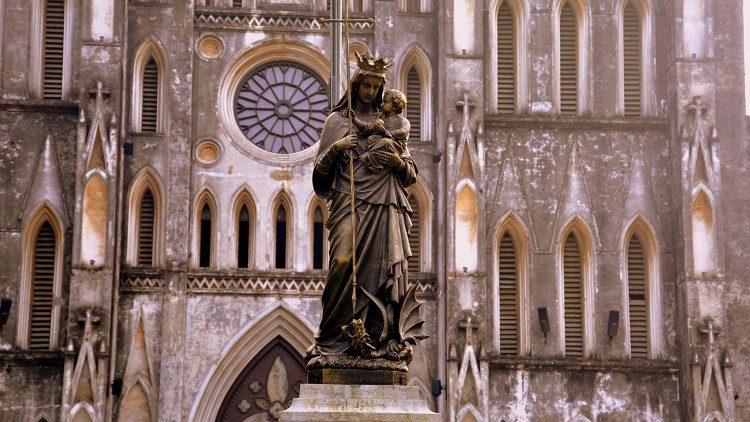
Cathedral of St. Joseph in Hanoi, VietnamCathedral of St. Joseph in Hanoi, Vietnam 

Vietnam celebrates Vocations Sunday with diaconate ordinations

The Church in Vietnam rejoices as eight men are ordained to the diaconate in the Archdiocese of Hanoi, ahead of World Vocations Day.

By Devin Watkins

As the Church celebrated the World Day of Prayer for Vocations on Sunday, Catholics in Vietnam’s capital expressed their support for eight men who recently took an important step on their journey toward the priesthood.

Archbishop Joseph Vu Van Thien had ordained eight new transitional deacons for his Archdiocese of Hà Nội.

He celebrated the Mass at Hanoi’s Cathedral of St. Joseph on 26 April, and presided over the ordination rite.

In his homily, Archbishop Van Thiên spoke to the new deacons about the three orders of the clerical state: diaconate, priesthood, and episcopate.

He pointed out that the three orders “are not titles or honors that indicate privilege, but tasks in service.”

“You are called to serve the Church and serve your brothers and sisters.”

Papal message for Vocations Day

In his message for the 60th World Vocations Day, Pope Francis said that there can be no vocation without mission, since Christians find true happiness and self-realization in offering others the new life we have discovered in Christ.

“Our mission finds expression in works of material and spiritual mercy,” said the Pope, “in a welcoming and gentle way of life that reflects closeness, compassion and tenderness, in contrast to our throwaway culture and general indifference.”

The Holy Father also pointed out that the Lord’s call to the ordained ministry represents a unique mission within the vocational call of all Christians to bring the Gospel to others.

First gathering since outbreak of pandemic

Meanwhile, the Archdiocese of Hanoi recently celebrated its first large-scale gathering of young people after the Covid-19 pandemic.

Some 5,000 young Catholics took part in the 7th Diocesan Youth Day on Sunday, 23 April.

They gathered under the theme of “Mary rose and went in haste”, which will form the background for World Youth Day in Lisbon in early August.

At the event in Hanoi, Archbishop Van Thiên celebrated Mass and led a half-hour of Eucharistic Adoration.

Seven groups of young Catholics wrapped up the meeting with artistic expressions of what it means for them to walk together with Mary in their lives.

Saturday, May 1, 2021

Deacons from 13 countries ordained today at St. Peter's in Rome


Saint Peter's BasilicaSaint Peter's Basilica 

Cardinal Tagle: Deacons are called to be living signs of Jesus

Cardinal Luis Antonio Tagle ordains 24 deacons from 13 countries during Mass in Saint Peter’s Basilica

By Vatican News staff writer

Early Saturday afternoon Cardinal Luis Antonio Tagle presided over Mass where he ordained 24 deacons studying at Rome’s Pontifical Urban College, a major seminary under the care of the Congregation for the Evangelization of the Peoples headed by him.

Congratulating and thanking them for their affirmative response to the Lord’s call, he also paid tribute to the support and formation received from family, their home dioceses, their teachers and seminary community. The 24 deacons come from Camerun, Benin, Senegal, Nigeria, Tanzania, Uganda, South Sudan, Zimbabwe, India, China, South Korea, Indonesia, and Papua New Guinea, and give "witness to the universality of the Church and its mission”.

In his homily, Cardinal Tagle recalled the Vatican II constitution Lumen Gentium which describes the role of the deacon “in service of the liturgy, of the Gospel, and of charity”, and quoting Saint Polycarp that they "be merciful, diligent, walking according to the truth of the Lord, who became the servant of all."  He underscored that “deacons are called to be living signs of Jesus, whose lordship is expressed in humble service to all”. With the grace of God, they remind Christians of “our common call to serve as Jesus did.”

Recalling the Gospel reading, where Jesus says,"Remain in me, as I remain in you...I am the vine, you are the branches...without me you can do nothing", Cardinal Tagle noted the special meaning this has today for the new deacons. He said it is not enough to know that Jesus lives in us, but that "we must choose to live and remain in him", so we may “become like him in love and service”. He encouraged the new deacons to “show the world the greatness of humble service, which is the fruit of living in Jesus.”.

In conclusion he, entrusted them to the care and protection of Mary, our Mother, and of Saint Joseph, “both humble servants, who lived for and in Jesus.”

Tuesday, April 20, 2021

Priests, deacons and religious; serving God by serving God's people


Mindful of history, priests, deacons and religious minister in the tradition of service

 
Deacon Villareal
Deacon Rudy Villarreal helps Friends of Los Niños. Courtesy photo

According to recent statistics, there are some 36,000 priests, 46,000 men and women religious and 19,000 permanent deacons serving in the United States today.

Each of these links to an impressive history of service to the people of God through their respective vocations. They are the contemporary heirs to a tradition of dedicated men and women dating even to biblical times.

The priesthood

The priesthood was established by Christ through his 12 apostles, upon whom he conferred authority to consecrate bread and wine into his true body and blood in the Eucharist. He further gave them authority to baptize and to forgive sins, and the mandate to “make disciples of all nations” (Mt 28:19).

With Peter as their head, the apostles appointed successors, passing on their authority through the laying on of hands in what would become the Sacrament of Holy Orders. As the young Church grew, a hierarchy of bishops and priests (“presbyters” or “elders” in Scripture) developed inevitably to provide sacraments and apostolic leadership to the ever-expanding Christian community.

Read more vocation articles here.

Through the centuries, every Catholic priest has been ordained by a bishop who traces his authority in an unbroken line to the original apostles — and ultimately to Christ — through apostolic succession, received through holy orders. Priests continue Christ’s ministry by offering his love, mercy and presence through the sacraments he established to serve his faithful until the end of time.

Fr. Wagner

“To minister to the Lord and his people in this way is very humbling, especially as I consider the hundreds of thousands of priests and religious — many of whom are saints — who have gone before us. Their examples inspire me in my own vocation and encourage me to be that example to the men and women of today.”

— Father Matt Wagner

Father Matt Wagner, a priest of the Diocese of Madison, Wisconsin, who pastors St. Olaf Parish in Mabel and St. Mary in Caledonia, told Our Sunday Visitor he considers it “a privilege as a priest of Jesus Christ to carry on the mission to ‘feed his lambs’ and ‘tend his sheep,'” referring to Christ’s words in John’s Gospel (21:15-17).

“In the Eucharistic sacrifice, in our visits to the sick and the homebound, and in the everyday interactions with those God has placed in our midst, we partake in the work of the master, apart from whom we can do nothing,” said Father Wagner. “I’m humbled to be able to witness firsthand how Christ is still working in this day and age, constantly drawing humanity to himself.”

He said he is “in awe” that God has chosen him to his redemptive work — not only through his baptismal calling but also in his priestly vocation.

“To minister to the Lord and his people in this way is very humbling, especially as I consider the hundreds of thousands of priests and religious — many of whom are saints — who have gone before us,” he said. “Their examples inspire me in my own vocation and encourage me to be that example to the men and women of today.”

The diaconate

The order of deacons appears first in Acts, where the apostles are so occupied caring for the widows and orphans that they don’t have enough time for preaching and teaching. They select seven men as deacons, lay hands on them and assign them to these ministries of service.

Soon, it seems, the deacons are preaching and teaching, too — and doing it so effectively that one deacon, Stephen, becomes the first recorded Christian martyr, stoned by a crowd as Saul, the future St. Paul, looks on approvingly.

Their role became so vital that, already in the second century, St. Ignatius of Antioch writes that deacons “are not servants of food and drink, but ministers of the Church of God” and that, along with priests and bishops, “you cannot have a church without these.”

The diaconate later became one of the “major orders,” a role to which a man would be ordained as a final step before his ordination to the priesthood, and was under the discipline of celibacy in the Roman church. The idea of deacon as a “terminal vocation” faded.

Even today, men are ordained transitional deacons and serve briefly in that capacity before priestly ordination. With the late 1960s, however, came the restoration of a permanent diaconate open to both married and celibate men.

Deacon Rudy Villarreal of the Diocese of Austin, Texas, draws inspiration from the account of the first deacons in Acts (6:1-7).

“As a deacon, I know I am called to serve by way of the Word of God. My love for Christ Jesus, who is the Word Incarnate, motivates me to answer his unmerited sacrificial gift with my service,” Deacon Villarreal told Our Sunday Visitor. “For me, this is a foundational ground.”

His diaconal ministry, he said, begins at home. “Through my experience as husband to my lovely bride, Katrina, and father to my four children, I experience the God who is love. Without love, nothing I do as a deacon — nothing I do as a man — matters.”

Among his joys is the mission-trip program he developed with Friends of Los Niños, a nonprofit based in Plano, Texas. He and Katrina provide formation to participants and then lead trips to Honduras, where they provide education, support, and empowerment to orphans and the poor in several communities.

“My volunteer work with Friends of Los Niños is an excellent example of what it means to be a deacon rooted in the service to widows and orphans,” said Deacon Villarreal. “Living an authentic Christian life as a deacon should be evidenced in your ministry to your family and to all the souls you encounter.”

Consecrated life

The epistles attest to how Christian widows in the early Church dedicated themselves to prayer and good works. In time, they formed small communities. Later came desert hermits and ascetics, who attracted disciples seeking holiness and spiritual direction, generally modeled upon the evangelical counsels of poverty, chastity and obedience.

These communities adopted precepts for their community life, such as the early “rules” written by St. Basil and St. Benedict, and monasteries and convents began to multiply. Vows of consecration became the norm.

By the Middle Ages, in addition to their commitment to prayer and labor, many religious communities were heavily invested in ministries of education, hospitals, caring for the poor and the missions. Religious orders by then had become formalized, requiring charters and papal approval, and members would follow the charisms of their founders.

Sr. Mary Francis Cannon

Sister Mary Frances Cannon is a Franciscan sister. Courtesy photo

Consecrated life today has countless diverse expressions — active and contemplative, religious and secular, each living the Gospel in radical ways and fulfilling good works and ministries. As the Catechism states, consecrated life “in its various forms is called to signify the very charity of God in the language of our time” (No. 926).

Franciscan Sister Mary Frances Cannon, who converted to Catholicism because of her attraction to the Eucharist, draws inspiration from her order’s namesake.

“St. Francis was convicted that men and women are beings created by God in the image and likeness of God and redeemed through the incarnation of the love of God,” Sister Cannon said. Therefore, “the more human we become, the more Christ-like we become.”

She cites another Franciscan sister, St. Marianne Cope, who provided care to the lepers on the Hawaiian island of Molokai in the late 1800s. “Her life of following in the footprints of Jesus has been an inspiration to many, including myself,” she said.

Now an elementary religion teacher in the Diocese of Charleston, South Carolina, Sister Cannon spoke of the “privilege” to serve in various ministries in the course of her vocation — including parish pastoral associate, caring for street people and the homeless, visiting those in prison, taking the Eucharist to the homebound and hospitalized, and leading Scripture studies.

“God has blessed me with so many wonderful opportunities to serve him by serving my brothers and sisters,” she said. “I love people, especially the poor and most vulnerable. Today, I get to talk about God’s extravagant love all day.”

Gerald Korson writes from Indiana.