Showing posts with label World. Show all posts

Tuesday, June 10, 2025

A 10-year PEW Report shows Muslim faith growing, the rise of "nones" and Christianity not keeping pace with world population


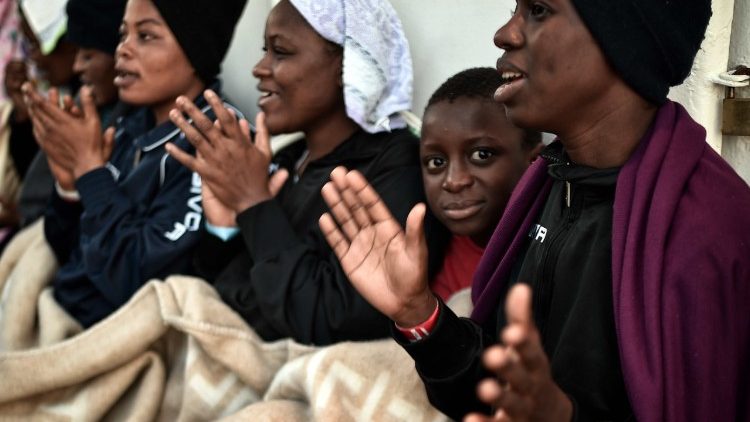
Christian communities continue to flourish in Sub-Saharan AfricaChristian communities continue to flourish in Sub-Saharan Africa  (AFP or licensors)

The changing face of faith: Pew report on global religious landscape 2010-2020

The just-published report issued by the Pew Research Centre on its findings on how the world’s religious landscape has evolved over the past decade highlights demographic growth, shifting affiliations, and rising secularism. It notes that Christians remain the world’s biggest religious group, although Muslims are growing fastest.

By Linda Bordoni

In a world marked by rapid social, cultural, and demographic shifts that affect the landscape of religion, the Pew Research Centre’s latest report provides a comprehensive overview of how religious affiliations and demographics have transformed over the past decade, from 2010 to 2020.

A growing and diversifying population

The report highlights that the global religious population has grown significantly over the last ten years, from approximately 5.9 billion in 2010 to nearly 6.9 billion in 2020. This increase is largely driven by demographic trends in regions such as sub-Saharan Africa, where high birth rates and vibrant religious communities continue to flourish. The expansion of the Muslim population, which rose from 23.2% to 24.1% of the world’s total, underscores the growing importance of Islam on the global stage. Meanwhile, while Christianity remains the largest faith, encompassing about 31.2% of the world’s population, it lags behind by not keeping pace with global population growth.

It is interesting to note that Christians are the world’s most evenly distributed group with a large presence in many regions, and that the vast majority of Muslims around the world are younger than 50; Buddhists, on the other hand, are older than other religious groups.

Shifts and divergences across continents

Despite overall growth, the report also paints a picture of divergence across continents. Europe, in particular, continues to experience a decline in religious identification, with a notable rise in those who consider themselves religiously unaffiliated—sometimes called “nones.” This group now accounts for roughly 17% of the European population, reflecting broader trends of secularization and changing social attitudes. North America, while still maintaining high Christian adherence, has seen a modest increase in secular and non-religious identities, signaling a shift in how faith is experienced and expressed.

Emerging trends and movements

The decade has also witnessed the rise of vibrant religious movements, especially within Christianity. Pentecostal and evangelical communities have expanded rapidly in Africa and Latin America, fueling a renewed energy within these traditions. In many regions, migration and globalization have contributed to increased religious diversity, fostering a more pluralistic society. Conversely, some areas have experienced religious revivals, with traditional practices gaining renewed importance amidst rapid social change.

The rise of the religious “Nones”

One of the most notable trends is the growth of those who identify as having no religious affiliation. Globally, this group is expanding, particularly in developed nations, as secularization continues to influence social attitudes. This shift, the Pew Research Centre notes, poses profound questions for religious institutions and policymakers about the future role of faith in public life.

In conclusion, the Pew report highlights that our world is becoming both more diverse and more complex in terms of religious identity. As populations grow and shift, so too do how people find spiritual fulfilment and engage with their communities, calling on the Church and faith communities worldwide to give renewed impetus to dialogue and to foster deeper understanding of the spiritual landscape in order to better meet its needs.

Sunday, April 6, 2025

Pope Francis makes unexpected appearance at Mass for Jubilee of Sick


Pope Francis greets the pilgrims gathered in St Peter's Square for the MassPope Francis greets the pilgrims gathered in St Peter's Square for the Mass  (VATICAN MEDIA Divisione Foto)

Pope: 'The sickbed can become a holy place'

In his homily for the Jubilee of the Sick and Healthcare Workers, Pope Francis says that "The sickbed can become a holy place, where charity burns away indifference and gratitude nourishes hope.”

By Francesca Merlo

In his homily for the Jubilee of the Sick and Healthcare Workers, taking place on the 5th and 6th of April, Pope Francis drew inspiration from the prophet Isaiah.

In his sermon, which was read aloud by Archbishop Rino Fisichella,  Pope Francis invited the faithful to contemplate the situation of the Israelites in exile: “it seemed that all was lost”, the Pope said. However, he continued, it was precisely in their moment of trial that a new nation was bring born. 

Pope Francis compared this experience to the woman in the day's Gospel reading, who had been condemned and ostracised for her sins. Her accusers, ready to cast the first stone, were halted by the quiet authority of Jesus who told her “Go your way. You are free. You are saved”.

In comparing the stories, Pope Francis says that God does not wait for our lives to be perfect before he intervenes in them. Rather, said the Pope, “He enters into our wounds. He knocks at our door, not despite our suffering, but because of it”.


Illness and care

Turning then to those who are ill and to all those who assist them, the Pope acknowledged the deep suffering that illnesses can bring. “It can make us feel like the people in exile… or like the woman in the Gospel,” he said. But, he continued, it can also be a place of encounter, a “school” in which we learn to love and be loved with humility and grace.

Pope Francis then reflected on his own illness, and consequent dependence on others, describing it not as a burden but as a lesson in trust, gratitude and hope. “Let us not push back”, he said, adding: “Let us allow ourselves to be loved”.

Pope Francis then turned to the healthcare professionals, thanking them for their work and encouraging them to receive every patient as an opportunity to renew their sense of humanity.  “The sickbed can become a holy place,” he said, “where charity burns away indifference and gratitude nourishes hope.”

Call to compassion

Bringing his address to a close, Pope Francis recalled the words of his predecessor Pope Benedict XVI, who reminded the Church that “the true measure of humanity is determined in relation to suffering”. A society that turns its back on the weak, he warned, becomes cruel and inhuman.

Finally, Pope Francis urged all those present to resist the temptation to marginalise and forget those who are elderly, ill, or weighed down by the hardships of life. “Let us not banish suffering from our surroundings,” he said. “Let us not exclude those who are frail.” Instead, we must allow God’s love - poured into our hearts - to transform even suffering into a space of communion and growth.