Showing posts with label Sacraments. Show all posts

Friday, November 21, 2025

Pope Leo XIV connected with 15,000 teenagers today in a enthusiastic online meeting


Pope Leo meets online with young American Catholics attending the National Catholic Youth ConferencePope Leo meets online with young American Catholics attending the National Catholic Youth Conference  (@Vatican Media)

Pope Leo to young people: Technology can help us live our Christian faith

Pope Leo XIV meets online with over 15,000 teenagers gathered in Indianapolis, Indiana, and invites young Catholics to grow in friendship with Jesus Christ, use technology healthily to deepen their faith, and avoid using political categories to speak about the Church.

By Devin Watkins

Over 15,000 young people met with Pope Leo XIV via video link on Friday, as they attended the National Catholic Youth Conference (NCYC) in the US city of Indianapolis.

Moderated by Katie Prejan McGrady, the event saw six young Catholics ask the Pope to share his thoughts on topics ranging from the Sacraments and mental health to artificial intelligence and the future of the Church.

In his opening remarks, Pope Leo praised the American youth for taking the time to meet together in person and encouraged them to be active members of their parish communities.

The conference gave them the chance to attend Mass, pray before the Blessed Sacrament, and receive the Sacrament of Reconciliation, and the Pope said these activities are “real opportunities to meet Jesus.”

Life in the Sacraments

The first question put to the Pope asked about accepting God’s mercy when we’ve sinned or let others down.

Pope Leo XIV acknowledged that everyone struggles with asking for God’s mercy and accepting that He truly does forgive us in Confession.

“Sin never has the final word,” he said. “Whenever we ask for God’s mercy, He forgives us. Pope Francis said that God never gets tired of forgiving—we get tired of asking!”

God’s heart, he added, is different than our own, since He never tires of searching for the lost sheep. The Pope invited young people to encounter Christ in the Sacrament of Reconciliation, confessing their sins openly and welcoming Jesus’ forgiveness in the priest’s absolution.

Struggling with depression and mental health issues

Next, the Pope responded to a question about mental health struggles, such as feeling sad or overwhelmed.

He invited everyone to open themselves to a deep relationship with Jesus, entrusting their difficulties to Him in prayer.

“In the quiet, we can speak honestly about what is in our hearts,” he said. “During Eucharistic adoration, you can look at Jesus in the Blessed Sacrament and know He looks at you with love.”

Young people, added the Pope, should also find trusted adults whom they trust, so that God can speak to them through others, such as parents, teachers, priests, and youth ministers.

He also invited them to pray for the gift of true friends, who push us to “seek Jesus when life gets confusing or difficult.”

“Many young people say, ‘No one understands me.’ But that thought can isolate you,” said Pope Leo. “When it comes, try saying, ‘Lord, you understand me better than I understand myself,’ and trust that He will guide you.”

Faith and technology

Answering a question about technology’s effects on faith, Pope Leo XIV upheld the usefulness of modern tools to connect people who thousands of miles are apart.

“Technology can help us do many things and even really help us live our Christian faith,” he said. “It also gives us amazing tools for prayer, reading the Bible, and learning more about what we believe.”

At the same time, the Pope noted that technology can never replace real, in-person relationships and participation in the Eucharist, inviting young Catholics to be intentional with their screen time and making sure that technology serves their lives, not the other way around.

Artificial intelligence, said Pope Leo, has become a defining feature of our times, pointing out that safety is not only about controlling the development of AI models but also about empowering people to make healthy decisions through education and personal responsibility.

Every tool should support our journey of faith and intellectual development, not hinder it, he said.

“Be careful that your use of AI does not limit your true human growth,” he said. “Use it in such a way that, if it disappeared tomorrow, you would still know how to think, create, and act on your own. Remember: AI can never replace the unique gift that you are to the world.”

Future of the Church

Pope Leo then responded to a question about the future of the Church, recalling Jesus’ promise to Peter that “the gates of hell will not prevail against the Church.”

The Church prepares for the future by remaining “faithful to what Jesus asks of us today,” he said, recalling that the Holy Spirit has guided the Church through two millennia of issues and challenges.

Young people, said the Pope, are not only the future of the Church but also her present, and he urged them to get involved by attending Sunday Mass and joining youth activities where their faith can grow.

“If you feel the Lord may be calling you to something specific, talk to your parish priest or another trusted leader,” he said. “They can help you discern what God is asking.”

Friends of Christ, missionaries of the Gospel

Finally, Pope Leo XIV expressed his hopes for the future of young people in the Church, inviting them to help shape her in the years ahead.

In response to their youthful desire to do something meaningful, the Pope urged young Catholics to offer their time and talents generously to build up the Church.

“Deep down, we long for truth, beauty, and goodness because we were created for them,” he said. “And this treasure we seek has a name: Jesus, who wants to be found by you.”

Young people are called to be friends of Christ and peacemakers, “who build bridges instead of walls, who value dialogue and unity instead of division.”

“Be careful not to use political categories to speak about faith,” he said. “The Church does not belong to any political party. Rather, she helps form your conscience so you can think and act with wisdom and love.”

In conclusion, Pope Leo invited young American Catholics to listen to God’s call in their lives and to discern their vocation, whether to marriage, the priesthood, or religious life.

“What greater cause could you dedicate your life to than the Gospel?” he asked. “The world needs missionaries. It needs you to share the light and joy you have found in Jesus.”

Saturday, February 3, 2024

Vatican reiterates that form and matter cannot be changed in administering the Sacraments


Dicastery for the Doctrine of the FaithDicastery for the Doctrine of the Faith 

‘For validity of Sacraments, formulas and matter cannot be modified’

In the face of continued liturgical abuses, the Dicastery for the Doctrine of the Faith releases a doctrinal Note entitled “Gestis verbisque,” reiterating that the words and elements established in the essential rite of each Sacrament cannot be changed because such changes render the Sacrament invalid.

By Vatican News

The Note from the Dicastery for the Doctrine of the Faith, entitled “Gestis verbisque,” was published on Saturday, February 3.

The Note was discussed and approved unanimously by the Cardinals and Bishops who are Members of the Dicastery and were present at the recent Plenary Assembly. Pope Francis then approved the text of the Note.

It reaffirms that the formulas and material elements established in the essential rite of each Sacrament cannot be changed at will in the name of creativity.

Doing so, in fact, renders the Sacrament itself invalid; therefore, it never existed and no Sacramental grace was conferred.

Presentation by Cardinal Fernández

Presenting the document, Cardinal Victor Fernández, Prefect of the Dicastery for the Doctrine of the Faith, explained the Note’s genesis.

He said there has been a “multiplication in the number of situations in which it was necessary to declare the invalidity of the celebrated Sacraments,” due to modifications that “then led to the need to track down the individuals involved to repeat the rite of Baptism or Confirmation and a significant number of the faithful have rightly expressed their disturbance.”

As an example, he cited modifications to the baptismal formula, including: “I baptize you in the name of the Creator...” and “In the name of the dad and the mom... we baptize you.”

These same circumstances have also caused concern among some priests who “having been baptized with such formulas, painfully discovered the invalidity of their ordination and of the Sacraments celebrated up to that moment.”

Cardinal Fernández explained that “while in other areas of the Church's pastoral action there is ample room for creativity,” in the realm of sacramental celebration this “turns instead into a ‘manipulative will’.”

Priority given to God's action

“With intimately connected events and words,” reads the doctrinal Note, “God reveals and carries out His plan of salvation for every man and woman.”

Unfortunately, he added, “it must be noted that not always does the liturgical celebration, especially that of the Sacraments, take place in full fidelity to the rites prescribed by the Church.”

The Church, “has the duty to ensure the priority of God's action and to safeguard the unity of the Body of Christ in those actions that are unequalled because they are sacred ‘par excellence’ with an efficacy guaranteed by the priestly action of Christ.”

The Church, he noted, is also “aware that administering God's grace does not mean appropriating it, but becoming an instrument of the Spirit in transmitting the gift of the Risen Christ. It knows, in particular, that her power (potestas, in Latin) in relation to the Sacraments ends at their substance” and that “in Sacramental actions she must preserve the saving acts that Jesus entrusted to Her.”

Matter and form

The Note then explains that the “matter of the Sacrament consists in the human action through which Christ acts. In it, a material element is sometimes present (water, bread, wine, oil), other times a particularly eloquent gesture (sign of the cross, laying on of hands, immersion, infusion, consent, anointing).”

The form of the Sacrament, says the Note, “is constituted by the word, which confers a transcendent meaning to the matter, transfiguring the ordinary meaning of the material element and the purely human sense of the action performed. Such a word always draws inspiration to various extents from Sacred Scripture, finds its origins in the Church’s living Tradition, and has been authoritatively defined by the Magisterium of the Church.”

Therefore, matter and form “have never depended nor can depend on the will of the individual or the individual community.”

Sacraments cannot be changed

The document reiterates that “for all the Sacraments, in any case, the observance of matter and form has always been required for the validity of the celebration, with the awareness that arbitrary changes to either one and/or the other—whose gravity and invalidating force must be ascertained in each instance—jeopardize the actual bestowal of Sacramental grace, with evident damage to the faithful.”

That which is read in the promulgated liturgical books must be faithfully observed without “adding, removing, or changing anything.”

The art of celebrating

The liturgy allows for variety that preserves the Church from “rigid uniformity,” as read in the Conciliar Constitution Sacrosanctum Concilium.

However, this variety and creativity which promote a greater intelligibility of the rite and the active participation of the faithful, cannot concern what is essential to the celebration of the Sacraments.

Friday, January 26, 2024

Pope Francis clarifies: we are not blessing the "irregular" unions, including same-sex unions


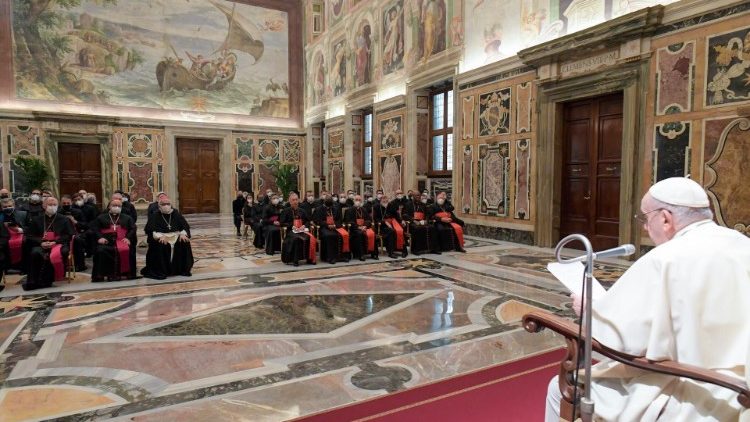
Pope Francis addressing members of the DDF in 2022Pope Francis addressing members of the DDF in 2022  (Vatican Media)

Pope Francis: Bless the persons, not the union

In an address to the plenary assembly of the Dicastery for the Doctrine of the Faith, Pope Francis discusses the Sacraments, human dignity, evangelisation, and Fiducia supplicans.

By Joseph Tulloch

Pope Francis addressed the Dicastery for the Doctrine of the Faith on Friday, as the department brought its annual plenary assembly to a close.

Thanking officials for their “precious work”, the Pope recalled that, in his 2022 reform of the Roman Curia, he divided the Dicastery into two sections, one concerned with Doctrine and the other with Discipline.

It was the former subject, the Pope said, that he wanted to touch on in his address, and he offered a number of thoughts organised around three words: ‘Sacraments’, ‘dignity’, and ‘faith’. 

New document from DDF

The first word that Pope Francis touched on in his address was ‘Sacraments’.

The Sacraments, he said, “feed and make grow the life of the Church”, he said, and thus require “special care” on the part of those who administer them.

“Let us," the Pope urged the DDF officials, “love and cherish the beauty and saving power of the Sacraments!”

Pope Francis then moved on to discuss dignity, noting that the DDF is “working on a document on this subject.“

“I hope,” he said, “that it will help us, as a Church, to always be close to all those who, without fanfare, in concrete daily life, fight and personally pay the price for defending the rights of those who are disregarded.”

Proclaiming the Gospel today

The Pope’s third subject, faith, was the one he dwelt on for the longest period.

“We cannot hide the fact," he said, ”that in large areas of the planet, faith, as Benedict XVI put it, no longer constitutes an obvious prerequisite for common living.”

Indeed, Pope Francis noted, faith is often “denied, mocked, marginalised, and ridiculed.”

The proclamation and communication of faith in today's world, he said, must therefore take a number of factors into account.

In particular, Pope Francis specified the “new urban cultures, with their many challenges but also the unprecedented questions of meaning they raise”, the need for “missionary conversion of ecclesial structures”, and, finally, “the centrality of kerygma [‘proclamation’] in the life and mission of the Church.”

“It is here," the Pope said, “that help is expected from this Dicastery.”

Pastoral blessings

It was "in this context of evangelisation,” Pope Francis continued, that he wanted to mention the recent Declaration Fiducia supplicans.

The purpose of the “pastoral and spontaneous blessings” discussed in the Declaration, the Pope stressed, is to “concretely show the closeness of the Lord and the Church to all those who, finding themselves in different situations, ask for help to continue—sometimes to begin—a journey of faith.”

In this regard, the Pope emphasized two points.

Firstly, he said, “these blessings, outside of any liturgical context and form, do not require moral perfection to be received.”

Secondly, he noted, “when a couple spontaneously approaches [a minister] and asks for them, he is not blessing the union, but simply the people who together have requested it.”

“Not the union,” the Pope stressed, “but the persons, naturally taking into account the context, sensitivities, the places where one lives, and the most appropriate ways to do it.”

Friday, December 15, 2023

Sacraments not to be denied to children born out of wedlock


Vatican: Having child out of wedlock does not bar access to sacraments


VATICAN CITY (CNS) -- Women who have conceived a child out of wedlock and have the courage to choose life for their baby “should be encouraged to have access to the healing and consoling power of the sacraments,” said the head of the Dicastery for the Doctrine of the Faith.

Cardinal Víctor Manuel Fernández, the dicastery prefect, was responding to a question from a bishop expressing concern for single mothers who abstain from the sacraments fearing the rigidity of their pastors and judgment from Catholics in their parishes.

“It is noted that in some countries, both priests and some lay people prevent mothers who have had a child outside of marriage from accessing the sacraments and even baptizing their children,” said the cardinal’s reply, which was approved by Pope Francis Dec. 13 and was posted on the dicastery’s website the next day.

Cardinal Fernández noted that Pope Francis had addressed the issue in 2012 when he was still archbishop of Buenos Aires, Argentina.

“There are priests who do not baptize the children of single mothers because (the children) were not conceived in the sanctity of marriage. They are the hypocrites of today,” the future pope had said. “They turn God’s people away from salvation.”

“And,” he had said, “that poor girl, who could have sent her child back to the sender but had the courage to bring him into the world, goes on pilgrimage from parish to parish to have him baptized.”

The cardinal also quoted Pope Francis’ remarks in 2015 to a virtual townhall meeting organized by ABC News with people in the United States.

Speaking to a mother in Los Angeles, the pope told her, “I know that it is not easy to be a single mother. I know that people can sometimes look down on you. But I want to tell you something: you are a brave woman because you were able to bring these two daughters into the world. You could have killed them in your womb, yet you respected life: you respected the life you had inside you, and God will reward you for that, and he does reward you.”

Cardinal Fernández said that Catholics should be educated to know that “being a single mother does not prevent that person from accessing the Eucharist.”

Like with any Catholic, he said, the “sacramental confession of sins allows the person to approach communion. The ecclesial community should, furthermore, value the fact that single mothers welcomed and defended the gift of life they carried in their wombs and struggle every day to raise their children.”

And, the cardinal said, if there is a situation where a woman “sometimes resorts to selling her body to support her family,” the reaction of the parish must be “to do everything possible to help her avoid this very serious risk rather than judge her harshly.”

People like to quote Jesus’ words to the woman caught in adultery: “sin no more,” the cardinal wrote.

“Certainly, Jesus always invites us to change our lives, to respond more faithfully to God’s will, and to live with greater dignity. However, this phrase does not constitute the central message of this Gospel pericope, which is simply the invitation to recognize that no one can cast the first stone.”

In his response to the letter sent by Bishop Ramón de la Cruz Baldera of San Francisco de Macorís, Dominican Republic, Cardinal Fernández also quoted from Pope Francis’ 2016 exhortation, “Amoris Laetitia,” on marriage and family life.

“Referring to mothers who must raise their children alone,” he said, Pope Francis “reminds us that ‘in such difficult situations of need, the Church must be particularly concerned to offer understanding, comfort and acceptance, rather than imposing straightaway a set of rules that only lead people to feel judged and abandoned by the very Mother called to show them God’s mercy.”

Saturday, November 11, 2023

Editorial on baptisms, sacraments, traditions and more in light of this week's Vatican announcement


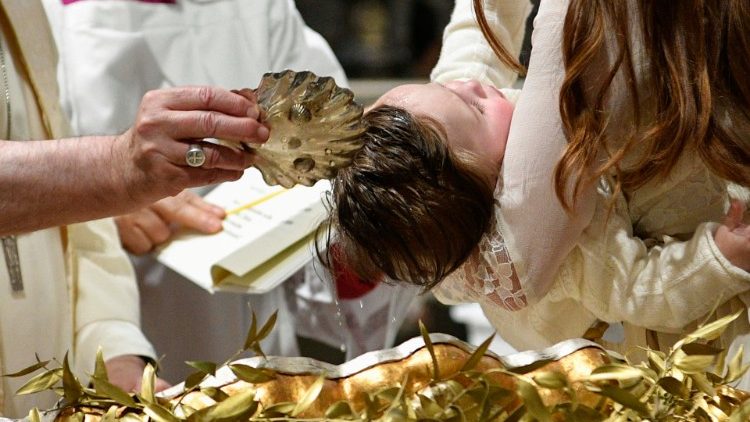
A baby is baptized in the Sistine ChapelA baby is baptized in the Sistine Chapel  (ANSA)EDITORIAL

The grace of baptism, tradition, and clerical tollhouses

Our Editorial Director reflects on the responses of the Dicastery for the Doctrine of the Faith to questions concerning the celebration of baptism and transsexual and homosexual persons.

By Andrea Tornielli

St Cyprian, the bishop of Carthage who was martyred in 258, participating in a synod of African bishops observed: “God's mercy and grace should not be refused to anyone born”. And St Augustine wrote: “When children are presented to be given spiritual grace, it is not so much those holding them in their arms who present them – although, if these people are good Christians, they are included among those who present the children – as the whole company of saints and faithful Christians … It is done by the whole Mother Church which is in the saints, since it is as a whole that she gives birth to each and every one of them”.
 

These are two statements by the Fathers of the Church that attest to the absolute gratuitousness of baptism, in some way even relativizing the role of parents and godparents (“if they are good believers”) who ask for the sacrament and present the child. These words, better than others, illuminate the recent response of the Dicastery for the Doctrine of the Faith (DDF) to a Brazilian bishop’s questions about baptism.

The note, signed by Cardinal Victor Manuel Fernandéz and approved by Pope Francis, shows a clear harmony with the recent papal magisterium. In fact, Pope Francis has repeatedly insisted that the door of the sacraments, and in particular that of baptism, must not remain closed, and that the Church should never turn into a tollhouse, but should instead welcome and accompany everyone on their bumpy paths in life.

The replies of the doctrinal dicastery, in the highly polarised context that characterizes the Church today, have provoked opposing reactions. Some fear that, by admitting the children of homosexual couples (whether they or adopted, or children of one of the two partners, even if generated by surrogate motherhood) to the sacrament of baptism would make both so-called “gay marriage” and the practice of surrogate motherhood (known as “womb renting” in Italian) morally licit. Such critics would do well to consider the relaxation of the prohibitions regarding who can serve as godparents at baptisms, which the Dicastery presents in the form of a question and answer.

It is interesting to note, first of all, a passage in the note that recalls that the newly published responses “re-propose, in substance, the fundamental contents of what has already been affirmed in the past by the Dicastery concerning these matters.” The reference is to previous pronouncements that have remained sub secreto, or reserved, (including one quoted in the footnote) that date back to earlier in this pontificate and its predecessors. Moreover, the initial quotations from the two Church Fathers proposed at the beginning of this article are contained, with many others, in a public document of the then Sacred Congregation for the Doctrine of the Faith, headed at the time by Croatian Cardinal Franjo Šeper and Dominican Archbishop Jérôme Hamer. This was the instruction Pastoralis actio, approved in October 1980 by Saint John Paul II, in which he responded to a series of objections against the celebration of infant baptism, reaffirming the importance of an “immemorial practice” of apostolic origin that should not be abandoned.

The 1980 document had in fact already indirectly responded o those who today would deny baptism to children of homosexual couples because by baptizing them the Church would make gay unions or the practice of uterus surrogacy morally licit, affirming that the practice of infant baptism “is truly evangelical, since it has the force of witness, manifesting God's initiative and the gratuitous character of the love with which He surrounds our lives: ‘not that we loved God but that He loved us... We love, because He first loved us’ (1 John 4:10, 19)”. And “even in the case of adults, the demands that the reception of Baptism involves should not make us forget that “He saved us, not because of deeds done by us in righteousness, but in virtue of His own mercy, by the washing of regeneration and renewal in the Holy Spirit (Tit. 3:5)”.

The instruction approved by Pope John Paul II forty-three years ago obviously took into account the changed social context and secularisation: “It sometimes happens that pastors are approached by parents who have little faith and practice their religion only occasionally, or even by non-Christian parents who request Baptism for their children for reasons that deserve consideration”. How should one act in such cases? While noting that the criterion remains valid, that the baptism of children is to be celebrated if there is an assurance that the child “will be given the benefit of a Christian upbringing”, the 1980 document specified: “With regard to the assurances, any pledge giving a well-founded hope for the Christian upbringing of the children deserves to be considered as sufficient”. Current practice in parishes attests to the fact that, following the example of the Nazarene, tireless in His search for every lost sheep, it is enough for a relative to make the commitment before the Church, in order not to close the door.

Today, is there not a greater need to believe more in the action of grace working through the sacraments, which are not a reward for the perfect but medicine for sinners? Should we not look more at the pages of the Gospel, where Jesus emerges as the One Who loves first, forgives first, embraces with mercy first, and where we see that it is within this embrace that people’s hearts are moved towards conversion?

And again, what fault do children have? However they came into the world, they are always God’s beloved and cherished creatures. Would it not be better, then, to focus more on the positive, namely the fact that people ask for baptism in a post-Christianity context, where it is increasingly rare for it to happen out of mere custom?

It is comforting to reread the words that a great 20th-century bishop had spoken in an interview in July 1978 about Luise Brown, the first “test-tube baby”. He denounced the risk that “baby factories”, separated from family contexts, might arise and explained that he shared “only partially” the enthusiasm for the experiment. But in the end, he offered his “best wishes to the child” and an affectionate thought to the parents, saying: “I have no right to condemn them: subjectively, if they have acted with the right intention and in good faith, they may even have great merit before God for what they have decided and asked the doctors to carry out”. That bishop was Albino Luciani, at the time the Patriarch of Venice, who a month later would become John Paul I and today he is recognized as Blessed.

Thursday, November 9, 2023

Vatican responds to transsexual and homosexual persons receiving Baptism and witnessing Marriages


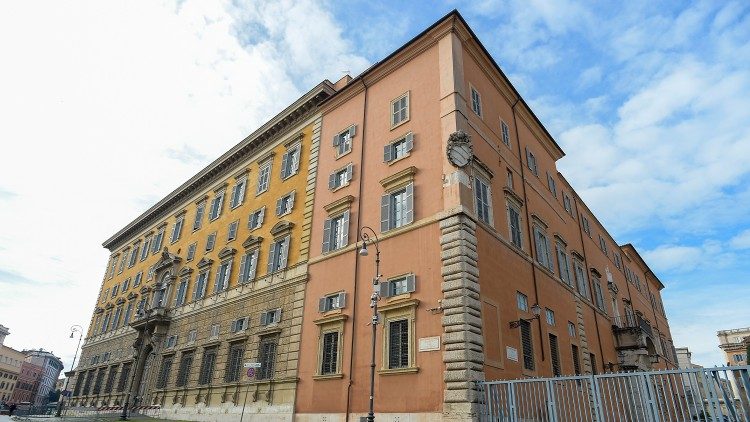
The offices of the Dicastery for the Doctrine of the Faith The offices of the Dicastery for the Doctrine of the Faith  

Transsexual and homosexual persons and the Sacraments

The Dicastery for the Doctrine of the Faith responds to questions concerning the participation of transsexual persons and persons with same-sex attraction in the Sacraments of Baptism and Matrimony and related ceremonies.

By Vatican News

Transsexual persons, even if they have undergone hormone therapy or sex reassignment surgery, may receive the Sacrament of Baptism “if there are no situations in which there is a risk of generating public scandal or confusion among the faithful”. The children of homosexual couples should be baptized even if they are born from a surrogate mother, provided there is a well-founded hope that they will be educated in the Catholic faith.

These clarifications were issued on Wednesday in a response to questions (dubia) submitted to the Dicastery for the Doctrine of the Faith (DDF) by Bishop José Negri of Santo Amaro, Brazil.

The document, signed by Cardinal Victor Manuel Fernandéz, the Prefect of the DDF, and approved by Pope Francis on 31 October, answered six questions concerning the possible participation of transsexual and homoaffective persons in the Sacraments of Baptism and Matrimony.

The answers “re-propose, in substance, the fundamental contents of what has already been affirmed in the past by the Dicastery concerning these matters.”

The DDF affirmed that transsexual persons, whether adults, children, or adolescents, can be baptized, provided they are “well-prepared and willing, and that there is no occasion of scandal."

In the case of doubts “about the objective moral situation in which a person finds themselves”, or concerning “their subjective dispositions towards grace” (and so also in situations where there does not appear to be an intention to amend), the DDF proposed certain considerations.

The Church teaches that when the Sacrament of Baptism “is received without repentance for grave sins, the subject does not receive sanctifying grace, although they do receive the sacramental character”, as we read in the Catechism. The indelible character “remains forever in the Christian as a positive disposition towards grace".

Quoting from St. Thomas and St. Augustine, the Dicastery recalls that Christ continues to seek the sinner, and when repentance comes, the sacramental character already received immediately disposes one to receive grace.

This is why, according to the document, Pope Francis has repeatedly said that the Church is not a “tollhouse” and, especially with regard to Baptism, the door should not be closed to anyone.

The question of whether a transsexual person can serve as a godfather or godmother at Baptism is more complicated. The Dicastery said that this “can be allowed under certain conditions," while noting that being a godparent is not a right. Therefore, it said, “pastoral prudence demands that it should not be allowed if there is a danger of scandal, undue legitimization, or confusion in the educational sphere of the ecclesial community”.

Concerning the possibility of a transsexual person serving as a witness to a marriage, the Dicastery noted that there is nothing “in current universal canonical legislation” and therefore it is permissible.

The DDF document went on to address several issues concerning homoaffective persons (that is, persons “who experience an exclusive or predominant sexual attraction toward persons of the same sex [CCC 2357])”.

The question was asked whether the children of homoaffective parents can be baptized, even if they were adopted or conceived through other methods, such as surrogate motherhood. The Dicastery replied: “In order for the child to be baptized, there must be a well-founded hope that he or she will be brought up in the Catholic religion”, citing the Code of Canon Law.

The document then addressed the case of a homosexual and cohabiting person who asks to be the godfather or godmother of a person to be baptized. The Dicastery said that in order to be a godparent, a person must lead “a life in conformity with the faith and the task he or she assumes”.

The case is different when two homosexual persons are involved in a relationship that does not consist simply of cohabitation, “but in a stable and declared relationship more uxorio [after the fashion of marriage] that is well known to the community”. The Dicastery for the Doctrine of the Faith said due prudence is necessary in such cases in order to “safeguard the Sacrament of Baptism and especially its reception, which is a precious good to be protected, since it is necessary for salvation.”

The Dicastery went on to say that consideration of “the genuine value the ecclesial community places on the duties of godfather and godmother, the role they play in the community, and the consideration they demonstrate with regard to the Church’s teaching” is also required.

The document suggested the possibility that “another person from the family circle might act as guarantor of the correct transmission of the Catholic faith to the baptized person.”

Further, it noted that the Church also offers the possibility, besides being a godparent, of assisting in the baptismal rite as a witness to the act of Baptism.

In response to a final question, the Dicastery said there is nothing to prevent a homoaffective person from being a witness to a marriage, even if that person is cohabitating.

The full text of the document, in Italian and Portuguese, can be found on the website of the Dicastery for the Doctrine of the Faith.