Showing posts with label The Holocaust. Show all posts

Tuesday, January 27, 2026

Pope Leo XIV acknowledges Holocaust Remembrance Day; calls for a reject of all anti-semitism


Pope on Holocaust Remembrance Day: Church rejects every form of antisemitism

Eighty-one years after the Auschwitz concentration and extermination camp was liberated, we remember the millions of lives lost to the Holocaust and focus on preventing the recurrence—in any form—of this form of “hatred, bigotry, racism and prejudice”.

By Kielce Gussie 

Eighty-one years ago today, the Auschwitz Birkenau German Nazi Concentration and Extermination Camp was liberated. In this camp alone, more than one million people were murdered, the majority of them Jews.

To mark the historic moment where the survivors were freed, the date—January 27—was chosen by the United Nations in 2005 as International Holocaust Remembrance Day. 2026 is the 25th anniversary of the creation of this day.

Pope Leo XIV commemorated the International Day with a Tweet on his Pontifex account, stressing that “the Church remains faithful to the unwavering position of the Declaration Nostra Aetate against every form of antisemitism. The Church rejects any discrimination or harassment based on ethnicity, language, nationality, or religion.”

The dangers of hatred and bigotry

From the horrors of the second World War and the Holocaust, the United Nations was born. Its goal is to maintain international peace and security, provide humanitarian aid to people in need, safeguard human rights, and uphold international law.


A participant lights candles during a ceremony marking International Holocaust Remembrance Day   (AFP or licensors)


With this mission in mind, the United Nations adopted two foundational documents in 1948: the Universal Declaration of Human Rights and the Convention on the Prevention and Punishment of the Crime of Genocide.

Together with these documents, the UN’s resolution creating this International Day stress that the Holocaust “will forever be a warning to all people of the dangers of hatred, bigotry, racism and prejudice”.

Ways of remembrance

From this resolution, the United Nations urged member states to “develop educational programmes that will inculcate future generations with the lessons of the Holocaust in order to prevent future acts of genocide”. Twenty-one years after this summons, countries have responded in their own ways.

In the United Kingdom, the Centre for Holocaust Education offers a look into understanding how and why it took place. Research at the Centre is focused on ensuring the Holocaust does not simply fade into memory, rather that its story and lessons continue to be taught to current generations.

At the United Nations General Assembly Hall in New York, diplomats and members of the public will come together to observe the International Day with Holocaust survivors and their families. Keeping alive the voices of those who lived through the horrors prevents the full impact of the Holocaust from being reduced to words in a textbook.

25 years of voices and stories

The theme for this 25th anniversary of the International Day is “Holocaust Remembrance for Dignity and Human Rights”. As the United Nations described, “remembrance dignifies the victims and survivors of the Holocaust. It keeps alive their memories of the communities and traditions and loved ones the Nazis sought to erase.”

Remembering challenges everyone to reflect on the “deadly consequences of antisemitism and hatred, dehumanization and apathy left unchallenged.”

The UN points out that after more than eight decades since the Holocaust, people today face daily attacks around the world.

Antisemitism has been on the rise and the denial and distortion of the Holocaust continue. According to a report by the Ministry for Diaspora Affairs and Combating Antisemitism, across Europe there has been a “400% increase in hateful content”.

Remembering the Holocaust, however, “defies denial and distortion, rejects falsehoods, confronts hatred, and insists on the humanity of the victims”, the UN noted. Placing an emphasis on universal rights for everyone—no matter their ethnicity, religion, or background—is essential for achieving peace. It is also a central part of the UN’s mission.

This International Day continues to be a poignant reminder to the world of the danger hatred, bigotry, and antisemitism pose. The UN stated, “in honoring the victims of the Holocaust, we reaffirm our common humanity and commit to defending the dignity and human rights of all people.”

Moreover, Holocaust Remembrance Day is a call to action: Do not forget, rather reflect on where the world is in order to prevent atrocities such as the Holocaust from ever occurring again.

Saturday, January 27, 2024

Pope speaks against hatred and violence on Holocaust Remembrance Day


Pope on Holocaust Remembrance Day: Hatred and violence deny our humanity

Pope Francis condemns hatred and violence on Holocaust Remembrance Day, emphasising the importance of remembrance in constructing a peaceful future.

By Francesca Merlo

Pope Francis has released a message on Holocaust Remembrance Day, stressing that the logic of hatred is never justified.

"Be aware", the Pope warns in his videomessage, "of how this path of death, extermination and brutality began".

"Remembrance is an expression of humanity", continues the Pope in his message. 

"Remembrance is a sign of civilisation", he adds, before concluding "Remembrance is a condition for a better future of peace and fraternity". 

Pope Francis on X

In a tweet published on Saturday, the Holy Father writes:

May our remembrance and condemnation of the horrible extermination of millions of Jews and people of other faiths, during the last century, help us all not forget that hatred and violence can never be justified, because it denies our very humanity. #WeRemember

Hatred denies humanity

During his General Audience on Wednesday, Pope Francis had already recalled the importance of Holocaust Remembrance Day, which is commemorated annually on 27 January.

During that audience the Holy Father asked that "the remembrance and condemnation of this terrible extermination of millions of Jews and people of other faiths might help everyone not to forget that the logic of hatred and violence can never be justified because it denies our own humanity". 

Friday, September 8, 2023

More truth revealed in Catholic role in saving Jews throughout Rome during WWII


Catholic-Jewish research backs reports Catholic convents sheltered 3,000-plus Roman Jews during WWII


BY NICOLE WINFIELD
Updated 3:07 PM CDT, September 7, 2023

ROME (AP) — Researchers have discovered new documentation that substantiates reports that Catholic convents and monasteries in Rome sheltered Jews during World War II, providing names of at least 3,200 Jews whose identities have been corroborated by the city’s Jewish community, officials said Thursday.

Researchers from the Pontifical Biblical Institute, Israel’s Yad Vashem Holocaust research institute and Rome’s Jewish community released the findings at an academic workshop Thursday held at the Museum of the Shoah, part of Rome’s main synagogue.

The documentation doesn’t appear to shed any new light on the role of Pope Pius XII during the Nazi occupation of Rome, including whether he directed Catholic institutions to shelter Jews. Historians have long debated Pius’ legacy, with supporters insisting he used quiet diplomacy to save Jewish lives and critics saying he remained silent as the Holocaust raged across Europe, and even as Roman Jews were rounded up and deported from the Vatican’s backyard in 1943.

Rather, the new documentation provides names and addresses of Romans who were sheltered in Catholic institutions during the war, which had only previously been reported in vague terms and numbers by Italy’s preeminent historian of the period, Renzo de Felice, in a 1961 book, according to a joint statement from the Pontifical Biblical Institute, Yad Vashem and Rome’s Jewish community.

The documentation was discovered in the archives of the Biblical Institute, which is affiliated with the Jesuit-run Pontifical Gregorian University. It lists more than 4,300 people who were sheltered in the properties of 100 women’s and 55 men’s Catholic religious orders. Of those, 3,600 are identified by name, and research in the archives of Rome’s Jewish community “indicates that 3,200 certainly were Jews,” the statement said.

“Of the latter it is known where they were hidden and, in certain circumstances, where they lived before the persecution. The documentation thus significantly increases the information on the history of the rescue of Jews in the context of the Catholic institutions of Rome,” the statement said.

The names are not being released to protect the privacy of the people and their descendants, it added.

It is unclear whether any of the Jews listed were baptized. Recently opened Vatican archives of the Pius papacy suggest that the Vatican worked hardest to save Jews who had converted to Catholicism or were children of Catholic-Jewish mixed marriages, according to the book “The Pope at War,” by Brown University anthropologist David Kertzer.

Claudio Procaccia, in charge of the cultural department of Rome’s Jewish community, said the documentation doesn’t provide any information as to whether the Jews identified had been baptized. But he stressed that the lists provided an important “new element in understanding qualitatively and quantitatively” who was sheltered, where and their origins.

“This is a very important step,” he said in an interview after the workshop, adding that further research was necessary to corroborate further the names listed and their histories, including with other lists in other archives. He noted that discrepancies are likely to emerge down the line since it is known that some people pretended to have Jewish last names to find shelter in Catholic convents, even if they weren’t necessarily Jewish.

Procaccia noted that the Jewish community in 2013 published its own research into the fate of Jews during the Nazi occupation of Rome, entitled “After October 16,” the date in 1943 when more than 1,000 of Rome’s Jews were rounded up and, two days later, deported to Auschwitz.

Iael Nidam Orvieto, director of Yad Vashem’s International Institute for Holocaust Research and an expert on the Jews of Italy during the Holocaust, said the new documentation adds new information but also poses new questions that require further investigation. One of those questions is why the list was even compiled by an Italian Jesuit at the Pontifical Biblical Institute immediately after the liberation of Rome.

“We find houses, even cloisters, that hid entire families, while others hid only a few,” Nidam Orvieto said in a statement to The Associated Press released by Yad Vashem. “There are many more questions we ask but we must remember that while this impressive document lists thousands of Jews who found refuge in religious institutions across Rome, it lacks the names of those who were refused assistance and their fate during the Holocaust.”

“We must therefore study this document in the correct context, taking into account all the factors that influenced this activity,” she added, saying researchers were only at the start of an ongoing project.

The Rev. Dominik Markl, a Jesuit professor at the Pontifical Biblical Institute and University of Innsbruck who helped coordinate the research, said he was moved by the fates of the people named in the documents, “those threatened to be murdered because of the persecution by the Nazi regime, and the many anonymous religious sisters and priests who risked their own security to help them survive.”

In comments to AP, Markl noted the significance of the joint research between Catholic and Jewish scholars on a fraught issue which has long divided scholars and often strained relations between Rome’s Jewish community and the Holy See.

“We are extremely grateful for the collaboration with the Jewish Community of Rome and Yad Vashem, which is promising to lead towards a more profound understanding of the history of the Shoah in Rome and beyond,” he said.

Wednesday, May 3, 2023

Pope celebrates birthday of author and Holocaust survivor


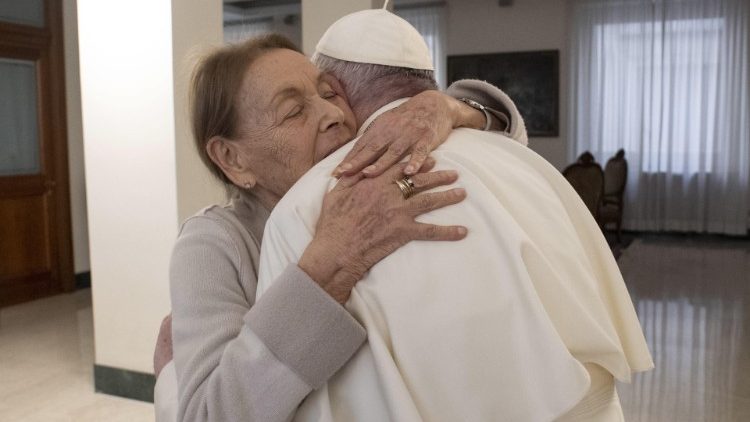
Pope Francis and Edith Bruck embracing at the Pope's residence in the VaticanPope Francis and Edith Bruck embracing at the Pope's residence in the Vatican  (ANSA)

Pope sends birthday wishes to friend and Holocaust survivor Edith Bruck

On her 92nd birthday, Pope Francis sends birthday wishes to the Holocaust survivor and writer Edith Bruck, saying that her work "tells young people about the importance of fighting for an ideal."

By Joseph Tulloch

Pope Francis was in the middle of a catechesis about his recent trip to Hungary when he paused and laid his prepared remarks to one side.

“We have in Rome an excellent Hungarian poet,” he said, speaking off-the-cuff, “who has been through many trials, and tells young people about the importance of fighting for an ideal, about not being defeated by persecutions, by discouragement.”

“This poet is 92 years old today: Happy Birthday, Edith!”

A witness to evil

Edith Bruck, a writer and Holocaust survivor, was born in 1931 to Hungarian Jewish parents.

In 1944 she and her family were sent to a concentration camp, where her parents and brother died. Mrs Bruck was liberated from the camp, together with her sister, in 1945.

She first moved back to Hungary, then to Israel, before finally settling in Rome, where she began a career as a writer.

Bruck has dedicated much of her work – which has included novels, poetry, plays, translations, and screenplays – to bearing witness to the evils she experienced in the concentration camps. She was asked to do so by two fellow concentration camp inmates, she says, who asked her to “tell the story. They will not believe you. But if you survive, tell the story, for us too.”

Friendship with Pope Francis

In 2021, the Osservatore Romano, the Vatican City's daily newspaper, conducted an interview with Mrs Bruck for Holocaust Memorial Day. Pope Francis read the interview and was so moved by it that he requested to meet with her.

A month later, he paid a visit to her apartment in Rome, telling her that he had come “to thank you for your testimony, and to pay homage to your people, martyred by the madness of Nazi populism."

A friendship then sprang up between the pair, who went on to exchange letters, phone calls, and gifts. A year later, Mrs Bruck came to visit the Pope in his residence in the Vatican, and wrote a book entitled Sono Francesco (I am Francis) reflecting on their encounter, to which the Pope wrote the preface.

Following the pair’s second meeting, the Holy See’s Press Office released a statement saying that their conversation had focused on “the priceless value of passing down the memory of the past to younger generations, including its most painful aspects, so as to avoid falling into the same tragedies.”

Tuesday, February 1, 2022

The truth about Pope Pius XII and the Holocaust


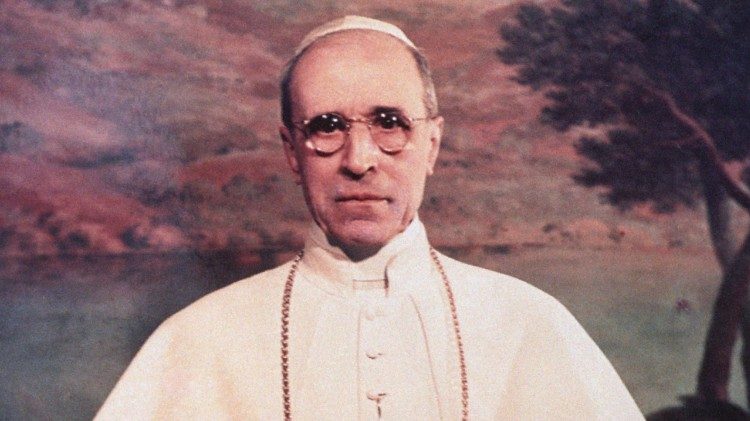
File photo of Pope Pius XIIFile photo of Pope Pius XII  (Vatican Media)

Feldkamp: Pope Pius XII knew early about Holocaust and saved many Jews

Pope Pius XII (1939-1958) personally saved at least 15,000 Jews, and knew early about the Holocaust, says German historian Michael Feldkamp, who offers proof from his findings in the Vatican archives. He says Pius XII sent a report on the Holocaust to the American government shortly after the Wannsee Conference, but they did not believe him.

By Mario Galgano

The chief archivist of the Bundestag (German parliament), Michael Feldkamp, has been involved in historical research on Pope Pius XII for several years.

Feldkamp has published on topics such as the Cologne nunciature and papal diplomacy, as well as articles on the relationship between the Catholic Church and National Socialism.

His book "Pius XII and Germany", published in the year 2000, aimed to bring his complex research to a wider audience, and was also intended as a response to John Cornwell's book “Pius XII - The Pope Who Remained Silent". Feldkamp collaborates with Vatican Archivist Johannes Icks.

Q: Dr. Feldkamp, you have been in the Vatican archives in the last few days and have seen some hitherto unknown documents on Pius XII and Eugenio Pacelli. What do you think is new in the research on Pius XII that the general public does not know yet?

Feldkamp: First of all, we in Germany are not the only ones doing research on Pius XII. There are not only historians in this field, but also journalists - whom we also need as propagators. What is new now, and what we have always known so far, is that Eugenio Pacelli, i.e. Pius XII, knew about the Holocaust very early on.

Regarding the systematic extermination of European Jews, Pius XII sent a message to US President Roosevelt in March 1942 - two months after the Wannsee Conference. In it, he warned him that something was happening in Europe in the war zones. These messages were not considered credible by the Americans. Today we know (...) that Pius XII was confronted with the persecution of the Jews almost on a daily basis. He had been presented with all the reports, and had created his own office within the Second Section of the Secretariat of State, where the staff had to deal exclusively with such matters. There was Cardinal Domenico Tardini - who later became an important cardinal at the Second Vatican Council - and there was Dell'Acqua, also later a cardinal. He is also considered one of the principal authors of the Second Vatican Council's Constitution on Reconciliation with the Jews (Nostra aetate).

During World War II, these leaders were in very close contact with Pius XII, reporting to him daily on persecution and mass deportations, as well as on the individual fates of the people who came to them. And the exciting thing now is that we can estimate that Pius XII personally saved about 15,000 Jews through his own personal efforts: opening monasteries, raising cloisters so that people could be hidden there, and so on. All of this is a huge sensation! The archival findings I have found now in the Vatican show me how accurately Pacelli was informed.


Q: You said that what Pius XII told them about the fate of the Jews but was not considered credible by the American side, so to speak. How did the Holy See and Pope Pius XII react?

Feldkamp: This is diplomatic correspondence, only letters that they had received were confirmed. It is interesting, however, that the president of the United States, or his associates in the State Department, repeatedly contacted Pius XII for information on individual cases...

Pope Pacelli's support for the Jews went so far that the Papal Palatine Guard, a kind of bodyguard for the Pope - like today's Swiss Guard - was involved in fights with the Waffen-SS, with Wehrmacht soldiers, to hide Jews in the Roman Basilica of Santa Maria Maggiore. Now we can see and prove all of this. I am grateful that we have opened these archives in the Vatican. In this way, we can now correct many of these vague assumptions or even accusations.

Above all, there is the accusation that Pius XII did nothing and remained silent. The problem of silence is still there, of course. But now it can be considered reasonable, considering that here he led people into hiding in covert operations. He could not then draw further public attention to himself by organizing protests or writing protest letters, but to divert attention, he conducted negotiations with the German embassy and the Italian police force, even with Mussolini and the Italian foreign minister and so on. He always tried to get as much as possible through negotiations.

Q: How do you see today's historiography and its re-evaluation of the Pius XII files? Are the results presented correctly and honestly, or do you fear that there are some reservations?

Feldkamp: Today's reappraisal can help clarify that. But I am also afraid that certain circles will still try to portray him negatively. I think that will happen. But it is certainly difficult to accuse or want to accuse anyone of this in detail. I also see in my research and in publications here in Germany how difficult it is to convey these new findings as credible. So, there are still people who say that they cannot imagine that, for 70 years we have believed what was wrong, and now it is supposed to be different. I encounter this skepticism often, both inside and outside the Church.

What we must and should pay attention to, and what I have always done, is to keep in mind that the results and the dossiers are all written in French and especially in Italian.

And that most of my colleagues, who are historians and who also know a lot about World War II, often do not understand Italian. This means that they now depend on their colleagues to translate it, or they depend on what I then present and translate. Of course, I try to translate very precisely, and then I bring in the Italian quotes so that people can understand it again, if necessary. I think there is a lot that can be done in this area.... We've already had stories where people have simply mistranslated or gone from one translation to another incorrectly.

Tuesday, March 3, 2020

Vatican Archives opened; Pope Pius XII truly saved a million Jews from the Nazi's

wikimedia

INTERVIEW: Thanks to Pius XII, Almost a Million Jews Saved from Nazis, Says Jewish Man Who Hated Pacelli But Now Calls Him a Hero (ARCHIVES OPEN TODAY)

Pope Francis Opens March 2, 2020, Vatican Apostolic Archives Around the Pacelli Pontificate to Scholars

“I have decided that the opening of the Vatican Archives for the Pontificate of Pius XII will take place on 2 March 2020, exactly one year after the eightieth anniversary of the election to the See of Peter of Eugenio Pacelli.”
With these words, Pope Francis made a long-awaited announcement. The statement came in his address about a year ago on, March 4, 2019, to superiors, employees and collaborators of the Vatican Secret (now renamed Vatican Apostolic Archives), on the eightieth anniversary of the election as Supreme Pontiff of the Servant of God Pius XII.
“The figure of that Pontiff, who found himself guiding the Barque of Peter at one of the saddest and darkest moments of the twentieth century, agitated and lacerated by the last world war, with the consequent period of reorganization of the nations and post-war reconstruction,” Pope Francis observed, “has already been investigated and studied in many aspects, sometimes discussed and even criticized (it could be said with some prejudice or exaggeration).”
“Today,” he added, “he has been appropriately re-evaluated and indeed placed in the correct light for his many qualities: pastoral, above all, but also theological, ascetic, and diplomatic.”
The Pope said he assumed this decision after hearing the opinion of his closest collaborators. Francis expressed his certainty “that serious and objective historical research will be able to evaluate, in the proper light and with appropriate criticism, the praiseworthy moments of the Pontiff and, without any doubt, also moments of serious difficulties, of tormented decisions, of human and Christian prudence, which to some might have seemed to be reticence, and which instead were attempts, humanly also very hard-fought, to keep the flame of humanitarian initiatives lit during periods of more intense darkness and cruelty, of hidden but active diplomacy, of hope in possible good openings of hearts.”
“The Church is not afraid of history,” the Jesuit Pontiff highlighted, adding: “rather, she loves it, and would like to love it more and better, as God does! So, with the same trust of my predecessors, I open and entrust to researchers this documentary heritage.”
To remember that today marks this historic opening, ZENIT brings you from our archives this exclusive interview with Gary Krupp, who through the Pave the Way Foundation and experts, historians and leaders of the archives themselves, have through research inside demonstrated that the controversial pope, criticized for not being vocal against Hitler, actually was responsible for saving the lives of about 800,000 Jewish people. Enjoy the interview:
***
INTERVIEW: Thanks to Pius XII, Almost a Million Jews Saved from Nazis, Says Jewish Man Who Hated Pacelli But Now Calls Him a Hero
Pave the Way Foundation Worked Since 2006 to Restore the Good Name of Pope Pius XII Smeared by the Soviet ‘Disinformation Project Called ‘Seat 12”
by Deborah Castellano Lubov MARCH 26, 2019

Thanks to Pope Pius XII nearly 1 million Jews were saved from the Nazis, and hence a Jewish hater of Pius XII has become his strongest advocate.
In an exclusive interview, ZENIT learned this was the situation of Gary Krupp, founder, along with his wife Meredith, founders and directors of the Pave the Way Foundation, which has tirelessly worked to reveal the truth of the action of the Vatican during World War II.
The Pave the Way Foundation is a nonsectarian organization which works to remove obstacles between religions, partially through eliminating non-theological challenges, and to initiate gestures of good will.
Pope Francis last month announced in an audience with members of the Vatican Secret Archives that for the 80th Anniversary of Pacelli’s death, he would open to academics and researchers, the Archives of Pacelli’s pontificate, which has been controversial, with some having said that while he was Pope during the Second World War he did not speak out, and others claiming there is evidence that he did more than almost anyone else to save Jews from the Nazis.
Here is ZENIT’s exclusive interview with Gary Krupp:
***
ZENIT: On March 4th, Pope Francis announced that in a year’s time, the Vatican Archives of Pius XII’s pontificate (1939-1958) will be open for consultation to any researchers and academics who wish to consult it. How did you receive this news?
Gary Krupp: We were extremely excited to hear the news! The Vatican archives will be opened eight years earlier than Canon Law dictates, as we have been urging all the Vatican officials over the last several years. We also acted to reveal the documentation unearthed by our team of scholars, Dr Michael Hesemann, Pave the Way Foundation Director for Germany, Johan Ickx, Ronald Rychlak, William Doino, Martin Gilbert, Limore Yagil, Edouard Husson, Dimitri Cavalli, Mark Riebling, Deacon Dominiek Oversteyne, all made incredible discoveries of documents from many archives that have been open for decades disproving the false narrative disseminated of Pius XII.
ZENIT: We speak about a remarkable number of historical documents…
Krupp: It will take years to properly research this amount of information. What we need is objective researchers who are seeking the truth, rather than those who come up with a theory and look to simply support their theory.
ZENIT: Your view of Pope Pius XII is not the same as of some time ago. How has it evolved?
Krupp: Pius XII was Pope when I was a child. My uncle met him twice in 1948 and he received a medal from him when he was in Rome with the US Navy. At that time my recollections of Pope Pius XII were always very positive. Then when I went to high school the world opinion completely changed. After reading some books dealing with this subject, I was convinced that he was not a friend of the Jewish people and at worst a collaborator with Nazi Germany against communism.
ZENIT: Then? What happened?
Krupp: A long time later, in 2006, through what I consider divine intervention, I was gradually exposed to some incredible documentation and testimony that brought me to a conclusion: I had been lied to! My emotions went from being shocked to being extremely angry.
Armed with documents, I traveled to Jerusalem to meet with the chief Ashkenazi Rabbi of Israel Yona Metzger and revealed what I had discovered. He told me: “I want you to find everything you possibly can on this subject and bless you for this work.” In Judaism, the worst character flaw a Jew can have is ingratitude. The defamation and character assassination of Pacelli, robbed the Jewish people of the dignity of expressing a measure of thanks to the one religious leader who acted to save more Jews than all the religious and political leaders of the era. This is to me a Jewish responsibility.
ZENIT: What did you do after that meeting?
Krupp: I submitted this potentially explosive international project to the board of PTWF to consider. Since our mission is to identify and eliminate obstacles between religions this project fit into my mission statement. The board approved it almost universally. So, we proceeded to contact International Scholars on the subject. Meredith, my wife, and I traveled throughout Europe to explore every possible path towards revealing the truth of the actions of the Holy See, towards Jewish people, under the pontificate of Pope Pius XII.
ZENIT: As a Jewish man, I suppose this issue is particularly meaningful…
Krupp: As a Jewish man I thought that utilizing my positive relationship with the Vatican to identify and reveal these documents to the world would be praised and heralded. I was shocked when I was simply attacked and criticized by many of the “historians” internationally. The good news is that the critical comments made about our work at PTWF remains on the Internet. Our vindication will come when the world’s opinion returns to where it was in 1958. One day Pius the XII will be recognized as righteous among nations at Yad Vashem.
ZENIT: There a lot of people who do not agree with this last statement. What would you reply?
Krupp: According to Israeli historian and diplomat Pinchas Lapide and sustained by Sir Martin Gilbert, the Catholic Church under the pontificate of Pius XII acted to save the lives of an estimated 847,000 Jews, almost a million. The difference is that Lapide and all the Jewish leaders who unreservedly praised Pius XII, lived through the war years and witnessed these actions. The modern historical revisionists simply read the false demonizing books to push their negative agendas.
ZENIT: You and your wife Meredith are the founders of the Pave the Way Foundation. Please, make us understand a little better what the Foundation has done, in cooperation with the Vatican, related to Pius XII.
Krupp: Since 2006, with the help of our international scholar partners, we have unearthed and posted online over 76,000 pages of primary source documents, along with eyewitness interviews, thanks to the cooperation with the Vatican, too. Two very dear and close friends of mine, Cardinal Tauran and the Archbishop Pietro Sambi both said to me that “Gary this is going to be your life’s work”. Cardinal Bertone, the former Vatican Secretary of State, personally gave us a set of the volumes of Acts and Documents of the Holy See during the Second World War so that we could digitize the 5000 pages and make them available for international scholarly study, on the Vatican website, the website of the Holy See Mission to the United Nations and Pave the Way’s Pius XII resource website page.
In addition, we were given permission to publish many Vatican documents with the stipulation that they not be used for commercial purposes. Consequently, when we traveled internationally, we were given access to many of the archives. We have discovered literally hundreds of ‘smoking guns.’
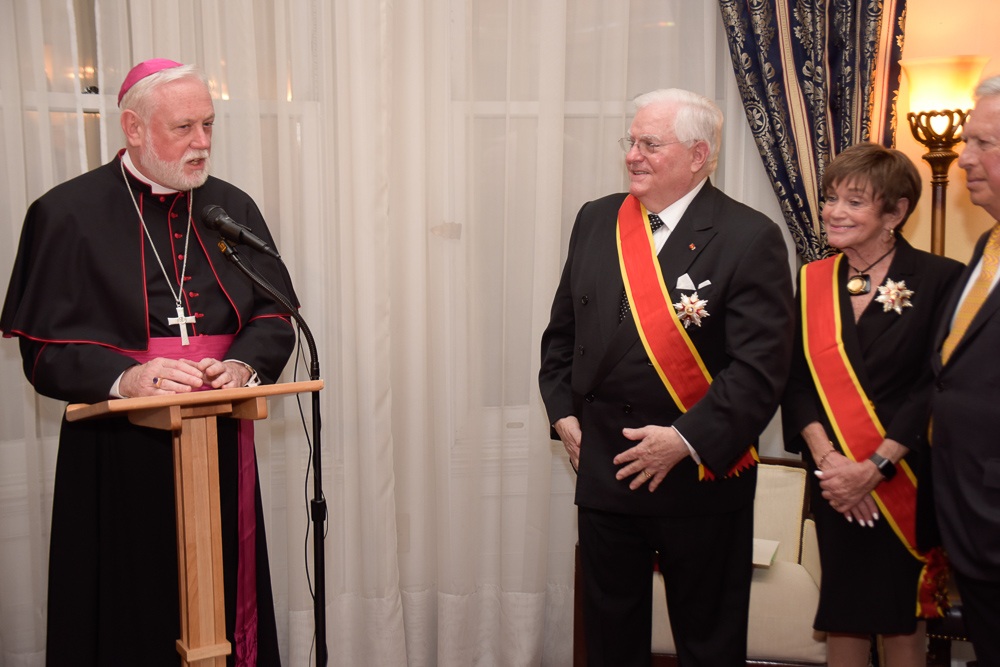
ZENIT: With regard to the cooperation with the Vatican, you and Meredith also are the first married couple to both be papal knight and dame of the Grand Cross of St Gregory the Great. Why were you bestowed this honor?
Krupp: Because of our decades of work to help the hospital of Padre Pio. On July 31, 2000. I was invested by Pope John Paul II and made a Knight Commander of the Pontifical Order of Saint Gregory the Great. Then again January 2007 I was raised in rank by Pope Benedict XVI further enhancing our level of trust. Then, October 1, 2019 on the 16th anniversary of the creation of Pave the Way, Meredith and I were raised to the highest class of the highest papal honor awarded to a lay person again by Pope Francis. These are providential signs of God’s approval of our work. Pave the Way is now in 23 countries where we work to solve problems with many of the world’s religions always from behind the scenes quietly all due to our Vatican recognition. Ironically, our Vatican recognition has been invaluable in working with the leaders of other faiths including the Christian Orthodox, Protestant churches and the Islamic world.
ZENIT: The judgment on the work of Pius XII towards Nazism and the Holocaust still divides the Catholic Church and the Jewish world. What will be the consequences of opening the Vatican archives?
Krupp: The opening of the six main archives will go a long way towards resolving the misunderstandings of the actions of the Holy See during World War II, even if it will take decades of devoted research to comb through the material.
The problem however is that many of the critics of Pius XII simply have not done any legitimate research on the subject. A recent interview of Robert Ventresca is very revealing. He doesn’t believe that there will be a smoking gun in the Vatican archives. He’s probably correct, because our international scholar partners have already discovered hundreds of “smoking guns” throughout the world. The critics have conveniently chosen not to even look at these documents. In his recent book Church of Spies, Mark Riebling has revealed that Pius XII was aware of every assassination attempt against Hitler. His research was done at the archives of the American CIA and the British archives. Not one word will be in any of the Vatican archives.
ZENIT: Very interesting…
Krupp: A further example in in Susan Zuccotti’s book Under His Very Windows. Here, she at least attempted to interview an eyewitness, Msgr Aldo Brunacci in Assisi. Msgr Brunacci stated that Cardinal Nicolini of Assisi summoned him and held up a letter of the Holy Father asking to do everything possible to save the persecuted Jews. Zuccotti asked Brunacci if he read the letter. He said no. So, she concluded there is no proof this letter really existed. These written requests were given to many of the diocese but ordered to be burned to protect the Holy See neutrality.
ZENIT: And what about Rome, the city of the Pope?
Krupp: Professor Johan Ickx and Dr. Michael Hesemann have done a huge amount of research in the archives of Santa Maria dell’Anima, which revealed the facts that Pius XII directly acted to stop the arrest of the Roman Jews October 16, 1943. Then, when we traveled to Austria, Meredith and I obtained 250 pages of wartime documents from the Archdiocese of Vienna showing how Pius XII sent money to support the Israelite community in Vienna and further the Vatican’s actions to obtain visas for Jews to go to Portugal and ultimately to the Dominican Republic, USA, Cuba and South America. These are just a few examples of how the critics have never bothered to even examine archives that of been open for decades.
ZENIT: How has it been possible?
Krupp: When Pave the Way published these on our Pius XII Resource page website literally none of the revisionists bothered to sign onto our site to examine these documents. We literally hand fed this information to them and they still refused to even look at this material. We must then conclude that literally nothing the future will reveal will change the mindset of some of these people. They will accuse the Vatican of sanitizing the archives. The unfortunate consequences of such denial will be the loss of any credibility of their qualifications as scholars.
ZENIT: There are some Jews – for example the Chief Rabbi of Rome, Riccardo Di Segni – who said that their negative judgment on Pope Pius XII will not change anyway. How do you judge this statement?
Krupp: In 2008, Meredith and I went to visit the Chief Rabbi of Rome to invite him to attend the symposium for 80 international Jewish scholars we were sponsoring in Rome. He simply said: “You’re paving the way to Pius XII’s Canonization. The Pope remained silent when 1259 Roman Jews with sent to Auschwitz. I studied this issue and you are wrong. No Roman Jews will attend your symposium.” The reality is that Di Segni never lived through the war contrasted by his predecessors, Rabbi Elio Toaff and Rabbi Israel Zolli, eye witnesses of the actions of Pius XII. Ironically, he remains within walking distance from multiple archives, which would’ve proved the truth.
ZENIT: And what is the truth?
Krupp: Had the chief Rabbi examined the archives of Bishop Hudal as Professor Johan Ickx did in Santa Maria dell’Anima, he would’ve discovered how it was Pius XII who acted directly to end the arrest of the Roman Jews on October 16, 1943. It was Pius XII who sent Fr Pancratius Pfeiffer to try to gain the release of the 1259 Jews arrested; he was unfortunately only successful in rescuing 224 Jews. The documents discovered at Santa Maria dell’Anima also showed how Pius XII used the threat to speak out against Hitler and the Nazis in order to end the arrest of the Roman Jews. He knew that such a public statement would have triggered the planned invasion of the Vatican. Something the German military feared since this could have resulted in massive riots throughout Europe. Pius XII acted while he was mindful that he was to be arrested and assassinated according to the 1972 testimony of General Karl Wolff obtained by Michael Hesemann.
ZENIT: You have quoted Israel Zolli, the Chief Rabbi of Rome during World War II, famous for having decided to convert to Roman Catholicism, after the war…
Krupp: Even his wife! They both took the name Eugenio and Eugenia, as Eugenio Pacelli, Pius XII. The reality is that the entire Roman Jewish community would have been massacred if Pius XII didn’t act to end the arrest and move to protect the Jews in the hundreds of ecclesiastical facilities and encourage Italian Catholics to give shelter to their Jewish neighbors.
ZENIT: To summarize, what discoveries could probably come out of the Vatican archives on the relationship between Pius XII and Nazism?
Krupp: The discoveries have already been made from hundreds of sources, from newspaper reports and documents and letters and eyewitness interviews. Much of this information had been revealed when Pope Benedict XVI ordered to open the archives up to 1939 in 2006. But these “smoking guns” have not publicly been accepted or acknowledged. Pacelli’s personal hatred of Hitler and Pacelli’s support of the excommunication of any Nazi who wore the uniform or flew the flag by the German Bishops in 1930 was reported to the US government in a confidential letter the day after he was elected Pope March 3, 1939. Of the 44 public speeches Pacelli made as Nuncio from up to 1929, 40 condemned the Nazi movement.
ZENIT: “The Church is not afraid of history,” Francis said last March 4th. How did you interpret this statement?
Krupp: He said that because he knows that truth will set us free. The Vatican archives possess over 16 million pages of documents, which will reveal many of the facts of the actions of the Holy See during WWII. But when Pope Benedict XVI opened the Secret Archives up to the period of 1939, only a few of the critics ever came to do any real research. The unfortunate reality is that many of those who have disparaged the name of Eugenio Pacelli have simply not properly researched the history of this great man. I do have confidence in Yad Vashem. They will ultimately come to the correct conclusion. Some time ago, a commission of experts, concluded that the negative plaque in their Hall of Shame was incorrect. So, they modified it, stating that they will wait for the archives to open to finalize their conclusions. I believe they will do their duty as an historical institution whose agenda is simply the truth.
ZENIT: The cause of beatification of Pope Pacelli is proceeding very slowly. What effects could the opening of the Vatican Archives have?
Krupp:  The course of beatification of Pacelli is determined by Canon Law. I believe that once the truth is revealed, the process will be proceeding properly, after having been slowed down for political reasons. In the Jewish faith I believe that one day Eugenio Pacelli will be recognized as righteous among nations which is almost our equivalent of canonization.