Showing posts with label Cardinal Victor Fernandez. Show all posts

Thursday, July 2, 2026

Vatican formally declares the SSPX has committed an "act of schismatic nature" and incurs "ipso facto" the "latae sententiae" excommunication reserved to the Apostolic See


The Lefebvrite episcopal ordinations took place in SwitzerlandThe Lefebvrite episcopal ordinations took place in Switzerland  (AFP or licensors)

Excommunication decreed for Lefebvrian episcopal ordinations

A document signed by Cardinal Víctor Manuel Fernández, Prefect of the Dicastery for the Doctrine of the Faith, defines the rite celebrated on 1 July as an “act of a schismatic nature,” with an explanatory note providing details of the grave canonical sanction of excommunication.

Vatican News

The bishops of the Priestly Fraternity of Saint Pius X, Alfonso de Galarreta and Bernard Fellay—respectively principal consecrator and co-consecrator—and the newly consecrated bishops Pascal Schreiber, Michael Goldade, Michel Poinsinet de Sivry, and Marc Hanappier have incurred “ipso facto” the “latae sententiae” excommunication reserved to the Apostolic See for having carried out “an act of a schismatic nature”: the “episcopal consecration of four presbyters, without pontifical mandate and against the will of the Supreme Pontiff.”

This was stated in a decree released on July 2 and signed by Cardinal Víctor Manuel Fernández, Prefect of the Dicastery for the Doctrine of the Faith, and countersigned by the two Secretaries of the same Dicastery.

The decision came twenty-four hours after the solemn ceremony celebrated in Écône, Switzerland, on the morning of July 1, 2026.

The Dicastery for the Doctrine of the Faith’s decree establishes that, in the act of carrying out the consecration, both the consecrators and those consecrated incurred the prescribed excommunication.

The painful epilogue was the consequence of the decision taken by the Lefebvrites against the will repeatedly expressed by Pope Leo XIV.

The excommunication newly separates the bishops and priests of the Fraternity of Saint Pius X from the Church of Rome.

As for the lay faithful, those who formally adhere to the Fraternity are to be considered excommunicated.


Decree of Excommunication

Further details are contained in an “Explanatory Note,” published by the Dicastery at the same time as the decree of excommunication, which is reproduced in full below:

The Dicastery’s Note

From the time of Saint Paul VI up to the most recent talks, held recently at this Dicastery, the many attempts to bring the members of the movement begun by Archbishop Marcel Lefebvre back into full communion with the Catholic Church have proved vain.

This situation has been further aggravated by the recent episcopal consecrations celebrated without pontifical mandate, against the will of the Holy Father, and in open violation of canon law.

Therefore, this Dicastery, in the faithful exercise of the functions entrusted to it, considers it necessary to state that this act constituted the delict of schism, with the canonical consequences for the sacred ministers and lay faithful involved. Indeed, as was already declared in 1988, “such disobedience—which implies in practice the rejection of the Roman primacy—constitutes a schismatic act” (cf. John Paul II, Apostolic Letter Ecclesia Dei, 3).

https://www.vatican.va/content/john-paul-ii/it/motu_proprio/documents/hf_jp-ii_motu-proprio_02071988_ecclesia-dei.html

In this regard, from now on:

1. The sacred ministers belonging to the Priestly Fraternity of Saint Pius X are in schism and must therefore be considered schismatics (cf. Ecclesia Dei, 5 c; Pontifical Council for Legislative Texts, Explanatory Note on the excommunication for schism incurred by those adhering to the movement of Bishop Marcel Lefebvre, 24.08.1996, 5-6) and are subject to the excommunication prescribed by law (can. 1364 § 1 CIC).

2. As regards the lay faithful, those who formally adhere to the Priestly Fraternity of Saint Pius X are to be considered schismatics and excommunicated under the conditions established in the 1996 Explanatory Note of the Pontifical Council for Legislative Texts (cf. ibidem, 7), which remains in force and which this Dicastery adopts as its own.

https://www.vatican.va/roman_curia/pontifical_councils/intrptxt/documents/rc_pc_intrptxt_doc_19960824_vescovo-lefebvre_it.html.

3. Finally, the holy People of God are warned that the sacred ministers of the Priestly Fraternity of Saint Pius X administer the sacraments illicitly, and that the sacrament of penance administered by them and marriages assisted by them are invalid.

The Church, as a caring mother, will welcome with sincere affection and lively solicitude all those who wish to return to full communion. The Apostolic Nuncios will arrange the procedures that Ordinaries may use in the various cases.

Finally, all the faithful are urged to remain steadfast in communion with the Roman Pontiff, with the Bishops in communion with him, and with the whole Church (cf. Lumen Gentium, 22; can. 751 CIC), and to refrain from taking part in celebrations and activities promoted by the aforementioned Priestly Fraternity of Saint Pius X.


Explanatory Note to Decree of Excommunication

Tuesday, June 23, 2026

The upcoming schedule for Pope Leo and the Consistory of Cardinals June 26 & 27th


Pope Leo XIV prays with the Cardinals during the Consistory in January 2026Pope Leo XIV prays with the Cardinals during the Consistory in January 2026  (@VATICAN MEDIA)

Vatican releases schedule for Pope’s Consistory with Cardinals

Pope Leo XIV will meet with members of the College of Cardinals on June 26-27 for an Extraordinary Consistory focused on the current situation of the Church and the world, the pursuit of peace, and the implementation of the Synod.

Vatican News

The Holy See Press Office has released the programme for the Extraordinary Consistory of Cardinals set for June 26-27, just ahead of the Solemnity of Sts. Peter and Paul.

As Pope Leo XIV meets with the Cardinals, they will discuss issues such as conflicts afflicting the world and how the Church should communicate through language and attitudes to build peace and reconciliation.

It will be the second Consistory gathering of Pope Leo’s pontificate, following the meeting held in January, which brought together 170 Cardinal electors and non-electors from around the world.

At the close of that Consistory, the Pope announced the June meeting, telling the Cardinals: “I feel and experience the need to be able to count on you.”

According to the programme released by the Holy See Press Office, the work will follow a “synodal” method, with prayer, silence, personal reflection, group discussion, and plenary sessions.

The Cardinals have been asked to maintain “confidentiality” regarding what takes place in the hall and not to make statements to the press during the Consistory, in order to preserve an atmosphere of fraternal exchange.

Four sessions of reflection

Participants will be divided into 20 groups. Nine groups will be made up of Cardinal electors who are Ordinaries, including Apostolic Nuncios and Cardinal electors who have completed their service as Ordinaries.

The other eleven groups will include Cardinal electors of the Roman Curia and non-elector Cardinals.

Each group will have a president, who will moderate the discussion and keep time, as well as a secretary, who will gather the contributions and draft the group’s final report.

The Consistory will begin on Friday, June 26, with Mass in St. Peter’s Basilica, presided over by Pope Leo XIV.

The Cardinals will then move to the Paul VI Hall for the opening session, which will begin with the singing of the Veni Creator Spiritus, an address by Cardinal Giovanni Battista Re, Dean of the College of Cardinals, and an introductory intervention by the Pope.

The first session will focus on the question: “In what kind of world are we called to proclaim the Gospel?” Cardinal Grzegorz Ryś, Metropolitan Archbishop of Krakow, will offer a biblical meditation, followed by silence, prayer, group sharing, and reports in plenary session.

On Friday afternoon, the second session will consider the theme “The culture of power and the civilization of love.” Cardinal Víctor Manuel Fernández, Prefect of the Dicastery for the Doctrine of the Faith, will introduce the theme, drawing on Chapter V of Magnifica humanitas.

Building the common good

On Saturday morning, after Mass in St. Peter’s Basilica presided over by Cardinal Re, the Cardinals will resume their work in the Paul VI Hall.

The third session, entitled “Building in the good: the worksites of our time,” will be introduced by Cardinal Stephen Brislin, Metropolitan Archbishop of Johannesburg and President of the Southern African Catholic Bishops’ Conference.

The discussion will focus on the fractures that make it difficult to build the common good, the questions emerging from peoples and communities, and the support that local Churches and the universal Church can offer.

The fourth and final session will take place on Saturday afternoon in the New Synod Hall and will be dedicated to “The path of implementing the Synod.” Cardinal Mario Grech, Secretary General of the Synod, will introduce the theme, beginning from the document Towards the Synodal Assemblies 2027-2028: Stages, Criteria, and Instruments for Preparation.

The session will include questions of clarification, a dialogue with Pope Leo XIV, and free interventions lasting no more than three minutes.

The Pope’s concluding address will bring the Consistory to a close, followed by the singing of the Te Deum and a dinner with the Pope in the Paul VI Hall.

On Monday, June 29, Pope Leo XIV will preside at Mass in St. Peter’s Basilica for the Solemnity of the Holy Apostles Peter and Paul.

Monday, May 18, 2026

Bishops world-wide consulting to find better ways to hand on the faith


Vatican Is Preparing Document on the ‘Transmission of the Faith’

Cardinal Fernández said that bishops from around the world have expressed ‘concern’ over the breakdown in handing on the faith and ‘proposed a study on the problem and possible ways of resolving it.’

Cardinal Víctor Manuel Fernández, prefect of the Dicastery for the Doctrine of the Faith (photo: Daniel Ibáñez/EWTN News)

The Dicastery for the Doctrine of the Faith (DDF) is preparing a major new document on the transmission of the faith, drawing on a wide-ranging consultation with episcopal conferences across the globe.

Cardinal Víctor Manuel Fernández, prefect of the DDF, revealed news of the document to the Register May 15, saying that the forthcoming text is being prepared “in dialogue with the Dicastery for Evangelization.” The cardinal did not specify a date for the text’s publication.

Cardinal Fernández said the document’s origins date back in part to Pope Francis’ 2013 apostolic exhortation Evangelii Gaudium (The Joy of the Gospel). The late pontiff “highly valued popular piety and the family as means of transmitting the faith,” the cardinal said, but had stated in Evangelii Gaudium — although not in these exact words — “that this transmission had been broken.”

Cardinal Fernández said work on the document gathered momentum after bishops from around the world, while on various ad limina visits to the Vatican, had “expressed this concern and proposed a study on the problem and possible ways of resolving it.”

The initiative then took on greater significance when cardinal and bishop members of the DDF were consulted at two of their monthly meetings — called Feria IV. During the first of those meetings, the need for such a document was confirmed and a “fruitful dialogue took place.” Several consultations were then held with experts and a “first draft was prepared” which “forms the basis” for the document in process.

The cardinal said that during further ad limina visits, the scope of the topic was expanded, and at the second Feria IV meeting the DDF decided to “conduct a very broad consultation with all episcopal conferences, various specialists and research centers.”

“The response has been enormous,” Cardinal Fernández observed, adding that “many conferences have already sent their opinions and useful resources.” He noted that the dicastery has been “surprised both by the quantity and the length of the responses received” and predicted it will “take a great deal of time to read and make use of all this material.”

The Argentinian cardinal went on to stress that the breadth of the consultation ensures “a universal perspective, encompassing a wide variety of viewpoints,” and pointed to significant regional differences in how the challenge of transmitting the faith is experienced.

“One need only consider that even among Muslim-majority countries, the bishops’ perspectives on this issue vary greatly,” he continued. “The pastoral experience of the episcopates of North Africa is not the same as that of Mali; the perspective of Turkey is not the same as that of Pakistan. In Europe, Poland is not the same as Germany, and Italy is not the same as England. In Latin America, Argentina is not the same as Colombia, and Brazil is not the same as Peru.”

Cardinal Fernández stressed that “preparing a text on the transmission of the faith today clearly requires moving beyond a European or Italian framework and drawing on the breadth, variety and richness of the universal Church.”

This being the case, he said the document “cannot be a text that offers unique recipes or one-size-fits-all solutions, but it must acknowledge the full scope of the issue and propose some paths that might inspire everyone in some way.”

He said he believed it was “good news that this topic is arousing so much interest” and added that, for this reason, the DDF does not think it “worth distracting ourselves with other topics at this time — all the more so given that, for a while, we will need to focus on the reception of the forthcoming encyclical.”

The cardinal was referring to the reportedly imminent publication of Pope Leo XIV’s first encyclical, principally on the subject of artificial intelligence.

Under Pope Leo XIV, Cardinal Fernández’s DDF has published far fewer major texts than under Pope Francis, who originally appointed the Argentinian to head the influential office in 2023.

Cardinal Fernández indicated that not only is the text on the transmission of faith currently the only major document under preparation at the dicastery but said that the DDF remains “focused on day-to-day work which is overwhelming.”

“Each morning, mountains of correspondence arrive at my office,” he said. “Just skimming through them takes several hours. Then, for each issue, a process of analysis follows.”


Pope Leo XIV first encyclical announced; release date is 05.25.2026; Magnifica humanitas (Magnificent humanity)


Pope Leo XIVPope Leo XIV

Pope Leo XIV’s first encyclical Magnifica humanitas to be published May 25

Pope Leo XIV’s first encyclical, Magnifica humanitas, on preserving the human person in the age of artificial intelligence, will be released on May 25. A presentation event with the Pope and various speakers is scheduled for the same day at the Vatican.

Vatican News

Pope Leo XIV’s first Encyclical Letter Magnifica humanitas, on preserving the human person in the age of artificial intelligence, will be released on May 25, 2026.

It bears the Pope’s signature dated May 15th, 135th anniversary of the publication of Pope Leo XIII’s encyclical Rerum novarum.

Magnifica humanitas will be presented on the day of its release at 11:30 a.m. at the Vatican’s Synod Hall.

The Pope will be present, along with several speakers: Cardinal Víctor Manuel Fernández, Prefect of the Dicastery for the Doctrine of the Faith; Cardinal Michael Czerny, S.J., Prefect of the Dicastery for Promoting Integral Human Development; Professor Anna Rowlands, a theologian and professor at Durham University (United Kingdom); Christopher Olah, co-founder of Anthropic (USA) and head of research on the interpretability of artificial intelligence; and Professor Leocadie Lushombo, I.T., professor of political theology and Catholic social thought at the Jesuit School of Theology / Santa Clara University in California (USA).

Cardinal Secretary of State Pietro Parolin will offer closing remarks, followed by an address and blessing by Pope Leo XIV.

Wednesday, May 13, 2026

Cardinal Fernandez warns SSPX that they must not ordain Bishops this summer


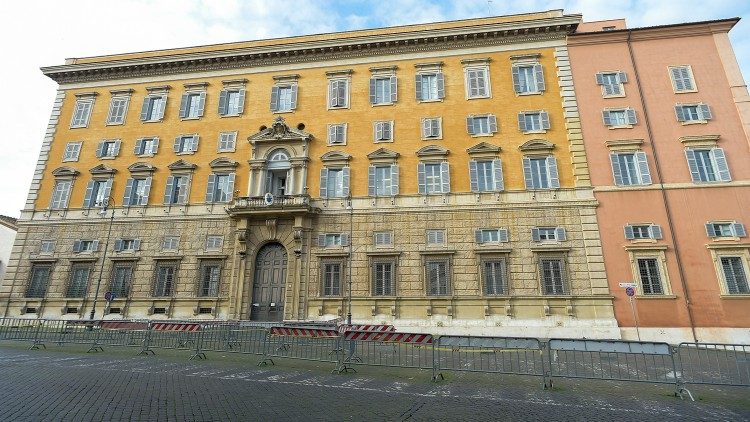
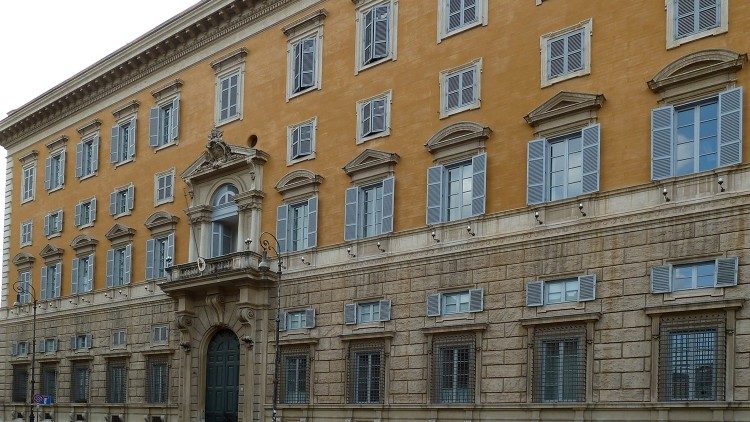
Headquarters of the Dicastery for the Doctrine of the FaithHeadquarters of the Dicastery for the Doctrine of the Faith 

Cardinal Fernández to Pius X Society: Ordaining new bishops is schismatic act

Cardinal Víctor Manuel Fernández, Prefect of the Dicastery for the Doctrine of the Faith, issues a new warning to the Society of St. Pius X against carrying out episcopal ordinations without a pontifical mandate, saying Pope Leo XIV continues to pray the Lefebvrians choose a different path.

Vatican News

The Priestly Fraternity of Saint Pius X (FSSPX), founded by Archbishop Marcel Lefebvre, has announced that it intends to carry out its plan to ordain new bishops without the pontifical mandate in July 2026, despite the Pope’s appeals.

On Wednesday, Cardinal Víctor Manuel Fernández, Prefect of the Dicastery for the Doctrine of the Faith, issued a statement to clarify several questions received, after bringing it to the attention of Pope Leo XIV.

The Pope wished to explicitly confirm his desire to continue praying that this new schismatic act may be avoided.

“I reiterate what has already been communicated,” stated Cardinal Fernández. “The episcopal ordinations announced by the Priestly Fraternity of Saint Pius X do not have the corresponding pontifical mandate. This action will constitute ‘a schismatic act’ (Pope St. John Paul II, Ecclesia Dei, no. 3), and ‘formal adherence to the schism constitutes a grave offense against God and entails the excommunication established by the law of the Church’ (ibid., 5c; cf. Pontifical Council for Legislative Texts, Explanatory Note, 24 August 1996).”

“The Holy Father,” concluded the Cardinal Prefect, “continues in his prayers to ask the Holy Spirit to enlighten the leaders of the Priestly Fraternity of Saint Pius X, so that they may retrace their steps regarding the extremely grave decision they have taken.”

Friday, February 20, 2026

The SSPX defiantly rejects further talks with Rome; plans to consecrate new bishops; causing real challenges for Pope Leo


Pope Leo faces crisis as breakaway Catholic group rejects Vatican talks

The group said it needs the new bishops as a matter of survival to minister to its faithful

In a letter to the Vatican’s doctrine chief, the Society of St. Pius X said the Holy See's threat of sanctions and schism if it goes ahead with the 1 July ceremony "is hardly compatible with a genuine desire for fraternal exchanges and constructive dialogue." (AP)


A breakaway Catholic traditionalist group on Thursday rejected the Vatican’s offer of talks, suggesting a collision course with Pope Leo XIV over its planned consecrations of new bishops without his consent.

In a letter to the Vatican’s doctrine chief, the Society of St. Pius X said the Holy See's threat of sanctions and schism if it goes ahead with the 1 July ceremony "is hardly compatible with a genuine desire for fraternal exchanges and constructive dialogue."

The SSPX, as the group is known, celebrates the old Latin Mass and was created in opposition to the Second Vatican Council, the 1960s meetings that modernized the Catholic Church and allowed for the celebration of Mass in the vernacular.

The SSPX broke with Rome in 1988, after its founder, Archbishop Marcel Lefebvre, consecrated four bishops without papal consent, arguing that it was necessary for the survival of the church’s tradition.

The Vatican promptly excommunicated Lefebvre and the four other bishops, and the group today still has no legal status in the church.

In the decades since that original schismatic act with Rome, the group has continued to grow, with schools, seminaries and parishes around the world.

It counts 733 priests, 264 seminarians, 145 religious brothers, 88 oblates and 250 religious sisters – a Catholic reality that poses a real threat to the Vatican because it represents a parallel church.

Earlier this month, the SSPX announced it planned to consecrate four new bishops on 1 July, since there are only two left from the original group. The SSPX said it needs the new bishops as a matter of survival to minister to the SSPX faithful, whose numbers have grown around the world.

The threat of a new consecration ceremony has created the first tangible crisis for Leo, who has sought to pacify relations with Catholic traditionalists that worsened under Pope Francis.

While the SSPX is out of communion with the Holy See, plenty of Catholic traditionalists who are loyal to Rome but sympathetic to the SSPX plight are watching how Leo handles the challenge.

In a bid to head off the crisis, the Vatican’s doctrine chief Cardinal Víctor Manuel Fernández invited the SSPX superior, the Rev. Davide Pagliarani, to the Vatican for talks Feb. 12. He proposed a theological dialogue on Vatican II, but only if the SSPX suspends the planned consecration ceremony.

In a letter to Fernández posted on the SSPX website Thursday, Pagliarani recalled that he had proposed precisely such a dialogue in 2019 and received no reply. He said doctrinal talks now were impossible under such conditions, and that regardless they will never agree on Vatican II.

“Indeed, the hand extended to open the dialogue is unfortunately accompanied by another hand already poised to impose sanctions,” he wrote. “There is talk of breaking communion, of schism, and of ‘serious consequences.’”

With no hope for doctrinal agreement, Pagliarani asked instead for the Vatican to exercise charity, given the number of Catholic faithful who attend SSPX churches.

“The society is an objective reality: it exists,” Pagliarani wrote. “This same society asks you only to be allowed to continue to do this same good for the souls to whom it administers the holy sacraments.”

The Vatican said it had no immediate comment.

Tuesday, November 4, 2025

Pope Leo XIV and the Doctrine of the Faith "clarify" Mary's title as co-redemptrix and mediatrix


Dicastery for the Doctrine of the FaithDicastery for the Doctrine of the Faith 

Doctrinal Note on Marian titles: Mother of the faithful, not Co-redemptrix

The document of the Dicastery for the Doctrine of the Faith, approved by Pope Leo XIV, offers clarifications on titles applied to the Blessed Virgin Mary, and calls for special attention to the use of the expression, “Mediatrix of all graces.”

Vatican News

The Dicastery for the Doctrine of the Faith on Tuesday, 4 November 2025, published Mater populi fidelis (“The Mother of the Faithful People”), a Doctrinal Note “On Some Marian Titles Regarding Mary’s Cooperation in the Work of Salvation.” Signed by the Prefect, Cardinal Víctor Manuel Fernández, and the Secretary for the Dicastery’s Doctrinal Section, Monsignor Armando Matteo, the Note was approved by the Pope on 7 October.

Mater populi fidelis (MPF) is the fruit of a long and complex collegial effort. It is a doctrinal document on Marian devotion, centered on the figure of Mary, who is associated with the work of Christ as Mother of believers. The Note provides a significant biblical foundation for devotion to Mary, as well as marshalling various contributions from the Fathers, the Doctors of the Church, elements of Eastern tradition, and the thought of recent Popes.

In this positive framework, the doctrinal text analyses a number of Marian titles, encouraging the adoption of some of those appellations and warning against the use of others. Titles such as “Mother of Believers,” “Spiritual Mother,” “Mother of the Faithful” are noticed with approval in the Note. Conversely, the title of “Co-redemptrix” is deemed inappropriate and problematic. The title of “Mediatrix” is considered unacceptable when it takes on a meaning that excludes Jesus Christ; however, it can used appropriately so long as it expresses an inclusive and participatory mediation that glorifies the power of Christ. The titles “Mother of Grace” and “Mediatrix of All Graces” are considered acceptable when used in a very precise sense, but the document also warns of particularly broad explanations of the meaning of the terms.

Essentially, the Note reaffirms Catholic doctrine, which has always emphasized that everything in Mary is directed towards the centrality of Christ and His salvific work. For this reason, even if some Marian titles admit of an orthodox interpretation through correct exegesis, Mater populi fidelis says it is preferable to avoid them.

In his presentation of the Doctrinal Note, Cardinal Fernández expresses appreciation for popular devotion but warns against groups and publications that propose a certain dogmatic development and raise doubts among the faithful, including through social media. The main problem in interpreting these titles applied to Our Lady, he says concerns the way of understanding Mary's association with Christ's work of redemption (paragraph 3).

Co-redemptrix

Regarding the title “Co-redemptrix,” the Note recalls that “some Popes have used the title “without elaborating much on its meaning.” Generally, it continues, “they have presented the title in two specific ways: in reference to Mary’s divine motherhood (insofar as she, as Mother, made possible the Redemption that Christ accomplished) or in reference to her union with Christ at the redemptive Cross. The Second Vatican Council refrained from using the title for dogmatic, pastoral, and ecumenical reasons. Saint John Paul II referred to Mary as ‘Co-redemptrix’ on at least seven occasions, particularly relating this title to the salvific value of our sufferings when they are offered together with the sufferings of Christ, to whom Mary is united especially at the Cross” (18).

The document cites an internal discussion within the then-Congregation for the Doctrine of the Faith, which in February 1996 had discussed the request to proclaim a new dogma on Mary as “Co-redemptrix or Mediatrix of all graces.” Then-Cardinal Joseph Ratzinger was opposed to such a definition, arguing, “the precise meaning of these titles is not clear, and the doctrine contained in them is not mature. […] It is not clear how the doctrine expressed in these titles is present in Scripture and the apostolic tradition.”

Later, in 2002, the future Benedict XVI expressed himself publicly in the same way: “The formula ‘Co-redemptrix’ departs to too great an extent from the language of Scripture and of the Fathers and therefore gives rise to misunderstandings… Everything comes from Him [Christ], as the Letter to the Ephesians and the Letter to the Colossians, in particular, tell us; Mary, too, is everything that she is through Him. The word ‘Co-redemptrix’ would obscure this origin.”

The note clarifies that Cardinal Ratzinger did not deny the good intentions behind the proposal, nor the valuable aspects reflected in it, but nonetheless maintained that they were “being expressed in the wrong way” (19).

Pope Francis also expressed his clear opposition to the use of the title Co-Redemptrix on at least three occasions.

Tuesday’s Doctrinal Note concludes: “It would not be appropriate to use the title ‘Co-redemptrix’ to define Mary’s cooperation. This title risks obscuring Christ’s unique salvific mediation and can therefore create confusion and an imbalance in the harmony of the truths of the Christian faith. […] When an expression requires many, repeated explanations to prevent it from straying from a correct meaning, it does not serve the faith of the People of God and becomes unhelpful” (22).

Mediatrix

The Note emphasizes that “the biblical statement about Christ’s exclusive mediation is conclusive. Christ is the only Mediator” (24).

At the same time, MPF recognizes “the fact that the word ‘mediation’ is commonly used in many areas of everyday life, where it is understood simply as cooperation, assistance, or intercession. As a result, it is inevitable that the term would be applied to Mary in a subordinate sense. Used in this way, it does not intend to add any efficacy or power to the unique mediation of Jesus Christ, true God and true man” (25).

Further, “it is clear that Mary has a real mediatory role in enabling the Incarnation of the Son of God in our humanity” (26).  

Mother of believers and Mediatrix of all graces

Mary’s maternal role “in no way obscures or diminishes” the unique mediation of Christ, “but rather shows its power […] Understood in this way, Mary’s motherhood does not seek to weaken the unique adoration due to Christ alone but, rather, seeks to enkindle it.”

Therefore, the Note states, “one must avoid titles and expressions that present Mary as a kind of ‘lightning rod’ before the Lord’s justice, as if she were a necessary alternative before the insufficiency of God’s mercy” (37b).

Thus, the title “Mother of Believers” “enables us to speak of Mary’s role in our relation to our life of grace”. However, MPF goes on to urge caution concerning the use of expressions that may convey “less acceptable notions” (45).

“Cardinal Ratzinger already affirmed” for example, “that the title ‘Mary, Mediatrix of All Graces’ was not clearly grounded in Revelation.” So, the Note continues, “in line with this conviction, we can recognize the difficulties this title poses, both in terms of theological reflection and spirituality” (45). In fact, “no human person — not even the Apostles or the Blessed Virgin — can act as a universal dispenser of grace. Only God can bestow grace, and he does so through the humanity of Christ” (53).

“Some titles, such as ‘Mediatrix of All Graces,’ have limits that do not favor a correct understanding of Mary’s unique place,” MPF explains, adding, “In fact, she, the first redeemed, could not have been the mediatrix of the grace that she herself received” (67).

Nonetheless, the Doctrinal Note acknowledges that “the term ‘graces,’ when seen in reference to Mary’s maternal help at various moments in our lives, can have an acceptable meaning. The plural form expresses all the aids — even material — that the Lord may grant us when He heeds His Mother’s intercession” (68).

Read the full text of Mater populi fidelis.