Showing posts with label Cardinal Arthur Roche. Show all posts

Friday, July 31, 2026

Cardinal Roche affirms Pope Leo XIV will not change Traditionis Custodes


Vatican liturgy chief says Pope Leo will not overturn Latin Mass restrictions


Cardinal Arthur Roche, prefect of the Dicastery for Divine Worship and the Discipline of the Sacraments, is pictured in a 2022 file photo. (OSV News/Reuters/Marko Djurica)


by Justin McLellan

Vatican City — July 30, 2026

The head of the Vatican's liturgy office said that Pope Leo XIV will not be peeling back restrictions on celebrating the pre-Vatican II Latin Mass put in place by his predecessor in 2021, dashing the hopes of traditionalist Catholics seeking a reversal of the controversial decree. 

"Pope Leo is not going to change Traditionis Custodes," said Cardinal Arthur Roche, prefect of the Dicastery for Divine Worship and the Discipline of the Sacraments, referencing Pope Francis' 2021 restrictions on the pre-Vatican II Latin Mass in an interview with the English Catholic magazine The Tablet published July 29. 

Traditionis Custodes created new norms for the celebration of the pre-Vatican II Latin Mass, which follows the 1962 Roman Missal, declaring that priests must request permission from their bishop to celebrate that form of the Mass and that communities attached to the liturgy must celebrate it at designated locations apart from ordinary parish churches. 

Publicly, Leo has not spoken at length on the issue, but Roche told The Tablet that the pope is "not going back to Summorum Pontificum" — the 2007 decree issued by Pope Benedict XIV that allowed priests to celebrate Mass from the 1962 missal. 

Some Catholics have turned greater access to the old form of the Mass into a rallying cry for a church that rejects modernity, turning the liturgy into a flashpoint between more traditionally minded Catholics and those advancing a Vatican II vision of the church marked by greater participation of the laity.

Yet in the interview, Roche, who was appointed by Pope Francis to his current post in 2021 less than two months before Traditionis Custodes was published, appeared to state that the current conditions in no way marginalize Catholics with an affinity for the pre-Vatican II Mass. 

"It’s interesting. When I meet with groups who want the antecedent liturgy, and I say: 'Well, the Holy Father has given you that, so what’s the problem?' they can’t answer," the cardinal said. "But then they go away and say, 'We’re still being persecuted.' In what way persecuted? Why is the band still playing a tune that is discordant with the life of the Church?"

The Vatican last year granted two U.S. dioceses temporary dispensations from enforcing Traditionis Custodes, and Leo allowed U.S. Cardinal Raymond Burke to celebrate a pre-Vatican II Latin Mass in St. Peter's Basilica, spurring hope among traditionalist Catholics that the American pope would soften restrictions on the old form of the liturgy. 

Yet under Leo's leadership, the Vatican has not changed its official position that the reformed liturgy remains the sole expression of the Latin-rite Mass. 

In January, a text authored by Roche, who at 76 is past the retirement age for cardinals, was distributed at a meeting of the world's cardinals which said that Francis "pointed the way to unity" with the restrictions he imposed on the old form of the liturgy and wrote that "there ought to be only one rite for celebrating the Mass."

Speaking to The Tablet, Roche said that Vatican II expressed the need for the church be more missionary in its focus, "and that to prepare people to be missionary, the very central core of the life of the Church, which is the Eucharist, has to nourish people in a different way."

He said the Mass today offers Catholics more spiritual nourishment than the 1962 Mass.

"The abundant diet of scripture that is now given through the celebration of the Mass and the sacraments is something that wasn’t available to use before, but it is now," he said. Whereas the old form of Mass portrayed the priest as acting on behalf of the congregation, the cardinal said that "in fact, when the Mass is being celebrated, because the baptized people are a priestly people, they too are celebrating with the priest," as emphasized in the reformed liturgy. 

Tuesday, February 11, 2025

St. Teresa of Calcutta now has feast day inscribed in the General Roman Calendar


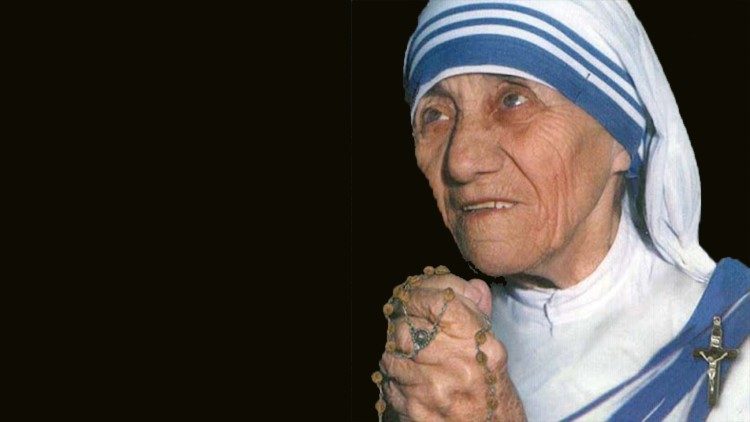
Mother Teresa of Calcutta (file photo)Mother Teresa of Calcutta (file photo) 

St. Teresa of Calcutta’s feast day inscribed in Roman Calendar on September 5

The Dicastery for Divine Worship and the Discipline of the Sacraments releases the decree inscribing St. Teresa of Calcutta in the General Roman Calendar, along with the liturgical texts to accompany her feast day on September 5.

By Devin Watkins

Mother Teresa of Calcutta was “a beacon of hope, small in stature but great in love, a witness to the dignity and privilege of humble service in the defence of all human life and of all those who have been abandoned, discarded and despised even in the hiddenness of the womb.”

Cardinal Arthur Roche, Prefect of the Dicastery for Divine Worship and the Discipline of the Sacraments, offered that praise of St. Teresa on Tuesday.

The Cardinal Prefect released a comment to accompany the decree inscribing St. Teresa of Calcutta into the General Roman Calendar.

The decree was accompanied by the liturgical texts (in Latin) to guide the faithful in praying the Liturgy of the Hours and the celebration of Mass.

Her feast day will be celebrated as an optional liturgical memorial annually on September 5, the date of her death in 1997.

Mother Teresa was born in Skopje on August 26, 1910 as Anjezë Gonxhe Bojaxhiu. She professed solemn vows as a Sister of Loreto in Calcutta, India, in 1937. In 1950, she left the Sisters of Loreto to found the Missionaries of Charity, which now numbers over 6,000 sisters active in 130 countries who serve those most in need.

Mother Teresa was awarded the Nobel Peace Prize in 1979, and Pope St. John Paul II beatified her on October 19, 2003.

Pope Francis canonized her on September 4, 2016 during the Extraordinary Jubilee of Mercy.

‘Witness of hope’

In his comment released on Tuesday, Cardinal Roche said Pope Francis requested her insertion in the Roman Calendar in response to the requests of bishops, religious, and the lay faithful.

He noted that her holiness and spirituality reveals to the faithful an “outstanding witness to hope for those who had been discarded in life.”

At the Mass of Canonization for St. Teresa on September 4, 2016, Pope Francis called her a conduit of divine mercy that illumines the darkness that surrounds us.

“Her mission to the urban and existential peripheries,” noted the Holy Father in his homily, “remains for us today an eloquent witness to God’s closeness to the poorest of the poor.”

Reflecting on the liturgical texts released on Tuesday, Cardinal Roche said the Collect prayer focuses on the presence of the Cross of Christ in the needs of the poor.

The First Reading for the optional memorial Mass comes from Isaiah and relates to the “fast that is pleasing to God”.

The Gospel, he added, underlines the revelation of the mysteries of the Kingdom of God to little ones.

The Liturgy of the Hours contains part of a letter Mother Teresa wrote to Fr. Joseph Neuner in 1960 about her struggle with what St. John of the Cross termed the “Dark Night of the Soul.”

“Opening her soul,” concluded Cardinal Roche, “she manifests the darkness of God’s absence through which she lived for many years yet joyfully offered to God, so that, bearing faithfully this trial, many souls may be enlightened.”

Thursday, March 30, 2023

Vatican orders German Synod not to implement some of their illicit and disobedient proposals


Vatican’s Liturgy Czar Rejects German Church’s Plans for Laity to Preach Homilies, Conduct Baptisms

Apart from covering the question of homilies and baptisms by laypeople, the seven-page letter also reminded the German bishops that liturgical translations must be confirmed and approved by the Vatican.


The Vatican’s liturgy czar has intervened against the implementation of resolutions of the German Synodal Way that demand laypeople should be able to regularly baptize and preach the homily at Mass in churches across Germany. 

In a letter to the German Bishops’ Conference president dated March 29, Cardinal Arthur Roche said neither was possible — despite at least one German diocese already announcing both practices.

The written intervention by the Vatican’s prefect of the Dicastery for Divine Worship and the Discipline of the Sacraments was addressed to Bishop Georg Bätzing of Limburg, reported CNA Deutsch, CNA’s German-language news partner, which has obtained a copy of the document. 

Apart from covering the question of homilies and baptisms by laypeople, the seven-page letter also reminded the German bishops that liturgical translations must be confirmed and approved by the Vatican. 

On the issue of homilies, Cardinal Roche wrote that the reason why laypeople cannot regularly preach at Mass is not due to their need for “better theological preparation or better communication skills.” Nor is the intent to create “inequalities among the baptized.”

Instead, the cardinal pointed to “distinctions made by the Spirit, who produces different charisms that are distinct and complementary.”

Cardinal Roche wrote that well-formed laypeople should contribute, for instance, as catechists or by conducting conversations about sacred Scripture. 

However, he added that laypeople could not give the homily at Mass since only someone ordained “sacramentally represents Christ by virtue of the sacra potestas [sacred power] conferred on him at ordination.” 

Explaining that the issue of preaching at Mass was, in other words, a sacramental rather than an educational matter, Cardinal Roche warned of “misunderstandings” about the figure and identity of the priest, who is the only one who can act ‘in persona Christi capitis’ [in the person of Christ, the head of the Church] by virtue of the sacrament.”

The cardinal also rejected the introduction of laypeople regularly administering baptisms, something already in practice in some German dioceses. He wrote that justifying this with a lack of priests, for example, was not possible under canon law.

Laypeople could only validly perform baptisms in exceptional circumstances, such as in danger of death or “in painful situations of persecution, but also in mission areas and in other cases of special need,” the cardinal explained.


Papal Appeal to Unity

Cardinal Roche reminded the German bishops of Pope Francis’ 2019 letter regarding the direction of the Synodal Way process. “The universal Church lives in and from the particular Churches, just as the particular Churches live and flourish in and from the universal Church; if they were separated from the universal Church, they would weaken, decay, and die,” the Pope wrote at the time.

Responding to Cardinal Roche's communication, a spokesperson for the German Bishops’ Conference on Thursday said the bishops would continue to seek dialogue with Rome on these issues.

Earlier this month, several German bishops announced plans to implement several resolutions passed by the Synodal Way. 

Bishop Franz-Josef Bode of OsnabrĂĽck — then vice president of the German Bishops’ Conference — said laypeople could baptize babies and “regularly” preach at homilies in his diocese. 

About one week later, on March 25, the Holy See announced that Pope Francis had accepted Bishop Bode’s request to resign