Showing posts with label gender dysphoria. Show all posts

Monday, April 8, 2024

Landmark release today from the Vatican: Dignitas infinita; all that is against human dignity including gender theory, surrogacy and much, much more


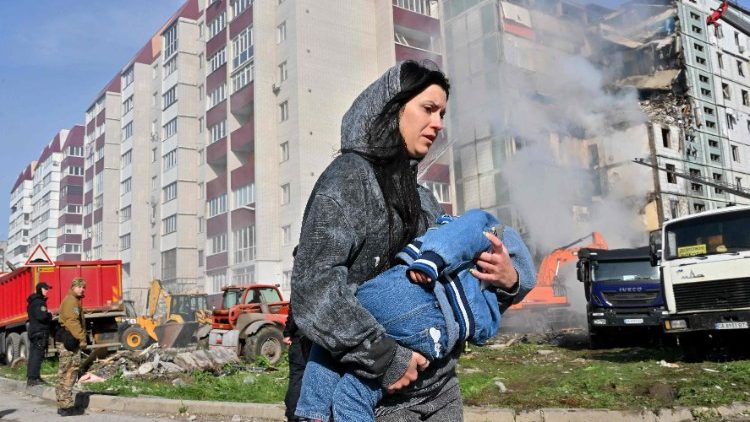
CORRECTION-UKRAINE-RUSSIA-CONFLICT-WAR

New Vatican document lists ‘grave violations’ of human dignity

The Dicastery for the Doctrine of the Faith’s new document 'Dignitas infinita' took five years to complete, and builds on the papal magisterium of the last decade: from war to poverty, from violence against migrants to violence against women, from abortion to surrogate motherhood to euthanasia, from gender theory to digital violence.

By Andrea Tornielli

Three chapters offer the foundations for the fourth, which is dedicated to "some grave violations of human dignity".

That’s the structure of the Dicastery for the Doctrine of the Faith’s new Declaration Dignitas infinita, which commemorates the 75th anniversary of the Universal Declaration of Human Rights and reaffirms "the indispensable nature of the dignity of the human person in Christian anthropology " (Intro.)

The main novelty of the document, which is the fruit of five years' work, is the inclusion of a number of key themes from the recent papal magisterium that accompany the bioethical ones. In the 'non-exhaustive' list that is offered, abortion, euthanasia and surrogate motherhood are listed as violations of human dignity alongside war, poverty and human trafficking.

The new text thus contributes to overcoming the dichotomy that exists between those who focus exclusively on beginning-and-end-of-life issues, while forgetting so many other attacks against human dignity and, conversely, those who focus only on defending the poor and migrants while forgetting that life must be defended from conception to its natural conclusion.

Fundamental Principles

The first three parts of the Declaration recall fundamental principles.

"In the light of Revelation, the Church resolutely reiterates and confirms" the "ontological dignity of the human person, created in the image and likeness of God and redeemed in Jesus Christ" (1).

This is an "inalienable dignity”, corresponding to "human nature apart from all cultural change"(6). It is a "gift" and therefore present in "an unborn child, an unconscious person, or an older person in distress (9).

"The Church proclaims the equal dignity of all people, regardless of their living conditions or qualities" (17), and she does so on the basis of biblical revelation: women and men are created in the image of God.

Christ, by becoming incarnate, "confirmed the dignity of the body and soul" (19), and, in His rising, revealed to us that man's dignity man rests “above all on the fact that he is called to communion with God" (20).

The dignity of every person

The document highlights the misunderstandings of those who prefer the expression "personal dignity" to "human dignity", “since they understand a person to be only ‘one who is capable of reasoning’" (24).

Thus, according to them, "the unborn child would not have personal dignity, nor would the older person who is dependent upon others, nor would an individual with mental disabilities. On the contrary, the Church insists that the dignity of every human person, precisely because it is intrinsic, remains in all circumstances" (24).

Furthermore, the document stresses that "the concept of human dignity is also occasionally misused to justify an arbitrary proliferation of new rights … as if the ability to express and realize every individual preference or subjective desire should be guaranteed." (25).

The list of violations

The Declaration then presents the list of "some grave violations of human dignity".

This includes "all offences against life itself, such as murder, genocide, abortion, euthanasia, and willful suicide” must be recognized as contrary to human dignity ", but also "all violations of the integrity of the human person, such as mutilation, physical and mental torture, undue psychological pressures ".

And, finally, it includes "all offences against human dignity, such as subhuman living conditions, arbitrary imprisonment, deportation, slavery, prostitution, the selling of women and children, degrading working conditions where individuals are treated as mere tools for profit rather than free and responsible persons".

The death penalty is also cited, since it "violates the inalienable dignity of every person, regardless of the circumstances" (34).

Poverty, war and human trafficking

The first issue mentioned is poverty, "one of the greatest injustices in the contemporary world" (36).

Then there is war, "another tragedy that denies human dignity", and always a “defeat of humanity" (38), to the point that "it is very difficult nowadays to invoke the rational criteria elaborated in earlier centuries to speak of the possibility of a ‘just war.’"(39).

The Declaration also discusses the "travail of migrants", whose "lives are put at risk because they no longer have the means to start a family, to work, or to feed themselves" (40).

The document then dwells on "human trafficking", which is taking on "tragic dimensions" and is described as " vile activity, a disgrace to our societies that claim to be civilized ". The Declaration invites "exploiters and clients" to make a serious examination of conscience (41).

Similarly, it calls for the fight against phenomena such as “the marketing of human organs and tissues, the sexual exploitation of boys and girls, slave labour, including prostitution, the drug and weapons trade, terrorism, and international organized crime” (42).

The document also mentions sexual abuse, which leaves “deep scars in the hearts of those who suffer it”: these are “sufferings that can last a lifetime and that no repentance can remedy” (43).
Discrimination and violence against women are then discussed. Among the latter are listed "coercive abortions, which affect both mother and child, often to satisfy the selfishness of males" and "the practice of polygamy" (45). Femicide is also condemned (46).

Abortion and surrogacy

The condemnation of abortion is strong: "Among all the crimes which can be committed against life, procured abortion has characteristics making it particularly serious and deplorable", and reference is made to the fact that "defence of unborn life is closely linked to the defence of each and every other human right" (47).

The Declaration’s rejection of surrogacy, by means of which "the immensely worthy child becomes a mere object", is also strong. This is a practice that "represents a grave violation of the dignity of the woman and the child …  A child is always a gift and never the basis of a commercial contract.” (48)

The list goes on to mention euthanasia and assisted suicide, confusingly defined by some laws as " death with dignity". The document stresses that "suffering does not cause the sick to lose their dignity, which is intrinsically and inalienably their own" (51).

The Declaration then speaks of the importance of palliative care and the avoidance of “aggressive treatments or disproportionate medical procedures”, reaffirming that “Life is a right, not death, which must be welcomed, not administered” (52).

A further serious violation of human dignity is the marginalization of differently-abled persons (53).

Gender theory

The document begins the section on this topic by stressing that "every sign of unjust discrimination” against homosexual persons “is to be carefully avoided, particularly any form of aggression and violence".

It is “contrary to human dignity", the Declaration says, that in some places “not a few people are “imprisoned, tortured and even deprived of the good of life solely because of their sexual orientation" (55).

Gender theory, which is “extremely dangerous since it cancels differences in its claim to make everyone equal", is then criticised (56).

The Church, we read, recalls that "human life in all its dimensions, both physical and spiritual, is a gift from God. This gift is to be accepted with gratitude and placed at the service of the good. Desiring a personal self-determination, as gender theory prescribes … amounts to a concession to the age-old temptation to make oneself God" (57).

Gender theory "intends to deny the greatest possible difference that exists between living beings: sexual difference” (58).

Therefore, " all attempts to obscure reference to the ineliminable sexual difference between man and woman” are “to be rejected" (59).

Sex change is also judged negatively since it "risks threatening the unique dignity the person has received from the moment of conception". This does not mean, however, excluding the possibility that “a person with genital abnormalities that are already evident at birth or that develop later may choose to receive the assistance of healthcare professionals to resolve these abnormalities" (60).

Digital violence

The final item on the list is “digital violence”. “New forms of violence are spreading through social media”, we read, such as cyberbullying, and “the internet is also a channel for spreading pornography and the exploitation of persons for sexual purposes or through gambling” (61).

The Declaration ends by urging that “respect for the dignity of the human person beyond all circumstances be placed at the centre of the commitment to the common good and at the centre of every legal system” (64).

You can find the full text of the Declaration Dignitas infinita on the Holy See website.

Thank you for reading our article. You can keep up-to-date by subscribing to our daily newsletter. Just click here

Friday, July 28, 2023

The battle is real;one hospital ends gender altering surgeries


Children’s hospital in Colorado halts ‘gender affirming’ surgeries, citing surge in requests


Children’s Hospital Colorado will stop performing purported “gender-affirming” surgeries on patients aged 18 years and older, citing an “unprecedented” number of referrals and a need to focus on pediatric patients.

The surgeries involved “chest reconstruction,” the Denver Post reported. The procedures remove breast tissue to create a masculine appearance for women who identify as men. Staff are now referring prospective surgery patients to other hospitals.

The hospital said it has not performed such surgeries on patients under age 18, though it continues to provide puberty blockers and hormones and other services that aim to affirm the self-identified gender of some patients.

“We have been receiving unprecedented referrals for gender-affirming care, and in order to continue delivering expert multidisciplinary care to our pediatric patients and their families, we have made the difficult decision to no longer provide gender-affirming surgical procedures for adult patients 18 years of age and older,” the hospital told CNA in a statement.

Though a spokesperson for Children’s Hospital Colorado told the Denver Post last week that children’s hospitals have been “directly threatened as a result of the gender-affirming care provided in their institutions,” she later told NBC News that threats to other hospitals did not drive the decision.

The hospital’s TRUE Center for Gender Diversity still provides puberty-blocking medicines, cross-sex hormone therapy, and counseling as well as referrals to other services, according to its website.  

“Using puberty blockers can avoid body changes that do not align with your identity,” the TRUE Center website says. It says hormone therapy can help produce secondary sex characteristics like voice pitch and breast development “that align with your gender identity.”

Catholic ethics rejects the removal of healthy sexual organs as a form of mutilation, according to an FAQ by the National Catholic Bioethics Center. The Catholic vision of the person as a unity of body and soul means that a person cannot change his or her sexual identity.

Purported gender-affirming drugs and procedures, especially for minors, have also drawn political scrutiny, public protest, and sometimes threats.

In November 2022, the New York Times published an article questioning the use of puberty blockers, which are often presented as a safe, reversible option. There are various protocols for using the drugs, little documentation of patient outcomes, and the drugs are not government-approved for use in gender therapies.

The drugs are prescribed as early as age 8 so that self-identified transgender patients can begin cross-sex hormones at age 12 or 13. However, puberty can help clarify self-perceived gender, and patients could be making life-altering choices prematurely. Among those who have used the drugs, bone strength analysis finds that their bone growth does not fully rebound. 

There are also concerns that the drugs’ interference with hormonal development could disrupt mental growth and brain development in areas such as critical thinking, sophisticated self-reflection, social skills, and problem-solving skills.

“Our team is now working with impacted adult patients to explore referrals to the many other hospitals in the region that provide this care for adults,” the hospital said in its statement. “Children’s Hospital Colorado takes a holistic approach to ensure a patient’s mental and physical needs surrounding their gender identity and expression are met.”

An unnamed woman whose child was seeking to schedule chest reconstruction at Children’s Hospital Colorado after turning 18 this fall spoke about the changes to The Denver Post. 

Before they could schedule the surgery her child’s primary care physician and a psychologist had to evaluate the child’s physical health and ability to make a decision about the procedure. Health insurers also had to agree to pay for the procedure.

She said her child has now been referred to the University of Colorado Hospital’s surgery center. She told the Denver Post the whole process has to restart, thwarting her child’s goal of finishing the surgery before leaving for college next year.

Colorado is the first state to define gender-affirming care as an essential health benefit and requires coverage of it in individual plans and small group plans, according to the website of the Division of Insurance at the Colorado Department of Regulatory Agencies. Colorado’s Medicaid program will streamline the process to provide people on Medicaid access to the drugs and surgeries on Aug. 30, 9 News reported.

An October 2022 Reuters report on children seeking gender care said 776 U.S. patients aged 13 to 17 with a prior gender dysphoria diagnosis underwent mastectomies from 2019 to 2021. This figure, compiled by health technology company Komodo Health Inc., was based on insurance claims data and did not include procedures paid for out of pocket. Genital surgeries were performed on another 56 patients in this time period.

The procedure is uncommon for patients under age 18, with some hospitals and gender clinics requiring patients to be adults. The surgical procedures are irreversible and have a heightened risk of complications, Reuters reported.

At least 121,882 children ages 6 to 17 were diagnosed with gender dysphoria from 2017 through 2021, Reuters said. It defined this dysphoria as the distress caused by a discrepancy between a person’s gender identity and the gender assigned to them at birth.

In the same period, at least 4,780 adolescents started on puberty blockers and at least 14,726 started hormone treatment.

Thursday, May 4, 2023

Archbishop of Oklahoma City hits home run in his call to respond to gender dysphoria with empathy but without compromising God's reality


Archbishop Coakley: Respond with love to those with gender dysphoria without compromising truth


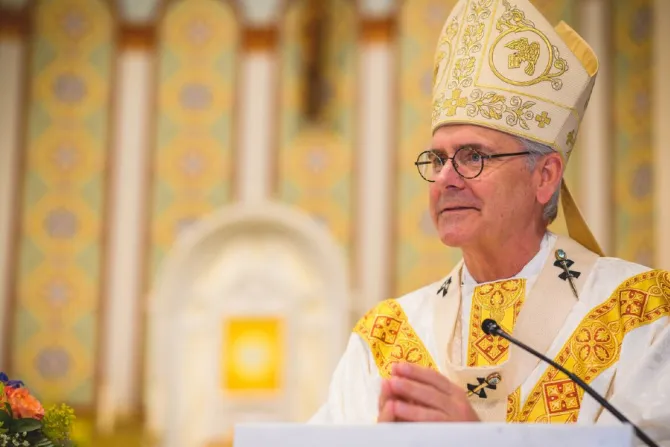
Archbishop Paul Coakley of Oklahoma City in an interview this week called for responding to those experiencing gender dysphoria with empathy but without compromising on the reality of God’s creation of humanity as male and female. 

“We can show love and compassion and concern as a parent, as a pastor, as a friend, without jettisoning our commitment to the truth,” Coakley told Montse Alvarado of EWTN News In Depth. 

“I think we can show affection and tenderness and compassion without succumbing to the pressure and that parents often feel subjected to by a young person, a child whom they love very much, who is obviously suffering.”

Coakley released a pastoral letter April 30 on the topic titled “On the Unity of the Body and Soul: Accompanying Those Experiencing Gender Dysphoria.” Coakley said the letter, which was in the works for several months, came in response to questions from some Catholic school principals in his diocese who have faced questions about how to respond to, for example, children in Catholic schools wishing to identify as a different gender.

In his interview with EWTN News In Depth, Coakley said his document is “seeking a broader audience [of] parents, teachers, pastors, anyone who’s accompanying, working with young people.”

In the letter, Coakley spoke about the Church’s teaching on sex and gender, which is that God created humans male and female in his image, as composites of body and soul. 

In a section of the letter addressed directly to those experiencing gender dysphoria, Coakley said it is vital not to dismiss the pain experienced by people who feel they are the wrong gender and affirmed that “each person who identifies as transgendered is loved by God and is a person Jesus Christ died to redeem … As a Church, we want to walk alongside you as you struggle with gender dysphoria.”

“We must avoid the extremes: to ignore the pain of the person and dogmatically assert that biological sex is the end of the conversation or to jettison the truth of the body in the false hope of relieving pain,” Coakley wrote in his letter.

“A Catholic response must both affirm God-given sex and recognize the struggle of the person in front of us. It requires listening with empathy as well as extending the invitation to receive God’s gift of the sexed body.”

Addressing parents who are struggling to respond to a child experiencing gender dysphoria, Coakley advised them to be open and listen to their child’s struggles but also to seek counseling and not to adopt pronouns different from the child’s biological sex. 

Coakley encouraged a compassionate approach that does not discount what the child is feeling, saying Catholics must “insist on the doctrinal integrity of our position, but at the same time recognizing the importance of being understanding and listening to a child and where they’re hurting.”

“Don’t shy away from the opportunity to engage [your] sons and daughters on these topics … I think nothing can be lost by taking time to listen and to try to understand,” he said. 

Though he presents some scientific evidence to support the idea that children should not seek medical interventions to change their gender, Coakley said the letter was more focused on the Church’s teaching and how to stay true to it in a loving manner. 

“I think we can benefit by some clarity that science can give about the meaning of sex, biological sex, and where gender comes from and things of that sort. But our focus is really on the doctrinal foundations for a solid pastoral approach that is willing to speak the truth in love, and we can’t separate the two,” he said. 

Speaking on EWTN News In Depth, Coakley advised parents to be prepared to talk to their children about these issues, taking care to discern the timing of when a child might be ready to discuss them. 

“Parents need to be in communication with their sons and daughters, to be engaging them regularly and making time for not just this kind of conversation, but about the things that matter, things that are important. Any conversation, I think I say in here about gender should be just a small subset of conversations that need to be taking place in the family all the time.”

He also said he hopes other bishops will consider releasing similar guidance. 

“I’ve already heard from several bishops in the last 24 hours who have thanked me for this, and I wouldn’t be surprised if some of them will find their own way to disseminate what I’ve tried to articulate in their own dioceses and in their own local settings,” he noted. 

“I think our priests and our parishes need the reassurance that this kind of guidance from a bishop can offer because they’re the ones that are on the front lines in their parishes dealing with this in a much more regular way than I am dealing with it.”