Showing posts with label euthanasia. Show all posts

Friday, August 9, 2024

The Catholic Church stands firm against euthanasia, assisted suicide


Archbishop Paglia with Pope Francis at a private audience on August 8Archbishop Paglia with Pope Francis at a private audience on August 8 

Archbishop Paglia confirms Church’s opposition to euthanasia, assisted suicide

The President of the Pontifical Academy for Life, Archbishop Vincenzo Paglia, reaffirms the Church’s opposition to euthanasia and assisted suicide, in response to media reports about the "Small Lexicon on the End-of-Life.”

By Salvatore Cernuzio

The Church is absolutely opposed to assisted suicide and euthanasia and defends the right to life of every person, especially the most vulnerable, while fostering collaboration with politics on end-of-life issues.

Archbishop Vincenzo Paglia, President of the Pontifical Academy for Life, offered that clarification on a few points in the "Small Lexicon on the End-of-Life," an 88-page glossary published by the LEV (Vatican Publishing House) regarding ethical issues related to end-of-life debates ranging from euthanasia and assisted suicide to palliative care and cremation.

Published in early July, the pamphlet has recently come under scrutiny after some media outlets highlighted what they saw as "openings" by the Holy See.

In reality, Archbishop Paglia explained to Vatican News in the following interview, these are indications rooted in the last 70 years of papal and Church teaching.

On Thursday morning, the Archbishop delivered a copy of the "Lexicon" to Pope Francis, who received him in audience at the Apostolic Palace.

Q: Archbishop Paglia, today you met with the Pope and presented the “Small Lexicon on the End-of-Life.” What did Pope Francis, who has consistently advocated for the defense of life at all stages, say about it?

Pope Francis reiterated his appreciation for the work being carried out by the Pontifical Academy for Life. Indeed, the end-of-life issue is complex, and the Church has a rich Magisterium from Pius XII in 1957 to today.

Life must be defended throughout its entirety, not just at particular moments. The right to life must be especially defended, particularly for the weak, to counter the “throwaway culture” that hides behind the claim of self-sufficiency and autonomy of today’s men and women.

Q: There are claims that this vademecum represents a shift by the Holy See toward allowing the suspension of nutrition and hydration. Is this true?

I recall that Pius XII in 1956 – as noted in the Lexicon – affirmed the permissibility of suspending ventilation under certain serious conditions. And already in 2007, the Congregation for the Doctrine of the Faith recognized that such treatments could be lawfully discontinued (or not started) when they entail “excessive burden or significant physical discomfort.”

These are two criteria that are part of the definition of disproportionate treatments, which are to be suspended. It is an evaluation that always requires the involvement of the sick person, as much as is possible. The Lexicon should be read in its entirety.

Q: Does anything change regarding euthanasia and assisted suicide? Some media outlets have suggested that the Small Lexicon on the End-of-Life masks a favorable judgment on these issues.

The Church reiterates its absolute opposition to any form of euthanasia and assisted suicide. This is also my conviction, even if some want to make me say otherwise.

However, the Church also invites reflection on how unreasonable obstinacy (therapeutic stubbornness) is not an expression of truly patient-centered medicine and care. Death is unfortunately a dimension of life. It is inevitable.

Certainly, we must never shorten the duration of life, but neither should we stubbornly obstruct its course in every possible way. We are fragile. And this is why we must take care of one another.

We must commit ourselves much more than we normally do to accompany people in the final stages of their existence, knowing that for us believers, death is not the last word!

Q: The Lexicon talks about “legislative mediations.” What are considered acceptable?

There are no "acceptable mediations" a priori. On fundamental and delicate end-of-life issues, it is desirable to achieve the highest possible common consensus, which respectfully considers different sensitivities and religious beliefs. This is the task of politics.

The Church can collaborate for the common good of society. It is the Church's role to form consciences rather than to draft laws.

Monday, April 8, 2024

Landmark release today from the Vatican: Dignitas infinita; all that is against human dignity including gender theory, surrogacy and much, much more


CORRECTION-UKRAINE-RUSSIA-CONFLICT-WAR

New Vatican document lists ‘grave violations’ of human dignity

The Dicastery for the Doctrine of the Faith’s new document 'Dignitas infinita' took five years to complete, and builds on the papal magisterium of the last decade: from war to poverty, from violence against migrants to violence against women, from abortion to surrogate motherhood to euthanasia, from gender theory to digital violence.

By Andrea Tornielli

Three chapters offer the foundations for the fourth, which is dedicated to "some grave violations of human dignity".

That’s the structure of the Dicastery for the Doctrine of the Faith’s new Declaration Dignitas infinita, which commemorates the 75th anniversary of the Universal Declaration of Human Rights and reaffirms "the indispensable nature of the dignity of the human person in Christian anthropology " (Intro.)

The main novelty of the document, which is the fruit of five years' work, is the inclusion of a number of key themes from the recent papal magisterium that accompany the bioethical ones. In the 'non-exhaustive' list that is offered, abortion, euthanasia and surrogate motherhood are listed as violations of human dignity alongside war, poverty and human trafficking.

The new text thus contributes to overcoming the dichotomy that exists between those who focus exclusively on beginning-and-end-of-life issues, while forgetting so many other attacks against human dignity and, conversely, those who focus only on defending the poor and migrants while forgetting that life must be defended from conception to its natural conclusion.

Fundamental Principles

The first three parts of the Declaration recall fundamental principles.

"In the light of Revelation, the Church resolutely reiterates and confirms" the "ontological dignity of the human person, created in the image and likeness of God and redeemed in Jesus Christ" (1).

This is an "inalienable dignity”, corresponding to "human nature apart from all cultural change"(6). It is a "gift" and therefore present in "an unborn child, an unconscious person, or an older person in distress (9).

"The Church proclaims the equal dignity of all people, regardless of their living conditions or qualities" (17), and she does so on the basis of biblical revelation: women and men are created in the image of God.

Christ, by becoming incarnate, "confirmed the dignity of the body and soul" (19), and, in His rising, revealed to us that man's dignity man rests “above all on the fact that he is called to communion with God" (20).

The dignity of every person

The document highlights the misunderstandings of those who prefer the expression "personal dignity" to "human dignity", “since they understand a person to be only ‘one who is capable of reasoning’" (24).

Thus, according to them, "the unborn child would not have personal dignity, nor would the older person who is dependent upon others, nor would an individual with mental disabilities. On the contrary, the Church insists that the dignity of every human person, precisely because it is intrinsic, remains in all circumstances" (24).

Furthermore, the document stresses that "the concept of human dignity is also occasionally misused to justify an arbitrary proliferation of new rights … as if the ability to express and realize every individual preference or subjective desire should be guaranteed." (25).

The list of violations

The Declaration then presents the list of "some grave violations of human dignity".

This includes "all offences against life itself, such as murder, genocide, abortion, euthanasia, and willful suicide” must be recognized as contrary to human dignity ", but also "all violations of the integrity of the human person, such as mutilation, physical and mental torture, undue psychological pressures ".

And, finally, it includes "all offences against human dignity, such as subhuman living conditions, arbitrary imprisonment, deportation, slavery, prostitution, the selling of women and children, degrading working conditions where individuals are treated as mere tools for profit rather than free and responsible persons".

The death penalty is also cited, since it "violates the inalienable dignity of every person, regardless of the circumstances" (34).

Poverty, war and human trafficking

The first issue mentioned is poverty, "one of the greatest injustices in the contemporary world" (36).

Then there is war, "another tragedy that denies human dignity", and always a “defeat of humanity" (38), to the point that "it is very difficult nowadays to invoke the rational criteria elaborated in earlier centuries to speak of the possibility of a ‘just war.’"(39).

The Declaration also discusses the "travail of migrants", whose "lives are put at risk because they no longer have the means to start a family, to work, or to feed themselves" (40).

The document then dwells on "human trafficking", which is taking on "tragic dimensions" and is described as " vile activity, a disgrace to our societies that claim to be civilized ". The Declaration invites "exploiters and clients" to make a serious examination of conscience (41).

Similarly, it calls for the fight against phenomena such as “the marketing of human organs and tissues, the sexual exploitation of boys and girls, slave labour, including prostitution, the drug and weapons trade, terrorism, and international organized crime” (42).

The document also mentions sexual abuse, which leaves “deep scars in the hearts of those who suffer it”: these are “sufferings that can last a lifetime and that no repentance can remedy” (43).
Discrimination and violence against women are then discussed. Among the latter are listed "coercive abortions, which affect both mother and child, often to satisfy the selfishness of males" and "the practice of polygamy" (45). Femicide is also condemned (46).

Abortion and surrogacy

The condemnation of abortion is strong: "Among all the crimes which can be committed against life, procured abortion has characteristics making it particularly serious and deplorable", and reference is made to the fact that "defence of unborn life is closely linked to the defence of each and every other human right" (47).

The Declaration’s rejection of surrogacy, by means of which "the immensely worthy child becomes a mere object", is also strong. This is a practice that "represents a grave violation of the dignity of the woman and the child …  A child is always a gift and never the basis of a commercial contract.” (48)

The list goes on to mention euthanasia and assisted suicide, confusingly defined by some laws as " death with dignity". The document stresses that "suffering does not cause the sick to lose their dignity, which is intrinsically and inalienably their own" (51).

The Declaration then speaks of the importance of palliative care and the avoidance of “aggressive treatments or disproportionate medical procedures”, reaffirming that “Life is a right, not death, which must be welcomed, not administered” (52).

A further serious violation of human dignity is the marginalization of differently-abled persons (53).

Gender theory

The document begins the section on this topic by stressing that "every sign of unjust discrimination” against homosexual persons “is to be carefully avoided, particularly any form of aggression and violence".

It is “contrary to human dignity", the Declaration says, that in some places “not a few people are “imprisoned, tortured and even deprived of the good of life solely because of their sexual orientation" (55).

Gender theory, which is “extremely dangerous since it cancels differences in its claim to make everyone equal", is then criticised (56).

The Church, we read, recalls that "human life in all its dimensions, both physical and spiritual, is a gift from God. This gift is to be accepted with gratitude and placed at the service of the good. Desiring a personal self-determination, as gender theory prescribes … amounts to a concession to the age-old temptation to make oneself God" (57).

Gender theory "intends to deny the greatest possible difference that exists between living beings: sexual difference” (58).

Therefore, " all attempts to obscure reference to the ineliminable sexual difference between man and woman” are “to be rejected" (59).

Sex change is also judged negatively since it "risks threatening the unique dignity the person has received from the moment of conception". This does not mean, however, excluding the possibility that “a person with genital abnormalities that are already evident at birth or that develop later may choose to receive the assistance of healthcare professionals to resolve these abnormalities" (60).

Digital violence

The final item on the list is “digital violence”. “New forms of violence are spreading through social media”, we read, such as cyberbullying, and “the internet is also a channel for spreading pornography and the exploitation of persons for sexual purposes or through gambling” (61).

The Declaration ends by urging that “respect for the dignity of the human person beyond all circumstances be placed at the centre of the commitment to the common good and at the centre of every legal system” (64).

You can find the full text of the Declaration Dignitas infinita on the Holy See website.

Thank you for reading our article. You can keep up-to-date by subscribing to our daily newsletter. Just click here

Tuesday, April 25, 2023

Pontifical Academy clarifies stance on assisted suicide


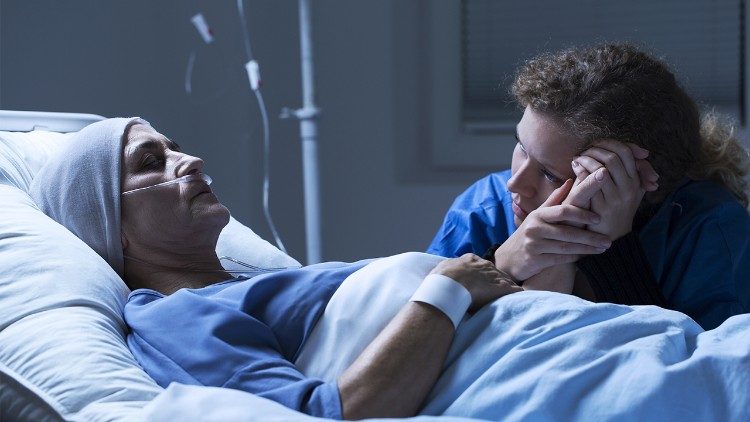
Accompaniment of the sick in the final phase of lifeAccompaniment of the sick in the final phase of life 

Archbishop Paglia clarifies stance on assisted suicide

Archbishop Vincenzo Paglia reiterates his opposition to "euthanasia" and assisted suicide and clarifies remarks about the legal status of the practice in Italy.

By Christopher Wells

Archbishop Vincenzo Paglia, the President of the Pontifical Academy for Life, has clarified earlier remarks concerning the legal status of medically assisted suicide in Italy, insisting that he fully adheres to the Church’s definitive magisterial teaching opposing the practice. 

“Archbishop Vincenzo Paglia, President of the Pontifical Academy for Life, in full conformity with the Church’s Magisterium, reaffirms his ‘No’ to euthanasia and assisted suicide.”

The clarification, in a statement issued by the Pontifical Academy, comes in response to “incorrect interpretations” of the Archbishop’s thoughts following a speech given by the PAV president last week in Perugia, Italy. In a speech devoted to the entire subject of end-of-life care, the Archbishop referenced the specific legal situation of assisted suicide in Italy.

Assisted suicide in Italy a crime

In 2019, Italy’s Constitutional Court ruled that in some cases and under certain conditions it is possible to request the indirect help of doctors to end one’s own life. Effectively, while assisted suicide remains a crime, it would no longer be penalized if specific conditions are met.

In his address last week, Archbishop Paglia explained that it is important that assisted suicide remain a crime in Italian law, which the Constitutional Court sentence recognizes. However, because the Court has asked Parliament to legislate concerning the issue, the Archbishop gave his opinion that a “legislative initiative” along the lines proposed by the Senate – maintaining medically-assisted suicide as a crime while de-penalizing it in certain circumstances – might be a possible solution to the legal question.

The statement from the PAV insists that any legal compromise would in no way involve a change in the moral stance towards assisted suicide.

No one left alone

The statement goes on to say that “any further elaboration is uncalled for,” stating, “On the scientific and cultural level, Archbishop Paglia has always supported the need for accompaniment of the sick in the final phase of life, using palliative care and loving personal attention, to ensure that no one is left to face alone the illness and suffering, and difficult decisions, that the end of life brings on.”

Friday, February 11, 2022

The teaching of the Church on euthanasia


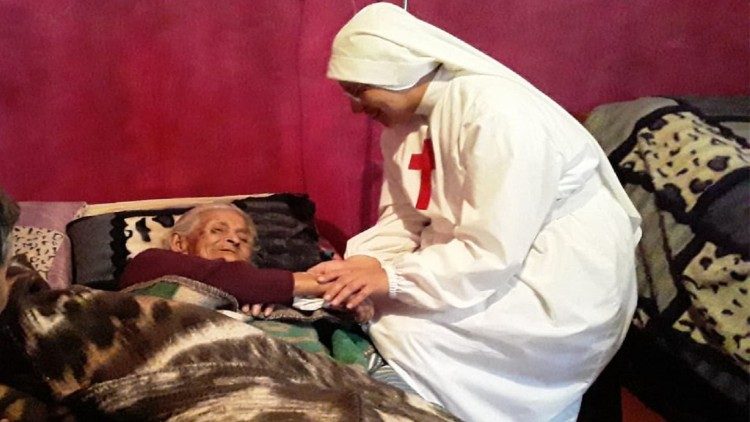
The Church has always defended human life from conception to natural deathThe Church has always defended human life from conception to natural death 

The Magisterium of the Church on euthanasia

The Church, in its 2000-year history, has always defended human life from conception to natural death, with particular attention to the more fragile stages of existence. The rejection of both euthanasia and “over-zealous” treatment constitute an affirmation of the rights of persons: an incurable condition does not mean a refusal of care.

By Amedeo Lomonaco

In its Greek etymology, the word “euthanasia” is related to the concept of a “good death” (εὐθάνατος). This term came to be associated, even in antiquity, with death without suffering. The aim of the doctor was, as far as possible, to ensure that the final moments of life were painless. This form of “euthanasia” was not inconsistent with the Hippocratic oath: “I will not administer, even on request, a deadly drug, nor will I suggest such advice; likewise. I will not give to any woman a medical abortifacient.”

Today, however, the term “euthanasia” no longer bears its original meaning. Instead, sadly, it signifies an action aimed at deliberately bringing about the death of a person with a serious ailment in order to end their suffering.

The rejection of euthanasia and “over-zealous” treatment

In its two-thousand-year history, the Catholic Church has always affirmed that human life must be defended from conception until natural death. Thus, according to the Catechism of the Catholic Church, “Intentional euthanasia, whatever its forms or motives, is murder. It is gravely contrary to the dignity of the human person and to the respect due to the living God, his Creator” (CCC 2324)

Technological progress has given rise to new ethical questions. The development of medicine has made it possible to improve health and prolong life in a way that had never occurred in the past and could never be have been imagined. In this regard, 65 years ago, on 24 November 1957, Pope Pius XII gave a speech to a group of anaesthetists and resuscitators that Pope Francis has described as “memorable.”

Reaffirming the illicitness of euthanasia, Pope Pius XII nevertheless affirmed that there is no obligation to always employ all therapeutic means potentially available; and that, in well-defined cases, it is lawful to abstain from them: this is the first indication of the principle of what might be called “over-zealous” treatment, defining as morally permissible, in some cases, the decision to refrain from or suspend the use of therapeutic measures when their use does not correspond to the criterion of “proportionality of treatment.”

John XXIII, Paul VI, and Vatican II

In the encyclical Mater et Magistra, Pope John XXIII emphasized, “Human life is sacred—all men must recognize that fact. From its very inception it reveals the creating hand of God.” And in the encyclical Pacem in terris, the same Pope, speaking of human rights, mentioned the right of all human beings to live, a right that “involves the duty to preserve one's life.”

The conciliar Constitution Gaudium et spes includes euthanasia in its list of “infamies” that are “opposed to life itself”:

“Whatever is opposed to life itself, such as any type of murder, genocide, abortion, euthanasia or wilful self-destruction, whatever violates the integrity of the human person, such as mutilation, torments inflicted on body or mind, attempts to coerce the will itself; whatever insults human dignity, such as subhuman living conditions, arbitrary imprisonment, deportation, slavery, prostitution, the selling of women and children; as well as disgraceful working conditions, where men are treated as mere tools for profit, rather than as free and responsible persons; all these things and others of their like are infamies indeed (GS 27).”

Later, Pope Paul VI, in an address to the United Nations Special Committee on the Question of Apartheid, compared questions about the end of life to racial issues, as he stressed the equality of all human beings, and the need to protect the rights of minorities as well as the rights of “the handicapped, the incurably ill and all those who live at the margin of society and are without voice.”

“Above all the precious right to life — that most fundamental of all human rights — must be affirmed anew, together with the condemnation of that massive aberration which is the destruction of innocent human life, at whatever stage it may be, through the heinous crimes of abortion or euthanasia.”

John Paul II: Euthanasia and the culture of death

Already in his 1995 encyclical Evangelium vitae, Pope John Paul II lamented that euthanasia, “disguised and surreptitious, or practised openly and even legally,” was becoming more widespread. “As well as for reasons of a misguided pity at the sight of the patient's suffering,” he wrote, “euthanasia is sometimes justified by the utilitarian motive of avoiding costs which bring no return and which weigh heavily on society.” Thus, he continued, “it is proposed to eliminate malformed babies, the severely handicapped, the disabled, the elderly, especially when they are not self-sufficient, and the terminally ill.”

The Polish pope noted, “The temptation grows to have recourse to euthanasia, that is, to take control of death and bring it about before its time, ‘gently’ ending one's own life or the life of others.” In fact, he said, “what might seem logical and humane, when looked at more closely is seen to be senseless and inhumane.” He concluded forcefully: “Here we are faced with one of the more alarming symptoms of the ‘culture of death’.”

Benedict XVI: Caring for the dying with love and accompaniment

Pope Benedict XVI, for his part, posed the questions, “does a human being who moves toward a rather precarious condition due to age and sickness still have a reason to exist? Why continue to defend life when the challenge of illness becomes dramatic, and why not instead accept euthanasia as a liberation?” In an address to health care workers in 2007, he responded, “The person called to accompany the aged sick must confront these questions, especially when there seems to be no possibility of healing.” At the same time, he noted, “Today's efficiency mentality often tends to marginalize our suffering brothers and sisters, as if they were only a ‘burden’ and ‘a problem’ for society.” He explained that those with “a sense of human dignity knows that they are to respect and sustain them while they face serious difficulties linked to their condition,” adding, “Indeed, recourse to the use of palliative care when necessary is correct, which, even though it cannot heal, can relieve the pain caused by illness.” However, he said, “alongside the indispensable clinical treatment, it is always necessary to show a concrete capacity to love, because the sick need understanding, comfort, and constant encouragement and accompaniment.”

Pope Francis: Reject the culture of waste

Today, the prevailing opinion, which Pope Francis has denounced as a “culture of waste,” of rejection or casting aside,” at times proposes a “false compassion which holds that it is a benefit to women to promote abortion; an act of dignity to perform euthanasia; a scientific breakthrough to ‘produce’ a child, considered as a right rather than a gift to be welcomed; or to using human lives as laboratory animals, allegedly in order to save others.” On the contrary, he said in his address to Italian doctors, “the compassion of the Gospel is what accompanies us in times of need, that compassion of the Good Samaritan, who ‘sees,’ ‘has compassion,’ draws near and provides concrete help (cf. Lk 10:33).”

The Pope underlined the point in 2017, in a Message to members of the World Medical Association: “It is clear that not adopting, or else suspending, disproportionate measures, means avoiding overzealous treatment; from an ethical standpoint, it is completely different from euthanasia, which is always wrong, in that the intent of euthanasia is to end life and cause death.” And he recalled the teaching of the Catechism of the Catholic Church (2278), “Discontinuing medical procedures that are burdensome, dangerous, extraordinary, or disproportionate to the expected outcome can be legitimate; it is the refusal of ‘over-zealous’ treatment. Here one does not will to cause death; one's inability to impede it is merely accepted.”

Incurable does not mean a refusal of care

In the Letter Samaritanus bonus, approved by Pope Francis and published in September 2020, the Congregation for the Doctine of the Faith affirms, “The judgement that an illness is incurable cannot mean that care has come at an end.” Those who are suffering from a terminal illness, as well as babies born with a limited expectation of survival have the right to be welcomed, cared for, and surrounded by affection. The Church does not countenance “over-zealous” or overly aggressive treatment; but nonetheless “reaffirms as definitive teaching that euthanasia is a crime against human life.”

Tuesday, September 28, 2021

When discussing healthcare the Pope issues strong statement against the evil of abortion and euthanasia


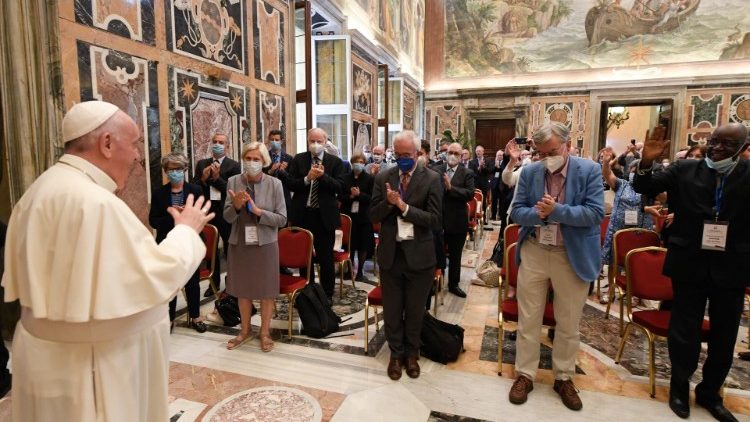
Pope Francis meets participants in the general assembly of the Pontifical Academy for Life.Pope Francis meets participants in the general assembly of the Pontifical Academy for Life.  (Vatican Media)

Pope urges choices that ensure food, healthcare, living conditions for the poor

Pope Francis on Monday addressed a group of participants in the general assembly of the Pontifical Academy for Life, which is discussing, “Public Health in Global Perspective“.

By Robin Gomes

Expressing pain at strong inequalities in healthcare and living conditions of people that prove that not all lives are equal and health is not protected for all in the same way, Pope Francis on Monday called for political, social and environmental choices that ensure access to food, healthcare and improved living conditions, especially for the poor. “Indeed, the pandemic crisis has made "both the cry of the earth and the cry of the poor" (Laudato si', 49) resound even more strongly. We cannot be deaf to this twofold cry; we must listen to it well!”  

Pope Francis made the call on Monday as he received in audience some 100 participants in the 2-day general assembly of the Vatican’s Pontifical Academy for Life.  “Public Health in Global Perspective - pandemic, bioethics, future”, is the theme of the September 27-28 virtual workshop that the Academy organized for the occasion. 

Listening to cries

Tired of much discussions on the Covid-19 pandemic, we are tempted to mover over to other issues, but the Pope said, “It is essential to reflect calmly in order to examine in depth what has happened and to glimpse the road to a better future for all.” 

\He urged the participants to listen carefully to the situation, in order to foster a true and proper conversion and to arrive at the specification of concrete decisions to come out of the crisis better.

Interconnectedness demands synergy

The Pope encouraged the Academy’s efforts on global ethics in public health saying it allows us to focus on aspects that are important for the coexistence of the human family and for the strengthening of a fabric of social friendship, which are the central themes of his Encyclical, Fratelli tutti.

The pandemic crisis has highlighted how profound is the interdependence both among ourselves and between the human family and the common home. Underscoring the harmful tendency of disregarding our “interconnectedness”, the Pope called for a synergy between different disciplines, such as biology and hygiene, medicine and epidemiology, economics and sociology, as well as anthropology and ecology.  This also calls for identifying technological, political and ethical criteria for action with regard to health systems, the family, work and the environment.

This synergy, the Pope said is particularly needed in the healthcare sector, because health and disease are determined not only by the processes of nature but also by social life.  

He lamented that many very serious problems are ignored because of a lack of adequate commitment, such as with malaria and tuberculosis that underscore the precariousness of sanitary conditions that causes millions of avoidable deaths.  These issues have not drawn the mobilization of energy and resources as Covid-19 pandemic.

Living conditions

While commending the measures against Covid-19 on a global level, the Pope said it should also make us alert and be responsible for the serious conditions in which others live, such as the lack of vaccines, drinking water and food, regarding which we have so far taken little or no interest.  

In this regard, the Holy Father said he does not know whether to laugh or cry when he hears authorities advising slum dwellers to sanitize themselves several times a day with soap and water when they have neither water nor soap.  They are asked not to come out of their homes when the whole neighborhood is their home. The application of the criterion of justice, the Pope said, should be applied in the broader field of health needs and the promotion of life. 

Inequalities

Considering health in its multiple dimensions and interconnectedness, the Pope said, we can observe how even living conditions, which are the result of political, social and environmental choices, have an impact on the health of human beings.  He said there were strong inequalities in different countries and in different social groups regarding life expectancy and healthy life expectancy, which depends on variables such as salary level, educational qualification and the neighborhood.  The inalienable dignity of the human person calls for appropriate commitment to overcome inequalities, or else we are in fact accepting the painful reality that not all lives are equal and health is not protected for all in the same way.

Pope Francis wished that a free healthcare system such as in Italy and elsewhere, continue, otherwise only those who can afford to pay will have the right to healthcare.  Free healthcare, he said, helps overcome inequality.  

Abortion and euthanasia – culture of waste

Pope Francis urged support for international and common initiatives, such as that of the G20 that aims at creating global governance for the health of all the inhabitants of the planet.  In this regard, the Pontifical Academy for Life can also offer a valuable contribution, such as in public debates, without "watering down" the Christian anthropological proposal, inspired by Revelation, which can also help today's men and women to rediscover the primacy of the right to life from conception to its natural end. 

He lamented today’s culture of waste which kills babies directly with abortion.  This has become a “normal” habit, which is very ugly and “really a murder”.  In this regard, the Pope asked a double question: “Is it right to eliminate, to take a human life to solve a problem? Is it right to hire a hitman to solve a problem? That's what abortion is.”

The Holy Father also spoke about the elderly, who are regarded as “waste material” a bit because they are of no use... But they are roots of wisdom, which this civilization discards. 

He denounced what he described as the law of "hidden" euthanasia, which shortens the life of the elderly who are provided only half the medicines, arguing they are expensive.   Catholic academics, universities and hospitals, the Pope said, cannot walk the road of “waste”.