Showing posts with label Supreme Court. Show all posts

Monday, March 2, 2026

The Bishops of the United States, other Catholic agencies to support lawsuit against Trump on birthright citizenship


US bishops among supporters of lawsuit against Trump birthright citizenship executive order


A demonstrator holds a placard during a protest outside the Supreme Court on May 15, 2025, as the justices heard oral arguments in Trump v. CASA related to lower courts placing an injunction on Trump’s executive order of Jan. 20, 2025, to end birthright citizenship. In a 6-3 ruling, the Supreme Court June 27 limited the scope of federal courts to block presidential policies nationwide. On April 1, 2026, the court will hear oral arguments in Trump v. Barbara, a challenge to the order ending birthright citizenship. (OSV News photo/Leah Millis, Reuters)


The U.S. bishops and a Catholic immigration advocacy group were among those who offered their support to a lawsuit challenging President Donald Trump’s executive order limiting birthright citizenship.

Oral argument in the case, Trump v. Barbara, is scheduled for April 1.

Within hours of returning to the Oval Office in January 2025, Trump signed an executive order seeking to change the longstanding legal interpretation of the 14th Amendment, which states, “All persons born or naturalized in the United States, and subject to the jurisdiction thereof, are citizens of the United States and of the State wherein they reside.”

Trump’s order sought to end birthright citizenship for children born in the U.S. to parents without legal status or temporary visa holders. Lawsuits promptly followed.

Previously, the Supreme Court limited the ability of federal judges to issue nationwide injunctions against the order while litigation over it proceeds but did not directly address the merits of the order itself.

A series of amicus briefs, sometimes called friend of the court briefs, were filed in either support or opposition to the order. Amicus briefs are filed by groups or individuals who are not a party to the case but have an interest in it, asking the court to consider certain arguments.

One such brief was filed by the U.S. Conference of Catholic Bishops and the Catholic Legal Immigration Network Inc., also known as CLINIC.

Their brief argued they were “motivated by the teachings of the Catholic
Church,” including “the central belief that every person is imbued with an inviolable dignity, and that all human life, created in the image and likeness of God, is sacred.”

“It is through this lens that the Church stands for ‘treating people humanely, treating people with the dignity that they have,’” the brief argued, citing comments made by Pope Leo XIV at Castel Gandolfo Nov. 18, 2025. “These teachings extend to immigrants in the United States without legal status and their American children who were born in the United States.”

“Not only is the principle of birthright citizenship woven into our Nation’s history and Western tradition, but it is also consistent with Catholic teaching,” the brief continued. “Birthright citizenship aligns with the Church’s teaching that humans were created as social beings and that political authority is morally bound to affirm and protect the inherent dignity of every human person in the community. In turn, birthright citizenship reflects the Catholic principle of subsidiarity by recognizing persons as members of the community from birth, thereby enabling their participation in civic life and ensuring that state power serves the human person as a social being.”

The brief concluded that “ending birthright citizenship lacks historical, legal, and moral support.”

“The principle of citizenship by birth is firmly rooted in Western legal tradition, enshrined in the Fourteenth Amendment, and reaffirmed by this Court’s precedent,” it said. “It is equally grounded in Church teachings, which affirms the inherent dignity of every human person, especially the innocent child.”

“As Catholics, our faith compels us to protest laws that deny the dignity of the human person and harm innocent children, particularly when such laws resurrect the very injustices the Fourteenth Amendment was enacted to repudiate,” it added. “At its core, this case is not solely a question about citizenship status or the Fourteenth Amendment. It is a question of whether the law will affirm or deny the equal worth of those born within our common community – whether the law will protect the human dignity of all God’s children.”

A brief in support of the executive order filed by the America First Policy Institute, a think tank that supports Trump-aligned policies, argued, “both the Executive and Legislative branches have broad constitutional authority over matters of immigration and foreign relations and have extensive powers related to national defense and sovereignty.”

“Accordingly, AFPI believes that each branch has the power and the duty to end birthright citizenship for children of illegal aliens, alien tourists, and aliens in the U.S. legally but temporarily,” they argued.

Other amici curiae, or those who filed briefs, included members of Congress, state attorneys general, legal organizations, and immigration policy groups.

Another brief from Evan D. Bernick and Jed H. Shugerman, professors who identified themselves as originalist scholars, argued, “For nearly all of the first 235 years under the Constitution, the citizenship of every child born in the United States to alien parents, with immaterial exceptions, was a given. Then, in 2025, the Trump administration changed course.”

Catholic social teaching on immigration balances three interrelated principles – the right of persons to migrate in order to sustain their lives and those of their families, the right of a country to regulate its borders and control immigration, and a nation’s duty to regulate its borders with justice and mercy.

Tuesday, October 7, 2025

The annual Red Mass in Washington, D.C. had no Supreme Court Justices in attendance


Supreme Court justices do not attend annual Red Mass due to security concerns


Washington Cardinal Robert McElroy, center, concelebrates the 73rd annual Red Mass at the Cathedral of St. Matthew the Apostle in Washington Oct. 5, 2025. Also pictured are Bishop Michael Burbidge of Arlington, Va.; Cardinal Christophe Pierre, the apostolic nuncio to the United States; Deacon Robert Vince, who serves at the cathedral; Archbishop Timothy Broglio of the Archdiocese for the Military Services; and Washington Auxiliary Bishop Juan Esposito. (OSV News/John Carr


Mark Zimmerman/Catholic Standard

Due to security concerns, no Supreme Court justices attended this year's Red Mass Oct. 5 at the Cathedral of St. Matthew the Apostle in Washington. The annual Mass prays for jurists and public officials the day before the start of the Supreme Court's term.

The Metropolitan Police Department of Washington reported that they had arrested a New Jersey man who had set up a tent on the steps of the cathedral and that they charged him with possession of explosives.

The Mass was delayed for about 20 minutes and hundreds of people waited outside before they were allowed to enter the cathedral through a side entrance.

At the Mass, Washington Cardinal Robert McElroy emphasized that "men and women of the law are architects of hope by reason of their vocation."

That hope, he said, is especially needed as the nation faces eroding faith in institutions, a collapse of political dialogue, a growth in political violence, and ongoing needs of the poor and powerless.

McElroy was the main celebrant and homilist at the 73rd annual Red Mass Oct. 5. The Red Mass, sponsored by the John Carroll Society of the Washington Archdiocese, invokes God's blessings on those responsible for the administration of justice and on all public officials. The name of the Mass stems from the red vestments worn by the presiding clergy.

Normally several Supreme Court justices attend the annual Red Mass, but as the security situation unfolded, none of the justices attended this year's Mass.

Concelebrants in 2025 included Cardinal Christophe Pierre, apostolic nuncio to the United States; Archbishop Timothy Broglio of the U.S. Archdiocese for the Military Services, who also is the president of the U.S. Conference of Catholic Bishops; Bishop Michael Burbidge and retired Bishop Paul Loverde of Arlington, Virginia; Washington Auxiliary Bishops Roy Campbell Jr. and Juan Esposito; and 12 priests, including Msgr. Ronald Jameson, the rector of St. Matthew's Cathedral.

In his homily, Washington's archbishop highlighted three key areas where people who work in the law can be architects of hope.

"The first is the crisis of institutional life in our nation. Our age has witnessed a dramatic collapse of faith in institutions of all kinds," McElroy said, noting "a corrosive instinct to attack every major institution."

Catholic social teaching, he said, "underscores that healthy governmental, cultural, religious and economic institutions are essential for the accomplishment of the common good and the service of all in the world in which we live."

The cardinal said two elements are vital to establishing healthy attitudes toward institutions.

"The first is the rejection of the hyper-criticism toward institutional life which is undermining the fundamental ability of institutions in government and society to serve the common good," the cardinal said. "The second is the reinvigoration of the countervailing forces in our government and society that constrain harmful accretions of power and delimit their proper scope."

He emphasized that men and women of the law "lie at the heart of this twofold conversation within our nation. By engaging constructively, dialogically and charitably in this conversation, you can help identify a pathway forward for us all. You can bring hope."

McElroy said a second area where people working in law can be architects of hope involves "the collapse of political dialogue within our nation and the growth of political violence. We have witnessed the assassination of Charlie Kirk and the assault on the Capitol. Both mark the progression from civil dialogue to uncivil dialogue to force and fear."

Noting that "we live at a moment in which politics is tribal, not dialogical, and where party label has become a shorthand for worldview on the most volatile topics in our national life," the cardinal said, "The result is explosive, within politics, family life, and friendships.

Whether they are students of the law, judges, legislators, public advocates or legal counsels, men and women working in the law "are by that commitment privileged and obligated to raise the plane of our political and social discussion," McElroy said, adding, "No group in our society has a greater capacity to remold our political discourse. No group has a deeper calling to bring hope."

A third key area where women and men of the law can be architects of hope, the cardinal said, was highlighted in that day's reading from the Gospel of Luke, which included the passage, "The Spirit of the Lord is upon me, because he has anointed me to bring glad tidings to the poor."

"The Scriptures point unswervingly to the need to keep the poor and the powerless at the forefront of our thoughts and actions," Washington's archbishop said.

He noted, "For in every social and economic system they are disproportionately shut out from the rights and privileges that are vital to their well-being. This includes our legal system. Whether they are those accused of crimes or those who are victims of crimes, or those who have been injured and seek civil redress, systemic inequalities in our legal system cry out for reform."

McElroy underscored how men and women involved in different aspects of the law can bring hope to the poor and other people in need.

He urged law students to make a commitment in their lives "to integrating substantive and caring pro-bono work as part of your ongoing career." Prosecutors, who often face "overwhelming caseloads," should "see the humanity deeply both in those you are prosecuting and in those who were victimized," he said.

Legislators must "provide the resources and processes necessary to make the legal rights of the poor and middle class more than theoretical," McElroy continued. "For defense attorneys, sustain hope in your own lives even when you confront injustice or indifference. For our judges, shapers of the laws that affect so many so profoundly, let the humanity and thirst for justice that led you to the law sustain and guide you, so that hope is reflected and created by your actions."

He counseled teachers of the law to "lift the minds and the hearts of your students always to the noble and the compassionate, rather than the easy or the expedient."

Closing his homily, McElroy said, "As women and men of the law, you participate in the mission of God's justice that Jesus announces in today's Gospel. May you take up the challenge to be true architects of hope, in this land, at this moment, in God's grace."

Msgr. Peter Vaghi, the longtime chaplain of the John Carroll Society, welcomed the congregation filling the cathedral.

The society is named for Archbishop John Carroll, who in 1789 became the nation's first Catholic bishop, leading the new Baltimore Diocese, which then included the territory of all 13 original states.

The Mass began with a color guard of Fourth Degree Knights of Columbus marching to the front of the cathedral bearing flags of the United States and of the Vatican, and people in the congregation sang the National Anthem.

After the Mass ended, the congregation sang "America the Beautiful," and then a recessional hymn seeking the Holy Spirit's help and guidance, "O Spirit, All Embracing."

Friday, May 23, 2025

SCOTUS shuts the door on proposed Oklahoma Catholic charter school


UPDATE: Oklahoma Catholic charter school loses Supreme Court bid for state approval


The U.S. Supreme Court building in Washington, D.C. | Credit: Wolfgang Schaller|Shutterstock

The U.S. Supreme Court on Thursday declined to issue a ruling in a contentious case involving what was proposed to be the nation’s first religious charter school, leaving untouched a lower court ruling that forbids the Catholic institution from accessing state funds.

In its Thursday ruling, the high court said its judges had split evenly on whether or not to allow St. Isidore of Seville Catholic Virtual School to launch in the state of Oklahoma. The ruling leaves in place an Oklahoma Supreme Court order that said the school’s use of public money would violate state and federal law.

“The judgment is affirmed by an equally divided court,” the unsigned order said. 

The per curiam decision noted that Justice Amy Coney Barrett “took no part in the consideration or decision” of the case. Barrett had recused herself from the case for unknown reasons, though it was likely due to her ties to the University of Notre Dame. The school’s religious liberty clinic helped the Catholic charter school in its bid before the Supreme Court.

Conservative-leaning justices at the high court had last month seemed sympathetic to the establishment of the school, while the court’s liberal justices were more skeptical of the proposal. 

At issue was whether the Catholic charter school would violate laws regarding the separation of church and state and the establishment of state-supported religion. Charter schools are privately-run institutions that are funded by the government similar to public schools.

Oklahoma Attorney General Gentner Drummond had argued against the incorporation of the school, claiming it violated Oklahoma and federal laws. The prosecutor referred to the institution as a “state-established religious school” and described it as “repugnant to Oklahoma and federal law.” He alleged that Oklahoma might be forced to subsidize “radical Islamic” schools if it allowed the Catholic institution access to public money.

The school was backed by religious liberty advocates, meanwhile, as well as the Archdiocese of Oklahoma City and the Diocese of Tulsa, both of which were involved with the school’s creation. 

Archbishop Paul Coakley and Bishop David Konderla last month said they “pray[ed] and hope[d] for a decision that stands with religious liberty and the rights of Oklahoma families to make their own decisions in selecting the best educational options for their children.” 

On Thursday the prelates said in a statement that they were “disappointed that the Oklahoma state Supreme Court’s decision was upheld in a 4-4 decision without explanation.”

“We remain firm in our commitment to offering an outstanding education to families and students across the state of Oklahoma,” they said. “And we stand committed to parental choice in education, providing equal opportunity to all who seek options when deciding what is best for their children.”

Meanwhile, Drummond’s office told CNA on Thursday said the ruling “represents a resounding victory for religious liberty and for the foundational principles that have guided our nation since its founding.” 

“This ruling ensures that Oklahoma taxpayers will not be forced to fund radical Islamic schools while protecting the religious rights of families to choose any school they wish for their children,” he said. 

The charter school had received the backing of the U.S. Conference of Catholic Bishops, which told the Supreme Court last month that charter schools “have long performed the function of educating students” in the United States and that St. Isidore’s participation in the state charter program would “not make it a state actor.”

Two dozen amicus briefs were filed at the Supreme Court in support of the Catholic charter school, including from the U.S. Solicitor General’s Office and the Union of Orthodox Jewish Congregations of America.

Also backing the school were a dozen states including Ohio, Texas, South Carolina, and Kansas, who argued in a brief that they had “a compelling interest in expanding educational opportunities for their citizens.”

Thursday, September 5, 2024

Catholics for Trump organization formed


Trump-Vance campaign launches Catholics for Trump coalition


Former President Donald Trump’s 2024 campaign on Sept. 4, 2024, launched the Catholics for Trump coalition, which emphasizes the defense of religious liberty, traditional values, and the sanctity of human life as priorities of the Republican nominee’s agenda. | Credit: Emily Elconin/Getty Images


Former President Donald Trump’s 2024 campaign on Sept. 4 launched the Catholics for Trump coalition, which emphasizes the defense of religious liberty, traditional values, and the sanctity of human life as priorities of the Republican nominee’s agenda.

The coalition, which intends to rally Catholic support behind the former president, seeks to show a contrast between Trump and his opponent, Vice President Kamala Harris, on key issues that are important to Catholics.

According to the coalition’s mission statement, Catholics for Trump commits “to safeguarding the vital principles of religious liberty and the sanctity of life that President Donald J. Trump has ardently championed.”

“Under President Trump’s leadership, our nation witnessed unprecedented support for religious freedoms, with significant victories both domestically and globally,” the mission statement read. “President Trump restored protections for faith-based organizations and bolstered the rights of religious institutions against governmental overreach.”

The mission statement added that Trump “has stood unwaveringly in defense of traditional values and the sanctity of human life” and that the coalition “stands with President Trump to continue building a nation where the rights of every individual to practice their faith freely is protected.”

Matt Schlapp, the president of The American Conservative Union, and his wife, Mercedes Schlapp, who served in the Trump administration, said in a joint statement that Trump “will continue to defend our religious freedoms and our values enshrined in faith and family.”

“We have watched Kamala Harris attack President Trump’s Catholic judicial nominees who had to face her hostile and unfair questions when she was a member of the Senate Judiciary Committee,” the statement read. “She was especially bigoted to anyone associated with the Knights of Columbus. Harris also was complicit in the FBI’s fascist infiltration of Catholic parishes that say Latin Mass.”

Matt and Mercedes Schlapp, who are both Catholic, were also involved in the 2020 Catholics for Trump coalition.

During his 2024 presidential campaign, Trump has been trying to appeal to Catholic and other Christian voters. In July, the former president accused Harris and the Democratic Party of being “after Catholics,” adding “somebody doesn’t like Catholics in that administration.”

Trump nominated three of the six Supreme Court justices who overturned Roe v. Wade, which had prevented states from imposing restrictions on abortion for nearly 50 years. Following the Supreme Court’s decision, about two dozen states imposed restrictions on abortion.

Since then, Trump has moderated his stance on abortion, announcing that he opposes federal restrictions and supports states adopting their own rules. In contrast, Harris has campaigned on codifying the abortion standards previously held in Roe v. Wade, which would override pro-life laws in more than 20 states.

Last week, Trump announced he would vote against a proposed constitutional amendment in Florida that would enshrine a right to abortion in the state’s constitution. The former president had previously signaled support for the amendment.

Harris has also launched a Catholics for Harris-Walz coalition to rally Catholic support behind her campaign. The campaign scheduled a virtual event for the coalition three weeks ago, but it was abruptly canceled.

Tuesday, March 26, 2024

Supreme Court hearing case today on the chemical abortion drug and Biden's FDA support of the drug


Experts preview U.S. Supreme Court’s abortion pill case


The United States Supreme Court will hear arguments Tuesday regarding the Biden administration’s alleged deficient safeguards surrounding use of the chemical abortion drug mifepristone and the risk the drug poses to women.

Among the safeguards, the Food and Drug Administration (FDA) v. Alliance for Hippocratic Medicine case could see the restoration of the initial requirement of in-person doctor visits before prescription of the pill as well as the initial seven-week limit on use of the abortion pill. 

In the case, the FDA challenged an August 2023 federal court ruling that affirmed that the FDA did not follow proper testing and safety protocols when it approved the abortion drug in 2000. 

In 2021, the FDA eliminated the in-person doctor visit originally required to obtain the drug, allowing the abortion pill to be prescribed via telemedicine and distributed through the mail. Earlier this year, drug stores such as Walgreens began selling the abortion pill over the count

Elizabeth Gillette, who survived severe complications from a chemical abortion, is set to testify about the lack of sufficient safeguards surrounding the drug and spoke with “EWTN News Nightly” anchor Tracy Sabol about the case.

In the interview, Gillette shared her experience with a chemical abortion — severe bleeding, labor pains, and seeing her dead child — that inspired her to testify against the lack of safeguards. 

“I was not properly prepared for the powerful drug that is the abortion pill. I suffered devastating side effects,” Gillette explained.

Chemical abortions involve a two-pill regimen consisting of the drugs mifepristone and misoprostol. This type of abortion cuts off the nutrients necessary for an unborn child to develop and then expels him or her from the womb. 

“I found myself on the bathroom floor in a pool of blood until I ended up expelling the entire amniotic sac with my baby — a recognizable baby inside,” she continued. “The trauma from this horrific experience still follows me today in the form of post-traumatic stress disorder.”

“This is nothing like what they told me would happen,” Gillette said. “It was minimized and the care was subpar.”

Chemical abortions account for over half of all U.S. abortions, according to a recent study.

Senior Counsel at Alliance Defending Freedom (ADF) Kellie Fiedorek also spoke about the case in an interview with Sabol.

“The FDA recklessly removed its original safeguards that provide women with in-person, ongoing care when taking abortion drugs,” she said. “Because they removed those, they put women’s lives in danger.”

“We sued the FDA on behalf of doctors to hold them accountable, and we’re asking the Supreme Court to reinstate those vital safeguards to protect the health and safety of women across this country,” Fiodorek indicated.

“The FDA’s own label says that roughly one in 25 women who take these drugs will end up in the emergency room,” Fiedorek continued. “So regardless of what people’s beliefs might be about abortion, we should all agree that women deserve the ongoing in-person care of a doctor when they’re taking high-risk drugs.”

The FDA first approved mifepristone for abortion in 2000 but included some restrictions on dispensation to prevent severe side effects. One restriction was that the drug had to be prescribed and dispensed in person.

That changed in 2021 when the FDA decided that the in-person requirement put a “burden on the health care delivery system.”

Over the years, other restrictions on the drug have also been removed. In 2016, the FDA determined that the drug can be used when a woman is pregnant with a child at 70 days’ gestation. Before 2016, the gestational limit was seven weeks. The FDA also decided in 2016 that non-physicians could prescribe the pill. 

In August 2023, the Fifth Circuit Court affirmed a lower court ruling that the FDA must reinstate the restrictions on the mifepristone pill that were in place before 2016. Those restrictions are currently on hold pending the U.S. Supreme Court’s decision. 

America’s Catholic bishops expressed concern about chemical abortions. In a February statement, the bishops noted that if the FDA policies are allowed to remain in place, “potentially harmful drugs [will] be mailed directly to girls and women who did not see a medical professional in person and may be injured or killed without public knowledge of the cause.”

“I would like everybody to remember that this is an extremely powerful drug, and women deserve ... to be treated with respect and with the safeguards in place,” Gillette said. “We’re worth it.”

Tuesday, January 9, 2024

U S Bishops actively preparing for the Novena for Life


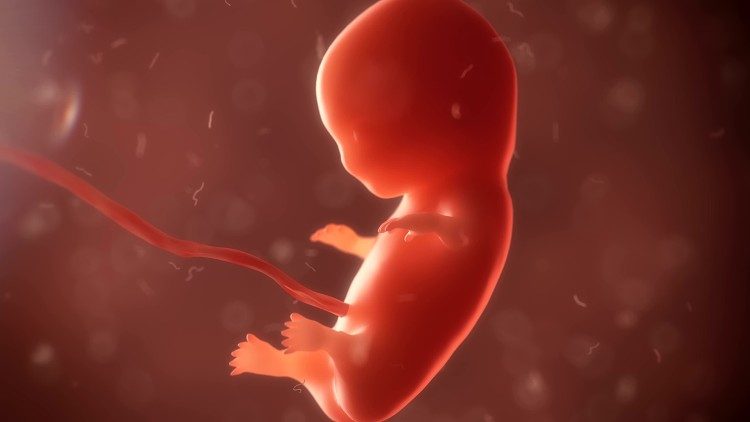
2019.01.29 Aborto, feto, embrione, vita, interruzione gravidanza

U.S. Church to hold annual Novena for Life against the “tragedy of abortion”

Ahead of the annual novena of prayer and penance for life commemorating the 51st the anniversary of the Supreme Court’s 1973 Roe v. Wade, U.S. bishops reiterate that continuing efforts are needed to protect children and their mothers from the "tragedy of abortion".

By Lisa Zengarini

Catholics across the United States are preparing to pray 9 Days for Life, the annual pro-life novena beginning this year on January 16.

Sponsored by the Committee on Pro-Life Activities of the U.S. Conference of Catholic Bishops, the novena is held ahead of the annual Day of Prayer for the Legal Protection of Unborn Children on January 22, commemorating the anniversary of the Supreme Court’s 1973 Roe v. Wade ruling which legalized abortion nationwide.  

First Novena for life in 2013

It was first launched in 2013 on the 40th anniversary of that landmark decision, and includes the March for Life  which has been held annually since 1974 in Washington  D.C. and then throughout the U.S..

Each of the nine days’ intentions will be accompanied by a reflection, educational information, and suggested daily actions to help build a culture of life. Participants can share their pro-life witness and invite their social networks to pray on social media with the hashtag #9DaysforLife.

The 2022 Supreme Court ruling overtuning the Roe vs. Wade 

This 12th edition comes nearly two years after the Supreme Court overturned the Roe vs. Wade in June 2022 by handing state lawmakers across the country the power to restrict or ban abortion.

Although that decision was a step forward, the US bishops noted that  “continuing efforts are needed to protect children and their mothers from the tragedy of abortion.” Indeed, they said, the overarching intention of the novena is the complete end to abortion.

Since June 2022 14 U.S. states have enacted near-total abortion bans, while two states – Georgia and South Carolina – have banned abortion past six weeks of pregnancy.

However, other states have enacted laws or held ballot referendums to protect access to abortion.   So far, seven states have directly voted on abortion and two state legislatures put abortion rights constitutional amendments on their 2024 ballots, while abortion advocates in at least nine other states are leading citizen-driven efforts to put similar measures on the ballot.

Statement on surrogacy

Ahead of the Novena for Life the U.S bishops also joined Pope Francis’ firm condemnation of surrogacy as an attack on the dignity of human life.

In his annual address on the state of the world to all of the ambassadors accredited to the Holy See on January 8, the Pope deemed surrogacy “deplorable” and called for a global ban on the exploitative practice of “so-called surrogate motherhood”, which, he said represents” a grave violation of the dignity of the woman and the child, based on the exploitation of situations of the mother’s material needs. A child is always a gift and never the basis of a commercial contract,” Pope Francis stressed.

Echoing his words, the U.S. bishops reiterated in a statement that the “practice of surrogacy is not morally permissible” “Instead,” they said in “we should pray for, and work towards, a world that upholds the profound dignity of every person, at every stage and in every circumstance of life.”

Threat of abortion remains US bishops' pre-eminent priority 

In its recently updated quadrennial "Forming Consciences for Faithful Citizenship" teaching document for the 2024 presidential elections, the USCCB reaffirmed that  the threat of abortion remains the bishops' “pre-eminent priority because it directly attacks our most vulnerable and voiceless brothers and sisters "and destroys more than a million lives per year in the United States alone.

Thursday, December 21, 2023

The battle against the evil of abortion is far from over as evidenced in recent elections


US Catholic leadership foresees challenges after repeated election defeats for abortion opponents


Updated 7:03 AM CST, December 20, 2023

Repeatedly in recent years, the U.S. Conference of Catholic Bishops has stipulated that “the threat of abortion remains our preeminent priority.” In the face of recent election setbacks for abortion opponents, leading bishops and their lay allies are reassessing how to move forward with that stance.

The latest rebuff came Nov. 7 in Ohio, when voters decisively approved a constitutional amendment that ensures access to abortion and other forms of reproductive health care. It was the seventh consecutive state where voters decided to protect abortion access since the U.S. Supreme Court overturned the nationwide constitutional right to abortion in June 2022.

The Ohio result was particularly stinging for abortion opponents, coming in a state where tough anti-abortion measures had been approved by the Republican-controlled legislature.

“Today is a tragic day for women, children, and families in Ohio,” the state’s Catholic bishops said in a joint statement as the outcome became clear.

“We must look ahead,” the bishops added. “Despite the obstacles this amendment presents, the Catholic Church in Ohio will continue to work for policies that defend the most vulnerable, strengthen the child-parent relationship, and support women in need.”

Brian Hickey, executive director of the Catholic Conference of Ohio, noted that support for the abortion-rights amendment was particularly strong among younger voters, signaling that it could take many years to build an anti-abortion majority in the state’s electorate. Exit polls suggested that more than 75% of voters aged 18 to 29 backed the amendment.

“How do we reach this next generation of Ohioans?” Hickey asked during an interview with The Associated Press. “We know there is a lot of work to do.”

The chairman of the U.S. bishops’ Committee on Pro-life Activities, Bishop Michael Burbidge of Arlington, Virginia, recalled how he and his colleagues celebrated 18 months ago after the Supreme Court — in its so-called Dobbs decision — struck down the much-debated Roe v. Wade ruling of 1973. The result was to end the nationwide right to abortion, and leave it to individual states to decide whether to ban it or allow it.

“There was a moment to celebrate, but we also knew it was only a brief moment, because rightfully this issue is back in the states,” Burbidge said. “These ballot-measure results are very unsettling.”

Burbidge said the Catholic leadership needed to convey more clearly that it is “pro-women” -- even as it supports state legislation aimed at limiting their options regarding unwanted pregnancies.

“Not even our parishioners are aware of all of the support the Catholic Church will give to single moms in need — counseling, financial assistance, housing — so mothers know they are being accompanied,” he told the AP. “We will be with them every step of the way.”

“We look at the results, and they are not favorable,” Burbidge added. “We have a good message to convey. ... Even if it hits some more bumps in the road, some disappointments, eventually we believe that what is true, what is just, will triumph.”

2024 will bring many opportunities for disappointments and triumphs. Abortion is sure to be a key issue in many political contests, and efforts are underway in several states — including Arizona, Arkansas, Florida, Missouri and Nebraska — to get Ohio-style abortion-rights measures on the ballot.

Burbidge and Hickey said the Catholic leadership, as it moved ahead in the abortion debate, should avoid sounding harsh and punitive. Hickey, for example, suggested that abortion restrictions would receive greater public support if they offered exceptions, perhaps allowing abortions for women impregnated by rape.

“We need to have those conversations,” Hickey said. “The Catholic Church is a place for refuge. It’s not a place for condemnation.”

Some Catholic abortion opponents favor an aggressive approach, whether or not it sways voter sentiment.

“The church will never compromise, it cannot compromise. It will always stand for the truth that every single human life is sacred,” said Brian Burch, president of the conservative advocacy group CatholicVote.

“But it’s very clear the public is completely divided on this,” he added. “Recent trends show the public is not willing to go where many pro-life entities had hoped to go in the wake of Dobbs.”

Burch said state legislatures with anti-abortion majorities should avoid punishing women who get abortions. But he approves of penalties against medical personnel who provide abortions, and favors new laws that could punish people for pressuring a woman to get an abortion.

“The abortion divide has become more heightened because of Dobbs,” he said. “There is no question the Democrats will use the issue next year. It’s a political gamble and I hope they’re wrong.”

Frank Pavone, national director of Priests for Life, hopes the Democrats do highlight the issue – and says abortion opponents should engage head-on in the ensuing debate, rather than skirting the issue.

“We need an honest debate about abortion — a debate that starts with a clear, objective and public description of what the abortion procedure is,” Pavone says in a strategy memo he’s distributing to political candidates. “Abortion supporters refuse to describe what they defend ... abortion itself is the last thing they want to talk about.”

Pavone was a Catholic priest from 1988 until 2022, when the Vatican removed him from the priesthood for “blasphemous communications” on social media, and persistent disobedience of his bishop. Over many years, he had drawn attention for partisan political activities that accompanied his anti-abortion activism.

In common with Burbidge, Hickey and Burch, Pavone advocates showing compassion for women considering abortion.

But Catholics who support abortion rights question how this rhetoric can be reconciled with a stance that would deny these women the freedom to choose for themselves how to proceed.

“Solidarity with women — what does that mean?” asked Jamie Manson, president of Catholics for Choice.

“Women do not have equality in the church. We’re not allowed to lead, to be ordained,” she said. “I don’t know what ‘solidarity’ means when you have an entrenched second-class status for women.”

Manson would like to see a new kind of conversation within Catholic ranks.

“Many Catholic women have had an abortion — they have a story to tell,” she said. “What I’m hoping and pushing for is for Catholic leaders to listen to why women made that choice and have no regrets.”

For now, the U.S. bishops conference has signaled it will press ahead with existing strategies on abortion. Last month, a week after the abortion-rights amendment was approved in Ohio, the bishops elected Daniel Thomas, the bishop of Toledo, Ohio, to succeed Burbidge in November 2024 as chairman of the Committee on Pro-Life Activities.

Thomas had forcefully appealed for Ohioans to defeat the amendment, calling it “extreme, dangerous and unacceptable.”

Manson depicted the election of Thomas as “ironic,” given that Catholic dioceses in Ohio had spent hundreds of thousands of dollars unsuccessfully opposing the amendment.

“The Catholic bishops are doubling down on their losing abortion strategy through 2024,” she said. “The Catholic Church will continue to spend big in elections — and they will continue to lose.”

___

Associated Press religion coverage receives support through the AP’s collaboration with The Conversation US, with funding from Lilly Endowment Inc. The AP is solely responsible for this content.