Showing posts with label Dicastery for Causes of Saints. Show all posts

Thursday, September 17, 2026

Celebrating the New Age of Matryrs


Pope Leo XIV meets with participants in the ConferencePope Leo XIV meets with participants in the Conference  (@Vatican Media)

Pope Leo XIV: New martyrs reflect Christ's light to the world

Addressing participants in the Conference, titled, '21st Century: A New Age of Martyrs?' organized by the Dicastery for the Causes of Saints and the Dicastery's Commission for New Martyrs - Witnesses of the Faith, Pope Leo XIV commends the witnesses as "stars shining in the darkness of selfishness and oppression" who "help the Church to reflect more fully the light of Christ the Lord."

By Deborah Castellano Lubov

"We admire these brothers and sisters of ours as stars shining in the darkness of selfishness and oppression. They help the Church to reflect more fully the light of Christ the Lord, so as to point humanity today towards the path that leads to the civilization of love."

Pope Leo XIV expressed this when addressing participants in the Vatican on Wednesday morning at the Conference, titled, '21st Century: A New Age of Martyrs?', organized by the Dicastery for the Causes of Saints and the Dicastery's Commission of the New Martyrs – Witnesses of the Faith.

The Conference took place on Tuesday at the Pontifical Patristic Institute Augustinianum in Rome and provided an opportunity for reflection and study on the phenomenon of contemporary martyrdom, through testimonies and contributions focusing on different geographical contexts and the many forms of Christian witness in our time.

The Commission

The Pope welcomed those gathered and pointed out that this designation is intended to indicate a broader category, distinct both from the martyrs whose causes of beatification are currently underway and from those who have been officially inscribed in the catalogue of the Blessed and the Saints.

The Commission, established by Pope Francis in 2023, Pope Leo reiterated, has the task of gathering testimonies concerning those who have lost their lives for Christ, independently of the canonical process, so that their example may not be lost.

"These are brothers and sisters," he insisted, "who, in diverse geographical, historical and political contexts, have given their lives for the Gospel."

Witnesses of the faith

Pope Leo went on to insist that their testimony" tells us that our own time, dominated by a culture of power, unlimited force and the unceasing development of weapons systems, is also a time that witnesses the heroism of those whom we are pleased to call “new witnesses of the faith.'”

The Holy Father recalled that many of them are killed through abuses of power or by criminal organizations because, as Christians, they oppose their injustices in the name of the Gospel.

"The concept of “witness of the faith,” he said, "was formulated precisely in order to embrace and honor complex historical situations in which the motivation of the perpetrators cannot be explicitly attributed to “hatred of the faith”."

From this perspective, the Pope explained, the work of this recently established Commission is historical and educational in nature, rather than juridical, focusing attention on the disposition of the victim rather than on the motives of the persecutor.

In other words, he added, consideration is given to the fact that the victim remained faithful to Christ in carrying out his or her evangelical commitment and did so unto death.

Manifesting heroically the Christian way of life

"In these witnesses of the faith," Pope Leo underscored, "it is evident that perseverance in doing good and fidelity unto the supreme gift of self in love have drawn their strength from the victory of the Lamb who was slain over evil, the one certainty capable of offering profound peace to those who believe in him."

"In them," he continued, "the Christian way of life is manifested heroically: it never seeks confrontation but rather disarms it through the power of meekness."

The witnesses of the faith, the Holy Father clarified, do not propose an ideology, but show a faith lived out in daily life, noting that their credibility arises from the coherence between words and actions, a coherence often carried to the point of supreme sacrifice.

"In cultural contexts marked by indifference, the 'holiness next door' and silent heroism," he said, "become significant forms of witness, capable of challenging everyone, even those who are most distrustful."

Reflect God's light and serve humanity

With this sentiment, Pope Leo expressed once more the Church's admiration for these witnesses, who help reflect the Lord's light and serve as guides for humanity.

"By giving their lives for justice, truth, peace and freedom," the Holy Father said, "the witnesses of the faith have contributed effectively to the coming of the new heavens and the new earth, which we confidently await through the mercy of God."

In this sense, he invited, "We are all called to make our contribution to this horizon of commitment, to this workshop of hope."

Finally, Pope Leo XIV concluded by thanking those gathered for their precious service and by imparting his Apostolic Blessing.

Thursday, June 18, 2026

Pope Leo recognizes causes for Beatification and Venerable


2023.07..05 Croce simbolo del martirio

Pope authorizes beatification of 20 Spanish martyrs

Pope Leo XIV approves the beatification of 20 priests martyred in hatred of the faith during the Spanish Civil War and recognizes the heroic virtues of five Servants of God whose lives were marked by missionary zeal, charity, prayer, and faithful service to the Church.

By Edoardo Giribaldi

Pope Leo XIV has authorized the Dicastery for the Causes of Saints to promulgate decrees recognizing the martyrdom of 20 diocesan priests from the Spanish islands of Ibiza and Formentera, who were killed in hatred of the faith during the Spanish Civil War. Their recognition clears the way for their beatification.

The Pope gave his approval during an audience on 18 June with Cardinal Marcello Semeraro, Prefect of the Dicastery for the Causes of Saints.

The Holy Father also recognized the heroic virtues of five Servants of God, who are now declared Venerable: Mother Clara Andreu y Malferit, a 17th-century religious from Mallorca; Father Júlio Emílio Alberto De Lombaerde, a Belgian missionary and founder of several religious congregations; Sister Maria Petra Giordano, a Dominican nun from Italy; Mother Maria Teresa Tallon, founder of the Parish Visitors of Mary Immaculate in the United States; and Mother Maria Agnese Tribbioli, founder of the Pious Workers of Saint Joseph.

Martyrs of Ibiza and Formentera

The 20 priests, led by Juan Torres Torres, were killed between August and September 1936 amid the anti-religious persecution that accompanied the Spanish Civil War. At the time, they represented nearly half of the local clergy on Ibiza, where increasing restrictions on religious worship had already forced the diocese to suspend public processions for security reasons.

The persecution intensified through acts of violence and desecration and sought to eradicate the Catholic identity of the islands. Juan Torres Torres, the youngest among the group, was remembered for his humility and generosity. The memory of the martyrs has remained alive within the local Church for decades.

Mother Clara Andreu y Malferit

Born in Mallorca in 1596, Mother Clara Andreu y Malferit entered the Monastery of Saint Bartholomew in Inca at a young age and spent her life in prayer and service. Known for profound mystical experiences, she responded with exemplary obedience and humility when Church authorities examined them. Her reputation for holiness endures, and the monastery remains a place of pilgrimage.

Sister Maria Petra Giordano

Born in Naples in 1912 and later raised in Rome, Sister Maria Petra Giordano discerned her vocation at the Basilica of Santa Maria sopra Minerva before entering the Dominican Monastery of Santa Maria del Sasso in Tuscany. Appointed novice mistress at a young age and later elected prioress, she dedicated her life to Gospel living and the formation of religious sisters. Having died in 2006, her cause benefits from numerous eyewitness testimonies.

Mother Maria Teresa Tallon

Born in New York State in 1867 to Irish immigrant parents, Mother Maria Teresa Tallon felt called to consecrate her life to God from an early age. After joining the Sisters of the Holy Cross, she served as a teacher and cared for the sick, even contracting diphtheria while assisting patients during an epidemic in San Francisco.

In 1908, while serving in Manhattan, she founded the Parish Visitors of Mary Immaculate, envisioning a community of women dedicated to bringing Christ's presence into homes and neighborhoods. Her life remained centered on God and on the education and care of those most in need.

Father Júlio Emílio Alberto De Lombaerde

Born in Belgium in 1878, Father Júlio Emílio Alberto De Lombaerde, a member of the Missionaries of the Holy Family, devoted his life to missionary work and founded three religious congregations. After receiving missionary formation with the Missionaries of Our Lady of Africa, he was sent to Brazil in 1912, where he dedicated himself to pastoral ministry, education, and catechesis, particularly in remote regions of the Amazon.

He became a Brazilian citizen in 1941 and often expressed his deep affection for the country he had made his home. He died in a car accident on Christmas Eve, 1944. His life was marked by apostolic zeal, perseverance in prayer, and unwavering trust in God.

Mother Maria Agnese Tribbioli

Born in Florence in 1879, Mother Maria Agnese Tribbioli overcame a difficult childhood before embracing religious life. She later founded the Congregation of the Pious Workers of Saint Joseph in the Diocese of Imola.

During the Second World War, she promoted numerous charitable initiatives, including sheltering a group of Jews despite the dangers involved. For her courageous witness, she was later recognized as Righteous Among the Nations. Inspired by the simplicity and poverty of Saint Francis of Assisi, she dedicated her life to serving those in need and died in 1965 at the age of 85.

Friday, May 22, 2026

Pope Leo XIV approves six decrees towards Sainthood


L to R: monument to the martyrs of Santander: Maronite Patriarch Elias Hoyek; Costantino Vendrame, Salesian missionary in IndiaL to R: monument to the martyrs of Santander: Maronite Patriarch Elias Hoyek; Costantino Vendrame, Salesian missionary in India 

Pope authorizes beatification of Lebanese 'founding father', 80 Spanish martyrs

Six decrees approved by the Dicastery for the Causes of Saints authorise the beatification of Patriarch Elias Hoyek and 80 martyrs of the Spanish Civil War, as well as recognizing four new venerables, including an Italian missionary in India and a young Cameroonian Carmelite.

By Benedetta Capelli

Pope Leo XIV on Thursday authorized the promulgation of six decrees from the Dicastery for the Causes of Saints, paving the way for the beatification of the Lebanese Maronite Patriarch Elias Hoyek and 80 martyrs of the Spanish Civil War.

The decrees, approved during an audience with Cardinal Marcello Semeraro, Prefect of the Dicastery, also recognized four new venerables: Salesian missionary Fr. Costantino Vendrame, Discalced Carmelite Br. Jean-Thierry of the Child Jesus and the Passion, Spanish religious Mother María Ana Alberdi Echezarreta, and Capuchin lay brother Fra Nazareno da Pula, affectionately remembered as “the saint with the sweets". 

Spanish martyrs

The 80 martyrs of Santander were killed during the anti-Catholic persecution that accompanied the Spanish Civil War in the 1930s. Among them were 67 priests, three Carmelite religious, three seminarians and seven laypeople.

Their stories include prisoners thrown into the sea with their hands and feet bound and stones tied to their bodies, others who disappeared aboard the prison ship Alfonso Pérez, and others still who were executed, burned, or died in makeshift concentration camps.

One of the group is Fr. Francisco Gonzáles de Córdova, pastor of Santa María del Puerto parish in Santoña. Refusing to abandon his flock despite threats and prohibitions against celebrating Mass or administering the sacraments, he was eventually imprisoned aboard a ship converted into a jail. Even in captivity he continued hearing confessions and leading the Rosary. Before his execution, he asked to be shot last so he could absolve and bless his companions. When he died, he was 48 years old.

Elias Hoyek, Lebanese 'founding father'

The miracle recognized for the beatification of Patriarch Elias Hoyek dates back to 1965 and concerns the healing of Nayef Abou Assi, a Druze officer in the Lebanese army who suffered from chronic bilateral spondylolysis. According to reports, he awoke completely healed after dreaming of the patriarch.

Born in Helta, Lebanon, on Dec. 4, 1843, Hoyek entered the seminary at 16 and later traveled to Rome to study theology, where he was ordained a priest in 1870. Returning to Lebanon, he co-founded the Congregation of the Maronite Sisters of the Holy Family with Mother Rosalie Nasr, the first female apostolic religious institute in the Maronite Church.

Elected Maronite Patriarch of Antioch in 1899, Hoyek dedicated three decades to clerical formation and catechesis while becoming a leading voice for Lebanese independence from the Ottoman Empire. During World War I, he opened monasteries and convents to the hungry and displaced regardless of religion. Ottoman authorities sentenced him to deportation, but the intervention of the Pope and Austro-Hungarian diplomacy prevented this from occuring.

Hoyek also played a key role in negotiations that led to the establishment of the state of Lebanon in 1920. He died in Bkerké in 1931, remembered as a man of dialogue, pastoral charity and evangelical poverty, widely revered a Lebanese 'founding father'.

Praying for vocations

Among those declared venerable is Br. Jean-Thierry of the Child Jesus and the Passion, a young Cameroonian Discalced Carmelite who died in Italy in 2006 at the age of 23 after battling bone cancer.

Known for his deep Marian devotion and constant praying of the Rosary, his vocation began in childhood through contact with an Oblate missionary in Cameroon. After entering the Carmelites in 2003, he learned the following year that he had cancer and underwent the amputation of a leg.

Transferred to Italy for treatment, he realized his recovery was unlikely and instead offered his suffering for vocations. On Dec. 8, 2005, as he lay dying, he made his solemn religious profession. His final words reportedly were: “So much light, so much light… How beautiful Jesus is!”


L to R: Brother Nazareno da Pula; Brother Jean Thierry; Spanish nun María Ana Alberdi Echezarreta

Holiness through charity

Mother María Ana Alberdi Echezarreta, a Spanish Conceptionist Franciscan nun born in the Basque Country in 1912, has also been declared venerable.

Orphaned at the age of seven, she began working early in life before discovering her religious vocation through a priest. She entered religious life in Madrid in 1932 and made her solemn profession four years later.

The Spanish Civil War forced her to flee her convent, but she later returned and eventually became novice mistress and then abbess in 1953, serving multiple terms. She guided her community through the difficult years following the war and the reforms of the Second Vatican Council, helping revise the order’s constitutions. Remembered for her gentleness and wisdom, she dedicated her life to “becoming holy through love.”

“Poor among the poor”

Salesian Fr. Costantino Vendrame, another new venerable, spent much of his priesthood serving the poor in India.

Born in the province of Treviso in 1893, he joined the Salesians and was ordained in Milan in 1924. Soon afterward he departed for India, where he served first in Assam and later in Tamil Nadu.

Known for traveling long distances on foot and living in extreme simplicity, he became a beloved missionary figure among the poor. During World War II he was imprisoned along with many others, yet continued to sustain fellow prisoners with his spiritual strength and optimism.

Afflicted later in life by severe arthritis, he died in Dibrugarh, India, on Jan. 30, 1957, the eve of the feast of St. John Bosco.

The 'Saint with the sweets'

Fra Nazareno da Pula, born Giovanni Zucca in Sardinia in 1911, earned the nickname “the saint with the sweets” because of his habit of distributing orange and lemon sweets while encouraging people to pray a Hail Mary as they ate them.

A veteran of World War II who spent four years as a prisoner of war in Ethiopia, he later met Padre Pio and expressed a desire to remain with him as a friar. Padre Pio instead encouraged him to return to Sardinia and live out his vocation there.

At the age of 39 he entered the Capuchin order as a lay brother, taking the name Fra Nazareno. He carried out humble tasks including begging for alms, cooking and gardening, always in a spirit of prayer and simplicity.

In 1986 he settled in the countryside near Pula, where a sanctuary dedicated to Our Lady of Consolation would later be built at his request. He died of cancer in 1992 and is buried there today.

Monday, April 27, 2026

Pope Leo XIV approved 49 decrees of martyrdom advancing Sainthood causes


File photo of Cardinal Marcello SemeraroFile photo of Cardinal Marcello Semeraro  (VATICAN MEDIA Divisione Foto)

Pope recognizes martyrdom of 49 Spaniards during civil war

Pope Leo XIV authorizes the promulgation of decrees recognizing the martyrdom, offering of life, and heroic virtues of several Servants of God, advancing their causes for canonization.

Vatican News

During an audience on Monday with Cardinal Marcello Semeraro, Prefect of the Dicastery for the Causes of Saints, Pope Leo XIV authorized the promulgation of several decrees concerning martyrdom, the offering of life, and the recognition of heroic virtues of several men and women.

Among the decrees is the recognition of the martyrdom of the Servants of God Stanislao Ortega García (born Lorenzo) and 48 companions, members of the Institute of the Brothers of Christian Instruction of Saint Gabriel, together with diocesan priest Emanuel Berenguer Clusella.

They were killed between July and November 1936 in various locations in Catalonia, Spain, during the same period of religious persecution, in hatred of the faith.

The Holy Father also recognized the offering of life of the Servant of God Pietro Emanuele Salado Alba, a lay member of the association “Hogar de Nazaret." Born in 1968 in Chiclana de la Frontera, Spain, he died in 2012 in Playa de Tonsupa, Ecuador.

In addition, the Pope approved decrees recognizing the heroic virtues of three Servants of God.

Maria Eletta of Jesus (born Caterina Tramazzoli), a Discalced Carmelite, was born in Terni, Italy, in 1605 and died in Prague in 1663.

Maria Teresa of the Most Holy Trinity (born Teresa Ysseldijk), a member of the Congregation of the Sisters of the Carmelites of the Divine Heart of Jesus, was born in Apeldoorn, the Netherlands, in 1897 and died in St. Louis, United States, in 1926.

Maria Raffaella De Giovanna, founder of the Congregation of the Tertiary Minim Sisters of Saint Francis of Paola, was born in Genoa, Italy, in 1870, where she died in 1933.

The promulgation of these decrees marks a step forward in the respective causes for canonization.

Thursday, March 26, 2026

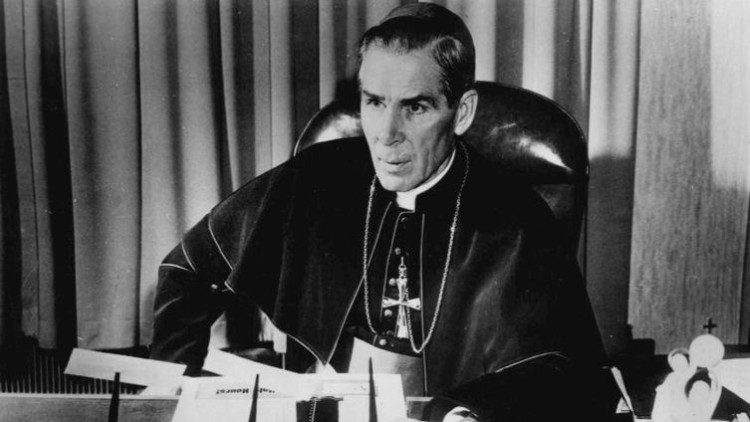
Beatification date & details released for Venerable Fulton J. Sheen


Venerable Fulton SheenVenerable Fulton Sheen 

Venerable Fulton Sheen to be beatified in St. Louis on 24 September

The late American Archbishop Fulton J. Sheen will be beatified at a Mass presided over by Cardinal Luis Antonio Tagle on September 24, 2026, in St. Louis, Missouri, according to the Dicastery for the Causes of Saints.

By Deborah Castellano Lubov and Robin Gomes

Venerable Fulton J. Sheen of the United States is set to be beatified on Thursday, September 24, 2026, in St. Louis, Missouri. 

Cardinal Luis Antonio Tagle, Pro-Prefect of the Dicastery for Evangelization, will preside at the beatification Mass, representing Pope Leo XIV.

After his heroic virtue was recognized, Fulton Sheen was declared Venerable in 2012 by Pope Benedict XVI. In 2019, Pope Francis authorized a decree recognizing a miracle through his intercession.

This recognition cleared Archbishop Sheen for beatification, after which he will have the title "Blessed."

The future Blessed Fulton Sheen was known for his dynamic preaching, especially on television and radio.

Born to an Irish family in El Paso, Illinois, on May 8, 1895, Sheen discovered his call to the priesthood at the age of 24 and was ordained a priest in 1919.

He pursued higher studies at the Catholic University of America in Washington (US), the Catholic University of Leuven (Belgium), and the Pontifical University of St. Thomas Aquinas in Rome. 

He returned to the U.S. in 1926 and began teaching at the Catholic University of America, a position he held until 1950. Sheen served as the Bishop of Rochester, New York, from 1951 to 1969, and Pope Paul VI later appointed him as the Titular Archbishop of Newport, Wales, in 1969. 

A gifted teacher and speaker, Sheen’s homilies were much appreciated. In 1930, he began participating in the Sunday radio program entitled “The Catholic Hour," which reached an estimated four million listeners at the height of its popularity.

In 1951, he began hosting a weekly television series, “Life is Worth Living," on matters of faith that attracted some 30 million viewers.    

He died in New York at the age of 84, on December 9, 1979.

Monday, March 23, 2026

Pope Leo XIV advances six causes for sainthood


Servant of God Stanisława Samulowska moves closer to sainthoodServant of God Stanisława Samulowska moves closer to sainthood 

Pope Leo advances six causes for sainthood

Pope Leo XIV advances several individuals toward sainthood, including an Italian who was a father of a family and another who offered his life for the faith, as well as a Spanish religious who served the Church throughout the 20th century.

Vatican News

Pope Leo XIV received Cardinal Marcello Semeraro, Prefect of the Dicastery for the Causes of Saints, in the Vatican on Monday morning and authorized the Dicastery to promulgate several decrees advancing six individuals toward sainthood.

The Pope recognized the offering of life of Servant of God Ludovico Altieri, Bishop of Albano, Cardinal of the Holy Roman Church, born on 17 July 1805 in Rome, Italy, who died on 11 August 1867 in the Italian hill town of Albano Laziale.

The Holy Father also recognized the following heroic virtues of four religious and an Italian layperson who was a father of a family:

- Servant of God Edward Joseph Flanagan, diocesan priest, Founder of Boys Town, born on 13 July 1886 in Ballymoe, Ireland, and died on 15 May 1948 in Berlin, Germany.

- Servant of God Henri Caffarel, diocesan priest, Founder of the Association “Teams of Our Lady” (Équipes Notre-Dame) and of the Secular Institute “Fraternity of Our Lady of the Resurrection”, born on 30 July 1903 in Lyon, France, who died on 18 September 1996 in Beauvais.

- Servant of God Stanisława Samulowska (born Barbara), professed religious of the Company of the Daughters of Charity of Saint Vincent de Paul, born on 30 January 1865 in Woryty in present-day Poland, who died on 6 December 1950 in Guatemala City, Guatemala.

- Servant of God María of Bethlehem of the Heart of Jesus Romero Algarín (born María Dolores), professed religious of the Congregation of the Handmaids of the Divine Heart, born on 7 October 1916 in Seville, Spain, who died on 12 November 1977 in Sanlúcar la Mayor.saints

- Servant of God Giuseppe Castagnetti, lay faithful and father of a family, born on 15 March 1909 in Montebaranzone, Italy, and died there on 22 June 1965.

With the decrees on heroic virtues, the respective candidates receive the title Venerable Servant of God, or simply Venerable.

Thursday, January 22, 2026

Pope Leo XIV moves 6 forward on path to Sainthood


Fr. Augusto Rafael Ramírez MonasterioFr. Augusto Rafael Ramírez Monasterio 

Pope approves decrees for 2 new Blesseds and 4 Venerables

Pope Leo XIV approves decrees for the causes of saints and recognizes the martyrdom of Guatemalan Fr. Augusto Rafael Ramírez Monasterio and Mother Maria Ignazia Isacchi, clearing the way for their beatification.

By Tiziana Campisi

On Thursday, Pope Leo XIV held an audience with Cardinal Marcello Semeraro, Prefect of the Dicastery for the Causes of Saints, and authorized him to promulgate decrees related to two people who will be beatified and four new Venerables.

The decrees recognized the martyrdom of Fr. Augusto Rafael Ramírez Monasterio, a priest of the Order of Friars Minor, and a miracle attributed to the intercession of Sr. Maria Ignazia Isacchi, founder of the Congregation of the Ursulines of the Sacred Heart of Jesus of Asola. Both will therefore be proclaimed Blessed.

He also recognized the heroic virtues of Nerino Cobianchi, a layman, and Srs. Crocifissa Militerni, Maria Giselda Villela, and Maria Tecla Antonia Relucenti, who have been proclaimed Venerable.

Guatemalan priest and martyr

Augusto Rafael Ramírez Monasterio was born in Guatemala City on November 5, 1937, into a large and devout Catholic family.

Having discerned a religious vocation, he began his Franciscan novitiate in Jumilla, Spain, where, after completing studies in philosophy and theology, he was ordained a priest on June 18, 1967.

In 1978, he served as guardian and parish priest of San Francisco el Grande in Antigua, Guatemala, dedicating himself to the parish’s pastoral life and to the poor and defenseless, while the country was being torn apart by civil war.

Arrested on June 2, 1983, he was tortured and then released but was placed under special surveillance and received numerous death threats.

On November 7, 1983, he was seized again by soldiers and killed during a transfer to the outskirts of the city. The decree recognizes that he was killed in hatred of the faith.


Sr. Maria Ignazia Isacchi

Italian Superior General of Ursuline Sisters of Somasca

Maria Ignazia Isacchi—born Angela Caterina and known as “Ancilla”—was born on May 8, 1857, in Stezzano, in the Italian province of Bergamo, and entered the Ursuline Sisters of Somasca at just over the age of twenty.

Elected Superior General, she transferred the motherhouse to Asola and continued to direct the institute there until 1924, when, for reasons of health, she was forced to resign; she nonetheless received the title “Superior General for life ad honorem.”

She died on August 19, 1934, in Seriate, and in 2022 she was declared Venerable.

Attributed to her intercession is the miraculous healing, in 1950, of Sister Maria Assunta Zappella, who suffered severe abdominal pain due to “enterocolitis of probable tubercular nature.”

On the last day of a novena, the sister suddenly felt better; the next day, a chest X-ray showed regression of the illness, and the treating physicians noted an unexpected and sudden improvement, with rapid progress and complete healing a few days later.

New Italian and Brazilian Venerables

Nerino Cobianchi—declared Venerable on Thursday—was born in the Italian province of Pavia on June 25, 1945, into a deeply religious farming family.

After moving with his family to Cilavegna in 1974, he became involved in the parish community, dedicated himself to young people, and was among the founders of a scout group.

He organized prayer groups, volunteered after the Irpinia earthquake in 1980, and carried out many charitable initiatives, extending them to other countries in the Sahel region.

Diagnosed with pancreatic cancer in October 1996, he continued his initiatives until his death on January 3, 1998.

His life was marked by intense charitable activity rooted in a firm faith, nourished by prayer, daily Mass, reading of the Bible, and recitation of the Rosary.

Crocifissa Militerni (born Teresa) was born on December 24, 1874, in Cetraro, in the Italian region of Calabria, and from a young age showed a strong inclination for a life of prayer and apostolic work directed to the young.

She contributed to the creation of the “Princess Mafalda” nursery school and devoted herself to caring for the sick, assisting the poor, the elderly, and the dying.

Humble and detached from material goods, she faced with serenity the sufferings caused by serious health problems and died on March 25, 1925.

Maria Giselda Villela, born in Brazil on January 12, 1909, lived an existence marked by illness and became prioress of the Carmel in Pouso Alegre.

Nicknamed Mãezinha (“little mother”) for her welcome and kindness, she became a spiritual point of reference for many.

Though living in enclosure, she knew how to open herself to the world, welcoming those who knocked at the parlor for comfort or advice.

She died on January 20, 1988, animated by great faith and trust in Divine Providence.

Maria Tecla Antonia Relucenti, born in the Italian city of Ascoli Piceno on September 23, 1704, embraced the project of founding the Congregation of the Pious Worker Sisters of the Immaculate Conception and was appointed Superior for life on December 8, 1744.

She dedicated herself to education and formation, collaborated in drafting the Constitutions, and died on July 11, 1769, remembered for steadfast faith and a spirit of charity.