Monday, September 5, 2022

USCCB Labor Day Reflection

 Most Reverend Paul S. Coakley

Archbishop of Oklahoma City
Chairman of the Committee on Domestic Justice and Human Development
United States Conference of Catholic Bishops
September 5, 2022


BUILDING A JUST ECONOMY FOR WOMEN AND FAMILIES

The Church often looks at the well-being of society through the lens of the well-being of the family. As Pope Francis said during his visit to the United States in 2015, “We cannot call any society healthy when it does not leave real room for family life. We cannot think that a society has a future when it fails to pass laws capable of protecting families and ensuring their basic needs...”1 This Labor Day, let us reflect on how we can build a more just economy by promoting the welfare of working families through both charitable works and through advocacy for improved policies such as expanding the Child Tax Credit and passing the Pregnant Workers Fairness Act. Advancing these two policies would have a profound impact on family stability, especially for families who are financially vulnerable.

Some recent reports have found the economy is returning to a pre-pandemic norm with regards to unemployment rates.2 However, other reports demonstrate that, while wages are rising, much or all of the increases are lost to inflation, which affects low-income families the most and puts our economy in a precarious position.3 I pray that government leaders who deal with inflation may have prudence in addressing its complexities and challenges.

But pre-pandemic norms were far from perfect. Even before current economic uncertainties, women - especially women of African descent and Latina women - earned less than their male counterparts, including when doing the same work with the same qualifications. They filled the majority of direct care jobs, experiencing increased risk of injury, high stress, and exposure to illness while earning low wages.4,5 They were the majority of caretakers for their loved ones, yet many lacked adequate family and medical leave policies. These and other economic challenges continue to affect working families and children.

This is also the first Labor Day since the Supreme Court’s reversal of Roe v. Wade. The ruling is an incredibly significant step towards healing the deep wounds of abortion and protecting all preborn human life. But our aim as Catholics has always been, and remains, to build a society in which abortion is unthinkable. This unique moment necessitates a society and an economy that supports marriages, families, and women; it demands that all of us reach across political aisles and work diligently to reframe social policies in ways that are pro-woman, pro-family, pro-worker and, thus, authentically pro-life.

One of the USCCB’s policy priorities this Congress has been supporting the Pregnant Workers Fairness Act (PWFA). There is currently no federal law requiring employers to provide short-term, reasonable accommodations to pregnant women in the workplace and the PWFA would do so. Common requests include being able to carry a bottle of water, a stool for jobs that involve long periods of standing, or lighter duty for jobs that entail heavy lifting. Women in low-wage and physically demanding jobs, disproportionately held by women of color, are regularly denied these simple accommodations and terminated or forced to take leave without pay. A number of states already have laws like this in place; however, pregnant women in every state should be protected by these standards. No woman should be forced to risk her or her child’s health, miscarriage, preterm birth, economic security or losing insurance benefits just because she requests a short-term, reasonable, pregnancy-related accommodation. The U.S. House of Representatives has already passed this bill with strong, bipartisan support. Now, with a short time left in this current legislative session of Congress, we urge immediate Senate passage of this proposal that would make the workplace safer for women and their preborn children. Hundreds of Catholics who participated in this year’s Catholic Social Ministry Gathering advocated for this bill in meetings with their U.S. Senators and we encourage Catholics to continue doing so through the advocacy center on the USCCB website.

The USCCB has also been actively advocating in favor of expanding the Child Tax Credit (CTC). In 2021, the CTC provided financial relief for families who were having difficulty making ends meet. Families largely spent this money on food, energy bills, housing payments and other basic needs. With rising inflation, continuing to expand this tax credit would be critically helpful to families forced to choose between buying food and filling up their gas tanks. Congress should move forward with a CTC proposal that has no minimum income requirement, includes families with mixed immigration status, is available for the year before birth, and is offered to every child – regardless of the size of the family. The CTC was enormously effective at reducing child poverty in 2021 and we should not regress from this progress.

Additionally, the USCCB supports federal paid leave policy, just wages, and the right to organize. We have long called for a system in which the whole of society enjoys fundamental human needs including nutrition, affordable housing, education, and health care. These common goods cannot be achieved through individual efforts alone, but require the collaboration and cooperation of everyone, and the exclusion of no one.

Just as significant as federal policy, there is much work that can be done locally to advance the dignity of work. For example, there are always opportunities to volunteer to help struggling families, such as with Catholic Charities. Additionally, the efforts of labor unions have helped union workers fare better during the pandemic than non-union workers, as they were more likely to maintain their pay and their jobs. To this end, the Catholic Campaign for Human Development supports organizations that work on low-wage workers' rights and training, in an effort to eliminate labor trafficking and related workplace abuses such as wage theft.

Finally, in writing this Labor Day reflection, I am reminded of Monsignor George Higgins, who passed away 20 years ago this year. He was a fervent advocate of economic justice for all, working closely with unions and union organizers, including Cesar Chavez and the United Farm Workers, and received many awards, including the Presidential Medal of Freedom. He was the director of what was then called the Social Action Department of the bishops’ conference and, in fact, wrote or was consulted on the U.S. Catholic bishops’ Labor Day statements for decades. Inspired by him, let us continue his good work in building a just society for all. May the spirit and example of Monsignor Higgins inspire us, that we might have the wisdom to build up justice and improve the lives of workers and their families as he did throughout his life.

Sunday, September 4, 2022

On Monday we remember the Saint of our lifetime, Mother Teresa of Calcutta


St. Teresa of Calcutta


The remarkable woman who would be known as Mother Teresa began life named Agnes Gonxha Bojaxhiu. Born on August 26, 1910, in Skopje, she was the youngest child born to Nikola and Drane Bojaxhiu. Receiving her First Communion at the age of five, she was confirmed in November 1916. Her father died while she was only eight years old leaving her family in financial straits.

Gonxha's religious formation was assisted by the vibrant Jesuit parish of the Sacred Heart in which she was very involved as a youth.

Subsequently moved to pursue missionary work, Gonxha left her home in September 1928 at the age of 18 to join the Institute of the Blessed Virgin Mary, known as the Sisters of Loreto, in Ireland. She received the name Sister Mary Teresa after St. Therese of Lisieux. In December of 1929, she departed for her first trip to India, arriving in Calcutta. After making her First Profession of Vows in May 1931, Sister Teresa was assigned to the Loreto Entally community in Calcutta and taught at St. Mary's School for girls.

Sister Teresa made her Final Profession of Vows, On May 24, 1937, becoming, as she said, the "spouse of Jesus" for "all eternity." From that time on she was called Mother Teresa.

She continued teaching at St. Mary's and in 1944 became the school's principal. Mother Teresa's twenty years in Loreto were filled with profound happiness. Noted for her charity, unselfishness and courage, her capacity for hard work and a natural talent for organization, she lived out her consecration to Jesus, in the midst of her companions, with fidelity and joy.

It was on September 10, 1946 during a train ride from Calcutta to Darjeeling for her annual retreat, that Mother Teresa received her "inspiration, her call within a call." On that day, in a way she would never explain, Jesus' thirst for love and for souls took hold of her heart and the desire to satiate His thirst became the driving force of her life.

By means of interior locutions and visions, Jesus revealed to her the desire of His heart for "victims of love" who would "radiate His love on souls." "Come be My light,'" He begged her. "I cannot go alone."

Jesus revealed His pain at the neglect of the poor, His sorrow at their ignorance of Him and His longing for their love. He asked Mother Teresa to establish a religious community, Missionaries of Charity, dedicated to the service of the poorest of the poor.

Nearly two years of testing and discernment passed before Mother Teresa received permission to begin. On August 17, 1948, she dressed for the first time in a white, blue-bordered sari and passed through the gates of her beloved Loreto convent to enter the world of the poor.

After a short course with the Medical Mission Sisters in Patna, Mother Teresa returned to Calcutta and found temporary lodging with the Little Sisters of the Poor. On December 21, she went for the first time to the slums. She visited families, washed the sores of some children, cared for an old man lying sick on the road and nursed a woman dying of hunger and tuberculosis. She started each day with communion then went out, rosary in her hand, to find and serve Him amongst "the unwanted, the unloved, the uncared for." After some months, she was joined, one by one, by her former students.

On October 7, 1950 the new congregation of the Missionaries of Charity was officially established in the Archdiocese of Calcutta. By the early 1960s, Mother Teresa began to send her Sisters to other parts of India. The Decree of Praise granted to the Congregation by Pope Paul VI in February 1965 encouraged her to open a house in Venezuela. It was soon followed by foundations in Rome and Tanzania and, eventually, on every continent. Starting in 1980 and continuing through the 1990s, Mother Teresaopened houses in almost all of the communist countries, including the former Soviet Union, Albania and Cuba.

In order to respond better to both the physical and spiritual needs of the poor, Mother Teresa founded the Missionaries of Charity Brothers in 1963, in 1976 the contemplative branch of the Sisters, in 1979 the Contemplative Brothers, and in 1984 the Missionaries of Charity Fathers.

Mother Teresa's inspiration was not limited to those with religious vocations. She formed the Co-Workers of Mother Teresa and the Sick and Suffering Co-Workers, people of many faiths and nationalities with who she shared her spirit of prayer, simplicity, sacrifice and her apostolate of humble works of love.

This spirit later inspired the Lay Missionaries of Charity. In answer to the requests of many priests, in 1981 Mother Teresa also began the Corpus Christi Movement for Priests as a "little way of holiness" for those who desire to share in her charisma and spirit.

During the years of rapid growth the world began to turn its eyes towards Mother Teresa and the work she had started. Numerous awards, beginning with the Indian Padmashri Award in 1962 and notably the Nobel Peace Prize in 1979, honored her work, while an increasingly interested media began to follow her activities. She received both prizes and attention 'for the glory of God and in the name of the poor."

There was a heroic side of this great woman that was revealed only after her death. Hidden from all eyes, even from those closest to her, was her interior life marked by an experience of a deep, painful and abiding feeling of being separated from God, even rejected by Him, along with an ever increasing longing for His love. She called her inner experience, the darkness. The "painful night" of her soul, which began around the time she started her work for the poor and continued to the end of her life, led Mother Teresa to an ever more profound union with God. Through the darkness she mystically participated in the thirst of Jesus, in His painful and burning longing for love, and she shared in the interior desolation of the poor.

In spite of increasingly severe health problems towards the end of her life, Mother Teresa continued to govern her Society and respond to the needs of the poor and the Church. By 1997, Mother Teresa's Sisters numbered nearly 4,000 members and were established in 610 foundations in 123 countries of the world. In March 1997 she blessed her newly-elected successor as Superior General of the Missionaries of Charity and then made one more trip abroad. After meeting Pope John Paul II for the last time, she returned to Calcutta and spent her final weeks receiving visitors and instructing her Sisters.

On September 5, Mother Teresa's earthly life came to an end. She was given the honor of a state funeral by the Government of India and her body was buried in the Mother House of the Missionaries of Charity. Her tomb quickly became a place of pilgrimage and prayer for people of all faiths, rich and poor alike.

Mother Teresa left a testament of unshakable faith, invincible hope and extraordinary charity. Her response to Jesus' plea, "Come be My light," made her a Missionary of Charity, a "mother to the poor," a symbol of compassion to the world, and a living witness to the thirsting love of God. As a testament to her most remarkable life, Pope John Paul II permitted the opening of her Cause of Canonization. On December 20, 2002 he approved the decrees of her heroic virtues and miracles.

Mother Teresa was beatified by Pope John Paul II on October 19, 2003.

On the occasion of her beatification, the Missionaries of Charity issued the following statement:

"We, the Missionaries of Charity, give thanks and praise to God that our Holy Father, Pope John Paul II, has officially recognized the holiness of our mother, Mother Teresa, and approved the miracle obtained through her intercession. We are filled with joy in anticipation of the Beatification that will take place in Rome on Mission Sunday, 19 October 2003, the closest Sunday to the 25th anniversary of the Holy Father's Pontificate and the end of the Year of the Rosary.

"Today, after three and a half years of investigation and study, the Church confirms that Mother heroically lived the Christian life and that God has lifted her up as both a model of holiness and an intercessor for all.

"Mother is a symbol of love and compassion. When Mother was with us, we were witnesses to her shining example of all the Christian virtues. Her life of loving service to the poor has inspired many to follow the same path. Her witness and message are cherished by those of every religion as a sign that "God still loves the world today." For the past five years since Mother's death, people have sought her help and have experienced God's love for them through her prayers. Every day, pilgrims from India and around the world come to pray at her tomb and many more follow her example of humble service of love to the most needy, beginning in their own families.

"Mother often said, 'Holiness is not the luxury of the few, it is a simple duty for each one of us. May her example help us to strive for holiness: to love God, to respect and love every human person created by God in His own image and in whom He dwells, and to care for our poor and suffering brethren. May all the sick, the suffering, and those who seek God's help find a friend and intercessor in Mother."

Following her beatification, a long wait for a second miracle then followed. On December 17, 2015 Pope Francis announced a second miracle had been attributed to the intercession of Mother Teresa. The miracle involved a Brazilian man who was afflicted with tumors who was miraculously cured. This cleared the way for Mother Teresa's canonization.

St. Teresa of Calcutta was canonized by Pope Francis on September 4, 2016 in a ceremony that was witnessed by tens of thousands of people, including 1,500 homeless people across Italy.

St. Teresa of Calcutta is the patron saint of World Youth Day, Missionaries of Charity and a co-patron of the Archdiocese of Calcutta, alongside St. Francis Xavier. Her feast day is celebrated on September 5.

Prayers for peace at end of beatification ceremonies today


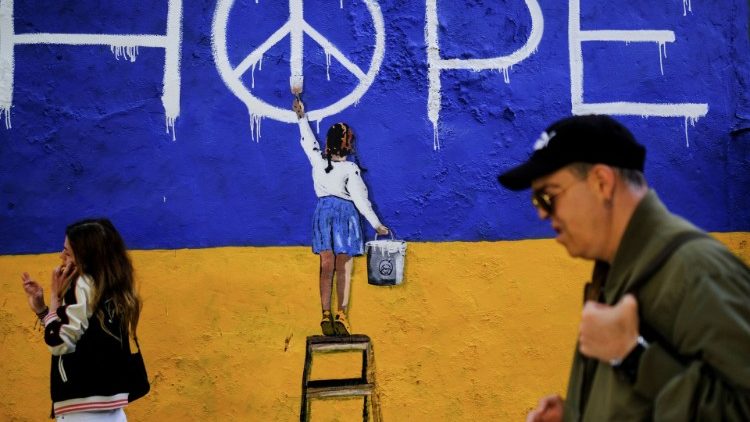
People walk past a mural with the colours of the Ukrainian flag and a sign now known as the "peace sign".People walk past a mural with the colours of the Ukrainian flag and a sign now known as the "peace sign". 

Pope prays for world peace, remembering Ukraine

Pope Francis greets all those present at the beatification mass for John Paul I, before turning to the Virgin Mary and praying for world peace.

By Francesca Merlo

Prior to the conclusion of the celebration of the beatification of John Paul I in St Peter's Square, Pope Francis extended his greetings to all those present, and thanked them for their participation. 

His gratitude was expressed, in particular, to his "brother Cardinals, to the Bishops and priests who have come from various countries".

The Pope also greeted all the official delegations who joined to pay homage to the new blessed and his "respectful thought" went to the President of the Italian Republic and the Prime Minister of the Principality of Monaco.

The Pope then greeted all the pilgrims present before turning in prayer to the Virgin Mary, "so that she might obtain the gift of peace throughout the world, especially for war-torn Ukraine".

May she, the first and perfect disciple of the Lord, help us follow the example and holiness of life of John Paul I, concluded the Pope.

Pope John Paul I beatified today in St. Peter's Square


Pope beatifies John Paul I: May he obtain for us the 'smile of the soul'

Pope Francis presided over the beatification Mass of Pope John Paul I, recalling how his smile communicated the goodness of the Lord. He encouraged everyone to learn from the Lord on how to love without limits and be a Church with a happy, serene and smiling face, that never closes doors.

By Thaddeus Jones

Recalling the example of the "smiling pope," John Paul I, Pope Francis presided over his beatification in Saint Peter's Square on Sunday. The Mass was celebrated by Cardinal Marcello Semeraro, Prefect of the Dicastery for the Causes of Saints, with 25 thousand faithful participating in a rainy and later sun-filled square. 


In his homily, Pope Francis recalled how in today's Gospel we hear of large crowds following Jesus who gives them a challenging message: to become His disciple means to put aside earthly attachments, to love Him more than his or her own family, to carry the cross we bear in our lives. 

Pope prays for world peace, remembering Ukraine

Crowds seek hope

The Pope observed that this admonition of the Lord contrasts with what we often see in our world, where the crowds are taken by the charisma of a teacher or leader, attaching their hopes for the future based on emotions, but they become more susceptible to those who instead shrewdly take advantage of them, telling them what they want to hear for their own profit, glory or power, profiting on society's fears and needs.

God’s style is different

The Pope explained that God's way is different, as he does not exploit our needs or vulnerabilities, or offer easy promises and favours. The Lord is not interested in huge crowds, or seeking approval, the Pope went on to say, pointing out that the Lord appears more worried about those who follow with easy enthusiasm but without a more profound understanding of what is needed.

“Instead of yielding to the allure of popularity, (Jesus) asks each person to discern carefully their reason for following him and the consequences that it will entail.”

Many in the crowds recounted in the Gospel reading were hoping Jesus would become their leader and free them from their enemies, the Pope observed, someone who could easily fix all their problems. This worldly focus on only one's needs, of gaining prestige and status, power and privilege, needs to be challenged he pointed out, as "this is not the style of Jesus...and cannot be the style of his disciples and of his Church."

Carrying one’s cross

The Lord asks a different attitude of us, the Pope said, he wants his disciples to prefer nothing other than this love, even over their deepest affections and greatest treasures.

“To follow him does not mean to become part of a court or a triumphal procession, or even to receive a lifetime insurance policy. On the contrary, it means “carrying one’s cross” (Lk 14:27): shouldering, like him, one’s own burdens and those of others, making one’s life a gift, spending it in imitation of his own generous and merciful love for us. These are decisions that engage the totality of our lives.”

Love without measure

To commit as a disciple of Jesus means to look to the Lord more than ourselves, to learn how to love from the Crucified One, "the love that bestows itself to the very end, without measure and without limits."

“In the words of Pope John Paul, “we are the objects of undying love on the part of God.” An undying love: it never sinks beneath the horizon of our lives; it constantly shines upon us and illumines even our darkest nights.”

When we look upon the Crucified Lord, the Pope continued, we are called to overcome the focus on ourselves, to love God and others everywhere, even those who see things differently, even our enemies.

Love calls for sacrifice


To love can involve "sacrifice, silence, misunderstanding, solitude, resistance and persecution," the Pope pointed out, and it calls on us to take risks, and never to settle for less or we can end up living life "halfway," without taking the decisive steps needed to be the Lord's disciples, truly committing ourselves to Him and helping others.

“As Pope John Paul also said, if you want to kiss Jesus crucified, “you cannot help bending over the cross and letting yourself be pricked by a few thorns of the crown on the Lord’s head.” A love that perseveres to the end, thorns and all: no leaving things half done, no cutting corners, no fleeing difficulties.”

Love without compromise

Recalling the example of Blessed John Paul I, Pope Francis recalled how the new Blessed lived the joy of the Gospel, "without compromises, loving to the very end." He did not seek his own glory, but lived as a "meek and humble pastor." 

“With a smile, Pope John Paul managed to communicate the goodness of the Lord. How beautiful is a Church with a happy, serene and smiling face, that never closes doors, never hardens hearts, never complains or harbours resentment, does not grow angry or impatient, does not look dour or suffer nostalgia for the past.”

In conclusion, the Pope encouraged us to ask Blessed John Paul I to help us obtain from the Lord “the smile of the soul” and to pray in his own words: “Lord take me as I am, with my defects, with my shortcomings, but make me become what you want me to be.” 

Saturday, September 3, 2022

Sunday Saint of the Day


St. Rosalia


St. Rosalia, daughter of Sinibald, Lord of Roses and Quisquina, was a descendant of the great Charlemagne. She was born at Palermo in Sicily. In her youth, her heart turned from earthly vanities to God. She left her home and took up her abode in a cave, on the walls of which she wrote these words: "I, Rosalia, daughter of Sinibald, Lord of Roses and Quisquina, have taken the resolution to live in this cave for the love of my Lord, Jesus Christ." She remained there entirely hidden from the world.


She practiced great mortifications and lived in constant communion with God. Afterward she transferred her abode to Mount Pellegrino, about three miles from Palermo, in order to triumph entirely over the instincts of flesh and blood, in sight of her paternal home. She is said to have appeared after death and to have revealed that she spent several years in a little excavation near the grotto. She died alone, in 1160, ending her strange and wonderful life unknown to the world. Her body was discovered several centuries later, in 1625, during the pontificate of Pope Urban VIII. Her feast day is September 4th.


Reforms for the Order of Malta promulgated


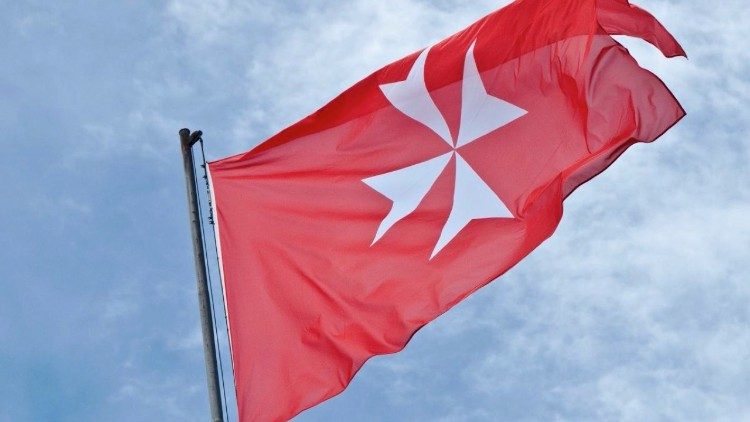
Flag of the Order of MaltaFlag of the Order of Malta 

Pope promulgates new Constitution of the Order of Malta

Pope Francis promulgates the new Constitution of the Order of Malta and appoints a provisional Sovereign Council, as part of an ongoing renewal process of the Order. He announces the convocation of the Extraordinary General Chapter for January 25, 2023, the Feast of the Conversion of St. Paul.

By Vatican News staff writer

Pope Francis has taken the next steps in the renewal of the Sovereign Military Hospitaller Order of St. John of Jerusalem, of Rhodes and of Malta (the Sovereign Military Order of Malta) with a decree issued on Saturday. 

The Decree establishes the new Constitutional Charter and related Melitense Code of the Order, an, taking effect immediately, the revocation of the High Offices, and the dissolution of the current Sovereign Council governing the Order. The Decree also names a provisional Sovereign Council whose members are: Fra' Emmanuel Rousseau, Grand Commander; Riccardo Paternò di Montecupo, Grand Chancellor; Fra' Alessandro de Franciscis, Grand Hospitaller; Fabrizio Colonna, Receiver of the Common Treasure. The directive also calls for an Extraordinary Chapter General on 25 January 2023, the feast of the Conversion of St. Paul.

Pope Francis highlights in the text that the Order has "always enjoyed special protection from the Apostolic See," pointing out how, over the centuries, the various popes have "acted to affirm the identity, to maintain operations, to help overcome crises, as well as to guarantee the existence and development" of the Order, including in its rights of sovereignty in the international sphere.

The Pope also recalls how the prerogatives of the Order do not constitute the set of powers and prerogatives proper to sovereign entities "in the full sense of the word," as stipulated in the 24 January 1953 ruling issued by the Tribunal of Cardinals. As a religious Order, therefore, it "depends in its various forms, on the Holy See." 

The Pope explains how through the years he has followed the journey of the Order "with paternal care and concern," and expresses appreciation for its outreach in various parts of the world and his gratitude for "the generous contribution of Members and Volunteers," while "also noting the need to begin a profound spiritual, moral and institutional renewal of the entire Order." The Pope notes that he has entrusted the "important work of reform" to his Special Delegate, Cardinal Silvano Maria Tomasi, who was also charged with the revision of the Constitutional Charter, the Melitense Code; and, together with the Order's Lieutenant Grand Master, the preparation of the Extraordinary Chapter General. "Many steps were taken," writes the Pope, "but there were just as many hurdles and difficulties encountered along the way."

Finally, with the Decree, Pope Francis confirms "all the faculties attributed in the past" to his Special Delegate "until the conclusion of the Extraordinary General Chapter."

In a statement issued by the Grand Magistry of the Sovereign Order of Malta, Fra’ John Dunlap, Lieutenant to the Grand Master and head of the Provisional Government of the Order, said: “The Order of Malta welcomes the paternal actions of His Holiness which demonstrate the great love the Pontiff has for our Order. In his careful review of the various proposals put before Him these last months, the Pope has determined a path forward that promises to ensure the Order’s future both as a Religious Institute and a Sovereign Entity."

The Lieutenant to the Grand Master further notes, that “the Pope’s decision to empower a Provisional Government is the first step in a clear blueprint for more efficient, streamlined governance for the Order." He also writes that the long-awaited Chapter General "will enable the Order to move beyond the Provisional Government to a regularised Government in conformity with its new Constitution." He also paid tribute to the "variety of accomplished and talented Knights in the Order’s governance" opening will help offer a fresh outlook on how to face today's challenges. Regarding the new Constitution, he describes it as "a carefully crafted document that speaks to the complexity and nature of a thousand-year-old religious order."

In conclusion, on behalf of the entire Order, he extends his "heartfelt thanks" to Pope Francis and his Special Delegate, Cardinal Silvano Tomasi, "for the care, thoroughness, and love they have exhibited for our Order.”