Showing posts with label Malta. Show all posts

Monday, January 8, 2024

Maltese Archbishop says Priests to marry


Watch: Priests should have option to marry – Archbishop Charles Scicluna 


The Church should look into revising its rules to allow Catholic priests the option to get married, Archbishop Charles Scicluna told Times of Malta.

The time is ripe to “discuss the issue seriously” and “take decisions on it”, he said, adding that he has already openly spoken about it at the Vatican, but acknowledged it is ultimately not his decision to make.

“This is probably the first time I’m saying it publicly and it will sound heretical to some people,” said the archbishop, who is also a respected Vatican official.

“Why should we lose a young man who would have made a fine priest, just because he wanted to get married? And we did lose good priests just because they chose marriage.”

The centuries-old rule on priestly celibacy has been publicly debated for decades but local Church authorities had, until now, always defended it, insisting a priest’s life should be exclusively dedicated to the Church and his community.

In an interview with Times of Malta this week, Scicluna acknowledged celibacy still has and will continue to have a place in the Church, but said he learnt from experience that priests should also be given the option to marry, just like in Catholic Churches of the Oriental rite.

“It was optional for the first millennium of the Church’s existence and it should become optional again,” he said.

“A man may mature, engage in relationships, love a woman. As it stands, he must choose between her and priesthood, and some priests cope with that by secretly engaging in sentimental relationships.”

He was fielding questions about Catholic priests who secretly live in a romantic relationship while they publicly continue to serve their duties as priests.

Priests who have children

Some of them have been in a committed relationship for years and others even secretly had children from those relationships.

“This is a global reality; it doesn’t just happen in Malta. We know there are priests around the world who also have children and I think there are ones in Malta who may have too,” he said.

The 64-year-old archbishop and lawyer is no ordinary prelate. Apart from running the Church in Malta, he also serves in one of the most influential positions at the Vatican – as Adjunct Secretary of the Holy See’s Dicastery for the Doctrine of the Faith.

The Roman Catholic Church in its Latin rite is the only Christian religion that requires all its priests to be celibate – to abstain from marriage and sexual relations.

But it was not always like that.

For the first millennium after the death of Jesus, priests were generally allowed to marry and have children. It was in the 12th century that the Church definitively introduced the rule.

But it is merely a rule – not Church dogma – so it can be changed by Pope Francis, although the 87-year-old Pontiff seems yet unconvinced.

Vatican came close in 2019

The Vatican came very close to changing the rule in 2019, when the Synod of Bishops overwhelmingly voted to allow married men in the Amazon region to become priests to help meet the needs of the Church there.

But despite resembling a parliament of bishops, the Synod is not a decision-making authority and the final say on rule changes in the Church lies in Francis’s hands, who did not go ahead with the change at all.

The archbishop said, however, that the Pope is right in insisting such a change should not be about mitigating the vocation crisis. Vocation has everything to do with faith and a person’s relationship with God, and the rules should not be changed to merely attract more men to priesthood or to fill in the gaps.

Known in Church circles as the Vatican’s most respected sex crimes expert, Scicluna enjoys a respectable reputation among the Holy See’s highest echelons and is often summoned by Pope Francis to launch investigations into some of the most high-profile, international abuse cases in the Church.

Saturday, September 3, 2022

Reforms for the Order of Malta promulgated


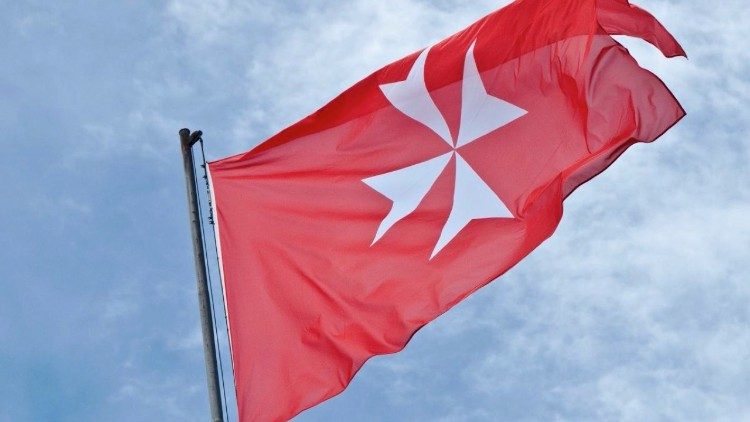
Flag of the Order of MaltaFlag of the Order of Malta 

Pope promulgates new Constitution of the Order of Malta

Pope Francis promulgates the new Constitution of the Order of Malta and appoints a provisional Sovereign Council, as part of an ongoing renewal process of the Order. He announces the convocation of the Extraordinary General Chapter for January 25, 2023, the Feast of the Conversion of St. Paul.

By Vatican News staff writer

Pope Francis has taken the next steps in the renewal of the Sovereign Military Hospitaller Order of St. John of Jerusalem, of Rhodes and of Malta (the Sovereign Military Order of Malta) with a decree issued on Saturday. 

The Decree establishes the new Constitutional Charter and related Melitense Code of the Order, an, taking effect immediately, the revocation of the High Offices, and the dissolution of the current Sovereign Council governing the Order. The Decree also names a provisional Sovereign Council whose members are: Fra' Emmanuel Rousseau, Grand Commander; Riccardo Paternò di Montecupo, Grand Chancellor; Fra' Alessandro de Franciscis, Grand Hospitaller; Fabrizio Colonna, Receiver of the Common Treasure. The directive also calls for an Extraordinary Chapter General on 25 January 2023, the feast of the Conversion of St. Paul.

Pope Francis highlights in the text that the Order has "always enjoyed special protection from the Apostolic See," pointing out how, over the centuries, the various popes have "acted to affirm the identity, to maintain operations, to help overcome crises, as well as to guarantee the existence and development" of the Order, including in its rights of sovereignty in the international sphere.

The Pope also recalls how the prerogatives of the Order do not constitute the set of powers and prerogatives proper to sovereign entities "in the full sense of the word," as stipulated in the 24 January 1953 ruling issued by the Tribunal of Cardinals. As a religious Order, therefore, it "depends in its various forms, on the Holy See." 

The Pope explains how through the years he has followed the journey of the Order "with paternal care and concern," and expresses appreciation for its outreach in various parts of the world and his gratitude for "the generous contribution of Members and Volunteers," while "also noting the need to begin a profound spiritual, moral and institutional renewal of the entire Order." The Pope notes that he has entrusted the "important work of reform" to his Special Delegate, Cardinal Silvano Maria Tomasi, who was also charged with the revision of the Constitutional Charter, the Melitense Code; and, together with the Order's Lieutenant Grand Master, the preparation of the Extraordinary Chapter General. "Many steps were taken," writes the Pope, "but there were just as many hurdles and difficulties encountered along the way."

Finally, with the Decree, Pope Francis confirms "all the faculties attributed in the past" to his Special Delegate "until the conclusion of the Extraordinary General Chapter."

In a statement issued by the Grand Magistry of the Sovereign Order of Malta, Fra’ John Dunlap, Lieutenant to the Grand Master and head of the Provisional Government of the Order, said: “The Order of Malta welcomes the paternal actions of His Holiness which demonstrate the great love the Pontiff has for our Order. In his careful review of the various proposals put before Him these last months, the Pope has determined a path forward that promises to ensure the Order’s future both as a Religious Institute and a Sovereign Entity."

The Lieutenant to the Grand Master further notes, that “the Pope’s decision to empower a Provisional Government is the first step in a clear blueprint for more efficient, streamlined governance for the Order." He also writes that the long-awaited Chapter General "will enable the Order to move beyond the Provisional Government to a regularised Government in conformity with its new Constitution." He also paid tribute to the "variety of accomplished and talented Knights in the Order’s governance" opening will help offer a fresh outlook on how to face today's challenges. Regarding the new Constitution, he describes it as "a carefully crafted document that speaks to the complexity and nature of a thousand-year-old religious order."

In conclusion, on behalf of the entire Order, he extends his "heartfelt thanks" to Pope Francis and his Special Delegate, Cardinal Silvano Tomasi, "for the care, thoroughness, and love they have exhibited for our Order.”

Wednesday, April 6, 2022

Recalling Malta visit, Ukranian suffering and migration at today's General Audience


Pope: UN powerless in Ukraine war, where logic of powerful prevails

Pope Francis reflects during the General Audience on his weekend visit to Malta, noting that “the dominant logic are the strategies of the most powerful countries to affirm their own interests.”

By Vatican News staff reporter

At the Wednesday General Audience, Pope Francis decried the war in Ukraine, and the powerlessness of the United Nations, noting how the “old story” of competition between greater powers continues today despite efforts to establish lasting peace.

Working for respect and peace

Pope Francis focused his catechesis on his weekend journey to Malta, and underscored how competition between greater powers has continued to today despite attempts to establish peace after World War II.

The war in Ukraine today has made us witnesses of “the impotence of the United Nations,” he observed.

“In the ongoing war in Ukraine, we witness the impotence of the International Organizations of the United Nation.”

He said this in the context of describing how Malta lies in a strategic location between Europe and Africa, and close to Asia, making it a place where peoples from around the world meet.

And while Malta, rich in history and civiliation, represents a mindset that should characterize our world with respect, freedom and peaceful coexistence, the dominating mindset of colonization of the most powerful still prevails today.

Welcomed with "unusual kindness"

Recalling the motto of the Malta journey taken from the Acts of the Apostles when the Apostle Paul was welcomed by the inhabitants “with unusual kindness” after his shipwreck there, the Pope said he chose those very words “with unusual kindness” as a way to show the path to follow.

This regards not just migrants, he explained, but kindness that creats a more fraternal, livable world, saving us from the “shipwreck” that we all risk facing, as we are all “in the same boat.” The Pope thanked the authorities and people of Malta for for their very warm welcome.

Welcoming and understanding migrants

A second key theme the Pope highlighted regards migration in Malta, where at the John XXIII Reception Centre he met numerous migrants landing there following harrowing journeys across the sea.

He stressed that we must always be open to hearing their stories, the only way to get beyond an often distorted vision of this phenomenon presented in the media.

Each person has a story, carries wounds, and has roots and culture, all with human dignity, he said, adding, “Each of them is the bearer of a wealth infinitely greater than the problems that welcoming them might entail.”

The Pope paid tribute in particular to Franciscan Fr. Dionysius Mintoff who founded the John XXIII Centre, also called “Peace Lab”, and continues his work at the age of 91 in welcoming and assisting migrants, creating a culture of encounter and peace through fraternity, compassion and solidarity.

Continuing legacy of evangelization

In conclusion, Pope Francis noted Malta’s key role in contributing to evangelization, where so many priests, religious and lay faithful have given their Christian witness around the world.

The Pope called his visit “an act of gratitude” to God, to the faithful of Malta and the island of Gozo.

In addition to recalling his visit as a pilgrim in the footsteps of Saint Paul, he paid tribute to their immense trust in the Blessed Mother, as experienced together during his visit to the National Marian Shrine of Ta’Pinu on Gozo.Recalling 

Monday, April 4, 2022

Giving thanks after Papal visit to Malta


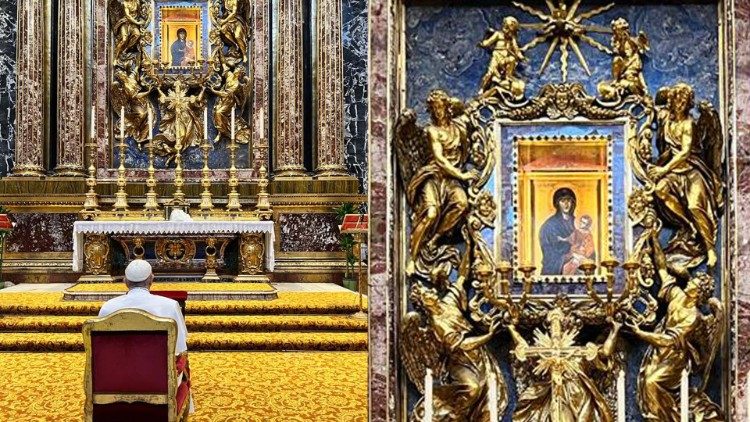
Pope Francis praying before Our Lady's icon in St. Mary MajorPope Francis praying before Our Lady's icon in St. Mary Major 

Pope thanks Our Lady for Apostolic Journey to Malta

On the morning after his visit to Malta, Pope Francis prays for a moment at the feet of the ancient Roman icon of Maria Salus Populi Romani to express his gratitude to Our Lady for her maternal protection.

By Devin Watkins

The Pope’s visit to the Basilica of St. Mary Major has once again acted as the two bookends of his Apostolic Journey, which this time took him to the EU nation of Malta for two days over the weekend.

According to the Holy See Press Office, Pope Francis traveled across Rome on Monday for a stop at the Papal Basilica to pray before the icon of Maria Salus Populi Romani.

The Pope laid a bouquet of flowers on the altar below Our Lady’s icon in the Borghese Chapel, and thanked the Blessed Virgin Mary for her maternal protection during his visit to Malta.

He then returned by car to his home at the Vatican’s Casa Santa Marta.

Marian devotion

Tradition has it that the icon of Mary “Salvation of the Roman Peoples” arrived in Rome during the reign of Pope St. Gregory the Great, sometime around 590 AD, though its origins date back much further.

Pope Gregory XVI crowned the icon in 1838, while Pope Pius XII repeated the gesture of devotion during the Marian year of 1954.

The Vatican Museums cleaned and restored the ancient icon of Maria Salus Populi Romani in 2018.

Brief, intense visit

Pope Francis spent Saturday and Sunday in the Mediterranean nation of Malta for a visit which was twice delayed due to Covid-19 restrictions.

Migration and war, in a way, were at the center of the Pope's Apostolic Journey. The theme for the visit was "They showed us unusual kindness", and the Holy Father spoke frequently about the need for nations to welcome, protect, promote, and integrate migrants.

At his first event, with civil authorities, Pope Francis called for solidarity toward people on the move, and his last event lauded a concrete example of what he meant, when he visited the "John XXIII Peace Lab" migrant center in Hal Far.

Pattern of war

On the other hand, the Pope spoke forcefully against war, calling it “sacrilegious”. Speaking to reporters on the return flight to Rome, he lamented the “pattern of war” which leads governments to spend money on weapons and disregard the sacredness of human life, even of the young.

Pope Francis' final public words during his Apostolic Journey to Malta were ones filled with pain:

“I am grieved. We never learn. May the Lord have mercy on us, on all of us. Every one of us is guilty!

Sunday, April 3, 2022

Pope hints at visit to Ukraine on presser flight back to Rome


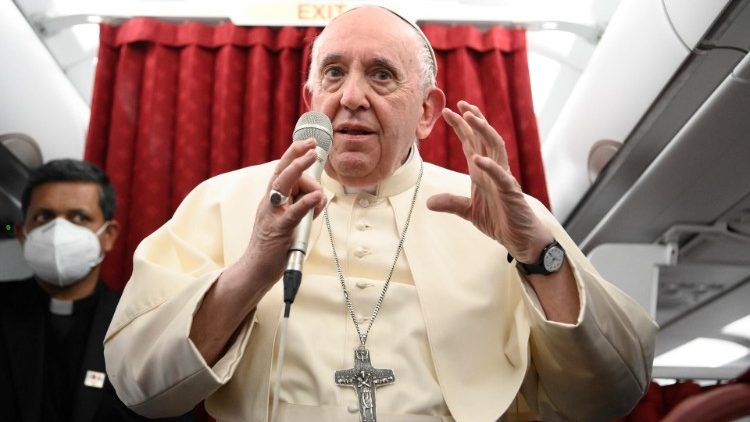
Pope Francis answers questions during an inflight press conference from MaltaPope Francis answers questions during an inflight press conference from Malta  (Vatican Media)

Pope Francis: 'We never learn, we are enamored of war and the spirit of Cain!'

Pope Francis answers questions about the war in Ukraine and the possibility of a journey to Kyiv, during the short flight from Malta to Rome at the conclusion of his 36th Apostolic Journey.

By Vatican News

"We never learn. May the Lord have mercy on us, on all of us. Every one of us is guilty!"

Speaking to reporters aboard the papal plane from Malta, Pope Francis recalls what struck him about the island's welcome and returns to talk about the war in Ukraine. (Here below is an unofficial translation of the Pope's inflight press conference)

Q: Thank you for your presence in Malta. My question is about the surprise of this morning in the chapel where [St. George Preca] is buried... What motivated you to make this surprise to the Maltese, and what you will remember about this visit to Malta? And how is your health? We have seen you during this very intense trip. We can say it went well. Thank you very much. (Andrea Rossitto with TVM)

My health is a bit fickle, I have this problem with my knee that causes problems with getting about, with walking. It's a bit annoying, but improving, and at least I can get out. Two weeks ago, I couldn't do anything. It's a slow thing; we’ll see if it comes back. However, a doubt arises at this age about not knowing how the game will end. Let's hope it goes well.

And then about Malta: I was happy with the visit: I saw the realities of Malta; I saw an impressive enthusiasm of the people, both on Gozo and on Malta, in Valletta, and in the other places. There was a great enthusiasm in the streets; I was amazed. It was a bit short.

One problem I saw for you and also one of the problems is migration. The problem of migrants is serious because Greece, Cyprus, Malta, Italy, and Spain: these are the closest countries to Africa and the Middle East, and they land here, they arrive here… Migrants must always be welcomed! The problem is that each government has to say how many they can receive regularly to live there. This requires an agreement among the countries of Europe, and not all of them are willing to receive migrants. We forget that Europe was made by migrants, right? But that's the way things are, but at the very least let us not leave all the burden to these neighbouring countries that are so generous, and Malta is one of them.

Today I was in the migrant reception centre and the things I heard there are terrible, the suffering of these people to get here… and then the camps, there are camps, which are on the Libyan coast, when they are sent back. This seems criminal, doesn't it? That's why I think it's a problem that touches everyone's heart. Just as Europe is making room so generously for the Ukrainians who knock on the door, so too for the others who come out of the Mediterranean.

This is a point that I finished the visit with, and it touched me so much, because I heard the testimonies, the sufferings and that are more or less like those that I think I told you are in that little book that came out, "Hermanito" in Spanish, "little brother"; and all the Via Crucis [the Way of the Cross] of these people. One of those who spoke today had to pay four times! I ask you to think about this. Thank you.

Q: On the flight that took us to Malta, you told one of my colleagues that a trip to Kyiv “is on the table”. While in Malta you referred to your closeness to the Ukrainian people, and on Friday in Rome, the Polish President opened the door to a possible visit to the Polish border. Today we were struck by the images coming from Bucha, a village near Kyiv, abandoned by the Russian army where Ukrainians have found dozens of bodies in the streets, some with their hands tied, as if they had been "executed". It seems, today, that your presence there is increasingly necessary. Do you think such a trip is feasible? And what conditions would have to be in place for you to be able to go there? (Jorge Antelo Barcia with RNA)

Thank you for conveying this news from today that I was not yet aware of. War is always an act of cruelty, an inhuman thing, that goes against the human spirit; I don't say Christian, [I say] human. It is the spirit of Cain, the "Cainist" spirit... I am willing to do whatever needs to be done, and the Holy See, especially the diplomatic side, Cardinal Parolin and Archbishop Gallagher, are doing everything… everything possible. We cannot render public everything they do, for prudence, for confidentiality, but we are pushing the boundaries of our work.

Among the possibilities there is the trip; there are two possible trips: the President of Poland proposed one trip when he asked me to send Cardinal Krajewski to visit the Ukrainians who have been welcomed in Poland; he has already been there twice - he brought two ambulances, and he was there with them for some time, and he will go again; he is willing to do so.

The other option is the trip that some of you have asked about; I answered with sincerity that I was planning to go, that my availability remains constant. There is no “no”: I am available. What are my thoughts regarding such a trip? This was the question: "we heard that you were thinking about a trip to Ukraine"; I said that it is on the table; it is there, one of the proposals I have received, but I don't know if it can be done, if it is fitting, and whether if would be for the best or if it is fitting to undertake it, whether I should go… all this is in the air.

For some time there have been considerations made regarding a meeting with Patriarch Kirill; that's what's being worked on, with the possibility of the Middle East as a venue for such a meeting. This is the how things are being considered at the moment.

Q: Several times during this trip you have talked about the war. The question everyone is asking is whether since the beginning of the war you have spoken to President Putin, and if not, what would you say to him today? (Gerry O'Connell with America Magazine)

The things which I've said to authorities on all sides are public. None of the things I have said are confidential. When I spoke to the Patriarch, he then released a nice statement of what we said to each other.

I spoke to the President of Russia at the end of last year when he called me to wish me 'happy birthday'. I have spoken twice to the President of Ukraine. Then, on the first day of the war, I felt I had to go to the Russian Embassy to speak to the Ambassador who is the representative of the people, and ask questions and offer my impressions regarding the situation. These are the official contacts I have had. With Russia I did it through the Embassy.

Also, I have spoken to the Major Archbishop of Kiev Shevchuk. I have also spoken regularly—every two or three days—with one of you, Elisabetta Piqué, who was in Lviv and is now in Odessa. She tells me how things are. I have also spoken with the rector of the seminary. But as I said, I am also in contact with one of you.

Speaking of that, I would like to give you condolences for your colleagues who have fallen. Whatever side they are on, it doesn't matter. However, your work is on behalf of the common good, and they have fallen in service of the common good, on behalf of information. Let's not forget them. They were brave, and I pray for them that the Lord will reward them for their work. These have been the contacts I have had so far.

Q: But what would be your message for Putin if you had a chance (to talk to him)?

The messages I have given to all the authorities are the ones I have done publicly. I do not do double-speak. I always speak the same.

I think in your question there is also doubt about just and unjust wars. Every war stems from an injustice, always, because that is the pattern of war. This is not a pattern for peace. For example, making investments to buy weapons. Some people say: ‘But we need them to defend ourselves.’ This is the pattern of war. When World War II ended everyone breathed "never war" and peace. There began a wave of work for peace with the goodwill not to give weapons, atomic weapons at that time, on behalf of peace, after Hiroshima and Nagasaki. There existed a great goodwill.

Seventy years later we have forgotten all that. That's how the pattern of war imposes itself. There was so much hope in the work of the United Nations then. But the pattern of war has imposed itself again. We cannot image another pattern. We are not used to thinking of the pattern of peace anymore. There have been great people like Ghandi and others whom I mention at the end of the encyclical Fratelli tutti who have bet on the pattern of peace.

But as humanity we are stubborn. We are in love with wars, with the spirit of Cain. It is not by chance that at the beginning of the Bible this problem is presented: the "Cainist" spirit of killing instead of the spirit of peace. ‘Father, you can't!’

I'll tell you something personal: In 2014, when I was in Redipuglia and saw the names of the dead, I cried. I truly cried out of bitterness. Then, a year or two later, for the Day of the Dead I went to celebrate in Anzio and saw the names the men who fell there. They were all young men, and I cried there, too. I really did. We must cry on the graves.

There is something that I respect because there is a political problem. When there was the commemoration of the Normandy landings, several heads of government came together to commemorate it. However, I don't remember anyone talking about the 30,000 young boys who were left on the beaches. Youth does not matter. That makes me wonder. I am grieved. We never learn. May the Lord have mercy on us, on all of us. Every one of us is guilty!
Pope Francis completes visit to Malta


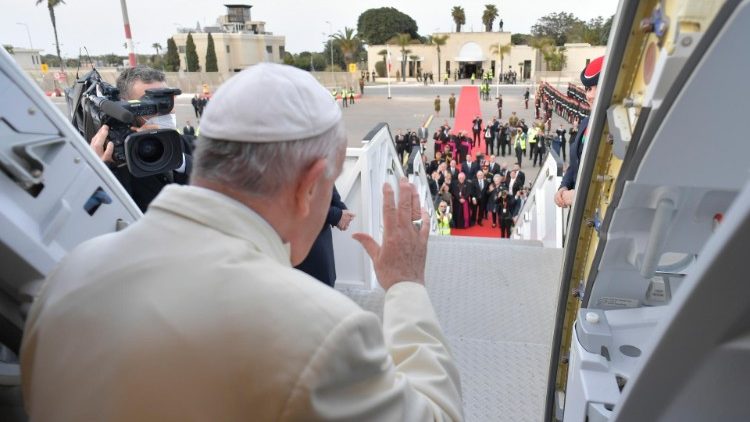
2022.04.02 Pope Francis departs from Malta2022.04.02 Pope Francis departs from Malta  (Vatican Media)

Pope Francis bids farewell to Malta

Pope Francis departs from Malta, concluding his two-day Apostolic Journey to the island nation.

By Linda Bordoni

Pope Francis has wrapped up his long-awaited Apostolic Visit to the Mediterranean island of Malta, his 36th Journey abroad, and the first to take place in 2022.

The Air Malta Boeing bringing him back to the Vatican took off shortly after 7 pm local time after a brief farewell ceremony at Malta’s International Airport, in the presence of President George Vella and other dignitaries and delegations.

Welcoming, protecting, promoting, integrating migrants

This visit had twice been delayed because of Covid restrictions. As was evident in his meetings and words, it provided him with many occasions to reiterate his call to welcome, protect, promote, and integrate migrants.

The island nation, strategically placed at the center of the Mediterranean Sea, is a port of rescue and shelter for many people fleeing violence, climate change, persecution and poverty during their perilous journeys of hope toward Europe.

The theme of the Journey, “They showed us unusual kindness”, highlights the value of hospitality on the island where, according to the Bible, St Paul was shipwrecked on his way to Rome around 60 A.D.

The visit marked the fourth time a Pope has been to Malta. St. John Paul II visited twice (in 1990 and 2001) and Pope Benedict XVI visited in 2010, on the occasion of the 1,950th anniversary of the shipwreck of St. Paul.

Decrying war, praying for peace

The Pope’s thoughts during the journey, which took place as the war in Ukraine continues to rage, were never far from the suffering of those undergoing the violence of bombings and other attacks, and he repeatedly asked for prayers for peace.

One highlight of the weekend visit included a meeting with authorities at the Presidential Palace. During his discourse on that occasion, he decried the war raging in Europe and warned it could pose a threat to all humanity.

Also on Saturday, the Pope boarded a catamaran taking him to the island of Gozo where he prayed at the Marian Shrine of Ta’Pinu.

On Sunday he celebrated Holy Mass for the people of Malta, 85% of whom profess to be Catholic, visited the Grotto of Saint Paul in Rabat, prayed for peace and fraternity, and spent time with migrants at the “John XXIII Peace Lab” Migrant Center in Hal Far.

Pope Francis is scheduled to land in Rome at about 8.45 pm local time.