reflections, updates and homilies from Deacon Mike Talbot inspired by the following words from my ordination: Receive the Gospel of Christ whose herald you have become. Believe what you read, teach what you believe and practice what you teach...
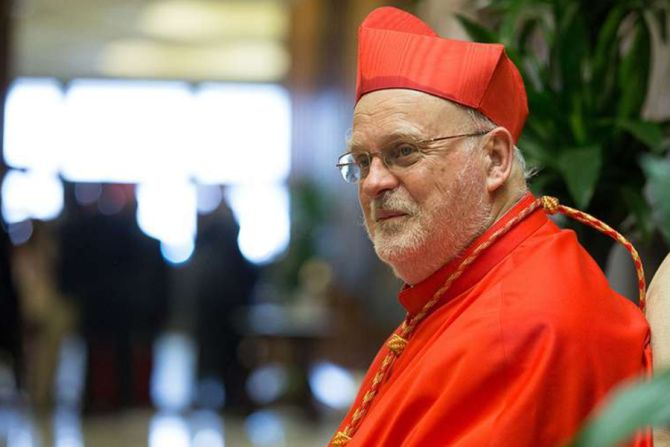
Scandinavia’s top Church leader hopes the role of women in the Church’s mission is a focal point at the upcoming synodal assembly on synodality — and, therefore, that the conversation isn’t bogged down on the settled question of whether the Church can ordain women.
“It would be very frustrating if the discussion was limited to this issue that cannot lead further, as priestly ministry is reserved to men in Catholic and Orthodox doctrine,” Cardinal Anders Arborelius, ordinary of the Archdiocese of Stockholm, told the National Catholic Reporter in an interview published Sept. 13.
Arborelius, who became the first cardinal ever from Scandinavia in 2017 and was made a member of the Vatican’s Dicastery for Bishops in 2022, will be one of the 360-plus voting participants at the October synod. The gathering, which will be held from Oct. 4–29 and followed by a second assembly in October 2024, is focused on how the Church can better incorporate its members into its life and mission.
Although synod organizers have insisted the event is not about changing doctrine, the event’sInstrumentum Laboris, or working document, explicitly asks whether “it is possible to envisage” “the question of women’s inclusion in the diaconate.” Some participants, such as San Diego Cardinal Robert McElroy, have actively pushed for women’s ordination to be a focal point of the proceedings, as have outside initiatives such as the Synodal Way in the Catholic Church in Germany.
The Church’s inability to sacramentally ordain women — which is often falsely portrayed as a “ban” in some media accounts — was confirmed in 1994 by Pope John Paul II, who wrote inOrdinatio Sacerdotalis that “the Church has no authority whatsoever to confer priestly ordination on women and that this judgment is to be definitively held by all the Church’s faithful.”
Pope Francis has also repeatedly affirmed this truth, stating in November 2016 that John Paul’s teaching was the clear and “final word” on the issue. More recently, Pope Francis told America magazine in 2022 that the fact that women cannot enter ordained ministry “is not a deprivation” and that the Church should continue to develop a “theology of women” and expand women’s participation in ecclesial life.
Arborelius made similar comments in his interview with the National Catholic Reporter, which was conducted during his August visit to the United States to participate in an ecumenical dialogue on St. Thérèse of Lisieux.
“It is of the utmost importance to find more possibilities for women to take part in the work of evangelization on various levels,” Arborelius said. “At the same time, it is important to see that there are other ways than ordained ministry.”
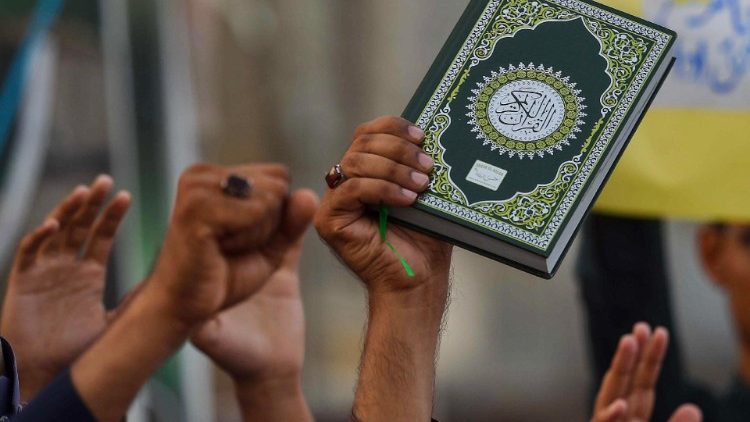
Pope Francis decries the burning of the Quran in Sweden
In an interview with the United Arab Emirate's daily 'Al-Ittihad,' Pope Francis laments the burning of the Quran, Islam's holiest book, in Sweden, while urging individuals take to heart the values promoted in the Document on Human Fraternity.
VATICAN NEWS
"I feel indignant and disgusted by these actions," Pope Francis expressed to Hamad Al-Kaabi, editor of the UAE's daily Al-Ittihad, regarding the burning of pages of the Quran in Sweden in recent days.
“Any book considered sacred by its authors must be respected out of respect for its believers, and freedom of expression must never be used as an excuse to despise others, and to allow this, must be rejected and condemned.”
Al-Ittihad is an Arabic language newspaper published daily in the United Arab Emirates. It is part of the Abu Dhabi Media group, a government organization.
Health after surgery
In the interview, Pope Francis spoke of his state of health after the recent abdominal surgery.
“It was difficult, but now, thanks to God, I am better thanks to the commitment and professionalism of the doctors and nursing staff, whom I thank very much. I pray for them and their families, and for all the people who have written and prayed for me in these days.”
The Pope, recalling his visit to Abu Dhabi in 2019, expressed appreciation for the Commitment of the UAE and Sheikh Mohamed bin Zayed for the path taken to spread brotherhood, peace and tolerance, and called for young people not to be left by adults in the grip of mirages and clashes of civilisations.
Protecting young people
"In my opinion, the only way to protect young people from negative messages and false and fabricated news, and from the temptations of materialism, hatred and prejudice, is not to leave them alone in this battle, but to give them the necessary tools, which are freedom, discernment and responsibility.
"Freedom," he continued, "is what distinguishes a person. God created us free even to reject Him, freedom of thought and expression are essential to help them grow and learn."
"We must never fall into the experience of treating young people as children incapable of choosing and making decisions," the Pontiff continued, "they are the present and investing in them means guaranteeing continuity," always following the golden rule of doing to others what you would like to be done to you.
Responding to a question about the Document on Human Fraternity, the Pope says he always gives it to the delegations he receives at the Vatican 'because I believe it is an important text not only for dialogue between religions, but for peaceful coexistence between all human beings.
There will be the civilisation of brotherhood or that of enmity, either we build the future together or there will be no future.'
Need for builders of peace
Pope Francis said he was pleased with the global community's acceptance of the document's message and objectives. "Human brotherhood is the antidote the world needs to heal from the poison of these wounds. The future of interreligious cooperation is based on the principle of reciprocity, respect for the other and truth'.
"Our task," adds Pope Francis, "is to transform the religious sense into cooperation, into fraternity, into concrete good works.
“Today we need builders of peace, not makers of weapons; today we need builders of peace, not instigators of conflict; we need firefighters, not arsonists; we need advocates of reconciliation, not people who threaten destruction'.”
Concrete commitments
Regarding concrete commitments in this regard, the Pope encouraging the charitable initiatives launched after the publication of the Document.
"It is easy," the Pope said, "to talk about fraternity, but the true measure of brotherhood is what we actually do in a concrete way to help, support, nurture and welcome my brothers and sisters in humanity.
"Every good by its very nature must be for everyone indiscriminately. If I only do good to those who think or believe as I do, then my good is hypocrisy, because good knows no discrimination or exclusion."
Regarding the increase in terrorist threats, Pope Francis responded in the words of the document, condemning "all practices that threaten life such as genocide, terrorist acts, forced displacement, trafficking in human organs, abortion and euthanasia, and policies that support all of these."
Abrahamic House in Abu Dhabi
The Pope expressed his appreciation for the Abrahamic House in Abu Dhabi, the space comprising a Church dedicated to St. Francis, a Mosque and a Synagogue, created to realise the principle of Human Fraternity.
Underlining the climate and environmental emergency, the Holy Father appealed, "The only effective way to tackle this crisis is to find realistic solutions to the real problems of the ecological crisis. We must turn declarations into action before it is too late."
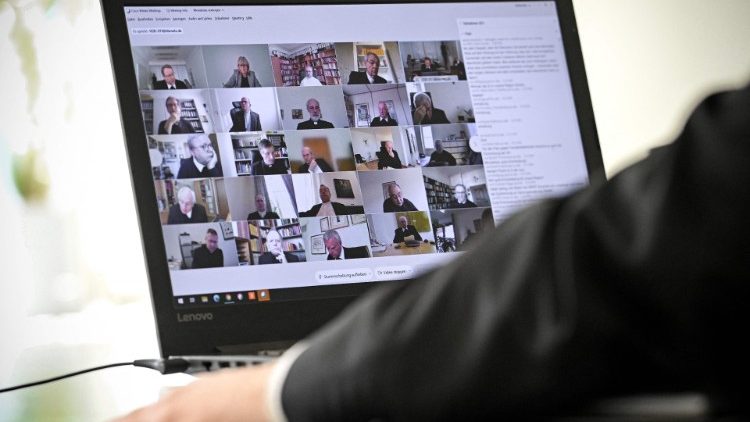
Bishops from the five Nordic countries have released a letter on the traditional Christian teaching on sexuality, upholding the “embodied integrity of personhood” against modern transgender ideologies.
“Now, notions of what it is to be a human, and so a sexual being, are in flux. What is taken for granted today may be rejected tomorrow. Anyone who stakes much on passing theories risks being terribly hurt. We need deep roots,” the eight members of the Nordic bishops’ conference say in the letter, which was released Saturday.
“Let us, then, try to appropriate the fundamental principles of Christian anthropology while reaching out in friendship, with respect, to those who feel estranged by them,” they continue. “We owe it to the Lord, to ourselves, and to our world, to give an account of what we believe, and of why we believe it to be true.”
The pastoral letter is being read aloud at Masses this weekend at Catholic churches in Sweden, Norway, Finland, Denmark and Iceland. EWTN Norway provided CNA with a copy of the letter.
Cardinal Anders Arborelius, the bishop of Stockholm, Sweden, is among the document’s eight signers.
The others are: from Norway, Bishop Erik Varden of Trondheim, Bishop Berislav Grgić of Tromsø and Bishop Bernt Eidsvig of Oslo; from Denmark, Bishop Czeslaw Kozon of Copenhagen; from Iceland, Bishop Dávid Tencer of Reykjavik and Bishop Emeritus Pierre Bürcher of Reykjavik; and from Finland, Father Marco Pasinato, apostolic administrator of Helsinki.
“Our mission and task as bishops is to point towards the peaceful, life-giving path of Christ’s commandments, narrow at the outset but growing broader as we advance,” the bishops state in the letter.
“We would let you down if we offered less,“ the bishops say, adding, ”we were not ordained to preach little notions of our own.”
The bishops explain that there is room for everyone in the Church, which, according to a fourth-century text, is “the mercy of God descending on mankind.”
“This mercy excludes no one. But it sets a high ideal,” the letter states.
The pastoral letter begins by recalling the 40 days and nights of rain that flooded the Earth in the days of Noah.
It says that when Noah and his relatives stepped back onto the cleansed Earth, God made his first covenant with man, promising that a flood would never again destroy the Earth.
God asked mankind, instead, to revere God, to construct peace, and to be fruitful, the bishops said. To ratify the covenant, God created a sign: a rainbow.
“This covenantal sign, the rainbow, is claimed in our time as the symbol of a movement that is at once political and cultural,” the bishops note. “We recognize all that is noble in this movement’s aspirations. In so far as these speak of the dignity of all human beings and of their longing to be seen, we share them.”
“The Church,” the letter continues, “condemns unjust discrimination of any kind, also on the basis of gender or orientation. We declare dissent, however, when the movement puts forward a view of human nature that abstracts from the embodied integrity of personhood, as if physical gender were accidental.”
The bishops also say in the letter they protest that such a view is imposed on children as “not a daring hypothesis but a proven truth.”
Transgenderism is “imposed on minors as a heavy burden of self-determination for which they are not ready,” the bishops lament, calling it “curious” that in an intensely body-conscious society, the body is in fact taken too lightly.
People now refuse to see the body “as significant of identity, supposing that the only selfhood of consequence is the one produced by subjective self-perception, as we construct ourselves in our own image,” they observe.
The bishops explain that we are, instead, created in the image and likeness of God, in both body and soul.
“The image of God in human nature manifests itself in the complementarity of male and female,” the letter states. “Man and woman are created for one another: The commandment to be fruitful depends on this mutuality, sanctified in nuptial union.”
The letter goes on to say that the union of a man and a woman, as an image of God’s communion with mankind, is not always easy or painless.
“For some it seems an impossible option,” the bishops acknowledge. “More intimately, the integration within ourselves of masculine and feminine characteristics can be hard. The Church recognizes this. She wishes to embrace and console all who experience hardship.”
The Nordic bishops say they recognize that “the yearning for love and the search for sexual wholeness touch human beings intimately” and they want to be there to accompany everyone as they gradually grow in wisdom and virtue.
“We are called to become new women and men,” they say in the letter. “In all of us there are elements of chaos that need to be ordered. Sacramental communion presupposes coherently lived consent to the terms of the covenant sealed in Christ’s Blood.”
They point out that circumstances may mean, therefore, that a Catholic is unable to receive the sacraments for a time. But “he or she does not therefore cease to be a member of the Church. Experience of internal exile embraced in faith can lead to a deeper sense of belonging. Exiles often turn out that way in Scripture. Each of us has an exodus journey to make, but we do not walk alone.
The bishops’ letter also offers some advice to those who are perplexed by the traditional Christian teaching on sexuality.
“First: Try to acquaint yourself with Christ’s call and promise, to know him better through the Scriptures and in prayer, through the liturgy and study of the Church’s full teaching, not just of snippets here and there. Take part in the Church’s life,” the bishops counsel.
“Secondly,” they add, “consider the limitations of a purely secular discourse on sexuality. It needs to be enriched. We need adequate terms to speak of these important things.”
The Church, they say, “shall have a precious contribution to make if we recover the sacramental nature of sexuality in God’s plan, the beauty of Christian chastity, and the joy of friendship, which lets us see that great, freeing intimacy can be found also in non-sexual relationships.”
Nordic Bishops ‘concerned’ about German Church’s synodal path
The Bishops of Scandinavia send an open letter to the Bishops’ Conference of Germany, and express their ‘fraternal concern’ over the direction and content of the German Church’s synodal process.
By Devin Watkins
As the worldwide Church continues along the path toward the Synod of Bishops in 2023, representatives of the Church in Scandinavian countries have reached out to the Bishops of Germany to express their concern over the local synodal journey.
The Nordic Bishops sent those concerns to the President of the German Bishops’ Conference, Bishop Georg Bätzing, in an open letter at the conclusion of their Spring Plenary Assembly.
The Synod of Bishops, focusing on the theme of synodality, is currently in the diocesan phase of a 2-year journey which will conclude with a month-long meeting of Bishops in Rome in October 2023.
Strong bonds between German and Nordic Churches
The 8 Bishops from Sweden, Denmark, Norway, Finland, and Iceland noted the long-running ties between their Dioceses and Germany. They expressed their gratitude for the “strong bonds” uniting them, including the many German priest, bishops, and nuns who have served in Nordic countries following the Protestant Reformation.
At the same time, the Nordic Bishops said German Bishops risk reducing the Church to a visible communion at the expense of the “sacramental mystery.”
“The orientation, method and content of the Synodal Path of the Church in Germany fill us with worry.”
Concern for German Church direction
Bishop Erik Varden of Trondheim, in Norway, told Vatican News’ Charlotta Smeds that the Nordic Bishops felt called to offer their thoughts on the direction the German Church is taking with the Synod on synodality.
“We simply wanted to express our anxiety and conviction that in order to make ourselves receptive to a newness of grace and a newness of life in the Church, what is needed is not simply deliberations and countless conversations, or majority votes, but also a rediscovery of the profound sacramental mystery of the Church,” said Bishop Varden.
Church both pilgrim people and mystical body
In their statement, the Nordic Bishops said they are worried the Church in Germany is focusing excessively on the image of the pilgrim People of God, almost at the expense of other theological conceptions of the Church, such as the Church as “corpus mysticum, as Bride of Christ, and as mediatrix of graces.”
Bishop Varden said the synodal path cannot forget that “the Church is not only the People of God on pilgrimage—which needs to be organized sensibly and needs an organized route map—but is also the mystical body and the Bride of Christ.”
The statement recalled that the Church is also a “mystery of communion: communion of humankind with the Triune God; communion among the faithful; communion of all the particular Churches with the Successor of Peter.”
Defending Catholic theology against spirit of the world
The Nordic Bishops pointed out that true reforms in the Church have always “set out from Catholic teaching founded on divine Revelation and authentic Tradition.”
Reform, they added, must always defend Catholic teaching and never “capitulate to the Zeitgeist” (‘spirit of the age’ – an 18th-century philosophical idea typically associated with Georg Hegel).
The Bishops called on the German Church to not focus only on structural change and thereby turn the Church into “a project, the object of our agency."
Rather, the Nordic Bishops said the Church’s life must be “rooted in Christ”.
“Only if we live out of the fullness of [Christ’s] revelation shall we measure up to this vocation. We can hardly expect a new fullness of Catholic vitality to follow from impoverishment of the content of our faith.”
Rich legacy for real renewal
Bishop Varden noted that the German Church has a “rich legacy of sanctity, of intelligent reflection, of tremendous contributions to theology, and pastoral charity”.
That legacy, he added, gives the German Church all the resources needed to “effect a real renewal.”
The Scandinavian Bishops’ letter to their German brothers, concluded Bishop Varden, was “a statement of solidarity but also of some fraternal concern.”
Lund cathedral in Sweden is offering hospitality to the Catholic parish of St Thomas
CHURCH
Sweden's Lund cathedral to host first Catholic Mass since Reformation
The decision by the Lutheran Church of Sweden to offer a temporary place of worship to a local Catholic parish reflects the spirit of Pope Francis' visit to the city in 2016 for a joint ecumenical commemoration of the Protestant Reformation
By Philippa Hitchen
The medieval cathedral in the southern Swedish city of Lund will be the setting for a Catholic celebration of the Eucharist for the first time since the days of the Reformation.
The chaplain of the Lutheran cathedral and the Catholic parish of St Thomas announced on Tuesday that the initiative follows on from the historic visit of Pope Francis to the city in October 2016 for a joint commemoration of the 500th anniversary of the Reformation.
Listen and download our report
Since the Pope and leaders of the Lutheran World Federation stood together in the ancient cathedral, praying for forgiveness and pledging themselves to closer spiritual and practical cooperation, Catholics and Lutherans in Lund have been meeting regularly in each other’s churches for ecumenical Vespers.
Strengthening Lutheran-Catholic relations
One of the main promoters of this monthly initiative is the chaplain of the cathedral, Rev Lena Sjöstrand, who says the papal visit to Lund and the nearby city of Malmö “touched so many people”. She says that through these continuing celebrations, people are happy to see that the visit was not merely “a one-off event”, but rather a concrete way of strengthening relations between the two Christian communities.
This autumn, the Catholic parish of St Thomas will close for major restoration work and the cathedral has offered to host the community on Sundays. The first Catholic Mass since the Reformation will be celebrated there on October 21st and will continue on a weekly basis until the parish church is ready for use again in the spring.
From Conflict to Communion
Promoters of the initiative note that the development also reflects the spirit of the 2013 joint document ‘From Conflict to Communion’, which focused on the fruits of fifty years of dialogue since the Second Vatican Council.
The ancient cathedral, dating back to the 11th century, was originally dedicated to St Lawrence and became the religious heart of the region during the Middle Ages. It is one of the finest examples of Romanesque architecture in Europe, drawing hundreds of thousands of visitors each year.
Common journey of reconciliation
Beneath its austere stone arches, Pope Francis and the Lutheran leaders spoke of their “common journey of reconciliation”. They also signed a joint statement recommitting Catholics and Lutherans to witness more closely together, “to remove the remaining obstacles” that stand in the way of full Christian unity.
The statement urges parishes and communities “to be bold and creative, joyful and hopeful” in their common witness and service to their neighbors in need. This latest ecumenical initiative is another important milestone, putting into practice the spirit of that historic encounter.
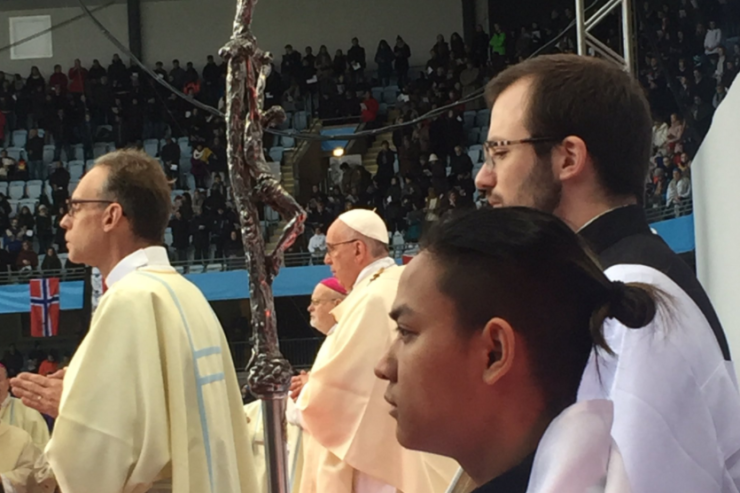
Pope Francis is flanked by Vatican Master of Ceremonies, Mons. Guido Marini as he celebrated a Mass at the Malmo stadium today. (Vincenzo Pinto/Pool Photo via AP)
Pope Francis offered the list at a Mass celebrating the Feast of All Saints
The Pope has offered a new list of Beatitudes at a Catholic Mass in Malmo, Sweden.
At the Mass, which took place at the conclusion of his ecumenical trip to the country, Pope Francis highlighted the lives of the Swedish saints Elizabeth Hesselblad and Bridget of Vadstena.
The best description of the saints, their “identity card”, the Pope said, is found in the Beatitudes from Jesus’s Sermon on the Mount, which begins, “Blessed are the poor in spirit.”
New situations require new energy and a new commitment, he said, and then offered a new list of Beatitudes for modern Christians:
— Blessed are those who remain faithful while enduring evils inflicted on them by others and forgive them from their heart.
— Blessed are those who look into the eyes of the abandoned and marginalised and show them their closeness.
— Blessed are those who see God in every person and strive to make others also discover him.
— Blessed are those who protect and care for our common home.
— Blessed are those who renounce their own comfort in order to help others.
— Blessed are those who pray and work for full communion between Christians.
Reflecting the multicultural makeup of the Catholic Church in Sweden and the rest of Scandinavia, the prayer intentions at Mass were read in Spanish, Arabic, English, German and Polish, as well as in Swedish.
Pope Francis gave an Angelus address this morning, after having celebrated Mass in Sweden’s Swedbank Stadium. Here is a Vatican translation of his prepared address:
***
As we conclude this celebration, I would like to express my gratitude to Bishop Anders Arborelius of Stockholm for his kind words, and to the civil authorities and all who helped in the planning and execution of this visit.
I offer a cordial greeting to the President and the Secretary General of the Lutheran World Federation, and to the Archbishop of the Church of Sweden. I also greet the members of the ecumenical delegations and the diplomatic corps present on this occasion, and all those who have joined us in this celebration of the Eucharist.
I thank God that I was able to visit this land and to meet with you, many of whom have come from all over the world. As Catholics, we are part of a great family and are sustained in the same communion. I encourage you to express your faith in prayer, in the sacraments, and in generous service to those who are suffering and in need. I urge you to be salt and light, wherever you find yourselves, through the way you live and act as followers of Jesus, and to show great respect and solidarity with our brothers and sisters of other churches and Christian communities, and with all people of good will.
In our life, we are not alone; we have the constant help and companionship of the Virgin Mary. Today she stands before us as first among the saints, the first disciple of the Lord. We flee to her protection and to her we present our sorrows and our joys, our fears and our aspirations. We put everything under her protection, in the sure knowledge that she watches over us and cares for us with a mother’s love.
Dear brothers and sisters, I ask you to keep me in your prayers. I keep you all very present in my own.
Now, together, let us turn to Our Lady and pray the Angelus.
[Original text: Spanish] [Vatican provided translation]
Pope Francis this morning celebrated Mass in Sweden’s Swedbank Stadium, on the feast of All Saints Day. Here is a Vatican translation of his prepared homily:
__
Today, with the entire Church, we celebrate the Solemnity of All Saints. In doing so, we remember not only those who have been proclaimed saints through the ages, but also our many brothers and sisters who, in a quiet and unassuming way, lived their Christian life in the fullness of faith and love. Surely among them are many of our relatives, friends and acquaintances.
Ours, then, is a celebration of holiness. A holiness that is seen not so much in great deeds and extraordinary events, but rather in daily fidelity to the demands of our baptism. A holiness that consists in the love of God and the love of our brothers and sisters. A love that remains faithful to the point of self-renunciation and complete devotion to others. We think of the lives of all those mothers and fathers who sacrifice for their families and are prepared to forego – though it is not always easy – so many things, so many personal plans and projects.
Yet if there is one thing typical of the saints, it is that they are genuinely happy. They found the secret of authentic happiness, which lies deep within the soul and has its source in the love of God. That is why we call the saints blessed. The Beatitudes are their path, their goal, their native land. The Beatitudes are the way of life that the Lord teaches us, so that we can follow in his footsteps. In the Gospel of today’s Mass, we heard how Jesus proclaimed the Beatitudes before a great crowd on the hill by the Sea of Galilee.
The Beatitudes are the image of Christ and consequently of each Christian. Here I would like to mention only one: “Blessed are the meek”. Jesus says of himself: “Learn from me for I am meek and lowly in heart” (Mt 11:29). This is his spiritual portrait and it reveals the abundance of his love. Meekness is a way of living and acting that draws us close to Jesus and to one another. It enables us to set aside everything that divides and estranges us, and to find ever new ways to advance along the path of unity. So it was with sons and daughters of this land, including Saint Mary Elizabeth Hesselblad, recently canonized, and Saint Bridget, Birgitta of Vadstena, co-patron of Europe. They prayed and worked to create bonds of unity and fellowship between Christians. One very eloquent sign of this is that here in your country, marked as it is by the coexistence of quite different peoples, we are jointly commemorating the fifth centenary of the Reformation. The saints bring about change through meekness of heart. With that meekness, we come to understand the grandeur of God and worship him with sincere hearts. For meekness is the attitude of those who have nothing to lose, because their only wealth is God.
The Beatitudes are in some sense the Christian’s identity card. They identify us as followers of Jesus. We are called to be blessed, to be followers of Jesus, to confront the troubles and anxieties of our age with the spirit and love of Jesus. Thus we ought to be able to recognize and respond to new situations with fresh spiritual energy. Blessed are those who remain faithful while enduring evils inflicted on them by others, and forgive them from their heart. Blessed are those who look into the eyes of the abandoned and marginalized, and show them their closeness. Blessed are those who see God in every person, and strive to make others also discover him. Blessed are those who protect and care for our common home. Blessed are those who renounce their own comfort in order to help others. Blessed are those who pray and work for full communion between Christians. All these are messengers of God’s mercy and tenderness, and surely they will receive from him their merited reward.
Dear brothers and sisters, the call to holiness is directed to everyone and must be received from the Lord in a spirit of faith. The saints spur us on by their lives and their intercession before God, and we ourselves need one another if we are to become saints. Together let us implore the grace to accept this call with joy and to join in bringing it to fulfilment. To our heavenly Mother, Queen of All Saints, we entrust our intentions and the dialogue aimed at the full communion of all Christians, so that we may be blessed in our efforts and may attain holiness in unity
[Original text: Spanish] [Vatican provided text]
Pope Francis and Bishop Mounib Younan sign the Joint Statement in Lund's Cathedral - AP
31/10/2016
(Vatican Radio) Pope Francis and Bishop Mounib Younan, President of the Lutheran World Federation signed a Joint Statement on Monday in which Catholics and Lutherans pledged to pursue their dialogue in order to remove the remaining obstacles that hinder them from reaching full unity. They also stressed their commitment to common witness on behalf of the poor, the needy and the victims of injustice. The Declaration was signed during the ecumenical prayer service held in Lund’s Lutheran Cathedral on the first day of the Pope’s visit to Sweden. Please find below the full text of the Statement:
JOINT STATEMENT
on the occasion of the Joint Catholic-Lutheran Commemoration of the Reformation
Lund, 31 October 2016
«Abide in me as I abide in you. Just as the branch cannot bear fruit by itself unless it abides in the vine, neither can you unless you abide in me» (John 15:4). With thankful hearts
With this Joint Statement, we express joyful gratitude to God for this moment of common prayer in the Cathedral of Lund, as we begin the year commemorating the five hundredth anniversary of the Reformation. Fifty years of sustained and fruitful ecumenical dialogue between Catholics and Lutherans have helped us to overcome many differences, and have deepened our mutual understanding and trust. At the same time, we have drawn closer to one another through joint service to our neighbours – often in circumstances of suffering and persecution. Through dialogue and shared witness we are no longer strangers. Rather, we have learned that what unites us is greater than what divides us. Moving from conflict to communion
While we are profoundly thankful for the spiritual and theological gifts received through the Reformation, we also confess and lament before Christ that Lutherans and Catholics have wounded the visible unity of the Church. Theological differences were accompanied by prejudice and conflicts, and religion was instrumentalized for political ends. Our common faith in Jesus Christ and our baptism demand of us a daily conversion, by which we cast off the historical disagreements and conflicts that impede the ministry of reconciliation. While the past cannot be changed, what is remembered and how it is remembered can be transformed. We pray for the healing of our wounds and of the memories that cloud our view of one another. We emphatically reject all hatred and violence, past and present, especially that expressed in the name of religion. Today, we hear God’s command to set aside all conflict. We recognize that we are freed by grace to move towards the communion to which God continually calls us. Our commitment to common witness
As we move beyond those episodes in history that burden us, we pledge to witness together to God’s merciful grace, made visible in the crucified and risen Christ. Aware that the way we relate to one another shapes our witness to the Gospel, we commit ourselves to further growth in communion rooted in Baptism, as we seek to remove the remaining obstacles that hinder us from attaining full unity. Christ desires that we be one, so that the world may believe (cf. John 17:21).
Many members of our communities yearn to receive the Eucharist at one table, as the concrete expression of full unity. We experience the pain of those who share their whole lives, but cannot share God’s redeeming presence at the Eucharistic table. We acknowledge our joint pastoral responsibility to respond to the spiritual thirst and hunger of our people to be one in Christ. We long for this wound in the Body of Christ to be healed. This is the goal of our ecumenical endeavours, which we wish to advance, also by renewing our commitment to theological dialogue.
We pray to God that Catholics and Lutherans will be able to witness together to the Gospel of Jesus Christ, inviting humanity to hear and receive the good news of God’s redeeming action. We pray to God for inspiration, encouragement and strength so that we may stand together in service, upholding human dignity and rights, especially for the poor, working for justice, and rejecting all forms of violence. God summons us to be close to all those who yearn for dignity, justice, peace and reconciliation. Today in particular, we raise our voices for an end to the violence and extremism which affect so many countries and communities, and countless sisters and brothers in Christ. We urge Lutherans and Catholics to work together to welcome the stranger, to come to the aid of those forced to flee because of war and persecution, and to defend the rights of refugees and those who seek asylum.
More than ever before, we realize that our joint service in this world must extend to God’s creation, which suffers exploitation and the effects of insatiable greed. We recognize the right of future generations to enjoy God’s world in all its potential and beauty. We pray for a change of hearts and minds that leads to a loving and responsible way to care for creation. One in Christ
On this auspicious occasion, we express our gratitude to our brothers and sisters representing the various Christian World Communions and Fellowships who are present and join us in prayer. As we recommit ourselves to move from conflict to communion, we do so as part of the one Body of Christ, into which we are incorporated through Baptism. We invite our ecumenical partners to remind us of our commitments and to encourage us. We ask them to continue to pray for us, to walk with us, to support us in living out the prayerful commitments we express today. Calling upon Catholics and Lutherans worldwide
We call upon all Lutheran and Catholic parishes and communities to be bold and creative, joyful and hopeful in their commitment to continue the great journey ahead of us. Rather than conflicts of the past, God’s gift of unity among us shall guide cooperation and deepen our solidarity. By drawing close in faith to Christ, by praying together, by listening to one another, by living Christ’s love in our relationships, we, Catholics and Lutherans, open ourselves to the power of the Triune God. Rooted in Christ and witnessing to him, we renew our determination to be faithful heralds of God’s boundless love for all humanity.