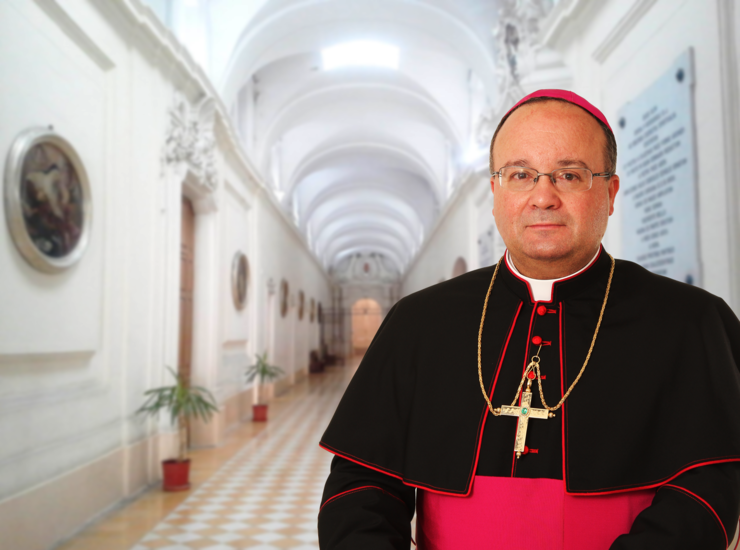
Showing posts with label Archbishop Scicluna. Show all posts

Monday, January 8, 2024

Maltese Archbishop says Priests to marry


Watch: Priests should have option to marry – Archbishop Charles Scicluna 


The Church should look into revising its rules to allow Catholic priests the option to get married, Archbishop Charles Scicluna told Times of Malta.

The time is ripe to “discuss the issue seriously” and “take decisions on it”, he said, adding that he has already openly spoken about it at the Vatican, but acknowledged it is ultimately not his decision to make.

“This is probably the first time I’m saying it publicly and it will sound heretical to some people,” said the archbishop, who is also a respected Vatican official.

“Why should we lose a young man who would have made a fine priest, just because he wanted to get married? And we did lose good priests just because they chose marriage.”

The centuries-old rule on priestly celibacy has been publicly debated for decades but local Church authorities had, until now, always defended it, insisting a priest’s life should be exclusively dedicated to the Church and his community.

In an interview with Times of Malta this week, Scicluna acknowledged celibacy still has and will continue to have a place in the Church, but said he learnt from experience that priests should also be given the option to marry, just like in Catholic Churches of the Oriental rite.

“It was optional for the first millennium of the Church’s existence and it should become optional again,” he said.

“A man may mature, engage in relationships, love a woman. As it stands, he must choose between her and priesthood, and some priests cope with that by secretly engaging in sentimental relationships.”

He was fielding questions about Catholic priests who secretly live in a romantic relationship while they publicly continue to serve their duties as priests.

Priests who have children

Some of them have been in a committed relationship for years and others even secretly had children from those relationships.

“This is a global reality; it doesn’t just happen in Malta. We know there are priests around the world who also have children and I think there are ones in Malta who may have too,” he said.

The 64-year-old archbishop and lawyer is no ordinary prelate. Apart from running the Church in Malta, he also serves in one of the most influential positions at the Vatican – as Adjunct Secretary of the Holy See’s Dicastery for the Doctrine of the Faith.

The Roman Catholic Church in its Latin rite is the only Christian religion that requires all its priests to be celibate – to abstain from marriage and sexual relations.

But it was not always like that.

For the first millennium after the death of Jesus, priests were generally allowed to marry and have children. It was in the 12th century that the Church definitively introduced the rule.

But it is merely a rule – not Church dogma – so it can be changed by Pope Francis, although the 87-year-old Pontiff seems yet unconvinced.

Vatican came close in 2019

The Vatican came very close to changing the rule in 2019, when the Synod of Bishops overwhelmingly voted to allow married men in the Amazon region to become priests to help meet the needs of the Church there.

But despite resembling a parliament of bishops, the Synod is not a decision-making authority and the final say on rule changes in the Church lies in Francis’s hands, who did not go ahead with the change at all.

The archbishop said, however, that the Pope is right in insisting such a change should not be about mitigating the vocation crisis. Vocation has everything to do with faith and a person’s relationship with God, and the rules should not be changed to merely attract more men to priesthood or to fill in the gaps.

Known in Church circles as the Vatican’s most respected sex crimes expert, Scicluna enjoys a respectable reputation among the Holy See’s highest echelons and is often summoned by Pope Francis to launch investigations into some of the most high-profile, international abuse cases in the Church.

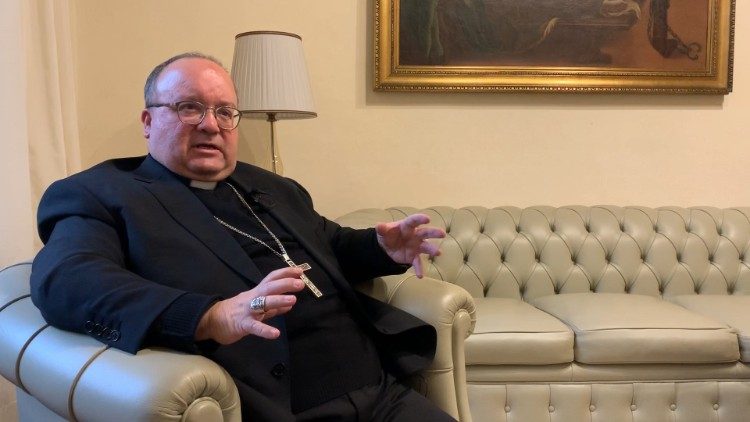
Saturday, March 25, 2023

Archbishop expert fighting abuse speaks on new Vos estis lux mundi


Archbishop Charles SciclunaArchbishop Charles Scicluna 

Archbishop Scicluna on 'universal law' to protect minors

Archbishop Charles Scicluna, Adjunct Secretary of the Dicastery for the Doctrine of the Faith and an expert in the fight against abuse, shares his thoughts on Pope Francis' updates to "Vos estis lux mundi," and says one important change is a "detailed procedure for reporting and investigating allegations against lay people at the head of international associations."

By Salvatore Cernuzio

Archbishop Charles Scicluna, the Archbishop of Valletta, Malta, since 2018, serving as Adjunct Secretary of the Dicastery for the Doctrine of the Faith, has always been involved in combating the scourge of abuse by clergy.

In the following interview with Vatican News, he illustrates the importance of the changes introduced on Saturday by Pope Francis in his update of 'Vos estis lux mundi,' the motu proprio promulgated in 2019 with which the Pope introduced procedural rules to combat sexual abuse and ensure that bishops and religious superiors are held accountable for their actions. 

Q: Archbishop Scicluna, what is the main change brought to Vos estis lux mundi in order to promote its better application almost four years after its entry into force? 

The first fundamental point is the very fact that the Pope confirms the law promulgated in 2019 and confirms it as a universal law of the Church, no longer ad experimentum. It is a very important law because, among other things, some new elements are introduced in the history of Canon Law, such as the criminal relevance of the abuse of a vulnerable adult.

Among the changes is a further clarification of who the victims of abuse are. Previously, we spoke of minors and vulnerable persons, now we also speak of 'vulnerable adults' and 'persons who habitually have an imperfect use of reason'. What does this specification mean? 

It is a harmonisation between two laws of 2021. Two years ago, Pope Francis promulgated a new version of the Particular Law that lists the rights reserved to the competence of the Dicastery for the Doctrine of the Faith and also a Motu proprio by which he revised the Chapter in the Code of Canon Law that speaks of penal sanctions. So, there is a harmonisation between these laws that speak of a very painful, but also very important, subject for pastoral care.

Q: The norms now apply not only to clerics and religious, but also to lay people who, we read, are, or have been, moderators of international associations recognised by the Apostolic See. Does this also refer to movements and ecclesial realities?

Definitely. This is one of the strongest changes in this version of Vos estis lux mundi. We are in the second part that gives the Church a detailed procedure on the reporting and investigation of allegations against persons in the Church leadership. In the 2019 document, this leadership included cardinals, patriarchs, bishops, and clerics appointed as pastors in the particular Churches, while in today's text, the Pope introduces two new categories: clerics who have been at the head of a public, clerical, incardinated association, and then lay faithful who have been moderators of international associations recognised by the Holy See.

Q: How much did recent news cases involving leaders of ecclesial realities influence this further specification? 

It must be said that some things in the public domain have already been reported and proceeded to trial... This law concerns the future and makes it very clear that when it comes to an allegation against a lay person in the leadership of an international association, reference must be made to this particular law which has become universal.

Q: The document specifies that dioceses and eparchies must be provided with organizations and offices which must be easily accessible to the public for reporting cases of abuse. This, too, is a further step. What is it due to?

It is the request for a widespread presence as a sign of the attention of the particular Church but also of the universal Church that wants to make it easier to report and feasible what is indicated in Article 5 on the care of persons.

In fact, the Article in question establishes that the Church authorities must commit themselves so that those who claim to have been offended, together with their families, are treated with dignity and respect and are offered welcome, listening and accompaniment through specific services of spiritual assistance, medical, therapeutic and psychological assistance according to the specific case. Hence, not only listening centres where people can make a report, but also places where people can be cared for.

Q: What changes with regard to the accountability of bishops? 

The law is a procedure that the Pope offers for the reporting and investigation of abuses affecting the leadership, but it does not in itself change the attitude, mentality and capacity to react.

The law remains an opportunity and also a tool, but it is up to us to assimilate the values engraved in these regulations and apply them. Behind the law, therefore, there must be the will, so often encouraged and advocated by Pope Francis, for feasible solidarity.

The Pope very often repeats this phrase: 'When one of us suffers, we all suffer'. If there is this attitude of solidarity, if there is the thirst for justice of which Jesus speaks, but also the will to do good, then the law becomes a living instrument, otherwise, like all laws, it could remain a dead letter.

Q: We see in the news, as well as from various investigations carried out within dioceses, with the help of independent commissions appointed by the Bishops' Conferences themselves, that unfortunately the scourge of abuse in the past as in the present is not extinct. With this fight carried out by the Pope, has there been any progress? 

First of all, there is now a highly evolved legislative framework. Now there is a need for the training of people in leadership, as well as widespread training to make it easier for people to speak out if there is a problem.

Besides the legal instruments, there is also the very clear, transparent and beautiful magisterium of Pope Francis, which we must all treasure.

Monday, February 18, 2019

Archbishop Scicluna speaks out forcefully ahead of the Summit for Protection of Minors

Photo by Zenit / Deborah Lubov

FEATURE: ‘I Will Never Give Up,’ Archbishop Scicluna Says at Vatican’s Presentation of Summit for Protection of Minors

Speakers Stress that to be Effective We Need Compliance With Guidelines, Not Discretion

I will never give up…
Archbishop Charles Scicluna, president of the Maltese Bishops’ Conference, the Pope’s entrusted reformer in combatting and investigating sex abuse, and one of the four organizers of this week’s Summit on the Protection of Minor’s in the Church in the Vatican, Feb. 21-24, said this, noting that even if it takes time, even if mistakes are made, there is no excuse in his mind to ever stop working toward protecting minors and the innocent in the Church.
The comments were made at the Holy See Press Office today, Feb. 18, where a press conference was held to present the meeting, convened by the Pope, which will bring together the presidents of the world’s bishops conferences and other representatives in the church and in religious life.
The speakers, along with Archbishop Scicluna, who also is an adjunct secretary in the Vatican’s Congregation for the Doctrine of the Faith, this morning included Cardinal Blase J. Cupich, archbishop of Chicago, member of the Organizing Committee; Fr. Federico Lombardi, S.J., president of the Joseph Ratzinger – Benedetto XVI Vatican Foundation, moderator of the meeting; Fr. Hans Zollner, S.J., president of the Centre for the Protection of Minors of the Pontifical Gregorian University, member of the Pontifical Commission for the Protection of Minors; reference for the Organizing Committee; and Sr Bernadette Reis, F.S.P., assistant to the ad interim director of the Holy See Press Office, along with Alessandro Gisotti, the ad interim director himself.
Fr. Lombardi announced information about the program, participants, and speakers, and it was noted that press and interested observers and faithful should go to the website pbc2019.org, which has been specifically launched for the encounter, providing information, resources and background on the summit itself and the subject matter.
Archbishop Scicluna reminded those present: “This represents a phase of a larger more comprehensive process.”
The daily briefings—to accommodate an incredibly large number of press–will take place in the Augustianum located off of St Peter’s Square. Present each day, along with a guest to be announced the day before will be Alessandro Gisotti, Prefect of Vatican’s Dicastery for Communications, Paolo Ruffini, Fr. Lombardi and Archbishop Charles Scicluna.
Each day will begin with prayer, then will consist of two interventions in the morning, and one in the afternoon, each followed with a question and answer session, and breaking into working groups based on language. Some highlights of these days, they explained, will be the Penitential Liturgy on Saturday afternoon and the Mass on Sunday morning. The Pope will not deliver the homily at either of these given that following Sunday’s Mass and before the Angelus at noon, he will give a concluding speech. Some victims, male and female, will be present during moments of prayer. The organizers will meet some victims and victim advocates ahead of the conference, and moderator, Fr. Lombardi, has offered to victims to take their handwritten messages and convey them to those gathered.
Some moments of the encounter will be able to be followed via streaming: the morning prayers, the Holy Father’s brief introduction the first day, all the relator’s interventions, nine in total (three of which by women), the Penitential Liturgy, and the Pope’s concluding discourse on the last day, after the Mass and before the Angelus.
“We all know how important this meeting is in the life of the Church,’ said Sr Bernadette Reis.
The speakers reminded that there are already effective guidelines and protocols in place, for zero tolerance of sexual abuse toward minors and toward negligence of Bishops in Pope Francis’ 2016 Motu Proprio ‘Like a Loving Mother.’
This issue is that these need to be completely observed and embraced and followed, and never ignored or neglected. While some parts of the world, especially in Anglophone countries, and some parts of Europe have taken them to heart, other parts of the world have not.
Various questions came up following the speakers’ brief interventions. One journalist observed that more than 80 percent of the cases involve abuse against teenagers of the male sex, and asked in the context of transparency if homosexuality therefore is going to be considered.
Cardinal Cupich said it is “right to admit and recognize that this large percentage of the abuses are male toward male abuse,’ but at the same time he reminded: “according to professional reports, such as the John Jay Report or or the Royal Commission in Australia, homosexuality is no more a contributing factor to abuse than any other.”
He reminded that these cases that which in the US in the 1960s and 1970s were so rampant, dramatically were reduced once effective measures went into place, for the formation of priests, bishops, male and female religious and roles of responsibility in the Church. By 2002 onward, he said, we see a massive reduction. He noted that we see about five cases a year now, noting that in 2017 there were seven substantiated cases, and four were committed by the same priest.
When some journalists alluded to those accused of abuse or misconduct operating in roles in the Vatican, Archbishop Scicluna underscored: “Rome needs to know that what it asks of local churches, it needs to be ready to apply at home.”
“Guidelines and practices,” Fr Zollner said, “need to be carried out throughout the whole world. Here [acknowledging the origins of the journalists in the press office], we have many from the West. But this needs attention and reactions not just from North and South America, and Central Europe, but from far beyond.”
When a journalist alluded to a book or conservative or liberal theories that there is hypocrisy within the hierarchy of the Church, in not following celibacy and often homosexually, and that this enables a system of covering up, Archbishop Scicluna began by noting: “I have investigated cases, not [their] cover up.”
“But,” he said clearly: “a system which ensures or enables cover up needs to go and we must condemn it.”
Given that among the 190 participants, there are about 10 women, Archbishop Scicluna and Cardinal Cupich agreed that there should be more women taking part but stressed that most present before arriving likely consulted lay experts, many of whom are women. They noted that women, have helped them personally to develop further expertise on the theme and with decision-making on abuse cases.
“Women, especially women religious in Asia and Africa,” Fr. Zollner observed, “are of most importance in safeguarding.”

Tuesday, November 13, 2018

Is this a significant Papal appointment?

Archbishop Scicluna -- Archdiocese of Malta Portrait

Pope Appoints Archbishop Charles Scicluna as Adjunct Secretary (#3 Official) of the Congregation for the Doctrine of the Faith

Vatican Says Pope’s Entrusted Sex Abuse Investigator to Remain Archbishop of Malta

Pope Francis has appointed Archbishop of Malta Charles Scicluna, the Pontiff’s entrust investigator into clergy sexual abuse, as adjunct secretary of the Congregation for the Doctrine of the Faith (CDF), where the Archbishop has served as Promoter of Justice.
The Archbishop of Malta and President of Maltese bishops, will be the CDF’s ‘Number 3’ official, to succeed retiring American Archbishop Joseph Augustine Di Noia. The Vatican says he will likewise remain as Archbishop of Malta.
This Pope’s appointment of Scicluna was published in the Holy See Press Office’s Nov. 13 bulletin today.
The former official of the CDF has been acting as president of a review board handling abuse cases within the Congregation.
The Pope sent him to Chile to try to solve the scandal of abuse that has swept the Church of that country. It was after the Pope received the findings of the Archbishop, that the Pope summoned the South American country’s bishops’ to Rome, they all resigned, and the Pope accepted various resignations, including of Bishop Juan Barros of Osorno.

Tuesday, October 9, 2018

Great advice for youth, great advice for all: if focus is Jesus you stay with His Church

FEATURE: ‘Your Advice for Young People to Stay or Be Faithful Catholics in Spite of Scandals?’ Archbishop Scicluna to ZENIT: ‘It Has to Be About Jesus’

Says We Ought to Give Pope Francis Time, Trust He Will Make System Where Bishops Will Be More Accountable

How should young people stay or be interested in the Church with all the scandals and negative press?  Archbishop Charles Scicluna, President of the Bishops’ Conference of Malta, says it must be about Jesus, not the Church.
The Pope’s trusted investigator of clergy sex abuse and cover up told ZENIT this, responding to its question on how young people are still to feel encouraged to be part of the Church, despite feeling discouraged or dissuaded by the abuse scandals and cover ups.
Archbishop Scicluna, a former official of the Vatican’s Congregation for the Doctrine of the Faith (CDF) and also president of a review board handling abuse cases within the CDF, acknowledged that many young people do not have much of a relationship per se with the Church.
“It is not about the Church, it is not about the Bishops,’ he said, adding: “It has to be about Jesus. If you find Jesus, then you want to be with his family. You know the family is not made of saints. There are lots of sinners there. Join the club. But there are sinners who have been touched by God’s mercy. And that is what I would say to young people.”
“You have a thirst. Your thirst is a love for God and a love for Jesus. So, before worrying about what the Church is about, concentrate on the tender loving face of Jesus, the face of the Lord’s mercy, and then you can be part of this family, that is full of sinners!”
The Pope sent Archbishop Scicluna to Chile to try to solve the scandal of abuse that has swept the Church of that country. It was after the Pope received the findings of the Archbishop, that the Pope summoned the South American country’s bishops’ to Rome, they all resigned, and the Pope accepted various resignations, including of Bishop Juan Barros of Osorno.
Moreover, he discussed his hopes for the Pope’s upcoming summit gathering the presidents of all the world’s bishops conferences on the topic of ‘protection of minors’ and vulnerable, an unprecedented move by any Pope, suggesting this encounter will be the venue to concretely tackle abuse, prevention and accountability, not the synod.
“We are going to have an important meeting in February. The Pope has called all the presidents of the national bishops conferences. I think that is the moment where we need to put on the agenda not only the question of prevention, but also of accountability.”
Responding to ZENIT’s question about what he believes ought to come out of the February meeting in order for it to be effective, he said: “I am not in charge of the February meeting, which is a blessing,” he joked. “I think the agenda is a tall agenda, which I would expect as a bishop. I am part of it because I am the president of probably the smallest bishops’ conference in the world.”
“My expectation being invited ex-ufficio for that meeting is that in having all these different cultures coming together, we need to realize this is not a problem linked to any culture or any geographical area, as used to be said. I think that is a myth that must be dispelled. But, we do realize that there are different ways of tackling the issues on the ground.”
Shame, Fear, an Impediment
“That is,” he explained, “there are cultures where shame is the impediment to disclosure. For others, it is fear.”
“We,” the Archbishop urged, “need to come together to realize that we need to empower ourselves and our communities to disclose abuse and to get to the roots of it.”
Archbishop Scicluna observed that Pope Francis calls this clericalism, adding: “we must be more concrete on what does that mean.”
“What the Pope says, when he talks about clericalism, as the source of the nurturing humus (root) of abuse in the Church is that there is there is a perversion of ministry and looking at ministry as a source of power rather than of service. That is something that we need to tackle because we need to go through all the issues.”
“We need to tackle questions of: formation of clergy, screening of clergy, cooperation with the civil authorities, but fundamentally the empowerment of our communities to give an effective response, because it is not only the question of stewardship by the bishops, this is something that concerns everybody, everywhere.”
“I think that is the motive,” he said.
Synod’s Scope Is Greater, But Accountability to Be Targeted in February
When asked about whether seeking to create a structure of accountability for bishops has been discussed, the Archbishop  said: “not that I know of,” but adding that the synod’s scope is much greater.
“We know there is a great expectation of great accountability. Now, how is that going to develop? I think we need to trust Pope Francis to develop a system whereby there is greater accountability.”
But the Synod, he reminded, is not about sex abuse of minors. The February encounter is the best forum for addressing this, he said, because it is going to be a dedicated forum. “I don’t expect to see quick answers at this synod. There are so many other things that we need to discuss. But I do think the February meeting, will be the right venue, where this will be on the agenda.”
One journalist noted that according to a Pew Research Center poll, Pope Francis is experiencing less favorability on his treatment of sex abuse, asking the Archbishop’s thoughts on this.
“Give him time,” Archbishop Scicluna responded.
Speaking to journalists on Sept. 14, including Zenit, in Poznan, Poland, who were on the ground for the Plenary Assembly of the Council of European Bishops’ Conferences (CCEE) taking place, Sept. 13-16, the Archbishop of Malta stressed the Pope and Church’s  commitment to combat this scandal.
Among the concrete measures to help prevent these situations, Archbishop Scicluna underscored, is to have effective pre-screening of the soundness of those who express their interest in becoming a priest.
“This summit,” he told press, “is a very strong sign of a commitment to the defense of the dignity and protection of minors in the Church. This call, this invitation,” the Pope’s trusted abuse investigator emphasized, “says one fundamental thing: that the issue of preventing abuse and the protection of minors commits the whole Church and commits everyone in the Church.”
2011 Circular Letter With Strong Guidelines Must Be Fully Implemented Everywhere
The meeting, the prelate noted, already points out a very clear position the Holy See took in 2011 when the Congregation for the Doctrine of the Faith addressed to all the Bishops’ Conferences of the world a circular letter. This document, he noted, “pointed out fundamental attitudes of response to the sad phenomenon of child abuse but also indicated the need to carry forward the intense, but necessary work of guidelines for every nation in the world.”
Many episcopal conferences, he said, followed suit. The majority, the Archbishop said, responded to this invitation and in the years that followed 2011, all the guidelines were examined by the Congregation for the Doctrine of the Faith.
“Already in 2011, the circular letter of the Congregation for the Doctrine of the Faith indicated the human formation of candidates for priesthood and religious life as one of the important and fundamental aspects. But already in 1992 there was a prophetic message of St. John Paul II in the Post-Synodal Exhortation Pastores dabo vobis which spoke of the formation of future priests.”
This exhortation, Archbishop Scicluna stated, “valued in a prophetic and urgent way the question of human formation, psychological screening and even a clear and timely evaluation of the candidate from the point of view of suitability to the ministry on the key of emotional suitability and of the suitability to be a pastor and father for the flock.”
During today’s briefing in the Holy See Press Office, Archbishop Scicluna reiterated these points, stressing it is necessary that bishops conferences, everywhere, must make sure that the created policies and guidelines, are implemented; he lamented that this implementation has not always taken place.
***
Full Text of Pope St John Paul II’s Post-Synodal Exhortation Pastores dabo vobis: http://w2.vatican.va/content/john-paul-ii/en/apost_exhortations/documents/hf_jp-ii_exh_25031992_pastores-dabo-vobis.html
CONGREGATIO PRO DOCTRINA FIDEI: CIRCULAR LETTER TO ASSIST EPISCOPAL CONFERENCES IN DEVELOPING GUIDELINES FOR DEALING WITH CASES OF SEXUAL ABUSES OF MINORS PERPETRATED BY CLERICS: http://www.vatican.va/roman_curia/congregations/cfaith/documents/rc_con_cfaith_doc_20110503_abuso-minori_en.html