reflections, updates and homilies from Deacon Mike Talbot inspired by the following words from my ordination: Receive the Gospel of Christ whose herald you have become. Believe what you read, teach what you believe and practice what you teach...
Pope to bishops at COP30: We are guardians of creation, not rivals for its spoils
Pope Leo XIV sends a video message to the bishops and cardinals of the Global South participating in COP30 in Brazil, urging cooperation and stressing that it is not too late if we choose deeds over words.
By Francesca Merlo - Belém, Brazil
COP30 has dedicated much of its discussion time to the global south, and the Catholic Church has been no exception, with meetings and symposiums in which Asia, Africa and Latin America and the Caribbean were all represented through their respective Cardinals.
Pope Leo, too, has demonstrated his closeness to the people of the Global South, sending a video message to all the bishops participating in COP.
On the 17th of November, as the first day of the second week drew to a close, Pope Leo, too was present in the Amazon, joining what he described as “the prophetic voice” of his brother Cardinals at COP30 who have been “telling the world with words and gestures that the Amazon region remains a living symbol of creation with an urgent need for care”.
Addressing the bishops gathered in the Museu das Amazônias, Museum of the Amazonias, Pope Leo said: “You chose hope and action over despair, building a global community that works together”. And while recognizing that progress has been made, he emphasized that it is “not enough” and that “hope and determination must be renewed, not only in words and aspirations, but also in concrete actions”.
“Creation is crying out in floods, droughts, storms and relentless heat", he said, noting that "one in three people live in great vulnerability because of these climate changes". To them, climate change is not a distant threat, and to ignore these people is to deny our shared humanity. The Pope stressed that while there is still time to keep the rise in global temperature below 1.5°C, the window is closing. “As stewards of God’s creation, we are called to act swiftly, with faith and prophecy, to protect the gift He entrusted to us”.
Pope Leo then went on to emphasize that the Paris Agreement, too, has made real progress, describing it as “our strongest tool for protecting people and the planet”. But, he added, we must be honest: “it is not the Agreement that is failing, we are failing in our response. What is failing is the political will of some. True leadership means service, and support at a scale that will make a difference. Stronger climate actions will create stronger and fairer economic systems. Strong climate actions and policies - both are an investment in a more just and stable world”.
Bringing his message to a close, the Pope recalled the work of the scientists, leaders and pastors of every nation and creed alongside whom we walk. We, he said, are guardians of creation, “not rivals for its spoils".
And with this in mind, the Pope asked all those present to send a clear global signal together, one of “unwavering solidarity behind the Paris Agreement and behind climate cooperation”.
Finally, Pope Leo said, “let this Amazonia Museum be remembered as the space where humanity chose cooperation over division and denial”.
Following the video message, the cardinals representing of the Global South who were present for the event presented a fishing net. The net is a replica of one given to Pope Francis during the Synod on the Pan-Amazon Region, in 2019, which had been woven by several indigenous communities in the Amazon, as a sign of unity and peace.
Pope appeals for protection of Yanomami people’s rights in Amazon rainforest
Pope Francis urges the political and civil authorities of countries in the Amazonia to safeguard the fundamental rights of the indigenous Yanomami people, who live on the border between Venezuela and Brazil.
By Devin Watkins
“I appeal to political and civil authorities to ensure the protection of the [Yanomami] people and their fundamental rights, and to prevent any form of exploitation of their dignity and their territories.”
Pope Francis made that appeal on Sunday as he concluded Mass in St. Peter’s Square.
He noted that St. Giuseppe Allamano, whom he canonized at the Mass, reminds Christians of our duty to care for people who are fragile or vulnerable.
The Yanomami are a group of around 35,000 indigenous people who live in 200-250 villages in the Amazonia region that lies between Venezuela and Brazil.
According to rights groups, illegal gold mining often takes place on Yanomami lands, causing social and environmental issues, including mercury poisoning in several communities.
For all peoples suffering because of war
At the Mass, Pope Francis also renewed his invitation for Christians to pray for peace for people suffering because of war and conflict.
“Let us continue to pray for the people suffering due to war: martyred Palestine, Israel, Lebanon, martyred Ukraine, Sudan, Myanmar, and all others. And let us invoke for all the gift of peace,” he said.
In his appeals, the Holy Father recalled the celebration of World Mission Sunday and its theme: “Go and invite everyone to the banquet.”
He said every Christian is called to take part in the universal mission of proclaiming the Gospel, so that all may come to the “joyful encounter with the Lord.”
“Let us support—with our prayers and assistance—all missionaries who endure great sacrifice to bring the radiant message of the Gospel to every part of the earth.”
New Paths: Pope meets with church officials from Amazon
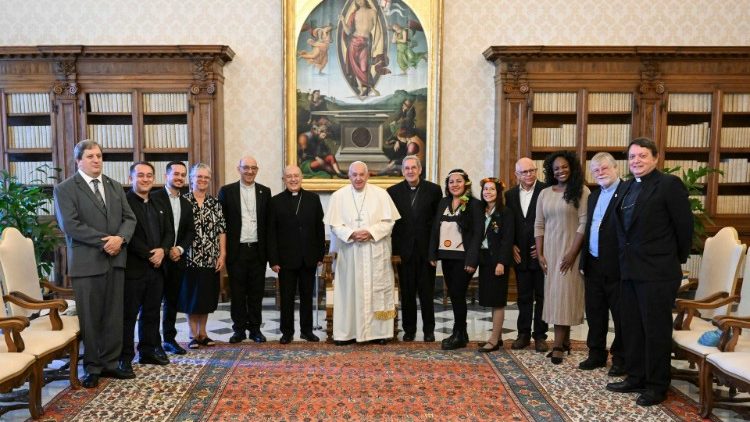
Cardinal Pedro Barreto, president of the Ecclesial Conference of the Amazon, shares with the Pope the fruits of the synodal journey in the region.
By Johan Pacheco
“The Amazon recognises Pope Francis as the ‘grandfather’. That is what they call him, the grandfather, and for the native peoples, the grandfather is the wise person, the person who guides, the person who has no other interest than to be able to serve and encourage life."
That's according to Cardinal Pedro Barreto, President of the Ecclesial Conference of the Amazon (CEAMA).
He was speaking in an interview with Vatican Radio-Vatican News after meeting with the Holy Father on the morning of 3 June.
The meeting was attended jointly by members of CEAMA and the Pan-Amazonian Ecclesial Network (REPAM). Cardinal Barreto explained that they are two separate organisations: the former juridical, while the network comprises the territory of Amazonia.
“We have offered the Pope the progress we have made in recent years, after the Synod on the Amazon that was held five years ago, in 2019. And we have seen how the Ecclesial Conference of the Amazon is a mature fruit of this synodal process that has been followed throughout the Amazon,” said Cardinal Barreto.
During the meeting, they were able to express to the Pope their concern over the murder of environmental activists; and the exploitation of natural resources, “illegal mining, which makes the urgency of the situation ever greater due to the effects of climate change.”
The president of CEAMA shared that Pope Francis “thanked them for the work that the Church is doing throughout the Amazon biome and told us to continue working together, also because the synodal experience in the Amazon is like a model experience of what life in the Universal Church can be like.”
“We are living an ecclesial kairos, a propitious time for the renewal of the Church in the Amazon; and from the Amazon we are also offering the Universal Church a new path, as was requested for the Amazon Synod: ‘New paths for the Church.’ All together, all the baptised, men and women, are part of the people of God who are on pilgrimage in history with the consolations and caresses of God, but also with the anguish and tears of many brothers and sisters,” the Cardinal said, looking to the future of the missionary and synodal work in Amazonia.
And with the Jubilee of 2025 in mind, Cardinal Barreto pointed out that “the Jubilee of Hope is also closely linked to this synodal spirituality. There is already a beginning of signs of enthusiasm and this enthusiasm is being transformed into hope. But hope is being put into action, joint action.”
On Tuesday 4 June, the Acts of the Special Assembly of the Synod of Bishops for the Pan-Amazon Region will be released. “New paths for the Church and for an integral ecology” will also be presented at the Sheikh Zayed Centre at the FAO headquarters in Rome.
Later this week, on Friday, a congress on the synodal journey of the Church in the Amazon, will be held at at the Pontifical Gregorian University. The congress is sponsored by REPAM and CEAMA.
Interview with Pedro Cardinal Barreto President of the Ecclesial Conference of the Amazon
What was your experience of the audience with Pope Francis?
We have had a meeting of the CEAMA presidency with the particiapation of the presidency of the Pan-Amazonian Ecclesial Network. There are two organisms: one, CEAMA, is juridical, the other is a territorial network in the Amazon. And today we have had the great joy of meeting with the Holy Father, Pope Francis, to thank him for all the support he has been giving us. There were representatives of the native peoples, the vice-presidents of REPAM and CEAMA, religious men and women, lay people, bishops. I have brought greetings from all over the Amazon. The Pope encouraged us, he gave us a lot of encouragement to continue walking together in this synodal process.
What were the most important points that you shared with the Pope about this synodal process and what were the fruits of the meetings held there with CEAMA?
First of all, we shared with the Pope the progress we have made in recent years, after the Synod on the Amazon that was held five years ago, in 2019.
And we have seen how the Ecclesial Conference of the Amazon is a mature fruit of this synodal process that has been followed throughout the Amazon.
The Amazon covers more than 7 million square kilometres, 9 countries, 105 dioceses – that is, we are talking about more than 130 bishops; and we are also very, very concerned about the situation, I would say, of abuse of environmental defenders, with some murders; but also, and in a very special way, with the irrational exploitation of natural resources, deforestation, illegal mining, which means that the urgency is increasing due to the effects of climate change.
Regarding this concern, for the person, certainly also deforestation, but also illegal mining, in which the people, the communities are most affected: What have you been doing concerning this issue?
The Church’s evangelizing mission is caring for life. Caring for the natural environment is, I would say, a natural part of our mission. To proclaim the Gospel of Jesus Christ is also to proclaim the rights of people. And also the quality of life that they should have with the air, water and soil. But definitely the Church in the Amazon, through the Pan-Amazonian Ecclesial Network is very attentive, they are the roots of what the Church is doing and that is through the Pan-Amazonian Ecclesial Network. CEAMA, which is the canonically-approved Ecclesial Conference of the Amazon, already has legal status at a judicial level in the various countries. In this sense, we are taking up these proposals that the final document of the Synod on the Amazon has offered us and we are putting them into practice. And this is the report that we have given to Pope Francis.
And what was Pope Francis' message to encourage you?
Basically, Pope Francis welcomed us, as he has always done, with great affection, he welcomed each one of us. We were thirteen people in total and each one of us brought a small gift, a letter from the Amazon that they recognise in Pope Francis as their “grandfather.” That is what they call him, the grandfather, and for the native peoples, the grandfather is the wise person, the person who guides, the person who has no other interest than to be able to serve and encourage life.
Secondly, he thanked the Church for the work it is doing throughout the Amazon biome and told us to continue working together, because the synodal experience in the Amazon is like a model experience of what life in the Universal Church can be like. And this has come out very strongly in the Synthesis Report of the first session of the Synod on Synodality, in which it expressly indicates in number 1G that the fruit of the synodal process in the Amazon region is the creation of the Ecclesial Conference of the Amazon, the first in the history of the Church, where all baptized men and women, lay people, native peoples, priests, religious, and bishops share the same faith and the same vision of announcing Jesus Christ in the Amazon region.
Your Eminence, during these days, apart from the Pope's visit, do you have a working agenda of activities to present this report in other institutions?
Yes, we have taken advantage of this presence here in Rome to be in contact with various dicasteries: the Dicastery of Evangelisation, which Pope Francis presides over and Cardinal Tagle is there, as is Archbishop Fisichella; and we will also be visiting the Dicastery of Bishops, the Dicastery for Integral Human Development, and the Dicastery of Consecrated Life, because the great majority of pastoral agents are religious, mainly religious women and men, especially religious women.
And so we are going to continue with these visits; and we will finish on Friday afternoon with a very important event to invite those entities of the Church that are partners in this synodal process because we are celebrating eleven years of the synodal journey of the Pan-Amazonian Ecclesial Network, five years from the Synod on the Amazon, and four years since the creation of this first and unprecedented Ecclesial Conference of the Amazon.
It is a gift for the Church, for the Amazon, that the Church accompanies these people and all the movements that live there. How do you see the future for CEAMA, for REPAM, and for all the institutions that work together? What do you hope for the future?
First of all, I believe that we must always be grateful to the many missionaries who have been present in the Amazon biome since the 16th century. And we have to recognise that we are heirs to the great pastoral richness that they have achieved.
Secondly, we are living an ecclesial kairos, a propitious time for the renewal of the Church in the Amazon, and from the Amazon we are also offering the Universal Church a new path, as was requested for the Amazon Synod: “New paths for the Church.” All together, all baptised men and women are part of the people of God who are on a pilgrimage through history with the consolations and caresses of God, but also with the anguish and tears of many brothers and sisters.
In this sense, I hope that we will continue to walk together and that the Synod on Synodality will not only take up this synodal experience from the Amazon, but will also promote the participation of all baptised men and women in the mission of the Church, in families, in society, in politics, in the economy, and also, logically, within our Church.
In the presentation of the report on the synod, you encourage us, as the Church in the Amazon, to live it, to walk together, but we would also like to ask you how you are preparing to live the Jubilee of Hope?
Yes, the Jubilee of Hope is also closely linked to this synodal spirituality. There is already a beginning of signs of enthusiasm and this enthusiasm is being transformed into hope. But hope is being put into action, joint action. And this is a small seedling, we could say, that is emerging; so the Jubilee of hope that Pope Francis has called for next year is certainly already showing some signs.
I am convinced that the year 2025 will be for all of us a wonderful experience of gathering this hope put into action. God walks with us, God is not mistaken in calling us, and therefore He calls us all to walk together, the more we walk toghether as brothers, as “Fratelli tutti” and he tells us: praising God, caring for nature and above all, living this joy of a God with us in the person of Jesus Christ with the special intercession of our Mother the Blessed Virgin.
Amazonia leaders grateful for Pope’s encouragement
South American indigenous leaders Patricia Gualinga, Sister Laura Vicuña and Yesica Patiachi – representatives of the Amazon Ecclesial Conference and REPAM – share their concerns about the attacks on their lands in Ecuador, Colombia and Peru in an audience with Pope Francis on Thursday.
By Salvatore Cernuzio
On March 4, South American indigenous leaders Patricia Gualinga, Sister Laura Vicuña, and Yesica Patiachi wrote a letter to Pope Francis informing him of their “lucha,” or years-long struggle to protect the Amazon and its inhabitants, and thanking him for his constant attention to this region of the world that is essential to the health of the entire eco-system. The idea for the letter came during a layover at an airport in Colombia, during one of their innumerable visits to international fora where they made the voice of their people heard. They then gave the letter to Cardinal Pedro Barreto of Peru.
Audience at the Vatican
They did not expect such a prompt response, which arrived five days later – much less that “Grandpa Francis” would invite them, through the Prefecture of the Papal Household, to a personal, face-to-face conversation, in the Vatican. The three indigenous leaders—representing the Ecclesial Conference of the Amazon (CEAMA) and the Pan-Amazonian Ecclesial Network (REPAM), but most importantly the Amazonian populations of Ecuador, Colombia, and Peru—were received by Pope Francis in the Apostolic Palace Library on Thursday morning.
The conversation with the Pope
“It was a pleasant, calm, and trustful conversation,” they told Vatican Media immediately after the audience. They were emotional as they recounted the attacks on their land, then joyful as they recalled the Pope's jokes about “portuñol”, the mix of Portuguese and Spanish they used to express themselves.
"This meeting with the Pope was a great joy for us," said Imrã Laura Vicuña Pereira Manso, a member of the indigenous Kariri people of Brazil, the daughter of migrant parents, and a religious of the Congregation of the Franciscan Catechist Sisters, a graduate in anthropology and specialized in social psychology. "What can I say...? It was a historic meeting. Pope Francis represents the new breath of the Spirit, the springtime in the Church. Once again we are living this spring and I feel that Pope Francis is leading these changes. Real changes, and there is no turning back because they are changes inspired by the foundation that is Jesus Christ".
Warmth, gifts, encouragement
“Pope Francis has given us a lot of security and confidence,” Patricia Gualinga echoed. Since June 2020, she has been the vice-president of CEAMA, the Ecclesial Conference of Amazonia, a body led until his death by the late Cardinal Claudio Hummes. CEAMA was born five months after the publication of Querida Amazonia, Pope Francis’ post-synodal exhortation on the Pan-Amazonian Region.
But Patricia is first and foremost the Kichwa leader of the Sarayaku, in Ecuador, an indigenous people living in the Pastaza forest who have made the defence of “madre Tierra” from the threats of foreign oil companies their reason for living.
Patricia has brought the voice of the Sarayaku to various COPs and other foreign events, and also to the Synod on Amazonia in 2019, invited as an expert among the bishops. She had already, on that occasion, had the opportunity to embrace the Pope—an emotional moment recalled by Patricia in a contribution to L'Osservatore Romano in the special issue for the tenth anniversary of the pontificate.
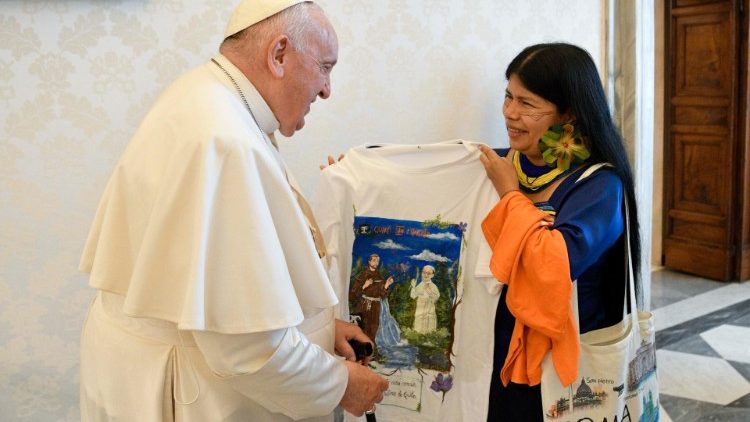
Speaking about Thursday’s meeting, Patricia said, “At first we were quite nervous because we did not know what to do, what to say. So we first gave him the gifts that many people sent from the territory. Many gave me letters or said, 'Greet the Pope'." The many gifts included a large painting depicting the Amazon landscape, t-shirts, necklaces, and even a box of chocolates. “When we sat down to converse, everything went well. It was a serene, quiet, very confidential conversation”.
The work of women
Three important points especially were addressed in the dialogue with the Pope: “the work of the women of the Church in the territory, the recognition of the ecclesiastical structure of this work, the reality of indigenous peoples and education.” The three indigenous leaders presented their concerns to the Bishop of Rome “so that he may be aware of them.”
The greatest fear is for the policies that are being pursued in various places, which they say represent an attack on international human rights, “but especially to the rights of the Amazon inhabitants,” says Gualinga. “Many of these policies have a commercial purpose,” she noted.
They spoke about the devastation caused by mineral extractions, about territories being plundered, and about inhabitants threatened with being deprived of their homes in order to set up open-pit mines—“even illegal ones,” said the Sarayaku representative, explaining that all this is on the increase in Ecuador.
CEAMA accompanies the struggles of the people and demands respect for the Amazon territories and their fundamental contribution to the world, taking into account all the wealth the region possesses. There is still a long way to go, but the women are on the frontlines carrying out this “process.”
The challenge of a Church with ‘an Amazonian face’
The activists told Vatican Radio that the Pope, for his part, praised the commitment of the women of Amazonia, their sensitivity, as well as their work of evangelization. “He encouraged us to go forward and said that no one can stop change," they explained.
That change, they said, also includes the challenge launched by the Pan-Amazonian Synod: to give the Church an Amazonian face. “It is a very big challenge that we are still building,” says Patricia Gualinga.
Markets and the destruction of creation
Patricia, Sister Laura, and Yesica—the latter a writer, researcher, painter, and educator of the Harakbut people whom the Pope had already met in the meeting with indigenous peoples in Puerto Maldonado during his 2018 trip to Peru—emphasized during the audience the joint advocacy efforts with the Amazon Ecclesial Conference to achieve a more just society, without forgetting the “cosmovision” of the indigenous peoples and “the great spirituality that is the presence of God.”
All three expressed regret at seeing that “people do not want to generate an awareness of caring for the environment.” Why is this? Because “the market invaded us,” Patricia explains. “It told us that everything could be possible; and what it did [instead] was, in a way, destroy creation, which is so beautiful.”
The ministries of women in the Church
In the conversation with the Pope, the activists did not fail to highlight the socio-educational and socio-pastoral reality of Amazonia, with an “emphasis” on the mission and ministries of women in the Church.
Concerning this last point, Imrã Laura reported, they all agreed that “there can be no going back” on the mission that every woman has been carrying out in the Church for a long time: “The woman is this maternal face of the Church: Mary, the mother of Jesus, as a woman who is at service. And women in the Church are those who bring about the changes that promote the evangelization of the Church.”
“Without a doubt,” the nun explained, “we women are present in countless communities, encouraging and motivating people not to lose faith and the meaning of life. But the service we render to the Church is not recognized, generating tensions that could be overcome with the recognition of new ministries for women according to the urgency of the socio-pastoral reality of the Church in Amazonia".
A visit to Assisi
Over the next few days, the three “difensoras” of human rights will meet representatives of eight Dicasteries of the Roman Curia, before heading to Assisi to venerate St. Francis, the saint of “naturaleza,” “the one who called earth, air and water brothers and sisters." There they will ask him for the gift of the “ecological conversion” desired by the Pope.
Pope Francis: The Zairean Rite is a “promising model” for the Amazon
Pope Francis praises the Zairean Rite in a preface he wrote for a new book published by the Vatican Publishing House.
By Paul Samasumo - Vatican City
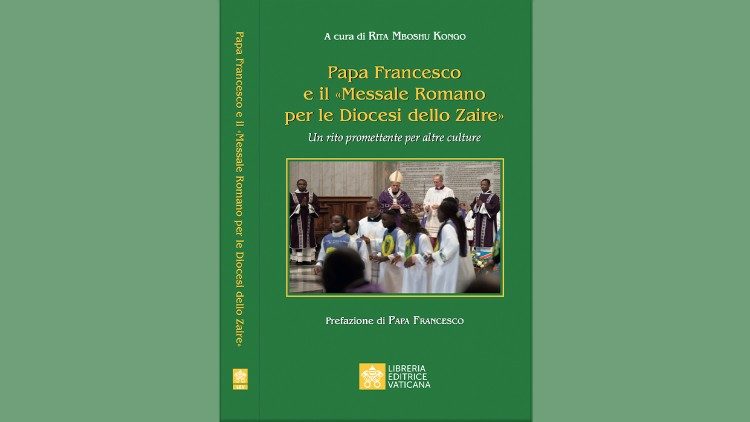
The liturgy must touch the hearts of local Church members says Pope Francis in a preface he penned for a book that was launched on Tuesday afternoon and published with the title, in Italian,Pope Francis and the Roman Missal of the Dioceses of Zaire. The book is edited by Sr. Rita Mboshu Kongo, a Congolese religious sister based in Rome.
Pope Francis' celebration of Mass according to the Zairean Rite
The launch of the book comes exactly one year after Pope Francis celebrated a special Mass for the Congolese community based in Rome, Italy. The Mass was celebrated according to the Zairean Rite used by Dioceses in the Democratic Republic of Congo, on 1 December 2019, in the Basilica of St Peter. The Mass commemorated the 25th anniversary of the Congolese Catholic Chaplaincy in Rome.
Only Inculturated Rite of the Latin Church
The Zairean Rite is “until now the only inculturated rite of the Latin Church approved after the Second Vatican Council” and “this process of liturgical inculturation in Congo is an invitation to enhance the different gifts of the Holy Spirit, which are a richness for all humanity,” writes Pope Francis in the preface to the new book.
The Zairean Rite
The Zairean Mass (Rite zaïrois in French) or the Roman Missal for the Dioceses of Zaire is a variation of the Mass of the Roman Catholic Church as we know it. In everyday speak, the Mass is sometimes referred to as “Congolese Mass.”
This liturgical rite fits into Congolese culture and takes into consideration the African way of life and of celebrating solemn occasions.
The Rite encourages participation and engagement of the congregation. There is constant back and forth between the assembly and the principal celebrant. Among other liturgical rituals and gestures, engagement of the faithful, gathered in Church, takes the form of liturgical dance. Congregants move gracefully in Church as an expression both of their faith and joy.
Cultural vibrancy and spirituality
Pope Francis notes that the Zairean Rite is particularly unique for its cultural vibrancy and spirituality. He says liturgical inculturation in the DRC is an invitation for all to enhance the different gifts of the Holy Spirit, which constitute a richness for humankind.
“Animated by religious songs with an African rhythm, the sound of drums and other musical instruments constitute real progress in the rooting of the Christian message in the Congolese soul. It is a joyful celebration. It is a true place of encounter with Jesus. They live what we have written: ‘The joy of the Gospel fills our hearts and our hearts,’” Pope Francis observes as he makes a passing reference to his document, “Evangelii gaudium.”
A model for an Amazonian Rite
The book, “Pope Francis and the ‘Roman Missal for the Dioceses of Zaire,” has as its subtitle, “-a promising rite for other cultures.” The Holy Father suggests that the Zairean Rite could be a model for an Amazonian rite.
“The Zairean Rite suggests a promising way also for the possible elaboration of an Amazonian Rite,” said Pope Francis. He was optimistic that this could be done “without upsetting the nature of the Roman Missal, to guarantee continuity with the ancient and universal tradition of the Church.”
An invitation for Inculturated Liturgies
The Pope quotes from his Post-Synodal Apostolic Exhortation, Querida Amazonia, released on 2 February 2020.
“Let’s remember what we explicitly said in the (document) Querida Amazonia. ‘It means that we can take up into the liturgy many elements proper to the experience of indigenous peoples in their contact with nature, and respect native forms of expression in song, dance, rituals, gestures and symbols. The Second Vatican Council called for this effort to inculturate the liturgy among indigenous peoples; over fifty years have passed, and we still have far to go along these lines,’” Pope Francis added.
The editor of the new book, Sr. Kongo, is a Religious of the Daughters of Mary, the Most Holy, Co-Redemptrix. She is a Professor of Spiritual Theology at the Pontificia Università Urbaniana in Rome. The book consists of contributions from Maurizio Gronchi, Jean-Pierre Sieme Lasoul, Oliver Ndondo and Silvina Perez.