reflections, updates and homilies from Deacon Mike Talbot inspired by the following words from my ordination: Receive the Gospel of Christ whose herald you have become. Believe what you read, teach what you believe and practice what you teach...
Pope: “Church in the Digital” offers tools for a Church also present online
Pope Francis pens the preface for “Church in the Digital”, a book edited by Fabio Bolzetta which offers tools and proposals for the Church that is also present in the digital world.
By Benedict Mayaki, SJ
“The difficult period humanity is going through because of the pandemic has made it clear not only that we will come out of this crisis if we come out of it together, but it has made us realize how useful technological tools and social networks can be.”
Pope Francis made that remark in the preface of a new book titled “The Church in the Digital” (La Chiesa nel Digitale), edited by Fabio Bolzetta and published by Tau Editrice.
The book was born from the experience of the Association of Italian Catholic Webmasters (WECA) and offers tools and proposals to discover, reflect upon, and share on social networks the experience of the Church which is also present in the digital world.
The Church during the pandemic
In the preface, Pope Francis highlights the challenges the Church faced during the periods of lockdown during the pandemic, noting that it was no longer possible to celebrate the Eucharist together or to be close to our sick loved ones, putting us in confrontation with our “constitutive fragility.”
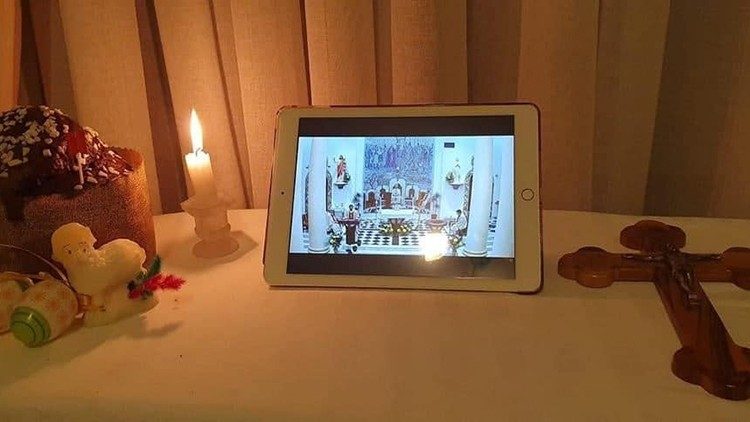
He also points at the many efforts employed to keep human and community relationships alive, including the priests who made use of technologies and social networks to keep God’s people in touch with His word and offer the possibility of attending Mass online. In fact, the Pope said, social networks were used to “keep in touch, to report needs, to keep us from feeling alone, to activate charitable initiatives, to keep seeing each other's faces as we waited to meet again.”
During this time also, the Holy Father notes that there were also “mistakes and errors,” but the important thing is that “when these attempts put the message to be communicated at the center, instead of the protagonism of the communicator, we must recognize that they were useful.”
More so, according to experts, some of the changes that have taken place because of the more frequent use of technology for virtual encounters are likely to remain long after the pandemic emergency is over, the Pope said.
Tutorials for formation on digital communication
The Holy Father underlines the work of the Association of Italian Catholic Webmasters (WECA) which, over the past two years, has met and helped priests of all ages who are committed, even through new technologies, to keep the communities entrusted to them united, thereby promoting the growth of the use of digital tools in pastoral care.
Thus, the book offers dozens of tutorials on the Church and digital communications, designed especially for priests whose generosity and spontaneity during the pandemic emergency must now be accompanied by appropriate training.
“There is indeed much to be done, to grow together in awareness of the importance but also the risks involved in using these tools. There is indeed much to be done to learn how to listen; and to engage and train young, digital natives who are able to revitalize parish websites.”
The web: a space for meeting and listening
Although virtual encounters do not and can never replace the beauty of face-to-face encounters, Pope Francis points out that the digital world is also inhabited by Christians who “can be protagonists of new forms of social and more human communication, more capable of listening and true sharing.”
This is because the web can also become “a space for meeting and listening,” even though sometimes the voices that shout the loudest and the pollution of fake news seem to prevail.”
“The web will not make us feel alone if we are really able to ‘network,’ and if the virtual space does not replace but helps the web of our flesh-and-blood social relationships,” the Pope said.
Virus-Prodded Online Masses Have Changed Many Catholic Parishes — Are They Keeping Some Catholics From Returning to Church?
While online liturgies were a blessing early in the pandemic and continue to provide benefits for parish ministries, some pastors who spoke with the Register expressed concern about the impact over time.
Parishioners sit during Sunday Mass at St. Augustine Catholic Church on August 15, 2021 in New Orleans, Louisiana. Parishioners wore face coverings during Mass as part of COVID-19 protocols inside the historic church which is recognized as the oldest Black Catholic parish in the country. (photo: Mario Tama / Getty)
During COVID times, livestreamed Masses have been a blessing to many.
And whether the new Delta variant spikes or fizzles in the coming weeks, coronavirus has already changed many Catholic parishes in the United States.
Consequently, for some formerly low-tech churches, high-tech is here to stay.
At the same time, Church leaders are emphasizing that getting back to in-person Mass is imperative, to partake in “the Eucharistic sacrifice, which is the fount and apex of the whole Christian life” (Lumen Gentium, 11). And while bishops and parish communities are welcoming the flock with open arms, concern is being expressed that online worship may be having a detrimental effect on the willingness of some of the faithful back to return to their parish churches.
But providing livestreamed Masses for those who cannot attend in person, due to health concerns and other serious reasons, is likely to remain a mainstay on Catholic worship for some time.
Our Lady of Grace Church in Indian Land, South Carolina, had no livestreaming when the coronavirus lockdowns hit in March 2020. So, for about six weeks, the pastor’s Masses were captured for an online congregation using an iPad.
One tight angle, shaky audio, uncertain Internet connection was the result.
“It was pretty bad. But it was something,” said Father Jeffrey Kirby, the pastor, in a telephone interview this month. “When the lockdown happened, it was important to me that the people of the parish see me, their priest, at their parish altar in their parish church.”
A year and five months later, the church has three cameras, a high-quality microphone, a soundboard, a production room — and 21,800 subscribers to the parish’s YouTube channel, Grace Lily Productions. Our Lady of Grace won a nationally competitive Parish Excellence Award in November 2020 for its technical performance.
The virus emergency not only changed the way the parish communicates with parishioners, it has even led it to unexpectedly develop a second constituency, as far-flung as California to the west and Ireland to the east.
Closer to home, the pastor said he sees an uptick in participation among parishioners in Bible study and novenas, which are also carried live online and which are key to the elusive formation of Catholic adults.
“It has really just provided an enhanced ability to participate in the life of the parish. We’ve seen a lot more people engaged,” Father Kirby said. “That has always been the great struggle: getting adults to learn more about their faith and go deeper into their faith. And now we’re seeing success in that area we’ve not seen in the past.”
The parish’s director of operations used to oversee the church’s facilities and determine which groups could use which rooms and when. Now, he spends all his working time overseeing livestreaming of key parish activities.
Over time the gradual-yet-steady equipment upgrades have cost about $100,000, Father Kirby said — all paid for by donors from elsewhere in the country who have sent donations without being asked. This past June the parish started offering “grace swag” in the form of coffee cups and T-shirts as a way of saying thank you to donors to the online operations.
Not Your Father’s Way of Joining a Parish
Cameras aren’t new at St. Monica’s Church in Santa Monica, California, where at least one Sunday afternoon Mass has been carried live online for about 10 years. But when California imposed the most stringent lockdown in the nation last year — at one point not allowing anyone in the church building for Mass except the priest — the parish started livestreaming all of its Masses. Staff also found creative ways to maintain participation. Lectors and members of the choir taped their portions of the Mass at home, which were mixed in to livestreaming using a second production room at the church.
The result is an engaging visual and audio production that has found a steady audience,
“It allowed us to continue to have a relationship with our community. And that’s the blessing,” said Msgr. Lloyd Torgerson, pastor of St. Monica’s, by telephone. “It kept us alive, and it kept us connected, because we were in their homes.”
Production values help make the connection. The church uses four cameras, which allows for varying angles and perspectives that give the viewer a lot to look at and maintain interest. The sound quality of the videos is flawless. To the left of the altar and behind it is a flatscreen that allows people in the church and watching online to see members of the choir, even if they aren’t present.
The cameras are small, out of the way, and operated by remote control.
“We didn’t want to drop big television cameras into the sanctuary. We really wanted them to be hidden and not disrupt the Mass at all, because of our liturgical sensibilities first,” said Merrick Siebenaler, director of strategic communications for the parish, who is involved in the production.
The parish routinely gets about 5,000 “hits” a week online; on Easter Sunday 2020, it skyrocketed to 60,000, the pastor said. Some far-away viewers have even joined the parish’s celebration of Mass, A person who lives near Dublin, for instance, joined the choir — which was possible because the choir was singing from their homes — and plans to join the parish on a pilgrimage to the Holy Land in February 2022.
A family who left the parish when the father got a job in Denmark — which is about 5,500 miles to the northeast — stayed in touch online during the virus, to the point where a child in the family has taken religious-education classes through St. Monica’s and is planning to travel back to the church this fall to receive first Communion.
Doughnut Mass?
Father Gary Zerr has heard exasperating comments concerning online Masses, including one from a young-adult parishioner at St. Edward’s Church in Keizer, Oregon, who said he likes the virtual option because he prefers having coffee and doughnuts while watching Mass.
But Father Zerr, the pastor of St. Edward’s, said he has seen more uplifting examples from virtual interaction, including cases of people finding the Mass online as a means to finding their way back to their faith. The church is now getting almost as many online viewers of Mass as the people who come in person, which itself is more than came before the virus, he said.
Mass isn’t the only draw. Two Family of Mary missionaries from central Europe got trapped on the West Coast last year during the virus travel restrictions and took to livestreaming Holy Hours at St. Edward’s. They got a good reaction, the pastor said.
When St. Edward’s opened in 2013, someone donated expensive camera equipment that went largely unused. But when the virus hit, Father Zerr felt like he knew why the equipment was there.
Overall, he said, online Mass is a major positive.
“I know some local pastors in the diocese are worried that people won’t come back, but I’ve had the exact opposite experience. We’ve found a lot of people have come back to church because of the livestream,” Father Zerr said. “There’s much more good than bad coming out of it. So we’re going to keep going.”
No Substitute for The Real Thing
Not receiving Communion is the stumbling block when it comes to online worship. While the “Act of Spiritual Communion” prayer written by St. Alphonsus Liguori during the 1700s became popular last year, it does not replace the Eucharist — the “source and summit” of the Catholic faith, according to the Catechism of the Catholic Church — because sacramental Communion can only be received in person.
In-person attendance at Mass has decreased nationwide during the pandemic. A Gallup poll released in June 2021 found that church attendance is down about 23% among Catholics in the United States since before the pandemic — from 37% in 2019 to about 30% in 2021.
Priests interviewed for this story agree that online Masses are a Godsend for shut-ins, nursing-home residents and people with compromised immune systems. But what about relatively healthy people who aren’t coming to church the way they used to?
At Father Torgeson’s California parish, for example, in-person Mass attendance remains only about half of what it was before the virus. In South Dakota, churches were shut down only two months last year — from March 15 to May 15. Yet church attendance in Sioux Falls, the largest city in the state, is down about 20% since then, said Father Charles Cimpl, pastor of the city’s Holy Spirit parish.
During the shutdown he taped weekend Masses for later streaming on YouTube. But he stopped after churches reopened. Like some other priests, he worries that relying on their laptop became a habit for former churchgoers.
“I think people got pretty comfortable with that. It was just a concern — they just did not feel the need, apparently, to come back,” Father Cimpl said. “I don’t know even if we got a lot of those people to return yet. In our city of Sioux Falls, we’re still experiencing that some of the people have not returned.”
‘Come Back to Receive Jesus’
A similar concern led Msgr. Christopher Nalty, a pastor in New Orleans, to stop livestreaming daily Masses after churches reopened, though he continues to livestream weekend Masses.
Msgr. Nalty is livestream-friendly — he sits on the board of the local television station that produces online Masses at the city’s cathedral and at St. Stephen Church, which is one of the two churches in Good Shepherd parish, which he serves as pastor.
Yet for the 6:30am Mass on Monday through Friday, he doesn’t want people rolling out of bed and plopping down in front of a computer screen if the church is open and available.
“I really wanted people to come back to Mass. A virtual Eucharist is not the Eucharist. I want people to come back to receive Jesus,” Msgr. Nalty said.
Matt McDonald is the editor of New Boston Post and a National Catholic Register correspondent.
Mary Beth Hess assists in livestreaming Mass at St. Jerome Catholic Church in Maplewood, Minn., June 15, 2021. (Credit: Dave Hrbacek/The Catholic Spirit via CNS.)
ST. PAUL, Minnesota — YouTube, Facebook, parish websites — all now offer livestream Masses from parishes across the Archdiocese of St. Paul and Minneapolis.
But before COVID-19 hit Minnesota in March 2020, most of those parishes had never livestreamed a single Sunday Mass.
With in-person Masses suspended for two months to help prevent spread of the virus, parishes suddenly scrambled to gather or purchase cameras, computers, soundboards, expertise and volunteers. They were anxious to continue offering the sacrament of the Eucharist to their parishioners — at least remotely.
Now that a 15-month suspension of the obligation to attend Sunday Mass has ended, as of July 1, pastors, parish staff and parishioners are weighing the costs and benefits of continuing to livestream their daily or weekly Masses.
Questions include whether livestreaming makes staying home and away from in-person Mass too easy, whether the monetary investment is “paying off” in terms of reaching people and evangelizing, and how best to invite people back to in-person Mass while offering an online alternative.
While the novel coronavirus has waned, concerns have arisen about the Delta variant of the virus, which could lead some to still prefer the livestreamed Masses.
In a July 28 memo to parishes and institutions in the archdiocese, Father Tom Margevicius, director of the Office of Worship, acknowledged the variant remains a threat, but said because each parish has “unique demographics,” pastors can determine their own best practices for minimizing the virus’ spread.
Holy Name of Jesus Parish in Medina decided to offer its last online Mass the weekend of June 27, said Michelle Hudlow, director of information technology and communications.
After an initial investment for software and other needs, it cost about $500 a week to hire someone and devote the necessary staff time to record, produce and share Sunday Mass via Facebook, YouTube and the parish website.
The cost and a desire to emphasize in-person Mass prompted the parish to end livestreams.
“The Eucharist is just too important, and people are better connected to God and each other when they are in the building together,” Hudlow told The Catholic Spirit, the archdiocesan newspaper. “Our focus is really on connecting with people.”
For other parishes, connecting people and evangelization are two reasons they plan to continue offering Mass online.
“We have discovered some real and ongoing needs,” said Father Tom Wilson, pastor of All Saints Parish in Lakeville, which increased its online presence when the pandemic hit by expanding its video uploads from only the homily to the entire Sunday Mass. The parish also purchased several more cameras.
“People who are homebound or confined to care centers, even without the pandemic, for them, it is a way to stay connected to their parish, and not just a regional or national broadcast,” Wilson said.
The parish also offers the Mass with an interpreter for the deaf on the second weekend of each month, and many people in the deaf community have learned of it and participate online, he said.
Livestreaming weddings and funerals during the pandemic also has been helpful, Wilson said. Still, the parish is considering its options going forward, as it weighs licensing requirements and other factors in offering the Mass online, he said.
St. Jerome in Maplewood has offered the Saturday vigil Mass live via YouTube since March 2020, and that will continue, said Mary Beth Hess, music director and the effort’s chief organizer, who learned how to livestream on the fly. Hess also livestreams daily Mass, a project she undertook on her own just to learn the ropes, which she’s grown to love. It’s been particularly helpful to seniors, the sick and disabled, she said.
“They could view Mass on TV, or other churches that were streaming Mass,” she said of those participating. “But they were so thankful to be able to see their dear St. Jerome church. To see Father Victor (Valencia, the pastor), the crucifix in front of the church, the statutes, the red carpeting … all of these things gave them comfort.”
The Basilica of St. Mary in Minneapolis plans to continue livestreaming the Mass, which began with the pandemic and will be expanded from the main church to include daily Mass in a smaller chapel downstairs, said Mae Desaire, director of marketing and communications.
“We have found it a great outreach and growth tool” with people who are homebound, in nursing homes, former parishioners, and others around the country and even the world able to participate via livestream, she said.
Johan von Parys, the basilica’s director of liturgy and the sacred arts, said the sacraments need to be celebrated in person and attendance at in-person Mass is growing and encouraged, even while livestreaming will continue to be offered.
“It was with great pain (during the pandemic) that I embraced the fact that the only way to reach people was by livestream,” he said.
But Christ is present in several ways at the Mass, including in the Scriptures, and that has been a consolation, he said.
“We could at least listen to the word of God proclaimed,” he said. “I know that Christ is present in the word.”
Some people turn to the online Mass because they are ill or they’ve moved away, von Parys said. “For those who can’t join us, there is at least this,” he said.
Livestreaming also has been an avenue for evangelization, he said, particularly for people who are curious about the church but uncomfortable with an in-person visit, or have fallen away from attending Mass but are contemplating a return.
Last March, Our Lady of Peace Parish in Minneapolis began recording its Saturday evening Mass and posting it at 7 a.m. each Sunday on YouTube. James Pike, the parish’s office manager, said the practice will continue as a tool for evangelization.
“A couple of people have watched, not been parishioners before, but have started to attend Mass in person,” Pike said. “One person was registered at another parish but had stopped attending there.”
Some people have expressed concern that livestreaming Mass makes it too easy to stay, and many parishes have discussed that possibility. But no one interviewed by The Catholic Spirit actually know that to have happened, and parish representatives believe that generally, people who participate in livestream Mass either have no other option or they are curious about the faith or a parish community.
“People taking time to watch online innately know that Mass is intended to be celebrated in person,” Pike said. “We’ve seen a lot of people come back” to in-person Mass, he said.
Wilson said he has yet to see “any evidence of people staying home and just eating breakfast. I know people worry about that, but so far, I have not experienced that directly.”
If people don’t realize that Mass needs to be celebrated in person, von Parys said, then the church has failed in its teaching of the faith.
“We need to have beautiful, dignified celebrations of the Eucharist, and we need good catechism,” he said.
Ruff is news editor of The Catholic Spirit, newspaper of the Archdiocese of St. Paul and Minneapolis.
First anniversary of Pope's lockdown Masses broadcast live from Santa Marta
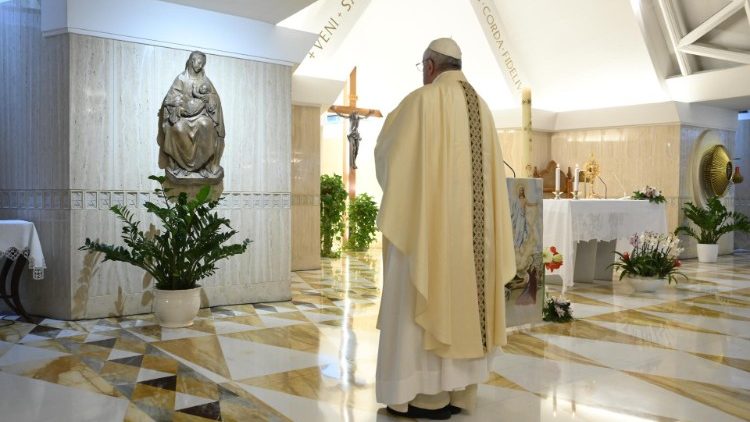
On 9 March 2020, at the outbreak of the pandemic, Vatican Media started to broadcast live the Pope’s morning Mass at Santa Marta. For more than two months Pope Francis drew close to believers around the world, reaching them despite the suspension of public celebrations.
By Benedetta Capelli
One year ago the coronavirus pandemic suddenly took the world by surprise, causing a cascade of regional and national lockdowns to stop its spread.
At first, Italy was hardest hit in Europe, followed by other nations. Life came to a surreal standstill in Rome and all around the Vatican. In order to reach people during this time of fear and bewilderment felt by many, Pope Francis offered a way to reach out and bring people the consolation that comes from prayer and faith.
Celebrating the Eucharist live, Pope Francis explained what he meant by doing this on that day: “In these days, I will offer Mass for the sick of this coronavirus epidemic, for the doctors, nurses, volunteers who help so much, family members, for the elderly who are in nursing homes, for the prisoners who are locked up. Let us pray together this week, this strong prayer to the Lord, 'Save me, O Lord, and give me mercy. My foot is on the right path. In the assembly I will bless the Lord.'"
The Church with the people
"Strong prayer," Pope Francis said, one that rises from his residence to become a one with prayers around the world for consolation, healing and overcoming the health and economic crisis.
Each day the Pope offered prayers for different groups of people facing difficulties: the sick, expectant mothers, the elderly, children far from school, healthcare workers, those who are fearful or sad, also for artists endowed with "very great capacity for creativity" who "through beauty show to us the path to follow” in trying to live out this period positively.
People around the world followed the live Mass broadcasts, participating spiritually. At the same time, attending Mass in person is essential, the Pope noted during one of his April homilies, but in safety: “This is the Church in a difficult situation, which the Lord permits, but the ideal of the Church is always with the people and with the Sacraments. Always.”
The broadcasts came to a conclusion in mid-May when the pandemic situation in Italy especially had improved.
US March for Life 2021 to be held in virtual format
Archbishop Joseph Naumann, Chairman of the USCCB Committee on Pro-Life Activities, invites the participation of all at the 2021 March for Life event, modified to be held virtually on 29 January, due to the ongoing Covid-19 pandemic.
By Vatican News staff writer
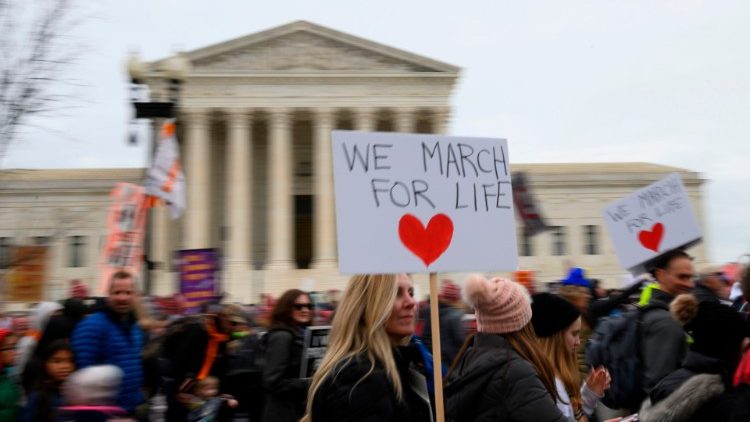
Every year, thousands of people turn out for the March for Life rally in peaceful protest against the legality and practice of abortion, and in defense of the right to life from the moment of conception to the moment of natural death.
The rally is usually held in January, on or around the anniversary of the Supreme Court’s 1973 Roe v. Wade ruling, which legalized abortion in the United States.
This year, however, the organizers of the annual March for Life announcedthat the event would now take place virtually, due to the ongoing Covid-19 health emergency and heightened security concerns in the nation’s capital.
Concern for lives and safety of participants
The Chairman of the US Bishops’ Committee on Pro-Life Activities, Archbishop Joseph F. Naumann of Kansas City, issued a statement on Tuesday about the change in format of the annual event and invited the participation of all.
“As long-time participants in the annual March for Life, my brother bishops and I commend the march organizers for their concern for the lives and safety of all participants. The countless, peaceful, pro-life marchers who would normally gather each year should not be put at risk,” said Archbishop Naumann.
In a statement on Friday announcing the change in format, the organizers of the March for Life noted that “The protection of all of those who participate in the annual March, as well as the many law enforcement personnel and others who work tirelessly each year to ensure a safe and peaceful event, is a top priority of the March for Life.”
“In light of the fact that we are in the midst of a pandemic which may be peaking, and in view of the heightened pressures that law enforcement officers and others are currently facing in and around the Capitol, this year’s March for Life will look different,” the statement said. “The annual rally will take place virtually and we are asking all participants to stay home and to join the March virtually.”
“We will invite a small group of pro-life leaders from across the country to march in Washington DC this year”, the statement noted. “These leaders will represent pro-life Americans everywhere who, each in their own unique ways, work to make abortion unthinkable and build a culture where every human life is valued and protected.”
Invitation to pray together
Archbishop Naumann noted that “peaceful prayer and witness must and will continue this year – just in a different format.”
He, therefore, invited all to join in a nationwide novena from 21-29 January “in preparation for the virtual March for Life and in observance of the annual Day of Prayer for the Legal Protection of Unborn Children on January 22.”
As part of the novena, dioceses all over the US are live-streaming Masses, Rosaries, Holy Hours, and more for the protection of human life. The faithful can also receive daily intentions, brief reflections and suggested actions by signing up on 9 Days for life, a web page dedicated to the novena for the protection of human life.
On 29 January, interested participants can follow the virtual event on the March for Life website.
Due to the increasingly rising number of COVID19 cases every day, and increasing deaths, throughout the world and in Italy, Pope Francis returned to privately streaming his Wednesday General Audiences today November 4, 2020, while in Italy the daily number of new cases is around 30,000, and daily deaths about 300.
This move to return without public this week was communicated in a Oct. 29 brief statement, issued by the Holy See Press Office to accredited journalists.
From next Wednesday, November 4, 2020, the Holy Father’s General Audiences will again be broadcast from the Library of the Apostolic Palace,” it began, noting: “This follows the identification of a positive case of COVID-19 during the General Audience of Wednesday, October 21,” and is being done “in order to avoid any eventual future risk for the participants’ health.”
No changes have been made, for the time being, of the Pope’s Angelus in St. Peter’s Square on Sundays at noon, which are still taking place according to the necessary health protocols.
He began his remarks to those following noting that it is “unfortunate” to no longer be with the public due the resurgence of COVID, but expresses it is responsible to act in accordance with the authorities’ recommendations against gatherings.
This morning, the Pope continued his catechesis on prayer and especially Jesus as a teacher of prayer, and how his prayer life characterized all the Lord did.
“Consistent prayer,” the Pope reminded, “produces a progressive transformation, makes us strong in times of tribulation, gives us the grace to be supported by Him who loves us and always protects us.”
Toward the audience’s conclusion, the Pope also invited that in this month of November, “let us pray especially for our deceased loved ones, and for all who have died, that the Lord in his mercy will welcome them to the banquet of eternal life. Upon you and your families I invoke the joy of our Lord Jesus Christ.”
Below are the Pope’s full remarks provided in English by the Vatican:
***
Catechesis on prayer – 13. Jesus, Teacher of prayer
Dear brothers and sisters, good morning!
Unfortunately we have had to return to holding this audience in the library, to defend ourselves against contagion by Covid. This also teaches us that we must be very attentive to the prescriptions of the authorities, both the political authorities and the health authorities, to defend ourselves against this pandemic. Let us offer to the Lord this distance between us, for the good of all, and let us think, let us think a lot about the sick, about those who are already marginalised when they enter the hospitals, let us think of the doctors, the nurses, the volunteers, the many people who work with the sick at this time: they risk their life but they do so out of love for their neighbour, as a vocation. Let us pray for them.
During His public life, Jesus constantly availed himself of the power of prayer. The Gospels show this to us when He retired to secluded places to pray. These are sober and discreet observations, that allow us only to imagine those prayerful dialogues. They clearly demonstrate, however, that even at times of greater dedication to the poor and the sick, Jesus never neglected His intimate dialogue with the Father. The more He was immersed in the needs of the people, the more He felt the need to repose in the Trinitarian Communion, to return to the Father and the Spirit.
There is, therefore, a secret in Jesus’ life, hidden from human eyes, which is the fulcrum of everything else. Jesus’ prayer is a mysterious reality, of which we have a slight intuition, but which allows us to interpret His entire mission from the right perspective. In those solitary hours – before dawn or at night – Jesus immersed Himself in intimacy with the Father, that is, in the Love that every soul thirsts for. This is what emerges from the very first days of His public ministry.
One Sabbath, for example, the town of Capernaum was transformed into a “field hospital”: after sunset they brought all the sick to Jesus, and He healed them. Before dawn, however, Jesus disappeared: He withdrew to a solitary place and prayed. Simon and the others looked for Him and when they found Him they said: “Everyone is searching for you!” How does Jesus reply? “Let us go on to the next towns, that I may preach there also; for that is why I came out” (see Mk 1:35-38). Jesus always goes a bit further, further in prayer with the Father, and beyond, to other villages, other horizons, to go and preach to other peoples.
Prayer was the rudder that guides Jesus’ course. It was not success, it was not consensus, it was not the seductive phrase “everyone is searching for you”, that dictated the stages of His mission. The path Jesus charted was the least comfortable one, but it was the one by which He obeyed the Father’s inspiration, which Jesus heard and welcomed in His solitary prayer.
The Catechism states that “When Jesus prays He is already teaching us how to pray” (no. 2607). Therefore, from Jesus’ example we can derive some characteristics of Christian prayer.
First and foremost, it possesses primacy: it is the first desire of the day, something that is practised at dawn, before the world awakens. It restores a soul to that which otherwise would be without breath. A day lived without prayer risks being transformed into a bothersome or tedious experience: all that happens to us could turn into a badly endured and blind fate. Jesus instead teaches an obedience to reality and, therefore, to listening. Prayer is primarily listening and encountering God. The problems of everyday life, then, do not become obstacles, but appeals from God Himself to listen to and encounter those who are in front of us. The trials of life thus change into opportunities to grow in faith and charity. The daily journey, including hardships, acquires the perspective of a “vocation”. Prayer has the power to transform into good what in life could otherwise be condemnation; prayer has the power to open the mind and broaden the heart to a great horizon.
Secondly, prayer is an art to be practised insistently. Jesus Himself says to us: knock, knock, knock. Jesus Himself says to us: knock, knock, knock. We are all capable of sporadic prayers, which arise from a momentary emotion; but Jesus educates us in another type of prayer: the one that knows a discipline, an exercise, assumed within a rule of life. Consistent prayer produces progressive transformation, makes us strong in times of tribulation, gives us the grace to be supported by Him who loves us and always protects us.
Another characteristic of Jesus’ prayer is solitude. Those who pray do not escape from the world, but prefer deserted places. There, in silence, many voices can emerge that we hide in our innermost selves: the most repressed desires, the truths that we insist on suffocating, and so on. And, above all, in silence God speaks. Every person needs a space for him- or herself, to be able to cultivate the inner life, where actions find meaning. Without the inner life we become superficial, agitated, and anxious – how anxiety harms us! This is why we must go to pray; without an inner life we flee from reality, and we also flee from ourselves, we are men and women always on the run.
Finally, Jesus’ prayer is the place where we perceive that everything comes from God and returns to Him. Sometimes we human beings believe that we are the masters of everything, or on the contrary, we lose all self-esteem, we go from one side to another. Prayer helps us to find the right dimension in our relationship with God, our Father, and with all creation. And Jesus’ prayer, in the end, means delivering oneself into the hands of the Father, like Jesus in the olive grove, in that anguish: “Father, if it is possible… let your will be done”. Delivering oneself into the hands of the Father. It is good, when we are agitated, a bit worried, and the Holy Spirit transforms us from within and leads us to this surrendering of oneself into the hands of the Father: “Father, let your will be done”.
Dear brothers and sisters, let us rediscover Jesus Christ as a teacher of prayer in the Gospel and place ourselves in His school. I assure you that we will find joy and peace.
APPEAL
In these days of prayer for the dead, we have remembered and continue to remember the helpless victims of terrorism, which is escalating in its cruelty throughout Europe. I am thinking, in particular, of the serious attack in Nice in recent days, in a place of worship, and of the other one the day before yesterday in the streets of Vienna, which caused dismay and reprobation among the population and those who cherish peace and dialogue. I entrust to God’s mercy the people who have tragically departed and I express my spiritual closeness to their families and to all those who suffer as a result of these deplorable events, which seek to compromise fraternal cooperation between religions through violence and hatred.
Special Greetings
I cordially greet the English-speaking faithful. In this month of November, let us pray especially for our deceased loved ones, and for all who have died, that the Lord in his mercy will welcome them to the banquet of eternal life. Upon you and your families I invoke the joy of our Lord Jesus Christ. God bless you!
Summary of the Holy Father’s words:
Dear Brothers and Sisters, in our continuing catechesis on prayer, we now consider how Jesus himself prayed, for this reveals key aspects of how we also are to pray. Even when immersed in caring for the people, Christ never neglected his dialogue with the Father, which guided all that he did and taught. In solitary prayer he nurtured a loving intimacy with his Father, an intimacy for which we too yearn. From our Lord’s example, we see that prayer first means listening, and encountering God: the primary desire of each day. Second, we need to pray with perseverance, so that it can become a rule of life, gradually transforming us and, by God’s grace, strengthening and sustaining us in times of tribulation. Third, solitude and silence are essential for prayer, not in order to escape from the world but, on the contrary, to help us open ourselves more effectively to the needs of others. Finally, prayer reminds us that everything depends on God. This leads us to recover the proper sense of our relationship with him and with the whole of creation. Let us, then, learn from Jesus, the master of prayer – who alone can grant us true joy and peace.