Showing posts with label consecrated virgin. Show all posts

Monday, September 16, 2024

A wonderful witness to the gift of consecrated virginity in a modern, 21st century world


Consecrated virgin ‘gives all, day and night,’

 amid Russia’s war in Ukraine


Olena Punda, a consecrated virgin for the Roman Catholic Diocese of Odesa-Simferopol, Ukraine, is seen Sept. 5, 2024, at the offices of the Roman Catholic Cathedral of the Assumption of the Blessed Virgin Mary in Odesa. Punda told OSV News her vocation enables her to "give all, day and night," to those impoverished by Russia’s war on Ukraine. (OSV News photo/Gina Christian)


By


ODESA, Ukraine (OSV News) — A consecrated virgin in Ukraine told OSV News she is grateful for her vocation, which enables her to “give all, day and night,” to those impoverished by Russia’s decade-long war against her nation.

“For me it is a great privilege,” said Olena Punda, speaking to OSV News Sept. 5 in the historic port city of Odesa, located on the Black Sea.

Punda, who hails from Khmelnytskyi in western Ukraine, took her vows as a consecrated virgin of the Roman Catholic Diocese of Odesa-Simferopol in 2021, having formerly been a member of a religious congregation.

She told OSV News that while she was serving in her previous order — the “particular mission” of which was “working with the poor” — she “felt a calling to (an even) more personal relationship with God,” especially in prayer.

“I felt I needed more space for this personal prayer, and more time (for it),” said Punda.

She began discerning a vocation to the life of a consecrated virgin, by which a never-married, celibate woman, after a period of formation, vows under her diocesan bishop to dedicate herself to Christ “with spousal love … in virginity,” while remaining in her “ordinary context of life” in her diocesan community, as described in the 2018 Vatican instruction on the vocation, “Ecclesiae Sponsae Imago.”

The vocation, which emerged in the church’s first centuries but was eclipsed by consecrated life in religious communities, was renewed by St. Paul VI following the Second Vatican Council. In 1970, the pope promulgated a new liturgical rite for the consecration of women living “in saeculo” (“in the world”), as well as a form for perpetually professed nuns living in community.

Punda, who lives alone, begins her day at 5 a.m. with prayer at her home, where — with episcopal permission — a tabernacle is present. She then heads to the Roman Catholic Cathedral of the Assumption of the Blessed Virgin Mary in Odesa, whose main altar’s Marian image received a papal crown in August 2022 — eight months after Russia’s full-scale invasion of Ukraine, which continues attacks launched in 2014.

Daily Mass is followed by morning prayer with “all the priests of the cathedral,” followed by a group breakfast, said Punda.

“We share the Eucharist and the table,” Punda said.

And then the work day begins, with the priests and Punda — who provides administrative support for Bishop Stanislav Shyrokoradiuk of Odesa-Simferopol — putting in long hours to keep the diocese running smoothly, even as Russia’s war on Ukraine has created a host of humanitarian and spiritual challenges.

“When the war started, our life changed, and our ministry expanded,” Punda said.

Along with handling chancery correspondence, Punda coordinates “various charity projects” and other initiatives for the diocese.

“And we also go out to extend a hand of help to the underprivileged and those who have suffered from the war,” especially those in the Mykolaiv and Kherson regions within the diocese, she said.

Punda admitted that “sometimes it’s dangerous to go” to such places, given Russia’s relentless attacks on civilian targets.

But “there are people there where no one can reach them,” she said. “They need basic things, such as food, hygienics and cleaning products.”

In Odesa and other cities, the need is just as great, since “they are filled with internally displaced people who have no means to survive,” said Punda. “So many people come to our church just to have anything we can give.”

As Russia’s full-scale invasion of Ukraine — declared a genocide in joint reports by New Lines Institute and the Raoul Wallenberg Center for Human Rights — approaches its third year, “there is a lot to be done” to help those suffering, Punda said.

Her vocation as a consecrated virgin uniquely enables her to assist the church in that mission, she said.

“It is important in a special way, because you can give all of you, day and night, when the need arises,” said Punda. “A wife or husband with children has so many cares, and they don’t necessarily have that opportunity to give themselves to that kind of service.”

Ultimately, her vocation is a grace, she said.

“It is God who can use me all the time that he needs, where he wants and to whom he wants,” said Punda.

Friday, March 8, 2019

Celebrating Religious Women on this International Day of the Woman

© ACN

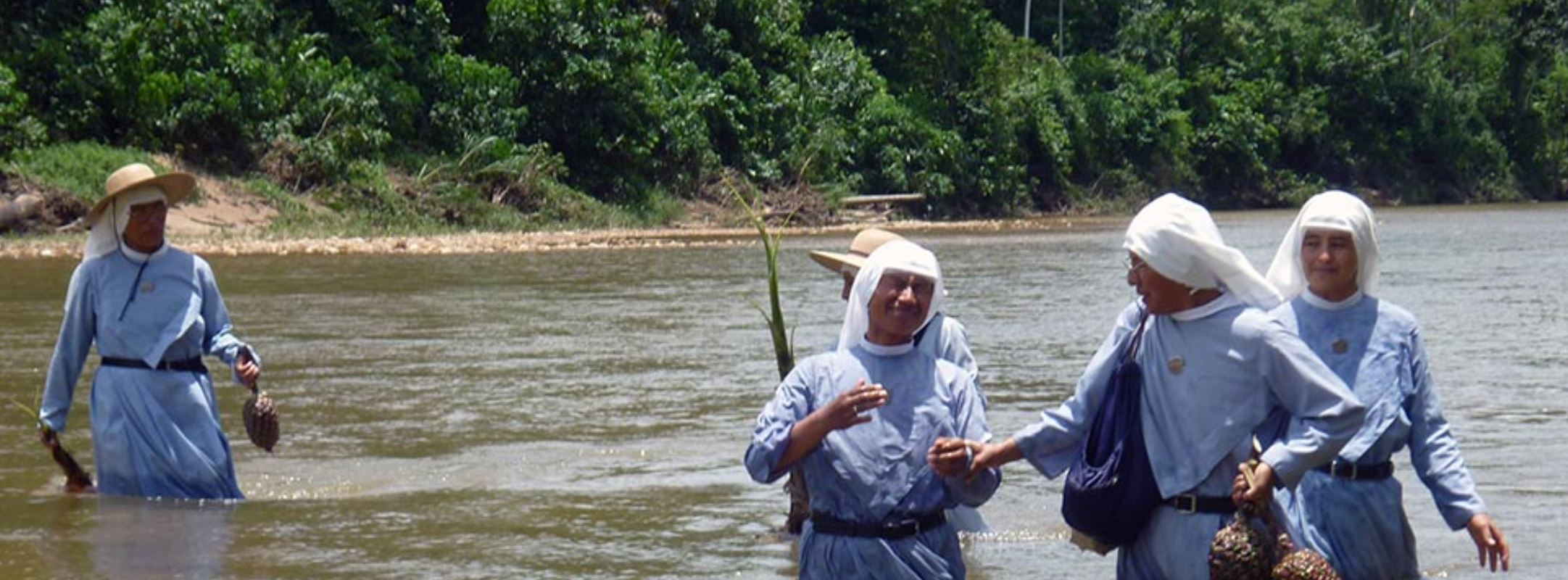
International Women’s Day: Strong Religious Women: Heroines and ‘Heart’ of Church

‘What would the church and society be without religious sisters?’

International Women’s Day on March 8, 2019, honors the indispensable efforts of women and campaigns for their rights. The focus of this day is less on the about 660,000 women worldwide who have dedicated their entire lives to serving their fellow humans: religious sisters.
During the Lenten and Easter season, the pontifical foundation Aid to the Church in Need (ACN) directs the attention of the public to these extraordinary women and calls for support.
“What would the church and society be without religious sisters?” the Executive President of ACN, Dr. Thomas Heine-Geldern, commented. “This is true in many countries: when the government breaks down and all organizations leave because of the tense security situation – the religious sisters are the ones who stay.”
Kindergartens, orphanages, schools, medical facilities, and parishes would be unthinkable without them. Not to mention their prayers for the concerns of the world: Pope Francis has called the religious sisters the “praying heart” of the church. “Anyone who has put their faith in the prayers of the religious sisters in a time of personal need knows how uplifting it is to be spiritually sustained and supported,” Heine-Geldern said.
Aid for 11,000 religious sisters in 85 countries
ACN supports about 11,000 religious sisters in 85 countries around the world. “Besides funding charitable activities, this includes granting subsistence aid – for example in eastern Europe, where the sisters have no source of income at all,” explained ACN Project Director Regina Lynch.
Other main areas of support are the formation of young religious sisters, rebuilding projects in countries in which convents have been destroyed through war or natural disasters and aid for transportation projects.
“As every employee of ACN who visits one of our project countries can confirm: without religious sisters, it would be impossible to carry out the work of the church under the most difficult circumstances. They are heroines – who do not shy away from either persecution or death,” Lynch said. Each year, the aid organisation receives tragic reports of religious sisters who have been killed in service.
The motto of ACN’s Lenten and Easter campaign is: “Extraordinary women. Thanks to God. Thanks to you.” The campaign gives religious sisters from all over the world the opportunity to talk about their vocations and their lives in prayer and community as well as their work for those most in need.
“The religious sisters are heroines of faith and charity,” explained ACN President Heine-Geldern. “They bear witness of the vitality and strength that comes from a life serving God and those around us. ACN is proud to be able to support these outstanding women.”

Thursday, July 5, 2018

New Vatican text on consecrated virginity by Pope Francis

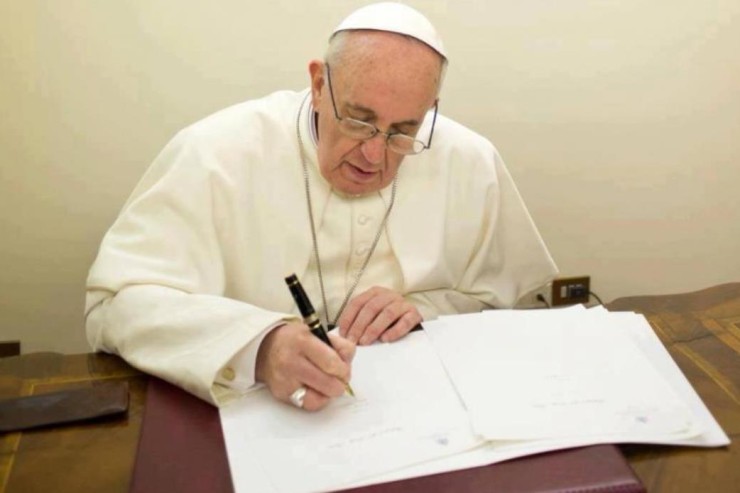
Pope Francis’ Instruction ‘Ecclesiae Sponsae Imago’ on ‘Ordo virginum’

Approved by the Holy Father on June 8, 2018, the Solemnity of the Most Sacred Heart of Jesus

Here is the Vatican provided text of the instruction, signed by the Holy Father on June 8, 2018:
***
Introduction
1. The image of the Church as the Bride of Christ is presented in the New Testament as an effective icon, revealing the intimate nature of the relationship that the Lord Jesus wanted to establish with the community of those who believed in him (Ep 5:23-32; Rev19:7-9; 21:2-3,9)
Since apostolic times this expression of the mystery of the Church has been demonstrated in a unique way in the lives of those women who with spousal love are dedicated to the Lord Jesus in virginity. Responding to a charism kindled in them by the Holy Spirit, they experience the spiritual fertility of an intimate relationship with him and offer the fruits of this relationship to the Church and to the world.
2. Some passages in the New Testament and in the writings of the first Christian centuries show that this form of evangelical life appeared in a spontaneous way in the different regions where ecclesial communities developed[1]. In the context of pagan society, it took its place among other forms of the ascetic life which were clear signs of the novelty of Christianity and of its capacity to respond to the deepest questions about the meaning of human existence[2]. In a process similar to that which concerned the status of widows who chose continence « in honour of the flesh of the Lord »[3], consecrated female virginity gradually assumed the characteristics of a state of life publicly recognised by the Church[4].
In the first three centuries, large numbers of consecrated virgins underwent martyrdom in order to remain faithful to the Lord. Among these were Agatha of Catania, Lucy of Syracuse, Agnes and Cecilia of Rome, Thecla of Iconium, Apollonia of Alexandria, Restituta of Carthage, and Justa and Rufina of Seville. From that time, right up to today the memory of the virgin martyrs has remained as a striking reminder of the total gift of self that virginal consecration demands.
In the women who embraced this vocation and responded to it with a decision to persevere in life-long virginity, the Fathers of the Church saw a reflection of the image of the Church as the Bride, totally dedicated to her Bridegroom: thus they refer to them as sponsae Christi (brides of Christ), Christo dicatae (dedicated to Christ), Christo maritatae (married to Christ), Deo nuptae (brides of God)[5]. In the living body of the Church, they comprised an institutionalized coetus (group), identified by the name of the Ordo virginum (Order of virgins)[6].
3. From the IV century, entry into the Ordo virginum took place through a solemn liturgical rite presided over by the diocesan bishop. In the heart of the community gathered for the Eucharistic celebration, the woman expressed her sanctum propositum (holy resolution) to remain in virginity for her whole life, for the love of Christ. The Bishop then pronounced the consecratory prayer. As affirmed already in the writings of Ambrose of Milan and subsequently, starting from the most ancient liturgical sources, the nuptial symbolism of the rite was displayed particularly by the bestowal of the veil on the virgin by the Bishop, a gesture that corresponded to the velatio (placing of the marriage veil) that took place during the marriage celebration[7].
4. The respect and pastoral concern that accompanied the evolution of the consecrated virgins are amply demonstrated in patristic literature. The Fathers did not limit themselves to criticizing the behaviour of consecrated women that was not in accord with their commitment to lead a chaste life in humble discipleship of Christ. They also challenged and vigorously opposed the arguments of those who denied the value of consecrated virginity as well as heretical deviations that supported the ideal of virginity and continence on the basis of a negative conception of matrimony and sexuality. Reflecting on the theological foundations of virginal consecration, they highlighted its charismatic origins, evangelical motivation, ecclesial and social significance, reference to the Virgin Mary as exemplar, and the prophetic value of anticipation and vigilant expectation of full communion with the Lord that will be brought about only at his glorious return at the end of time. Addressing the consecrated virgins « more with affection than with the authority »[8] of their office, they exhorted consecrated virgins to nourish and express their love for Christ the Bridegroom through attentive meditation on the Scriptures and in persevering personal and liturgical prayer; by practising asceticism, the virtues and the works of mercy; by cultivating an attitude of obedient attention to the magisterium of the Bishop and in the obligation to safeguard ecclesial communion. Thus, they would offer a transparent and persuasive evangelical witness within the Christian community and in the social setting within which they remained inserted, generally living with their family of origin and at times in community.
In the same period, by means of papal decrees and the constitutions of provincial councils, the regulation of essential aspects of this form of life began to be defined.
5. While consecrated virgins in the first centuries usually lived with their own families, as cenobitic monasticism developed the Church associated virginal consecration with community life, and therefore with the observance of a common rule and obedience to a superior. Over the course of centuries, the original way of life of the Ordo virginum, with its characteristic foundations in the local ecclesial community under the guidance of the diocesan bishop, gradually disappeared.


Saturday, May 27, 2017

In the Archdiocese of New Orleans today: a consecrated virgin

Image may contain: 1 person, wedding, table and indoor
Image may contain: 5 people, people smiling, people standing and wedding
Image may contain: 4 people, people smiling, people standing and wedding
Image may contain: 2 people, wedding

Clarion Herald
The bride was fashionably early.
On her 36th birthday, Elizabeth Rizzo was in position early in the back of Our Lady of the Rosary Church today for the 10:30 a....m. Mass in which she would become consecrated as a "bride of Christ."
Rizzo made promises to Archbishop Gregory Aymond to live her life as "a consecrated virgin living in the world" – one of about 235 women in the United States and 4,000 throughout the world.
Rizzo, who will continue to work as a real estate clerk in the Orleans Parish Sheriff's Office, wore a white wedding dress and was accompanied in the opening procession by Sister of Mount Carmel Beth Fitzpatrick, vicar for religious for the Archdiocese of New Orleans, and her younger sister, Miriam Rizzo.
Rizzo sat in the front pew with her parents, Deacon Pete Rizzo and his wife Gayle. After the Gospel (John 15:9-17) – "This, I command you, love one another" – Rizzo lit a small oil lamp, symbolic of the women in the parable of the 10 virgins who awaited Christ's coming, and walked into the sanctuary after being called forth by Archbishop Aymond.
In his homily, Archbishop Aymond called the liturgy of consecration "historic" for the archdiocese. He reminded the congregation that Rizzo would continue in her job, showing others in her daily life the light of Christ.
Rizzo counsels people who are in danger of losing their homes through defaulting on their mortgages.
The archbishop said Rizzo would promise to pray the Liturgy of the Hours daily for the church, to pray for the bishop and to pray for the special intentions of priests and for women who have been raped or sexually abused.
"To swim with the tide can be fun; however, whenever one is courageous enough to swim against the tide, it can be very, very challenging," Archbishop Aymond said. "Pope Francis says we must swim against the tide in order to be disciples of the Lord Jesus. That is also true to live in the world as a consecrated virgin – swimming against the tide."
The archbishop said some of the baptized are called to live a life of consecrated virginity. "It is a call from God,” he said. “It is a vocation to a unique way of life."
He said Jesus makes it clear that vocations are a "call from God."
"Jesus reminds us, 'It was not you who chose me; it was I who chose you,'" the archbishop said.
Archbishop Aymond said Rizzo had spent nine years in prayer and spiritual direction before coming to the altar. "This was not something she rushed into," he said.
"The call to the consecrated life dates back to the time of the apostles,” he added. "Today through her promise and through the words of consecration, Elizabeth becomes the bride of Christ. She promises that she will be single-hearted and radically committed to him alone. Her human life, in a very special way, will point to Christ. And she will remind us that the true life that we seek is not here but rather in our home in heaven."
The archbishop said when Rizzo shows compassion to those with whom she works and to those whom she serves – the ones who may be losing their homes through foreclosure – she is doing Christ's work.
"Through the opportunity to enter into the darkness of people's lives, she sees Christ in the faces of those who are hopeless," he said. "She will assure them through her prayers that she will do whatever possible to help them when she extends the heart and compassion of Christ."
After the homily, Rizzo prostrated herself in front of the altar as the Litany of the Saints was intoned. She then knelt in front of the archbishop and placed her hands in his, a sign that she was placing her life in God's care. She stated her intent "to live in chastity as one espoused to Christ."
Archbishop Aymond then offered the prayer of consecration, presented her with a white veil, an ancient sign of spousal commitment as the virgin to Christ. She then received a ring – her late grandmother Marie's – as a sign that she is "the bride of Christ."
"You will wear that ring always as a sign of your commitment, and also it is a sign of God's commitment to you," Archbishop Aymond said. "As you make your promise today to God and to the church, at that very moment, God is speaking to your heart his promise to be faithful to you that you may continue to hear and to live the call

Monday, August 17, 2015

What a beautiful way to celebrate a wedding; learn more about consecrated virgins

Fort Wayne woman marries God


FORT WAYNE, Ind. (WANE) – Hundreds of people attended a wedding at the Cathedral of the Immaculate Conception in downtown Fort Wayne Saturday morning. It may sound like a standard on a summer Saturday, but this marriage is one most people have likely never seen or heard of before.
The bride’s name is Jessica Hayes, the groom is Jesus Christ. Saturday morning, she became the Fort Wayne-South Bend Diocese’s first consecrated virgin in 25 years.
It’s not the wedding day Hayes envisioned for herself as a little girl. Sure it came with the same struggles any bride-to-be would have, like finding the perfect dress.
“I’ve seen so many wedding dresses over the years that I think I’ve probably changed my mind very many times. I had to really consider the appropriateness of the occasion for my dress. I wanted my shoulders to be covered, and I would have to lie prostrate before the altar, so I really wanted to make sure that I was well-covered in a way that still shows the beauty of a bride,” Hayes said.
Of course, she also wanted to make sure her guests had a good time.
“I’m so happy to have had so many witnesses today because there may be others that the Lord is calling in this way that have now heard of this life and can consider it in their prayer,” Hayes said.
For the 38-year-old theology teacher from Bishop Dwenger High School, this commitment represents years of prayer and soul-searching.
“I had been praying about it for years, trying to seek God’s will for my life and not really finding it in any of the paths that I sought before. It was really a consideration of which things brought me the most joy and where my greatest happiness was. It seemed that all of those loves converged on this one thing where I could still be living in the world and be a part of the lives of my students and be studying and teaching and involved in a parish life, but I could also give myself more completely by making this total commitment of my life to serve the church in whatever capacity is needed and whatever capacity my own gifts are available for,” Hayes said.
A consecrated virgin is a fairly rare occurrence in the Catholic church. Saturday’s ceremony makes Hayes the only one in the Fort Wayne-South Bend diocese. There are approximately 3,000 around the world and more than 200 in the United States.
“I think that in some sense, we’re all called to be married. It’s just a matter of discerning how. So, my marriage is to Christ and someone else’s marriage is to their spouse. A priest’s marriage is to the church. That’s a good desire that’s planted in us by God. The real question is how, how is this lived most joyfully in me,” Hayes said. “I do think that not everybody has the same path. To be able to look at all of these different ways of life and to see people living them out joyfully is an invitation to consider a little bit more deeply what those things mean. As Catholics and as Christians, we’re all called to that loving relationship with our God. So, I’m called to live it out in this way. Married couples are called to live that out in their married vocation and their love of their family. It’s a way of life that really anticipates what all of us will live in heaven, that union with ourselves and Christ and a real knowing and loving of him. My path is choosing that closer following now because that’s where my greatest joys lie.”
A consecrated virgin is different from a nun in that Hayes will still live her life as a lay person.
“This is a vocation for women that feel that deeper call to spend their life more in knowing Jesus and making that a public commitment in serving his church, but are also called to live in the world,” Hayes said.
As one might expect, the vocation comes with some confusion.
“My students asked if they should call me Mrs. Hayes when I come back to school next week, and no, I’m still Ms. But, I am married to Jesus,” Hayes said.
Hayes said she wants to use her experience to help increase vocations among women.
“I think, especially with the young women I’ve worked with in my teaching so far, the religious life isn’t something that many of them consider because we don’t have women religious teaching with us in our schools like we used to years ago. So, many of them don’t consider that as an option anymore because they don’t see young women their own age considering it and joining it. That’s really something I try to expose my female students a little bit more to,” Hayes said.
It’s a spiritual journey Hayes can’t wait to begin.
“Even more so than looking forward to this day is a looking forward to the rest of my life just because it’s a deepening of that commitment. Now that I’ve made a public commitment, that’s really an encouragement to me to live up to that because people know that this is who I am and my life needs to be lived in conformity with that . So, it’s one more step in that direction that others expect this way of life from me and I need to live consistently in my words and actions that love for Jesus,” Hayes said.