Showing posts with label church ministries. Show all posts

Friday, July 5, 2024

Blessings, joys, graces, yes; but there is also work, stress, etc.


'I love this work, but it's killing me': The unique toll of being a spiritual leader today
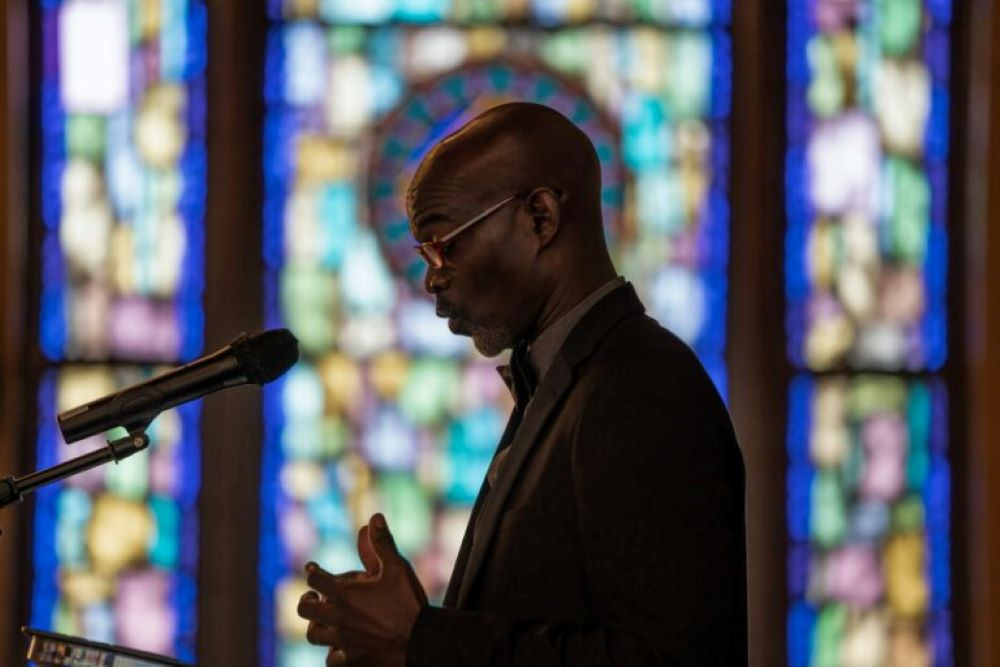


The past few years have put even more stress on many clergy. (E+/Martine Severin)  

LAURA CAPTARI

View Author Profile

STEVEN SANDAGE

View Author Profile

July 4, 2024

Clergy, chaplains and other spiritual leaders play vital roles in their communities, from celebrating life's most joyous moments to offering comfort and guidance in the face of tragedy.

However, the personal toll of this work on spiritual leaders can be immense, including burnout, trauma and health challenges — and often goes unacknowledged.

There is growing attention to the stresses clergy have experienced amid the COVID-19 pandemic and increasing polarization. Chaplains, too, faced significant strain in their pivotal but often invisible role within health care. There is concern over a potential "great resignation," with more than a third of U.S. pastors thinking about quitting.

But this is not a new problem. Research shows significant mental health and occupational risks for spiritual leaders long before the pandemic. We are both psychology researchers who provide psychotherapy to spiritual leaders, teach seminarians and study their experiences.

Key risks

The experiences of clergy and chaplains who work in health care, education and other community settings are diverse, and some of them are thriving. But for those who are struggling, several key risks stand out.

First, a sense of "calling" to a vocation, which is often central to spiritual leaders' identities, can be a double-edged sword. Deep commitment to the meaning and moral duty of one's work can lead people in many careers to sacrifice pay and personal time. Research among spiritual leaders highlights how challenging it can be to set boundaries when their work is considered a spiritual and moral duty.

Second, their roles can include an overwhelming array of responsibilities, from fundraising, rituals and spiritual care to public communication and facilities management. In 2007, psychologist Richard DeShon analyzed pastors' jobs for the United Methodist Church. He identified 13 main types of tasks, each of which involved long lists of specific responsibilities, and 64 necessary personal competencies needed to perform these tasks. DeShon concluded that he had "never encountered such a fast-paced job with such varied and impactful responsibilities."

Third, Americans' public trust and esteem for spiritual leaders has been plummeting in recent decades. This may be due to the decreasing percentage of people involved in religious congregations, as well as sexual abuse scandals

The prevalence of traumatic stress

Our research is revealing the extent to which spiritual leaders contend with extreme and traumatic levels of stress on the front lines of human suffering and conflict. This may be particularly the case in congregations with fewer resources, or in settings such as hospitals and correctional facilities, where chaplains often serve.

Many years back, one of us, Steve, consulted on a study examining spiritual leaders' well-being. I was convinced there had been some sort of error when nearly one-third of the sample scored above the clinical cutoff for symptoms of post-traumatic stress disorder — significantly higher than scores among military personnel after deployment. Ultimately, the religious group that commissioned the study was not comfortable publishing the results.

Since then, our research team at the Danielsen Institute has replicated this finding in a sample of Muslim, Jewish and Christian leaders. Once again, we found nearly one-third scored above the clinical cutoff for PTSD symptoms related to work stressors. Clergy described aggression from congregants and direct exposure to extreme suffering, such as being called to a home amid a domestic conflict or right after someone died by suicide.

Digging into the data

The majority of research to date has focused on what can go wrong for spiritual leaders. We know comparably little about what helps.

Our systematic literature review of 82 empirical studies found clear distinctions between factors that increase risk, mitigate harm and enhance well-being. Yet the absence of particularly stressful experiences did not necessarily mean clergy and chaplains felt like they were thriving: Experiences of suffering and flourishing are not mutually exclusive.


Individual factors can certainly contribute to the risks; for example, female spiritual leaders are at higher risk of burnout and traumatic stress, as are leaders who feel their self-worth is linked to "success in ministry." However, our findings revealed that congregational and denominational factors are just as influential. Many spiritual leaders describe feeling on call 24/7, for example, and experiencing overwhelming stress from community disagreements — sometimes involving threats to the leader's financial security or personal safety. In contrast, feeling supported by one's congregation can make a positive difference.

Perhaps most surprising, only 5% of the studies tackled the question of how to help spiritual leaders who are struggling. And little empirical focus has been given toward prevention: how to proactively equip people being trained for these vocations. 

Beyond self-care

During the COVID-19 pandemic, our team convened online support groups for chaplains. More than 250 professionals around the world participated.

Some grappled with not being seen as "essential personnel." Others took on unprecedented responsibilities, such as trying to be at the bedside of everyone who was dying and using technology to help families feel present. Many were torn between their call to provide care and real fears about infection risk. This evoked painful existential and spiritual questions and even a sense of moral injury: guilt and inner turmoil about how to navigate impossible situations.

In a group one of us — Laura — was leading, a member Zoomed in from her hospital bed and shared that she had contracted COVID-19. Her labored breathing was evident, as was her passionate commitment to this work.

That day's session was the last she attended, and she died the following week. Together, as we processed the tragic news and lit a candle to commemorate her, the group grieved the loss of one of its own.

These conversations revealed the power of spiritual leaders having a confidential space to gain support and discuss the complexity of their work. Nearly three-quarters of the chaplains had considered leaving the field recently, yet 98% described their work as incredibly meaningful. As one person poignantly described it, "I love this work, but it's killing me."

Members used the space to help each other process the existential, spiritual and moral toll of their work. After participating, they reported feeling less burned out, more resilient and having a greater sense of flourishing.

Our team has since developed and is evaluating CHRYSALIS, an eight-week online program to support spiritual leaders' well-being. We're focused on helping leaders develop core strengths to thrive — beyond "self-care" —while also working to change organizational structures that are a setup for trauma and burnout.

Prevention and response

Our work is part of a larger conversation between scientists, faith leaders and people who train and support clergy and chaplains.

For example, Common Table Collaborative fosters collaboration between researchers and those on the front lines. Initiatives such as Flourishing in MinistryHealthy Congregations and Chaplaincy Innovation Lab offer support for spiritual leaders. And there are training efforts to equip leaders in trauma-responsive care, such as The Khalil Center's Muslim Mental Health first-responder training program.

All are exploring changes that can help clergy and chaplains thrive and stay on the front lines of caring for communities.

[Steven Sandage receives funding from The Peale Foundation. He is professor of the psychology of religion and theology at Boston University. Laura Captari is a clinical and research psychologist at The Danielsen Institute, Boston University. The views expressed in this commentary do not necessarily reflect those of Religion News Service.]

Saturday, April 22, 2023

Pope encourages those in various lay ministries


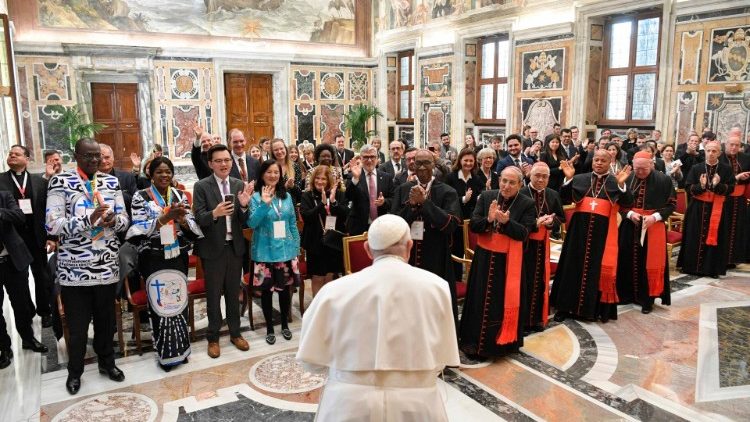
Pope Francis meeting the members of the Dicastery for Laity, Family and Life Pope Francis meeting the members of the Dicastery for Laity, Family and Life   (Vatican Media)

Pope: Lay ministers must serve and never become self-referential

Pope Francis addresses participants in Plenary Assembly of the Dicastery for Laity, Family and Life and reflects on the meaning of ministeriality in the Church and on the role of laypeople which must be focused on mission and service.

By Lisa Zengarini

Laypeople in the Church can carry out many instituted ministries, substitute services, assignments and offices, which, however, “must never become self-referential”, but always tend "to transform society" by “bringing Christian values into the social, political and economic world” of our time.

Pope Francis made this remark on Saturday in his address to the members of the Dicastery for Laity, Family and Life as they concluded their Plenary Assembly on the theme “The laity and ministeriality in the synodal Church”.

Welcoming the participants in the Clementine Hall, the Pope reaffirmed that "the willingness to serve the brethren, and in them, to serve Christ" is the true motivation that must inspire any faithful who assumes an ecclesial task and  any commitment to Christian witness in the reality where he or she lives”

The origin of the ministeriality of the Church

Referring to the theme of the three-day session, Pope Francis reflected on the meaning of ministeriality in the Church and on the role of laypeople in this context.

He noted that when we speak of Church ministries in general, the thought immediately goes to “instituted”  ministries such as the ones of lector, acolyte, and catechist “which are all well known”.

However, he said, these instituted ministries “do not represent the full extent of the ministeriality of the Church, which is broader and, ever since the first Christian communities, regards all the faithful”.  

The  common priesthood of all the faithful based on Baptism

The Pope recalled that its origin lies in Baptism and in the gifts of the Holy Spirit.

Indeed, the Sacrament is "the root of the common priesthood of all the faithful which is in turn expressed in the ministries”.

This is because all the baptized – whether lay people, celibate, married people, priests, religious – are Christifideles, that is believers in Christ, “and are therefore required to take part in the mission He entrusted to the Church, also through the assumption of specific ministries”.

The ministry of the laity in particular, the Pope continued, also “stems from the charism that the Holy Spirit distributes within the People of God for its edification”. This, the Pope said, explains even more clearly whythe ministeriality of the Church cannot "be reduced merely to instituted ministries, but rather embraces a far vaster field”.

Participating  in the prophetic and regal function of Christ

Even today, "as in the first Christian communities,  faced with particular pastoral needs, without resorting to the institution of ministries, pastors can entrust certain supplementary functions to laypeople, that is, temporary services, as in the case of the proclamation of the Word of the distribution of the Eucharist.”

Moreover, Pope Francis continued, “besides the instituted ministries, supplementary services, and other regularly entrusted offices, the laity can carry out a range of tasks, which express their participation in the prophetic and regal function of Christ: not only within the Church, but also in the environments where they live”, for example in reaching out to those affected by old and new forms of poverty, including migrants.

Family ministry

The Pope also mentioned the field of family ministry which is all the more relevant today in light of the many challenges the family is facing and which was another focus of the Plenary.

Recalling the magisterium of Pope St. John Paul II and of Pope St. Paul VI, Pope Francis highlighted, amongst other things,  the educational mission of the family as a ministry of evangelization.

Mission and service

All these ministries, services, assignments and offices, the Pope emphasized, “must never become self-referential” and have two fundamental things in common: "Mission and service", because they  "are an expression of the one mission of the Church and all are forms of service to others”.

“I like to emphasize that at the root of the term ministry there is the word minus, which means “minor”. And Jesus said so: those who command should make themselves the smallest, otherwise they do not know how to command. It is a small detail, but of great importance. Those who follow Jesus are not afraid to make themselves “inferior”, “minor”, to place themselves at the service of others. Indeed, Jesus himself taught us: “whoever would be great among you must be your servant, and whoever would be first among you must be slave of all” (Mk 10: 43-44).”

“Only by serving his brothers and sisters and, in them, Christ”, Pope Francis concluded, will “all the baptized be able to discover the meaning of their own life, joyfully experiencing being ‘a mission on this earth’ that is, being called, in different ways and forms, to ‘bring light, bless, enliven, raise up, heal and free’.

Wednesday, August 24, 2022

More ministry reflection centered on instituted ministers and extraordinary ministers


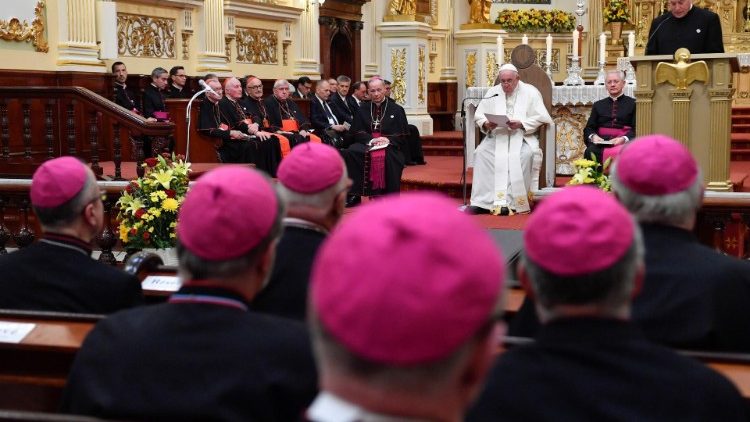
2022.07.28 Viaggio apostolico in Canada - Vespri con i Vescovi, Sacerdoti, Diaconi, Consacrati,  Seminaristi e gli operatori Pastorali presso la Cattedrale di Notre-Dame2022.07.28 Viaggio apostolico in Canada - Vespri con i Vescovi, Sacerdoti, Diaconi, Consacrati, Seminaristi e gli operatori Pastorali presso la Cattedrale di Notre-Dame  (Vatican Media)

Ministries in the Church: Pope calls for a dialogue with Bishops

On the occasion of the 50th anniversary of Pope St. Paul VI's motu proprio "Ministeria quaedam", Pope Francis reflects on the Apostolic Letter’s impact on instituted and extraordinary ministries, and expresses his desire to open a dialogue with Bishops’ Conferences to continue along the path set out fifty years ago.

By Vatican News

Fifty years have passed since Paul VI's motu proprio "Ministeria quaedam" was published.

The Apostolic Letter reformed the “minor orders”, including that of the Lector for ministry of the Word, and that of the Acolyte for the ministry of the Altar. It also established lay ministries.

To mark the occasion, Pope Francis released a message on Wednesday expressing his desire to begin a dialogue with Bishops' Conferences around the world "in order to be able to share the richness of the ministerial experiences that in these fifty years the Church has lived both as instituted ministries (lectors, acolytes and, only recently, catechists) and as extraordinary and de facto ministries."

The purpose, the Pope explains, is to "be able to listen to the voice of the Spirit without stopping the process, being careful not to want to force it by imposing choices that are the fruit of ideological viewpoints."

For this reason, Pope Francis believes that "it is useful to share the experiences of these years, all the more in the spirit of the synodal journey. That experience can offer valuable indications to arrive at a harmonious vision of the question of baptismal ministries and thus continue along our journey."

Pope Paul VI's path and Pope Francis’ Letters

In his message, Pope Francis recalls that Paul VI's Motu Proprio not only renewed the discipline of the minor orders and the subdiaconate, "but offered the Church an important perspective that was able to inspire further progress."

The possibility of the further development of ministries was also discussed during the Synod on the Amazon.

Subsequently, Pope Francis wrote two Apostolic Letters addressing the situation: the first, "Spiritus Domini" published on 10 January 2021, allowed women to participate in the Lectorate and Acolytate ministries.

The second, "Antiquum ministerium" published 10 May, 2021, instituted the ministry of Catechist.

"These two interventions," the Pope explains, "should not be interpreted as replacing the previous doctrine, but as a further development made possible because it is based on the same principles – consistent with the reflection of the Second Vatican Council" that had inspired Paul VI.

Pope Paul VI, following the requests of many Council Fathers, had in fact fifty years ago "granted the Bishops’ Conferences the possibility of asking the Apostolic See for the establishment of those ministries considered necessary or very useful in their regions. Even the ordination prayer for bishops, during the intercessions, indicates among its principal tasks, that of organizing ministries."

Foundations of each ministry

Pope Francis explains that "the issue is of fundamental importance for the life of the Church: in fact, there is no Christian community that does not express ministries."

This is shown in the Letters of St. Paul, where "a widespread ministeriality” is described as “being organized on the basis of two certain foundations”: at the origin of every ministry there is always God who by His Holy Spirit works all things in all," and "the purpose of every ministry is always the common good, the building up of the community."

Every ministry is therefore "a call from God for the good of the community."

Thanks to these two central ideas, the Christian community can organize "the variety of ministries that the Spirit stirs up in relation to its concrete situation."

This organization, the Pope writes, "is not a merely functional fact but is, rather, a careful community discernment in listening to what the Spirit suggests to the Church, in a concrete place and in the present moment of her life."

Thus, "any ministerial structure that arises from this discernment is dynamic, lively, and flexible like the action of the Spirit: it must be rooted in it ever more deeply lest dynamism become confusion, liveliness be reduced to extemporaneous improvisation, flexibility be transformed into arbitrary and ideological adaptations."

‘Realities are more important than ideas’

In his message, Pope Francis continues that "the ecclesiology of communion, the sacramentality of the Church, the complementarity of the common and the ministerial priesthood, and the liturgical visibility of each ministry are the doctrinal principles that, animated by the action of the Spirit, make the variety of ministries harmonious."

The question of baptismal ministries touches on several aspects that "certainly need to be considered: the terminology used to indicate ministries, their doctrinal foundation, the juridical aspects, the distinctions and relationships between individual ministries, their vocational value, the formation paths, the institutive event that empowers the exercise of a ministry, the liturgical dimension of each ministry."

These are complex issues, which, the Pope says, "certainly need to continue to deepen," but without "pretending to define and resolve them in order to then be able to live ministeriality," because acting in this way "most likely we would not be able to go very far."

This is why Pope Francis repeats in his message what was already written in the exhortation "Evangelii gaudium," namely that "realities are greater than ideas" and "a constant dialogue must be established between the two, avoiding that the idea ends up separating itself from reality." The Pope continues by saying that "time is greater than space."

Therefore, "rather than obsessing over immediate results in resolving all tensions and clarifying every aspect – thus running the risk of truncating them – we must go along with the action of the Spirit of the Lord.”

Tuesday, August 23, 2022

Pope applauds the diversity of ministries in the Church


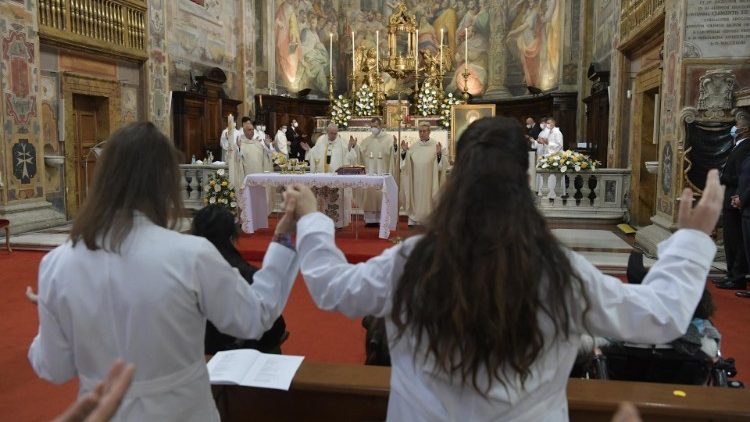
A celebration at the church of Santo Spirito in Sassia, RomeA celebration at the church of Santo Spirito in Sassia, Rome  (Vatican Media)

Pope: Diversity of ministries a richness for Church

On Monday the 72nd National Liturgical Week opened in Salerno, Italy, an initiative promoted by the Liturgical Action Center. In a message to the participants, Pope Francis expresses his hopes that the meeting will allow for a fruitful deepening in appreciation of the ecclesial ministries in the Church in a perspective of ever greater service.

By Adriana Masotti

Cardinal Pietro Parolin, Secretary of State, conveyed the cordial greetings of Pope Francis to the president of Italy's Liturgical Action Center, Archbishop Claudio Maniago of Catanzaro-Squillace, and to all the participants involved. He said the theme they are discussing - 'Ministries at the Service of a Synodal Church' - "holds particular significance for the Church in the present historical moment." Cardinal Parolin recalled the Pope's words regarding the Synodal path the Church has undertaken and the need to become "experts in the art of encounter," and available to help each other "so that the diversity of charisms, vocations and ministries enriches us." 

The study days that have just started have brought together bishops, priests, deacons, religious men and women, and numerous lay people. Cardinal Parolin said, "The Holy Father's hope is that this meeting of experts in the field, which places itself at the service of the pastoral care of the Church in Italy (...) will contribute to the theological-liturgical-pastoral understanding of the ministerial reality, opening perspectives for pastoral discernment by the ecclesial community."

Steps of the Magisterium on 'ministeriality'

Cardinal Parolin then recalled various contributions of the Papal Magisterium regarding ministeriality such as the motu proprio Ministeria quaedam 50 years ago when "St. Paul VI revised the entire area of minor orders, preserving those of the Lector and Acolyte as instituted ministries, and no longer considered as reserved to candidates for the Sacrament of Holy Orders." Precisely from this document, Cardinal Parolin explained, the Liturgical Action Center "rightly proposes a reflection on the liturgical animation of the entire People of God." He said the Pope looks at the renewal of the Church in an increasingly "communal" and less clerical direction. 

With the motu proprio Spiritus Domini, Pope Francis overcomes the constraint that excluded women from access to the first two ministries, while with the motu proprio Antiquum Ministerium, he gives the Church "the role of the instituted ministry of the Catechist." It is on this track of deepening a diversified "ministeriality" that the meeting is based, Cardinal Parolin continued, always recalling that every ministry in the Church must be inspired by the spirit of service as lived by Jesus. He said these discussions offer an opportunity to assess the contribution that has been made to ecclesial life and the promotion of these same ministries.

The importance of lay people and their role

A Church understood as a "mystery of communion," Cardinal Parolin observed, sheds greater light on the role of the laity, making it a matter of "fostering in the lay faithful a clearer awareness of their vocation which is expressed in a plurality of duties." But he warned that "in dealing with these issues, we must be careful not to confuse the universal priesthood and the ministerial priesthood, arbitrarily interpreting the concept of 'substitution,' 'clericalizing,' and thus risking the creation of a de facto ecclesial structure of service parallel to that founded on the Sacrament of Holy Orders."

Cardinal Parolin concluded the message by assuring all participants in the Conference, which concludes on Thursday, of Pope Francis' prayers and blessing, adding his own hopes for every success with this "important pastoral initiative."