Showing posts with label chastity. Show all posts

Sunday, December 11, 2022

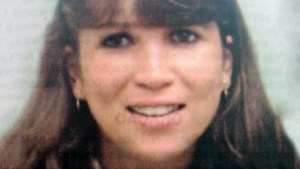
Beatified yesterday, she is martyr and witness to faith, chastity and the dignity of women


Pope prays new 20-year-old blessed will inspire young people


Kathleen N. Hattrup - published on 12/11/22

Isabel Cristina Mrad Campos was killed in 1982 in Brazil, "defending her dignity as a woman and the value of chastity."

Pope Francis recognized the beatification in Brazil on December 10, 2022, of a young woman who was killed “in odium fidei” at just age 20.

Isabel Cristina Mrad Campos is seen as a “Maria Goretti” of Brazil.

The Pope noted how she was killed recently, in 1982, “in hatred of the faith, for defending her dignity as a woman and the value of chastity.”

May her heroic example stimulate young people in particular to give a generous witness of faith and adherence to the Gospel. Let us applaud the new Blessed!

You can learn about Blessed Isabel Cristina in the article below:

Martyrs

The Pope spoke of her as a martyr, saying she died “in hatred of the faith.”

Catholic Culture defines a martyr as “A person who chooses to suffer, even to die, rather than renounce his or her faith or Christian principles.”

As noted in this review of the designation of “martyr of purity”:

To be declared a martyr, someone must either die for the faith directly, or die in defense of a Christian virtue.

But the virtue of chastity does not require that a person choose death over rape. The Church does not value virginity over life. So why would the [choice of these martyrs] be celebrated by the Church as a model of chastity?

The answer is that [these martyrs’] death was a reflection of [their] life. Living virtuously developed in [them] the “habit of excellence” that Aristotle described. Though young, [they] had an abhorrence of sin so deeply developed that when confronted with impurity, even though the sin was not [theirs, they] fled from it. 

Saturday, August 18, 2018

Fr. Longenecker right again on all of this; Fr. Martin wrong, if you are a celibate than damnit be celibate


    What Does Fr Martin Mean by “Celibate Gay Priests”?


    Fr Martin has been tweeting some more anguished messages about how we should not blame all the good “celibate gay priests” for the sex abuse horrors.
    I agree with him, but then I don’t think very many people are doing that.
    Most Catholics are aware that some of our priests struggle with same sex attraction. In my experience most people are accepting and welcoming, while not condoning homosexual activity. I think Fr Martin is setting up a straw man here and suggesting that the current scandals are provoking a witch hunt against all people with same sex attraction. There may be a few extremists who are taking this line, but I don’t think many of us do.
    Most Catholics simply agree with the teaching of the catechism that people with same sex attraction should be welcomed with respect, but that homosexual activity is a sin. We also want to be careful not to scapegoat a whole category of people. The anger people feel should not lead to stereotyping, scapegoating and injustice.
    There is a second problem however, which I brought out in this post, and that is, I wonder why we should be obliged to call a priest “gay” if he is celibate. For most people “gay” is associated with the LGBTQ agenda, activism, gay pride parades, and the active gay lifestyle with all its outrageous expressions. Why should a priest who is celibate want or need to be identified as “gay”? If he’s celibate why does his sexual preference have to be an issue at all?
    Some will assume that if a person with same sex attraction doesn’t “come out” and talk about it they must therefore be “in the closet” sexually repressed and some sort of uptight neurotic mess. But as I say in the article…
     It could be that a celibate priest who experiences same sex attraction may well have become a mature, self actualized human being. He may well have come to accept his sexuality and finds his personality and ministry is fulfilled through his celibacy. To be truly well adjusted it seems to me that a person is not constantly talking about one’s sexuality. The truly well adjusted, mature and self accepting person realizes that he or she is more than his sexual preferences and simply gets on with life.
    Indeed, as a priest, the man may quite rightly have a sense of dignity, modesty and respect for his parishioners. Why should he flaunt his sexuality in front of the children and devout old people of his parish? This doesn’t mean he is “in the closet” repressed and oppressed by homophobes. It might simply mean that he is a well adjusted, self disciplined, mature and modest person.
    I wonder therefore, why Fr Martin insists on calling priests with came sex attraction “gay”? Why does he refer to them as “celibate gay priests” when the term “gay” most definitely does not imply celibacy in either the popular imagination or the gay pride movement?
    I’m assuming by “celibate gay priest” Fr Martin means a priest with same sex attraction who is not sexually active, but then why does he need to be labelled as “gay”?
    However, I wonder whether by “celibate” Fr Martin means something quite different than most Catholics do?
    In an article for National Review Fr Benedict Kiely speaks about the unusual definition of “celibacy” he discovered soon after being ordained as a priest.
    “Uncle Ted” McCarrick rose through the Church — and “everyone knew,” including many in the Catholic and secular press — and got a free pass for his abuse of minors precisely because of its homosexual character. During my seminary years I heard the nonsense, often spouted by members of religious orders vowed to chastity, that celibacy meant only “not getting married” and did not preclude sexual activity, although the Church’s teaching is clear that sexual activity outside marriage is illicit. I know of one famous cleric, now dead, who boasted (and it turns my stomach to think of a priest living so brazen a lie) of a male friend with whom he had sex regularly.
    I can vouch for that.  When I was a layman working for a Catholic charity in England I was in a different rectory every weekend and had plenty of face time with the priests. Most were good, solid, hard working men for whom I have great respect, but one man was clearly living with his concubine and another man had photos of himself and his boyfriend all over the rectory. My suspicions about both men were confirmed by another priest in their diocese who said, “these are the men who justify their relationships with the interpretation that ‘celibacy’ just means they can’t get married.
    I suspect that was the interpretation of “celibacy” endorsed by the creeps in the PA report and their episcopal enablers.
    I used to think this interpretation of celibacy and the activity associated with it was not widespread, but I am now starting to believe otherwise. If this is the case, then Richard Sipe’s observations (reported here) that widespread laxity in the observation of the vow of celibacy allowed for an atmosphere in which abuse was both commonplace and hushed up is understandable. The authorities turned a blind eye because they and so many of the other men they knew were also observing “celibacy” in that unusual manner.
    But Mr. Sipe’s most far-reaching conclusion was that those two phenomena were linked. Failures of celibacy among church leaders, he argued, even if they happened with adults, created a system of hypocrisy and secrecy in which the abuse of minors could take place.
    “Sooner or later it will become broadly obvious that there is a systemic connection between the sexual activity by, among and between clerics in positions of authority and control, and the abuse of children,” Mr. Sipe wrote in a letter to Bishop Robert W. McElroy of San Diego in 2016. (be warned. the linked letter is explicit and v. distressing to read.)
    “When men in authority — cardinals, bishops, rectors, abbots, confessors, professors — are having or have had an unacknowledged-secret-active-sex life under the guise of celibacy, an atmosphere of tolerance of behaviors within the system is made operative.”
    Does Fr Martin’s definition of “celibacy” jive with the other progressive’s definition? If so, perhaps by a “celibate gay priest” Fr Martin actually means a gay priest who tries to restrain himself and only have sex with his boyfriend on their day off and when they go on a gay cruise together. Is this what he means by “celibate gay priest”?
    It would seem so. On page. 216, para 4 of his little book,  The Jesuit Guide to (Almost) Everything  Fr Martin defines celibacy as “the restriction against marriage for members of the Catholic clergy.”
    Check out how sneaky this is. Most Catholics, assuming that celibacy means “you keep your pants on and you sleep alone” would read Fr Martin’s definition and conclude that is what he meant. But that is not what he meant. He meant what he said, “celibacy means not getting married.”
    His flexible definition would be consistent with what many in the LGBTQ movement mean by “marriage”. When I asked a gay Anglican priest I’ll call Larry what kind of relationship he had with his “husband” Steve, he admitted that they had tried monogamy but found it impossible so they now had an “open relationship” and the main rule was that they talked together about the different men they had been with. “Honesty is the key guideline” he explained. “Its the lying and deceitfulness in a relationship which destroys trust.”
    It would seem that Larry and Steve’s arrangement is not unusual as Joseph Sciambra reports here:
    According to numerous studies, the majority of so-called “monogamous” same-sex male relationships are actually open negotiated partnerships which allow sex with outside partners.
    If many gay partners who are “married” have an understanding of marriage that allows for multiple partners and what anyone else would call “adultery” should we be surprised that promiscuous priests have a definition of “celibacy” that is actually the opposite of the received definition?
    So when Fr Martin talks about “celibate gay priests” I hope we’ll be forgiven for wondering what what exactly he means by “celibate”.
    One wonders did ex-cardinal McCarrick have the same definition of “celibacy”? Is that why he behaved the way he did, and why others overlooked his “disappointing failures”?
    Did the gay priests in Pennsylvania have that definition of “celibacy”?
    Furthermore, if Fr Martin’s definition of “celibate” is iffy, shall we conclude that his supporters Cardinal Farrell, Cardinal Cupich, Bishop McElroy and Cardinal Tobin are in agreement and that they also condone this secret and specialized definition of “celibacy”?
    I wonder whether I ought to ask these questions, especially as I am a married priest, but on the other hand, as a married man, I wonder what my wife would think if my definition of marriage meant that I slept around with lots of other women, but because I  didn’t marry any of them I was being faithful to her.
    You see my point.
    These are tricky times, and I hesitate to write about these matter since all of us–married and single alike–are involved in the great work of achieving chastity. Nevertheless, since some priests do have an ambiguous understanding of celibacy that is most certainly one of the causes of the present disaster.

    Friday, July 27, 2018

    There is a path for those with same-sex attraction; and for that matter, all peoples not married(like really married)


    Break open the filing cabinet: Chastity & Integration

    “You seem very…managed.” I sat across from a priest on a retreat. He had just heard me describe a few elements of my relational history. This was his response. “I mean, it’s sort of like a filing cabinet,” he went on. “You pulled open these nice, neat folders to show me, then put them back in.”
    In the immediate aftermath of the conversation, I felt frustrated. You can’t be emotional all the time, after all! Wasn’t there a place for ordered, rational description of events and the current standing of relationships? While I believe that point stands, I don’t think it’s entirely what he was getting at.
    Experiencing attraction to other girls as a teenager, I had already determined I wasn’t going to act on them. I’d been to youth conferences and teen Masses and chastity talks. I was committed to Jesus and had a basic understanding that certain acts (read: sex) were destined for certain circumstances (read: marriage). Admirable as that was, I didn’t know how to confront or even “manage” my experiences of attraction. So I just tried not to think about them. One could say I tucked them away in the filing cabinet. I was abstinent, but I can’t say I understood what I was living, nor did I feel particularly free. I wasn’t so much “chaste” as I was compartmentalizing.
    The Catechism defines chastity this way:
    “Chastity means the successful integration of sexuality within the person and thus the inner unity of man in his bodily and spiritual being” (CCC 2337).
    “Integration” comes from the Latin meaning “of the whole.” For me to be chaste, I need to first be aware of the whole picture of my life. Then I need to look honestly at those areas where I struggle with those truths. I need to entrust the doubts and longings of my heart to God, so I can make virtuous choices. Chastity involves the whole person – the movements of my internal soul and the expression of my physical body.
    THE WHOLE PICTURE (IN PART)
    First and foremost, my “person” is created in the image and likeness of God. In Genesis 1, we see this image and likeness manifested in two ways – male and female. For me, this means my womanhood (or “femaleness,” as St. John Paul II would say) is intrinsic to my person and my sexual identity. It’s essential! The same thing goes for a man. His manhood (“maleness”) is essential to his person and sexual identity. As a woman, I recognize that knit within my femaleness is an organ system that is incomplete unto itself. It cannot fulfill its procreative and unitive purposes alone. In that sense, my sexual complementarity (man) is inseparable from my sexual identity (woman). There’s more to a robust Catholic understanding of the human person, but these are the bare bones that related to my particular experience.
    #THE STRUGGLE IS REAL
    I don’t think teenagers say this anymore, but the statement is true! The effects of the Fall are universal for all but two human beings (and they’re no longer available for audible two-way conversations). I can understand the logic of the aforementioned theological points, but knowledge alone doesn’t bring my wayward heart into perfect alignment.
    The Catechism states that “everyone, man and woman, should acknowledge and accept his [or her] sexual identity” (CCC 2333). For many of us, however, “acceptance” might look a lot like that filing cabinet. “Well,” we say, “I’ve acknowledged that I’m the sex that I am and that I experience attraction to people like me. Checked that box! Let’s just file that away for now.” Unfortunately, the acknowledge-and-file method is still its own sort of compartmentalizing. If I’ve “filed away” my capacity for same sex desires, how will I respond when I’m stirred by a scene on TV? Or if I’m nearing my alcohol limit and my eyes settle on someone they wouldn’t settle on otherwise? If all I’ve done is acknowledged truth without integrating it, will I make the choice for chastity in these scenarios? I hope so! But it might be a lot more challenging.
    Chaste integration is a process. I need to take a hard look at the challenges to its progress. Two of my favorite Scripture passages include two very similar comments from Jesus. They bookend the Gospel of John. In one, Jesus has no disciples yet, but Andrew and John are trailing him. Jesus turns and asks them, “What are you looking for?” At the end of John’s Gospel, the tomb lies empty and Mary Magdalene weeps. A man approaches. The gardener, perhaps? Then comes the question. “Who are you looking for?”
    With these experiences, I need a hard, prayerful prayerful examination of what I’m looking for. “What is it about being a woman that frightens me? What empowers me?” “When I’m attracted to women, what am I looking for? Besides ‘not being alone,’ why do I want to be with HER in particular?” “When I feel attracted to men, what draws me in there? Is it similar? Different?” “What are the trends and movements in my imagination?” “Do any of these answers connect to particular wounds in my life or relationships? How can I move toward healing?”
    Prayerfully examining the reality of my emotions is not acceptance of a cultural conclusion! If I want to live as a whole, healthy person, I need chaste integration. I need to adhere the whole of my life to the whole of the Gospel. I can only do that if I lean into these realities before God and in conversation with trusted friends and mentors. Together we can sort through my desires and my doubts.
    GOOD LIFE CHOICES
    As a former high school teacher, there was a lot of focus on helping teens make “good life choices.” This pertained not only to their dating relationships, but to sports, to family, to socializing, to schoolwork, and all the rest. My commitment to chaste integration involves my whole person and my whole life. Embracing my Creator-endowed sexual identity as woman has connotations for my romantic relationships (read: not other women). But it impacts all of my relationships. It makes me a daughter, a sister, a spiritual mother. It means life in relation to others in community. It means discernment of my charisms and gifts for the life of the Church. It means my life is a tightly woven tapestry, not a filing cabinet.
    Where we compartmentalize and how we cope looks different for all of us. And by “all of us” I, of course, mean all of us. No matter our sexual desires, we all have aspects of our lives that we tuck away in the filing cabinet. We might even lock it up. The progression I’ve outlined here – awareness of the Church’s teaching, prayerfully examining where your head and your heart conflict, and living the truth in all aspects of your life – these apply to all of us. So let’s take another look at chastity and personal integration. Together we can move beyond “managed” and into freedom in Christ

     Anna Carter lives and works in Milwaukee, WI.  Since graduating from the Franciscan University of Steubenville, Anna has worked for NET Ministries and in local catechetical ministry with youth and young adults.  Anna is the Co-Founder of Eden Invitation, an evangelistic outreach to millennial Catholics experiencing same sex attraction.

    Tuesday, June 12, 2018

    Cardinal Sarah returns to the most important point about homosexuality and it's chastity

    Cardinal Sarah critiques Fr James Martin on 


    The Church cannot back down on its call to chastity, the cardinal said
    Cardinal Robert Sarah, prefect of the Congregation for Divine Worship and the Discipline of the Sacraments, has said the Church cannot back down on its teaching on chastity when dealing with the gay community.
    In an op-ed for the Wall Street Journal, the cardinal critiques Fr James Martin’s book ‘Building a Bridge’, which calls for “dialogue” with the LGBT community while criticising Church figures for showing hypocrisy on the issue of chastity.
    Cardinal Sarah describes Fr Martin as “one of the most outspoken critics of the church’s message with regard to sexuality”, and argues that while Fr Martin is right to say there should be no double standards regarding the call to chastity, members of the LGBT community must be made aware of the fullness of Church teaching.
    “He repeats the common criticism that Catholics have been harshly critical of homosexuality, while neglecting the importance of sexual integrity among all of its followers,” Cardinal Sarah writes.
    “Father Martin is correct to argue that there should not be any double standard with regard to the virtue of chastity, which, challenging as it may be, is part of the good news of Jesus Christ for all Christians. For the unmarried—no matter their attractions—faithful chastity requires abstention from sex.”
    Cardinal Sarah says that while this may seem a high standard, especially in the modern world, it would be “contrary to the wisdom and goodness of Christ to require something that cannot be achieved.”
    “As a mother, the Church seeks to protect her children from the harm of sin, as an expression of her pastoral charity,” he added.
    Fr Martin responded by telling America magazine, of which he is editor-at-large, that he is not challenging Church teaching. Instead, he is calling for Catholics to ask why that teaching is so widely rejected by the LGBT community.
    He also praised Cardinal Sarah for using the term “LGBT” in his op-ed, which he calls a “step forward”.
    However, he said the cardinal “misses a few important points,” including “the immense suffering that LGBT Catholics have felt at the hands of their church.”
    “Building a Bridge is not a book of moral theology nor a book on the sexual morality of LGBT people. It is an invitation to dialogue and to prayer, and I’m sure that Cardinal Sarah would agree on the importance of both.” Fr Martin said.
    In his op-ed, the cardinal said that while experiencing attraction to people of the same sex is not in itself sinful, same-sex relations are “gravely sinful and harmful to the well-being of those who partake in them”.
    “People who identify as members of the LGBT community are owed this truth in charity, especially from clergy who speak on behalf of the church about this complex and difficult topic,” Cardinal Sarah added.
    He praised the example Catholics who experience same-sex attraction but live according to Church teaching, citing Daniel Mattson and his book “Why I Don’t Call Myself Gay: How I Reclaimed My Sexual Reality and Found Peace.”
    “These men and women testify to the power of grace, the nobility and resilience of the human heart, and the truth of the church’s teaching on homosexuality,” the cardinal said.

    Saturday, October 3, 2015

    Chaste Homosexual Catholics tell synod that chastity is for everyone, not just gays

    Gay Catholics tell synod to promote chastity – for everyone

    Opening Session of the Extraordinary Assembly of the Synod of Bishops at the Vatican on Oct. 6, 2014. Credit: Mazur/catholicnews.org.uk (CC BY-NC-SA 2.0).
    Opening Session of the Extraordinary Assembly of the Synod of Bishops at the Vatican on Oct. 6, 2014. Credit: Mazur/catholicnews.org.uk (CC BY-NC-SA 2.0).
    .- Same-sex attracted Catholics who have turned away from a homosexual lifestyle are urging participants at the upcoming Synod on the Family to defend the Church's teaching on chastity for everyone – including for divorced and remarried.
    “I fear that chastity does not have enough of a voice at the Synod,” said Rilene Simpson, a member and spokesperson of Courage, an apostolate which offers pastoral support for men and women with same-sex attraction. She told CNA: “We need to have the Church’s support.”
    “We're talking about chastity for everybody. We're talking about chastity for people with same-sex attraction. We’re talking about chastity within the confines of marriage. We're talking about chastity for people who are divorced, and remarried.”
    “It is a beautiful, beautiful virtue, it’s a grace from God, it’s a way to become closer to him, and we need to hear more about chastity,” she said.
    Rilene, whose story is featured in the 2014 Courage-produced documentary Desire for the Everlasting Hills, was one of the main speakers at a conference held Friday in Rome aimed at presenting the Church's pastoral resources for persons with same-sex attraction.
    The international gathering, entitled “The Ways of True Love – Pastoral Approaches to Welcome and Accompany those Living with Homosexual Tendencies,” was held Friday at the Pontifical Thomas Aquinas University, also known as the Angelicum.
    Organized by Courage, Ignatius Press, and the Napa Institute, the gathering was intentionally scheduled to take place as close to the Synod on the Family as possible.
    “What I am hoping from the Synod fathers... (is) that they can see the truth and not buy into the lies,” said David Prosen, a Catholic therapist at a Franciscan University in Steubenville, who also shared his testimony at the Oct. 2 gathering.
    Having himself lived a homosexual lifestyle before embracing the Church's teaching on chastity, David – whose story is featured on the 2014 documentary The Third Way – told CNA he had once been told by a priest it was “okay to be in an intimate relationship with a man as long as you love him.”
    “This is so harming,” he said. “So, what I hope is that the Synod fathers will really look at the truth that we, all of us, all men and women have gifts that God has given us because we are created in his image and likeness and because we are his sons and daughters – not because of who I’m attracted to.”
    David's presentation at Friday's gathering was entitled “I am not gay...I am David,” and touched on his own struggles with identity during his youth.
    “I know for myself, when I was in the culture, that whole sense of identity to me meant belonging,” he told CNA.
    “I didn’t really fit in in high school. Finally I felt like I belonged somewhere but it wasn’t giving me what I really needed. I found out years later that the reason is because that’s not who I am. I was embracing something that wasn’t true.”
    David explained how in high school he had admired traits in other people that he felt he lacked in himself.
    “I was looking at my peers and going ‘gosh if only I looked like him, if I was athletic like him, or popular then maybe I would fit in,' and there was this shame,” he said. “In puberty, that piece became exaggerated and that’s when I believed something that really wasn’t true.”
    “I wasn’t really affirmed in my gender and that’s what I was looking for all along.”
    David explained he has since learned to establish fulfilling and chaste friendships with other men, largely through the help of the Courage apostolate.
    “There is a profound joy and peace in living a chaste life,” he said.
    Friday's conference comes partly in response to the 2014 Extraordinary Synod on the Family, in which persons with same-sex attraction did not have an adequate voice, according to organizers.
    At least two of the Synod fathers will take part in the event: French Guinea's Cardinal Robert Sarah, prefect of the Pontifical Council for Divine Worship, and Australia's Cardinal George Pell, prefect for the Secretariat for the Economy.
    In brief remarks given to journalists at the conference, Cardinal Pell stressed that the Church has long offered support to persons with same-sex attraction. “It's happening already...in many places,” he said.
    “No non-government institution offers more avenues of care of, say, HIV people, in parishes, communities, groups like Courage, Christian families,” etc. “We're obliged to. Because we're Christians.”
    The conference also featured a presentation by Monsignor Livio Melina, president of Rome's John Paul II Institute on Marriage and the Family, who spoke on the Christian anthropological understanding of homosexuality.
    Other experts included Dr. Paul McHugh of Johns Hopkins; Dr. Timothy Lock, a clinical psychologist; and Dr. Jennifer Morse of the Ruth Institute.
    Friday's conference comes one day ahead of another gathering in Rome entitled Ways of Love, whose organizers support a form of pastoral care which does not necessarily preclude sexually intimate relationships between same-sex couples.
    This year's Synod on the Family, to be held on Oct. 4-25, will be the second and larger of two such gatherings to take place in the course of a year. Like its 2014 precursor, the focus of the 2015 Synod of Bishops will be the family, this time with the theme: “The vocation and mission of the family in the Church and the modern world.”