Showing posts with label Dicastery of Promoting Christian Unity. Show all posts

Wednesday, September 16, 2026

Pope Leo XIV, three Vatican Dicasteries remember Nosta aetate on its 60th anniversary


Pope Leo XIV signs the Note 'A Journey of Peace' in the presence of the Cardinal Prefects of the Dicasteries for the Doctrine of the Faith, for the Promotion of Christian Unity, and for Interreligious DialoguePope Leo XIV signs the Note 'A Journey of Peace' in the presence of the Cardinal Prefects of the Dicasteries for the Doctrine of the Faith, for the Promotion of Christian Unity, and for Interreligious Dialogue 

Nostra aetate, 60 years on: Church renews dialogue against hatred and division

On the 60th anniversary of 'Nostra aetate', which opened a new chapter in relations between Catholics and believers of other faiths, three Vatican Dicasteries publish a Note entitled “A Journey of Hope,” renewing the call to counter fundamentalism, protect religious freedom, and build coexistence founded on fraternity.

By Salvatore Cernuzio

At the time, it was a turning point in relations between Catholics and Jews and with believers of other faiths, as well as a beacon of hope in the aftermath of the Second World War.

Today, sixty years later, the conciliar Declaration Nostra aetate remains a point of reference for rekindling “that hope in our world, devastated by war and our degraded natural environment.”

It also continues to offer a paradigm for guiding the Church’s pastoral and theological choices at a time when divisions prevail over dialogue, religious freedom is constantly violated, and the name of God is betrayed and used to legitimize violence and terrorism.

Condemning discrimination and persecution

For this reason, on the 60th anniversary of this “brief yet bold” conciliar Declaration, the Dicastery for the Doctrine of the Faith, the Dicastery for Promoting Christian Unity, and the Dicastery for Interreligious Dialogue have published the Note “A Journey of Hope.”

The document retraces the essential stages of dialogue since Nostra aetate, assessing its challenges and achievements and outlining prospects for the future.

Its purpose is to renew a timeless message: “The Church reproves, as foreign to the mind of Christ, any discrimination against people or persecution of them on account of race, color, social condition, or religion”.

“The Church reproves, as foreign to the mind of Christ, any discrimination against people or persecution of them on account of race, color, social condition, or religion.”

Journey from the Second Vatican Council to the present day

The document’s reflection begins with a question of pressing relevance: “How can the call to universal fraternity be lived concretely in societies marked by increasing cultural and religious diversity, by war and violence, and by a growing trend toward secularization?”

The approximately twenty-page text is signed by the Prefects of the respective Dicasteries—Cardinals Víctor Manuel Fernández, Kurt Koch, and George Koovakad—and by their Secretaries, Fr. Armando Matteo, Archbishop Flavio Pace, and Fr. Indunil Janakaratne Kodithuwakku Kankanamalage, respectively.

The journey outlined by the document begins with the origins of Nostra aetate, which at the time was “a response to the tragic consequences of antisemitism, which culminated in the Shoah.”

Its publication on 28 October 1965 marked “a profound change,” because, for the first time, the Church explicitly declared that she “rejects nothing that is true and holy” in other religions and invited the faithful to regard their precepts and doctrines “with esteem and respect.”

The Note, recalling the Declaration Dignitatis humanae, affirms: “No respectful relationship with other religions can be sincere or feasible without a corresponding respect for the religious freedom of others.”

With the same “conviction,” the signatories call for “the same freedom for Christians in countries where they are a minority,” highlighting the “persecution” that Christians still suffer today “in various parts of the world at the hands of extremist religious groups.”

“Every persecution for religious reasons is always a violation of human dignity, to which a common response must urgently be found—one that, in the spirit of Nostra aetate, promotes respect, dialogue, and peaceful coexistence among all and towards all.”

Relations between Jews and Christians

The Vatican document devotes considerable attention to the distinctive relationship between Christians and Jews, beginning with their common roots in the Old Testament and extending to the Council’s recommendation of “mutual understanding and respect” and “fraternal” dialogue.

Along the same lines, “A Journey of Hope” reiterates that “God’s covenant with the Jewish people is irrevocable, and this continually challenges the Church.”

This does not mean that “the covenant with the Jewish people runs parallel to the Christian way of salvation”: for the Church, “Christ is the one and only Redeemer.”

Nevertheless, “this irrevocable covenant has theological significance”; consequently, “we cannot do without one another.”

Joint struggle against antisemitism

Solidarity with the Jewish people also includes “the shared struggle” against antisemitism.

Nostra aetate already deplored anti-Jewish hatred and persecution “at any time and by anyone,” including within the Church.

It also recalls the condemnations issued by the Popes, particularly those concerning the Holocaust.

The document notes that the conflicts that have erupted in the Middle East have “left their mark” on dialogue between Jews and Christians.

“Many channels of communication have been strained and continue to be tested by differing interpretations of the events that have unfolded, interpretations that are often not unanimous even within the respective religious communities,” the Dicasteries state.

They urge that the “mutual knowledge and esteem” that has remained firm throughout sixty years of “common effort” be maintained and developed further.

Clear fruits of dialogue

It is precisely this common work, the document emphasizes, that has produced “evident” fruits in dialogue with Islam and other religions, including Hinduism, Buddhism, Jainism, Sikhism, Shintoism, Taoism, Confucianism, Zoroastrianism, and traditional African religions.

Lasting relationships of friendship have been established among religious leaders, joint educational and social projects have been launched, and common declarations have been published in response to humanitarian tragedies, wars, or environmental crises.

“Sono state instaurate relazioni durature di amicizia tra responsabili religiosi, sono stati avviati progetti educativi e sociali congiunti, sono state pubblicate dichiarazioni comuni di fronte a drammi umanitari, guerre o crisi ambientali”

Theological dialogue among experts and interreligious monastic dialogue have been fundamental in this regard. So too has the lived experience, carried out quietly and discreetly, of priests, religious, and laypeople in multi-religious neighborhoods, “where the simple fact of living in peace and being present for one another, as neighbors, is already a form of witness.”

All these achievements, “sometimes still embryonic, invisible yet fruitful,” embody the insight of Nostra aetate: “To live in the world as witnesses to the love of God, in dialogue with all.”

“To live in the world as witnesses to the love of God, in dialogue with all.”

Condemnation of Islamophobia

The three Dicasteries strongly criticize manifestations of “Islamophobia” that “fail to distinguish adequately between, on the one hand, cases of fundamentalism and violence and, on the other, the peaceful lives of other Muslim believers who integrate into and contribute to the countries that welcome them.”

“We should thank the Christian communities that have grown in a spirit of welcome and as well as in greater knowledge and esteem for Muslim believers,” it states.

The poor as ‘the compass’

Retracing the teaching of the Popes from Paul VI to Leo XIV, the Vatican document then focuses on the importance of dialogue in this period of history.

The “welcome or rejection” of the poor is presented as a “universal criterion of discernment” for understanding whether the right direction is being followed.

Calling the poor a compass, the document says “concrete concern for the most vulnerable is the essential measure by which the integrity of every project—whether political, economic, social academic, religious, or cultural—must be judged.”

Difficulties of dialogue

The document then highlights “the difficulties surrounding dialogue” today. Some fear “doctrinal relativism or a dilution of religious identity,” while relations that “have historically been marked by conflict” or the memory of “past wounds” make mutual trust difficult.

The very foundations of dialogue are undermined by “the increase of fundamentalism, the persistence of prejudice, the political manipulation of religious affiliation, and violence committed in the name of God.”

In secularized societies, this is compounded by the marginalization or instrumentalization of religious discourse, which is “reduced to folklore or subjective opinion, or obscured entirely.”

Behaving as brothers and sisters

The journey, therefore, remains “demanding” and “requires humility, courage, and discernment.”

Dialogue, the document reiterates, is neither a “strategy” nor a renunciation of one’s identity, but an “authentic evangelical path.” Indeed, it presupposes “a clear awareness of one’s own religious and cultural identity, together with a genuine openness to otherness.”

“Respect” and “esteem” are “indispensable foundations” for overcoming “attitudes of exclusion, contempt, or indifference that had long prevailed.”

“We cannot call upon God as the Father of all if we refuse to behave in a fraternal manner toward certain people who have been created in the image of God,” it states, quoting Nostra aetate.

“We cannot call upon God as the Father of all if we refuse to behave in a fraternal manner toward certain people who have been created in the image of God.”

Abandoning defensiveness, hostility, conquest

In the face of those who today “foment divisions and stir up conflicts,” believers of different traditions are called to “seek, with clarity and hope, the conditions necessary for peaceful coexistence.”

To achieve this goal, it is necessary to abandon “the logic of defensiveness, hostility, or conquest in order to adopt an attitude that is open, benevolent, and courageous.”

The new document concludes with an appeal addressed to all people. May we become “builders of bridges, not walls,” “artisans of peace and fraternity,” capable of “welcoming others in their diversity” and “collaborating in building a more just and humane society.”

Thursday, March 26, 2026

Pope Leo XIV acknowledges the installation of the new Anglican Archbishop of Canterbury


The common prayer service in the Chapel of our Lady of Martyrdom. with the Archbishop of Canterbury, Dame Sarah Mullally, and Cardinal Kurt KochThe common prayer service in the Chapel of our Lady of Martyrdom. with the Archbishop of Canterbury, Dame Sarah Mullally, and Cardinal Kurt Koch 

Pope assures Archbishop of Canterbury of dialogue 'in truth and love‘

Pope Leo XIV sends a message to Archbishop Sarah Mullally on the occasion of her installation, recalling the progress and challenges in Catholic–Anglican relations. The Archbishop's installation ceremony in Canterbury Cathedral took place on 25 March.

Vatican News

Pope Leo XIV has sent a message to Sarah Mullally on the occasion of her installation as Archbishop of Canterbury, assuring her of his prayers and invoking “grace, mercy, and peace… in truth and love”.

The installation service, historically known as an enthronement, took place in Canterbury Cathedral on 25 March. In the presence of some 2,000 guests, including the Prince and Princess of Wales, it marks the symbolic start of Dame Sarah's public ministry as the Archbishop of Canterbury.

In his message, the Pope notes that the office entrusted to the new Primate of the Anglican Communion carries significant responsibilities, not only within the Diocese of Canterbury but also across the Church of England and the wider Anglican Communion. He observes that she begins her ministry “at a challenging moment in the history of the Anglican family,” and prays that she may be strengthened with wisdom and guided by the Holy Spirit, drawing inspiration from Mary, the Mother of God.


Cardinal Koch and Archbishop Mullally during the service

Recalling the 1966 encounter

The message recalls the historic meeting in 1966 between Pope Paul VI and Archbishop Michael Ramsey, when Catholics and Anglicans committed themselves to “a new stage in the development of fraternal relations, based upon Christian charity.” This commitment, he highlights, has borne fruit over the past sixty years.

In his message, the Pope refers to the work of the Anglican-Roman Catholic International Commission (ARCIC), established following that encounter, stating that it has contributed to greater mutual understanding and has supported a more effective common witness, particularly in the face of contemporary global challenges.

At the same time, he acknowledges that the ecumenical journey has encountered difficulties. He recalls the 2016 Joint Declaration signed by Pope Francis and Justin Welby, which noted that “new circumstances have presented new disagreements.”

These differences, he adds, do not prevent Christians from recognizing one another as brothers and sisters in Christ by virtue of their common baptism.

Thus, the Pope expresses his belief that dialogue should continue “in truth and love,” so that Christians may come to know together the grace, mercy and peace of God and offer these to the world.

Unity and common witness

Pope Leo XIV writes that the unity sought by Christians is directed toward the proclamation of Christ, recalling the prayer of Jesus, “that the world may believe”. He also cites an address of Pope Francis to Anglican Primates in 2024, which stated that divisions among Christians risk hindering their common vocation to make Christ known.

The witness of a reconciled and united Christian community, he affirms, contributes to the clarity of the proclamation of the Gospel.


Cardinal Koch kneeling on the kneeler used by Pope John Paul II and Dame Sarah Mullally

The liturgy in Canterbury

The Pope’s message was delivered on Thursday, 26 March in Canterbury Cathedral at the conclusion of a common prayer service presided over by Archbishop Mullally and the Pope’s envoy, Cardinal Kurt Koch, Prefect of the Dicastery for Promoting Christian Unity.

The liturgy marks the 60th anniversary of the 1966 meeting between Pope Paul VI and Archbishop Michael Ramsey. During the celebration, the same kneeler used in the 1982 encounter between Pope John Paul II and Archbishop Robert Runcie was used.

The 2026 Catholic delegation included Archbishop Flavio Pace, Secretary of the Dicastery for Promoting Christian Unity and Father Martin Browne, an official of the Dicastery; Cardinals Vincent Nichols and Timothy Radcliffe; Archbishop Bernard Longley of Birmingham, co-chair of ARCIC; Archbishop Richard Moth of Westminster; Archbishop John Wilson of Southwark; Archbishop Leo William Cushley of Saint Andrews and Edinburgh; Bishop Kenneth Nowakowski of the Ukrainian Greek Catholic Church in the United Kingdom and the chargé d’affaires of the Apostolic Nunciature in London, Ante Vidović.

A moment of the common prayer service


Friday, October 3, 2025

Through Cardinal Koch, Catholic Church acknowledges Anglican Church appointment of 1st female Archbishop of Canterbury


Announcement of the new Archbishop of Canterbury to lead the Church of EnglandAnnouncement of the new Archbishop of Canterbury to lead the Church of England  (TOBY MELVILLE)

Cardinal Koch congratulates Archbishop-designate of Canterbury Sarah Mullally

The Prefect of the Dicastery for Promoting Christian Unity congratulates the Rt. Revd. and Rt. Hon. Dame Sarah Mullally on her appointment as the 106th Archbishop of Canterbury.

By Vatican News

King Charles III has approved the nomination of the Rt Revd and Rt Hon Dame Sarah Mullally, Bishop of London, as the 106th Archbishop of Canterbury. She will be the first woman to hold the office, with her installation scheduled for March 2026 at Canterbury Cathedral.

In a letter addressed to Bishop Mullally, Cardinal Kurt Koch, President of the Dicastery for Promoting Christian Unity, offered his congratulations and expressed the Catholic Church’s support for her new ministry. He wrote:

"Having learned of your nomination… I write to congratulate you on your appointment and to express the good wishes of the Catholic Church to you as you prepare to undertake this important service in your Church. I pray that the Lord will bless you with the gifts you need for the very demanding ministry to which you have now been called, equipping you to be an instrument of communion and unity for the faithful among whom you will serve," Cardinal Koch writes.

Cardinal Koch highlighted the longstanding theological dialogue between the Anglican Communion and the Catholic Church, noting that it has fostered mutual understanding and affection over nearly sixty years. He recalled the warmth of relationships between the two communions, particularly after the death of Pope Francis earlier this year, and expressed hope that this closeness would continue:

"It is my fervent hope that such closeness may continue in the years ahead as we continue to walk together on the way. With the assurance of my prayers for you and your family," he said.

Bishop Mullally

Bishop Mullally succeeds Archbishop Justin Welby, who resigned almost a year ago. She has served as Bishop of London since 2018, becoming the first woman in that role, and previously served as Bishop of Crediton in the Diocese of Exeter. Prior to her ordination in 2001, she was England’s Chief Nursing Officer, the youngest person ever appointed to that role at age 37. She has described nursing as “an opportunity to reflect the love of God.”

The Crown Nominations Commission for Canterbury selected Bishop Mullally following a process of public consultation and prayerful discernment that began in February 2025. The Commission included representatives from the Church of England, the global Anglican Communion, and the Diocese of Canterbury.

Reflecting on her appointment, Bishop Mullally said she hopes to encourage the Church “to continue to grow in confidence in the Gospel, to speak of the love that we find in Jesus Christ and for it to shape our actions,” and looks forward to sharing “this journey of faith with the millions of people serving God and their communities in parishes all over the country and across the global Anglican Communion.”

Tuesday, September 9, 2025

Pope Leo XIV to preside at ecumenical prayer service in remembrance of 21st century martyrs


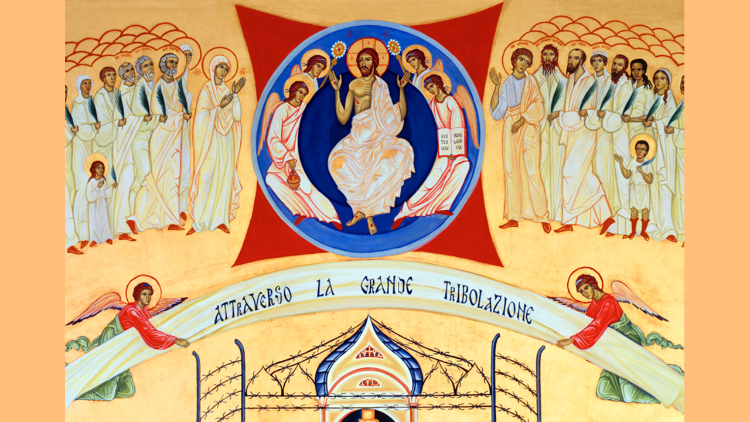
Icon of the New Martyrs and Witnesses of Faith of the 20th Century in the Basilica of St. Bartholomew on Tiber Island in RomeIcon of the New Martyrs and Witnesses of Faith of the 20th Century in the Basilica of St. Bartholomew on Tiber Island in Rome 

Pope Leo to preside at ecumenical commemoration of modern martyrs

Pope Leo will join with representatives of other Churches and Ecclesial Communities on the Feast of the Exaltation of the Holy Cross for an ecumenical ceremony commemorating 21st century martyrs and witnesses of the faith.

By Christopher Wells

Pope Leo XIV is set to preside at a prayer service to remember the many Christians of our time who have been killed on account of their faith in Christ.

The Holy Father will be joined by representatives of other Christian Churches and ecclesial communities for an “Ecumenical Commemoration of Martyrs and Witnesses of the Faith of the Twenty-first Century,” which will take place on the Feast of the Exaltation of the Holy Cross on Sunday, 14 September, in the Papal Basilica of St Paul’s Outside the Walls.

The Commemoration is an initiative of the Dicastery for the Causes of Saints and its Commission of New Martyrs – Witnesses to the Faith, which was established in 2023 by Pope Francis “to identify the Witnesses of the Faith in this first quarter century and to continue it into the future.”

Speaking on Friday to members of the Ecumenical Joint Working Group of the Catholic Church and the World Council of Church’s, the prefect of the Dicastery for Promoting Christian Unity, Cardinal Kurt Koch, said the commemoration “will give visible expression to the conviction that the Church is already one in the blood of her martyrs.”

Preserving memory

At a press conference on Monday presenting the Commemoration, the President of the Commission of New Martyrs, Archbishop Fabio Fabene, described the Commission’s work, saying that their research “has embraced all Christian denominations, since the vitality of baptism unites all Christians who gave their lives,” and adding, “thus is realized the ‘ecumenism of blood,’ as Saint John Paul II liked to call martyrdom.”

“The Church is already united,” Abp. Fabene continued, “and Pope Leo in turn hope that the blood of these martyrs will be ‘a seed of peace, reconciliation, fraternity, and love.’” The Archbishop added, “The Commission’s work of documentation is meant to ensure these stories are not lost but preserved in memory."

The 'geography' of modern martyrs

Following Archbishop Fabene’s remarks, Professor Andrea Riccardi, Vice-President of the Commission, described the “geography” of the witnesses of the faith, noting witnesses killed in the Americas by organized crime, drug traffickers, or those who exploit the environment; the martyrs of Europe, including missionaries who were killed in distant lands; the persecutions of the Middle East and northern Africa, especially Eastern Christians; and Christians at prayer in Asia, such as the victims of the Easter bombing in Sri Lanka in 2019

Professor Riccardi noted sub-Saharan Africa as the continent “where Christians die most,” pointing to victims of jihadist attacks, as well as ethnic-political violence targeting missionaries.

Unfortunately, he said, “Christians continue to die” throughout the world. “The manner of their lives and deaths changes, but they continue to die as witnesses of the Gospel – passionate for God and their brothers and sisters, authentic servants of humanity, free communicators of the faith.”

A great encouragement to unity

Finally, the Commission’s Secretary, Monsignor Marco Gnavi, explained that the commemoration of the twenty-first century witnesses of the faith would take the form of a Liturgy of the Word, presided over by Pope Leo, with 24 representatives of various Christian denominations taking part. “They represent the Christian oikoumene that desires to be permeated by this heritage,” he said.

Msgr Gnavi explained, “This liturgy will allow the Word of God to speak and broaden our memory to include that of other Christians of different confessions,” adding that it stands in continuity with the similar ecumenical celebration led by Pope St John Paul II at the Colosseum during the Great Jubilee of the year 2000.

Noting that the ceremony will include testimonies from some of the martyrs, Msgr Gnavi said, “Being side by side, while the martyrs speak of their life through their death, is a great encouragement toward unity – among ourselves and within the whole human family we long for in love.”

Tuesday, July 8, 2025

Pope Leo XIV promotes 3 from North America to Vatican Dicasteries


3 North Americans named to Vatican dicasteries for ecumenism, interreligious dialogue


On July 3, Pope Leo XIV appointed Archbishop Mitchell T. Rozanski of St. Louis, left, and Cardinal Frank Leo of Toronto as members of the Dicastery for Interreligious Dialogue. The pope also appointed Holy Cross Father Russell McDougall as a consultor of the Dicastery for Promoting Christian Unity. Father McDougall is executive director of the U.S. Conference of Catholic Bishops' Secretariat for Ecumenical and Interreligious Affairs. (CNS photo/Paul Haring) (OSV News photos/Remo Casilli, Reuters; Barbara Johnson, University of Notre Dame)


VATICAN CITY (OSV News) — Three North Americans are among recent appointees to Vatican dicasteries that address issues of ecumenism and interreligious dialogue.

On July 3, Pope Leo XIV appointed Archbishop Mitchell T. Rozanski of St. Louis and Cardinal Frank Leo of Toronto as members of the Dicastery for Interreligious Dialogue, along with 19 other bishops from around the world.

The same day, Pope Leo appointed Holy Cross Father Russell McDougall as a consultor of the Dicastery for Promoting Christian Unity. Father McDougall is executive director of the U.S. Conference of Catholic Bishops’ Secretariat for Ecumenical and Interreligious Affairs. 

As an administrative body of the Roman Curia, the Dicastery for Interreligious Dialogue “promotes and supervises relations with members and groups of non-Christian religions, with the exception of Judaism, competence for which belongs to the Dicastery for Promoting Christian Unity,” according to the Vatican website.

Meanwhile, the Dicastery for Promoting Christian Unity describes itself as promoting within the church “an authentic ecumenical spirit” and as “active in all areas that can contribute to promoting Christian unity by strengthening relationships with other Churches and Ecclesial Communities.”

Archbishop Rozanski, who has considerable experience engaging in formal and informal interreligious and ecumenical dialogue, said in a July 3 statement he was “deeply humbled” by the appointment.

“I am grateful to His Holiness for his trust and look forward to participating in the fostering of working together for deeper understanding and the common good,” said the archbishop, a member of the USCCB’s Ecumenical and Interreligious Affairs Committee and its chairman from 2014-2017, leading the bishops’ dialogue with the Evangelical Lutheran Church in America on the 500th anniversary of the Reformation in 2017.

He is also co-chair of the Polish National Church-Roman Catholic Dialogue, which examines the issues that have divided the two churches with the aim of establishing full communion.

In his July 3 statement, Cardinal Leo said he was “grateful to the Holy Father for the opportunity to serve as a member of the Dicastery for Interreligious Dialogue.”

“I very much look forward to dialogue and reflection on how the Catholic Church can work with other faith traditions in a positive and constructive manner as we identify areas of common concern and engagement,” he said.

An expert in canon law, diplomacy and international law, Cardinal Leo was also named a member of the Dicastery for Legislative Texts in January.

Father McDougall is a former rector of the University of Notre Dame’s Tantur Ecumenical Institute in Jerusalem and was on faculty at King’s College in Wilkes-Barre, Pennsylvania, where he assisted efforts to expand interfaith engagement. 

The appointments do not impact the appointees’ primary ministerial roles.