Showing posts with label Cardinal Ouellette. Show all posts

Friday, March 1, 2024

Pope Francis declares Gender ideology as "an ugly danger of our time"


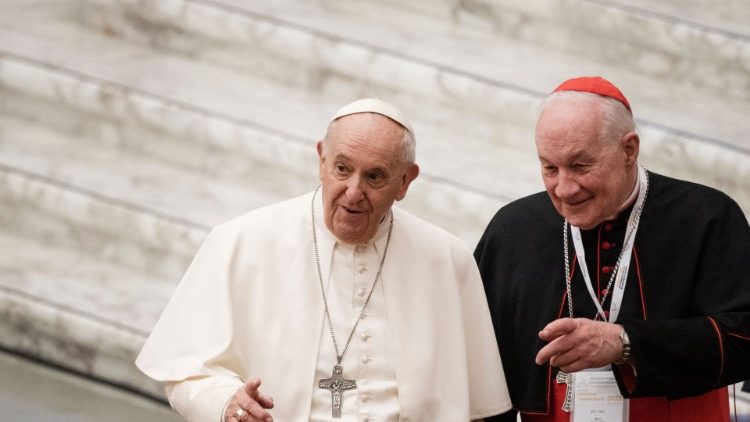
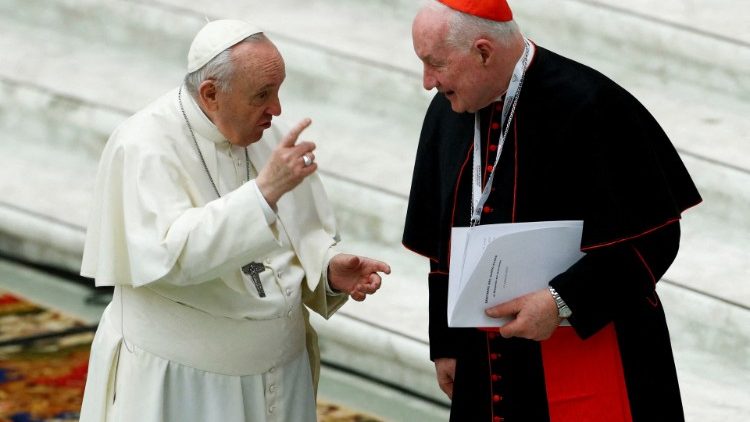
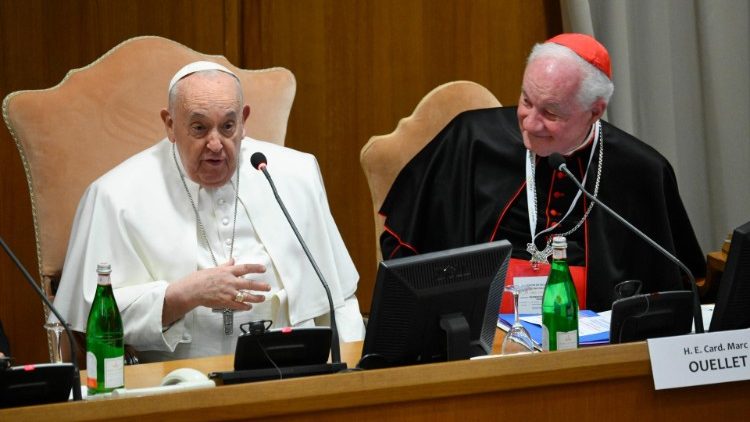
Pope Francis addressing international Symposium "Man-Woman: Image of God. Towards an Anthropology of Vocations" in the VaticanPope Francis addressing international Symposium "Man-Woman: Image of God. Towards an Anthropology of Vocations" in the Vatican  (VATICAN MEDIA Divisione Foto)

Pope Francis: Gender ideology is the ugliest danger of our time

Addressing participants in the international Symposium "Man-Woman: Image of God.” Pope Francis describes so-called gender ideology as the "ugliest danger" of our time, because it cancels out all differences that make humanity.

By Lisa Zengarini

Pope Francis on Friday again spoke out against gender theory describing it as an “ugly ideology of our time”, because it erases all distinctions between men and women. To ceancel this difference “is to erase humanity. Man and woman, instead, exist in a fruitful ‘tension’”, he said.

The Symposium

The remarks came as he opened his address to participants in the international Symposium "Man-Woman: Image of God. Towards an Anthropology of Vocations" held in the Vatican on March 1-2.

The Congress is organized by Cardinal Marc Ouellet, Prefect Emeritus of the Dicastery for Bishops, together with the Centre for Research and Anthropology of Vocations (CRAV) and is a follow-up to the previous 2022 Symposium dedicated to the theology of the priesthood.

Introducing his address the Pope said he still has a cold and asked his assistant Monsignor Filippo Ciampanelli to read it out for him, "so I don't get so fatigued.”

In the prepared text the Pope reflected on the theme of the Congress which is aimed first of all at highlighting the anthropological dimension of every vocation.

The human person is a vocation

Indeed, he remarked, “the life of the human being is a vocation” which has a relational character: “I exist and live in relation to who generated me, to the reality that transcends me, to others and to the world around me, in which I am called to embrace a specific and personal mission with joy and responsibility.”

“Each one of us discovers and expresses oneself as called, as a person who realizes oneself in listening and response, sharing our being and gifts with others for the common good.”

This fundamental anthropological truth is sometimes overlooked in today's cultural context, where human beings tend to be reduced to their mere material and primary needs. Yet, Pope Francis said , they are more than this: created by God in His own image, man and woman “carry within themselves a desire for eternity and happiness that God himself has planted in their hearts and that they are called to fulfil through a specific vocation.”

“Our being in the world is not a mere fruit of chance, but we are part of a design of love and are invited to go out of ourselves and realize it, for ourselves and for others,” the Pope said.

“We are called to happiness, to the fullness of life, to something great to which God has destined us.”

We all have a mission in Church and society

Recalling Cardinal Saint John Henry Newman’s “Meditations and Prayers” Pope Francis further remarked that not only we have all been entrusted with a mission, but ”each and every one of us is a mission.” 

The Pope therefore welcomed the symposium and the studies conducted on this topic because, he said, “they spread awareness of the vocation to which every human being is called by God”, and are also useful to reflect on today’s  challenges, on the ongoing  anthropological crisis, and on the need to  promote  human and Christian vocations.

Promoting a more effective "circularity" of vocations

He also emphasized the importance of promoting “a more effective circularity” of the different types of vocations in the Church, including lay vocations, ordained ministry and consecrated life, so they “can contribute to generating hope in a world overwhelmed by death.”

“Generating this hope, placing oneself at the service of the Kingdom of God to build an open and fraternal world is a mission entrusted to every woman and man of our time,” he said.

The courage to seek God’s will

Closing his address, Pope Francis encouraged the participants in the Symposium not to shy away from risks in seeking God’s will in their work, reminding them a living faith is not an artifact in a museum:”The Holy Spirit asks us fidelity, but fidelity moves, and often leads us to take risks”,  he said.

“Move forward with the courage to discern and risk seeking God's will.”

Friday, January 26, 2024

Prominent Cardinal accused of clergy sex-abuse


Quebec cardinal, papal advisor named in sex abuse lawsuit


ROME – A Canadian cardinal and key ally of Pope Francis has been named in a class action sexual abuse lawsuit against the Archdiocese of Quebec, with the specific charge being that he inappropriately touched a 17-year-old girl on two occasions in 1987 and 1988.

Cardinal Gérald Lacroix’s name was added to a list of alleged perpetrators in the class action suit in court filings Thursday. The lawsuit was authorized in 2022, and covers anyone who was sexually assaulted by personnel of the Archdiocese of Quebec since 1940.

A spokesperson for Lacroix expressed “shock” over the new charge in comments Thursday.

“Different versions are circulating regarding the allegations against Cardinal Lacroix. We are trying to understand, and we will be able to comment later,” said Valérie Roberge-Dion, a spokesperson for Lacroix.

The class action suit is a civil action seeking monetary damages, and so far neither Ouellet nor Lacroix have been charged with any crime.

Lacroix, 66, a former missionary in Colombia, played a lead in Pope Francis’s 2022 visit to Canada. Last March, he was named by Francis to his Council of Cardinal Advisors, making him one of the pope’s most important advisors on matters of church reform.

During the Synod of Bishops on Synodality in October 2023, Lacroix defended the exercise in comments to reporters, saying that Pope Francis was attempting to promote a more “listening” church. He was among seven participants elected by the synod to oversee its concluding document.

According to attorney Alain Arsenault, who’s leading the class action lawsuit, Lacroix’s alleged victim, who has not been identified, is now in her 50s. She did not come forward previously, he said, out of concern for the reaction of her devout Catholic parents.

Arsenault said there were two alleged assaults, both of which are said to have occurred when the alleged victim accompanied her parents to a Bible study in Quebec. According to Arsenault, the woman charges that Lacroix, who would have been in his early 30s at the time, pulled her into a separate room and groped her, then instructed her not to tell her mother because it would “kill her” to learn what had happened.

Arsenault told reporters that the woman contacted the law firm only after her mother had died in order to join the class action suit.

Overall, the law firm says that 147 people have come forward with allegations of sexual abuse and assault against more than 100 priests and lay personnel of the archdiocese, some of whom are alleged to have multiple victims.

Arsenault said he doesn’t expect the case to go to trial in 2024. Instead, he said, attorneys will spend the year requesting and evaluating documents and also interviewing witnesses, presumably including Lacroix.

A member of the Pius X Secular Institute, which was founded in New Hampshire in 1939, Lacroix was ordained in 1988 and has played several leadership roles inside the community, including serving in Colombia from 1990 to 2000 opening new houses of the institute.

Lacroix was named the Archbishop of Quebec in 2011, replacing Ouellet. Pope Francis designated him as cardinal in January 2014. In addition to serving on the Council of Cardinals, Lacroix is also a member of the Dicastery for Divine Worship and the Discipline of the Sacraments.

Friday, October 6, 2023

Vatican to host international Congress on Vocations


Pope Francis and Cardinal Marc Ouellet at the opening of Symposium on priesthood at the Vatican on 17 February 2022Pope Francis and Cardinal Marc Ouellet at the opening of Symposium on priesthood at the Vatican on 17 February 2022  (AFP or licensors)

Vatican to host Congress on vocations in March 2024

Cardinal Marc Ouellet is organising an international Congress on vocations to be held in the Vatican in March 2024, which seeks to propose faith in Jesus Christ and communion with others to a society flailing for meaning.

By Vatican News

Cardinal Marc Ouellet, Prefect Emeritus of the Dicastery for Bishops, together with the CRAV (Centre for Research and Anthropology of Vocations), is preparing a follow-up to the previous 2022 symposium dedicated to the theology of the priesthood.

The Congress will be held in the Vatican on 1-2 March 2024 on the theme, "Man-Woman: Image of God. Towards an Anthropology of Vocations".

In the following interview with Vatican News, Cardinal Ouellet presented the goals of the Congress.

Q: Cardinal Marc Ouellet, what is the significance of this initiative?

First of all, I'd like to remind you that this initiative follows on from the Symposium held in February 2022 at the Paul VI Hall on the theme: “Toward a Fundamental Theology of the Priesthood.” The Church is in a profound synodal research to develop the active participation of all the faithful in view of a deeper ecclesial communion that has an impact on mission.

A synodal Church will grow to the extent that it goes beyond the discussion of ideas to engage people and vocations. To this end, the fundamental theme of priesthood has brought to the fore the participation of all the baptized in the priesthood of Christ, and the pastoral service that the ordained ministry assumes for the benefit of the priestly community of the baptized.

The anthropological theme of 1-2 March 2024 – “Man-Woman: Image of God” – continues this synodal research by deepening the foundations of Christian anthropology that enable all vocations to be built on the Word of God, in the midst of the challenges posed by contemporary cultural currents that raise many questions and uncertainties about human and Christian identity.

A synodal Church that wants vocations must be welcoming to everyone in society, but it cannot build its own witness on sand, so it must rely on an anthropology firmly rooted in the Word of God. This is the significance of the initiative that CRAV is organizing with the support of Pope Francis, who will personally take part in the two-day Congress at the Synod Hall.

Q: What do you expect from this Congress?

We hope to offer reasons for hope and engagement. The common experience of our secularized societies speaks of loneliness, individualism, excessive consumption, multiple addictions, suicides and so on. These phenomena have their roots in the decline of the family, the absence of reference points, education subjugated to ideologies, the globalization of indifference, the crisis of hope.

What does Christian anthropology offer us? First of all, faith in Christ as the transcendent foundation, clear reference points on the human vocation, reasons to live and even to suffer in the service of Love; the Christian vision of man and woman promotes self-giving as the path to happiness, self-realization in service and communion with others in a horizon of solidarity and brotherhood with humanity as a whole.

This Congress will thus provide a highly up-to-date vision for educators and trainers in all areas of Christian formation, including families of course. This is academic research, with international participation and the prospect of publication in four languages.

The scientific approach does not preclude reflection on vocations, to identify obstacles to commitment and to provide means of overcoming uncertainties and the scandal of counter-testimonies, which are quite common these days. Participants will need to register in advance, as space in the Synod Hall is limited to 300 participants. Please remember that the Symposium in the Paul VI Hall had over 700 participants.

Q: How are the Proceedings of Symposium 2022 on the Priesthood being distributed?

The Proceedings of the Symposium are being published in two volumes and in six languages, as promised.

It's the biggest update on the priesthood theme since the Second Vatican Council. Study days are being organized on various continents to disseminate the proceedings and promote an appreciation of their originality, which consists in studying the relationship between the two forms of participation in Christ's Priesthood, the baptismal form and the ministerial form based on the sacrament of Holy Orders. A spiritual retreat in this same spirit will be held on 4 November 2023 at the Angelicum University in Rome.

This communication is very useful for the Church's synodal research, because it raises awareness of the reality of baptism and its priestly and missionary dimension. I'm personally on a major promotional tour covering four continents and a number of capitals: Madrid, Paris, Abidjan, Washington, Brasilia, Bogotà, etc.

We're counting on the episcopal authorities to support us. We're counting on the episcopates and local resources involved in the study days to make this heritage of wisdom known in formation circles, and to invite people to share in the costs of our initiative.

Q: How can we discover the beauty of every vocation?

Pope Francis often speaks of holiness in ordinary life, that of the people next door whom we rub shoulders with every day and often ignore. We have just experienced the World Youth Day in Lisbon, where thousands of young people regained awareness of the beauty of their faith and their Church.

CRAV organized testimonies from married couples and families, as well as priests and religious, for thousands of young people who came to the Jeronimo’s Church.

Testimonies reveal that they were struck by the presentation of three testimonies in one hour, which showed the complementarity and reciprocity of vocations, in a word the "communion of vocations". The beauty of each vocation becomes clearer when we discover that we are committed together in a synodal and missionary Church.

Monday, February 20, 2023

Cardinal Ouellet on priestly ministry


Pope Francis and Cardinal Marc OuelletPope Francis and Cardinal Marc Ouellet 

Cardinal Ouellet: Priesthood depends on closeness to God

Cardinal Marc Ouellet, Prefect of the Vatican's Dicastery for Bishops, offers Vatican News an overview of the proceedings from last year's International Symposium "Towards a Fundamental Theology of Priesthood", which were presented on Monday.

By Deborah Castellano Lubov

Cardinal Marc Ouellet, Prefect of the Vatican’s Dicastery for Bishops, says closeness to Christ and a lively relationship with God, are keys to the priesthood.

In an interview with Vatican News on the sidelines of a press conference presenting the Proceedings of the International Symposium "Towards a Fundamental Theology of Priesthood,” largely organized by the Cardinal, Cardinal Ouellet offered this insight.

The conference, held on Monday morning in Sala Marconi of the Vatican Radio headquarters, centered on the International Symposium, promoted by Cardinal Ouellet and the Centre for Research and Anthropology of Vocations, was held in the Vatican’s Paul VI Hall, from 17 to 19 February 2022.

The Symposium's work was opened by Pope Francis, and was attended by bishops, clergy, laity and religious.

Together they reflected on the themes "Traditions and New Horizons", "Trinity, Mission, Sacredness", and "Celibacy, Charism, Spirituality."

The Proceedings of the Symposium consist of two volumes, and were published in Italian, Spanish, French, and Portuguese, while the English and German will be published in the near future. 

At the press conference on Monday, Cardinal Ouellet announced that these documents are for young people.

"Part of our scientific committee will go to the World Youth Day in Lisbon, where we will do conferences for bishops, chaperones, young people, and will have a place for liturgical and vocational animation," he shared, noting, "We have contacts with the WYD leadership to give the event a vocational slant."

Speaking alongside the Cardinal at the conference were Cardinal Gianfranco Ghirlanda, S.J.; Bishop Gianmarco Busca, Bishop of Mantua; and, Sister Linda Pocher, Professor of Fundamental Theology and Mariology at the Pontifical Faculty of Educational Sciences 'Auxilium' in Rome.

Following the press conference, Cardinal Ouellet told Vatican News about the results of the Symposium summarized in the Proceedings.

Q: Your Eminence, looking at the Proceedings, what would you say is the main takeaway?

Our main objective is to rediscover, and help the lay people to rediscover, their priestly identity, so that their priestly identity is a meaning for their participation in the liturgy, obviously, but much more than that, their priestly identity is also in their mission in the world, where through charity, faith and hope they share a witness of Christ.

This is a contribution to peace in the world that is also priestly. That's the priestly responsibility of the laity.

Q: What are some of the main points found in these Proceedings?

For priestly ministry, I would say that's a way of telling them that the main goal of your ministry is to sustain and encourage and nurture the priesthood of the baptized.

That's the main point, because that's the reason why they preach the Gospel and they give the sacraments, so that the baptized, the lay faithful, can live in their union with Christ, their search for holiness, and so, have an impact also in their environment, in their social environment.

Q: Cardinal Ouellet, turning to the current context, many speak about the importance of formation also for protection of minors, though we know that there have been scandals. How does this Symposium take into account the current climate and its difficulties?

Yes. The problematic of abuses was not ignored by our Symposium, even if it was not the center of our research. The answer to this, to these problems, is formation. That's true: seminary formation, also the formation and the religious formation is where we have to prevent.

So, we must study, and do a good discernment on the personality of the candidates, helping them to discover their own limits.

But more than control, we need a spiritual formation which creates a very lively relationship with God. From there, you receive a grace and help for your moral behavior. And so, it has an impact on the whole ministry.

Saturday, August 20, 2022

Cardinal Ouellet reacts


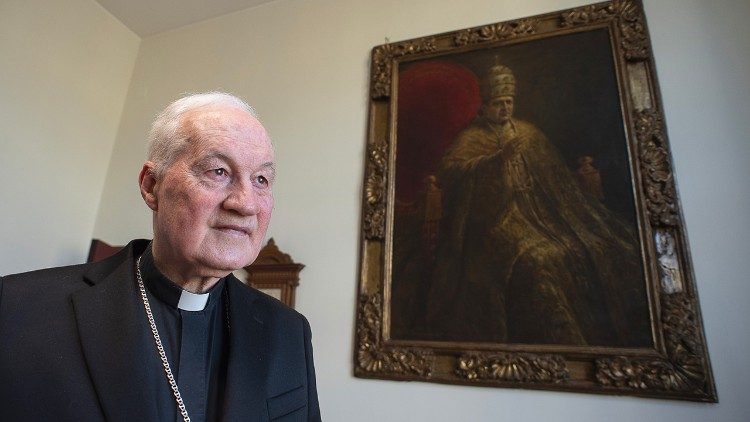
Cardinal Marc OuelletCardinal Marc Ouellet 

Cardinal Ouellet firmly denies accusations of inappropriate conduct

Canadian Cardinal Marc Ouellet responds forcefully to a woman’s accusations of inappropriate behaviour, saying that, if a civil inquest is opened, he intends to participate actively so that his innocence would be recognized.

By Vatican News

In a statement released Friday evening, Cardinal Marc Ouellet, the Prefect of the Dicastery for Bishops, firmly denies accusations of inappropriate conduct alleged to have taken place more than ten years ago, when he was Archbishop of Quebec.

The accusations of inappropriate behaviour – which some media outlets have characterized as sexual assault – were made public earlier this week.

The full text of the Cardinal’s statement reads:

Having learned of the false accusations made against me by the complainant (F.), I firmly deny having made any inappropriate gestures toward her and I consider defamatory the interpretation and dissemination of these allegations as sexual assault. Should a civil investigation be initiated, I will actively participate in it to ensure that the truth is established and that my innocence is recognized.


On Thursday, the Director of the Holy See Press Office, Matteo Bruni, issued a statement declaring that, following the outcome of a preliminary investigation entrusted to Jesuit Father Jacques Servais, Pope Francis had decided there were insufficient grounds to open a canonical investigation of sexual misconduct by Cardinal Ouellet against person ‘F’.

Bruni’s statement notes that Father Servais, having been consulted by the Pope, had affirmed that, “There are no grounds to open an investigation into the sexual assault against person ‘F.’ by Cardinal M. Ouellet. Neither in the written report sent to the Holy Father, nor in the testimony via Zoom that I subsequently gathered in the presence of a member of the Diocesan Ad Hoc Committee, did this person make any accusation that would provide grounds for such an investigation.”

Friday, August 19, 2022

Pope finds insufficient grounds of the charges brought against Cardinal Ouellet


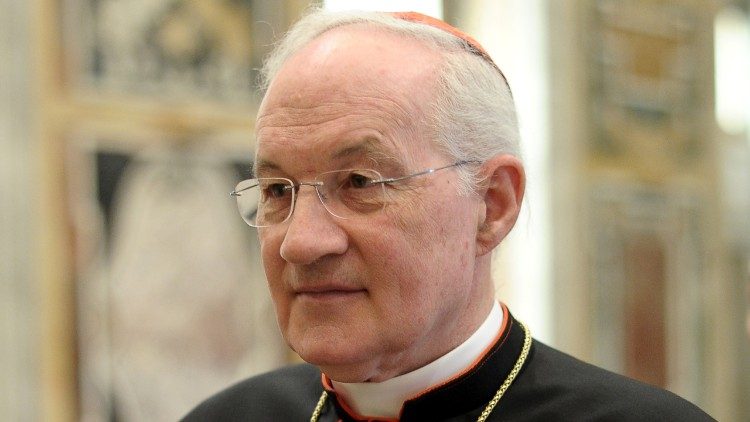
Cardinal Marc OuelletCardinal Marc Ouellet  (Vatican Media)

Ouellet: Pope finds insufficient grounds for canonical investigation

Pope Francis' decision not to open a canonical investigation is based on a preliminary investigation by a Jesuit priest into the allegations of sexual assault more than ten years ago, made by a woman against Cardinal Ouellet.

By Vatican News

Pope Francis has determined "there are insufficient grounds to open a canonical investigation for sexual assault by Cardinal Ouellet regarding person ‘F’.”

This is what the director of the Holy See's Press Office, Matteo Bruni, said in a statement on Thursday concerning accusations made by a woman against the prefect of the Dicastery for Bishops.

The accusations, which came to light in recent days, concern events that took place more than ten years ago, when Ouellet was Archbishop of Quebec City.

In this case, Bruni said, the Pope entrusted a preliminary investigation to Jesuit Father Jacques Servais, whose conclusion was that “there are no grounds to initiate a process against Cardinal Ouellet for sexual assault.”

The statement adds that the Pope then consulted further with Father Servais, who confirmed his position with these words: “There are no grounds to open an investigation into the sexual assault against person ‘F.’ by Cardinal M. Ouellet. Neither in the written report sent to the Holy Father, nor in the testimony via Zoom that I subsequently gathered in the presence of a member of the Diocesan Ad Hoc Committee, did this person make any accusation that would provide grounds for such an investigation.”

This was the basis for the Pope’s decision.