Showing posts with label Bishop Joseph Tyson. Show all posts

Thursday, October 16, 2025

Immigration Enforcement policies having an impact on Catholic priests, seminarians and religious

ICE enforcement impacts immigrant priests, seminarians and religious in the US


The badge of a U.S. Immigration and Customs Enforcement official is seen in this illustration photo. (OSV News photo/Lucy Nicholson, Reuters)


 WASHINGTON (OSV News) — Immigrant priests, seminarians and religious in the U.S. are among those impacted by immigration enforcement policy, advocates and analysts told OSV News.

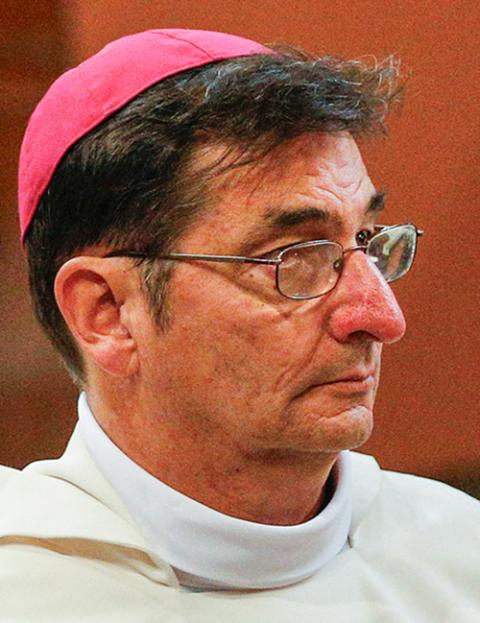
Bishop Joseph J. Tyson of the Diocese of Yakima in central Washington wrote in a recent newsletter that several seminarians in the diocese were among them, including one who was born in the U.S. but left to be with his parents, who had self-deported to Mexico. 

In an interview with OSV News, Bishop Tyson said many of the priests and seminarians in his diocese come from immigrant backgrounds.

“I know how hard it is to keep my priests and my seminarians in status,” he said. “I can only imagine what it’s like for parishioners who don’t have a fleet of lawyers.”

Joint report found many vulnerable to deportation are Christians

Bishop Tyson cited a joint report released earlier this year by the National Association of Evangelicals, the U.S. Conference of Catholic Bishops‘ Migration and Refugee Services, the Center for the Study of Global Christianity at Gordon-Conwell Theological Seminary, and World Relief, which found many of those vulnerable to deportation themselves — or those who have a family member vulnerable to deportation — are Christians. 

More than 10 million Christians living in the U.S. would be vulnerable to deportation under Trump administration policies implemented in 2025, the report said. Christians account for approximately 80% of all those at risk of deportation, it added, and the Christians most at risk of deportation were Catholics, 61% of the total. The report found one in six Catholics (18%) are either vulnerable to deportation or live with someone who is. 

In the Diocese of Yakima, the bishop said, that number is probably higher. 

Priests and religious “are in a challenging situation”

J. Kevin Appleby, senior fellow for policy at the Center for Migration Studies in New York and former director of migration policy for the USCCB, told OSV News, “I think priests and religious from other nations are in a challenging situation, caught between looking after their flock here and perhaps also being a target of enforcement, even if they have legal status.”

“They can play an important role, however, in ministering to immigrants and their families, as they have a shared experience with them and understand the fear they are feeling,” Appleby said. “When push comes to shove — and loyal to their ministry — they will stand with their immigrant brothers and sisters and be a great asset to the church in the U.S. at this troubling time.”

The National Study of Catholic Priests — released in 2022 by The Catholic University of America’s Catholic Project — indicated 24% of priests serving in the U.S. are foreign-born, but the study didn’t record visa or green card status. 

Of these priests, 15% were ordained outside the U.S., while others are foreign-born priests who came to the U.S. as seminarians, were ordained in the U.S. and are also subject to visa renewals, it said.

The consequence of immigration enforcement to the maximum degree, Bishop Tyson said, would mean “we have parishes without priests immediately.”

Bipartisan legislation may ease religious worker immigration restrictions

The U.S. bishops have offered their support to bipartisan congressional legislation that would ease some immigration restrictions on religious workers from other countries. The legislation, titled the Religious Workforce Protection Act, would permit religious workers already in the U.S. on temporary R-1 status with pending EB-4 applications to stay in the U.S. while waiting for permanent residency.
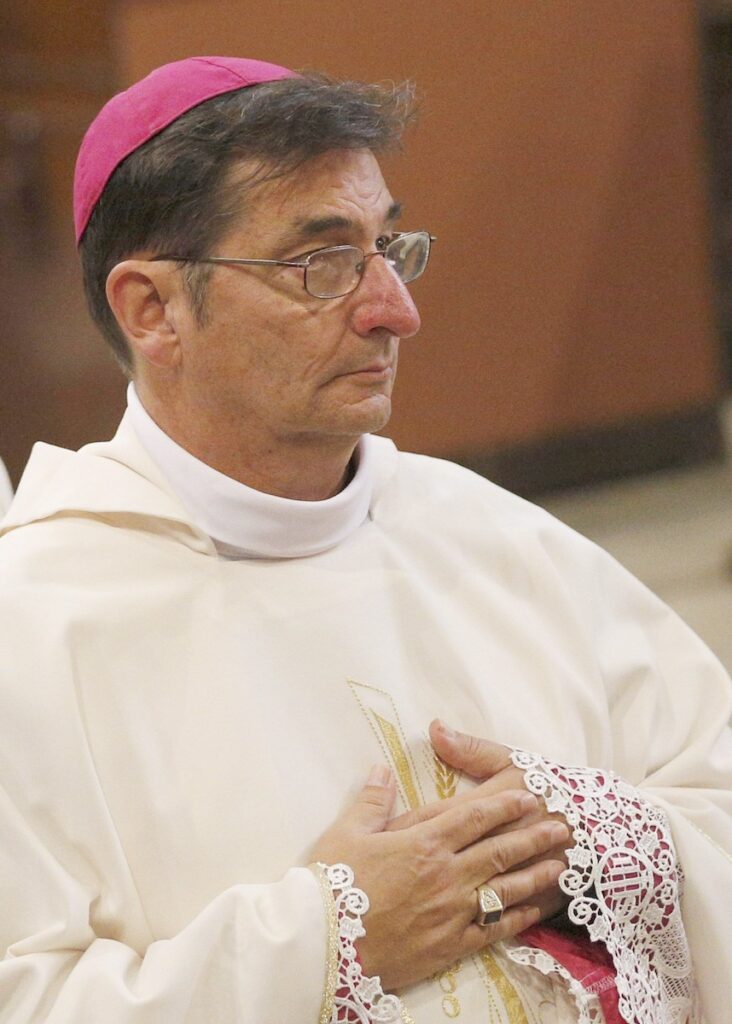
Bishop Joseph J. Tyson of the Diocese of Yakima, Wash., is pictured concelebrating Mass at the Basilica of St. John Lateran in Rome Feb. 4, 2020. Bishop Tyson wrote in a recent newsletter that several seminarians in the diocese were among those impacted by immigration enforcement policy, including one who was born in the U.S. but left to be with his parents, who had self-deported to Mexico. (CNS photo/Paul Haring)

An April letter from the USCCB to lawmakers about the Religious Workforce Protection Act said, “Simply put, an increasing number of American families will be unable to practice the basic tenets of their faith if this situation is not addressed soon. Likewise, hospitals will go without chaplains, schools will go without teachers, and seminaries will go without instructors.”

Catholic groups are among those urging the Trump administration to address the backlog in the R-1 visa category.

Bishop Tyson said that legislation would help ease some of the challenges presented by ensuring his priests’ legal status remains in good order.

“Foreign-born religious workers play a vital role in serving immigrant communities in the U.S., often providing services in the languages people know best and offering a sense of home and support,” Miguel Naranjo, director of religious immigration services at the Catholic Legal Immigration Network, commonly known as CLINIC, told OSV News.

“With the end of the protected locations policy, we have seen growing fear in immigrant communities about ICE presence in houses of worship — and even greater risks to the religious workers themselves,” Naranjo said. “Many now carry proof of status at all times, aware of the heightened enforcement climate. Immigrants are increasingly afraid to leave home, attend services, or risk being separated from their families. Yet, despite these challenges, foreign-born religious workers remain steadfast. Their courage and commitment to their ministry have only deepened, knowing their role in serving immigrant communities is more critical than ever.”

Pope Leo XIV’s recent comments for bishops’ unified voice

Asked about Pope Leo XIV‘s recent comments calling on the U.S. bishops to speak with a unified voice on migration issues, Bishop Tyson said, “I think we’ve got to somehow find a way of reclaiming the pulpit, because I think there’s voices outside the bishops’ conference that are very loud on this, and we have Catholics in public life that teach things that are incorrect about the human person.”

“I think that’s kind of where we the bishops really have to figure out how we’re going to work with the social media landscape, TikTok, Facebook, Instagram — the plethora of people that launch things and tend to minimize the weight of our teachings in general on Catholic social teaching, very specifically around immigration,” he said.

Catholic social teaching on immigration balances three interrelated principles — the right of persons to migrate in order to sustain their lives and those of their families, the right of a country to regulate its borders and control immigration, and a nation’s duty to regulate its borders with justice and mercy.

Bishop Tyson noted there was controversy surrounding Pope Leo’s recent comments in which the pontiff said church teaching on both immigration and abortion were clear.

“In the Diocese of Yakima, I don’t have the luxury of choosing between protecting the unborn and protecting the undocumented,” he said. “If you want to save the unborn, you have to walk through the doors of the undocumented, because that’s where the pregnancies are, that’s where the births are, that’s where the vast majority of my baptisms are. These are not separate universes. It’s one thing.”

Thursday, June 27, 2024

Layoff announcement from USCCB causes concerns

 Bishops' conference layoffs spark wave of concern and speculation


The headquarters of the U.S. Conference of Catholic Bishops in Washington, D.C. (Wikimedia Commons/Farragutful)


The recent announcement of significant layoffs within the U.S. Conference of Catholic Bishops' Department of Justice, Peace and Human Development has sparked a wave of concern and speculation among the Catholic community and the broader public, particularly regarding the implications for the office's ongoing projects and initiatives.

"Needless to say, I am deeply disappointed by this latest development at the conference," said Bishop Joseph Tyson of Yakima, Washington, who sits on the subcommittee of the bishops' Catholic Campaign for Human Development (CCHD). Tyson said he was "saddened" that he heard first about the layoffs only when NCR reached out to him for comments, and not from the U.S. bishops' conference leadership itself.

The Catholic Campaign for Human Development is part of the Department of Justice, Peace and Human Development.

"Selective staff reductions in CCHD may leave the incorrect impression that CCHD staff is at fault. But the CCHD staff is not at fault," Tyson said. "And after our strong backing of CCHD, the optics of a staff reduction seem to contradict our message of strong support."

Bishop Joseph Tyson of Yakima, Washington (CNS/Paul Haring)

Bishop Joseph Tyson of Yakima, Washington (CNS/Paul Haring)

In a June 25 email to NCR, Chieko Noguchi, executive director of the Office of Public Affairs at the bishops' conference, said, "Staff were notified of changes to the structure of the USCCB's Department of Justice, Peace, and Human Development. This reorganization will allow the Conference to align resources more closely with recent funding trends."

Noguchi confirmed this included the loss of jobs, but added, "Since this is a personnel matter, I'm not able to share further information at this time."

Sources close to American Catholic social justice organizations told NCR that the number of laid-off staffers could be as high as 12, about half of the entire department. The U.S. bishops' conference did not respond to questions regarding how many and which staffers have been laid off, and whether their roles will be replaced in the foreseeable future.

NCR also tried to contact some of the staffers in the Department of Justice, Peace and Human Development office directly, but they responded they were not authorized to provide any information on the matter.

Tyson pointed out that questions have persisted over the years regarding the transparency and accuracy of financial reporting, particularly in relation to the Catholic Campaign for Human Development. Tyson suggested that "a 10-year longitudinal study" could provide "valuable insights," allowing for a detailed, frame-by-frame analysis of what transpired and why the bishops' subcommittee remained unaware of certain financial issues.

"I have just finished my 19th year as a bishop and over these many years there have been questions about the quality of financial information shared within the conference and publicly," he said.

Bishop John Stowe of Lexington, Kentucky (CNS/Tyler Orsburn)

Bishop John Stowe of Lexington, Kentucky (CNS/Tyler Orsburn)

According to Bishop John Stowe of Lexington, Kentucky, "The CCHD subcommittee has still not seen a financial report that makes sense."

Stowe, who also sits on the subcommittee, added that he is "sure the approval [regarding the layoffs] was not given at a broader level than the General Secretariat and the Executive Committee," and that it is "absolutely time" for an outside audit of U.S. bishops' conference finances.

The rest of the bishops sitting on the Justice, Peace and Human Development committees and subcommittee did not immediately respond to NCR's requests for comment.

The Justice, Peace and Human Development office encompasses a range of programs dedicated to international and domestic policy; environmental justice; combating racism; and education and outreach, along with overseeing the Catholic Campaign for Human Development. This campaign administers grants to community organizations across the U.S. that aim to address systemic poverty.

As NCR staff reporter Brian Fraga reported earlier in June during the U.S. bishops' spring meeting in Louisville, Kentucky, there were fears of potential cutbacks or elimination of the campaign, raising questions about the bishops' commitment to social justice and anti-poverty initiatives.

However, during a closed-door executive session at the spring meeting in Louisville, the bishops overwhelmingly supported the Catholic Campaign for Human Development, despite financial challenges that may necessitate reduced grant funding. Both lay and religious social justice activists expressed optimism, highlighting the bishops' strong endorsement of the program's anti-poverty mission.

Even though the session's outcome had been seen as a significant victory for social justice advocates within the church, these recent layoffs may constitute a new threat.

Drawing from his experience with PREPARES, a statewide initiative supported by a five-year strategic grant from the Catholic Campaign for Human Development, Tyson emphasized the recurring issue of delayed funding. The program, designed to support mothers and families from conception to a child's fifth birthday, has often faced financial hurdles. Despite the campaign's work in contracting evaluators to monitor progress, there were instances where the local Catholic Charities agencies had to provide cash flow due to delayed grant money, he said.

"From my limited vantage point, the financial side of the USCCB may need to deepen their knowledge and develop better skills in tracking the speed and rate of revenue and expenses — not only for CCHD but other areas of conference work," added Tyson.

Pax Christi USA, the national Catholic peace movement, has expressed disappointment over the decision of the bishops' conference, viewing this move as a severe setback for their collaborative efforts to promote social justice.

Johnny Zokovitch, Pax Christi USA's executive director, emphasized that the U.S. bishops' provision to scale back its social justice initiatives is a "tragedy" that will impact not only domestic partners but also those around the world who rely on these efforts.

"Our faith-filled work for peace, the work to promote Gospel nonviolence and to advocate for those on the margins, those who are impoverished, those who are struggling for justice, is best done together; it is strengthened in community," he said.