Showing posts with label Archbishop Justin Welby. Show all posts

Tuesday, November 12, 2024

Anglican Church Leader Justin Welby resigns over complaints of his handling of child abuse


The Archbishop of Canterbury Justin Welby speaks during the General Synod of the Church of England on February 15, 2016 in London.Ben Pruchnie/Getty

Anglican Church head, Archbishop of Canterbury Justin Welby, resigns over handling of child abuse

London — The Archbishop of Canterbury, Justin Welby, head of the Anglican Church, resigned Tuesday after a review found that he and other senior church leaders had covered up the "prolific and abhorrent" abuse of over 100 boys and young men in the United Kingdom and other countries by a British lawyer who helped lead Christian summer camps in the U.K. and other countries.

John Smyth was accused of attacking boys and young men he met at Christian camps in the 1970s and 1980s. He died in South Africa in 2018 at the age of 77 without ever facing any legal proceedings. 

"The last few days have renewed my long felt and profound sense of shame at the historic safeguarding failures of the Church of England," Welby said in a statement announcing his resignation. "For nearly twelve years I have struggled to introduce improvements. It is for others to judge what has been done."

An independent Church of England review into the handling of complaints against Smyth found last week that, "despite the efforts of some individuals to bring the abuse to the attention of authorities, the responses by the Church of 

"I am so sorry that in places where these young men, and boys, should have felt safe and where they should have experienced God's love for them, they were subjected to physical, sexual, psychological and spiritual abuse," Welby said in an initial statement responding to the review's findings. "I am sorry that concealment by many people who were fully aware of the abuse over many years meant that John Smyth was able to abuse overseas and died before he ever faced justice."

Welby has said he was unaware of Smyth's abuse until 2013, the year he became the archbishop.

"Nevertheless the review is clear that I personally failed to ensure that after disclosure in 2013 the awful tragedy was energetically investigated," Welby said. "Since that time the way in which the Church of England engages with victims and survivors has changed beyond recognition. Checks and balances introduced seek to ensure that the same could not happen today."

The Archbishop of Canterbury is the most senior figure in the Church of England, also known as the Anglican Church. The U.S.-based Episcopal Church, which has 1.6 million members, is part of the worldwide Anglican Communion and there are over 7,000 Episcopal churches across the U.S.

Welby has played a central role in many high-profile events, including officiating the wedding of Prince Harry and Meghan, the Duke and Duchess of Sussex, and delivering the sermon at the state funeral of Queen Elizabeth II.

"I think, rightly, people are asking the question: 'Can we really trust the Church of England to keep us safe?' And I think the answer at the moment is 'no,'" Bishop of Newcastle Helen-Ann Hartley told CBS News' partner network BBC News, calling on Welby to resign.

Andrew Morse, who told the BBC he was abused for years by Smyth as a teenager, had also called for Welby to resign. He said Welby's "admission that in 2013, which is really modern day in comparison to the 1970s and 1980s, that he didn't do enough, that he wasn't rigorous… is enough in my mind to confirm that Justin Welby, along with countless other Anglican churchmen, were part of a cover-up about the abuse."

Morse said he was beaten several times by Smyth during his youth, and that further abuse could have been stopped if Welby had acted when he found out about Smyth's actions in 2013.

"It is those African lives and those African victims that are very much on my conscience — and I would hope on the archbishop's conscience too."

Thursday, May 2, 2024

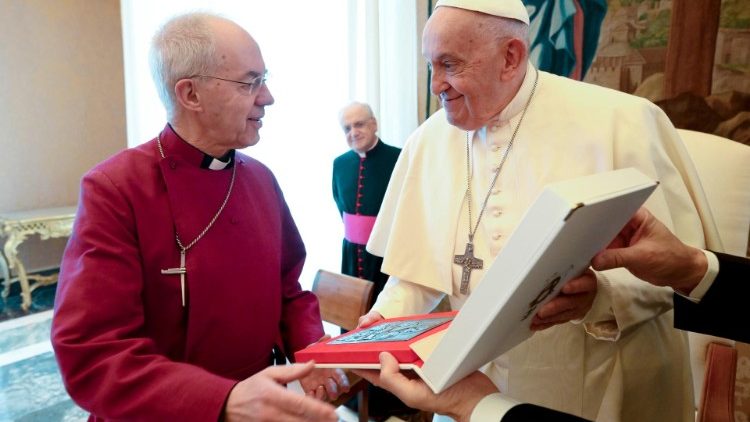
Pope Francis speaks to the leaders of the Anglican Communion; discusses papal primacy


Pope Francis with the Archbishop of Canterbury, the Most Revd Justin WelbyPope Francis with the Archbishop of Canterbury, the Most Revd Justin Welby  (VATICAN MEDIA Divisione Foto)

Pope to Anglican bishops: ‘Patient dialogue’ needed on papal primacy

Speaking to the Primates of the Anglican Communion, Pope Francis says that even the very earliest Christians had their disagreements.

By Joseph Tulloch

Senior clergy from the Anglican Communion are in Rome this week for the body’s 2024 Primates Meeting – the first of its kind to be held in the Eternal City.

On Thursday morning, participants, including the Archbishop of Canterbury, Justin Welby, met with Pope Francis in the Vatican.

Long history of cooperation

Pope Francis began his address by thanking Archbishop Welby for his presence, noting that he “began his service as Archbishop of Canterbury around the same time that I began mine as Bishop of Rome.”

“Since then,” the Pope added, “we have had many occasions to meet, to pray together and to testify to our faith in the Lord. Dear brother Justin, thank you for this fraternal cooperation on behalf of the Gospel!”


He stressed in particular the pair’s joint trip to Sudan in 2023, which, he said, was “really beautiful”.

Papal primacy

Pope Francis went on to thank the gathered bishops for having chosen Rome, the “City of the Apostles Peter and Paul”, as the location for their meeting this year.

“I realise”, the Pope said, “that the role of the Bishop of Rome is still a controversial and divisive issue among Christians.”

He quoted Pope Gregory the Great’s definition of the Bishop of Rome as servus servorum Dei, or ‘servant of the servants of God’, suggesting that it accurately captures the reality that the Pope’s authority can never be detached from his service to the Christian community.

“For this reason,” Pope Francis stressed, “it is necessary to engage in ‘a patient and fraternal dialogue on this subject, a dialogue which, leaving useless controversies behind’, strives to understand how the Petrine ministry can develop as a service of love for all.”


Thankfully, the Pope noted, “positive results have been achieved in the various ecumenical dialogues on the question of primacy as a ‘gift to be shared’.”

The Apostles and the Holy Spirit

Another key theme of Pope Francis’ address were the lessons that the earliest Church might offer for modern ecumenism.

While, the Pope said, the Acts of the Apostles is above all concerned with “the joyful spread of the Gospel”, the author “does not conceal moments of tension and misunderstanding, often born of the frailty of the disciples, or different approaches to the relationship with past tradition.”


We often forget, the Pope noted, that even these earliest Christians - who had “known the Lord and had encountered him as risen from the dead” - were divided in their understanding of the faith.

We, like them, Pope Francis suggested, must learn to entrust ourselves to the Holy Spirit.

“We are called,” he said, “to pray and to listen to one another, seeking to understand each other’s concerns and asking ourselves … whether we have been docile to the promptings of the Spirit, or prey to our own personal or group opinions.”

Monday, October 2, 2023

Pope calls for listening ahead of the Synod


Before Synod Retreat, 

Pope Prays For Listening Instead Of Polarization


VATICAN CITY (CNS) — On the eve of a three-day spiritual retreat for participants in the assembly of the Synod of Bishops, Pope Francis prayed that members of the church may embrace silence to listen to the voice of God and one another.

“Silence, in the ecclesial community, makes fraternal communication possible, where the Holy Spirit draws together points of view,” the pope said to members of the synod, Christian leaders and young people in St. Peter’s Square Sept. 30. “To be synodal is to welcome one another like this, in the knowledge that we all have something to share and to learn, gathering together to listen to the spirit of truth in order to know what the Lord is saying to the churches.”

Synod participants were scheduled to spend three days together at a spiritual retreat outside Rome before the synod assembly formally opens Oct. 4.

Seated before the San Damiano cross, in front of which St. Francis of Assisi said he heard Jesus tell him to “rebuild my church,” Pope Francis prayed that “the synod be a ‘kairos’ (moment) of fraternity, a place where the Holy Spirit will purify the church from gossip, ideologies and polarization.”

Alongside Pope Francis were the leaders of 12 Christian churches and communities, including Orthodox Ecumenical Patriarch Bartholomew of Constantinople, Anglican Archbishop Justin Welby of Canterbury, Syriac Orthodox Patriarch Ignatius Aphrem II and the Rev. Anne Burghardt, general secretary of the Lutheran World Federation. Some 4,700 young people from 51 countries and belonging different Christian traditions also were present in the square, according the ecumenical Taizé Community which organized the event. The Vatican said some 18,000 in total were present.

Many of the young participants in the prayer vigil completed a pilgrimage through Rome, walking to St. Peter’s Square after a time of praise and worship at the Basilica of St. John Lateran, the cathedral of the diocese of Rome, on the other side of the city.

Pope Francis told the group that just as silence is necessary to listen to the different perspectives that exist within the Catholic Church, “silence is essential for the journey of Christian unity.”

Silence “is fundamental to prayer, and ecumenism begins with prayer and is sterile without it,” he said. “The more we turn together to the Lord in prayer, the more we feel that it is he who purifies us and unites us beyond our differences.”

To put the vigil’s message into action, eight minutes of silence was observed in the ornate square which was decorated with Dutch flowers. Earlier in the day, Pope Francis had created 21 new cardinals at a consistory in the square.

The pope noted that the silence that fell upon the square was “not an empty silence, but a moment filled with faith, expectation and readiness.”

“In a world full of noise, we are no longer accustomed to silence; indeed sometimes we struggle with it, because silence forces us to face God and ourselves,” he said. “Yet it lies at the foundation of the word and of life.”

Before the vigil, young people from Lebanon, Indonesia and Slovenia shared their experiences of participating in the Catholic Church’s synodal journey. Tilen from Slovenia shared that he was struck by how a single question could start an “all-night series of listening, disagreeing, growing, and seeing how taking the time to listen to each other helped us to go deeper.”

Ukrainian children dressed in traditional outfits and Nigerian musicians performed before for the vigil, which was accompanied by music from the Taizé Community.

Joined at the center of the stage by the other church leaders, Pope Francis closed the prayer vigil by praying that the Holy Spirit would fill the synod participants with “wisdom and courage in order to be servants of communion and bold witnesses of your forgiveness in today’s world.”

Monday, September 25, 2023

Just 5 days to ecumenical prayer service ahead of the Synod on Synodality


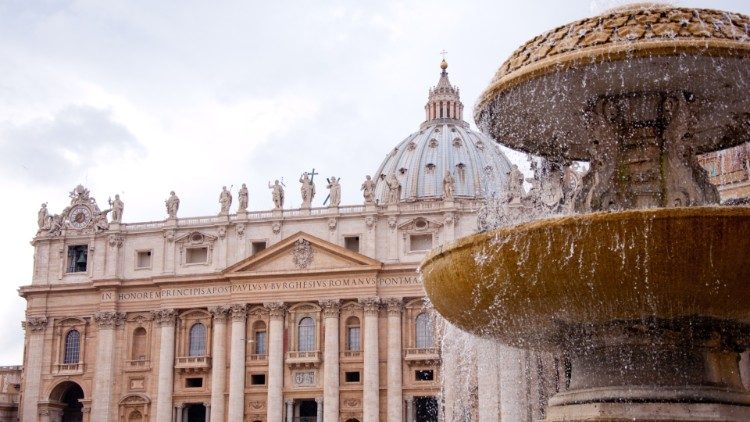
St. Peter's BasilicaSt. Peter's Basilica 

Ecumenical Prayer Vigil ahead of Synod approaches

Pope Francis invites leaders of Churches from different denominations to join him in prayer on September 30 entrusting the work of the 16th Ordinary General Assembly of the Synod, together, to the Holy Spirit.

By Deborah Castellano Lubov

Pope Francis will preside over the ecumenical prayer vigil ahead of the upcoming Synod's General Assembly in St Peter’s Square on Saturday, 30 September.

This vigil of prayer will welcome the participation and presence of the Ecumenical Patriarch of Constantinople, Bartholomew I; the Archbishop of Canterbury Justin Welby, and many other Church leaders, as well as thousands of Christians from different denominations.

Saturday evening's prayer vigil, is intended to entrust to the Holy Spirit the work of the 16th General Assembly of the Synod, taking place in the Vatican on 4-29 October, and will include listening to the Word of God, praise and intercession, Taizé songs and silence.

Event transmitted live 

The programme leading up to the prayer and the ecumenical vigil will be transmitted live by Vatican Media via its YouTube channel, with translation into eight different languages.

The following are the tools to learn the latest about the event on social platforms: Facebook / Instagram: @30Sept2023 #Together2023 ; and on X (formerly known as Twitter): @Together2023

According to a press release diffused by the Holy See Press Office on Monday, before Saturday's prayer vigil, from 5 to 6 pm, there will be a celebration of gratitude centered on four gifts, namely, gratitude for the gift of unity and for the synodal journey; the gift of the other; the gift of peace; and the gift of the Creation.

As the Churches are celebrating the Season of Creation, St Peter’s Square will also be full, of trees and flowers, as well as the San Damiano Cross of St. Francis.

Young, world united in prayer

Thousands of young adults from various countries will take part in a programme of workshops and meetings around Rome, from 29 Sept. to 1 Oct., which includes the ecumenical prayer vigil on Saturday and, earlier that afternoon, a prayer of praise and worship in the Basilica of St. John Lateran.

The young adults' workshop themes include hearing from refugees of their experiences, learning from other denominations and faiths, visiting the work of the city missions to the marginalized, recognising Christ in the diversity of our traditions, ecumenical panel discussions, and caring for creation.

In the same spirit, more than 200 common prayers have been organized across the world, on or around, 30 September, with Christians from different Churches sharing prayer and reflection together in their own countries. 

Saturday, May 6, 2023

King Charles III Coronation and Queen Camilla at Westminster Abbey


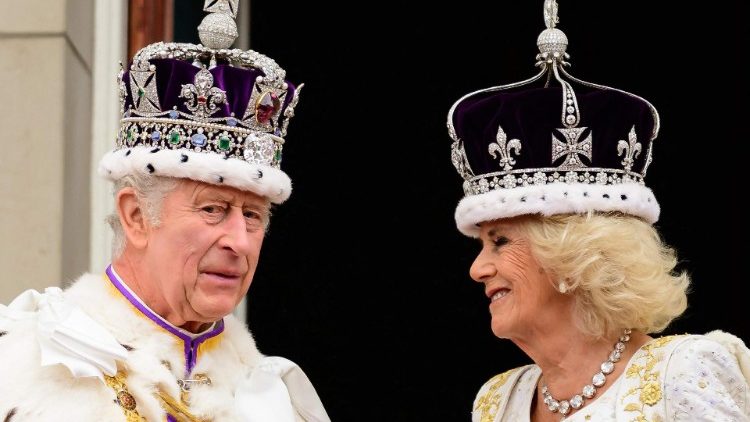
King Charles III and Queen CamillaKing Charles III and Queen Camilla 

King Charles III formally crowned in London's Westminster Abbey

Britain’s new monarch King Charles III and his wife Queen Camilla are crowned on Saturday at Westminster Abbey in a religious ceremony rich with ancient traditions and pageantry. Aged 74, Charles is the oldest British monarch ever to be crowned having ascended to the throne upon the death of his mother Queen Elizabeth II in September last year.

By Susy Hodges

The coronation of King Charles and his wife Queen Camilla was a day of lavish celebrations filled with pomp and pageantry but at its heart was a religious ceremony that traces its origins back over 1,000 years.

Thousands of dignitaries from Britain and across the world attended the coronation service in London’s Westminster Abbey.  The service was led by the head of the Anglican Communion, the Archbishop of Canterbury, Justin Welby but other church and faith leaders also attended including the head of the Catholic Church in England and Wales, Cardinal Vincent Nichols, Archbishop of Westminster, who read a prayer.

There was a powerful ecumenical moment right at the start of the coronation service when a silver processional cross containing two fragments of the True Cross gifted to King Charles by Pope Francis was carried up the aisle.  The Pope sent the precious relics to the king last month as an ecumenical gesture marking the centenary of the Anglican Church in Wales.

After being presented with symbolic regalia, the culmination of the ceremony came when Charles was crowned while seated upon the ancient wooden coronation chair made in 1300.  The Archbishop of Canterbury placed on the King’s head the traditional coronation crown made of solid gold and studded with gems.

The crowning was preceded by most sacred part of the coronation ritual where the King was anointed by Archbishop Welby. The oil for the coronation came from olives produced from two groves on the Mount of Olives in Jerusalem and was consecrated at the Church of the Holy Sepulchre there.

The day’s formal celebrations began with a lavish procession across central London from Buckingham Palace to Westminster Abbey with the King and Queen travelling in a modern horse-drawn carriage. Tens of thousands of people ignored the rain here and lined the processional route to catch a glimpse of the royal couple. At the end of the coronation service in Westminster Abbey, the newly crowned royal couple retraced the route back to the Palace, this time travelling in the Gold State Coach that was built in the 18th century. 

The public festivities ended with King Charles and Queen Camilla greeting the crowds from the balcony of Buckingham Palace and watching a military fly past.

Friday, February 10, 2023

Same-sex unions to be "blessed" by church of England setting up more division in the Anglican Communion


Church of England votes to bless same-sex couples

The Church of England’s governing body has voted to bless same-sex couples while leaving unchanged the definition of marriage as between a man and a woman in a move that could nonetheless have global consequences for Christian unity.

“For the first time, the Church of England will publicly, unreservedly, and joyfully welcome same-sex couples in church,” Anglican Archbishop of Canterbury Justin Welby and Archbishop of York Stephen Cottrell said in a joint statement.

“The church continues to have deep differences on these questions which go to the heart of our human identity,” the archbishops continued. They said they are “committed to respecting the conscience of those for whom this goes too far and to ensure that they have all the reassurances they need in order to maintain the unity of the church as this conversation continues.”

Some Anglican leaders objected that the church cannot bless sinful sexual relationships and warned that the vote impairs full unity in the Anglican Communion, while backers of redefining marriage said they would revisit the question in future synods.

The General Synod of the Church of England on Thursday voted by 250 to 181 votes to approve the offering of blessings to same-sex couples in civil marriages.

It narrowly approved an amendment endorsing marriage as only between a man and a woman. By a margin of 52% to 45%, the synod defeated a proposed amendment demanding a vote on a proposal to recognize same-sex unions as marriages within two years, the U.K. newspaper The Guardian reported.

While the synod’s bishops, clergy, and laity all voted to pass the measure, the vote among Church of England bishops was especially lopsided. They voted in favor of the measure 36 to 4, with two abstentions.

The move drew criticism from the Church of England Evangelical Council, which characterized it as a “lose-lose” position that would demoralize orthodox believers while not appeasing advocates of the redefinition of marriage.

“We are deeply saddened and profoundly grieved that General Synod has given a ‘green light’ to the proposals put forward by the House of Bishops,” the council said. “The Church of England now appears set on a course of action that rejects our historic and biblical understanding of sex and marriage, by departing from the apostolic faith we are called to uphold.”

The Global South Fellowship of Anglican Churches, representing more than 20 provinces of the Anglican Communion, said it “deeply regrets” the decision, charging that it “goes against the overwhelming mind of the Anglican Communion.” It was skeptical of the claim that doctrine had not changed, citing the principle that “Anglican liturgy expresses its doctrine.”

“The church cannot ‘bless’ in God’s name the union of same-sex partnered individuals, much less sexual relationships between same-sex persons which in God’s Word he declares to be sinful,” the global Anglican group said.

The fellowship said the actions of the archbishop of Canterbury in the vote caused it “to question his fitness to lead what is still a largely orthodox worldwide Communion.”

With great sadness, the group said “the Church of England has now joined those provinces with which communion is impaired.”

Anglican Bishop Steven Croft of Oxford, who supports redefining marriage to include same-sex unions, said the vote was a “significant and historic step.”

“Same-sex couples will become much more visible and their relationships will be celebrated publicly and that, I think, will continue to change attitudes within the life of the church,” he said. He characterized the amendment on the doctrine of marriage as “important to give some reassurance to those who are more conservative” but said the church would not stop revisiting the question.

Other backers of redefining marriage were less enthusiastic. Nigel Pietroni, the chair of the Campaign for Equal Marriage in the Church of England, said the vote fell short of their goal of “radical inclusion” but was a “small step forward.”

The Church of England synod also voted to welcome a review of a ban on clergy contracting same-sex civil marriages and a review of a celibacy requirement for clergy in same-sex relationships. It voted to “lament and repent” of failures to welcome those who identify as LGBTQ+ and for the harm they experienced and continue to experience in churches.

The Anglican Communion was significantly fractured in 2003 when the U.S.-based Episcopal Church voted to ordain as a bishop V. Gene Robinson, a gay man in a same-sex relationship.

Some Catholic leaders, especially in Western Europe, have pushed for the blessing of same-sex couples.

With the assent of Pope Francis, the Congregation for the Doctrine of the Faith on March 15, 2021, issued a response to a question on the blessings of same-sex unions. The Catholic Church does not have the power to bless same-sex unions, the Vatican body ruled. Though it recognized the “sincere desire to welcome and accompany homosexual persons,” it explained that God “does not and cannot bless sin.”

Saturday, February 4, 2023

Pope Francis at ecumenical prayer service in South Sudan


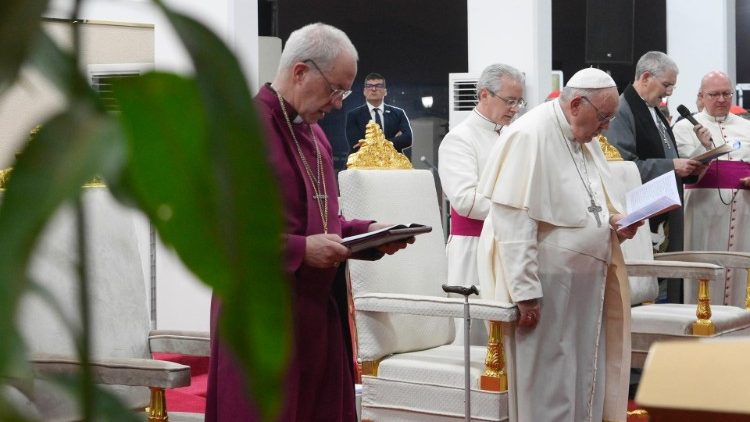
Pope Francis at the Ecumenical PrayerPope Francis at the Ecumenical Prayer

Pope at Ecumenical Prayer in South Sudan: Those who unleash war betray God

Pope Francis addressed the faithful gathered for an ecumenical prayer service in South Sudan, and urges all those present to pray, to work and to journey.

By Francesca Merlo

In Juba's John Garang Mausoleum, concluding his second day in South Sudan, Pope Francis addressed the faithful gathered for an ecumenical prayer. He noted that from the South Sudanese land, "wracked by violence", "many prayers have now been raised to heaven".

Pope Francis asked all those present to reflect on three verbs: 

To pray

The first, is to pray. Pope Francis noted that prayer gives us the strength to go forward, to overcome our fears, to glimpse, even in the darkness, the salvation that God is even now preparing.  He added that "prayer brings down God’s salvation upon the people", and that the prayer of intercession is the type of prayer that we, as shepherds of God’s holy people, are especially called to practise. 

The Holy Father urged all those present to support each other in this effort.

“In the diversity of our confessions, let us feel united among ourselves, as one family, responsible to pray for everyone.”

To work

Speaking of the verb "work", Pope Francis noted that the peace of God is not only a truce amid conflicts, "but a fraternal fellowship that comes from uniting and not absorbing; from pardoning and not overpowering; from reconciling and not imposing".

Let us work tirelessly, urged the Pope "for the peace that the Spirit of Jesus and the Father urges us to build: a peace that integrates diversity and promotes unity in plurality".

“Those who choose Christ choose peace, always; those who unleash war and violence betray the Lord and deny his Gospel.”

"What Jesus teaches us is clear," added the Pope, "we are to love everyone, since everyone is loved as a child of our common Father in heaven". 

To journey

The third and final verb is "to journey". The Pope noted that in this country, "Christian communities have been deeply committed to promoting processes of reconciliation", before expressing his gratitude for this "radiant testimony of faith born of the realisation, expressed not only in words but also in deeds that prior to any historical divisions, there remains one unchanging fact, namely, that we are Christians". 

Speaking of ecumenism in South Sudan, Pope Francis described this reality as "a precious treasure" and an act of praise for the name of Jesus. 

“May the witness of unity among believers overflow to the people as a whole.”

Memory and commitment

Bringing his discourse to an end, Pope Francis introduced two final words for the South Sudanese encouraging them to persevere in their journey: memory and commitment. 

Memory means making sure that "the steps that you take follow in the footsteps of those who have gone before you. Commitment.  means journeying towards unity when love is concrete. 

Finally, Pope Francis noted that together with the Archbishop of Canterbury and the Moderator of the Church of Scotland, they travelled to South Sudan as "pilgrims, to be with you".

“Let us love each other constantly, from the heart.”

Friday, February 3, 2023

Joined by Archbishop of Canterbury and Moderator of the Assembly of Scotland, Pope seeks peace in South Sudan


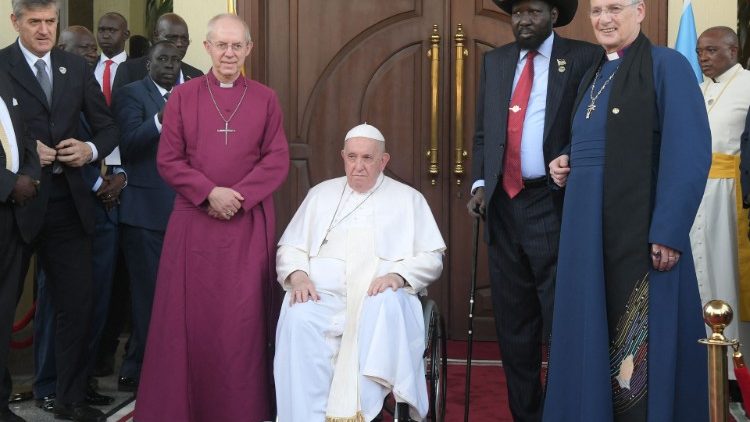
Archbishop Welby, Pope Francis, Salva Kiir and Rev. Dr Greenshields in Juba at Meeting with AuthoritiesArchbishop Welby, Pope Francis, Salva Kiir and Rev. Dr Greenshields in Juba at Meeting with Authorities  (AFP or licensors)

Ecumenical leaders tell South Sudan’s leaders to act for peace now

The Archbishop of Canterbury and the Moderator of the General Assembly of Scotland are in South Sudan with Pope Francis on a long-planned “Pilgrimage of Peace”. They had direct words for the country’s leaders at a Meeting with Authorities, Civil Society and Diplomatic Corps in Juba.

By Linda Bordoni

Pope Francis, Justin Welby and the Reverend Dr. Iain Greenshields addressed the political leaders of South  Sudan on Friday afternoon, kicking off a long-planned ecumenical pilgrimage for peace to the ravaged east African nation.


Speaking after the Pope’s powerful address, the Archbishop of Canterbury recalled having witnessed the devastation of war in the country and the suffering and grief it caused when he visited the nation nine years ago.

Archbishop Welby reminded those present that, together with a former Moderator of the Church of Scotland, Pope Francis hosted a retreat at the Vatican in 2019 for the leaders of South Sudan.

“We prayed it would be a space for the Holy Spirit to work, and in that meeting we saw the possibility of hope. Pope Francis knelt to kiss the feet of each politician. Almost five years later, we come to you in this way again: on our knees to wash feet, to listen, serve and pray with you.”

However, the Archbishop continued, when he remembers the commitments made back in 2019, he is saddened by what he sees and hears.  

“We hoped and prayed for more; we expected more; you promised more. We cannot pick and choose parts of a Peace Agreement. Every part must be done by every person, and that costs much.”

Peace is in your hands

Archbishop Welby went on to point out that “the answer to peace and reconciliation is not in visits like this but it is in your hands.”

“For the heroic and brave and courageous people of South Sudan, who fought for so long for their freedom and won it,” surely they are people "who have the courage to struggle for peace and reconciliation,” he said.

“[Peace] is within your reach, it is close to you, you can take it, with the help of God.”

“I pray this might be a visit of hope and healing, of time spent together as one family of Christ, following the one God who brings us ever closer to each other and to him,” he concluded.

“And I pray most that the prayer that was sung to me this afternoon by a group of primary school children may be answered: They sang: no more corruption, we want peace in South Sudan, Give us peace in South Sudan!”

Peace is within the reach of the leaders

In his speech, the Right Reverand Dr Iain Greenshields highlighted the need for the peace of Christ.

“Today, we need that peace. We need churches and leaders who are generous of heart, liberal of love, and profligate with God’s grace," he exclaimed. "We need leaders who care about the values by which our countries live, who care about the conditions in which people live, and who act out their faith in work amongst the most vulnerable and marginalised.”

“These things make for peace.”

Noting that all the people are essential co-workers in God's desire for a world in which all people can live life in fullness, he said it is “in the reach of the President, Vice-Presidents, leaders and people of South Sudan to extend the reach of justice and compassion to the whole of this young and optimistic country, full of people ready to work for a vibrant and fulfilling future.”

“May all political, civic and international leaders join together in seeking God’s holistic promise of life in fullness for all God’s people.”