Saturday, March 30, 2019

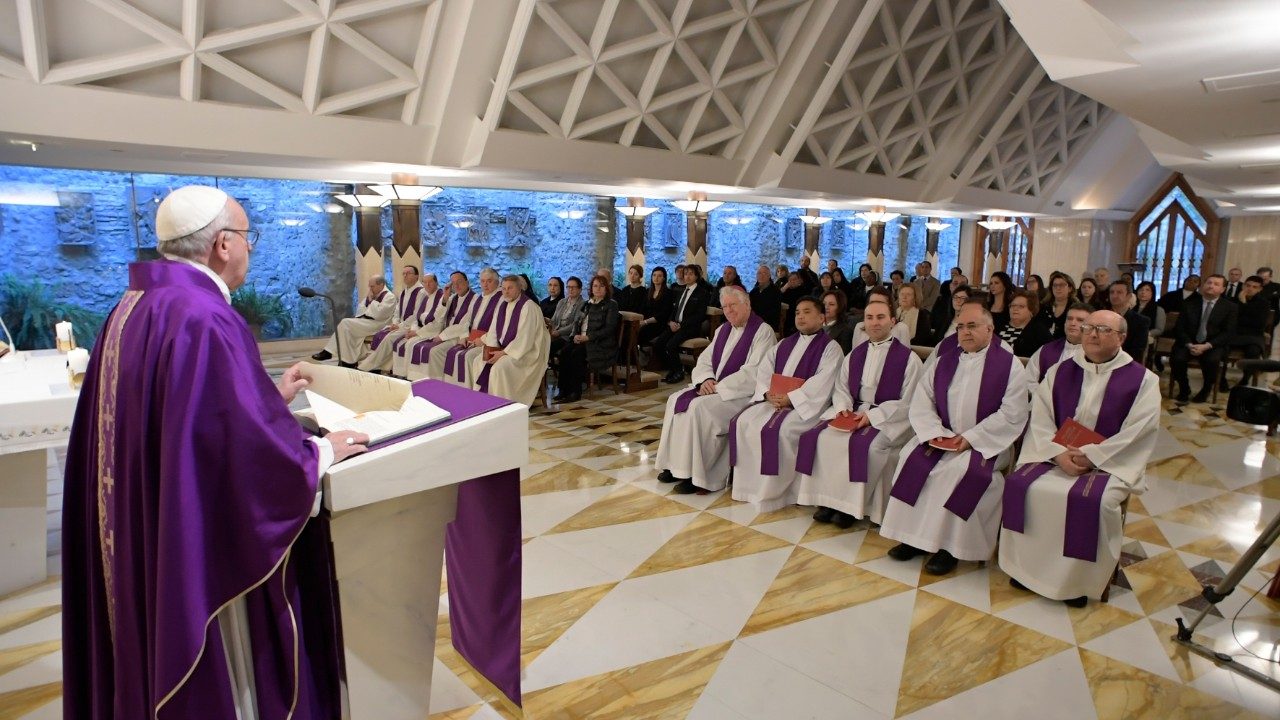
Pope Francis arrives in Morocco; 1st address to the diplomats


Copyright: Vatican Media

Pope’s Address to Moroccan Authorities, Diplomatic Corps

‘…The courage to encounter one another and extend a hand of friendship is a pathway of peace and harmony for humanity, whereas extremism and hatred cause division and destruction…’

Below is the Vatican provided text of Pope Francis’ address to Moroccan authorities and the diplomatic corps this morning in Rabat:
***
Your Majesty,
Your Royal Highnesses,
Distinguished Authorities of the Kingdom of Morocco,
Members of the Diplomatic Corps,
Dear Friends,
As-Salam Alaikum!
I am pleased to set foot in this country so filled with natural beauty, while at the same time preserving the traces of ancient civilizations and bearing witness to a long and fascinating history. Before all else, I would like to express my deep gratitude to His Majesty King Mohammed VI for his kind invitation, for the warm welcome which he has given me in the name of the entire Moroccan people, and, in particular, for his gracious introduction.
This visit is for me an occasion of joy and gratitude, for it allows me to see at first hand the richness of your land, your people and your traditions. I am also grateful that my visit offers a significant opportunity for advancing interreligious dialogue and mutual understanding among the followers of our two religions, as we commemorate – at a distance of eight centuries – the historic meeting between Saint Francis of Assisi and Sultan al-Malik al-Kamil. That prophetic event shows that the courage to encounter one another and extend a hand of friendship is a pathway of peace and harmony for humanity, whereas extremism and hatred cause division and destruction. It is my hope that our mutual esteem, respect and cooperation will help strengthen the bonds of sincere friendship, and enable our communities to prepare a better future for coming generations.
In this land, a natural bridge between Africa and Europe, I would like to affirm once more our need for cooperation in giving new impetus to the building of a world of greater solidarity, marked by honest, courageous and indispensable efforts to promote a dialogue respectful of the richness and distinctiveness of each people and every individual. All of us are called to rise to this challenge, especially at the present time, when our differences and our lack of reciprocal knowledge risk being exploited as a cause for conflict and division.
If we wish, then, to share in the building a society that is open, fraternal and respectful of differences, it is vital to foster the culture of dialogue and adhere to it unfailingly, to adopt mutual cooperation as our code of conduct and reciprocal understanding as our method and standard (cf. Document on Human Fraternity, Abu Dhabi, 4 February 2019). We are called to pursue this path tirelessly, in the effort to help each other overcome tensions and misunderstandings, clichés and stereotypes that generate fear and opposition. In this way, we will encourage the growth of a fruitful and respectful spirit of cooperation. It is likewise essential that fanaticism and extremism be countered by solidarity on the part of all believers, grounded in the lofty shared values that inspire our actions. For this reason, I am happy that I will shortly visit the Mohammed VI Institute for the Training of Imams, Morchidines and Morchidates. Established by Your Majesty, the Institute seeks to provide effective and sound training to combat all forms of extremism, which so often lead to violence and terrorism, and which, in any event, constitute an offense against religion and against God himself. We know how important it is to provide a suitable preparation for future religious leaders, if we wish to awaken a genuinely religious spirit in the heart of future generations.
Authentic dialogue, then, makes us appreciate more fully the importance of religion for building bridges between people and successfully meeting the challenges that I mentioned above. While respecting our differences, faith in God leads us to acknowledge the eminent dignity of each human being, as well as his or her inalienable rights. We believe that God created human beings equal in rights, duties and dignity, and he calls them to live as brothers and sisters and to spread the values of goodness, love and peace. That is why freedom of conscience and religious freedom – which is not limited to freedom of worship alone, but allows all to live in accordance with their religious convictions – are inseparably linked to human dignity. In this regard, there is a constant need to progress beyond mere tolerance to respect and esteem for others. This entails encountering and accepting others in their distinctive religious beliefs and enriching one another through our diversity, in a relationship marked by good will and by the pursuit of ways we can work together. Understood in this way, creating bridges between people – from the point of view of interreligious dialogue – calls for a spirit of mutual regard, friendship and indeed fraternity.
The International Conference on the rights of religious minorities in Muslim countries, held in Marrakech in January 2016, addressed this issue, and I am pleased to note that it condemned, in effect, any exploitation of religion as a means of discriminating against or attacking others. It also stressed the need to move beyond the concept of religious minority in favour of that of citizenship and the recognition of the value of the person, which must have a central place in every legal system.
I also see as a prophetic sign the creation in 2012 of the Al Mowafaqa Ecumenical Institute in Rabat. The Institute, an initiative of Catholics and other Christian denominations in Morocco, seeks to help promote ecumenism, as well as dialogue with culture and with Islam. This praiseworthy undertaking manifests the concern and the desire of the Christians living in this country to build bridges as a means of expressing and serving human fraternity.
All these are ways to halt the misuse of religion to incite hatred, violence, extremism and blind fanaticism, and the invocation of the name of God to justify acts of murder, exile, terrorism and oppression (Document on Human Fraternity, Abu Dhabi, 4 February 2019).
The genuine dialogue we want to encourage also leads to a consideration of the world in which we live, our common home. The International Conference on Climate Change, COP 22, also held here in Morocco, once more demonstrated that many nations are conscious of the need to protect this planet where God has placed us to live and to contribute to a true ecological conversion for the sake of integral human development. I express my appreciation for the progress being made in this area and I am gratified by the growth of authentic solidarity between nations and peoples in the effort to find just and lasting solutions to the scourges that threaten our common home and the very survival of the human family. Only together, in patient, judicious, candid and sincere dialogue, can we hope to devise adequate solutions for reversing the trend of global warming and to achieve the goal of eliminating poverty (cf. Laudato Si’, 175).
Similarly, today’s grave migration crisis represents an urgent summons for concrete actions aimed at eliminating the causes that force many people to leave country and family behind, often only to find themselves marginalized and rejected. Last December, once more here in Morocco, the Intergovernmental Conference on the Global Compact for safe, orderly and regular migration adopted a document intended to serve as a point of reference for the entire international community. At the same time, much still remains to be done, especially in passing from the commitments undertaken there, at least in principle, to concrete actions, and, more particularly, to a change of attitude towards migrants, one that sees them as persons, not numbers, and acknowledges their rights and dignity in daily life and in political decisions. You are aware of my great concern for the frequently grim fate of such people, who for the most part would not have left their countries were they not forced to do so. I trust that Morocco, which hosted that Conference with great openness and exceptional hospitality, will continue to be an example of humanity for migrants and refugees within the international community, so that here, as elsewhere, they can find generous welcome and protection, a better life and a dignified integration into society. When conditions permit, they can then decide to return home in conditions of safety and respect for their dignity and rights. The issue of migration will never be resolved by raising barriers, fomenting fear of others or denying assistance to those who legitimately aspire to a better life for themselves and their families. We know too that the consolidation of true peace comes through the pursuit of social justice, which is indispensable for correcting the economic imbalances and political unrest that have always had a major role in generating conflicts and threatening the whole of humanity.
Your Majesty, distinguished Authorities, dear friends! Christians are deeply appreciative of the place accorded them in Moroccan society. They wish to do their part in building a fraternal and prosperous nation, out of concern for the common good of its people. In this regard, I think of the significant work of the Catholic Church in Morocco in providing social services and in the field of education, thanks to its schools, which are open to students of every confession, religion and background. In thanking God for all that has been accomplished, allow me to encourage Catholics and all Christians to be servants, promoters and defenders of human fraternity here in Morocco.
Your Majesty, distinguished Authorities, dear friends! I thank you and all the Moroccan people once more for your warm welcome and your kind attention. Shukran bi-saf! May the Almighty, Gracious and Merciful, protect you and bless Morocco! Thank you.

Friday, March 29, 2019

Deacon, Martyr, Saint

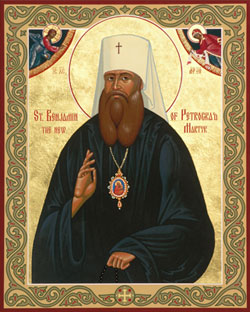
St. Benjamin


Image of St. Benjamin


St. Benjamin, Martyr (Feast Day - March 31) The Christians in Persia had enjoyed twelve years of peace during the reign of Isdegerd, son of Sapor III, when in 420 it was disturbed by the indiscreet zeal of Abdas, a Christian Bishop who burned the Temple of Fire, the great sanctuary of the Persians. King Isdegerd threatened to destroy all the churches of the Christians unless the Bishop would rebuild it.
As Abdas refused to comply, the threat was executed; the churches were demolished, Abdas himself was put to death, and a general persecution began which lasted forty years. Isdegerd died in 421, but his son and successor, Varanes, carried on the persecution with great fury. The Christians were submitted to the most cruel tortures.
Among those who suffered was St. Benjamin, a Deacon, who had been imprisoned a year for his Faith. At the end of this period, an ambassador of the Emperor of Constantinople obtained his release on condition that he would never speak to any of the courtiers about religion.
St. Benjamin, however, declared it was his duty to preach Christ and that he could not be silent. Although he had been liberated on the agreement made with the ambassador and the Persian authorities, he would not acquiesce in it, and neglected no opportunity of preaching. He was again apprehended and brought before the king. The tyrant ordered that reeds should be thrust in between his nails and his flesh and into all the tenderest parts of his body and then withdrawn. After this torture had been repeated several times, a knotted stake was inserted into his bowels to rend and tear him. The martyr expired in the most terrible agony about the year 424.

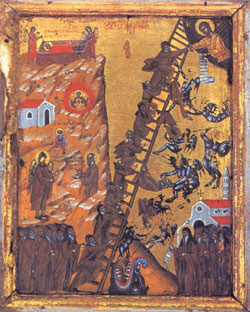
A ladder climbing Saint

St. John Climacus


Image of St. John Climacus


Abbot of Sinai, so called "Climacus" from the title of his famous book, The Climax, or The Ladder of Perfection; also known as John Scholasticus. He was a Syrian or a Palestinian who started his eremitical life at sixteen, living for many years as a hermit on Sinai. He then went to Thale. Revered also as a scriptural scholar, he authored The Ladder of Perfection to provide a comprehensive treatise on the ideal of Christian perfection and the virtues and vices of the monastic life. Composed in thirty chapters, it was intended to correspond to the age of Christ at the time of his baptism by John the Baptist. John was elected abbot of the monks of Mt. Sinai at the age of seventy He died there on March 30.

A Lenten Penetential homily from Pope Francis

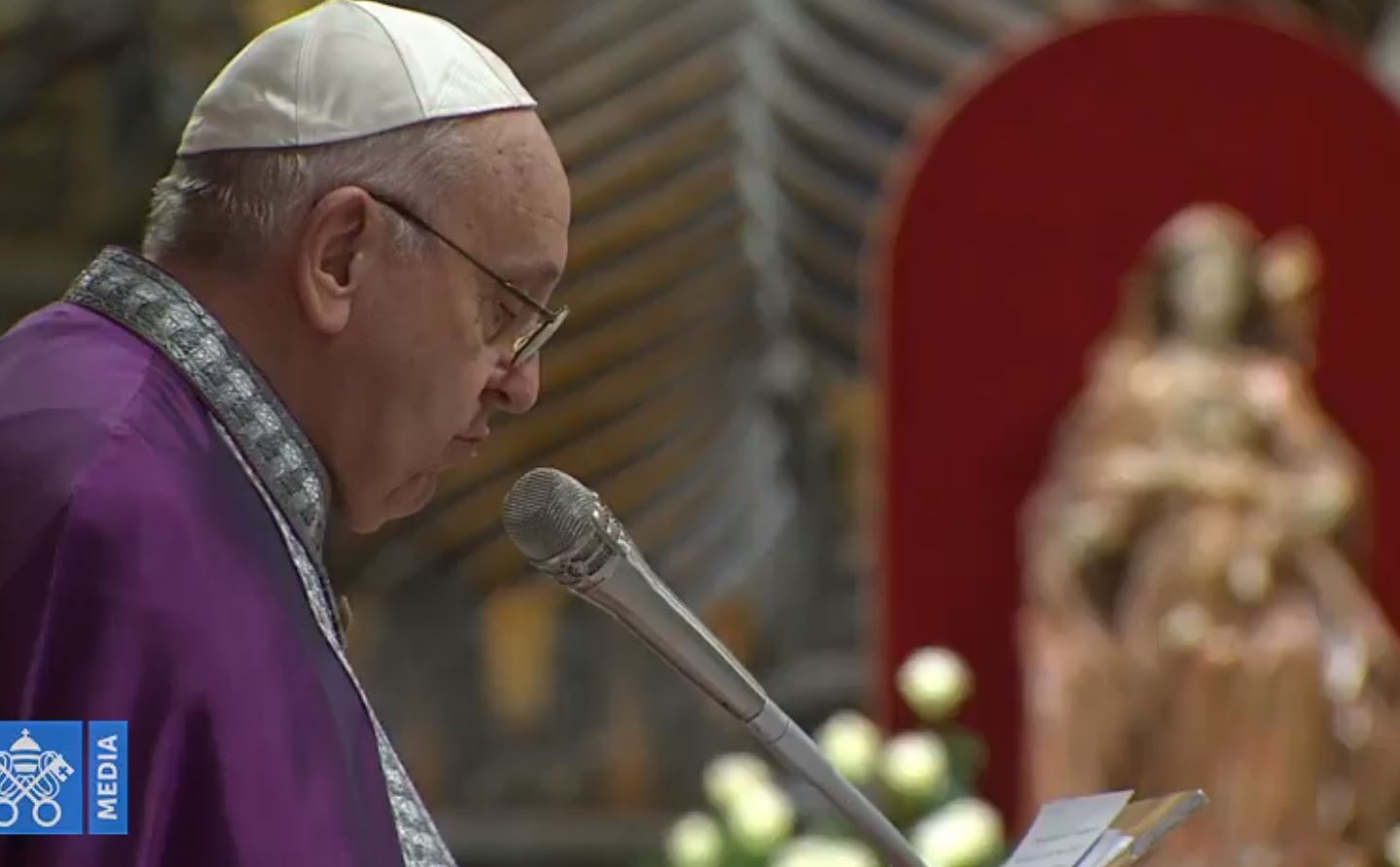
Vatican Media Screenshot

Pope at Penitential Service: ‘Without God, we Cannot Overcome Evil’

‘Evil is strong, it has a seductive power: it attracts and fascinates.’

“Evil is strong, it has a seductive power: it attracts and fascinates,” according to Pope Francis. “Our own efforts are not enough to detach ourselves from it: we need a greater love.
“Without God, we cannot overcome evil. Only his love raises us up from within, only his tender love poured out into our hearts makes us free. If we want to be free from evil, we have to make room for the Lord who forgives and heals.
“He accomplishes this above all through the sacrament we are about to celebrate. Confession is the passage from misery to mercy; it is God’s writing upon the heart. There – in our hearts – we constantly read that we are precious in the eyes of God, that he is our Father and that he loves us even more than we love ourselves.”
The Holy Father’s comments came on March 29, 2019, during his homily during the Penitential Celebration in the Vatican Basilica. He also heard the confessions of several penitents.
Following is the Holy Father’s Full Homily:
“The two of them alone remained: mercy with misery” (In Joh 33, 5). In this way, Saint Augustine sums up the Gospel we have just heard. Those who came to cast stones at the woman or to accuse Jesus with regard to the Law have gone away, having lost interest. Jesus, however, remains. He remains because what is of value in his eyes has remained: that woman, that person. For him, the sinner comes before the sin. I, you, each one of us come first in the heart of God: before mistakes, rules, judgments, and our failures. Let us ask for the grace of a gaze like that of Jesus, let us ask to have the Christian perspective on life. Let us look with love upon the sinner before his or her sin; upon the one going astray before his or her error; upon the person before his or her history.
“The two of them alone remained: mercy with misery”. The woman caught in adultery does not represent for Jesus a paragraph of the Law, but instead a concrete situation in which he gets involved. Thus he remains there with the woman, for the most part standing in silence. Meanwhile, he twice performs a mysterious gesture: he writes with his finger on the ground (Jn 8:6, 8). We do not know what he wrote and perhaps that is not the most important element: the attention of the Gospel focuses on the fact that the Lord writes. We think of the episode at Sinai when God wrote the tablets of the Law with his finger (cf. Ex 31:18), just as Jesus does now. Later, God, through the prophets, promised that he would no longer write on tablets of stone, but directly on the heart (cf. Jer 31:33), on the tablets of the flesh of our hearts (cf. 2 Cor 3:3). With Jesus, the mercy of God incarnate, the time has come when God writes on the hearts of men and women, when he gives a sure hope to human misery: giving not so much external laws which often keep God and humanity at a distance, but rather the law of the Spirit which enters into the heart and sets it free. It happens this way for the woman, who encounters Jesus and resumes her life: she goes off to sin no more (cf. Jn 8:11). It is Jesus who, with the power of the Holy Spirit, frees us from the evil we have within us, from the sin which the Law could impede but not remove.
All the same, evil is strong, it has a seductive power: it attracts and fascinates. Our own efforts are not enough to detach ourselves from it: we need a greater love. Without God, we cannot overcome evil. Only his love raises us up from within, only his tender love poured out into our hearts makes us free. If we want to be free from evil, we have to make room for the Lord who forgives and heals. He accomplishes this above all through the sacrament we are about to celebrate. Confession is the passage from misery to mercy; it is God’s writing upon the heart. There – in our hearts – we constantly read that we are precious in the eyes of God, that he is our Father and that he loves us even more than we love ourselves.
“The two of them alone remained: mercy with misery”. Those two, alone. How many times do we feel alone, that we have lost our way in life. How many times do we no longer know how to begin again, overwhelmed by the effort to accept ourselves. We need to start over, but we don’t know where to begin. Christians are born from the forgiveness they receive in Baptism. They are always reborn from the same place: from the surprising forgiveness of God, from his mercy which restores us. Only by being forgiven can we set out again with fresh confidence, after having experienced the joy of being loved by the Father to the full. Only through God’s forgiveness do truly new things happen within us. Let us hear again words the Lord spoke through the prophet Isaiah: “Behold, I am doing a new thing” (Is 43:19). Forgiveness gives us a new beginning, makes us new creatures, helps us take hold of a new life. God’s forgiveness is not a photocopy which is identically reproduced in every passage through the confessional. Receiving pardon for our sins through a priest is always a new, distinctive and unique experience. We pass from being alone with our miseries and accusers, like the woman in the Gospel, to being raised up and encouraged by the Lord who grants us a new start.
“The two of them alone remained: mercy with misery”. What do we need to do to come to love mercy, to overcome the fear of Confession? Let us accept once more the invitation of Isaiah: “Do you not perceive it?” (Is 43:19). It is important to perceive God’s forgiveness. It would be beautiful, after Confession, to remain like that woman, our eyes fixed on Jesus who has just set us free: no longer looking at our miseries, but rather at his mercy. To look at the Crucified One and say with amazement: “That’s where my sins ended up. You took them upon yourself. You didn’t point your finger at me; instead, you opened your arms and forgave me once again”. It is important to be mindful of God’s forgiveness, to remember his tender love, and taste, again and again, the peace and freedom we have experienced. For this is the heart of Confession: not the sins we declare, but the divine love we receive, of which we are ever in need. We may still have a doubt: “Confessing is useless, I am always committing the same sins”. The Lord knows us, however; he knows that the interior struggle is difficult, that we are weak and inclined to fall, that we often relapse into doing what is wrong. So he proposes that we begin to relapse into goodness, into asking for mercy. He will raise us up and make us new creatures. Let us start over, then, from Confession, let us restore to this sacrament the place it deserves in life and pastoral ministry!
“The two of them alone remained: mercy with misery”. Today, in Confession, we too draw life from this saving encounter: we with our miseries and sins, and the Lord who knows us, loves us and frees us from evil. Let us enter into this encounter, asking for the grace to rediscover its saving power.

Are the rumors true for Washington DC

Consistent and persistent rumors suggest we soon will have a new Archbishop for Washington DC and it would be 71 year old Archbishop Wilton Gregory of Atlanta:

Image may contain: 1 person, smiling, closeupStay tuned for breaking news!

Pope Francis signs into law new guidelines for Vatican City regarding protection of minors


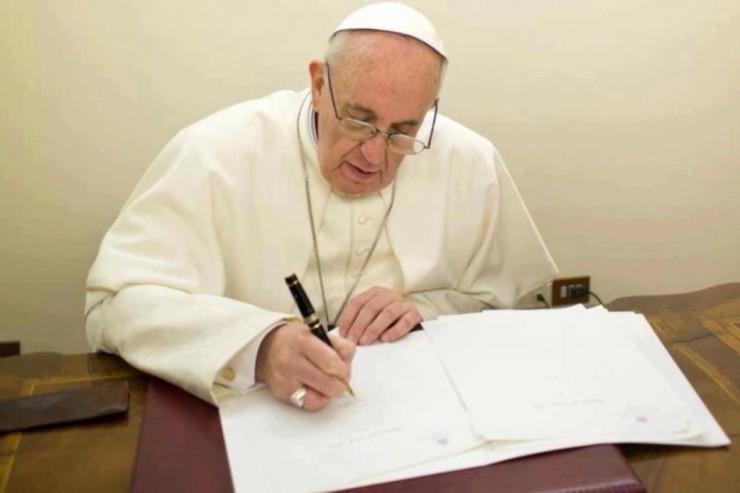
Pope writing a letter

JUST IN: Pope Signs Motu Proprio, Law, and Guidelines for Protection of Minors and Vulnerable Adults for the Vatican City State

New Law Goes Into Effect June 1

Pope Francis has signed three documents on “the protection of minors and vulnerable adults’ for the Vatican City State, which mark–according to Vatican Press Office Director, Alessandro Gisotti–the first important step following the February 21-24 Summit in the Vatican on the Protection of Minors.
The Summit had brought together the presidents of the national bishops’ conferences worldwide, and had anticipated three immediate action steps: (1) the publishing of a motu proprio on the protection of minors for the Vatican City State (that just published today), (2) an anti-abuse ‘vademecum’ for the Universal Church, to explain in a Q & A to bishops clearly how to address cases of abuse and react accordingly, and (3) to create ‘task forces’ to help dioceses around the world that may need help in implementing the appropriate measures to protect minors.
This afternoon, the Vatican spokesman, issued a statement announcing the three documents “being published that respond to the concrete demands expressed by the People of God to address the scourge of the sexual abuse of minors.”
All three documents – the laws on the protection of minors in Vatican City State, the Motu proprio which applies the norms to the Roman Curia, and the Guidelines for the Vicariate of Vatican City –, he noted, are acts to “reinforce the protection of minors by strengthening the normative framework.”
The Holy Father, he expressed, hopes everyone might develop in their awareness that the Church must always be ever increasingly a safe home for children and vulnerable persons.
Below is the full text of Alessandro Gisotti’s statement:
***
A month after the conclusion of the Meeting on the Protection of Minors held in the Vatican, a meeting greatly desired by Pope Francis, three very significant documents are being published that respond to the concrete demands expressed by the People of God to address the scourge of the sexual abuse of minors. Announced this past February 24, this is the first important step following the summit of the Episcopal Conferences.
Significantly, all three documents – the laws on the protection of minors in Vatican City State, the Motu proprio which applies the norms to the Roman Curia, and the Guidelines for the Vicariate of Vatican City – are signed by the Holy Father. Together, these acts reinforce the protection of minors by strengthening the normative framework.
The Holy Father hopes that – thanks also to these norms which pertain to Vatican City State and to the Roman Curia – everyone might develop in their awareness that the Church must always be ever increasingly a safe home for children and vulnerable persons.

Thursday, March 28, 2019

The Pope just doesn't like germs

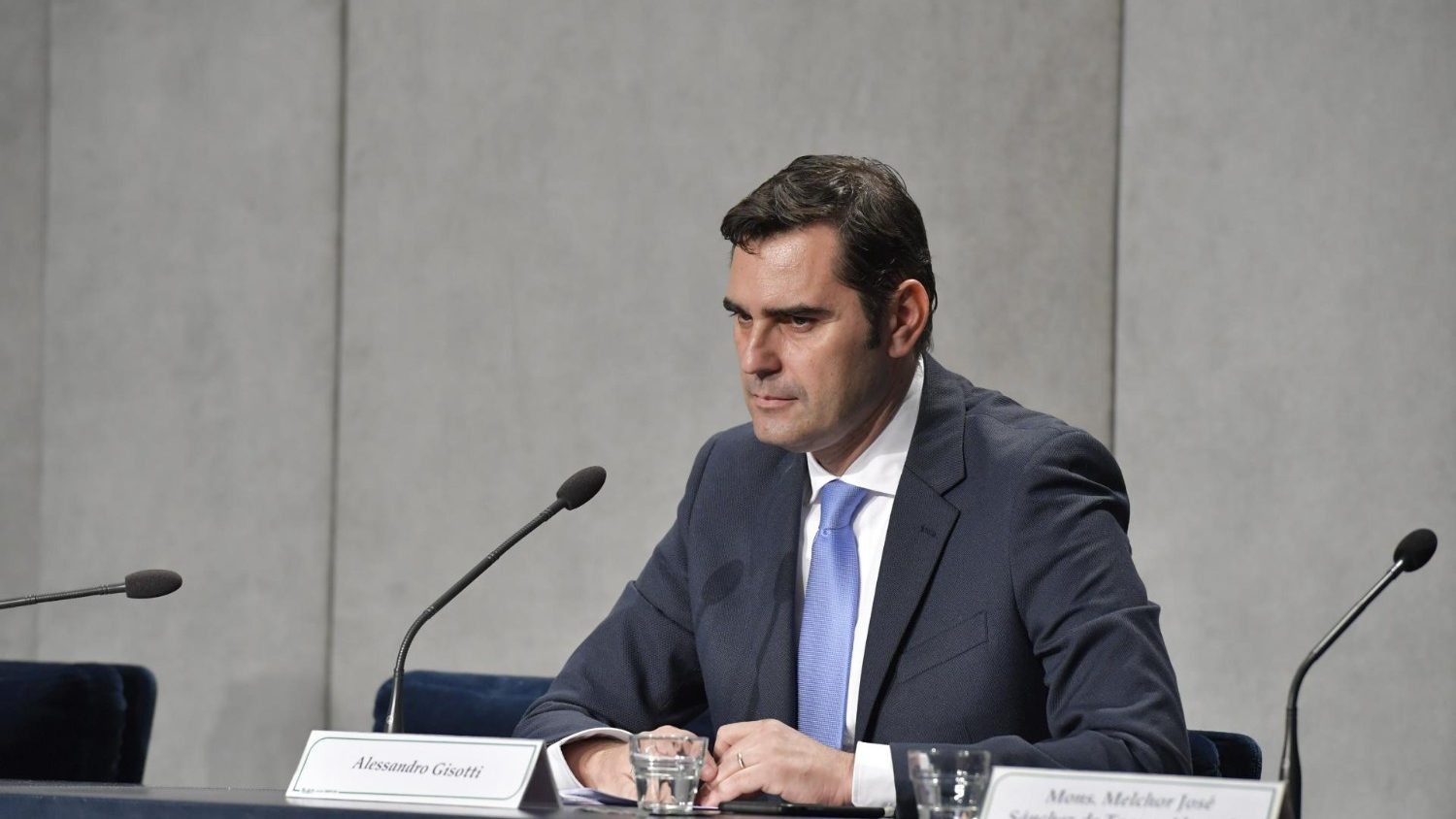
Alessandro Gisotti - © Vatican Media

Pope Has Told Alessandro Gisotti Why He Withdrew Hand Repeatedly From the Line Trying to Kiss His Ring

During Briefing for Pontiff’s March 30-31 Visit to Morocco, Vatican Spokesman Shares Francis’ Reasoning: ‘Hygiene’

“It was a simple question of hygiene…”
This was explained by Alessandro Gisotto, Director of the Holy See Press Office, who after receiving an avalanche of inquiries about the Pope withdrawing his hand repeatedly from a long queue of individuals who bowed and tried to kiss the ring on Monday, May 25, in the Italian town of Loreto on the Adriatic Sea, decided to ask the Pontiff himself his reasoning behind it.
Preventing the spread of germs, Pope Francis clarified to Gisotti, especially when there are so many people, arriving one right after the other, is the Pontiff’s goal. He noted how the Pope normally allows the kissing of the ring when we are speaking about single individuals or smaller groups.
Alessandro Gisotti added: “He likes to embrace people and be embraced by people.”
Vatican observers have noted that neither Francis’ predecessor Benedict or John Paul II, were not overly enthusiastic either about the kissing of the ring.

Thursday Morning Papal Homily

© Vatican Media

Pope at Santa Marta: “Either You Are with Jesus or You Are Against Jesus”

“There Is Still Time” to Open One’s Heart to God”

“Either you are with Jesus or you are against Jesus,” said Pope Francis, during the Mass he celebrated at Saint Martha’s on March 28, 2019. In his homily, reported by “Vatican News,” he invited to open one’s heart to the Lord because “there is still time.”
“So often we are deaf and we don’t listen to the Lord’s voice. We listen to info, the neighbourhood gossip: we always listen to this,” observed the Pontiff, commenting on today’s First Reading. He stressed the “Lord’s lamentation” in face of “obstinate people, who don’t want to listen,” who “cover their ears,” who have “lost the sense of faithfulness.”
He invited Christians to ask themselves if they have also acted as if God “didn’t count.” “Have I lost fidelity to the Lord?” – “No, no, I go to Mass every Sunday . . . “”Yes, yes, but . . . is my heart hard, obstinate, deaf, does it let the Lord enter or rather arranges three or our things and then does what it likes?”
“It’s a question for each one of us,” stressed the Holy Father. “We must all pose it.” And, he warned, when he who doesn’t listen to the Lord and hardens his heart, finds himself in face of “something . . . that he doesn’t like, he abandons the Lord under some pretext, he discredits the Lord, slanders and defames Him.”
“So in the Gospel, Jesus is accused of casting out demons “by Beelzebub, leader of the demons”: it’s the penultimate stage of rejection of the Lord,” before “the stage with no return, which is blasphemy against the Holy Spirit.” “He who is not with Me is against Me,” warns Jesus. “’No, no I am with Jesus, but at a certain distance, I don’t get too close,’ no, that doesn’t exist. You are either with Jesus or you are against Jesus; you are either faithful or you are unfaithful; either you have an obedient heart or you have lost fidelity.”
However, the Pope concluded by inviting not to lose hope, because “there is still time”: Come back to Me with all your heart,’ says the Lord, ‘because I am merciful and compassionate, I will forget all. What matters to Me is that you return to Me” . . . And He forgets all the rest. It’s the time of mercy; it’s the time of the Lord’s pity: let us open our hearts so that He comes in us.”

Thursday Saint of the Day

St. Venturino of Bergamo


Image of St. Venturino of Bergamo


Dominican preacher and missionary crusader. A native of Bergamo, Italy, he joined the Dominicans in 1319 and soon distinguished himself as a brilliant preacher, attracting huge crowds throughout northern Italy. Pleased with his ability to reach large numbers of believers, he announced in 1335 his intention to go on a pilgrimage to Rome. When Pope Benedict XII (r. 1334-1342) learned of the pilgrimage, he feared Venturino might be planning to crown himself pope, and so forbade the friar to proceed. This decree was joined by one issued by the Dominicans themselves at the Chapter in London (1335). Ignorant of these bans, Venturino proceeded to Rome and then to Avignon where he was arrested and imprisoned until 1343. He is also known for helping to organize a crusade, at the behest of Pope Clement VI (r. 1342-1352), against the Turks who were then menacing Europe.