Monday, August 4, 2025

Fresh off an incredible Jubilee for Youth in Rome, preps moving forward for World Youth Day in South Korea


The Secretary of the Dicastery for the Laity, Family and Life says preparations have already begun for WYD Seoul 2027The Secretary of the Dicastery for the Laity, Family and Life says preparations have already begun for WYD Seoul 2027  (@Vatican Media)

WYD Seoul: Preparations have already begun

Following Pope Leo's annoucement of the dates for World Youth Day in 2027, the Prefect of the Dicastery for the Laity, Family and Life extends an invitation to bishops and youth ministry offices worldwide to start their journeys towards the global event.

By Kielce Gussie

Following the Angelus on 3 August during the Jubilee of Youth, Pope Leo XIV announced the dates for the next World Youth Day, which is to be held in Seoul, South Korea.


During the Angelus prayer at Tor Vergata, Pope Leo renewed Pope Francis' invitation to everyone to attend WYD 2027   (@Vatican Media)

“I renew the invitation that Pope Francis extended in Lisbon two years ago: young people from all over the world will gather together with the Successor of Peter to celebrate World Youth Day in Seoul, Korea, from 3 to 8 August 2027.”

“I renew the invitation that Pope Francis extended in Lisbon two years ago: young people from all over the world will gather together with the Successor of Peter to celebrate World Youth Day in Seoul, Korea, from 3 to 8 August 2027.”

The journey continues

Cardinal Kevin Farrell, the Prefect of the Dicastery for the Laity, Family and Life, responded to the papal invitation, expressing his gratitude for the announcement. He also extended an invitation to formators, youth ministry offices, and bishops “to journey together toward Seoul, guided by the theme of WYD Seoul 2027: ' Take courage! I have conquered the world!'

The Prefect shared that it is the theme of the 2025 Jubilee Year—hope—that helps encourage everyone to proclaim the Gospel message throughout the world. “It is up to young people to become pilgrims of hope to heal loneliness and poverty, and to become witnesses of peace in this world torn apart by divisions, conflicts, and wars”, he continued.

According to the Dicastery’s Secretary, Dr. Gleison De Paula Souza, preparation for the WYD in two years has already started and “is proceeding quickly towards the dates chosen by the Holy Father.”

The Dicastery has teamed up with the Local Organizing Committee of Seoul, Dr. De Paula Souza explained, as well as the bishops and young people from around the world, “welcomed by the Korean Church, come together to witness that the encounter with Christ changes lives and gives the courage to overcome the challenges to which they are called.”

See you in Seoul

Closing the Angelus, the Pope tied in the Jubilee message with World Youth Day, saying:

“It is precisely the hope that dwells in our hearts that gives us the strength to proclaim the victory of the risen Christ over evil and death; and you, young pilgrims of hope, will be witnesses of this to the ends of the earth! I look forward to seeing you in Seoul: let us continue to dream together and to hope together.”

“It is precisely the hope that dwells in our hearts that gives us the strength to proclaim the victory of the risen Christ over evil and death; and you, young pilgrims of hope, will be witnesses of this to the ends of the earth! I look forward to seeing you in Seoul: let us continue to dream together and to hope together.”

Sunday, August 3, 2025

Saint of the Day for Monday, patron of Priests, aka Cure' of Ars


St. John Vianney


Jean-Baptiste-Marie Vianney, known as John in English, was born May 8, 1786, in Dardilly, France and was baptized the same day. He was the fourth of six children born to Matthieu and Marie Vianney.

John was raised in a Catholic home and the family often helped the poor and housed St. Benedict Joseph Labre when he made his pilgrimage to Rome.

In 1790, when the anticlerical Terror phase of the French Revolution forced priests to work in secrecy or face execution, young Vianney believed the priests were heroes.

He continued to believe in the bravery of priests and received his First Communion catechism instructions in private by two nuns who lost their convents to the Revolution.

At 13-years-old, John made his first communion and prepared for his confirmation in secrecy.

When he was 20-years-old, John was allowed to leave the family farm to learn at a "prsbytery-school" in Écully. There he learned math, history, geography and Latin.

As his education had been disrupted by the French Revolution, he struggled in his studies, particularly with Latin, but worked hard to learn.

In 1802, the Catholic Church was reestablished in France and religious freedom and peace spread throughout the country.

Unfortunately, in 1809, John was drafted into Napoleon Bonaparte's armies. He had been studying as an ecclesiastical student, which was a protected title and would normally have excepted him from military services, but Napoleon had withdrawn the exemption in some dioceses as he required more soldiers.

Two days into his service, John fell ill and required hospitalization. As his troop continued, he stopped in at a church where he prayed. There he met a young man who volunteered to return him to his group but instead led him deep into the mountains where military deserters met.

John lived with them for one year and two months. He used the name Jerome Vincent and opened a school for the nearby village of Les Noes' children.

John remained in Les Noes and hid when gendarmes came in search of deserters until 1810, when deserters were granted amnesty.

Now free, John returned to Écully and resumed his ecclesiastic studies. He attended a minor seminary, Abbe Balley, in 1812 and was eventually ordained a deacon in June 1815.

He joined his heroes as a priest August 12, 1815, in the Couvent des Minimes de Grenoble. His first Mass was celebrated the next day, and he was appointed assistant to Balley in Écully.

Three years later, when Balley passed away, Fr. John Vianney was appointed parish priest of the Ars parish. With help from Catherine Lassagne and Benedicta Lerdet, La Providence, a home for girls, was established in Ars.

When he began his priestly duties, Fr. Vianney realized many were either ignorant or indifferent to religion as a result of the French Revolution. Many danced and drank on Sundays or worked in their fields.

Fr. Vianney spent much time in confession and often delivered homilies against blasphemy and dancing. Finally, if parishioners did not give up dancing, he refused them absolution.

He spent 11 to twelve hours each day working to reconcile people with God. In the summer months, he often worked 16-hour days and refused to retire.

His fame spread until people began to travel to him in 1827. Within thirty years, it is said he received up to 20,000 pilgrims each year.

He was deeply devoted to St. Philomena and erected a chapel and shrine in her honor. When he later became deathly ill but miraculously recovered, he attributed his health to St. Philomena's intercession.

By 1853, Fr. Vianney had attempted to run away from Ars four times, each attempt with the intention of becoming a monk but decided after the final time that it was not to be.

Six years later, he passed away and left behind a legacy of faith and was viewed as the champion of the poor.

On October 3, 1873, Pope Pius IX proclaimed Fr. Vianney as "venerable" and on January 8, 1905, Pope Pius X beatified him. St. John Vianney was canonized on May 31, 1925. His feast day was declared August 9 but it was changed twice before it fell to August 4.

St. John Vianney would often say: "Private prayer is like straw scattered here and there: If you set it on fire, it makes a lot of little flames. But gather these straws into a bundle and light them, and you get a mighty fire, rising like a column into the sky; public prayer is like that."


The Catholic Devotion for the month of August: The Immaculate Heart of Mary


Month of the Immaculate Heart

facebook sharing button Share
twitter sharing button Tweet
linkedin sharing button Share
pinterest sharing button Pin
email sharing button Email
sharethis sharing button
O Mary Immaculate, inflame our hearts with one ray of the burning love of thy pure heart.
Highlights
Prayer of the Month


Novena to the Immaculate Heart of Mary

O Most Blessed Mother, heart of love, heart of mercy, ever listening, caring, consoling, hear our prayer. As your children, we implore your intercession with Jesus your Son. Receive with understanding and compassion the petitions we place before you today, especially ...(special intention).


Devotions to the Immaculate Heart of Mary

Documents


Websites

The month of August is dedicated to the Immaculate Heart. Since the 16th century Catholic piety has assigned entire months to special devotions. The month of August is traditionally dedicated to the Immaculate Heart of Mary. The physical heart of Mary is venerated (and not adored as the Sacred Heart of Jesus is) because it is united to her person and is the seat of her love (especially for her divine Son), virtue, and inner life. Such devotion is an incentive to a similar love and virtue.

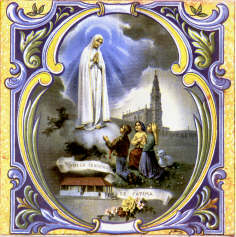
This devotion has received new emphasis in this century from the visions given to Lucy Dos Santos, oldest of the visionaries of Fatima, in her convent in Tuy, in Spain, in 1925 and 1926. In the visions Our Lady asked for the practice of the Five First Saturdays to help make amends for the offenses committed against her heart by the blasphemies and ingratitude of men. The practice parallels the devotion of the Nine First Fridays in honor of the Sacred Heart.

On October 31, 1942, Pope Pius XII made a solemn Act of Consecration of the Church and the whole world to the Immaculate Heart. Let us remember this devotion year-round, but particularly through the month of August.

Excerpted from The Prayer Book by Reverend John P. O'Connell, M.A., S.T.D. and Jex Martin, M.A.

Consecration to the Immaculate Heart

Pope Paul VI, on the floor of the Vatican Council at the close of the third session, renewed publicly the consecration of the Church and the world to Mary's Immaculate Heart. He said that his thoughts turned to the whole world "which our venerated predecessor Pius XII . . . not without inspiration from on high, solemnly consecrated to the Immaculate Heart of Mary. . . . O Virgin Mary, Mother of the Council, to you we recommend the entire Church." When he visited Fatima on May 13, 1967, the same Pope recalled this "consecration which we ourselves have renewed on November 21, 1964 — we exhort all the sons of the Church to renew personally their consecration to the Immaculate Heart of the Mother of the Church and to bring alive this most noble act of veneration through a life ever more in accord with the divine will and in a spirit of filial service and of devout imitation of their heavenly Queen."

Before making a consecration, it is most desirable to make a careful preparation extending over some period of time. One good way to make that preparation is described in the last part of St. Louis de Montfort's True Devotion book.

The most essential thing is not making an act of consecration, with or without some solemnity, though that is important. The essential thing is to live that consecration.

Living a consecration could be described as following three attitudes or spirits:

 Union — Imitation of Jesus and Mary, so as to become like them, and trying to develop as constant as possible a realization of His and her presence.
 Dependence — Give to Jesus and Mary the right to dispose of everything we have, temporal and spiritual.

 Obedience — Jesus and Mary have the right to ask us to do anything at all, even without reward. In consecration, we recognize that right, give it on a basis of love, and plan to carry it out with fullest generosity.

St. Maximilian Kolbe liked to speak of the relation of consecration to our baptismal promises, in which we promised to renounce Satan and all his works, and to follow Jesus, by whom we are "sealed" in baptism as His property. Consecration is the fullest kind of response to and carrying out of these promises. Mary, in view of her Immaculate Conception, was most fitted to respond most fully, and that she did, with a fullness and perfection beyond our ability to visualize — for we recall that Pius IX told us that even at the start of her existence, her holiness was so great that "none greater under God can be thought of, and no one but God can comprehend it."

Excerpted from Our Father's Plan, Fr. William G. Most

Reparation to the Immaculate Heart

Our very consecration to the Immaculate Heart of Mary calls upon us to make reparation for the offenses that we and others have committed against her. The Church, in inviting us to consecrate ourselves to her Immaculate Heart, implicitly calls upon us for this reparation. But more explicitly, and even before Fatima, Saint Pius X offered a plenary indulgence to all who on the first Saturday of the month would observe special devotions in honor of the Immaculate Virgin in a spirit of reparation for the blasphemies uttered against her.

There is, however, an even more basic reason why each one of us owes reparation to the Immaculate Heart of Mary: every sin of ours caused grief and suffering to her in union with her divine Son. For sin was the cause of that terrible day on Calvary when she, as the New Eve, shared in the torment of the great sacrifice, and, amidst indescribable pain, brought forth spiritually all the members of the Mystical Body of her divine Son. God willed that Mary should be intimately associated with His Son in bearing the burden of all sin; surely then, her Immaculate Heart, in union with His divine Heart, should receive reparation from us who have caused them such pain. If anyone causes hurt to even a very ordinary human being, he does not overlook the need to make amends. How much more do we owe to the Hearts of Jesus and Mary!

Excerpted Mary in Our Life, Fr. William G. Most

After youth mass, Pope Leo XIV recalls the young people of Gaza, Ukraine and delivers Angelus Address


Aftermath of an overnight Israeli strike on an UNRWA school that was sheltering displaced people in Khan YounisAftermath of an overnight Israeli strike on an UNRWA school that was sheltering displaced people in Khan Younis  (q)

Pope Leo: We are with the young people of Gaza, Ukraine and war-torn lands

At the conclusion of the closing Mass for the Jubilee of Youth, Pope Leo remembers young people suffering "the most serious evils" caused by other human beings, mentioning specifically war-torn Gaza, Ukraine, and "every land bloodied by war."

Vatican News

Just before the conclusion of the closing Mass for the Jubilee of Young People at Rome's Tor Vergata field, Pope Leo expressed his closeness and solidarity with the young people suffering in Gaza, Ukraine and all those living in war-torn parts of the world. 

“In communion with Christ, our peace and hope for the world, we are closer than ever to young people who suffer the most serious evils which are caused by other human beings. We are with the young people of Gaza. We are with the young people of Ukraine, with those of every land bloodied by war. My young brothers and sisters, you are the sign that a different world is possible, a world of fraternity and friendship, where conflicts are not resolved with weapons but with dialogue.”

Sympathies for Maria and Pascale

The Pope also expressed his sympathies and condolences over the death of two young pilgrims, Maria and Pascale, a Spaniard and Egyptian, who died during their time in Rome due to sudden health emergencies.

We give thanks to God

The Pope's words came just before leading the Angelus prayer as he offered final greetings to the over one million pilgrims gathered for the Sunday morning outdoor Mass.

He took the opportunity to invite everyone to express their immense gratitude to God for the gift of these days of their Jubilee.

He said the outpouring of God's grace for the Church and the entire world was reflected in the participation of all the young people, and he thanked them with all his heart. Greeting the thousands of bishops, priests, religious and pastoral leaders accompanying the young people, the Pope thanked them for their pastoral care, as well as all those who offered their prayers for the events and participated spiritually.

World Youth Day 2027 in Seoul, Korea

Finally, the Pope recalled that following this jubilee "Pilgrimage of Hope" in Rome, the next destination on the horizon will be Asia when the Successor of Peter will join them to celebrate World Youth Day in Seoul, Korea, from 3 to 8 August 2027. The theme of the next WYD is taken from John's Gospel, the verse recalling Jesus' words to his disciples at the Last Supper, “Take courage! I have overcome the world."

The Pope said may the hope that abides in our hearts give us the strength to announce the victory of the Risen Christ over evil and death. And it is this reality that gives the young pilgrims hope and the courage to be witnesses to the ends of the earth. He said may we continue to dream and hope together in view of the next meeting in Seoul, entrusting ourselves to the maternal protection of the Blessed Virgin Mary.

Pope Leo XIV presides and preaches at Mass for Jubilee of Young People in Rome


Pope at Youth Mass: The Lord is gently knocking at the window of your soul

During the Mass for the Jubilee of Young People at Tor Vergata, Pope Leo XIV reminds the young people that Jesus is our hope and urges them to "adventure with the Lord toward eternity" as the Lord is "gently knocking" at the window of their soul.

By Deborah Castellano Lubov

Jesus is our hope, adventure with Him throughout your life, and let Him enlighten you...

Pope Leo XIV expressed this during the Mass for the Jubilee of Young People at Tor Vergata in Rome on Sunday morning.

The Holy Father introduced this by acknowledging in his homily that even if today’s liturgy does not mention the episode directly, it invites us to reflect on the encounter with the Risen One “Who transforms our lives and enlightens our affections, desires and thoughts.”

The Lord is knocking at window of our soul

He noted that the first reading, taken from the Book of Ecclesiastes, invites us, like the two disciples, to come to terms with the experience of our limitations and the fleeting nature of all things that pass away.

“We are not made for a life where everything is taken for granted and static, but for an existence that is constantly renewed through gift of self in love.” “This is why,” he said, “we continually aspire to something 'more' that no created reality can give us; we feel a deep and burning thirst that no drink in this world can satisfy." 

"Knowing this," he said, "let us not deceive our hearts by trying to satisfy them with cheap imitations!"  Rather, he suggested, "Let us listen to them!" 

"Let us turn this thirst," the Holy Father suggested, "into a step stool, like children who stand on tiptoe, in order to peer through the window of encounter with God.  We will then find ourselves before Him, who is waiting for us, knocking gently on the window of our soul." 

St. Augustine's wisdom

“It is truly beautiful, especially at a young age,” the Holy Father said, “to open wide your hearts, to allow him to enter, and to set out on this adventure with him towards eternity.”


Pope Leo XIV delivers homily at Mass for Jubilee of Young People (@Vatican Media)


Saint Augustine, reflecting on his intense search for God, the Pope recalled, asked himself: 'What, then, is the object of our hope [...]?'

Asking whether our source of hope is the earth or something beautiful that comes from it, he argued that these items were not, but rather 'the One Who made them,' 'He is your hope.'

St. Augustine, Pope Leo reminded the young people, thinking of his own journey, prayed and said, “You [Lord] were within me, but I was outside, and it was there that I searched for you […]  You called, you shouted, and you broke through my deafness."

Like Augustine’s search for meaning, the Pope acknowledged the young people at times ponder similar questions.

Things that are above

The Pope acknowledged, “There is a burning question in our hearts, a need for truth that we cannot ignore, which leads us to ask ourselves: what is true happiness?  What is the true meaning of life?  What can free us from being trapped in meaninglessness, boredom and mediocrity?"

In recent days, Pope Leo recalled the young people have had many beautiful experiences, adding that through all this, "you can grasp an important point," namely the fullness of our existence does not depend on what we store up or, as we heard in the Gospel, on what we possess. 

Rather, he reminded, fullness has to do with what we joyfully welcome and share.  "Buying, hoarding and consuming are not enough.  We need to lift our eyes, to look upwards, to the 'things that are above…’"

Jesus is our hope

"Dear young people, Jesus is our hope," Pope Leo insisted.

"It is He," as Saint John Paul II said addressing young people in the same place during the 2000 Jubilee, Pope Leo remembered, “who stirs in you the desire to do something great with your lives [...] to commit… to improving yourselves and society, making the world more human and more fraternal.”

Therefore, the Holy Father exhorted, “Let us remain united to Him, let us remain in His friendship, always, cultivating it through prayer, adoration, Eucharistic Communion, frequent Confession, and generous charity, following the examples of Blessed Piergiorgio Frassati and Blessed Carlo Acutis who will soon be declared saints.” 

Hence, he invited, “Aspire to great things, to holiness, wherever you are.  Do not settle for less.  You will then see the light of the Gospel growing every day, in you and around you.”

Finally, after entrusting the young people to the Blessed Mother, Pope Leo XIV concluded, praying that as they return home, they “continue to walk joyfully in the footsteps of the Savior, and spread your enthusiasm and the witness of your faith to everyone you meet!” 

Saturday, August 2, 2025

Two Saints straight from Acts of the Apostles


St. Gamaliel


Feastday: August 3
Death: 1st century


Rabbinical teacher, the mentor of St. Paul. Gamaliel counseled the Jewish Sanhedrin in Jerusalem to release St. Peter and other apostles. He reportedly became a Christian, and the finding of his body in Jerusalem was celebrated on August 3 by early Christians.

See Acts chapter 5, Acts chapter 17, Acts chapter 22.


St. Lydia Purpuraria


Lydia Purpuraria (1st century) was born at Thyatira (Ak-Hissar), a town in Asia Minor, famous for its dye works, (hence, her name which means purple seller). She became Paul's first convert at Philippi. She was baptized with her household, and Paul stayed at her home there. Her feast date is August 3.

See Acts chapter 16