Showing posts with label pilgrimage. Show all posts

Monday, July 6, 2026

The 2026 National Eucharistic Pilgrimage ends in Philadelphia


National Eucharistic Pilgrimage ends, but ‘the journey continues’


Faithful sing hymns as they participate in a July 5, 2026, Eucharistic procession through the streets of Philadelphia that marked the conclusion of the 2026 National Eucharistic Pilgrimage in that city amid the nation's 250th anniversary celebrations. (OSV News photo/Gina Christian)

PHILADELPHIA (OSV News) — As the 2026 National Eucharistic Pilgrimage concluded amid the U.S.’s 250th anniversary, “the journey continues,” said Archbishop Nelson J. Pérez of Philadelphia.

And, he added, “we’re all walking to one place,” with the path leading to the “powerful, transformative and lifegiving” love of God.

The archbishop was the principal celebrant and homilist at the final liturgy for the pilgrimage, which took place July 5 at the Cathedral Basilica of Saints Peter and Paul in Philadelphia, the second to last stop on the pilgrimage route. 

At the start of the Mass, Pope Leo XIV — the first U.S.-born pope — addressed the faithful in a pre-recorded video message, saying that the “strong, though largely unknown, Eucharistic heritage” of the nation “must continue to serve as source of both renewal and unity.”

Pilgrims wrap up six-week tour

The pilgrimage arrived in Philadelphia July 2, having traveled through most of the nation’s original 13 colonies — spanning 18 dioceses and archdioceses, as well as two Eastern Catholic eparchies — since its May 24 launch.

With a theme of “One Nation Under God,” the pilgrimage had been placed under the patronage of St. Frances Xavier Cabrini, the woman religious and Italian immigrant who became the first U.S. citizen to be canonized after a lifetime of work ministering to immigrants. Stops along the Cabrini Route highlighted sites significant to Catholicism’s contributions to U.S. history.

 
Seminarians from St. Charles Borromeo Seminary in Ambler, Pennsylvania, along with several Knights of Columbus led a July 5, 2026, Eucharistic procession through the streets of Philadelphia, marking the close of the 2026 National Eucharistic Pilgrimage. (OSV News photo/Gina Christian)

Despite an ongoing heatwave, hundreds filled the cathedral’s pews for the July 5 liturgy, overflowing into aisles and side chapels and joining in the hymns led by multiple multicultural choirs. 

Following the Mass, attendees braved temperatures above 90 degrees and high levels of humidity for a Eucharistic procession through the streets of Philadelphia to the National Shrine of St. John Neumann, located at St. Peter the Apostle Church some two miles away.

Archbishop Pérez held the monstrance as he processed under a canopy held aloft by attendants, with the Knights of Columbus forming an honor guard and choir members, in full choral robes, leading pilgrims in multiple hymns.

Pilgrim voices

Walking along the route, Kevin DePaulo and Helen Chalhoub — young adult Catholics from the Philadelphia suburbs — told OSV News that participating in the Philadelphia stop of the pilgrimage was a source of joy.

DePaulo described the Eucharistic procession as “a meaningful opportunity to really do something that shows our faith outside of just going to church on Sunday. It’s a public witness.”

Chalhoub, who carried a banner with the image of the Divine Mercy and the text of the Hail Mary, said that she looked forward to continuing “to lean on the Lord through everyday life, through challenges, and even when things are going well. Just to always lean on the Lord and be with him.”

Patrick McNabb, a Philadelphia-area native now living in Rhode Island, brought his young children Grace and Brendan to the Mass and procession, having already attended earlier pilgrimage events in both Rhode Island and Massachusetts.

As a father, said McNabb, he hoped his kids would “grow closer to God” as a result of their participation.

Joshua Brooks, currently in his fourth college year at St. Charles Borromeo Seminary in Ambler, Pennsylvania, said the day’s Mass and procession “really shows how the Eucharist is the source and summit of our Catholic faith.”

As he prepared to help carry the main banner at the front of the procession, Brooks said, “We’re going to bring Christ into the streets of Philadelphia, to give witness to people that Jesus is here with us on earth in the Blessed Sacrament.”

Brooks, who converted to Catholicism in high school after being raised Baptist, added, “The Eucharist really means everything. And when we go out together as a Catholic family, we show that the Eucharist is for all of us.”

Archbishop Nelson J. Pérez of Philadelphia processes with the Blessed Sacrament July 5, 2026, during the final Eucharistic procession of the 2026 National Eucharistic Pilgrimage, which concluded in that city amid the nation’s 250th anniversary celebrations. (OSV News photo/Gina Christian)

Several members of the Immaculate Heart of Mary Sisters of Wichita, Kansas, told OSV News after the procession that the liturgy and the journey to the St. John Neumann Shrine — at which Benediction took place — were an experience of oneness among Catholics.

“We certainly saw the universal Church in our procession today,” said Sister Mary Monica. “It was beautiful coming together, because Christ is unity, and so our nation needs to come together. And it’s only through Christ that will happen.”

From start to finish

Bishop Erik T. Pohlmeier of St. Augustine, Florida — whose diocese hosted the start of the 2026 National Eucharistic Pilgrimage — said that “what binds us all together is the Eucharist.

“Our greater identity is unity with each other, (more) than anything else,” he told OSV News.

Bishop Pohlmeier said the nine young adults who accompanied the Blessed Sacrament throughout the 2026 pilgrimage — known as “perpetual pilgrims” — had gotten “a glimpse into the bigger reality of the Church” as a result of their journey.

Several pilgrims affirmed the bishop’s insight during a post-procession press conference.

“I think it’s so beautiful going through so many different parts of the country, so many different dioceses,” said Cheyenne Johnson, who had also been a 2025 perpetual pilgrim.

Johnson said she and her fellow pilgrims had experienced “so many different cultures in different places,” adding, “And I think that’s a beautiful thing.”

Yet at the heart of such diversity remains a divine unity, said Archbishop Pérez.

The “enduring presence” of Christ’s “body, blood, soul and divinity” in the sacrament of the altar was given as a “gift” that gathers the faithful, he said during his homily at the cathedral.

“It transforms us,” said Archbishop Pérez. “It conquers us.”

Tuesday, May 26, 2026

From St. Augustine Florida to Philadelphia PA.; Jesus in the Eucharist is on the move; National Eucharistic Pilgrimage as we prepare for the 250th birthday of the USA


National Eucharistic Pilgrimage kicks off in St. Augustine, Florida, on Pentecost

The pilgrimage, whose 2026 theme is “One Nation Under God,” will travel the St. Frances Xavier Cabrini Route from Florida up the eastern seaboard before concluding July 5 in Philadelphia.


Jesus in the Eucharist is carried in procession on the grounds of the Shrine of Our Lady of La Leche to the historic chapel for exposition and adoration during opening day events for the National Eucharistic Pilgrimage on Pentecost Sunday, May 24, 2026, in St. Augustine, Florida. | Credit: Jeffrey Bruno

ST. AUGUSTINE, Florida — The 2026 National Eucharistic Pilgrimage kicked off on Sunday in St. Augustine, Florida, as Catholics gathered for Pentecost Mass at the National Shrine of Our Lady of La Leche at Mission Nombre de Dios, launching a six-week East Coast journey that will carry the Blessed Sacrament to Philadelphia during the United States’ 250th anniversary year.

The pilgrimage, whose 2026 theme is “One Nation Under God,” will travel the St. Frances Xavier Cabrini Route from Florida up the Eastern Seaboard before concluding July 5 in Philadelphia.

Organizers have described the route as a way to connect Eucharistic faith with the country’s history, including stops through many of the original 13 colonies and several historic Catholic landmarks.

Religious sisters pray during Mass at the opening day of the National Eucharistic Pilgrimage on Pentecost Sunday, May 24, 2026, in St. Augustine, Florida. | Credit: Jeffrey Bruno

Bishop Erik Pohlmeier of the Diocese of St. Augustine welcomed pilgrims at the opening event, joined by National Eucharistic Pilgrimage staff, clergy, religious, lay faithful, families, and the perpetual pilgrims who will accompany the Eucharist along the route.

“We should be compelled to speak the message of the Gospel… to take up our part in the grand work of the Church,” Pohlmeier said during his Pentecost homily.

The day began with arrival and welcome at the shrine, followed by opening remarks, the Family Rosary Across America with Relevant Radio, and the Opening Pentecost Mass at the Field Altar. After Mass, the Eucharist was carried in procession on the shrine grounds to the historic chapel for exposition and adoration.

Bishop Erik Pohlmeier kneels before the monstrance during exposition of the Blessed Sacrament on the opening day of the National Eucharistic Pilgrimage on Pentecost Sunday, May 24, 2026, in St. Augustine, Florida. | Credit: Jeffrey Bruno

More than 1,000 pilgrims attended the opening events, gathering under the intense Florida sun as umbrellas stretched across the crowd throughout the outdoor Mass and procession. Families, clergy, religious sisters, and pilgrims of all ages filled the shrine grounds before following the Eucharist in procession to the historic chapel for adoration.

The launch site carries historical significance. The Diocese of St. Augustine said the pilgrimage begins in “the nation’s oldest Catholic city,” linking the earliest chapter of Catholic life in what is now the United States with a new generation of pilgrims carrying the Eucharist across the country. The shrine grounds are associated with the Mass of thanksgiving celebrated in 1565 at the founding of St. Augustine, the nation’s oldest continuously occupied European-established city in the continental United States.

In his homily, Pohlmeier connected the feast of Pentecost to both the history of Catholicism in St. Augustine and the Church’s missionary calling today. Reflecting on the arrival of Catholic missionaries to Florida’s shores in the 16th century, he said that “from that beginning, they centered their life around the Eucharist.”

He described Pentecost as producing both “the missionary impulse” and “the divine power of the Church’s work,” saying those same gifts remain essential for the Church today.

The 2026 pilgrimage is named for Frances Xavier Cabrini, the first U.S. citizen to be canonized a saint. Known for her missionary work among immigrants, orphans, the poor, and the sick, Mother Cabrini is also the patron saint of immigrants.

Nine young adults were named perpetual pilgrims for the 2026 journey: Zachary Dotson, Marcel Ferrer, John Paul Flynn, Eduardo Gutierrez, Cheyenne Johnson, Angelina Marconi, Raymond Martinez II, Sharon Phillips, and Mary Carmen Zakrajsek. The pilgrims will travel full time with the Blessed Sacrament from St. Augustine to Philadelphia.

Jesus in the Blessed Sacrament is carried in procession from the grounds of the Shrine of Our Lady of La Leche to the historic chapel for adoration during the opening day of the National Eucharistic Pilgrimage on Pentecost Sunday, May 24, 2026, in St. Augustine, Florida. | Credit: Jeffrey Bruno

John Paul Flynn, a Catholic University of America student from Maryland serving as a media missionary for portions of the pilgrimage, said he first learned about the opportunity through an Instagram post his girlfriend sent him. Already involved in Catholic media work, Flynn said the opportunity gradually became something he felt called to pursue.

Describing the pilgrimage as “too good … to pass up,” Flynn said he realized his current stage of life as a student gave him a rare opportunity to spend weeks accompanying the Eucharist across the country. He said he hopes the experience will deepen his faith and make Christ’s presence more tangible through the journey

Pilgrims process to the Cathedral Basilica of St. Augustine during opening day events for the National Eucharistic Pilgrimage on Pentecost Sunday, May 24, 2026, in St. Augustine, Florida. | Credit: Jeffrey Bruno

The pilgrimage is scheduled to pass through 18 dioceses and two Eastern-rite eparchies, with public events including Mass, Eucharistic adoration, processions, service projects, and opportunities for prayer.

Later Sunday, pilgrims processed approximately 1.2 miles from the National Shrine of Our Lady of La Leche to the Cathedral Basilica of St. Augustine, where reflections, speakers, sacred music, and overnight adoration were planned.

The launch comes two years after the first National Eucharistic Pilgrimage crossed the country in 2024 and one year after the 2025 pilgrimage continued the movement. Organizers have said the 2026 route is intended to invite prayer for unity, healing, and renewal as the country approaches its semiquincentennial.

The pilgrimage will continue Monday through the Diocese of St. Augustine before moving north. Its final events are scheduled for Independence Day weekend in Philadelphia.

Friday, May 22, 2026

A Eucharistic Pilgrimage starting in St. Augustine, Florida; site of 1st Catholic Mass in America


National Eucharistic Pilgrimage’s Florida kickoff roots US history in the Mass

A file photo shows the historic chapel of the Shrine of Our Lady of La Leche at Mission Nombre de Dios in St. Augustine, Fla., with the statue of the nursing and watchful mother of Jesus. (OSV News photo/St. Augustine Catholic)

Before the Declaration of Independence was boldly signed in 1776, before pilgrims feasted at what became popularly regarded as the “First Thanksgiving” in 1621, there was St. Augustine, Florida. 

The coastal Florida city was founded in 1565 by Spanish Catholic explorer Pedro Menéndez de Avilés, is celebrated as the longest continually inhabited European-founded city in the U.S. and is home to the United States’ oldest continuously operating parish, the Cathedral Basilica of St. Augustine. 

It is also the May 24 starting point for the 2026 National Eucharistic Pilgrimage, themed “One Nation Under God” in honor of America’s 250th year.

The pilgrimage begins on the historic grounds of America’s oldest Marian shrine: the National Shrine of Our Lady of La Leche at Mission Nombre de Dios, which Bishop Erik T. Pohlmeier of St. Augustine has described as “the oldest site of continuous Catholic presence in the United States.”

With its founding, St. Augustine became the site of an early Mass in what is now the United States, celebrated in 1565 to commemorate the landing of a Spanish explorer, his crew and Catholic clergy.

“As we focus this year on the Declaration of Independence and the 250th anniversary of that, St. Augustine helps us begin not with politics, but with worship,” said Jason Shanks, National Eucharistic Congress president. “And I think that’s critically important.”


Oldest US Marian shrine

Both the shrine and the mission, its caretakers say, “stand as living witnesses” not just to the founding of St. Augustine, but also to the practice of the Mass in the United States. The site roots its history in the landing of Spanish Admiral Pedro Menéndez de Avilés. In 1565, his crew sighted land on Aug. 28, the feast of St. Augustine, and Menéndez came ashore Sept. 8. The admiral claimed the land for Spain, “establishing the settlement that would become the first permanent European settlement in what is now the continental United States,” according to the shrine’s website.

Soon after landfall, the expedition’s chaplain, Father Francisco López de Mendoza Grajales, celebrated a Mass of thanksgiving.

The shrine and mission grounds, known as “The Sacred Acre,” still yield discoveries, said the shrine’s rector, Father Timothy Lindenfelser.

“We’re constantly doing archaeological excavations. Most recently, we found the foundations of the Franciscan church that was on the property. That was found with burials of Indigenous people around it, and then the kitchen that was connected to it,” he said. “Every time we do a renovation or do archaeological digs, we’re always finding new things.”

A graphic depicts the 2026 route of the National Eucharistic Pilgrimage, which begins May 24 in St. Augustine, Fla., and ends in Philadelphia July 5. (OSV News graphic/National Eucharistic Congress)


Continued Catholic presence

The mission and shrine’s website describe Father Francisco’s Mass as the “first Catholic Mass of Thanksgiving in what is now the United States, establishing the first parish and planting the roots of the Catholic faith in the New World.”

However, “we do not claim to be the first Catholic Mass in what is today the United States,” said Father Lindenfelser. “The first that’s documented would have been in Pensacola in 1559. The Spanish established a settlement there, so we know there were priests and Mass was celebrated. But the settlement didn’t last.”

Kathleen Bagg, the Diocese of St. Augustine’s communications director, elaborated, telling OSV News, “What makes St. Augustine historically significant is that the Sept. 8, 1565, Mass of Thanksgiving was connected to the founding of the first permanent European settlement in what is now the continental United States, and to a Catholic community whose presence has continued into the present day.”

“The phrase ‘first Catholic Mass of Thanksgiving in what is now the United States’ is intended as a historical distinction connected to the founding of St. Augustine, rather than a claim that no earlier Masses had ever been celebrated elsewhere in territories that later became part of the United States,” she said.


Determining first Mass in future US ‘tricky’

If the wording seems intentionally careful, it is because there is some historical wrestling over the location of the first Mass celebrated in what would become the United States of America. 

“There are a whole series of Spanish expeditions into Florida and elsewhere in the Southeast, long before Pensacola was established in 1559,” said J. Michael Francis, a history professor and chair of Florida studies at the University of South Florida.

He noted expeditions led by Juan Ponce de León — the first of which made landfall in 1513, probably south of Cape Canaveral — as well as subsequent expeditions, and the settlement of San Miguel de Guadalupe.

“It hasn’t been located archaeologically,” Francis told OSV News, “but it was likely somewhere in present-day South Carolina in 1526. That settlement lasted for less than one year — but assuredly there were many Masses said at San Miguel. Then you have the 1539 Hernando de Soto expedition, and there were likely dozens — if not hundreds — of Masses said between 1539 and 1543 during the course of that expedition.

“So,” he emphasized, “this is where it gets really tricky.”


Accounts vary

The 1565 Mass at St. Augustine, held on the feast of the Nativity of Mary, “is often attributed to an account written by the priest” — Father Francisco López de Mendoza Grajales — “who allegedly said that Mass. But he never says that in his account. What he says is that on Sept. 8, 1565 — when Menéndez, the founder of St. Augustine, comes ashore — they greet him singing the ‘Te Deum laudamus,'” a hymn of rejoicing.

Father López, Francis continued, “said Menéndez — and all of the others with him — approached him on their knees, and they kissed the cross. … But he never specifically says, ‘I said Mass.’ He says there were ‘other ceremonies.’ There’s another account — that has been attributed to Pedro Menéndez de Avilés’ brother-in-law — in which he says that on that day, Menéndez ordered that a solemn Mass be said.

“So, what often happens with these kinds of stories is that different sources get conflated,” Francis stressed.


‘A great place of evangelization’

Bagg pointed out what she described as another “important historical nuance.”

“While St. Augustine remained continuously inhabited as a city, Catholic parish life was interrupted during the British period (1763–1784), when Spanish clergy departed and public Catholic worship ceased until the arrival of the Minorcans and Father Pedro Camps in 1777,” she told OSV News. “Even with that interruption in sacramental life, the broader Catholic presence associated with the founding of St. Augustine and Mission Nombre de Dios remains foundational in American Catholic history.”

Ultimately, the St. Augustine site remains a place of witness. When the tourist trolleys stop at the National Shrine of Our Lady of La Leche at Mission Nombre de Dios, Father Lindenfelser says visitors often find themselves deeply affected.

“Many people have come back to the faith,” he said. “Some people have for the very first time heard the message of the Gospel, just because they were sitting there — and one of the chaplains or one of the staff, we come up and talk to them,” Father Lindenfelser said. 

“So, it’s still today a great place of evangelization,” he added, “by just being present to those who come.”

Friday, August 8, 2025

Pope Leo XIV receives Venice pilgrims including three prison inmates


One of the pilgrim inmates presents a chalice to Pope Leo XIV during their audience Thursday morning (photo credit: © Gente Veneta, weekly magazine Diocese of Venice)One of the pilgrim inmates presents a chalice to Pope Leo XIV during their audience Thursday morning (photo credit: © Gente Veneta, weekly magazine Diocese of Venice) 

Pope Leo welcomes Venetian inmates on Jubilee pilgrimage

Pope Leo XIV on Thursday receives in audience a group of pilgrims from Venice, including three inmates of the city’s Santa Maria Maggiore prison.

By Christopher Wells

Three inmates from Venice’s Santa Maria Maggiore Prison are among a group of pilgrims received by Pope Leo on Thursday at the Vatican. The group's Jubilee pilgrimage of almost 500 kilometers included traversing the final hundred kilometers, from the Italian town of Terni to Rome, on foot.

The pilgrims were accompanied to the audience by the Patriarch of Venice, Archbishop Francesco Moraglia; and prison chaplain Father Massimo Cadamuro, along with other archdiocesan officials.

Ahead of the audience, Father Cadamuro said, “The meeting with Pope Leo truly brings to completion this experience of ours, a journey and a pilgrimage, undertaken entirely under the banner of a trustworthy hope, which represents a necessary dimension for the authentic life of all people, both free and incarcerated. Having been able to undertake this pilgrimage together makes everything stronger, truer, more authentic.”

Enrico Farina, the Director of the Santa Maria Maggiore Prison, was also present on Thursday. In remarks prior to the audience, he said, the opportunity to allow inmates to take part “in an intense human and spiritual journey” fills him “with pride.” He noted, too, that the inmates will be given a blank diary containing reflections and prayers inspired by “this deeply meaningful journey,” and said he was honoured to share the moment with the pilgrims.
 

Following on from a Jubilee audience for seminarians from Venice and the surrounding area in June, Thursday’s encounter is “another great gift from Pope Leo,” who accepted the inmates request for an audience at the end of their pilgrimage, according to Archbishop Moraglia.

The Patriarch of Venice said the pilgrimage and audience with the Pope “is an experience that—I am certain—will leave an indelible mark on the soul, life, and story of these inmates, of the staff and volunteers who are accompanying them, and also of all those who are committed to diocesan ministry directed toward prisons and the reintegration of male and female inmates into social life.”

The Jubilee pilgrimage, along with the opportunity to meet with Pope Leo, is part of the Archdiocese of Venice’s “ongoing and comprehensive commitment” to pastoral care of inmates in local prisons. As part of that commitment, Archbishop Moraglia has meet in recent weeks with Italy’s Minister of Justice, Carlo Nordio, to discuss the state of prisons in and around Venice, as well as efforts to reintegrate inmates into civil society following completion of their sentences.

Thursday, January 2, 2025

Pilgrimage sites announced by the Archdiocese of New Orleans for Jubilee 2025

 The following churches, shrines, basilicas in the Archdiocese of New Orleans have been designated as pilgrimage sites for Jubilee 2025:


The Cathedral Basilica of St. Louis King of France

Basilica of St. Stephen

National Votive Shrine of Our Lady of Prompt Succor

Shrine of the Vietnamese Holy Martyrs

National Shrine of Blessed Francis Xavier Seelos

St. Jude Shrine

St. Joseph Church and Shrine on the Westbank

St. Anne Church and Shrine

St. Joseph Abbey

St. Augustine Church

St. Charles Borromeo Church

St. John the Baptist Church

More details coming soon.


Tuesday, November 26, 2024

Jubilee 2025: what it takes to be a pilgrim


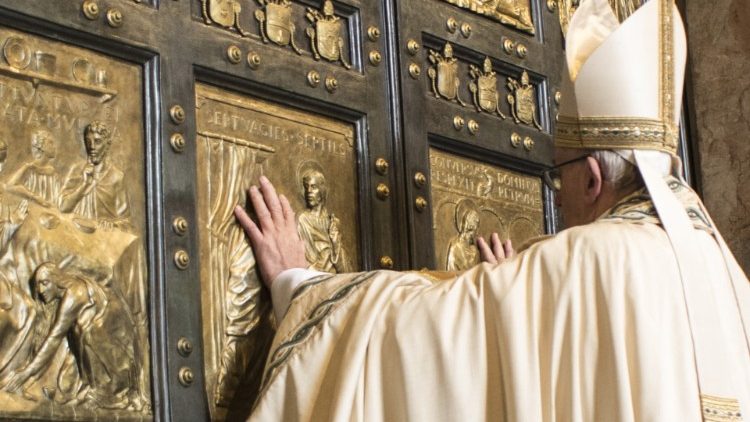
File photo of Pope Francis opening Holy Door to inaugurate Jubilee YearFile photo of Pope Francis opening Holy Door to inaugurate Jubilee Year 

Jubilee 2025: What it takes to be a pilgrim

As pilgrims prepare for the 2025 Jubilee, a priest, a tour guide and a theologian reflect on what the Holy Year means to them.

By Phoebe Martel 

Starting this Christmas Eve, the Eternal City will open its gates to an estimated 35 million pilgrims for the 2025 Jubilee Year of Hope.

The Catholic Holy Year ordinarily occurs once every 25 years, and the Jubilee is a chance for the faithful to visit holy sites, perform pious works, and have their sins remitted. The Pope grants plenary indulgence to Jubilee pilgrims on December 24, with the opening of the Holy Door of Saint Peter’s Basilica.

The upcoming Jubilee follows 2024’s Year of Prayer, which Pope Francis declared as a preparatory period for personal meditations on God and the Catholic vocation. This year’s theme is Pilgrims of Hope, chosen to promote peacebuilding in a world threatened by climate change and ongoing wars.

Youth pilgrims called to the Eternal City

Steve Kerekes is the founder of WorldYouthDay.com and JMJ Pilgrimages, which organizes Jubilee itineraries for young Catholic students and parishioners in half a dozen countries. These youth pilgrimages are structured around visits to key sites like the Basilica of St. John Lateran and the Appia Way catacombs, culminating in an audience with Pope Francis at Tor Vergata.

For Kerekes, making a pilgrimage is vital to faith education, allowing for an ultimate close encounter with God that young people may not be able to access at home.

“Young people may be searching even more for the fundamental truths of the faith, and we teach them how to do that on pilgrimage,” Kerekes said. “Leaving their country behind is very important to free all the clutter and open them up to the grace of God.”

Kerekes sees the pilgrimage as an act of love, allowing faithful youth to replenish their spiritual wells so they can become forces for grace and mercy in contemporary culture.

“Living in the turmoil of the world you were meant to live in for your salvation – this is what God has chosen for you,” he said. “So I tell young people, don’t be afraid to give Him everything.”

Anglophones in Rome

At Saint Patrick’s American Parish in Rome, preparations are underway to welcome a 2025 influx of Anglophone tourists. Along with Americans, Saint Patrick’s welcomes regulars from Australia, Kenya, Ghana, and Singapore.

The church will expand its opening hours, along with providing a revised edition of its pilgrim guide from the last Jubilee in 2000. The pamphlet will provide practical advice and spiritual guidance about what it means to be a pilgrim, particularly for those not already travelling with a tour group or home diocese.

Rector Fr. Matt Berrios, a Paulist priest originally from the United States, understands the pilgrimage as a chance to deepen their relationship with God through sensory experience and historical understanding.

“When you come to Rome, especially to these pilgrimage spaces that are marvellous examples of the art and spirituality of their own time, you see different examples of the images people clung on to,” Father Berrios said. “Sometimes art, poetry and music are the best tools we have to express the definitional aspects of our faith.”

Reflecting on the theme of hope, Father Berrios pinpointed Catholic spirituality as one that calls on adherents to “be the light of the world,” harnessing their faith for the greater good.

“Our calling is about being a beacon of hope, not just journeying towards something for which we long,” he said. “Hope is, in part, defined by something outside of ourselves. In many ways, the Christian vocation is light, and you don’t light a lamp to put it under a basket.”

The way of the pilgrim

At its core, the Jubilee is a chance for the global Church to renew its commitment to being a life-restoring force on a fractured, war-torn planet. The word 'Jubilee' derives from the Hebrew jobel, a ram’s horn blown to proclaim a yearlong period in which farmers left fields to rest and recover.

1300 years after the first Catholic Jubilee year, the Holy Year remains a dedicated time and space where pilgrims can contemplate how to best care for life on Earth. In a world that centres productivity and individualism, the Jubilee gestures towards a more communal and sustainable way of living.

“Pilgrimage is a space where you reinforce this idea of coming together so that when you go back home, you really take something new with you,” says Filomeno Lopez, a writer and theologian from Guinea Bissau. “This is especially true for us Africans because we know that the most important part of life is togetherness.” 

The act of a long and strenuous pilgrimage, too, is one Mr. Lopez says is integral to instilling empathy for the migrant experience.

In Mr. Lopez’s view, Christ himself came to Earth as a migrant from the heavens, and the human experience itself is an amalgamation of temporary journeys and quests for salvation. Thus, we are all guests in the natural world, and it is up to us to honour its sanctity.

“The nature of a human being is to be a pilgrim,” he said. “Jubilee is a period to stop for a while and think about what is really needed in life. As a pilgrim, we are here for such a short period. Before I leave, what can I leave to others?”