Showing posts with label Indulgence. Show all posts

Sunday, November 1, 2026

Month of November Devotion: The Holy Souls in Purgatory


Month of the Souls in Purgatory


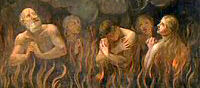
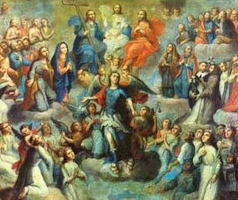
The month of November (Overview - Calendar) is dedicated to the Holy Souls in Purgatory. The Church commemorates all her faithful children who have departed from this life but have not yet attained the joys of heaven. St. Paul warns us that we must not be ignorant concerning the dead, nor sorrowful, "even as others who have no hope ... For the Lord Himself shall come down from heaven ... and the dead who are in Christ shall rise.

The Church has always taught us to pray for those who have gone into eternity. Even in the Old Testament prayers and alms were offered for the souls of the dead by those who thought "well and religiously concerning the resurrection." It was believed that "they who had fallen asleep with godliness had great grace laid up for them" and that "it is therefore a holy and wholesome thought to pray for the dead, that they may be loosed from sins." We know that a defiled soul cannot enter into heaven.

Excerpted from Liturgical Meditations, The Sisters of St. Dominic
Duration of Purgatory

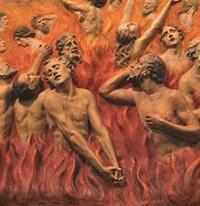
Purgatory is not eternal. Its duration varies according to the sentence pronounced at each particular judgment. It may be prolonged for centuries in the case of the more guilty souls, or of those who, being excluded from the Catholic communion, are deprived of the suffrages of the Church, although by the divine mercy they have escaped hell. But the end of the world, which will be also the end of time, will close forever the place of temporary expiation. God will know how to reconcile His justice and His goodness in the purification of the last members of the human race, and to supply by the intensity of the expiatory suffering what may be wanting in duration. But, whereas a favorable sentence at the particular judgment admits of eternal beatitude being suspended and postponed and leaves the bodies of the elect to the same fate as those of the reprobate; at the universal judgment, every sentence, whether for heaven or for hell, will be absolute, and will be executed immediately and completely.
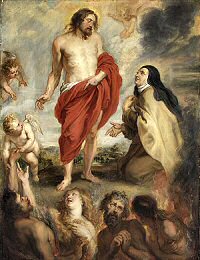

Offering Prayers and Sacrifices

The Church Suffering and the Church Militant constitute in their relations a second circle of most vital activities. Having entered into the night "wherein no man can work," the Suffering Church cannot ripen to its final blessedness by any efforts of its own, but only through the help of others—through the intercessory prayers and sacrifices (suffragia) of those living members of the Body of Christ who being still in this world are able in the grace of Christ to perform expiatory works. The Church has from the earliest times faithfully guarded the words of Scripture that it is a holy and a wholesome thing to pray for the dead that they may be loosed from their sins. [2 Macab. 12, 43] The suppliant cry of her liturgy: "Eternal rest give to them, O Lord, and let perpetual light shine upon them," can be heard already in the Acts of the martyrdom of SS. Perpetua and Felicitas (A.D. 203) and is represented in numerous sepulchral inscriptions of the most ancient period, while theologians and Fathers of the Church, beginning with Tertullian, have supplied its substantial proof. . .. So fundamental indeed and so natural to man's hope and desire and love is this belief, that historians of religion have discovered it among almost all non-Christian civilized peoples: a striking illustration of Tertullian's saying that the human soul is naturally Christian.

The Catholic, therefore, is jealous to expiate and suffer for the "poor souls," especially by offering the Eucharistic Sacrifice, wherein Christ's infinite expiation on the Cross is sacramentally represented, and stimulating and joining itself with the expiatory works of the faithful, passes to the Church Suffering according to the measure determined by God's wisdom and mercy.

— Karl Adam

Indulgences
By the practice of Indulgences, the Church places at the charitable disposal of the faithful the inexhaustible treasure accumulated, from age to age, by the superabundant satisfactions of the saints, added to those of the martyrs, and united to those of our Blessed Lady and the infinite residue of our Lord's sufferings. These remissions of punishment she grants to the living by her own direct power; but she nearly always approves of and permits their application to the dead by way of suffrage, that is to say, in the manner in which, as we have seen, each of the faithful may offer to God who accepts it, for another, the suffrage or succor of his own satisfactions.

— The Liturgical Year, Abbot Gueranger O.S.B.

A partial indulgence can be obtained by devoutly visiting a cemetery and praying for the departed, even if the prayer is only mental. One can gain a plenary indulgence visiting a cemetery each day between November 1 and November 8. These indulgences are applicable only to the Souls in Purgatory.

A plenary indulgence, again applicable only to the Souls in Purgatory, is also granted when the faithful piously visit a church or a public oratory on November 2. In visiting the church or oratory, it is required, that one Our Father and the Creed be recited.

A partial indulgence, applicable only to the souls in purgatory, can be obtained when the Eternal Rest (Requiem aeternam) is prayed. This is a good prayer to recite especially during the month of November:

Eternal rest grant to them, O Lord, and let perpetual light shine upon them. May the souls of the faithful departed, through the mercy of God, rest in peace. Amen.

Sunday, October 18, 2026

Pope Leo XIV grants plenary indulgence for World Mission Sunday


Pope grants plenary indulgence for the 100th World Mission SundayPope grants plenary indulgence for the 100th World Mission Sunday (Erzdiƶzese Wien/ Wolfgang Seper)

Pope grants plenary indulgence for 100th World Mission Sunday

On World Mission Sunday, Pope Leo XIV prays that the Church might always remain faithful to Jesus’ exhortation to “Go into all the world and proclaim the good news to all creation”

Vatican News

Through the Apostolic Penitentiary, Pope Leo XIV has granted a plenary indulgence on the occasion of the 100th World Mission Sunday, established by Pope Pius XI in 1926 and celebrated today, Sunday, October 18. This year’s theme is “One in Christ, United in Mission.”

The faithful can pray the Rosary, in union with the Pope, for the spread of the Gospel throughout the world.

At today’s Angelus, the Pope said: “Today we celebrate the 100th World Mission Day.  Let us think of how much missionary history has unfolded over these one hundred years!  Let us pray that the Church may always remain faithful to the mandate of the Risen Lord: “Go into all the world and proclaim the good news to the whole creation”

Conditions for the indulgence

The Apostolic Penitentiary’s decree specifies that the indulgence can be obtained under the usual conditions: sacramental confession, Eucharistic Communion, and prayer for the intentions of the Supreme Pontiff.

Papal message for World Mission Sunday

In his message for the 100th World Mission Sunday, released on January 25, Pope Leo urges “the whole Church to continue joyfully and zealously, in the Holy Spirit, along the missionary path, which requires hearts united in Christ, reconciled communities, and a willingness in everyone to cooperate generously and confidently.”

At the heart of the mission, the Pope identifies the “mystery of union with Christ”.

“Being Christian is not primarily a set of practices or ideas: it is a life in union with Christ, in which we are made participants in the filial relationship that He lives with the Father in the Holy Spirit,” the Pope emphasizes. He adds that the Church’s primary responsibility in its mission is to renew the spiritual and fraternal unity among its members.

Today, we are witnessing conflicts, polarization, misunderstandings, and mutual distrust, Leo XIV observes. He points out that when this happens within ecclesial communities as well, their witness is weakened.

Pope Leo therefore stresses that the evangelizing mission entrusted by Christ to His disciples requires “hearts that are reconciled and desirous of communion.” This means, the Pope says, that the proclamation of the Gospel is “always a collective, communal, and synodal undertaking.”

Saturday, April 11, 2026

How to receive a Plenary Indulgence for Divine Mercy Sunday


Plenary Indulgence for Divine Mercy Sunday

In a decree dated August 3, 2002, the Apostolic Penitentiary announced that in order “to ensure that the faithful would observe this day (Divine Mercy Sunday) with intense devotion, the Supreme Pontiff himself established that this Sunday be enriched by a plenary indulgence…so that the faithful might receive in great abundance the gift of the consolation of the Holy Spirit.  In this way, they can foster a growing love for God and for their neighbor, and after they have obtained God’s pardon, they in turn might be persuaded to show a prompt pardon to their brothers and sisters.”

The plenary indulgence is granted (under the usual conditions of a sacramental confession, Eucharistic communion and a prayer for the intentions of the Supreme Pontiff) to the faithful who, on Divine Mercy Sunday, in a spirit that is completely detached from the affection for a sin, even a venial sin, recite the Our Father and the Creed, and also adding a devout prayer (e.g. Merciful Jesus, I trust in you!).

Additional provisions are offered for those who are impeded from fulfilling these requirements, but who wish to acquire a plenary indulgence.  The full text of the decree of the Apostolic Penitentiary may be found at: www.mercysunday.com.  While the readings and prayers for Mass on this day remain unchanged (they reflect perfectly on Our Lord’s Divine Mercy) the Holy See offers this reflection:

The Gospel of the Second Sunday of Easter narrates the wonderful things Christ the Lord accomplished on the day of the Resurrection during His first public appearance: “On the evening of that day, the first day of the week, the doors being shut where the disciples were, for fear of the Jews, Jesus came and stood among them and said to them, ‘Peace be with you.’  When He had said this, He showed them His hands and His side.  Then the disciples were glad to see the Lord.  Jesus said to them again, ‘Peace be with you.  As the Father has sent Me, so even I send you,’ and then He breathed on them, and said, ‘Receive the Holy Spirit.  If you forgive the sins of any, they are forgiven; if you retain the sins of any, they are retained’” (Jn 20, 19-23).

In addition, the decree requires that parish priests “should inform the faithful in the most suitable way of the Church’s salutary provision.  They should promptly and generously be willing to hear their confessions.  On Divine Mercy Sunday, after celebrating Mass they should lead the prayers that have been given above, and they should also encourage the faithful to perform acts of mercy as often as they can.”

From the Feb. 2003 edition of the BCL (Bishops Committee on the Liturgy) Newsletter by the U.S. Conference of Catholic Bishops.

Friday, January 16, 2026

A special Jubilee Year of St. Francis of Assisi; plenary indulgences available


The passing of Saint Francis of Assisi, whose eighth centenary is being celebrated this yearThe passing of Saint Francis of Assisi, whose eighth centenary is being celebrated this year 

Year of Saint Francis: 'Indulgence is an encounter with God, not a spiritual shortcut'

The Regent of the Apostolic Penitentiary comments on the decree published on Friday announcing plenary indulgences during the special Jubilee Year proclaimed by Pope Leo XIV on the occasion of the 800th anniversary of the Saint’s death, stressing. “The Year of Saint Francis must not become yet another chapter rich in special spiritual effects, but a silent passage from enthusiasm to deep maturity, from spectacular celebration to imitation in daily life.”

By Fr. Marek Weresa

The special Jubilee Year of Saint Francis proclaimed by Pope Leo XIV will take place from 10 January 2026 to 10 January 2027, on the occasion of the eighth centenary of the death of Saint Francis of Assisi.

In an interview with Vatican Media, Bishop Krzysztof Nykiel, Regent of the Apostolic Penitentiary, said we must not fear that the sacred time of the Jubilee will become “banal.

On this day in which the Decree of the Penitentiary announcing the plenary indulgences during this special Year was published, Bishop Nykiel speaks of mercy that surpasses the limits of human justice and stresses that indulgence is not a “dispenser of graces.”

The Apostolic Penitentiary has issued a Decree granting the plenary indulgence during the Year of Saint Francis on the occasion of the 800th anniversary of his death. What exactly are the conditions, and to whom is it addressed?

The Apostolic Penitentiary, in accordance with the will of Pope Leo XIV, has issued a Decree granting the faithful the plenary indulgence during the Year of Saint Francis, celebrated on the occasion of the 800th anniversary of the death of the Saint of Assisi. The life of the Poor Man of Assisi shows that God’s mercy works in history also through people who have opened their hearts to His action.

Looking at his example, we see that God’s grace can transform even the greatest weaknesses. Precisely indulgence makes it possible to free the heart from the burden of sin, since it is the remission by God of the temporal punishment for sins that have already been forgiven in the sacrament of penance and reconciliation, so that one may carry out the due reparation in full freedom.

Therefore, the Jubilee is an opportunity for the faithful to rekindle their faith, strengthen their relationship with God and with the community of the Church.

To obtain the plenary indulgence during the Year of Saint Francis, certain specific conditions indicated by the Church must be fulfilled: sacramental confession, Eucharistic Communion, certain prayers according to the intentions of the Pope, interior detachment from sin, and the performance of certain works, such as a pious pilgrimage to Franciscan churches, participation in Jubilee celebrations, prayer and meditation in the Franciscan spirit, as well as daily acts of charity and humility that express the spirituality of Saint Francis.

I would like to emphasize that a significant element of the document is the care shown for the sick and the elderly who cannot leave their homes; they may unite themselves spiritually to the celebration of the Year of Saint Francis by offering to God their prayers, sufferings, and daily difficulties of life, and by committing themselves to fulfilling the usual conditions as soon as this becomes possible.

The great spiritual experience of the Jubilee Year 2025 is now behind us. We are now facing another special moment: the Year of Saint Francis. How can we avoid spiritual “fatigue” caused by exceptional events? What can we do to prevent this time from becoming banal?

This is a very pertinent question. After the intense and beautiful spiritual experiences of the Great Jubilee, we can indeed be threatened by what might be called an “inflation of holiness,” which occurs when exceptional events lose their ability to move the heart. But in the life of faith, it is not a matter of a continual “more,” but of a “deeper.” The Jubilee Year of Hope was a time of grace; the Church opened wide her doors. Now it is essential to ask ourselves: what has happened to me since then? Without pausing and assimilating experiences, even the holiest moments remain at the level of emotions.

It may be helpful to return to notes, homilies, and retreats from the Jubilee. Identifying and isolating a single concrete fruit that has remained with me (for example, greater trust, reconciliation, a new practice of prayer), and making it a starting point rather than an end in itself. The figure of Saint Francis is particularly valuable in the context of spiritual fatigue. He does not propose “more practices,” but simplicity and authenticity: a return to personal reading of the Gospel, joy in small things, a faith lived in relationships, not only in events.

The year dedicated to Saint Francis can be an invitation to simplify prayer by deepening it, rather than multiplying it; to live the Gospel concretely rather than merely talking about it. We must not fear that the sacred times of Jubilees become “banal.” They are not meant to astonish us continuously, but to give proper orientation to the heart. The Year of Saint Francis must not become another chapter full of special spiritual effects, but a silent passage from enthusiasm to deep maturity, from spectacular celebration to imitation in daily life.

In the document of the Apostolic Penitentiary, we read these words: “This Year of Saint Francis should encourage all of us, each according to his or her own possibilities, to imitate the Poor Man of Assisi.” What message does the life of Saint Francis offer to modern man?

The biography of Saint Francis shows that true imitation of Christ is not based on declarations or ideas, but on a concrete and real lifestyle rooted in the Gospel. He reminds us of the timeless value of poverty and simplicity. By renouncing wealth and social prestige, Francis showed that freedom of heart is born of detachment from material goods. For today’s person, living in a world of consumerism, this is an extremely timely invitation to moderation, responsible use of goods, and placing God and neighbor above material possessions: it is a matter of “being” more than “having.”

In our time, when faith is often superficial or reduced to emotions and experiences, his attitude also encourages consistency between faith and daily life, and witness given through actions rather than only words or feelings. Saint Francis teaches active and fraternal love, especially toward the weakest, the poor, and the marginalized. His life was a response to indifference and sometimes to selfishness—problems just as evident today, when interpersonal relationships tend to flatten and “the virtual prevails over reality.”

Not least, St. Francis also shows that peace is born from a converted heart, not from self-interested declarations or compromises without truth. In a world marked by conflicts, social violence, and insecurity, his life is a call to build peace based on the Gospel of Christ, the only Redeemer of humanity!

The decree speaks of the need to “detach from sin” in order to obtain the indulgence. How should this requirement be interpreted concretely?

The requirement of “detachment from all sin” mentioned in the decree may seem one of the most difficult elements of the theology of indulgences. From a pastoral perspective, it is worth considering it not as an ideal available only to a few, but as an attitude of the heart to which every Christian is truly called. From a theological point of view, it is not only about committing a sin, but about the interior acceptance of sin, the pleasure it brings, or the willingness to commit it again.

A person may confess and at the same time keep in their heart the thought: “I know it is wrong, that it is not good, but I do not want to stop doing it.” Such an attitude is an attachment to sin that neutralizes grace. By contrast, the detachment from sin that is required is not an emotional sense of purity, but an act of the will that says: “Lord, I want no sin at all, not even the smallest.”

First of all, it is not a state of sinlessness. A person may have weaknesses, recurring venial sins, and may even experience painful falls. What matters is the intention and the orientation of the heart: the sincere decision to break with sin here and now. If someone says to God: “I do not want sin, I hate it, even though I know I am weak,” then there is no attachment to sin in that person.

With the solemn rite celebrated this morning in the Basilica of Saint Mary of the Angels, at the Porziuncola, the commemorative year of the passing of the Poor Man officially began …

How can the faithful be helped in a more mature spiritual preparation so that they do not treat indulgence as a “dispenser of graces”?

It is essential to understand that indulgence is first and foremost an encounter with God, and that its power lies not in our human efforts, but in the grace of God that transforms the heart. From this flow several conclusions. All penitential practices—such as confession, Communion, pilgrimage, prayer—are instruments of preparation that facilitate the encounter with God, but they do not replace the experience of grace itself.

The authentic fruits of indulgence appear when a person consciously opens themselves to God’s transforming power, allows Him to act in their heart, heals relationships, forgives, and is converted. Therefore, indulgence is not “religious magic” or, as stated in the question, “a dispenser of graces,” but an invitation to a living relationship with God, in which the human person accepts the gift of mercy rather than trying to conquer it. God acts; the human person responds with generosity and faith.

If pastors help the faithful to perceive indulgence as a stage on the path of conversion, and not a spiritual shortcut, it will indeed become an instrument of maturation and deepening of faith—and this is, ultimately, the principal goal of the Jubilee Year of Saint Francis.

Saturday, November 1, 2025

November 2nd: All Souls Day; Purgatory; Indulgences


Ordinary Time: November 2nd

The Commemoration of All the Faithful Departed (All Souls' Day)


Today is the Commemoration of the All the Faithful Departed (All Souls' Day). The Church, after celebrating the feast of All Saints, today prays for all who, in the purifying suffering of Purgatory, await the day they will join in heavenly glory. The celebration of the Mass, which re-presents the Sacrifice of Christ on Calvary, has always been the principal means by which the Church fulfills the great responsibility of charity toward the dead. Death cannot break the bonds of the Body of Christ. —Daily Roman Missal

"All who die in God's grace and friendship, but still imperfectly purified, are indeed assured of their eternal salvation; but after death they undergo purification, so as to achieve the holiness necessary to enter the joy of heaven.
"The Church gives the name Purgatory to this final purification of the elect, which is entirely different from the punishment of the damned" (CCC 1030-1031).

Even when November 2 falls on a Sunday, the Mass celebrated is that from the Commemoration of All the Faithful Departed.

On this day, any Priest may celebrate three Masses, observing, nevertheless, what was established by Benedict XV in the Apostolic Constitution, Incruentum altaris sacrificium, 10 August 1915: Acta Apostolicae Sedis 7 (1915) pp. 401-404. —Third Edition of the Roman Missal

We pray for the Faithful Departed especially during the "octave" of All Souls, from November 1st to the 8th.


All Souls Day
The Church, after rejoicing yesterday with those of her children who have entered the glory of heaven, today prays for all those who, in the purifying suffering of Purgatory await the day when they will be joined to the company of saints. At no place in the liturgy is stated in more striking fashion the mysterious union between the Church triumphant, the Church militant and the Church suffering; at no time is there accomplished in clearer fashion the twofold duty of charity and justice deriving for every Christian from the fact of his incorporation in the mystical Body of Christ. By virtue of the consoling doctrine of the communion of saints the merits and prayers of each one are able to help all; and the Church is able to join her prayer with that of the saints in heaven and supply what is wanting to the souls in Purgatory by means of the Mass, indulgences and the alms and sacrifices of her children.

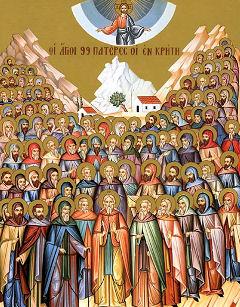
The celebration of Mass, the sacrifice of Calvary continued on our altars, has ever been for the Church the principal means of fulfilling towards the dead the great commandment of charity. Masses for the dead are found in the fifth century. But it was St. Odilo, fourth abbot of Cluny, who was responsible for the institution of the general commemoration of all the faithful departed; he instituted it and fixed its celebration on November 2, the day after All Saints. The practice spread to the rest of Christendom.

Daily in a special Memento in the Canon of the Mass, at which the priest remembers all those who have fallen asleep in the Lord, the priest implores God to grant them a place of happiness, light and peace. Thus there is no Mass in which the Church does not pray for the faithful departed; but today her thoughts are directed towards them in a particular fashion, with the maternal preoccupation of leaving no soul in Purgatory without spiritual aid and of grouping them all together in her intercession. By a privilege that Benedict XV's decree has extended to the whole world every priest can today celebrate three Masses; for the liberation of the souls in Purgatory the Church multiplies the offering of the sacrifice of Christ, from which she draws forever on behalf of all her children, infinite fruits of redemption.

Highlights and Things to Do:

  • Add some pious practices to help the souls in Purgatory: attend three Masses for the faithful departed on this day; remember your family and friends who are deceased and make an extra sacrifice for them; pray the rosary for the most forgotten soul in Purgatory.
  • An indulgence, applicable only to the Souls in Purgatory, is granted to the faithful, who devoutly visit a cemetery and pray, even if only mentally, for the departed. The indulgence is plenary each day from November 1-8; on other days of the year it is only a partial indulgence. The plenary indulgence is earned under the usual conditions: sacramental confession (within 20 days before or after), one Eucharistic Communion for each visit (20 days before or after), and prayer for the Pope's intentions (usually one Our Father and the Creed or Hail Mary, prayed each visit) while detached from sin. See Praying for the Dead and Gaining Indulgences During November for more information about indulgences for the souls in Purgatory.
  • There is also solemn commemoration from the Book of Blessings that can be used on All Souls. See Visiting a Cemetery on All Souls Day, Memorial Day, or on the Anniversary of Death or Burial

  • In many places this day centers around the family departed and the cemetery. Families go to gravesites, clean them, decorate them, add candles. This can be an all-day affair, with picnics and celebration. Of particular note is the Dia de los Muertos or the Day of the Dead, celebration in Mexico on November 2. One could say this is the "Mexican Halloween." For more information on this Catholic holiday, see Mexico Connect for a variety of links for information. 
    Deeply rooted cultural elements connoting particular anthropological concepts are to be found among the customs and usages connected with the "cult of the dead" among some peoples. These often spring from a desire to prolong family and social links with the departed. Great caution must be used in examining and evaluating these customs. Care should be taken to ensure that they are not contrary to the Gospel. Likewise, care should be taken to ensure that they cannot be interpreted as pagan residues.

A Guide to Plenary Indulgences for the All Souls' "Octave", November 1-8
Visiting a Cemetery: An indulgence, applicable only to the Souls in Purgatory, is granted to the faithful, who devoutly visit a cemetery and pray, even if only mentally, for the departed. The indulgence is plenary each day from November 1-8; on other days of the year it is a partial indulgence.


Visiting a Church on November 2: A plenary indulgence, applicable only to the souls in purgatory, is granted to the faithful who, on All Souls' Day (or, according to the judgment of the ordinary, on the Sunday preceding or following it, or on the solemnity of All Saints), devoutly visit a church or an oratory and recite an Our Father and the Creed.


Praying for the Faithful Departed: A partial indulgence, applicable only to the souls in purgatory, is granted to the faithful who,

  • devoutly visit a cemetery and at least mentally pray for the dead;
  • devoutly recite lauds or vespers from the Office of the Dead or the prayer Eternal rest. (Manual of Indulgences, Fourth Edition, 1999)

Indulgence Requirements:

  • To gain a plenary indulgence, in addition to excluding all attachment to sin, even venial sin, it is necessary to perform the indulgent work and fulfill the following three conditions: sacramental Confession, Eucharistic Communion, and prayer for the intention of the Sovereign Pontiff.
  • A single sacramental confession suffices for gaining several plenary indulgences, but Holy Communion must be received and prayer for the intention of the Holy Father must be recited for the gaining of each plenary indulgence.
  • The three conditions may be fulfilled several days before or after the performance of the prescribed work; it is, however, fitting that Communion be received and the prayer for the intention of the Holy Father be said on the same day the work is performed.
  • The condition of praying for the intention of the Holy Father is fully satisfied by reciting one Our Father and one Hail Mary. A plenary indulgence can be acquired only once in the course of the day, a partial indulgence can be acquired multiple times.
  • If a visit to a Church or an oratory is required to obtain an indulgence attached to a particular day, this may be accomplished from noon of the preceding day until midnight of the particular day.

Manual of Indulgences, Fourth Edition, 1999 (Enchiridion Indulgentarium)

Friday, October 31, 2025

November 1st: the Solemnity of All Saints Day


Ordinary Time: November 1st

Solemnity of All Saints


Solemnity of All Saints: Almighty ever-living God, by whose gift we venerate in one celebration the merits of all the Saints, bestow on us, we pray, through the prayers of so many intercessors, an abundance of the reconciliation with you for which we earnestly long. Through our Lord Jesus Christ, your Son, who lives and reigns with you in the unity of the Holy Spirit, God, for ever and ever.


Today is the Solemnity of All Saints. The Church celebrates all the saints: canonized or beatified, and the multitude of those who are in heaven enjoying the beatific vision that are only known to God. During the early centuries the Saints venerated by the Church were all martyrs. Later the pope set November 1 as the day for commemorating all the Saints. We all have this "universal call to holiness." What must we to do in order to join the company of the saints in heaven? We "must follow in His footsteps and conform [our]selves to His image seeking the will of the Father in all things. [We] must devote [our]selves with all [our] being to the glory of God and the service of [our] neighbor. In this way, the holiness of the People of God will grow into an abundant harvest of good, as is admirably shown by the life of so many saints in Church history" (Lumen Gentium, 40).

"This perfect life with the Most Holy Trinity—this communion of life and love with the Trinity, with the Virgin Mary, the angels and all the blessed—is called "heaven." Heaven is the ultimate end and fulfillment of the deepest human longings, the state of supreme, definitive happiness" (CCC 1024).

Remember to pray for the Poor Souls in Purgatory from November 1 to the 8th.


All Saints Day
During the year the Church celebrates one by one the feasts of the saints. Today she joins them all in one festival. In addition to those whose names she knows, she recalls in a magnificent vision all the others "of all nations and tribes standing before the throne and in sight of the Lamb, clothed with white robes, and palms in their hands, proclaiming Him who redeemed them in His Blood."

The feast of All Saints should inspire us with tremendous hope. Among the saints in heaven are some whom we have known. All lived on earth lives like our own. They were baptized, marked with the sign of faith, they were faithful to Christ's teaching and they have gone before us to the heavenly home whence they call on us to follow them. The Gospel of the Beatitudes, read today, while it shows their happiness, shows, too, the road that they followed; there is no other that will lead us whither they have gone.

According to various authors including Father Francis X. Weiser, SJ, the "Commemoration of All Saints" was first celebrated in the East. The feast is found in the West on different dates in the eighth century. The Roman Martyrology mentions that this date is a claim of fame for Gregory IV (827-844) and that he extended this observance to the whole of Christendom; it seems certain, however, that Gregory III (731-741) preceded him in this. At Rome, on the other hand, on May 13, there was the annual commemoration of the consecration of the basilica of St. Maria ad Martyres (or St. Mary and All Martyrs). This was the former Pantheon, the temple of Agrippa, dedicated to all the gods of paganism, to which Boniface IV had translated many relics from the catacombs. Gregory VII transferred the anniversary of this dedication to November 1.

Highlights and Things to Do:

  • Visiting a cemetery and praying for the faithful from November 1 through November 8 will gain a plenary indulgence that can be applied only to the souls in Purgatory. On other days, this work gains a partial indulgence. See the green section below for indulgence requirements.
  • Spend a little time after Mass thanking God for all the unnamed saints, some of whom could be our own relatives.
  • Pray the Litany of the Saints 

A Guide to Plenary Indulgences for the All Souls' "Octave", November 1-8
Visiting a Cemetery: An indulgence, applicable only to the Souls in Purgatory, is granted to the faithful, who devoutly visit a cemetery and pray, even if only mentally, for the departed. The indulgence is plenary each day from November 1-8; on other days of the year it is a partial indulgence.


Visiting a Church on November 2: A plenary indulgence, applicable only to the souls in purgatory, is granted to the faithful who, on All Souls' Day (or, according to the judgment of the ordinary, on the Sunday preceding or following it, or on the solemnity of All Saints), devoutly visit a church or an oratory and recite an Our Father and the Creed.


Praying for the Faithful Departed: A partial indulgence, applicable only to the souls in purgatory, is granted to the faithful who,

  • devoutly visit a cemetery and at least mentally pray for the dead;
  • devoutly recite lauds or vespers from the Office of the Dead or the prayer Eternal rest. (Manual of Indulgences, Fourth Edition, 1999)

Indulgence Requirements:

  • To gain a plenary indulgence, in addition to excluding all attachment to sin, even venial sin, it is necessary to perform the indulgent work and fulfill the following three conditions: sacramental Confession, Eucharistic Communion, and prayer for the intention of the Sovereign Pontiff.
  • A single sacramental confession suffices for gaining several plenary indulgences, but Holy Communion must be received and prayer for the intention of the Holy Father must be recited for the gaining of each plenary indulgence.
  • The three conditions may be fulfilled several days before or after the performance of the prescribed work; it is, however, fitting that Communion be received and the prayer for the intention of the Holy Father be said on the same day the work is performed.
  • The condition of praying for the intention of the Holy Father is fully satisfied by reciting one Our Father and one Hail Mary. A plenary indulgence can be acquired only once in the course of the day, a partial indulgence can be acquired multiple times.
  • If a visit to a Church or an oratory is required to obtain an indulgence attached to a particular day, this may be accomplished from noon of the preceding day until midnight of the particular day.

Friday, November 1, 2024

November 2nd: All Souls Day; remembering all the faithful departed


Ordinary Time: November 2nd

The Commemoration of All the Faithful Departed (All Souls' Day)

Other Titles: All Souls Day

facebook sharing button Share
twitter sharing button Tweet
linkedin sharing button Share
pinterest sharing button Pin
email sharing button Email
sharethis sharing button

MASS READINGS

November 02, 2024 (Readings on USCCB website)

PROPERS [Show]

COLLECT PRAYER

Commemoration of All the Faithful Departed, Mass 1: Listen kindly to our prayers, O Lord, and, as our faith in your Son, raised from the dead, is deepened, so may our hope of resurrection for your departed servants also find new strength. Through our Lord Jesus Christ, your Son, who lives and reigns with you in the unity of the Holy Spirit, God, for ever and ever.


Commemoration of All the Faithful Departed, Mass 2: O God, glory of the faithful and life of the just, by the Death and Resurrection of whose Son we have been redeemed, look mercifully on your departed servants, that, just as they professed the mystery of our resurrection, so they may merit to receive the joys of eternal happiness. Through our Lord Jesus Christ, your Son, who lives and reigns with you in the unity of the Holy Spirit, God, for ever and ever.


Commemoration of All the Faithful Departed, Mass 3: O God, who willed that our Only Begotten Son, having conquered death, should pass over into the realm of heaven, grant, we pray, to your departed servants that, with the mortality of this life overcome, they may gaze eternally on you, their Creator and Redeemer. Through our Lord Jesus Christ, our Son, who lives and reigns with you in the unity of the Holy Spirit, God, for ever and ever.

show

Recipes (22)

show

Activities (12)

show

Prayers (9)

show

Library (12)

show

Blog & Podcasts (14)


Today is the Commemoration of the All the Faithful Departed (All Souls' Day). The Church, after celebrating the feast of All Saints, today prays for all who, in the purifying suffering of Purgatory, await the day they will join in heavenly glory. The celebration of the Mass, which re-presents the Sacrifice of Christ on Calvary, has always been the principal means by which the Church fulfills the great responsibility of charity toward the dead. Death cannot break the bonds of the Body of Christ. —Daily Roman Missal

"All who die in God's grace and friendship, but still imperfectly purified, are indeed assured of their eternal salvation; but after death they undergo purification, so as to achieve the holiness necessary to enter the joy of heaven.
"The Church gives the name Purgatory to this final purification of the elect, which is entirely different from the punishment of the damned" (CCC 1030-1031).

Even when November 2 falls on a Sunday, the Mass celebrated is that from the Commemoration of All the Faithful Departed.

On this day, any Priest may celebrate three Masses, observing, nevertheless, what was established by Benedict XV in the Apostolic Constitution, Incruentum altaris sacrificium, 10 August 1915: Acta Apostolicae Sedis 7 (1915) pp. 401-404. —Third Edition of the Roman Missal

We pray for the Faithful Departed especially during the "octave" of All Souls, from November 1st to the 8th.


All Souls Day
The Church, after rejoicing yesterday with those of her children who have entered the glory of heaven, today prays for all those who, in the purifying suffering of Purgatory await the day when they will be joined to the company of saints. At no place in the liturgy is stated in more striking fashion the mysterious union between the Church triumphant, the Church militant and the Church suffering; at no time is there accomplished in clearer fashion the twofold duty of charity and justice deriving for every Christian from the fact of his incorporation in the mystical Body of Christ. By virtue of the consoling doctrine of the communion of saints the merits and prayers of each one are able to help all; and the Church is able to join her prayer with that of the saints in heaven and supply what is wanting to the souls in Purgatory by means of the Mass, indulgences and the alms and sacrifices of her children.

The celebration of Mass, the sacrifice of Calvary continued on our altars, has ever been for the Church the principal means of fulfilling towards the dead the great commandment of charity. Masses for the dead are found in the fifth century. But it was St. Odilo, fourth abbot of Cluny, who was responsible for the institution of the general commemoration of all the faithful departed; he instituted it and fixed its celebration on November 2, the day after All Saints. The practice spread to the rest of Christendom.

Daily in a special Memento in the Canon of the Mass, at which the priest remembers all those who have fallen asleep in the Lord, the priest implores God to grant them a place of happiness, light and peace. Thus there is no Mass in which the Church does not pray for the faithful departed; but today her thoughts are directed towards them in a particular fashion, with the maternal preoccupation of leaving no soul in Purgatory without spiritual aid and of grouping them all together in her intercession. By a privilege that Benedict XV's decree has extended to the whole world every priest can today celebrate three Masses; for the liberation of the souls in Purgatory the Church multiplies the offering of the sacrifice of Christ, from which she draws forever on behalf of all her children, infinite fruits of redemption.

A Guide to Plenary Indulgences for the All Souls' "Octave", November 1-8
Visiting a Cemetery: An indulgence, applicable only to the Souls in Purgatory, is granted to the faithful, who devoutly visit a cemetery and pray, even if only mentally, for the departed. The indulgence is plenary each day from November 1-8; on other days of the year it is a partial indulgence.


Visiting a Church on November 2: A plenary indulgence, applicable only to the souls in purgatory, is granted to the faithful who, on All Souls' Day (or, according to the judgment of the ordinary, on the Sunday preceding or following it, or on the solemnity of All Saints), devoutly visit a church or an oratory and recite an Our Father and the Creed.


Praying for the Faithful Departed: A partial indulgence, applicable only to the souls in purgatory, is granted to the faithful who,

  • devoutly visit a cemetery and at least mentally pray for the dead;
  • devoutly recite lauds or vespers from the Office of the Dead or the prayer Eternal rest. (Manual of Indulgences, fourth edition, 1999)

Indulgence Requirements:

  • To gain a plenary indulgence, in addition to excluding all attachment to sin, even venial sin, it is necessary to perform the indulgent work and fulfill the following three conditions: sacramental Confession, Eucharistic Communion, and prayer for the intention of the Sovereign Pontiff.
  • A single sacramental confession suffices for gaining several plenary indulgences, but Holy Communion must be received and prayer for the intention of the Holy Father must be recited for the gaining of each plenary indulgence.
  • The three conditions may be fulfilled several days before or after the performance of the prescribed work; it is, however, fitting that Communion be received and the prayer for the intention of the Holy Father be said on the same day the work is performed.
  • The condition of praying for the intention of the Holy Father is fully satisfied by reciting one Our Father and one Hail Mary. A plenary indulgence can be acquired only once in the course of the day, a partial indulgence can be acquired multiple times.
  • If a visit to a Church or an oratory is required to obtain an indulgence attached to a particular day, this may be accomplished from noon of the preceding day until midnight of the particular day.

Thursday, October 31, 2024

All Saints Day, November 1, 2024


Ordinary Time: November 1st

Solemnity of All Saints

Other Titles: All Saints Day

facebook sharing button Share
twitter sharing button Tweet
linkedin sharing button Share
pinterest sharing button Pin
email sharing button Email
sharethis sharing button

MASS READINGS

November 01, 2024 (Readings on USCCB website)

PROPERS [Show]

COLLECT PRAYER

Solemnity of All Saints: Almighty ever-living God, by whose gift we venerate in one celebration the merits of all the Saints, bestow on us, we pray, through the prayers of so many intercessors, an abundance of the reconciliation with you for which we earnestly long. Through our Lord Jesus Christ, your Son, who lives and reigns with you in the unity of the Holy Spirit, God, for ever and ever.

show

Recipes (16)

show

Activities (13)

show

Prayers (7)

show

Library (6)

show

Blog & Podcasts (6)

» Enjoy our Liturgical Seasons series of e-books!

Today is the Solemnity of All Saints. The Church celebrates all the saints: canonized or beatified, and the multitude of those who are in heaven enjoying the beatific vision that are only known to God. During the early centuries the Saints venerated by the Church were all martyrs. Later the pope set November 1 as the day for commemorating all the Saints. We all have this "universal call to holiness." What must we to do in order to join the company of the saints in heaven? We "must follow in His footsteps and conform [our]selves to His image seeking the will of the Father in all things. [We] must devote [our]selves with all [our] being to the glory of God and the service of [our] neighbor. In this way, the holiness of the People of God will grow into an abundant harvest of good, as is admirably shown by the life of so many saints in Church history" (Lumen Gentium, 40).

"This perfect life with the Most Holy Trinity—this communion of life and love with the Trinity, with the Virgin Mary, the angels and all the blessed—is called "heaven." Heaven is the ultimate end and fulfillment of the deepest human longings, the state of supreme, definitive happiness" (CCC 1024).

Remember to pray for the Faithful Departed from November 1 to the 8th.


All Saints Day
During the year the Church celebrates one by one the feasts of the saints. Today she joins them all in one festival. In addition to those whose names she knows, she recalls in a magnificent vision all the others "of all nations and tribes standing before the throne and in sight of the Lamb, clothed with white robes, and palms in their hands, proclaiming Him who redeemed them in His Blood."

The feast of All Saints should inspire us with tremendous hope. Among the saints in heaven are some whom we have known. All lived on earth lives like our own. They were baptized, marked with the sign of faith, they were faithful to Christ's teaching and they have gone before us to the heavenly home whence they call on us to follow them. The Gospel of the Beatitudes, read today, while it shows their happiness, shows, too, the road that they followed; there is no other that will lead us whither they have gone.

According to various authors including Father Francis X. Weiser, SJ, the "Commemoration of All Saints" was first celebrated in the East. The feast is found in the West on different dates in the eighth century. The Roman Martyrology mentions that this date is a claim of fame for Gregory IV (827-844) and that he extended this observance to the whole of Christendom; it seems certain, however, that Gregory III (731-741) preceded him in this. At Rome, on the other hand, on May 13, there was the annual commemoration of the consecration of the basilica of St. Maria ad Martyres (or St. Mary and All Martyrs). This was the former Pantheon, the temple of Agrippa, dedicated to all the gods of paganism, to which Boniface IV had translated many relics from the catacombs. Gregory VII transferred the anniversary of this dedication to November 1.

Highlights and Things to Do:

  • Visiting a cemetery and praying for the faithful from November 1 through November 8 will gain a plenary indulgence that can be applied only to the souls in Purgatory. On other days, this work gains a partial indulgence. See the green section below for indulgence requirements.
    • Listen to the Catholic Culture Audiobook: St. John Henry Newman—Use of Saints’ Days read by James Majewski.
    • Spend a little time after Mass thanking God for all the unnamed saints, some of whom could be our own relatives.
A Guide to Plenary Indulgences for the All Souls' "Octave", November 1-8
Visiting a Cemetery: An indulgence, applicable only to the Souls in Purgatory, is granted to the faithful, who devoutly visit a cemetery and pray, even if only mentally, for the departed. The indulgence is plenary each day from November 1-8; on other days of the year it is a partial indulgence.

Visiting a Church on November 2: A plenary indulgence, applicable only to the souls in purgatory, is granted to the faithful who, on All Souls' Day (or, according to the judgment of the ordinary, on the Sunday preceding or following it, or on the solemnity of All Saints), devoutly visit a church or an oratory and recite an Our Father and the Creed.


Praying for the Faithful Departed: A partial indulgence, applicable only to the souls in purgatory, is granted to the faithful who,

  • devoutly visit a cemetery and at least mentally pray for the dead;
  • devoutly recite lauds or vespers from the Office of the Dead or the prayer Eternal rest. (Manual of Indulgences, fourth edition, 1999)

Indulgence Requirements:

  • To gain a plenary indulgence, in addition to excluding all attachment to sin, even venial sin, it is necessary to perform the indulgent work and fulfill the following three conditions: sacramental Confession, Eucharistic Communion, and prayer for the intention of the Sovereign Pontiff.
  • A single sacramental confession suffices for gaining several plenary indulgences, but Holy Communion must be received and prayer for the intention of the Holy Father must be recited for the gaining of each plenary indulgence.
  • The three conditions may be fulfilled several days before or after the performance of the prescribed work; it is, however, fitting that Communion be received and the prayer for the intention of the Holy Father be said on the same day the work is performed.
  • The condition of praying for the intention of the Holy Father is fully satisfied by reciting one Our Father and one Hail Mary. A plenary indulgence can be acquired only once in the course of the day, a partial indulgence can be acquired multiple times.
  • If a visit to a Church or an oratory is required to obtain an indulgence attached to a particular day, this may be accomplished from noon of the preceding day until midnight of the particular day.