Showing posts with label IRS. Show all posts

Thursday, April 23, 2026

EWTN has this story on the Justice Department v Southern Poverty Law Center


Southern Poverty Law Center indicted for fraudulently paying informants inside extremist groups

The Southern Poverty Law Center labeled some traditionalist Catholic groups as hate groups over views related to gender, sexuality, and marriage. No Catholic groups were mentioned in the indictment.


A gavel rests atop a pile of hundred-dollar bills. | Credit: RomanR/Shutterstock


Tessa Gervasini

The U.S. Department of Justice has charged the Southern Poverty Law Center (SPLC), a civil rights group that has classified certain Catholic organizations as hate groups, with multiple fraud charges for alleged use of paid informants to monitor racist organizations.

SPLC, an organization that reports it fights “white supremacy and various forms of injustice,” faces charges including 11 counts of wire fraud, false statements to a federally insured bank, and conspiracy to commit concealment money laundering. SPLC did not immediately respond to a request for comment.

While there has been overlap with Catholic advocacy over the years on social and economic justice issues such as racial justice and advocacy concerning conditions in immigration detention centers, the SPLC has also taken positions that many Catholic institutions strongly dispute. SPLC has labeled some Catholic organizations as “hate groups.”

The U.S. attorney for the middle district of Alabama issued the April 21 indictment. The FBI and the Internal Revenue Service investigated.

“The SPLC allegedly engaged in a massive fraud operation to deceive their donors, enrich themselves, and hide their deceptive operations from the public," Federal Bureau of Investigation (FBI) Director Kash Patel said.

While "vowing to dismantle violent extremist groups," SPLC "actually turned around and paid the leaders of these very extremist groups,” Patel said.

According to the indictment, in the 1980s the SPLC began operating a network of individuals who were associated with, or who infiltrated, violent extremist groups at the SPLC’s direction. Donors were unaware that donations were funding the organizers of the same racist and extremist groups that the SPLC reported it was denouncing.

Prosecutors said that between 2014 and 2023, the SPLC funneled more than $3 million in donated funds to individuals associated with various extremist groups including the Ku Klux Klan, Aryan Nations, National Socialist Party of America (American Nazi Party), and United Klans of America. No Catholic groups were mentioned in the indictment.

According to the indictment, the scheme was intended to obtain money via donations through materially false representations and omissions about what the funds would be used for.

In order to pay the individuals, the SPLC allegedly opened bank accounts connected to a series of fake entities such as “Fox Photography” and “Rare Books Warehouse” that were used to send money from donors to informants. The SPLC then made a series of false statements related to the operation of the accounts, the indictment alleges.

“The SPLC is manufacturing racism to justify its existence,” said acting Attorney General Todd Blanche when announcing the indictment. “Using donor money to allegedly profit off Klansmen cannot go unchecked.”

U.S. Attorney Kevin Davidson said this "kind of deception undermines public trust and social cohesion.”

Patel added that it is an “ongoing investigation against all individuals involved.” The DOJ reported a conviction will result in the forfeiture of financial gains from the alleged illegal activities.

Labeling Catholics and Christian groups

In recent years, SPLC has been accused of unfairly labeling Christian organizations as “radical.”

In July 2025, the House Judiciary Committee found documents that revealed the FBI “put more federal law-enforcement resources into surveilling Catholics than previously known.”

The committee’s report found that several internal FBI documents used the terms “radical traditionalist catholic” or “Radical-Traditionalist Catholic” between 2009 and 2023. An FBI internal database contained at least 13 documents that used these terms that all cited the SPLC.

Also, in 2021, critics of SPLC said the organization had become extreme after it released its 2020 “census of hate groups,” which included numerous pro-life and family organizations such as the Ruth Institute.

After being classified by SPLC as a hate group, a spokesperson for the Ruth Institute said, “our credit card processing company dropped us. Businesses refused to work with us. People scattered, thinking we were radioactive.”

“What the Southern Poverty Law Center did to us was a mere inconvenience in comparison to the harm they have done to our country. The indiscriminate application of the ‘hate’ label, the ratcheting up of rhetoric — all this has contributed to the polarized and toxic atmosphere we now experience,” according to Jennifer Roback Morse, Ruth Institute president.

Along with the Ruth Institute, Christian organizations Alliance Defending Freedom, a legal advocacy organization defending religious liberty, and Family Research Council, a nonprofit promoting family values, were also both designated as “Anti-LGBTQ hate groups" by SPLC for their stances on marriage and family.

Wednesday, July 9, 2025

USCCB says still NO to Catholic clergy, church, endorsing political candidates


Catholic Church holds firm on not taking stand on political candidates, despite possible IRS shift


(OSV News) — The Catholic Church “maintains its stance of not endorsing or opposing political candidates,” said U.S. Conference of Catholic Bishops spokesperson Chieko Noguchi, following a recent court case in which a long-standing federal ban against such activity appeared to have been partly relaxed.

Noguchi issued the statement July 8, a day after the Internal Revenue Service agreed in a court filing that a house of worship addressing its congregation about electoral politics in the context of religious faith does not violate the Johnson Amendment.

Approved by Congress in 1954, the amendment prohibits 501(c)(3) organizations — a type of tax-exempt nonprofit under U.S. tax code, and the typical corporate structure for churches, worship communities and charities in the nation — from engaging in political campaign activity. In 1987, Congress clarified that the ban includes statements opposing candidates.

Johnson amendment lawsuit

In August 2024, the National Religious Broadcasters — which describes itself as a “nonpartisan, international association of Christian communicators” that promotes both members’ free speech rights and professional development — and several other plaintiffs filed suit against the IRS, claiming the Johnson Amendment violated their First and Fifth Amendment rights, as well as the Religious Freedom Restoration Act.

On July 7, the NRB and the IRS jointly filed with the U.S. District Court for the Eastern District of Texas for a court-approved settlement, with the motion stating, “When a house of worship in good faith speaks to its congregation, through its customary channels of communication on matters of faith in connection with religious services, concerning electoral politics viewed through the lens of religious faith, it neither ‘participate(s)’ nor ‘intervene(s)’ in a ‘political campaign,’ within the ordinary meaning of those words.” 

The motion likened such “bona fide communications internal to a house of worship, between the house of worship and its congregation, in connection with religious services,” to “a family discussion concerning candidates.” 

In addition, said the motion, “this interpretation of the Johnson Amendment is in keeping with the IRS’s treatment of the Johnson Amendment in practice.” 

Catholic perspective

However, said Noguchi, “The IRS was addressing a specific case, and it doesn’t change how the Catholic Church engages in public debate.”

Roger Colinvaux, a professor of law at The Catholic University of America’s Columbus School of Law and an expert on nonprofit organizations and federal income tax, told OSV News that while the stipulation in this NRB-IRS suit is “obviously binding for the parties,” there is uncertainty as to “the legal authority beyond this case.”

“All that’s been agreed to is that the IRS won’t enforce the Johnson Amendment against these plaintiffs,” he said. “And they’ve kind of announced this new standard, but it doesn’t appear as a revenue ruling, it doesn’t appear as a regulation — it’s just part of this consent agreement.”

Additional guidance needed

Colinvaux added that “if this really is the IRS’s position generally, then they need to follow it up with some guidance, because all we have right now is just this one document, which was filed in this one legal case.”

An internal USCCB memo — written by the bishops’ general counsel to state Catholic conference directors and seen by OSV News — noted that the consent judgment “narrowly resolves a broader request for declaratory relief initially brought before last year’s election, which sought to include all 501(c)(3) organizations despite being led by religious groups.”

The original request “involved very specific factual scenarios and was filed in the U.S. District Court for the Eastern District of Texas,” said the memo.

The memo also stated that “since the release of this judgment, the IRS has not responded to requests for comment nor issued any additional guidance,” although “the agreement appears consistent with the IRS’s historical enforcement approach (or lack thereof) in this area.”

“While credible First Amendment arguments have long existed regarding the protection of speech from the pulpit, this judgment represents the clearest concession by the IRS, indicating concerns over the constitutionality of the Johnson Amendment,” said the memo. “Its decision to concede at this time likely reflects current administration priorities and an evaluation of potential Supreme Court appeals.”

The USCCB general counsel also recommended “maintaining our current stance of refraining from endorsing political candidates until additional guidance is provided by the IRS.”

The National Council of Nonprofits strongly supports the Johnson Amendment, stating on its website the measure is a means of ensuring “organizations dedicated to the public good in communities remain above the political fray.”

“The Church seeks to help Catholics form their conscience in the Gospel so they might discern which candidates and policies would advance the common good,” Noguchi said in her statement. “The Catholic Church maintains its stance of not endorsing or opposing political candidates.”

Gina Christian is a multimedia reporter for OSV News. Follow her on X @GinaJesseReina.

Tuesday, July 8, 2025

IRS declares churches CAN endorse political candidates without losing tax-exempt status


IRS says churches can endorse political candidates without losing tax exemptions

Story by Gary Grumbach


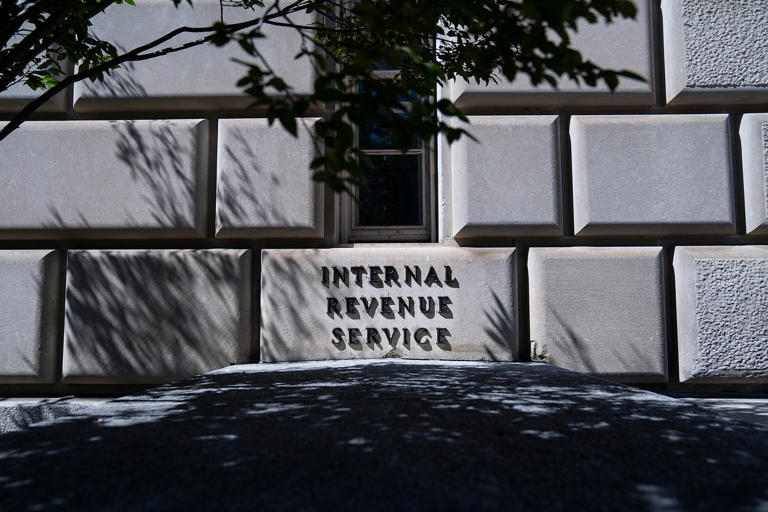
The Internal Revenue Service building. (Sarah Silbiger for The Washington Post via Getty Images file)


The Internal Revenue Service agreed in a court filing that churches can endorse political candidates without fear of losing their tax-exempt status.

The IRS made the statement in a court case challenging the Johnson Amendment, a 1954 U.S. tax code provision that prohibits all 501(c)(3) non-profit organizations — including churches — from formally endorsing or opposing political candidates.

In a filing Monday aimed at resolving a lawsuit between the National Religious Broadcasters and others against the IRS, the parties jointly agreed that churches can endorse candidates without fear of losing their tax-exempt status. The agreement likens such endorsements to a "family discussion concerning candidates."

“When a house of worship in good faith speaks to its congregation, through its customary channels of communication on matters of faith in connection with religious services, concerning electoral politics viewed through the lens of religious faith, it neither 'participate[s]' nor 'intervene[s]' in a 'political campaign,' within the ordinary meaning of those words,” the parties wrote in the filing in federal court for the Eastern District of Texas, which was first reported by The New York Times.

“Thus, communications from a house of worship to its congregation in connection with religious services through its usual channels of communication on matters of faith do not run afoul of the Johnson Amendment as properly interpreted.”

The joint motion for a “consent judgement” in the case must be approved by a judge before the lawsuit is formally resolved.

A spokesperson for the IRS and a lawyer for the plaintiffs did not immediately respond to a request for comment.

The amendment was named after Lyndon B. Johnson, who sponsored it in the Senate. Johnson had pushed for the rule in response to conservative nonprofits that supported a political rival.

The amendment has rarely been enforced when it comes to churches. The Washington Post reported in 2017 that more than 2,000 pastors had publicly defied the Johnson Amendment in organized demonstrations. Only one of those pastors was investigated, and none were punished, the paper reported.

President Donald Trump has been a vocal opponent of the amendment. He vowed to "get rid of and totally destroy" it at the National Prayer Breakfast in 2017, adding that doing so would "allow our representatives of faith to speak freely and without fear of retribution."

While the IRS action doesn't go that far — getting rid of the amendment would require an act of Congress — it does target the specific provision Trump complained about.

Lloyd Hitoshi Mayer, a professor at Notre Dame Law School, said that if approved, the joint motion would technically only apply to the churches that filed suit, but the language in it "is basically giving the green light for churches to endorse candidates from the pulpit and not have to worry about IRS enforcement while President Donald Trump is in office."

He predicted the move will have two major ramifications.

"The first is that churches that maybe were hesitant to endorse candidates have less of a reason to be hesitant" and are "going to feel freer to support candidates from the pulpit," Mayer said.

"The second ramification is even church leaders who don’t want to get involved will feel pressure to do so, from political candidates and members of their congregation," potentially putting pastors "in an awkward position."

That pressure could include financial incentives from congregants who could try to sway churches with donations, Mayer said.

The religious groups' suit argued a change was necessary because churches were unfairly targeted by the amendment, and they sought to have the entire amendment declared unconstitutional.

"The IRS operates in a manner whereby the Plaintiffs are in jeopardy of punishment if they forthrightly say that a candidate’s positions are unbiblical; or that another candidate’s positions are consonant with biblical teaching," their suit says. "The Plaintiffs’ speech is clearly chilled in this regard because they are not free to proclaim their views on the issues of the day and then compare their views with the views of the candidates on these same issues."

As part of the joint motion, the religious groups agreed to drop their constitutionality claims against the amendment as a whole, so it would still apply to other 501(c)(3) tax exempt organizations, including charities and universities.

This article was originally published on NBCNews.com