Showing posts with label Bishop Zurek. Show all posts

Wednesday, December 21, 2022

Some perspective on Pavone and on Bishops whose credibility is "tattered"


The Vatican’s action against Frank Pavone: overdue yet unexplained

By Phil Lawler ( bio - articles - email ) | Dec 19, 2022


Yes, there are other priests—many others, really—whose conduct has been far more egregious, whose public statements have been far more injurious to the faith. Yes, it is painful to see a leading figure in the American pro-life movement disciplined, while others who undermine Church moral teaching are showered with Vatican honors. Yes, many thousands of loyal Catholics have lost confidence in their bishops, and they see a blatant double standard in the handling of disciplinary cases.

Nevertheless the laicization of Frank Pavone is not an injustice. In fact it should not be a surprise.

“What took so long?” Those are the words of Pavone himself, in his response to the announcement that he had been defrocked. His bishop had warned him, long ago, about the exactly that possibility. After nearly fifteen years of fighting against episcopal authority—years in which he refused to accept his bishop’s directives—Pavone could not have been surprised by this weekend’s news.

If it is true (and I have no reason to doubt it) that Pavone first heard the news from a CNA reporter a few days ago—although the Vatican order for his laicization was issued on November 9—that can only be because he had broken off communications with his bishop. “Father Pavone was given ample opportunity to defend himself in the canonical proceedings, and he was also given multiple opportunities to submit himself to the authority of his diocesan bishop,” wrote Archbishop Christophe Pierre, the apostolic nuncio to the US. By his own account Pavone had been very actively involved in canonical appeals for years. Finally the appeals ran out.

Father Pavone was certainly not the first priest to fall into an adversarial relationship with his diocesan bishop. But other unhappy clerics recognize that on the day of their ordination to the priesthood, when they promised obedience to the ordaining bishop and his successors, they gave away all the high cards in their hand. In a battle with his bishop, the diocesan priest inevitably loses.

And frankly, despite all the problems that are so sadly evident in the Catholic hierarchy today, that is as it should be. A Catholic priest must be subject to some hierarchical control; otherwise he is a loose cannon: a minister who represents the Church but does not accept the Church’s authority.

In defending himself against his bishop, Pavone has consistently taken the line that he has been persecuted for his pro-life advocacy. “They just don’t like the work I’m doing for these babies,” he told CNA. That argument is disingenuous at best. Many other priests have been outspoken in their defense of the unborn, without causing any such conflicts with their superiors. His conflicts with his bishops—first with Cardinal Edward Egan in New York, then with Bishops John Yanta and Patrick Zurek in Amarillo, Texas—have revolved around his role in the secular corporation that he founded: Priests for Life.

Full-time work for a secular corporation?

Priests for Life (PFL) is a large activist organization, with an annual budget of about $10 million—more than the budget for the Amarillo diocese where he served. The group has its own board of directors, its own professional staff, its own headquarters in Florida. Yet Pavone is the unquestioned leader, the figurehead, the public spokesman, the decision-maker for PFL. So a question naturally arises: can a diocesan priest devote his full-time attention to a secular organization? Can he set his policies for that organization, disregarding input from his bishop?

That question becomes more pressing when, as in this case, the priest refuses to open the organization’s financial books to his diocesan superiors. In September 2011—yes, more than a decade ago—Bishop Zurek intervened because of his “deep concerns regarding [Pavone’s] stewardship of the finances of the Priests for Life (PFL) organization.” As I reported at the time:

Father Pavone says that he has answered every question the bishop asked about the finances of PFL. Bishop Zurek disputes that point, charging that PFL has managed to “rebuff my every attempt at calling for financial transparency.”

Later, in an effort to mediate the disagreement, Cardinal Timothy Dolan of New York suggested an independent audit of PFL, and the appointment of a few representatives of the hierarchy to the group’s board. Again Pavone refused.

In 2005, Father Pavone had moved to establish a religious order, called the Missionaries of the Gospel of Life, which he saw as an arm of Priests for Life. That plan posed a novel challenge to the normal working plan of the Catholic hierarchy: a religious order that would be controlled by a secular corporation. The nascent religious order was quietly disbanded a few years later, amid complaints that its young members were being used as fundraisers for PFL.

The blasphemy charge

In announcing Pavone’s laicization to the American bishops, Archbishop Pierre said that the priest was disciplined for his “blasphemous communications on social media” as well as his “persistent disobedience.” The charge of disobedience is easy to understand; Pavone had insisted that he could not accept Bishop Zurek’s order to work in the Amarillo diocese. He explained that the late Cardinal John O’Connor, who ordained him, had approved his work with PFL. But it seems highly unlikely that Cardinal O’Connor gave him carte blanche to define his own priestly mission. And in any case, at ordination a priest promised obedience to his bishop and that bishop’s successors. When Cardinal Egan sought to put some restraints on his PFL involvement, Father Pavone arranged to transfer to the Amarillo diocese. But the problems with obedience followed him to Texas.

But what about those “blasphemous communications”? The apostolic nuncio did not explain the charge, but Father Pavone had often pushed the boundaries of taste in his condemnations of the abortion industry and its supporters. During the 2020 presidential campaign he wrote on Twitter about “supporters of this goddam loser Biden and his morally corrupt, America-hating, God-hating Democratic party.” Can we agree that sort of language is inappropriate for a man of the cloth?

Pavone’s heavy involvement in partisan politics was a concern, certainly. (He made few friends among the American bishops when he took a high-profile stand in support of Donald Trump’s campaign.) But his willingness to use religious occasions for political purposes—even for purposes as worthy as the pro-life movement—also made bishops uneasy. Their concern reached new heights in 2016, when he put the body of an aborted fetus on an altar, and posted a video of it on social media. Critics saw this action as a desecration of both the altar and the unborn child’s remains.

(Pavone has said that the fetal remains were placed not on an altar, but on a table, which he sometimes used as an altar. The distinction is obscure. What do you call a table on which a priest sometimes celebrates Mass? An altar.)

The bishops’ tattered credibility

Why are so many Catholics upset by Pavone’s laicization? Three reasons.

First, because loyal Catholics—especially those of us who have been active in the pro-life movement—are tired of hearing bishops play lip service to the Gospel of Life, while tolerating the scandalous behavior of prominent Catholics who support the slaughter of the unborn. Why is Pavone disciplined, and not Biden or Pelosi?

Second, because the scandals that have ripped through the Church in the past few decades have shredded the credibility of the hierarchy. A generation ago, a bishop who reined in a rebellious cleric could assume that loyal Catholics would accept his disciplinary action in good faith. No longer.

Third, while Pavone has spoken out frequently in his own defense, the voice of the hierarchy has been virtually silent. Archbishop Pierre offered only a sketchy explanation for the laicization, with no specific charges. Bishop Zurek and the Amarillo diocese had no comment. We have heard Pavone’s defenses, but we have not heard the charges against him. If the purpose of disciplinary action is to protect the Catholic faithful from being misled, in this case the action has failed.

Tuesday, December 20, 2022

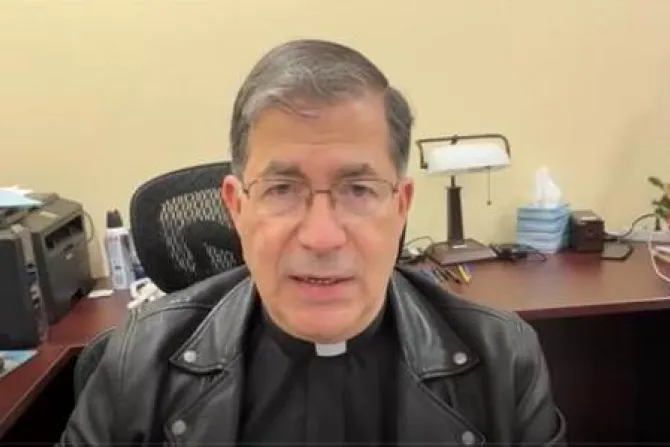
Frank Pavone remains steadfast; says let the next Pope reinstate me


Priests for Life's Frank Pavone: ‘The next pope can reinstate me’ to the priesthood


Pro-life activist Frank Pavone on Monday defiantly asserted that the Vatican’s decree removing him from the priesthood is not final, saying “the next pope can reinstate me.”

“This idea that any of this is permanent in terms of dismissal from the priesthood is simply incorrect, because we’re going to continue,” Pavone, the national director of the pro-life organization Priests for Life, said in a Dec. 19 interview with the Christian Broadcasting Network posted on YouTube.

“Then there will be a next pope, and the next pope can reinstate me,” he said.

CNA broke the news on Dec. 17 that the apostolic nuncio to the United States, Archbishop Christophe Pierre, had informed the U.S. bishops in a letter dated Dec. 13 that the prefect for the Dicastery for the Clergy, Cardinal Lazzaro You Heung Sik, had removed Pavone from the priesthood on Nov. 9, without any possibility of appeal.

Pavone was found guilty in a canonical proceeding of “blasphemous communications on social media” and “persistent disobedience of the lawful instructions of his diocesan bishop,” Pierre wrote.

Pavone on Dec. 17 claimed to not know about the Vatican’s action, saying, “How did CNA learn about this before I did?” 

On Monday, Priests for Life released a statement saying Pavone has yet to receive any formal notification of the Vatican’s decree.

A spokeswoman for the organization also told CNA that Pavone was most recently incardinated — meaning formally attached to a diocese — in the Diocese of Amarillo, Texas. 

In addition, she confirmed that Pavone participated in the canonical process that led to his dismissal from the clerical state.

“His canonical team was involved in trying to resolve this situation and to fight back against the ongoing persecution of Father Frank from his bishop,” the spokeswoman said. “The canonical team also was working on Father Frank’s attempt to be incardinated into another diocese. Our canonical team is not at liberty to discuss these subjects now, and we are not releasing the name of the bishop or diocese into which he was hoping to incardinate.”

The statement provides some additional context surrounding the Vatican’s stunning decree removing the well-known Pavone from the priesthood while leaving other important questions still unanswered. 

Among them: What specific communications did Pavone make that were deemed “blasphemous”? Who is the bishop that Pavone disobeyed? And what of the Masses and other sacraments Pavone has celebrated in the more than five weeks that have passed since the Vatican rendered its judgment?

Pavone says he’s being ‘aborted’

Pavone, 63, who was ordained in the Archdiocese of New York, is known for his sometimes profanity-laced social media posts and provocative pro-life activism, which included a live-streamed endorsement of Trump in 2016 during which Pavone placed an aborted baby on a table he also used for Mass. 

Pavone hosted the television show “Defending Life” on EWTN for many years until Bishop Patrick J. Zurek of Amarillo revoked his permission to appear on the network. EWTN is the parent organization of CNA.

On both his Twitter and Facebook pages, Pavone continues to present himself as a priest. A laicized priest is forbidden to celebrate the sacraments, except for hearing confessions and absolving a sinner in danger of death, Father Gerald E. Murray, a canon lawyer, told CNA in an interview Sunday.

"Any other sacramental celebration is unlawful and thus an act of disobedience," Murray said.

Pavone was still saying Masses online as recently as last week, according to videos posted online. The spokeswoman said Priests for Life would not comment on whether Pavone will continue to do so. 

In interviews and social media posts, Pavone has framed the judgment against him as retaliation for his outspokenness on the pro-life issue, rather than an indictment of his conduct.

In a Dec. 17 tweet, Pavone stated that he was being “aborted.”

“[I]n every profession, including the priesthood, if you defend the #unborn, you will be treated like them! The only difference is that when we are ‘aborted,’ we continue to speak, loud and clear,” Pavone wrote. He later tweeted the words “Ecclesiastical #abortion.”

Pavone also claims that his removal from the priesthood stems from a yearslong effort by Amarillo Bishop Patrick J. Zurek and others in the Catholic hierarchy to discredit and silence him.

In his interview with the Christian Broadcasting Network (CBN), Pavone called Zurek “one of the ringleaders in all of this.”

“The process has been a one-sided narrative,” he told CBN. “It’s a one-sided effort to just cancel out what we are trying to do.”

Pierre’s letter to the bishops, however, included a clear statement that the Vatican’s decree has no bearing on Pavone’s involvement in Priests for Life.

“Since Priests for Life, Inc. is not a Catholic organization, Mr. Pavone's continuing role in it as a layperson would be entirely up to the leadership of that organization,” the statement said.

In a tweet Monday morning, Pavone said his board, pastoral team, and staff at Priests for Life are “1000% united with me in moving forward with our work.”

“We will not slow down. My vocation is to be a priest and a #prolife leader and I will not walk away from either one of those!” Pavone wrote. 

Which bishop did he disobey?

Pierre’s letter, obtained and verified by CNA, does not elaborate on the specific “blasphemous communications” at issue. 

Canon 1369 of the Code of Canon Law states, “A person who in a public show or speech, in published writing, or in other uses of the instruments of social communication utters blasphemy, gravely injures good morals, expresses insults, or excites hatred or contempt against religion or the Church is to be punished with a just penalty.”

Incardinated in Amarillo in 2005, Pavone has been in a running battle there with Zurek, who became the diocese's bishop in 2008. 

Zurek suspended Pavone in 2011, a decision the Vatican overruled in 2012 after Pavone appealed. Zurek also stated in 2016 that Priests for Life, now based in Florida, is “not a Catholic institution, but a civil organization, and it is not under the control or supervision of the Diocese of Amarillo.”

Pavone’s political activism reached a crescendo in recent years in his public embrace of Donald Trump. He served on official Trump campaign outreach positions in 2016 and was originally a co-chair of Trump’s 2020 pro-life coalition, as well as an advisory board member of Catholics for Trump. He eventually stepped down from those 2020 posts. Canon law forbids clerics from having an active role in political parties unless they receive the permission of their bishop. 

In 2020, the Amarillo Diocese chastised Pavone for profanity-laced Twitter posts denouncing then-presidential candidate Joe Biden and the Democratic Party. Pavone also implied that he would withhold absolution from someone he felt was not repentant for supporting the Democratic Party and its pro-abortion policies.

Neither the Diocese of Amarillo nor the office of the apostolic nuncio in Washington, D.C., have responded to CNA’s requests for comment.

Priests for Life’s statement Monday that Pavone most recently was incardinated in Amarillo clarifies a different statement posted on the organization’s website, which says Pavone received permission from the Vatican in 2019 to transfer away from Amarillo but does not say where. 

In 2020, Pavone told CNA he was seeking a transfer to the Diocese of Colorado Springs. On Monday, Bishop James Golka of Colorado Springs issued a statement saying that Pavone was never incardinated there.

Golka, who took the helm in Colorado Springs in June 2021, said Pavone has referred to a “supposed 2019 agreement to transfer to the Diocese of Colorado Springs under my predecessor, the late Bishop Michael Sheridan, that was blocked by the Vatican.”

“I regret that, in the time that elapsed between my arrival in Colorado Springs and Bishop Sheridan’s death, I did not have the opportunity to speak with him about many of the things that occurred during his tenure, including this matter. Therefore, I am unable to comment on Mr. Pavone’s assertion other than to say that he has never been incardinated in the diocese,” Golka stated.