Showing posts with label Bishop Robert McClory. Show all posts

Thursday, October 15, 2020

But a correct and courageous Bishop challenges McElroy, speaks truth on life


Bishop Daly Challenges Bishop McElroy’s Statements on Abortion and the 2020 Election

During an Oct. 13 virtual discussion about voting, the bishop of San Diego implied that Joe Biden’s overt support for abortion rights is a ‘prudential’ position that is acceptable for a Catholic politician to advance.

Bishop Thomas Daly speaking with students gathered for the 2019 Respect Life Mass.
Bishop Thomas Daly speaking with students gathered for the 2019 Respect Life Mass. (photo: Courtesy photo / Diocese of Spokane)

SPOKANE, Wash. — Bishop Thomas Daly of Spokane told the Register Wednesday that he strongly disagreed with San Diego Bishop Robert McElroy’s guidance to Catholic voters, offered during a virtual discussion organized by St. Mary’s College just three weeks before the 2020 presidential election.

In his Oct.13 remarks, Bishop McElroy indicated it was acceptable for Catholics to support Democratic nominee Joe Biden’s pro-abortion-rights stance because, according to the bishop, the “formulation of individual laws regarding abortion” lies in the “realm” of prudential judgment.

“Reading through Bishop McElroy’s statement, I noticed that he never mentions that abortion is the ‘preeminent’ moral issue for Catholics,” Bishop Daly told the Register.

“Bishop McElroy is a moral theologian, but one of the most important roles of a bishop is to teach, and he never mentions the Church’s teaching that abortion is the ‘preeminent’ moral issue for Catholics.”

During the discussion, which was titled “Voting as an Authentic Disciple,” at the Indiana college, Bishop McElroy addressed the question of how Catholic voters should consider a candidate’s position on abortion. 

According to the National Catholic Reporter, Bishop McElroy said that because the Church teaches that some actions, including abortion, are “intrinsically evil,” defined as “always and everywhere wrong,” Church leaders have argued that “candidates who seek laws opposing intrinsically evil actions automatically have a primary claim to political support in the Catholic conscience.”

The San Diego bishop did not agree with this position and told his audience that “the framing of legislation is inescapably the realm of prudential judgment, not intrinsic evil.”

“While a specific act of abortion is intrinsically evil, the formulation of individual laws regarding abortion is not,” he said. “It is an imperative of conscience for Catholic disciples to seek legal protections for the unborn. But whether these protections take the form of sanctioning the doctor or the pregnant mother, whether those sanctions should be civil or criminal penalties, and the volatile issues pertaining to outlawing abortions arising from rape, incest and danger to the mother are all questions of deep disagreement among advocates wholeheartedly devoted to the protection of unborn children. Like the issues of fighting poverty and addressing climate change, the issue of abortion in law and public policy is a realm where prudential judgment is essential and determinative.”


Bishop Daly criticized his guidance in an Oct. 14 interview with the Register. 

The 2020 election pits President Donald Trump, a Republican who has pledged to continue to implement and promote pro-life policies, against Joe Biden, a self-identified Catholic who backs Roe v. Wade, opposes the Hyde Amendment and has promised to pass legislation securing legal abortion should Roe be overturned.

Bishop Daly recalled that before the November 2019 vote on updating the U.S. bishops’ election-year statement, “Cardinal [Blase] Cupich and Bishop McElroy wanted changes in the document, with Bishop McElroy arguing that it isn’t Catholic teaching that abortion is the preeminent issue that we face as a world, and Archbishop [Charles] Chaput stood to challenge that statement.”

During that intense debate over the language on abortion that would be added to a letter accompanying the USCCB’s election-year guidance, “Forming Consciences for Faithful Citizenship,” Bishop McElroy argued that identifying abortion as a “preeminent priority” was at odds with Church teaching and with Pope Francis’ apostolic exhortation Gaudete et Exsultate (Rejoice and Be Glad). The exhortation states that the lives of the unborn are “equally sacred” with “the lives of the poor, those already born, the destitute, the abandoned and the underprivileged, the vulnerable infirm and elderly exposed to covert euthanasia, the victims of human trafficking, new forms of slavery, and every form of rejection.” 

“It is not Catholic teaching that abortion is the preeminent issue that we face in the world of Catholic social teaching,” Bishop McElroy said, adding that to teach otherwise would provide “a grave disservice” to the faithful.

Archbishop Charles Chaput of Philadelphia stood up to challenge Bishop McElroy’s argument. 

“I am certainly not against quoting the Holy Father’s full statement. I think it’s a beautiful statement,” said Archbishop Chaput. “But I am against anyone stating that our stating it [abortion] is ‘preeminent’ is contrary to the teaching of the Pope,” he added, sparking applause. “That isn’t true.”

Bishop McElroy also suggested in his St. Mary’s comments that voters should not question the Catholicity of a candidate who does not support pro-life policies.


“One very sad dimension of the election cycle we are witnessing,” he said, is “the public denial of candidates’ identity as Catholics because of a specific policy position they have taken. Such denials are injurious because they reduce Catholic social teaching to a single issue. But they are offensive because they constitute an assault on the meaning of what it is to be Catholic.”

Bishop Daly noted Bishop McElroy said it was “offensive” to question a candidate’s Catholic identity, irrespective of the polices they uphold. 

“But in his description of what constitutes a Catholic, there is no mention of loving Christ and loving the truth,” Bishop Daly said. “The truth is that life begins at conception and must be protected and reverenced until natural death. That belief forms who we are as Catholics, but it is left out of his definition of being a Catholic, as far as I am concerned.”

“I keep thinking of those words from Deuteronomy: ‘I have set before you life and death, the blessing and the curse. Choose life, then, that you and your descendants may live.’”

Bishop Daly said that the San Diego bishop’s remarks “effectively constituted a defense of Biden and other prominent Catholic elected officials who publicly support unrestricted abortion.”

“But if abortion is intrinsically evil, which Bishop McElroy admits to, how can Catholics vote for a candidate like Biden?” asked Bishop Daly.

“He has moved in an aggressive way to do all he can to make sure abortion is available. He has walked away from the Hyde Amendment. If elected, he will push for legislation that furthers abortion. He is not passive on this issue. There is no nuance. He has taken a strong stand.”

The Bishop of San Diego says what? Note: posting this to demonstrate why American Catholics are confused and poorly taught


San Diego Bishop Defends Voting for Pro-Abortion Politicians


Public support for abortion does not make a politician a bad Catholic, argued the progressive bishop of San Diego, Robert McElroy, in an online address this week.

“I feel compelled to address one very sad dimension of the election cycle we are witnessing — the public denial of candidates’ identity as Catholics because of a specific policy position they have taken,” Bishop McElroy said in an Oct. 13 Zoom address titled “Voting in Faith, Rebuilding in Hope.

“Such denials are injurious because they reduce Catholic social teaching to a single issue,” the bishop continued, in clear reference to Joe Biden. “But they are offensive because they constitute an assault on the meaning of what it is to be Catholic.”

“In the end, it is the candidate who is on the ballot, not a specific issue,” he stated. “The faith-filled voter is asked to make the complex judgment: Which candidate will be likely to best advance the common good through his office in the particular political context he will face?”

In his address, Bishop McElroy said that there are three pressing issues defining the upcoming elections, each of which lays legitimate claim to being the preeminent concern for Catholic voters, namely, abortion, climate change, and healing a culture of exclusion and racism.

“Frequently in discussions of the application of Catholic social teaching to voting, the question is raised whether one specific issue is singularly determinative for voting in the current election cycle,” McElroy said. “Some have categorized abortion in that way. Others, climate change. Still other Americans see the central issue in the 2020 election as the ability to heal our culture of exclusion and racism so that we can truly become a unified nation with a coherent political community.”

“Each of these issues has a powerful moral claim upon the conscience of a faith-filled Catholic voter,” he added.

“How should a Catholic voter evaluate the claims put forth by many Catholic leaders that Church teaching demands that abortion, or climate change or rejecting racism is singularly determinative for faithful voting in the election of 2020?” he asks, before suggesting that none of these has an absolute claim of precedence over the others.

“There is no single issue which in Catholic teaching constitutes a magic bullet that determines a unitary option for faith-filled voting in 2020,” he stated and “voting for candidates ultimately involves choosing a candidate for public office, not a stance, nor a specific teaching of the Church.”

While insisting that a Catholic’s defense of the innocent unborn “needs to be clear, firm and passionate,” Bishop McElroy suggested that this does not rule out voting for a pro-abortion candidate even if the other is pro-life.

In his address, the bishop rejected arguments by certain theologians that Catholics should not vote for candidates who promote “intrinsic evils” such as abortion or euthanasia.

The framing of legislation “is inescapably the realm of prudential judgment, not intrinsic evil,” he contended in an act of intellectual legerdemain. “Thus, while a specific act of abortion is intrinsically evil, the formulation of individual laws regarding abortion is not.”

By the bishop’s logic, beating one’s wife would be evil, but pushing for the legalization of wife-beating would not.

“Like the issues of fighting poverty and addressing climate change, the issue of abortion in law and public policy is a realm where prudential judgment is essential and determinative,” he declared.

“Thus the assertion so frequently heard in many Catholic political conversations that the public policy dimensions of poverty and climate change are questions of prudential judgment, while the public policy dimensions of abortion and marriage are not, is simply false,” he proposed.

Because of this, despite Joe Biden’s full-bore support for taxpayer-funded abortion on demand, it is “morally legitimate for a Catholic, having integrated into his decision the teaching of the Church in its integrity and made his decision prayerfully out of a desire to advance the Gospel of Jesus Christ, to conclude in conscience that he should vote to elect Vice President Biden,” McElroy concludes.

This week’s address was not the first time that Bishop McElroy has sought to downplay the importance of abortion.

Last February, the bishop asserted that while abortion is a great evil, “the long-term death toll from unchecked climate change is larger and threatens the very future of humanity.”


Both abortion and climate change are “core life issues in the Catholic Church,” the bishop said during a public lecture at the University of San Diego. But neither should be identified as preeminent in 2020 since that would “inevitably be hijacked by partisan forces to propose that Catholics have an overriding duty to vote for candidates who espouse that position,” he said.

Bishop McElroy has never tried to conceal his odium toward President Donald Trump, and just one month after Trump’s inauguration, he called for resistance to the administration.

In an address to a Meeting of Popular Movements in February 2017, McElroy said that “President Trump was the candidate of disruption. He was the disrupter.”

“Well, now we must all become disrupters,” he said.

In November 2019, Bishop McElroy resisted efforts by the U.S. bishops to declare abortion to be the “preeminent” moral issue for Catholic voters.

At the annual bishops’ meeting, McElroy said he disagreed with language singling out abortion as the “preeminent priority because it directly attacks life itself,” saying it was contrary to the teaching of Pope Francis.

Bishop McElroy said the text was “discordant with the Pope’s teaching, if not inconsistent” despite the pope’s frequent condemnations of abortion.

“It is not Catholic teaching that abortion is the preeminent issue that we face as a world in Catholic social teaching. It is not,” McElroy declared.

Then-Philadelphia Archbishop Charles Chaput offered a rebuttal to Bishop McElroy, insisting that calling abortion the “preeminent priority” was not just correct but necessary, adding that this position represented no breach with Pope Francis.

“I am against anyone saying that our stating that [abortion] is preeminent is contrary to the teaching of the Pope because that isn’t true,” he said. “It sets up an artificial battle between the bishops’ conference of the United States and the Holy Father, which isn’t true.”

“I don’t like the argument Bishop McElroy used because it isn’t true,” he added, eliciting a round of applause from the bishops in the hall.

Thursday, November 28, 2019

A new Bishop for Gary Indiana

Pope Francis appoints new bishop of Gary, Indiana

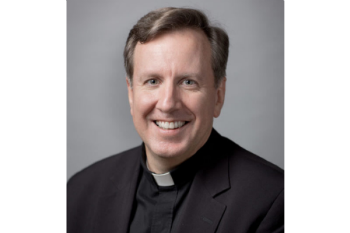
McClory Msgr Robert J


Gary, Ind., (CNA) - Msgr. Robert J. McClory has been appointed as the fifth bishop of the Diocese of Gary, Indiana, the Vatican announced on Tuesday, Nov. 26. 
The Diocese of Gary, in northwestern Indiana, is part of the metropolitan province of Indianapolis. The diocese is home to 170,203 Catholics and has been sede vacante since April 25, when Bishop Donald J. Hying was named the new bishop of the Diocese of Madison. McClory will be consecrated and installed as the new bishop of Gary on Feb. 11, 2020. 
McClory was ordained a priest for the Archdiocese of Detroit on May 22, 1999, and was given the honorific title "monsignor" in 2005. He has been the pastor of the parish of the National Shrine of the Little Flower Basilica in Royal Oak, MI, since July 2017. McClory celebrated his first Mass at the shrine in 1999. 
"I am honored and humbled that the Holy Father has appointed me as the bishop of Gary. During this week in which we celebrate Thanksgiving, my heart is full of gratitude that he has entrusted me to serve the people of northwest Indiana," Bishop-elect McClory said in a statement published by the Archdiocese of Detroit. 
"I look forward to getting to know the needs of our local church and, together, sharing the Good News of Jesus Christ," he added. 
A native of Detroit, McClory has a Juris Doctor from the University of Michigan Law School and worked as a civil lawyer from 1991 until 1994, when he entered seminary. He received a bachelor's degree in sacred theology in 1998 from Gregorian University in Rome, and received a canon law license from the Pontifical University of St. Thomas in Rome in 2000. 
Since his ordination, McClory has been assigned to parishes throughout the archdiocese of Detroit. Since 2001, he has been a judge of the Detroit Metropolitan Tribunal, and he has taught canon law at Sacred Heart Major Seminary since 2002. 
From 2009 until 2018, MCClory served as the Moderator of the Curia and Vicar General in the Archdiocese of Detroit. He has also acted as a consultant for the Catholic Leadership Institute, and served as a priest-observer for Region VI for the U.S. Conference of Catholic Bishops. 
The Archdiocese of Detroit released a statement early Tuesday morning congratulating McClory for his appointment. USCCB Vice President Archbishop Allen Vigneron praised McClory as a "zealous priest who generously devotes all the talents God has blessed him with to the ministry of spreading the Gospel."


"The pastors and people of the Church of Gary will find themselves blessed by his service," said Vigneron. "We, the priests, religious and faithful of the Archdiocese of Detroit, send him on mission with our heartfelt prayers."