Showing posts with label Bishop Mark Spalding. Show all posts

Saturday, July 11, 2026

The fast & furious growth of the Catholic Church across the American Southeast


Southern Dioceses Confront the Challenges of Rapid Catholic Growth

As Catholic populations surge across the American Southeast, dioceses are racing to expand parishes, cultivate vocations and ensure growth becomes lasting renewal.

On a typical Sunday morning in parts of the Southeastern region of the United States, the challenge facing Catholic parishes is not finding enough people to fill pews — it is finding enough space for everyone who shows up for Mass.

In fast-growing communities, churches are implementing additional Masses, opening overflow areas and, in some cases, livestreaming liturgies for parishioners who cannot fit inside the sanctuary. In the Archdiocese of Atlanta alone, diocesan officials report that 30% of parishes have at least one weekend Mass at or above capacity.

Parking lots fill early. Fellowship halls become temporary liturgical spaces. Parish buildings designed for a smaller Catholic presence are being asked to serve communities that have expanded far beyond their original expectations. 

That reality stands in stark contrast to much of the Northeast and Midwest, where many dioceses have spent the last several years navigating parish mergers, school closures and diocesan restructuring in response to declining Catholic populations.

Across much of the Southeast, however, Catholic communities are growing alongside broader population shifts driven by migration, new housing developments and economic opportunities. 

During the U.S. Conference of Catholic Bishops’ spring plenary assembly in Orlando in June, the Register spoke with four bishops whose dioceses are experiencing the effects of sustained Catholic growth in the South: Archbishop Gregory John Hartmayer of Atlanta; Archbishop Mark Steven Rivituso of Mobile, Alabama; Bishop J. Mark Spalding of Nashville; and Bishop Jacques Fabre-Jeune of Charleston, South Carolina. 

Although each leads a different local Church, they described remarkably similar priorities: expanding parish capacity, planning years ahead of growth and forming disciples who can sustain it.

Growth Meets Capacity

In Atlanta, home to one of Georgia’s two Catholic sees (the other being in Savannah), those demands are already visible every weekend.

Across the archdiocese, which serves more than 1.2 million Catholics, growth is concentrated in suburban areas where residential construction often precedes parish infrastructure by years. Parishes are adding Masses, using overflow seating or livestream participation simply to accommodate attendance. 

According to diocesan officials, six parishes regularly operate between 120% and 150% capacity.

The archdiocese’s growth is also increasingly diverse. Alongside long-established parishes, Atlanta is home to a large and growing Vietnamese Catholic community, with two parishes and a community continuing to develop. That growth is reflected not only in parish life but also in leadership: one of the archdiocese’s three auxiliary bishops, Bishop John Nhàn Trần, is Vietnamese. 

Meeting the needs of that expanding population also requires a strong focus on vocations. The archdiocese recently accepted 20 new seminarians, bringing the total number of men in formation to more than 70 for the upcoming year in an archdiocese with 325 priests ministering in some capacity.

“We have put our seminarians on notice that they’ve got to learn as much as they can with these languages in seminary to celebrate the Mass,” Archbishop Hartmayer said, noting that the archdiocese is “finding it difficult to keep up with [the] growth.”

A native of Buffalo, New York — a diocese that has experienced numerous parish closures and mergers in recent years — Archbishop Hartmayer attributed much of Atlanta’s growth to migration, coupled with a vibrant parish life that many newcomers find unexpectedly welcoming. 

“There is a spirit alive in the Church itself that draws people,” he said. “It’s an exciting time for the Church in the Southeast.”

Similar pressures are visible across the region.

In Mobile, the seat of Alabama’s Catholic archdiocese and one of just two Catholic jurisdictions in the state, Archbishop Rivituso said the influx of new Catholics is especially visible among young adults. 

More than 600 people entered the Church this past Easter, a 36% increase over the previous year, many of whom were university students. The archdiocese serves more than 113,000 Catholics while preparing for future needs with 13 seminarians in formation. Yet demographic growth is occurring alongside an aging priesthood; of the archdiocese’s 84 diocesan priests, 50 are age 60 or older.

To prepare for continued expansion, the archdiocese has begun acquiring land for potential parish construction in several of Alabama’s fastest-growing communities. In Opelika, St. Mary of the Mission Parish is scheduled to open a new church and multi-purpose facility this December.

Construction is blessed before any building begins in the Archdiocese of Mobile, Alabama. (Photo: Courtesy photo)

Meanwhile in Tennessee, Bishop Spalding previously told the Register that Nashville’s metro area is growing at about 1.5% annually, well above the national average — a pace that requires dioceses not only to respond pastorally but to anticipate structural and vocational needs years in advance.

That planning is reflected in the diocese’s priestly formation. According to diocesan officials, only a handful of priests are expected to retire over the next several years, while the diocese currently has 109 priests ministering to its faithful and 35 seminarians in formation.

The diocese serves more than 126,000 Catholics, while an estimated 279,000 Catholics live across Tennessee’s dioceses of Nashville, Memphis and Knoxville. Those figures reflect a Church that is continuing to grow, with parish expansions and capital campaigns underway, including the construction of the new Mother Teresa Catholic Church in Nolensville, while operating in a culture where religion remains socially embedded.

“When you come to Tennessee,” Bishop Spalding said, “they ask you where you were born, where you went to school, and then … where do you go to church?”

That familiarity, he said, often strengthens Catholic identity in a region still shaped by a strong Protestant culture.

“The Catholics in Tennessee have a chip on their shoulder,” he said. “They work hard in defending the Church and promoting the faith, and that draws people in.”

Across much of the Southeast, long known as the “Bible Belt,” Bishop Fabre-Jeune suggested a gradual cultural shift. With a smile, he said it could someday become known as the “Mary Belt.”

‘We Can’t Build Fast Enough’

But behind that optimism lies a shared reality: Growth brings pressure.

“We can’t build new churches fast enough,” Archbishop Hartmayer said. “We also can’t raise money fast enough to expand.”

To respond more quickly, the Archdiocese of Atlanta has developed internal financing structures that allow parishes to begin construction sooner rather than waiting years to accumulate the necessary funds. Through diocesan resources, parishes can access financial support for projects such as new churches and other facilities, with funds replenished over time as projects are repaid.

A dedication to the Sacred Heart of Jesus is held at the Basilica of the Sacred Heart of Jesus in Atlanta, Georgia, on June 12, 2026. (Photo: Julianna Leopold )

Covering the entire state of South Carolina, the Diocese of Charleston has taken a similarly forward-looking approach.

“The diocese hired a company to see where the areas of growth are happening throughout the state,” Bishop Fabre-Jeune said, “and from those results, [we found] six lots of land for future parishes.”

According to diocesan statistics, 1,754 people entered the Church this past Easter, while Catholic households in South Carolina have increased by 20.2% over the past decade. The diocese currently has 137 priests serving across the state, with 36 seminarians in formation.

For Bishop Fabre-Jeune, responding to that growth means preparing not only for where Catholics will worship, but how they will be sustained in their faith. The diocese’s five-year pastoral plan, Via Fidelis, began with evangelization, moved into its second year focused on catechesis, and will continue through 2029 in sacraments, service and mission.

The catechetical focus of Via Fidelis takes concrete shape in what Bishop Fabre-Jeune described as mystagogy, the post-baptismal period of formation for new Catholics. “We are hoping to engage more deeply in that,” he said, “not only making sure [new members] receive the faith, but that they continue to grow and mature in it.” 

In Nashville, Bishop Spalding said dioceses are also adapting creatively as growth reshapes assumptions about available worship space.

“If another denomination’s church is up for sale, we at least look at the situation,” he said. “That can either be an initial church for our community or, with some work, can be made into a more permanent church for the parish to thrive in.”

Across the region, bishops emphasized that growth cannot be met by buildings alone.


Throughout the Diocese of Nashville, approximately 886 Catholics were received into the Catholic Church during Easter Vigil Masses on Saturday, April 4, 2026. (Photo: Rachel Lombardi/Diocese of Nashville)

“We must focus on nurturing a culture of vocations,” Archbishop Rivituso added, pointing to the long-term challenge of sustaining parish life as Catholic populations expand faster than clerical capacity in some areas, “so that people who feel encouraged to say ‘Yes’ to God’s call can then give back to the growing Church communities.”

Integrating New Arrivals

The challenge, according to Archbishop Rivituso, does not end when people enter the Church.

“When we see people come in on Easter Vigil,” he continued, “I want to be able to see them next Easter Vigil, still connected, still part of the life of the parish.” 

He pointed to ministries serving the poor, immigrants and vulnerable communities as essential to integration into parish life throughout the Archdiocese of Mobile.

“We want to get the new members of the Church involved,” Bishop Spalding added. “Whether it be education, formation, charitable work, liturgical activity — giving people real ways to belong, not just attend.” 

According to the region’s bishops, that emphasis on integration is increasingly central across dioceses experiencing rapid growth.

“It’s a good problem to have,” Archbishop Hartmayer noted. “We hope that it continues, but we cannot take any of it for granted. What’s happening in the Northeast can happen in the Southeast if we are not intentional about good liturgy, good music, good homilies and good pastoral care for the people in our parishes.”

Across dioceses, leaders stressed that success cannot be measured only by how many arrive, but by how many remain and deepen their faith.

The demographic shift has redrawn the map of American Catholicism, making the South its fastest-growing region. But bishops across the region consistently returned to the same concern: growth alone is not renewal.

Whether that growth becomes lasting stability will depend on how the Church responds — not only in buildings and vocations, but in its ability to integrate, form and sustain a rapidly changing Catholic population across the Southeast.

Thursday, July 10, 2025

Two Catholic Dioceses in the U.S. dispense Mass attendance if immigrants fear detention by the federal government/ICE


2 Catholic dioceses say immigrants can skip Mass over ICE raid fears


John Moore / Getty Images

John Moore / Getty Images

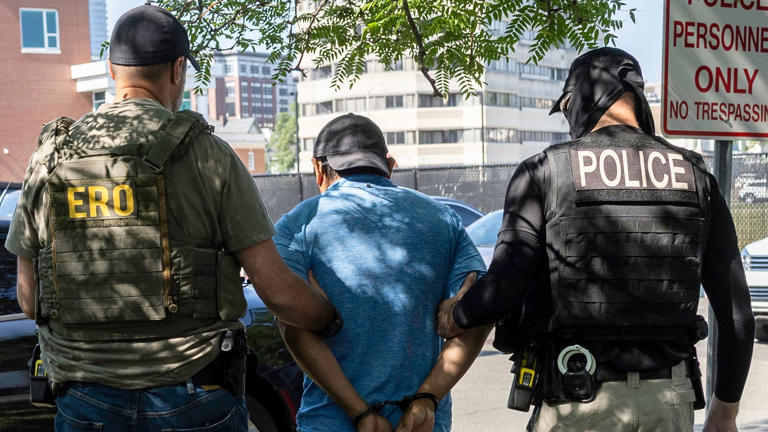
At least two Catholic dioceses in the U.S. say immigrants fearful of detentions from ongoing immigration raids are not required to attend Sunday Mass.

Why it matters: The rare dispensations from the dioceses of Nashville and San Bernardino, California, signal how some local Catholic officials are responding to the growing panic that immigrants feel from the Trump administration's intensified immigration enforcement.

Driving the news: The Diocese of San Bernardino announced Tuesday that immigrants who had a "genuine fear" about getting caught in immigration raids were dispensed from the weekly obligation of Sunday Mass.

  • "In issuing this decree, I'm guided by the Church's mission to care for the spiritual welfare of all entrusted under my care, particularly those who face fear or hardship," San Bernardino Bishop Alberto Rojas and Vicar General Gerard M. Lopez wrote.
  • The diocese east of Los Angeles is the sixth-largest in the U.S. and serves around 1 million Catholics, according to its website.

The Diocese of Nashville issued a similar decree in May after officials noticed a significant decline in attendance at Spanish-speaking Mass services, per local media.

  • "In response to the recent immigration enforcement activities in the Nashville area, many of those in our diocese are concerned about possibly being confronted or detained while attending Mass or other parish events," the diocese said in a statement.
  • "Our churches remain open to welcome and serve our parish communities, but no Catholic is obligated to attend Mass on Sunday if doing so puts their safety at risk."

The intrigue: Catholic priest and author James Martin called the San Bernardino dispensation a wise move.

  • "It is a dramatic sign that not even Catholic churches are considered safe places any longer. Where are the voices for religious freedom now?" Martin posted on X.

State of play: The move comes after President Trump changed an Immigration and Customs Enforcement (ICE) policy that previously prevented agents from raiding churches.

  • The move has met with intense criticism from some Christian leaders but drew praise from some white evangelicals.

Zoom in: It's unclear how many other dioceses are considering or have issued similar announcements.

  • The United States Conference of Catholic Bishops spokesperson
    Chieko Noguchi told Axios local bishops know the needs of their dioceses and have the authority to dispense those under their pastoral care.
  • "The Catholic Church recognizes that civil authorities have a duty to enforce laws and keep communities safe from violent criminals," Noguchi said.
  • "However, we also believe that the God-given dignity of each person must be upheld, which includes acknowledging their right to emigrate in search of a better life and to express their religious beliefs openly and without fear."

The Department of Homeland Security did not immediately respond to Axios' request for comment.

Zoom out: Dispensations from attending Mass for large populations are rare and occur only during times of crisis, such as the COVID-19 pandemic.

  • They are usually granted to sick people who physically can't attend Mass, but rarely do they involve people targeted by law enforcement.

Between the lines: A recent survey shows the issue of immigration divides white and Latino Catholics, both of whom are also split along racial lines in their support for President Trump.

  • The United States Conference of Catholic Bishops has been actively involved in advocating for immigrants and immigration reform in the U.S.

Tuesday, May 7, 2024

A new Bishop for Knoxville Tennesse

 Pope appoints new bishop for Knoxville pe Francis appoints Father James Mark Beckman next Bishop of Knoxville


May 7, 2024

Pope Francis has appointed Father James Mark Beckman, 61, a priest of the Diocese of Nashville for more than three decades, as the fourth Bishop of the Diocese of Knoxville. The appointment was announced in Washington, D.C., on May 7, 2024, by Cardinal Christophe Pierre, apostolic nuncio to the United States.

“I am blessed and honored to accept this appointment from the Holy Father,” Bishop-elect Beckman said. “I am a native Tennessean, and I am grateful that I can continue serving the Church and now the faithful of the Diocese of Knoxville in this region that I know well and love tremendously.”

Archbishop Shelton J. Fabre will continue to lead the Diocese of Knoxville as apostolic administrator until Bishop-elect Beckman’s episcopal ordination in late July.

“I have known Bishop-elect Beckman for a long time,” Archbishop Fabre said. “We were seminarians together at the Catholic University in Louvain, Belgium many years ago. I believe in my heart that he will be a good shepherd for the faithful of the Diocese of Knoxville.”

Bishop-elect Beckman was born on October 19, 1962, in Lawrenceburg, Tenn., which is located within the Diocese of Nashville. He attended Sacred Heart School and Lawrenceburg County High School and received a bachelor’s degree in history from St. Ambrose College in Davenport, Iowa in 1984. He also earned a master’s degree in religious studies from the Catholic University in Louvain, Belgium in 1988.

He was ordained a priest of the Diocese of Nashville by Bishop James D. Niedergeses on July 13, 1990. He served as associate pastor of Holy Rosary Parish, Nashville (1990-91); teacher and associate principal of Father Ryan High School, Nashville (1990-96); pastor of Our Lady of Lourdes Parish, Springfield, Tenn. and St. Michael Mission, Cedar Hill, Tenn. (1996-2002); pastor of St. Matthew Parish, Frankin, Tenn. (2002-15); and pastor of St. Henry Parish, Nashville (2015-present).

Bishop-elect Beckman has also served as director of priest personnel for the Diocese of Nashville since 2018.

“While our own hearts are saddened by the departure of such a dear friend and collaborator in ministry, we are joyful for our brothers and sisters in our neighboring diocese who are receiving such a kind, faithful, and capable new shepherd,” said Bishop J. Mark Spalding of the Diocese of Nashville.

Bishop-elect Beckman is an avid hiker and said he plans to continue his passion for the outdoors while serving in the Diocese of Knoxville.

“Over the years I have made many friends in the Diocese of Nashville, and I have much gratitude for the support they’ve given me. I look forward to nurturing the same meaningful relationships with the Catholic community in East Tennessee,” Bishop-elect Beckman said. “This is a wonderful diocese, and I am thrilled to be part of its future.”

Tuesday, March 28, 2023

Catholic Church in Nashville praying for the victims of the Presbyterian school massacre


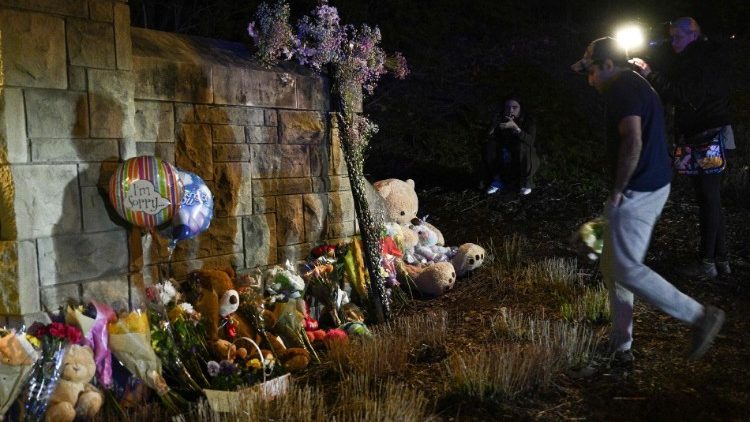
Man lays flowers to a makeshift memorial outside the Covenant School building in NashvilleMan lays flowers to a makeshift memorial outside the Covenant School building in Nashville  (AFP or licensors)

Church in Nashville mourns victims of yet another US mass shooting

Bishop Mark Spalding of Nashville calls for prayers for the victims and families of the latest mass shooting in the US, killing three children and three members of staff in a local Presbyterian school.

By Vatican News staff reporter

Six people, including three children, lost their lives Monday following a shooting by an ex-student at a school in the US city of Nashville, Tennessee.

The incident took place in the Covenant School in the Green Hills neighbourhood, a private Presbyterian school that educates students in preschool through to sixth grade.

Victims include three nine-year-old children and three school employees: the head of the school, a substitute teacher and a custodian.

According to the police, the shooter was 28-year-old Audrey Hale, who was armed with three guns, including a semi-automatic rifle. The suspect drove to the school and got in by firing through one of the school doors, which were all locked. She had drawn detailed maps of the school, police said, including the entry points to the building.

After the shooting, the young woman who was once a student at the school was killed during subsequent gunfire with police.

Bishop of Nashville J. Mark Spalding praying for victims

The Bishop of Nashville J. Mark Spalding said he was heartbroken at the news and in a statement posted to social media asked for prayers for the victims, their families, and the Covenant Presbyterian community.

In the late afternoon, he celebrated a special Mass at the Cathedral of the Incarnation, which was live-streamed on Facebook.

“My heart breaks with news of the school shooting at The Covenant School this morning. Let us pray for the victims, their families, and the Covenant Presbyterian community.”

In a later statement, the Diocese expressed shock and deep sadness at the news of the shooting and again asked for prayers.

“This news is a painful reminder that these horrific events can happen at any time, our own city is not immune to this violence,” said Brian Cooper, chancellor and chief operating officer.  “Across Middle Tennessee, our churches and schools continue to be vigilant as we focus on the safety and security of parishioners, students, faculty, and staff. It is a top priority,” he continued. “Within the last five years, the diocese has conducted multiple comprehensive security reviews of each school and adjacent parish grounds. We have taken significant steps to continually enhance the security of our facilities in cooperation with parish leaders.”

“We have in place mandatory training for our faculty, staff, and administration. This was established several years ago,” Dr Rebecca Hammel, superintendent of schools for the Diocese, added in the statement. “This training accompanies annual site and safety protocol reviews and regular safety drills conducted with staff and students in our schools. We will look for opportunities to strengthen our safety protocols as we learn from the ongoing police investigation of this sad incident.”

US Bishops' appeals  for  gun control measures

The Nashville tragedy is the last of long a string of ongoing mass shootings that have become all too prevalent in the United States in the past decades, reigniting each time the national debate on gun reform in the country.

US Bishops have also joined in calling for reasonable gun control measures, echoing Pope Francis’ pleas that “It is time to say ‘no more’ to the indiscriminate trafficking of weapons.” In June 2022 the chairs of four committees of the US Conference of Catholic Bishops (USCCB) issued a statement urging all members of Congress to action that “addresses all aspects of the crisis, including mental health, the state of families, the valuation of life, the influence of entertainment and gaming industries, bullying, and the availability of firearms.”

Pope Francis has frequently denounced gun trafficking, including in his 2015 address to a joint session of Congress. “Why are deadly weapons being sold to those who plan to inflict untold suffering on individuals and society?” he asked U.S. lawmakers. “Sadly, the answer, as we all know, is simply for money: money that is drenched in blood, often innocent blood.”