Showing posts with label Argentina. Show all posts

Monday, September 21, 2026

The Papal Itinerary for November's South American trip


File photo: Pope Leo aboard an aeroplaneFile photo: Pope Leo aboard an aeroplane  (@Vatican Media)

Vatican releases itinerary for Pope's upcoming journey to Latin America

The Holy See Press Office releases the program, logos and mottos for Pope Leo XIV’s upcoming Apostolic Journey to Uruguay, Argentina and Peru, which will take place from 6 to 17 November.

Vatican News

The Holy See Press Office has released the program for Pope Leo XIV’s upcoming Apostolic Journey to South America in November, which will see him visit Uruguay, Argentina and Peru and travel to ten cities over twelve days.

Alongside the program, the logos and mottos for each of the three stages have also been unveiled.

The Holy See had already announced the dates of the journey, and the cities to be visited, on 5 August, but the program released today reveals further details, including times, venues and activities.

READ THE FULL ITINERARY HERE

6-8 November: Uruguay

The Pope will arrive in Uruguay, where he will remain from 6 to 8 November, visiting Montevideo, Paysandú and Florida.

It will be the first papal visit to the country since St John Paul II’s journey in 1988. The motto for this stage of the visit will be “I bring you news of great joy”, taken from the angel’s announcement to the shepherds in Bethlehem (Lk 2:10. The logo, on the other hand, shows Christ crucified and risen, flanked by Pope Leo and Our Lady of the Thirty-Three, patroness of Uruguay. Above them is the sun, inspired by the “Sun of May”, a symbol of Uruguay’s national identity, while the color blue evokes the national flag.


The logo of the papal trip to Argentina

8–11 November: Argentina

On 8 November, Pope Leo will head to Argentina, where he will remain until 11 November. The program includes visits to Buenos Aires, Córdoba and Luján.

The visit will be particularly significant as Argentina is the home country of Pope Francis. The Pope will arrive in the country almost four decades after the last papal visit: St John Paul II travelled there in 1987.

The motto for this stage will be “Welcome everyone. Go and proclaim”. The logo depicts a group of people with a cross at the center. The arrangement of the figures suggests a shared journey, in which each person participates with a sense of co-responsibility: from encounter to proclamation, as missionary disciples on the way.

The logo of the Apostolic Journey to Peru


11-17 November: Peru

On 11 November, the Pope will travel to Peru, where he will remain until 17 November. This will be the longest stage of the journey and include stops in Lima, Chiclayo, Cuzco and Pucallpa. The visit will have particular significance for a Pope who spent years carrying out missionary and pastoral work in the country.

The motto for this stage of the trip is “Let us open our hearts”. The logo is framed by a heart symbolizing openness to God, to others and to the future. Inside is a map of Peru, over which the Holy Spirit is depicted in the form of a dove. At the center is the Pope, surrounded by the Peruvian saints St Rose of Lima, St Turibius of Mogrovejo, St Martin de Porres, St Francis Solano and St John Macías.

Wednesday, August 5, 2026

On the road again; papal edition; Uruguay, Argentina & Peru


Pope Leo waves (File photo)Pope Leo waves (File photo)  (@Vatican Media)

Pope Leo to visit Uruguay, Argentina and Peru in November

The Holy See Press Office announces that Pope Leo will make an Apostolic Journey to Uruguay, Argentina and Peru in November 2026.

Vatican News

Pope Leo XIV will undertake an Apostolic Journey to Uruguay, Argentina and Peru from 6 to 17 November, the Holy See Press Office has announced.

The Holy Father will visit Montevideo, Paysandú and Florida from 6 to 8 November; Buenos Aires, Córdoba and Luján from 8 to 11 November; and Lima, Chiclayo, Cusco and Pucallpa from 11 to 17 November.

Uruguay, where Catholics make up only 36% of the population, is the country with the lowest number of Catholics in all of Latin America. Argentina, meanwhile, was the homeland of Leo's predecessor Pope Francis, although the late Pope, who hailed from Buenos Aires, did not manage to visit during his 12-year pontificate. 

Peru, finally, is a country which Pope Leo knows very well - he first arrived as a missionary in the 1980s, later serving as a bishop there and acquiring citizenship.

This journey to Latin America, which will see the Pope visit ten cities over eleven days, will be his sixth international trip. The schedule for the journey will be released in due course. 

Monday, February 12, 2024

At canonization of Argentine Saint, the Pope meets Argentine President


Pope Francis meets with Argentine President Milei

Pope Francis holds a private audience with the President of Argentina, Javier Milei, a day after the Pope canonized the first native-born Argentinian saint.

By Devin Watkins

President Javier Gerardo Milei and Pope Francis met briefly on Sunday on the sidelines of the Mass which the Pope presided over in St. Peter’s Basilica.

During that event, the Pope canonized St. María Antonia de San José de Paz y Figueroa, known around the world as “Mama Antula,” making her the first Argentine saint.

On Monday, the Argentine Pope welcomed the President of Argentina for an official audience in the Vatican’s Apostolic Palace.

President Milei was accompanied by his sister, Karina Milei, who serves as the General Secretary of the Presidency of Argentina.

The 53-year-old native of Buenos Aires was sworn in as President on December 10, 2023.

According to the Holy See Press Office, President Milei met afterwards with Cardinal Secretary of State Pietro Parolin, accompanied by Archbishop Paul Richard Gallagher, Secretary for Relations with States and International Organizations.

“During the cordial discussions, which took place at the Secretariat of State, appreciation was expressed for the good relations between the Holy See and the Argentine Republic, and the will to strengthen them further,” according to a press statement.

“The parties then addressed the new Government’s programme to counter the economic crisis,” it continued. “Attention then turned to various themes of an international character, especially ongoing conflicts and the commitment to peace among nations.”

Listening to God and to the People by Bishop Angelelli


Martyred Argentine Bishop Enrique Ángel AngelelliMartyred Argentine Bishop Enrique Ángel Angelelli 

Pope Francis: Every human person is a precious gift of God

We present Pope Francis’ preface to “Enrique Ángel Angelelli: In Ascolto di Dio e del Popolo’ (Enrique Ángel Angelelli: Listening to God and to the People), a collection of the homilies delivered by the Argentine bishop between 1968 and his martyrdom in 1976.

Enrique Ángel Angelelli: Listening to God and to the People

Preface by Pope Francis

Every man, every woman, every believer: we are all a gift from the Lord, a very precious gift. Each of us is a gift for everyone and for the whole Church, taking flesh in a context, in a time, in a specific place. We are concrete gifts, for concrete people, and in this way we are also a gift for all, in the simplicity of the life we live. Indeed, the more we grow in friendship with the Lord and with others, the more the harshness, the hardness, the incompatibilities are smoothed out or, more aptly, cease to be an obstacle to communion and paradoxically become our unique and unrepeatable way of being, the specific colour of the gift that we are for others. We are all gift, then, and yet the Church recognizes in the saints people who are a gift in a somewhat broader, that is, universal, way: that is why they are canonized, so that their existence and friendship can also reach people, places, contexts and times that are not those closest to them. For the saints are brothers and sisters so resembling Jesus that they can be sure references (by their example, teaching and friendship and devotion) for every Child of God. So that we may all be more united to the Father and to our brothers and sisters, more like Jesus, more united as brothers and sisters among ourselves.

The blessed martyr Enrique Angelelli, Bishop of La Rioja, was and still is a gift from the Lord for the Church that is in Argentina. A man of great freedom and love for every person: friend or foe, brother or enemy. A truly Catholic bishop, because he was united with the universal Church in listening and in filial obedience to the Pope and in tenacious commitment to implement the directions and impulses of the Second Vatican Ecumenical Council in his diocese. For example, the manner in which he communicates to his people the meeting he would have with Paul VI on the occasion of his visit ad limina Apostolorum was very beautiful – I would even say moving; with the same enthusiasm, he also conveys to the faithful the result of the meeting and the messages and letters he received from Rome. At the same time, despite growing dangers and hostility from his adversaries, despite fear and threats, he carries out the mandate to be a shepherd of a flock of the Church. A flock, however, that is not meant to shut itself up in the sacristy but to spread God’s love, welcomed and celebrated in the sacraments, in the ordinary life of work, family, associations, and solidarity. I do not believe Angelelli was a hero, but truly a martyr (and so the Church has recognized him).

The martyr bears witness that if the heart and mind are in God then certain attitudes always arise in him: sincere love for all and the rejection of all instrumentalization and shortcuts that aim at self-interest or quiet living, if the rights and lives of the weakest, the marginalized – those who, we would say today let us say, are on the peripheries – are at stake. That is why Bishop Angelelli and his homilies, collected in this volume entitled Listening to God and to the People, can also be a source of inspiration and growth in evangelical discernment of the challenges and situations that each of us is called to experience in the Church and in our professional and family lives.

Bishop Enrique was also a shepherd of the simple: he valued popular piety (linked to places, times, and festivals of that land and people) to foster the people's adherence – in unity and solidarity – to Christ and Mother Church. As this volume testifies, his preaching was truly popular, addressed to all and accessible to all: anchored, too, in the concrete circumstances of social life to show that the Gospel is not an idea and faith is not a belief. Faith in Christ, in fact, is the acceptance of a relationship that changes us in heart and mind, and the way we look at ourselves and others. The Gospel has us looking (pardon the pun and the linguistic stretch) looked upon and looking with love.

Sunday, February 11, 2024

Pope Francis presides at canonization Mass of Mama Antula


Pope Francis canonises Argentinian laywoman ‘Mama Antula’

Pope Francis canonises María Antonia de San José, describing her as a "wayfarer of the spirit" and "a model of apostolic fervour and audacity".

By Joseph Tulloch and Stefan von Kempis

‘Mama Antula’ is Argentina's first female saint.

She was canonised by Pope Francis – himself Argentinian– on Sunday morning, in a Mass in St Peter’s Basilica.

María Antonia de San José de Paz y Figueroa, known in her own country, and by millions of faithful around the world, as “Mama Antula”, lived in Argentina in the 18th century.

At that time, the Jesuit order had been expelled from Argentina. María Antonia, a laywoman, made it her mission to spread Ignatian - that is, Jesuit - spirituality throughout the country. 

Among the roughly five thousand present in St Peter's Basilica for the occasion was Javier Milei, the newly-elected president of Argentina.


A "wayfarer of the Spirit"

Towards the end of his homily, Pope Francis laid to one side his prepared remarks and spoke off-the-cuff.

“Today we think of María Antonia de San José, 'Mama Antula',” he said. “She was a wayfarer of the Spirit. She travelled thousand of kilometres on foot, crossing deserts and taking dangerous paths, bringing God with her."

“Today she is a model of apostolic fervour and audacity for us,” the Pope continued. “When the Jesuits were expelled [from Argentina], the Spirit lit a missionary flame in her based on trust in providence and perseverance.”

“Let us pray today to María Antonia, Santa María Antonia de Paz de San José, that she may help us very much.”

Solemn moment of canonisation

The Litany of All Saints rang out solemnly under Michelangelo's dome, then the Pope spoke the canonisation formula.

A deacon consecrated the relics of "Mama Antula", and the Gospel was recited in Greek, as is customary on particularly solemn occasions.

During the offertory, Claudio Perusini and his family brought gifts to the altar; the man had been healed by a miracle that took place through the intercession of the new saint and paved the way for her canonisation.

Leprosy and marginalisation

The Pope had already honoured the new saint in detail on Friday; in his sermon this Sunday, other than the remarks reported above, he largely refrained from highlighting her virtues. Instead, he went into detail about this Sunday's Gospel, which describes the healing of a leper by Jesus (Mk 1:40-45). The man had not only suffered from leprosy, but also, and above all, from marginalisation.

"Fear, prejudice and false religiosity: these are three causes of a great injustice, three 'leprosy infections of the soul' that make the weak suffer because they are treated like rubbish. Brothers and sisters, let us not think that this only happened in the past. How many suffering people we encounter on the pavements of our cities! And how many fears, prejudices and incongruous behaviours, even on the part of those who believe and call themselves Christians, continue to hurt them! Even in our time, there is much marginalisation, there are barriers that need to be broken down, there are 'leprosy infections' that need healing."

And how does such healing take place? Not by keeping our distance. The Pope emphasised this to his listeners in St Peter's Basilica by pointing out that Jesus made the first move and touched the sick person, although he realised that in doing so he was violating the ideas of purity of his time.

An important day for Argentina

5,500 faithful gathered in St Peter's Basilica for the celebration, among them thousands of the Pope's compatriots, including bishops, priests and pilgrims from the archdiocese of Portiña, where Pope Francis was once a pastor.

Vigils were organised across Argentina, and the liturgy was shown on giant screens in public squares.

President Javier Milei, who has been in Rome since Saturday, was also present in the Basilica, and will meet privately with Pope Francis tomorrow, 12 February, in the Vatican.

Wednesday, November 22, 2023

Pope congratulates newly elected President of Argentina despite his past criticisms of the Pope


Pope Francis congratulates president-elect Milei of Argentina in phone call


Julieta Villar

Pope Francis contacted the president-elect of Argentina, Javier Milei, to congratulate him on his victory in Sunday’s runoff presidential election. The libertarian economist, who ran for the La Libertad Avanza (Freedom Advances) party, will take office on Dec. 10.

The pontiff called the future president of Argentina on Tuesday and had a “pleasant and very good” conversation, those close to the politician told Infobae online news.

According to the news outlet, the person who made the contact possible was the pope’s ophthalmologist, Fabio Bartucci. The phone call was confirmed to ACI Prensa, CNA’s Spanish-language news partner, by the Holy See’s Press Office.

When the call was made, Diana Mondino, a member of Milei’s La Libertad Avanza party just elected to the national Legislature, personally went looking for Milei, who was recording a television interview, and the president-elect interrupted the report to talk with the Holy Father.


Milei also extended the invitation for Pope Francis to visit Argentina next year “as head of state and leader of the Church,” Infobae added.

The Todo Noticias portal stated that, according to members of Milei’s team, the Holy Father reportedly “responded positively” to the invitation.

During the conversation, the libertarian addressed the pontiff as “His Holiness,” and a leader close to Milei said that “they spoke together very well. It was thrilling."

Witnesses to the communication between the two told Infobae that Pope Francis pointed out to the new president that “health, education, and poverty are very important issues.”

In response, Milei said he is convinced that changes he plans to make “are going to be good for the population.”

Pope Francis urged the future president to have “wisdom and courage to govern,” to which Milei replied: “I have the courage, I am working on the wisdom.”

The phone call from Rome comes after some harsh criticism of the pope by Milei. In public statements, the next president had claimed that the pontiff was “the representative of the evil one on Earth” and had proffered other insults, for which he was urged to apologize.

In the presidential debates, Milei, in addition to offering his apology, guaranteed that if the pope wants to visit Argentina, he will be respected “not only as head of state, but as leader of the Catholic Church.”

In recent weeks, the possibility of Pope Francis visiting his native country began to gain momentum, and the nation’s bishops gathered at their 123rd plenary assembly even formalized the invitation with a letter to the pontiff. 

A Nov. 14 article on Infobae alleged that the pontiff had told those close to him that the decision to travel did not depend on the result of the elections.

This story was first published by ACI Prensa, CNA’s Spanish-language news partner. It has been translated and adapted by CNA.

Wednesday, November 8, 2023

Argentine Cardinal and three others on path to Sainthood


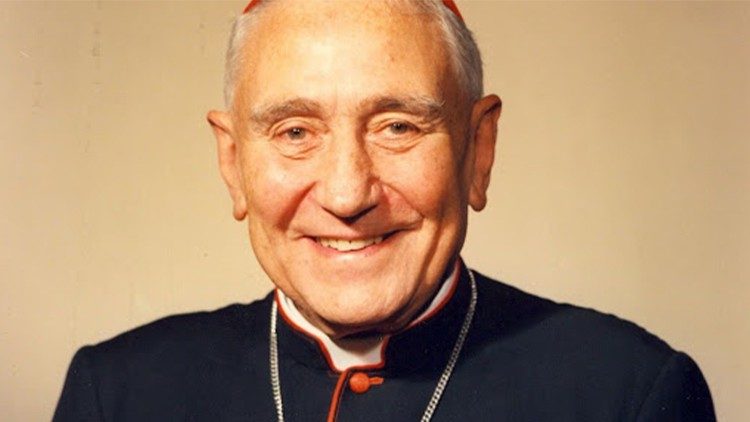
Cardinal Edoardo Francisco PironioCardinal Edoardo Francisco Pironio 

Pope opens path to beatification of Argentinian Cardinal Pironio

Pope Francis recognises a miracle attributed to the intercession of Cardinal Edoardo Francisco Pironio, and proclaims the "heroic virtues" of three other individuals.

By Joseph Tulloch

Pope Francis has recognised a miracle attributed to the intercession of Edoardo Francisco Pironio, the Argentine Cardinal known to many as “the friend of God.”

In an audience on Wednesday morning with the Prefect of the Dicastery for the Cause of the Saints, Pope Francis gave his assent to the publication of a decree regarding the miracle, thus paving the way for Pironio’s beatification.

Legacy of service

Cardinal Pironio was born in Argentina in 1920, to a family of Italian immigrants. He was the last of 23 children.

During his lifetime, he was well-known for his humility and profound spirituality, as well as for his close relationships with the homeless people living in the vicinity of St Peter’s Square.

Once considered a leading candidate for the papacy, he was a key figure in the Latin American Church, serving as both secretary and president of the Latin American Episcopal Conference.

In 1975, Pope Paul VI called him to Rome, where he was created Cardinal. From 1984 to 1996, he served as President of the Pontifical Council for the Laity.

Cardinal Pironio died in Rome in 1998, after a long and difficult illness.

Pope Francis: Pironio 'never closed the door to anyone'

During his time in Argentina, Pironio met with Jorge Mario Bergoglio, then provincial of the Jesuits, later to become Pope Francis.

In an interview, the Pope said of Pironio: “When you spoke with him, he always gave you the feeling that he was the worst man in the world, the worst sinner.”

“He would open a panorama of holiness to you from his profound humility. He opened horizons for you; you realised that he never closed the door to anyone, even people he knew did not understand him," said Pope Francis.

Heroic virtues recognised

During the meeting on Wednesday, Pope Francis also recognized the “heroic virtues” of three individuals - Giuseppe Marrazzo, Eliswa of the Blessed Virgin Mary (born Eliswa Vakayil), and Francesca Foresti (born Eleanora).

Two of these – Marrazzo, a Rogationist priest, and Foresti, a Franciscan nun – were Italian, while Sr. Eliswa hailed from the Indian state of Kerala.

The Pope's decision means that all three - already recognised as Servants of God - will now be recognised as Venerable, the next step in the beatification process.