Showing posts with label Archbishop Jerome Listecki. Show all posts

Monday, November 4, 2024

A new Archbishop for the Archdiocese of Milwaukee


Pope Francis Accepts Resignation of Archbishop Jerome Listecki of the Archdiocese of Milwaukee; Appoints Bishop Jeffrey Grob as Successor


WASHINGTON – Pope Francis has accepted the resignation of Archbishop Jerome E. Listecki, 75, from the pastoral governance of the Archdiocese of Milwaukee, and has appointed Bishop Jeffrey S. Grob, auxiliary bishop of Chicago, as his successor.

The resignation and appointment were publicized in Washington, D.C. on November 4, 2024, by Cardinal Christophe Pierre, apostolic nuncio to the United States.

The Archdiocese of Milwaukee is comprised of 4,758 square miles in the State of Wisconsin and has a total population of 2,363,605 of which 529,771, are Catholic.

Wednesday, November 15, 2023

USCCB advances cause for canonization of Paulist Priest Thomas Hecker


U.S. Bishops Affirm Advancement of the Cause of Beatification and Canonization of Servant of God Isaac Thomas Hecker, Paulist Priest


BALTIMORE - At their annual November Plenary Assembly, the bishops of the United States held a canonical consultation on the cause of beatification and canonization of the Servant of God Isaac Thomas Hecker.

Archbishop Jerome E. Listecki of Milwaukee, chairman of the U.S. Conference of Catholic Bishops’ (USCCB) Committee on Canonical Affairs and Church Governance, and Cardinal Timothy M. Dolan of New York, facilitated the discussion by the bishops. The bishops voted to support the advancement of the cause of beatification and canonization on the diocesan level.

The following brief biography of Isaac Hecker has been drawn from materials provided by the Archdiocese of New York:

Isaac Thomas Hecker was born on December 18, 1819, in New York City, to John and Caroline Hecker. Isaac began formal education in 1826 but stopped after his maternal grandfather’s death. He then worked as an apprentice at a local Methodist newspaper. He later joined his older brothers in their successful bakery business, which allowed them to support his growing interest in spirituality. Isaac spent years exploring various contemporary religious ideas, but none fully satisfied his reason or conscience. Eventually his search would take him to the Catholic Church, which “burst upon my vision as the object to which all my efforts had been unintentionally directed. It was not a change, but a sudden realization of all that had hitherto obscurely captivated my mind, and secretly attracted my heart.”

Embracing his vocation, Hecker joined the novitiate for the Redemptorists and was ordained to the priesthood in 1849. Father Hecker embarked on missions, promoting moral reform and a higher Catholic standard of living in the United States. In 1858, Father Hecker, along with other American Redemptorists, sought to establish an English-speaking mission in the United States, which led to their departure from the Redemptorist order. They formed a new community, the Congregation of Missionary Priests of St. Paul the Apostle, which is today known as the Missionary Society of Saint Paul the Apostle, commonly known as the Paulist Fathers, committed to evangelizing and building up the Catholic community in the United States.

Father Hecker’s vision extended beyond parochial missions to addressing the broader societal challenges of the 19th century, emphasizing the role of the Holy Spirit in individual lives and in guiding the Church. He saw the Church as an essential unifying force in a fragmented society, capable of overcoming division. His teachings emphasized personal conversion, the Church’s authority, and the interaction between faith and reason. In his later years, Hecker’s focus broadened to address global issues, and he explored the significance of immigration in building a united society. Father Hecker’s final work, “The Church and the Age,” encapsulated his theological reflections that emphasize the importance of the Holy Spirit’s influence in the Church and the individual.

Father Isaac Hecker died at the Paulist Fathers’ residence in New York City on December 22, 1888, after battling numerous illnesses over the last years of his life. He left behind a legacy of recognizable holiness and his reputation for sanctity was evident in his own lifetime and has continued to inspire pastoral and missionary zeal in the Church down to today.

He continues to provide an inspirational model for our contemporaries to think about the search for God, the experience of conversion, the giving of oneself heroically in service, the furthering of the Church’s mission, and attentiveness to the direction of the Holy Spirit.

The Archdiocesan Inquiry phase of the cause of beatification and canonization of the Servant of God Isaac Thomas Hecker was formally opened in the Archdiocese of New York in January 2008.

Friday, March 24, 2023

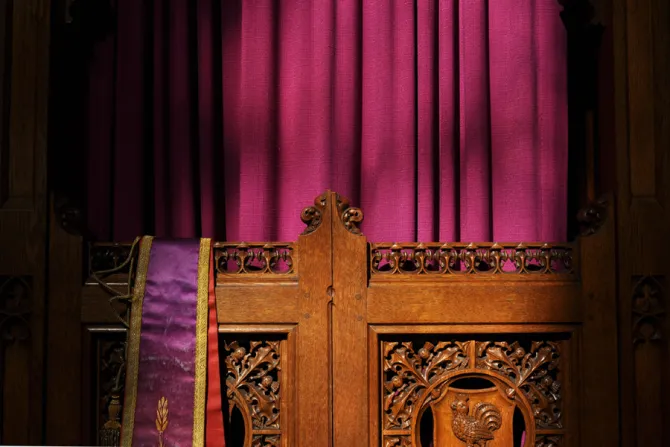
Archbishop strips a Priest's faculty to hear confessions


Priest stripped of faculty to hear confessions after he advocated violating that sacrament in sex abuse cases


Archbishop Jerome Listecki of Milwaukee has stripped one of his priests of the faculty to hear confessions following the clergyman’s public support for civil laws mandating that priests break the seal of confession for sins of sexual abuse.

“I have informed Father James Connell that effective immediately he is to cease all such erroneous communications that distort the teachings of the Church about the confessional seal,” Listeicki wrote in a March 22 statement. 

“I have also immediately removed the canonical faculties of Father Connell to validly celebrate the sacrament of confession and to offer absolution, here in the Archdiocese of Milwaukee and thereby also in the Catholic Church around the world.”

Connell, a retired priest in the archdiocese and former vice chancellor, made comments March 13 in delawareonline.com advocating for a Delaware state bill that mandates priests break the seal of confession for penitents who confess sins of child sexual abuse. 

Connell wrote that “no institution in our society, not even a recognized religion, has a significant advantage over governments’ compelling interest and responsibility to protect its children from harm by abuse or neglect.”

“Thus, no valid freedom of religion argument rooted in the absence of truth can provide a moral justification for sheltering perpetrators of abuse or neglect of children from their deserved punishment, while also endangering potential victims,” he continued.

This isn’t the first time Connell, a canon lawyer, has spoken publicly on the issue. In 2018, he appealed to Pope Francis in an online article to “release from the seal of confession” all information regarding child or vulnerable adult sexual abuse so authorities can be notified.

The seal of confession “is not a matter of divine law,” he said in that piece. 

In the Code of Canon Law, Canon 983 says that “the sacramental seal is inviolable; therefore it is absolutely forbidden for a confessor to betray in any way a penitent in words or in any manner and for any reason.”

In 2019, he filed a lawsuit in a U.S. district court against Wisconsin and nine other states arguing that exemptions for the clergy from being mandatory reporters in cases when sexual abuse became known to them under the sacramental seal are unconstitutional.

That lawsuit was dismissed by the judge one day after it was filed.

Connell is a vocal advocate for victims of clerical sexual abuse. Following the August 2022 death of Archbishop Rembert Weakland, who covered up priestly sexual abuse and paid hush money to a former adult seminarian with whom he had a sexual relationship, Connell publicly called for clergy in the archdiocese to boycott the funeral.

Connell himself was accused in 2009 of covering up a sexual abuse case when he worked in the chancery, a claim that both he and the archdiocese denied.

In his recent column, Connell wrote that “all people in Delaware should support the proposed HB 74 that would repeal the Delaware clergy-penitent privilege statute.”

Listecki said that Connell’s comments on the confessional seal are “gravely contrary” to Church teaching and that the Church “firmly declares that the sacramental seal of confession is always, and in every circumstance without exception, completely inviolable.”

“The false assertions of Father James Connell have caused understandable and widespread unrest among the people of God, causing them to question if the privacy of the confessional can now be violated, by him or any other Catholic priest,” he said.

CNA reached out to Connell for comment but received no response by time of publication. 

Sandra Peterson, the archdiocese’s communications director, referred CNA to Listecki’s statement and added that she is unaware of any intervention against Connell for his prior comments against the seal of confession in the two years she has been working for the archdiocese.