reflections, updates and homilies from Deacon Mike Talbot inspired by the following words from my ordination: Receive the Gospel of Christ whose herald you have become. Believe what you read, teach what you believe and practice what you teach...
Pope to Afghan delegation: 'No one can invoke God’s name to foment hate'
Addressing a delegation from the Afghan Community Association in in Italy, Pope Francis reiterates that religion must never be used to incite hatred and violence, but instead to promote fraternity among peoples.
By Lisa Zengarini
“No one can invoke God’s name to foment contempt, hatred and violence towards others.” Pope Francis strongly reaffirmed this stance on Wednesday as he met in the Vatican with members from the Afghan Community Association in Italy before his General Audience.
The association is a network of Afghan men and women living in Italy engaged in supporting the integration of Afghan refugees in Italian society and in promoting dialogue and the respect of human rights of all ethnic communities.
The "tragic" situation in Afghanistan
Opening his address, the Pope recalled the tragic events Afghanistan has endured in the past decades marked by instability, warfare, internal divisions and systematic violation of basic human rights that have forced many to exile.
He decried that the ethnic diversity that characterizes Afghan society is “sometimes used as a reason for discrimination and exclusion, if not outright persecution.”
“You have gone through a tragic time, with many wars.”
The Pope also referred to the critical situation on the borders with Pakistan where many Afghans have taken shelter, and where the ethnic Pashtun minority (the majority ethnic group in Afghanistan, ed. ) also endures abuse and discrimination.
Religion should help mitigate differences
In this difficult context, he noted, religion should help mitigate contrasts and create a space where everyone is granted full citizenship rights without discrimination. Instead, “it is manipulated” and used as an instrument of hatred to fuel confrontation that leads to violence.
He, therefore, encouraged the members of the Afghan network to continue in their “noble endeavor to promote religious harmony" striving " to overcome misunderstandings between different religions in order to build paths of trusting dialogue and peace. “
Promoting human fraternity, not hatred and violence
In this regard, Pope Francis recalled the Document on Human Fraternity for World Peace and Living Together he signed in Abu Dhabi on 4 February 2019 with Grand Iman of Al-Azhar. That historic document stated that “religions must never incite war, hateful attitudes, hostility and extremism, nor must they incite violence or the shedding of blood”, which, it said, are the “consequence of a deviation from religious teachings” and “result from a political manipulation of religions.”
The Pope remembered that their appeal also applied to ethnic-linguistic-cultural differences which can live peacefully together by adopting a “culture of dialogue as the path; mutual cooperation as the code of conduct; reciprocal understanding as the method and standard.”
He thus expressed his “fervent hope” that “these standards will become a common heritage and so influence people’s thinking and behavior”, remarking that if they will be applied in Pakistan, they will also benefit the Pashtun community there.
“[ I have seen how in some African countries where there are two important religions - Islam and Catholicism – at Christmas Muslims go to greet Christians and bring lambs and other things, and for the Feast of Sacrifice Christians go to Muslims and bring them things for their celebration: this is true fraternity, and this is beautiful. ]”
Building a society where no one is discriminated
Pope Francis concluded by invoking God to “assist government leaders and peoples in building a society where all are accorded full citizenship with equal rights; where everyone can live according to their own customs and culture (...), without abuses of power or discrimination."
Pope prays for migrants lost at sea in most recent Mediterranean tragedy
Pope Francis prays for the dead and for those who have survived after the bodies of dozens of migrants wash up on an Italian shore.
By Francesca Merlo and Nathan Morley
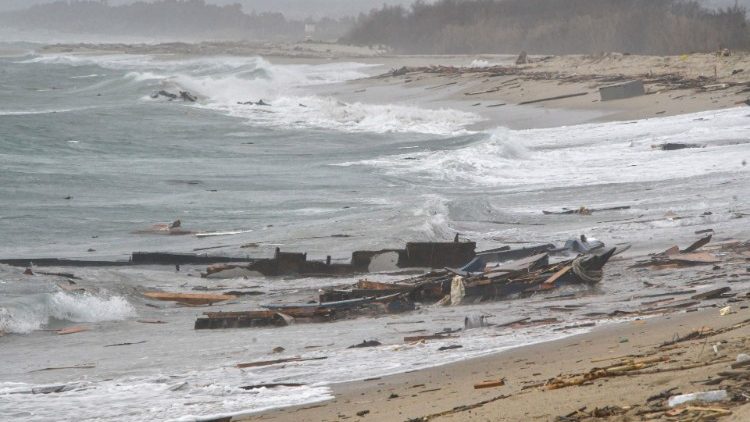
Another tragedy in the Mediterranean Sea. Pope Francis on Sunday turned his thoughts on to the lives lost in yet another tragedy in which dozens of people lost their lives when their overloaded boat sank in rough seas.
Addressing the faithful gathered for his Sunday Angelus, the Holy Father explained that just off the coast of Calabria in Italy, over 40 bodies, including the bodies of many children, have been recovered.
"I pray for them", said the Pope, "for those who are lost, and for those who have survived", he added.
The Holy Father also expressed his gratitude towards all those who participate in rescue operations, as well as to all those who offer welcome to those seeking refuge. "May the Virgin Mary sustain you", he concluded.
The tragedy
The tragedy occurred at dawn on Sunday. It is understood that the overloaded vessel bringing migrants from Iran, Pakistan, and Afghanistan smashed into rocks during rough weather.
ANSA, the Italian news agency, reports 80 survivors were found on a beach; they told rescuers at least 250 people were on board the fishing boat in which they were traveling.
Twenty-one of the survivors were taken to hospital.
It was later reported 27 bodies were found washed up at a seaside resort, with more spotted at sea – including a baby.
The perilous Mediterranean route
Just last week, a group of African migrants were drowned while dozens went missing when their overloaded boat sank off the Libyan coast.
The Mediterranean route is considered the most dangerous crossing in the world for people seeking refuge in Europe.
Countless rickety, unseaworthy boats packed with migrants have sunk in the area during the last five years.
With better weather arriving across the region, more migrant boats are expected to set sail in the coming weeks.
The persecution of Christians is at its highest point in three decades, according to the latest report from advocacy group Open Doors.
The World Watch List, released by Open Doors on Jan. 18, reported that, overall, the number of Christians facing persecution worldwide remained steady in 2022 at approximately 360 million.
In a list of the 50 countries with the most persecution, North Korea returned to the first spot in 2022. The year prior, Afghanistan had landed in the top ranking following the Taliban’s takeover of the country’s government.
Afghanistan ranks ninth in the latest list because the country’s Christians have either been killed, fled, or are in strict hiding, according to Open Doors’ Italian director Cristian Nani.
The few Christians who remain in Afghanistan are living like the early Church, Nani said at a Jan. 18 presentation of the World Watch List at Italy’s Chamber of Deputies. “They live the faith in secret because it’s the only way to live it in safety.”
Nani explained that today there is an increasing phenomenon of a “refugee” church, due to the number of Christians fleeing persecution.
The other countries classified as having “extreme” levels of Christian persecution this year are Somalia, Yemen, Eritrea, Libya, Nigeria, Pakistan, Iran, Sudan, and India.
In sub-Saharan Africa, anti-Christian violence has reached “unprecedented intensity,” the report said.
Nigeria continues to be the epicenter of massacres with 5,014 Christians killed in 2022, nearly 90% of the total number of Christians killed worldwide — 5,621.
Almost 90% of kidnappings carried out against Christians in 2022 also took place in Nigeria, where Nani said there is a kidnapping “business” taking place.
He said an all-too-common scenario is the kidnapping of a Christian man’s wife and daughters, who will frequently endure sexual violence and sex trafficking before they are released for a ransom.
In addition to its Watch List, Nani said Open Doors is working to find “radical solutions” to persecution and to help persecuted Christians find healing and forgiveness, and to “break the circle of violence.”
Andrea Benzo, special envoy for the protection of religious freedom in Italy’s Ministry of Foreign Affairs, called Christian persecution not just a lack of freedom of worship but a failure of society.
He noted the popularity of the subject of “rights” in Italy and other Western countries while the human right to religious liberty is ignored.
The World Watch List also underlined continuing Christian persecution in China, which is No. 16 on the list.
China, it said, “is forging an international alliance to redefine human rights,” while more countries adopt “the Chinese model of centralized control of the freedom of religion.”
A member of Italy’s Chamber of Deputies, Andrea Delmastro Della Vedove, said Italy needs to have the courage to propose the principles of religious liberty in countries where it is not properly respected.
He said the Italian government should put pressure on the international community to promote religious pluralism.
Delmastro is the president of an inter-parliamentary group for the protection of the religious freedom of Christians formed in 2019 by the right-wing party Fratelli d’Italia (Brothers of Italy), part of the coalition now in power in Italy.
He asked people to consider what lands on the front pages of newspapers and asked: “What could our abandoned brothers and sisters in the Middle East and China think about that?”
Pope Francis asked for prayers for persecuted Christians after his weekly public audience on Jan. 18. He said he is praying for Father Isaac Achi, a Catholic priest who died after bandits set fire to his parish rectory in northern Nigeria on Sunday.
Pope Francis calls for prayer, fasting for Afghanistan
At the Angelus, Pope Francis calls Christians to show solidarity with the people of Afghanistan, especially women and children, the victims of violent attacks in recent days. "Let us continue to assist those in need", he says, "and pray that dialogue and solidarity may lead to peaceful and fraternal coexistence."
By Vatican News staff reporter
“I am following the situation in Afghanistan with great concern,” Pope Francis said on Sunday, adding, “I share in the suffering of those who mourn for the people who lost their lives in the suicide attacks last Thursday, and of those who are seeking help and protection.”
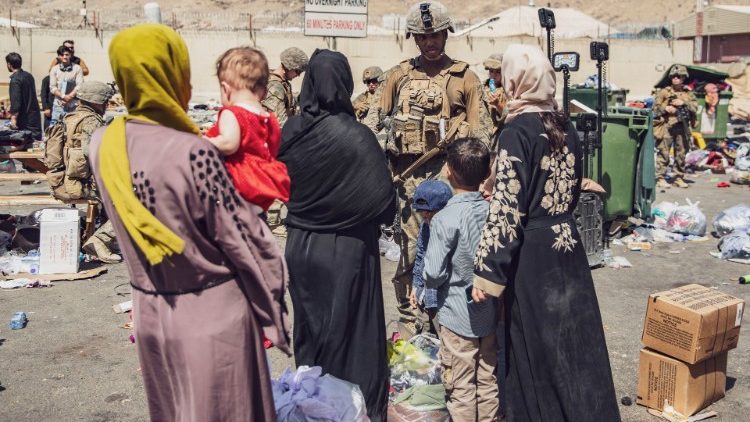
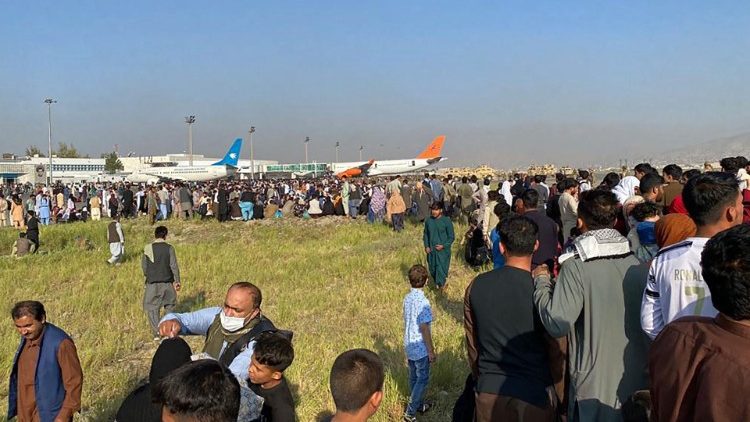
Almost two hundred people were killed in the suicide bombing at Kabul’s airport last week, and thousands of people are still waiting desperately to flee to the country as the Taliban takes control of the war-torn nation.
The Holy Father commended the souls of those who were killed “to the mercy of Almighty God.” At the same time, he thanked those who are working to help the “sorely tried population” of Afghanistan, especially women and children. “I ask everyone to continue to assist those in need,” the Pope said, “and to pray that dialogue and solidarity may lead to the establishment of peaceful and fraternal coexistence, and offer hope for the future of the country.”
Pope Francis insisted that “in historical moments like this we cannot remained indifferent,” and for Christians it is a duty to respond. For this reason, he said, “I appeal to everyone to intensify prayer and practise fasting: prayer and fasting, prayer and penance. Now is the time to do it.”
Adding emphasis to his appeal, he continued, “I’m serious: Intensify prayer and practice fasting, asking the Lord for mercy and forgiveness.”
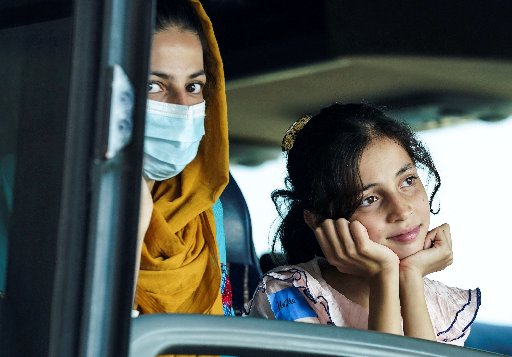
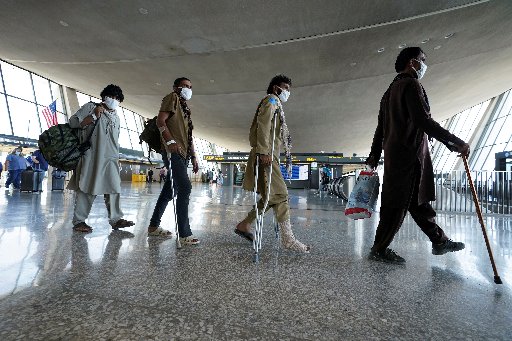
An Afghan refugee waves aboard a bus headed to a refugee processing center upon the Afghans' arrival at Dulles International Airport in Dulles, Va., Aug. 25, 2021. (CNS photo/Kevin Lamarque, Reuters)
As Afghanistan convulses, Catholic organizations help refugees in U.S.
Afghan refugees ride aboard a bus taking them to a refugee processing center upon their arrival at Dulles International Airport in Dulles, Va., Aug. 25, 2021. (CNS photo/Kevin Lamarque, Reuters)
WASHINGTON (CNS) — An already tense situation in Afghanistan took a turn for the worse early Aug. 26 when two explosions near the Kabul airport led to casualties and injuries still being calculated.
Gen. Kenneth F. McKenzie, head of U.S. Central Command, said in an Aug. 26 video news conference that 12 U.S. service members were killed and 15 were wounded in the attack.
“While we’re saddened by the loss of life, both U.S. and Afghan, we’re continuing to execute the mission,” said McKenzie, adding that an extremist Islamic State group was behind the attack involving suicide bombers.
Afghans, U.S. citizens and others eager to leave the country had been flocking to Kabul’s international airport after a Taliban takeover in the capital in mid-August when the Afghan military collapsed following withdrawal of U.S. troops and contractors.
On the other side of the world, the Catholic Church, particularly in the U.S., has been “involved in the reception and establishment” of those seeking safe haven, participating in the effort with other faith-based aid groups and organizations such as the International Rescue Committee, said Bill Canny, executive director of Migration and Refugee Services for the U.S. Conference of Catholic Bishops.
While some of those fleeing are U.S. citizens, many are refugees who don’t have family members in the country nor have been in the U.S. before and left their lives behind at a moment’s notice with little beyond what they could carry.
“These are people who have been persecuted in their countries and they need new homes, their kids need to get into schools, they need to find work,” said Canny in a Aug. 25 telephone interview with Catholic News Service, speaking about the dire situation unfolding by the minute in Afghanistan.
Faith-based groups, including Catholic organizations, also have been calling on the Biden administration to speed up the evacuations.
“Our government owes a debt of service to the Afghan people, not to mention the moral responsibility it has to help the women and children of Afghanistan who are now in imminent danger. The National Advocacy Center of the Sisters of the Good Shepherd calls on President Biden to immediately not just to welcome but to fervently work to get out those in danger,” said Fran Eskin-Royer, the organization’s executive director, in an Aug. 26 statement.
Anna Gallagher, executive director for Catholic Legal Immigration Network Inc., said Aug. 24 on Twitter that Afghans had “risked their lives for us, and we must now make every effort to protect theirs.”
The George W. Bush administration sent troops to Afghanistan after the Sept. 11, 2001, attacks in New York and Washington, trying to pin down al-Qaida militants who planned the attack, including Osama bin Laden, who was believed to be in and out of Afghanistan hiding with help from the Taliban.
Afghan refugees walk to a bus taking them to a refugee processing center upon their arrival at Dulles International Airport in Dulles, Va., Aug. 25, 2021. (CNS photo/Kevin Lamarque, Reuters)
U.S. troops remained there under previous administrations from both political parties and in October 2020, President Donald Trump tweeted that he would withdraw U.S. troops from Afghanistan by Christmas. Biden continued with the plan but with a different timeline. However, analysts have blamed all previous administrations– from George W. Bush to Biden — with the unfolding drama.
Some Catholics say what is important is to help those affected by it.
“All politics must remain out of this decision. These are our brothers and sisters, and we must receive them with great dignity and respect,” Gallagher said.
President Joe Biden said Aug. 22 that the military had evacuated 28,000 people since Aug. 14 from the Kabul airport and seemed set on an Aug. 31 full withdrawal of troops in what analysts said was to prevent precisely the kind of attack that took place Aug. 26.
McKenzie said at least 1,000 Americans were still in Afghanistan and the U.S. would do everything possible to get them out, “but not everybody wants to leave,” he said.
For its part, the church has been helping Afghans as best as it can, given that certain systems to move refugees along, in the U.S., are “still slow and recovering from the previous administration,” said Canny.
“Over the last month, we’ve begun to rebuild the system in preparation of more arrivals … since those arrivals haven’t been able to get started, it’s a good moment to welcome those families being resettled,” Canny said.
The U.S. has been using domestic military bases to process and house Afghan refugees, including at El Paso’s Fort Bliss in Texas, Camp McCoy in Wisconsin, Fort Lee in Virginia, Joint Base McGuire-Dix-Lakehurst in New Jersey.
The challenge is that facilities at those military installations have only been put up recently, Canny said.
“We have staff in each one with exception of Fort Lee. … We want to make sure we do a review of their legal status. They would only be in the installation for a week and are given assistance with mental health and wellness, if they need it, make sure they’re OK, make sure the kids are OK,” said Canny.
Local news reports out of New Mexico also said Holloman Air Force Base was waiting for indications it would be a place to welcome refugees.
Parishes and Catholic laypeople around the country who want to help can do so in a variety of ways, said Canny.
“The best thing for parishes to do is get in in touch with local Catholic Charities who are involved in the national effort,” Canny said. “Call their dioceses and find out what’s going on (locally). Also, look at what other churches are doing in an ecumenical (effort) to provide refugees, people who are here out of fear for their lives, the best welcome, because they aided our government.”
People can also donate to Catholic Charities as well as to organizations listed in the MRS resources page at www.justiceforimmigrants.org/afghanistan. There also may be opportunities for people to open up their homes to refugees in the short-term as they move into some cities where the housing markets are expensive, Canny said.
“We’re grateful for the opportunity to help,” Canny said. “We don’t consider ‘we’re saving these people,’ who are in effect saving us by giving us the opportunity to help. … This is what our church does and it’s founded on the Gospel and it includes the life of Jesus and Mary and Joseph as they fled for safety.”
Western Bishops’ Conferences are speaking out on the situation in Afghanistan, urging their governments to welcome those fleeing the country, and praying for peace through dialogue.
By Vatican News staff reporter
In view of the unfolding humanitarian crisis in Afghanistan as the country falls to the Taliban, Bishops in western nations are calling on their governments to help the thousands of people fleeing the country – especially those who risked their lives to assist the military mission that began 20 years ago.
Act with utmost urgency
From the United States, Bishop Mario Dorsonville and Bishop David Malloy, chairs respectively of the USCCB’s Committees on Migration and on International Justice and Peace, issued a statement calling on the US government “to act with the utmost urgency, considering all avenues to preserve life.” They note that Catholic organizations and partners have been assisting the government in welcoming Afghan refugees and their families, and add that they “will continue to work as long as necessary until those who are in harm’s way are brought to safety.”
With Pope Francis, the statement says, the US Bishops are “praying for peace in Afghanistan – ‘that the clamor of weapons might cease and solutions can be found at the table of dialogue.’”
A disastrous defeat
In Europe, the chairman of the German Bishops Conference, Bishop Georg Bätzing said he was “outraged by the widespread suffering and helplessness of those whose future is being stolen from them.”
He said, “The takeover by the Taliban in Afghanistan represents a disastrous defeat for the United States and the countries that until recently were committed to its side,” including Germany. He warned that the “life and limb of thousands and thousands of people are endangered and the flame of hope that has nourished them is extinguished” by the surrender of the country to the Taliban.
Bishop Bätzing insisted that western countries must evacuate Afghans who assisted their military forces and international aid organizations, saying “generous admission offers” should be granted, especially to those most at risk. He urged them to help countries in the region accept and care for refugees from Afghanistan, and said the European Union must be prepared to welcome refugees who arrive in Europe.
He, too, insisted on the power of prayer, and invited “everyone to join in prayer with the sufferings of the people of Afghanistan, and to call on God for His gracious help.”
Jesuits, Missionaries of Charity stranded in Afghanistan
Two Jesuits and four MC nuns are stranded in Afghanistan, as the country and its capital fell to the Taliban. Afghans as well as foreigners are trying to flee the country amid pandemonium and chaos at Kabul airport.
By Vatican News staff writer
Two Jesuits stranded in strife-torn Afghanistan have sought prayers as the Taliban militants took control of the troubled south-east Asian nation. “Thank you for your continuous prayers for our safety. The way the situation is changing in the country, it is anyone’s imagination … safety does not make sense here. It is a chaotic situation,” Indian priest Father Jerome Sequeira, the country head of the Jesuit mission in Afghanistan, wrote in a message to his friends and colleagues.
Afghanistan fell to the Taliban after the United States ended its 20 years of operations there. A relative calm reigned in the Afghan capital Kabul on August 16, a day after its president fled and the Taliban installed themselves in the presidential palace. However, Kabul airport was a scene of pandemonium and roads leading to it were clogged with traffic and people, as thousands scrambled to flee the country in panic.
Missionaries of Charity nuns
Four Missionaries of Charity (MC) nuns are also stranded in Afghanistan and will probably be moved to their countries, UCA News reported. “Our two priests are stuck in Afghanistan and are waiting for their evacuation,” said a Jesuit priest based in the Indian capital New Delhi. “We have also suspended our mission in Afghanistan indefinitely as we are not sure when the situation will improve,” he said. A senior nun at the Missionaries of Charity headquarters in eastern India’s Kolkata city confirmed that four of their nuns are in Afghanistan, including an Indian. She gave no details of the other three, fearing for their safety. The Missionaries of Charity, which St. Teresa of Kolkata founded in 1950, arrived in Kabul in 2004 for humanitarian work.
The two Jesuit priests and the Missionary of Charity nun are among many Indians waiting for the Indian government's evacuation flights to get them out of the country.
Fr. Sequeira in Kabul
Father Sequeira, who works for the Jesuit Refugee Service (JRS), had gone to Kabul airport to take the 10:45 flight to India. “It resembled a chaotic railway station,” he told Matters India August 16 evening, speaking from “a secure place” in the city. He said he came to the country in 2006 and never in the past 15 years has he seen such a breakdown of system.
He narrated how he had to drag his luggage as large crowds and vehicles jammed the roads. “Thousands of people are trying to flee. I managed to reach the second gate but then Taliban were shooting in the air and trying to control the crowd. Before, my reaching, thousands of people had managed to enter the airport building but the entire airport staff had abandoned the place. Without any security check and boarding passes people had gone into the flight,” Father Sequeira said.
He referred to images on social media showing people clinging on to a US military aircraft on the tarmac as it tried to take off. “In this chaotic situation no flight will land at the moment. Seeing this senseless situation, no country will dare to fly to Kabul at the moment. It was a terrifying experience,” said the Jesuit priest who works for the Jesuit Refugee Service (JRS).
Fr. Rodrigues in Bamiyan
The other Jesuit Father Robert Rodrigues from southern India’s Karnataka state is stuck in Bamiyan in central Afghanistan. He managed to get inside Bamiyan airport in the evening on August 15, checked in and was awaiting a United Nations flight to land, which would fly him to Kabul some 25 minutes away. Meanwhile, the situation changed dramatically and the entire airport security personnel just abandoned the airport. Father Sequeira said Father Rodrigues is safe and was “much better and relaxed” on August 16. “We are seeking possible ways to evacuate him from Bamiyan to Kabul through the help of UN agencies,” Father Sequeira said.
Taliban taking over system
According to him, the Taliban is busy in occupying government systems and putting their own persons. “They are not harming the civilians at the moment but it will come once they have fully captured all the systems of the country. They have the list of all organizations and profile too. In some places they have started door-to-door enquiries about the personnel of the organization,” Father Sequeira’s message explained.
He said the Jesuit Refugee Service has indefinitely suspended its activities in Afghanistan “and all are hibernating in their homes or communities.” “All flights are cancelled and it all depends on the agreement between UN bodies and the Taliban.” He said the entire JRS body is putting all efforts to evacuate him and Father Rodrigues. “At the moment, I am safe,” Father Sequeira wrote.
The JRS country head lamented how the international community could have given up the country to the Taliban after investing and establishing so much in 20 years. “With the way the Taliban took over provinces, all thought it would take some 90 days for them to reach Kabul. But they swept over the capital in ten days,” he added. According to him, the Taliban militants have taken control of 33 of Afghanistan’s 34 provinces.
Meanwhile, the UN’s World Health Organization (WHO) has expressed worries that the upheaval caused by the Taliban takeover is compromising the country’s other battle against the coronavirus. It said the chaos has slowed the vaccination programme. It is concerned over the unfolding safety and humanitarian needs in the country, including risk of disease outbreaks and rise in Covid-19 transmission.
14 years of Jesuit mission in Afghanistan
Father Stany D’Souza, president of the Jesuit Conference of South Asia, said both the Jesuits are safe, adding they are in touch with them. Until last month, the Jesuits had planned to continue their mission in Afghanistan.
Saint Pope John Paul II established a mission sui juris for Afghanistan on May 16, 2002, and entrusted it to the Barnabite fathers. Two years later the Jesuits ventured into the country to help the Afghan people rebuild their war-ravaged nation through education.
The JRS launched programmes to educate the youth, especially the internally displaced persons, returnees from neighboring countries and other vulnerable sections. The Jesuits have trained more than 300 young teachers and through them were educating more than 25,000 children in four provinces. Young girls were major beneficiaries of the Jesuit mission in a country still haunted by memories of the Taliban’s anti-female attitude before it was toppled in 2001. The Indian Jesuits were also involved in livelihood interventions.
They too had their troubles with the Taliban. On June 2, 2014, suspected Taliban fighters abducted JRS director Father Alexis Prem Kumar, who was accompanying teachers on a visit to a school for refugees in the village of Sohadat, some 500 miles west of Kabul. The priest from southern India’s Tamil Nadu state was held handcuffed during most of his 8-month captivity. His release on February 22, 2015 was secured with the help of the Indian government.
However, the Jesuits’ links with Afghanistan go back more than 400 years. In 1581, Mughal Emperor Akbar took along a Jesuit priest from Agra in northern India to Kabul. A year later, in 1582, Jesuit Brother Bento de Goes stopped at Kabul on his way to China. But there was no lasting Jesuit presence in the country. (Source: Matters India, UCA News)