Wednesday, June 2, 2021

The martyrs of Uganda


St. Charles Lwanga and Companions


For those of us who think that the faith and zeal of the early Christians died out as the Church grew more safe and powerful through the centuries, the martyrs of Uganda are a reminder that persecution of Christians continues in modern times, even to the present day.

The Society of Missionaries of Africa (known as the White Fathers) had only been in Uganda for 6 years and yet they had built up a community of converts whose faith would outshine their own. The earliest converts were soon instructing and leading new converts that the White Fathers couldn't reach. Many of these converts lived and taught at King Mwanga's court.

King Mwanga was a violent ruler and pedophile who forced himself on the young boys and men who served him as pages and attendants. The Christians at Mwanga's court who tried to protect the pages from King Mwanga.

The leader of the small community of 200 Christians, was the chief steward of Mwanga's court, a twenty-five-year-old Catholic named Joseph Mkasa (or Mukasa).

When Mwanga killed a Protestant missionary and his companions, Joseph Mkasa confronted Mwanga and condemned his action. Mwanga had always liked Joseph but when Joseph dared to demand that Mwanga change his lifestyle, Mwanga forgot their long friendship. After striking Joseph with a spear, Mwanga ordered him killed. When the executioners tried to tie Joseph's hands, he told them, "A Christian who gives his life for God is not afraid to die." He forgave Mwanga with all his heart but made one final plea for his repentance before he was beheaded and then burned on November 15, 1885.


Charles Lwanga took over the instruction and leadership of the Christian community at court -- and the charge of keeping the young boys and men out of Mwanga's hands. Perhaps Joseph's plea for repentance had had some affect on Mwanga because the persecution died down for six months.

Anger and suspicion must have been simmering in Mwanga, however. In May 1886 he called one of his pages named Mwafu and asked what the page had been doing that kept him away from Mwanga. When the page replied that he had been receiving religious instruction from Denis Sebuggwawo, Mwanga's temper boiled over. He had Denis brought to him and killed him himself by thrusting a spear through his throat.

He then ordered that the royal compound be sealed and guarded so that no one could escape and summoned the country's executioners. Knowing what was coming, Charles Lwanga baptized four catechumens that night, including a thirteen-year-old named Kizito. The next morning Mwanga brought his whole court before him and separated the Christians from the rest by saying, "Those who do not pray stand by me, those who do pray stand over there." He demanded of the fifteen boys and young men (all under 25) if they were Christians and intended to remain Christians. When they answered "Yes" with strength and courage Mwanga condemned them to death.

He commanded that the group be taken on a 37 mile trek to the place of execution at Namugongo. The chief executioner begged one of the boys, his own son, Mabaga, to escape and hide but Mbaga refused. The cruelly-bound prisoners passed the home of the White Fathers on their way to execution. Father Lourdel remembered thirteen-year-old Kizito laughing and chattering. Lourdel almost fainted at the courage and joy these condemned converts, his friends, showed on their way to martyrdom. Three of these faithful were killed on road.

A Christian soldier named James Buzabaliawo was brought before the king. When Mwanga ordered him to be killed with the rest, James said, "Goodbye, then. I am going to Heaven, and I will pray to God for you." When a griefstricken Father Lourdel raised his hand in absolution as James passed, James lifted his own tied hands and pointed up to show that he knew he was going to heaven and would meet Father Lourdel there. With a smile he said to Lourdel, "Why are you so sad? This nothing to the joys you have taught us to look forward to."

To all our readers, Please don't scroll past this.

Deacon Keith FournierToday, we humbly ask you to defend Catholic Online's independence. 98% of our readers don't give; they simply look the other way. If you donate just $5.00, or whatever you can, Catholic Online could keep thriving for years. Most people donate because Catholic Online is useful. If Catholic Online has given you $5.00 worth of knowledge this year, take a minute to donate. Show the volunteers who bring you reliable, Catholic information that their work matters. If you are one of our rare donors, you have our gratitude and we warmly thank you. Help us do more >

Also condemned were Andrew Kagwa, a Kigowa chief, who had converted his wife and several others, and Matthias Murumba (or Kalemba) an assistant judge. The chief counsellor was so furious with Andrew that he proclaimed he wouldn't eat until he knew Andrew was dead. When the executioners hesitated Andrew egged them on by saying, "Don't keep your counsellor hungry -- kill me." When the same counsellor described what he was going to do with Matthias, he added, "No doubt his god will rescue him." "Yes," Matthias replied, "God will rescue me. But you will not see how he does it, because he will take my soul and leave you only my body." Matthias was cut up on the road and left to die -- it took him at least three days.

The original caravan reached Namugongo and the survivors were kept imprisoned for seven days. On June 3, they were brought out, wrapped in reed mats, and placed on the pyre. Mbaga was killed first by order of his father, the chief executioner, who had tried one last time to change his son's mind. The rest were burned to death. Thirteen Catholics and eleven Protestants died. They died calling on the name of Jesus and proclaiming, "You can burn our bodies, but you cannot harm our souls."

When the White Fathers were expelled from the country, the new Christians carried on their work, translating and printing the catechism into their natively language and giving secret instruction on the faith. Without priests, liturgy, and sacraments their faith, intelligence, courage, and wisdom kept the Catholic Church alive and growing in Uganda. When the White Fathers returned after King Mwanga's death, they found five hundred Christians and one thousand catchumens waiting for them. The twenty-two Catholic martyrs of the Uganda persecution were canonized.


To the Bishops: unity yes but truth too


Editorial: The problem of unity without truth 

U.S. BISHOPS SPRING MEETING BALTIMORE
Archbishop Jose H. Gomez of Los Angeles speaks on the first day of the spring general assembly of the USCCB in Baltimore June 11, 2019. (CNS photo/Bob Roller)

“I pray not only for them, but also for those who will believe in me through their word, so that they may all be one, as you, Father, are in me and I in you, that they also may be in us, that the world may believe that you sent me” (Jn 17:20-21).

In the modern world, we speak of unity as something to be desired in itself. We talk about “speaking with one voice,” being “united in opposing injustice,” “unified in our desire to create a better world.” We cast unity as a sign of strength, the proof of the righteousness of our cause, whatever it may be.

What we rarely do is tie unity to truth, to recognize that any unity that doesn’t flow from a shared recognition of, and adherence to, the truth is not merely false but worse than a lack of unity.

For Christians, unity is not merely something to be desired; it is a divine command. At the Last Supper, Christ prayed that we may all be one, as he and the Father are one. The unity of the Son and the Father is not superficial. It goes to the essence of who they are as the first and second Persons of the Trinity. The Son and the Father cannot fail to be united, because they are truth itself. And they call each and every one of us to enter into the fullness of that truth.

“Consecrate them in the truth. Your word is truth. As you sent me into the world, so I sent them into the world. And I consecrate myself for them, so that they also may be consecrated in truth” (Jn 17:17-19).

In a few weeks, the bishops of the United States will hold their spring 2021 general assembly. In these (we pray) final days of the pandemic, they will meet virtually, as they did in November of last year. Among the items on the agenda is the question of Eucharistic coherence, the opportunity to speak with one voice about the centrality of the Eucharist in the life of the Church, and all that flows from that reality.

In his High Priestly Prayer at the Last Supper, just moments after instituting the priesthood and the Eucharist, Jesus prayed that his disciples would be united in truth: not in adherence to abstract moral principles, but in the encounter with him, and through him with the Father. He prayed that the Father would send the Spirit, the Advocate of truth, to be with the disciples, the very first bishops, and in describing the unity of Father, Son and Holy Spirit, he revealed the mystery of the Trinity.

Yet this year, between Pentecost Sunday and Trinity Sunday, the successors of those disciples here in the United States spoke, not with one voice, united in timeless truth, but with many voices more concerned with passing political divisions. In competing statements leaked to the press and released on websites and social media, they did not proclaim the substance of the truth but debated whether they should even speak with one voice. The unity among the successors of the apostles that should naturally flow from the personal encounter of each of them with Jesus Christ crumbled in the face of political considerations that turned Christ’s prayer for unity on its head.

The bishops need to speak with one voice not because of political considerations but in spite of them. If we act as if the truth that we have come to know through our encounter with Christ is less important than the preservation of a political unity that relegates that truth to a mere matter of personal belief, why would anyone else believe that it is necessary for him or her to know the truth? If we who have encountered Christ still act as if we are bound by the things of this world, why would those whom we have been called to evangelize believe that the truth will set them free?

Disunity on the fundamental truths of the Faith among the successors of the apostles isn’t merely disappointing or disheartening. To those who have not yet encountered Christ, such disunity is likely to be seen as evidence that the Good News proclaimed by the Church is false, and that Christ is not who he claims to be.

“And I have given them the glory you gave me, so that they may be one, as we are one, I in them and you in me, that they may be brought to perfection as one, that the world may know that you sent me, and that you loved them even as you loved me” (Jn 17:22-23).

As they prepare to meet, we pray that the bishops of the United States will set aside political considerations and speak with one voice, so that, as Christ prayed, “the world may know that you sent me.”

Our Sunday Visitor Editorial Board: Gretchen R. Crowe, Scott P. Richert, Scott Warden, York Young

Did the Pope just shut the door on deaconesses; let us pray so


How the Pope’s canonical reform closes door on German deaconesses

Analysis

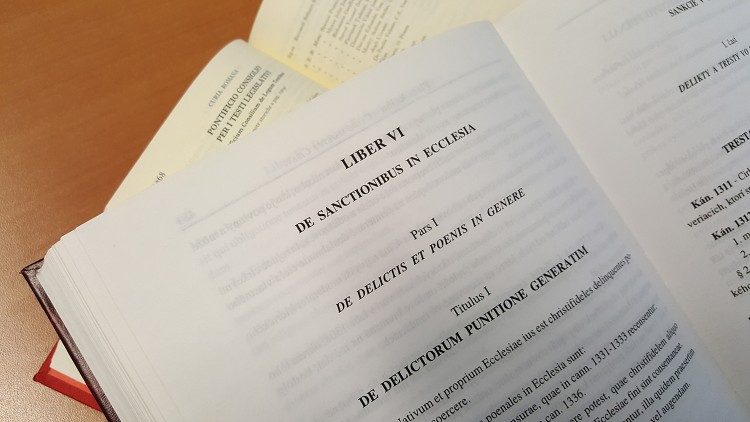
On Tuesday morning, Pope Francis promulgated a revised Book VI of the Code of Canon Law, which contains the penal law of the Latin Church. Included within its provisions is a new, far more explicitly outlined crime on the attempted ordination of women, in what could prove to be a pointed action directed at the Church in Germany.

Bishop Georg Bätzing, president of the German bishops’ conference.

The revised canon 1379 provides that “both a person who attempts to confer a sacred order on a woman, and the woman who attempts to receive the sacred order, incur a latae sententiae excommunication reserved to the Apostolic See,” and that the one who attempts to ordain a woman “may be punished by dismissal from the clerical state.”

While this is not, strictly speaking, an innovation in the law, it makes explicit what was formerly only implied by a much broader canon, and closes the scope for a potential loophole in the language to be argued by someone attempting to confer ordination at any level on a woman.


The previous version of the canon provided the penalty of excommunication for “a person who simulates the administration of a sacrament.” This included a priest or bishop who knowingly attempts to perform a sacrament with invalid matter, which would include, for example, attempting to ordain a woman, since the valid matter for sacramental ordination is a baptized man.

During the Synodal Way currently being pursued by the German bishops in partnership with the Central Committee of German Catholics, participants and working groups have made repeated calls for changes to universal Church teaching and practice. 

Among those changes most frequently called for have been the blessing of same-sex couples in churches, and for the ordination of women, first to the deaconate and, eventually, to the priesthood.

Earlier this year, the Vatican’s Congregation for the Doctrine of the Faith issued a response on the question of blessing same-sex unions, clearly ruling them to be impossible, and prohibited. In response, clergy across Germany last month staged a day of “blessings” for hundreds of same-sex unions in open defiance of Rome. 

Some in Rome have been concerned that after the conclusion of the German Synodal Way, one or more of the bishops may attempt a similar maneuver by trying to ordain a woman to the deaconate and defying Rome to take action, a move the revised law would seem to preclude.

In addition to the German synodal process, debate about the possibility of ordaining women as deacons has surfaced several times in the last decade. In 2016, Pope Francis set up a commission at the Congregation for the Doctrine of the Faith to examine the historical role of “deaconesses” in the early Church. While that commission did not issue a conclusive finding, Francis himself noted that the historical role was not akin to sacramental ordination, and was closer to the role of an abbess in many cases.

The issue surfaced again during the Synod on the Amazon, with the final synodal document asking that the issue be revisited, something the pope agreed to do.

In the meantime, the Church has repeatedly stated that the reservation of priestly ordination to men alone is a function of divine law, and beyond the power of the Church to change or depart from. 


Some theologians and bishops have argued that, since deacons do not have the power of sacramental ministry beyond those common to all the faithful, conferring deaconal ordination on women would not challenge this teaching directly.

However, other theologians, in line with settled Church teaching, have pointed out that there is only one sacrament of holy orders in the Church, common to deacons, priests, and bishops, with each class of cleric receiving an increased fullness of orders. The Church’s teaching which excludes women from sacramental ordination, they argue, applies to all three grades since the essential nature of the sacrament cannot be divided.

The previous wording of the canon, replaced by the pope on Tuesday, offered what some could have argued was a loophole reflecting this debate. 

Canon 1379 previously provided the penalty of excommunication for “a person who simulates the administration of a sacrament.” 

Simulation of a sacrament means knowingly and deliberately attempting to perform a sacrament in a way which would make it impossible or invalid, while at the same time holding it out for others to believe it to be valid.

In the case of the sacrament of holy orders, the essential matter for validity is a baptized man and, therefore, attempting to ordain a woman would be invalid. The canon has previously been invoked for the attempted ordination of women to the priesthood. However, it could have been possible to argue, in line with the above, that woman are not necessarily “invalid” matter for the reception of merely deaconal orders, and so the ordination - while a clear breach of Church discipline - could have been argued to either valid, or at least performed in the belief that it was valid, excluding the intention to “simulate” the sacrament.

The revised wording of the canon appears to be both an exclusion of this argument and a means of rendering the argument itself null.


Both a person who attempts to confer a sacred order on a woman, and the woman who attempts to receive the sacred order incur a latae sententiae excommunication reserved to the Apostolic See,” the new text states. 

The use of the term “attempts” underscores that the action itself, conferring ordination, cannot be completed, only attempted, because it would never be valid. Also of note is the use of the term “a sacred order” which includes all three grades of order, including deacon.

If a German cleric were to attempt to ordain a woman to the deaconate in defiance of Rome, as many did in the mass blessing of same-sex couples, they would incur an excommunication automatically - while Rome would have to declare the penalty formally for the full legal affects to apply to the one attempting the ordination, this would, in effect, simply be a statement of fact rather than a legal or theological determination of what had happened, with arguments to be made for and against.

In their repeated back-and-forth with Rome over the progress of their Synodal Way, the German bishops have developed a marked tactic of essentially ignoring orders from Rome when told not to do something. 

Their gambit, largely successful to this point, has been to continue and dare the Vatican to intervene and provoke a possible breach between the Church in Germany and Rome. The revision of canon 1379 marks a clear line in the sand, with the Germans now being told what will happen should they attempt to proceed with ordaining women deacons, and, by providing for the excommunication to remain latae sententiae, effectively putting the ball in their court before the fact.

If that message was not clear enough, the canon ends by warning that clerics - which includes bishops - may also “be punished by dismissal from the clerical state.”

Pope Francis Wednesday General Audience 06.02.2021


Pope Francis holds his weekly general audience at the Vatican on June 2, 2021.Pope Francis holds his weekly general audience at the Vatican on June 2, 2021.  (Vatican Media)

Pope at Audience: Jesus the model of prayer for His disciples

Pope Francis continues his catechesis on Christian prayer at the Wednesday General Audience, and explains that prayer was fundamental in Jesus’ relationship with His disciples.

By Robin Gomes

Pope Francis picked out a few examples from the Gospel to explain that prayer was fundamental in Jesus’ relationship with His disciples.

Choosing His disciples

Before choosing His disciples, Luke says, Jesus went up the mountain to pray and spent the whole night praying to God. At daylight, He chose His disciples naming them apostles. Prayer, which is dialogue with the Father, the Pope said, is the criterion of this choice, which many not appear to be the best ones, especially with regard to Judas, the future traitor. But the Pope said that the names of the disciples were written in God’s plan. 

The Pope pointed out that the apostles are at times a cause of concern for Jesus, but He carries them in His heart even in their errors and when they fall because He receives them from the Father. Hence, prayer for them continually reappears in Jesus’ life.

Patiently awaiting conversion

As a teacher and friend, the Holy Father continued, Jesus waits patiently for the conversion of the disciple, as is evident with Peter at the Last Supper. Jesus tells Peter He has prayed that his faith may not fail and when he is converted, he should confirm his brothers. "Jesus’ love during the time of the weakness of His disciple does not cease, but rather becomes more intense, and we are at the centre of His prayer.”

Prayer at turning points

Pope Francis assured Christians that Jesus continues to love and pray even for those in mortal sin and the ugliest of sins. His love and prayer for each one of us never cease, rather it becomes even more intense. He assured Christians that at this very moment He is praying for us showing the Father his wounds, the price of our salvation.

Again, Jesus was in a solitary place praying, when He wanted to verify the faith of His disciples. When He asked them who they thought He was, Peter answered, "The Christ of God.” 

“The great turning points of Jesus' mission,” the Pope said, “are always preceded by intense, prolonged prayer.” This test of faith is “a renewed starting point for the disciples”, because from then on, the Holy Father said, Jesus took on a new tone in His mission, speaking openly to them of His passion, death and resurrection.

At this moment of the announcement of His end, which instinctively arouses repulsion in His disciples and in us, the Pope said, “prayer is the only source of light and strength”.

“It is necessary to pray more intensely every time the road takes a turn uphill."

The Transfiguration

Soon after speaking about His lot in Jerusalem, the episode of the Transfiguration takes place.

Luke says that Jesus took Peter, John and James up the mountain to pray, when His face changed in appearance and His garment became white and radiant. Moses and Elijah in their glory were conversing with Jesus about His departure which was to accomplish in Jerusalem. 

“Therefore,” the Pope explained, “this anticipated manifestation of the glory of Jesus took place in prayer, while the Son was immersed in communion with the Father and fully consented to His will of love, to His plan of salvation.”

And out of that prayer came a clear word for the three disciples involved: "This is my Son, the chosen one; listen to Him".

Jesus perfects our prayer

Thus, the Pope said, Jesus not only wants us to pray as He prays, but assures us that, even if our attempts at prayer are completely vain and ineffective, we can always count on His prayer.

He urged Christians to repeat and memorize that Jesus always prays for us. “When there is some difficulty, when you are in the orbit of distractions: Jesus is praying for me,” he said adding, Jesus Himself has said it. “Let us not forget that what sustains each one of us in life is Jesus' prayer for each one of us, with name, surname, before the Father, showing Him the wounds that are the price of our salvation.

In conclusion, Pope Francis said that “even if our prayers were only stutterings, if they were compromised by a wavering faith, we must never cease to trust in Him”.

“Supported by the prayer of Jesus, our timid prayers rest on eagle wings and soar to Heaven,” concluded the Pope.

Tuesday, June 1, 2021

Two early church martyrs mentioned in the Roman Canon


Sts. Marcellinus and Peter


Though we know very little about these two martyrs under Diocletian, there is no question that the early church venerated them. Evidence of the respect in which they were held are the basilica Constantine built over their tombs and the presence of their names in the first eucharistic prayer.

Pope St. Damasus says that he heard the story of these two martyrs from their executioner who became a Christian after their deaths. Marcellinus, a priest, and Peter, an exorcist, died in the year 304. According to a legendary account of their martyrdom, the two Romans saw their imprisonment as just one more opportunity to evangelize and managed to convert their jailer and his family. The legend also says that they were beheaded in the forest so that other Christians wouldn't have a chance to bury and venerate their bodies. Two women found the bodies, however, and had them properly buried.

June 1st means hurricane season; let us pray

 Prayer for Protection During Hurricane Season

Our Father in Heaven,
through the intercession of Our Lady of Prompt Succor,
spare us during this hurricane season from all harm.
Protect us and our homes
from all disasters of nature.
Our Lady of Prompt Succor,
hasten to help us.
Through Christ our Lord. Amen.

Major penal reforms announced today at the Vatican


2020.02.21 CIC De sanctionibus Codice diritto canonico

Pope reforms penal sanctions in the Church: Mercy requires correction

With the Apostolic Constitution “Pascite Gregem Dei,” Pope Francis reforms Book VI of the Code of Canon Law, continuing a revision begun by Benedict XVI and applying penal sanctions to more criminal offenses. The new text is a more agile tool for correction, which is to be applied promptly to “avoid more serious evils and to soothe the wounds caused by human weakness.”

By Vatican News

“Tend the flock of God, guarding it not by constraint but willingly, as it pleases God” (cf. 1 Pet 5:2). The Apostolic Constitution “Pascite Gregem Dei”, with which Pope Francis reforms Book VI of the Code of Canon Law on penal sanctions in the Church, begins with these words of the Apostle Peter. The new text, presented on Tuesday in the Holy See Press Office, enters into force on 8 December.

“In order to respond adequately to the needs of the Church throughout the world,” explains Pope Francis, “it appeared evident that the penal discipline promulgated by St. John Paul II on January 25, 1983 in the Code of Canon Law needed to be revised, and that it required modification in such a way as to allow Pastors to employ it as a more agile salvific and corrective tool, to be applied promptly and with pastoral charity to avoid more serious evils and to soothe the wounds caused by human weakness.”

The Pope recalls that Benedict XVI launched this revision in 2007, a process which engaged, “in a spirit of collegiality and cooperation,” with Canon Law experts from around the world, as well as with Bishops’ Conferences, major superiors of religious institutes, and Dicasteries of the Roman Curia. The resulting intense and complex text was submitted to the Pope in February 2020.

In his Apostolic Constitution, Pope Francis notes that the Church throughout the centuries has given itself rules of conduct “which unite the People of God and for whose observance the Bishops are responsible.” He also stresses that “charity and mercy require a Father to commit himself also to straightening what at times becomes crooked.”

It is a task, he explains, “which must be carried out as a concrete and inalienable requirement of charity not only towards the Church, the Christian community and possible victims, but also towards those who have committed a crime, who require both mercy and correction from the Church. In the past, much damage has been caused by a lack of perception of the intimate relationship which exists in the Church between the exercise of charity and recourse—when circumstances and justice require it—to penal sanctions.” He says this trend represented a way of thinking which made correction more difficult, “often giving rise to scandal and confusion among the faithful.”

Therefore, adds the Pope, “the negligence of a Pastor in resorting to the penal system demonstrates that he is not fulfilling his function correctly and faithfully.”

In fact, “charity requires that Pastors have recourse to the penal system as often as necessary, keeping in mind the three aims which make it necessary in the ecclesial community, namely, the restoration of the demands of justice, the amendment of the offender, and the reparation of scandals.”

“The new text,” says the Pope, “introduces various changes to the law currently in force and imposes sanctions on some new offenses.”

He notes that Book VI has also been improved “from a technical point of view, especially with regard to fundamental aspects of criminal law, such as the right of defense, the statute of limitations for criminal action, and a more precise determination of penalties”, offering “objective criteria in identifying the most appropriate sanction to be applied in a concrete case” and reducing an authority’s discretion, in order to favor ecclesial unity in the application of penalties, “especially for offenses that cause greater damage and scandal in the community.”

The Apostolic Constitution “Pascite Gregem Dei” is dated 23 May 2021, the Solemnity of Pentecost, and enters into force on 8 December 2021.

June is the month devoted to the Sacred Heart of Jesus


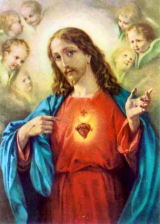
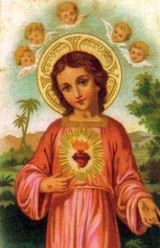
Month of the Sacred Heart

     
Behold this Heart which has loved men so much, and yet men do not want to love Me in return. Through you My divine Heart wishes to spread its love everywhere on earth."- Jesus to Saint Margaret Mary
Highlights
Prayer of the Month


An Act of Consecration to the Sacred Heart of Jesus
Most sweet Jesus, humbly kneeling at Thy feet, we renew the consecration of our family to Thy Divine Heart. Be Thou our King forever! In Thee we have full and entire confidence. May Thy spirit penetrate our thoughts, our desires, our words and our deeds. Bless our undertakings, share in our joys, in our trials, and in our labors. Grant us to know Thee better, to love Thee more, to serve Thee without faltering.

Devotions to the Sacred Heart of Jesus

Documents

Websites


Sacred Heart of Jesus, Font of Love and Mercy.

The Month of June (Overview - Calendar) is dedicated to the Sacred Heart. The Church celebrates the Solemnity of the Sacred Heart of Jesus on the Friday following the second Sunday after Pentecost. In addition to the liturgical celebration, many devotional exercises are connected with the Sacred Heart of Jesus. Of all devotions, devotion to the Sacred Heart was, and remains, one of the most widespread and popular in the Church.

Understood in the light of the Scriptures, the term "Sacred Heart of Jesus" denotes the entire mystery of Christ, the totality of his being, and his person considered in its most intimate essential: Son of God, uncreated wisdom; infinite charity, principal of the salvation and sanctification of mankind. The "Sacred Heart" is Christ, the Word Incarnate, Saviour, intrinsically containing, in the Spirit, an infinite divine-human love for the Father and for his brothers.

Excerpted from the Directory on Popular Piety and the Liturgy

The Popes on Devotion to the Sacred Heart

The feast of the Sacred Heart was approved for specified dioceses by Clement XIII in 1765, and extended to the whole Church by Pius IX in 1856. In 1889 Pope Leo XIII elevated it to the rank of first class, and through an encyclical letter in 1899 dedicated the whole Catholic world to the Sacred Heart of Jesus.
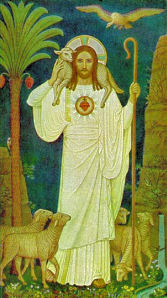
Devotion to the Sacred Heart was also an essential component of Pope John Paul II's hopes for the "new evangelization" called for by the Church.

"For evangelization today," he said, "the Heart of Christ must be recognized as the heart of the Church: It is He who calls us to conversion, to reconciliation. It is He who leads pure hearts and those hungering for justice along the way of the Beatitudes. It is He who achieves the warm communion of the members of the one Body. It is He who enables us to adhere to the Good News and to accept the promise of eternal life. It is He who sends us out on mission. The heart-to-heart with Jesus broadens the human heart on a global scale."

Here are some of the relevant documents: Leo XIII in his Encyclical Letter Annum sacrum (1889) on the consecration of mankind to the Sacred Heart; Pius XI in Caritate Christi Compulsi (On The Sacred Heart) and Miserentissimus Redemptor (On Reparation To The Sacred Heart); Pius XII in his Encyclical Letter Haurietis aquas; Paul VI in his Apostolic Letter Investigabiles divitias Christi (1965) and John Paul II in Message on the centenary of the consecration of mankind to the Sacred Heart of Jesus (1999), in L'Osservatore Romano, 12 June 1999.

Scriptural Basis for the Devotion

Jesus, who is one with the Father (cf. John 10, 30), invites his disciples to live in close communion with him, to model their lives on him and on his teaching. He, in turn, reveals himself as "meek and humble of heart" (Mt 11, 29). It can be said that, in a certain sense, devotion to the Sacred Heart of Jesus is a cultic form of the prophetic and evangelic gaze of all Christians on him who was pierced (cf. John 19, 37; Zac 12, 10), the gaze of all Christians on the side of Christ, transfixed by a lance, and from which flowed blood and water (cf. John 19, 34), symbols of the "wondrous sacrament of the Church"(St. Augustine).
The Gospel of St. John recounts the showing of the Lord's hands and his side to the disciples (cf. John 20,20), and of his invitation to Thomas to put his hand into his side (cf. John 20, 27). This event has also had a notable influence on the origin and development of the Church's devotion to the Sacred Heart.

These and other texts present Christ as the paschal Lamb, victorious and slain (cf. Apoc 5,6). They were objects of much reflection by the Fathers who unveiled their doctrinal richness. They invited the faithful to penetrate the mysteries of Christ by contemplating the wound opened in his side. Augustine writes: "Access is possible: Christ is the door. It was opened for you when his side was opened by the lance. Remember what flowed out from his side: thus, choose where you want to enter Christ. From the side of Christ as he hung dying upon the Cross there flowed out blood and water, when it was pierced by a lance. Your purification is in that water, your redemption is in that blood".

Excerpted from the Directory on Popular Piety and the Liturgy

The Sacred Heart and Our Spiritual Life

Devotion to the Sacred Heart is a wonderful historical expression of the Church's piety for Christ, her Spouse and Lord: it calls for a fundamental attitude of conversion and reparation, of love and gratitude, apostolic commitment and dedication to Christ and his saving work.

Devotions to the Sacred Heart of Jesus are numerous. Some have been explicitly approved and frequently recommended by the Apostolic See. Among these, mention should be made of the following:


Personal Consecration
Personal consecration, described by Pius XI as "undoubtedly the principal devotional practice used in relation to the Sacred Heart" (Miserentissimus redemptor).

Family Consecration
Family consecration to the Sacred Heart, in which the family, by virtue of the Sacrament of Holy Matrimony already participating in the mystery of the unity and love of Christ for the Church, is dedicated to Christ so that he might reign in the hearts of all its members (Aliae concessiones).

Litany of the Sacred Heart of Jesus
The Litany of the Sacred Heart of Jesus, approved for the whole Church in 1891, which is evidently biblical in character and to which many indulgences have been attached (Aliae concessiones).

Act of Reparation to the Sacred Heart
The act of reparation, a prayer with which the faithful, mindful of the infinite goodness of Christ, implore mercy for the offences committed in so many ways against his Sacred Heart (Aliae concessiones).

The Practice of the First Fridays
The pious practice of the first Fridays of the month which derives from the "great promises" made by Jesus to St. Margaret Mary. At a time when sacramental communion was very rare among the faithful, the first Friday devotion contributed significantly to a renewed use of the Sacraments of Penance and of the Holy Eucharist. In our own times, the devotion to the first Fridays, even if practised correctly, may not always lead to the desired spiritual fruits. Hence, the faithful require constant instruction so that any reduction of the practice to mere credulity is avoided and an active faith encouraged so that the faithful may undertake their commitment to the Gospel correctly in their lives. They should also be reminded of the absolute preeminence of Sunday, the "primordial feast" (Sacrosanctum Concilium), which should be marked by the full participation of the faithful at the celebration of the Holy Mass.

Excepted from the Directory on Popular Piety and the Liturgy