Tuesday, March 29, 2022

Pope Francis ready to travel to Malta


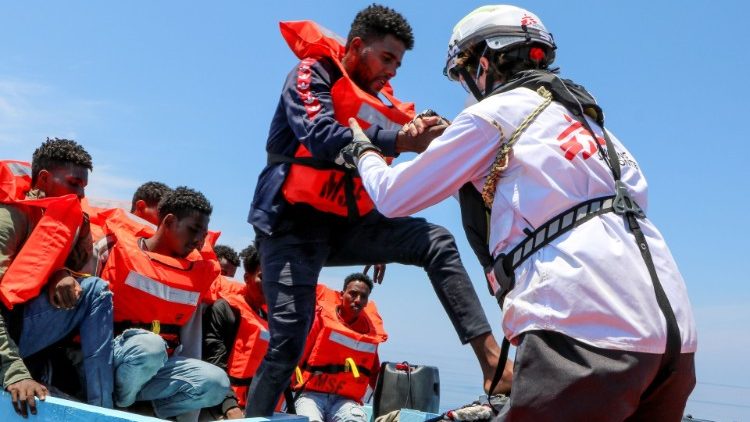
Migrants are helped off a small boat near Malta by a member of Doctors Without BordersMigrants are helped off a small boat near Malta by a member of Doctors Without Borders pancis e Fr

Culture of care and hospitality central to Pope's Malta visit

Pope Francis sets off on his 36th Apostolic Visit abroad to the Mediterranean island nation of Malta this weekend, 2-3 April 2022. Amongst the highlights are a visit the Grotto of St. Paul whose ship washed up on Maltese shores in 60 A.D., and a meeting with refugees.

By Deborah Castellano Lubov

Pope Francis’ imminent visit to the Mediterranean island nation of Malta, after having been postponed in March 2020 due to the coronavirus pandemic, is set to take place this weekend.

The Director of the Holy See Press Office, Matteo Bruni, on Tuesday, presented the 2-3 April 2022 Apostolic Trip to the archipelago. The visit marks the Holy Father’s 36th trip abroad, to the small nation, 90 percent of whose population according to a 2018 survey, professes to be Catholic.


The Journey’s theme is ‘They Showed Us Unusual Kindness’ (Acts 28:2) and highlights the plight of migrants crossing the Mediterranean toward Europe as well as promotes evangelization in the country. The visit’s logo shows open hands from a ship reaching out toward a Cross.

The theme also recalls the hospitable and warm welcome St. Paul received in 60 A.D., when his boat was shipwrecked and washed upon the shores of Malta. Matteo Bruni  recalled that Pope Francis dedicated the January 2020 General Audience catecheses to the welcome of St. Paul by the Maltese.

While in Malta, the Holy Father will travel to the cities of Valletta, Rabat, Floriana and the island of Gozo. He will give five discourses during the course of the visit in Italian. The entire visit, other than private encounters, can be watched on Vatican Media, through the Vatican News website, YouTube, Facebook and on Vatican Media live feed, with English-language commentary.

As Pope Francis usually does during his Apostolic Journeys, he is also scheduled to have a private meeting with fellow Jesuits. The text of that conversation will be released at a later time.

Commemorating St. Paul

A major highlight of the trip will include Pope Francis’ visit to the Grotto of St Paul at the Basilica in Rabat, where - through a moment of prayer that will see him going down and entering the Grotto - he will commemorate the ‘Apostle of the Peoples’ shipwreck on the island nearly 2,000 years ago. Another important moment will be the Pope’s meeting with refugees at the Giovanni XXIII Peace Lab Center for Migrants in Hal Far.

During his first day, after meeting with civil authorities, the Holy Father will board a catamaran to the island of Gozo from the capital, La Valletta, where he will preside over a prayer meeting at the National Shrine of Ta' Pinu and give a homily. He will return by ferry to the island of Malta before transferring to the Apostolic Nunciature, where he will reside during his overnight visit.

Pope Benedict XVI visited Malta in 2010, while St. John Paul II visited in both 1990 and 2001. Malta’s first saint, George Preca, was canonized on 3 June 2007 by Pope Benedict XVI.

The Director of the Holy See Press Office also told the press that Cardinal Mario Grech, the General Secretary of the Synod of Bishops, who is Maltese and was bishop of Gozo, from 2005 to 2019, will be part of the Pope’s entourage for this Apostolic Journey.

Remembering refugees amid war

As far as whether the Holy Father will speak on war, in light of the ongoing war in Ukraine, the Director of the Holy See Press Office suggested that “it would be difficult to not take the war into account in this moment.”

Matteo Bruni noted how the trips’ focus on welcome and hospitality takes on heightened meaning as countless refugees are fleeing from devastated Ukraine as the war wages into its second month.

The Holy Father is expected to hold a brief press conference while on the plane returning to Rome, despite the brevity of the return flight.

Monday, March 28, 2022

Tuesday Saint of the Day


St. Ludolf of Ratzeburg


Ludolf was a Norbertine priest (a canon regular of the Premonstratensian Order). In 1236 he was chosen to become bishop of the German see of Ratzeburg. While fulfilling his episcopal duties, he continued the practices of his Norbertine religious life. For his courageous defense of the Church, he was imprisoned and harshly treated by Duke Albrecht of Saxony-Lauenburg. Subsequently he fell ill and died from what he had suffered. A soldier tormented by excruciating pains in his head resulting from an arrowhead that had become embedded in his flesh during battle invoked the intercession of Saint Ludolf. Soon afterward, he found that the arrowhead had shifted to the surface of his head wound, so that he was able to extricate it with his hand. In thanksgiving to God, the Blessed Virgin Mary, and Saint Ludolf, the soldier donated to the Church a lavishly decorated missal and several beautifully adorned liturgical vestments.

Is the demise of the Greek Catholic Church part of Putin's diabolical plan?


Does Greek Catholic Church help explain Putin’s obsession with Ukraine?


ROME – This week, the University of Notre Dame announced that Archbishop Borys Gudziak, the highest-ranking prelate of the Ukrainian Greek Catholic Church in the U.S., will deliver this year’s commencement address. No matter the circumstances, the choice would have made great sense – Gudziak is a graduate of Harvard who studied under Henri Nouwen, the founder and president of the Ukrainian Greek Catholic University in L’viv, and one of the Catholic Church’s preeminent public intellectuals.

In context, however, inviting Gudziak is also a statement of solidarity with Ukraine as Putin’s scorched-earth war grinds on mercilessly.

If a retired NYU professor of Russian history is right, the big stage for Gudziak may also help explain what Putin is doing in Ukraine in the first place.

Jane Burbank took to the New York Times on March 22 to offer a provocative reading of Putin’s motives. Forget the Tsar or the Soviet Union, Burbank provocatively argues – what Putin really wants back is no less than the Mongol Empire, with him in charge.

Historically, Burbank says, in the Russia of the 1910s and 1920s, there were two major intellectual camps regarding the country’s future after the Tsar, and both reflected deeply imperialistic ambitions.

One was the Bolsheviks and their dream of Russia leading a global workers’ struggle to usher in the classless state. The other was less well known, but influential in elite circles. It dreamt of Russia rebuilding the grand Eurasian empire of the 13th and 14th centuries, which, at its peak, included all of modern-day Mongolia, China, parts of Burma, Romania, Pakistan, Siberia, Ukraine, Belarus, Cilicia, Anatolia, Georgia, Armenia, Persia, Iraq, Central Asia, and much or all of Russia, along with additional countries as tributary states.

This Eurasian vision imagined such a modern-day empire as thoroughly rooted in the Russian Orthodox faith, thereby standing as a permanent bulwark of values and tradition against the decadent West.

That empire, according to Burbank, is the “grand theory” driving the war.

In turn, it may help explain Putin’s obsession with Ukraine, which isn’t just about the Baptism of Rus’ in 988 or reabsorbing a territory Russians have always regarded as theirs. It’s also about destroying, or at least stifling, the main source of resistance to the Eurasian vision within its own landmass, which is Ukraine’s Greek Catholic Church.

By far the largest of the 23 Eastern churches in full communion with Rome, the Ukrainian Greek Catholic Church has around 6 million members, roughly evenly split between Ukraine itself and a Ukrainian diaspora around the world. Historically it dates to the 1596 Union of Brest, which brought the Ruthenian Orthodox Church of the Polish-Lithuanian Commonwealth into union with the Vatican.

By 1963, the church was officially recognized as Ukrainian since that’s where it flourished and put down roots.

It’s not just the numbers, however. The Greek Catholic Church punches well above its weight in terms of social and cultural affairs. It helped lead the 2004-2005 “Orange Revolution,” which brought down the corrupt regime of Viktor Yanukovych in favor of the more pro-Western Viktor Yuschenko, and it has also led the moral and spiritual mobilization in opposition to the current Russian invasion.

The Greek Catholics have a noble history, having been the most martyred church in the world in percentage terms during the Soviet era. Gudziak envisioned the legacy of those martyrs as one “wing” of the re-founded Catholic University in Ukraine, described as the “only Catholic university between Poland and Japan.” (In keeping with Gudziak’s studies under Nouwen, the other wing is the disabled.)

Though one shouldn’t be too sweeping in characterizing the thinking of Greek Catholics, as they’ve got their internal contrasts and divisions just like everybody else – I mean, a small rump band of Greek Orthodox traditionalists who consecrated their own bishops without permission of the pope in 2009, actually declared the Throne of Peter vacant in 2019, staged a conclave, and elected, of all people, Italian Archbishop Carlo Maria Viganò, who’s developed a second career as a professional thorn in the side of Pope Francis.

Nonetheless, it’s safe to say that mainstream Greek Catholic thought is highly nationalistic, but not in the pugnacious, “us v. the West” sense of Russia. Instead, it envisions a truly independent Ukraine, fostering the best of its distinctive culture but deeply engaged with the international community. As part of that picture, Greek Catholic intellectuals have dreamed of Ukrainian Orthodox and Catholic believers coming together in some form of “reconciled diversity,” and thus independent of Moscow.

The Greek Catholics typically are also dubious about the Vatican’s “Russia Policy,” which, in practice, often means bending over backward to placate Moscow for the sake of some eschatological dream of reuniting the Christian East and West. As the Ukrainians tend to see it, those long-term ambitions shouldn’t justify allowing a bully to push around a local church that’s paid more than its fair share of blood for its loyalty to Rome.

There simply isn’t anyplace else in the former Mongol Empire with a Catholic church this large, this vibrant and relevant, and, from Moscow’s point of view, this threatening.

For sure, inflicting damage on the Greek Catholic Church undoubtedly isn’t the main reason Russian tanks are clogging the highways of Ukraine these days. On the other hand, from Putin’s point of view, shutting down his central spiritual and intellectual rival in his own backyard probably wouldn’t be chump change either.

The new assignments for Archdiocese of New Orleans to begin July 2022

 OFFICIAL APPOINTMENTS In order to provide pastoral care for the people of God in the Archdiocese of New Orleans, Archbishop Aymond has made the following appointments:

 Pastors: In accordance with Canon 522 and the USCCB norms, all appointments for pastors are for a six year term, which may be renewed.

 Reverend Daniel Brouillette as Pastor of St. Peter Parish, Covington, effective July 1, 2022.

 Reverend Lance Campo as Pastor of St. Theresa of Avila Parish, New Orleans, effective July 1, 2022.

 Reverend Daniel Darmanin as Pastor of St. Margaret Mary Parish, Slidell, effective July 1, 2022.

 Reverend Angel Diaz-Perez as Pastor of Annunciation Parish, Bogalusa, effective July 1, 2022.

 Reverend Bryan Howard as Pastor of St. Cletus Parish, Gretna, effective July 1, 2022. 

Reverend Fred Kaddu, S.S.J. as Pastor of All Saints Parish, New Orleans, effective immediately.

 Reverend Lambert Lein, S.V.D. as Pastor of St. Katharine Drexel Parish, New Orleans, effective July 1, 2022.

 Reverend Robert Merced, O.P. as Pastor of St. Anthony of Padua Parish, New Orleans, effective, August 1, 2022.

 Very Reverend Wayne Paysse as Pastor of St. Dominic Parish, New Orleans, effective July 1, 2022.

 Reverend Andrew Rudmann as Pastor of St. Philip Neri Parish, Metairie, effective July 1, 2022.

 Reverend Kenneth Smith as Pastor of Our Lady of Lourdes Parish, Violet, effective July 1, 2022.

 Reverend Christopher Zavackis as Pastor of Our Lady of Lourdes Parish, Slidell, effective July 1, 2022.

 Parochial Vicars:

 Reverend Sylvester Adoga as Parochial Vicar of St. Jane de Chantal Parish, Abita Springs, effective July 1, 2022.

 Reverend Daniel Dashner as Parochial Vicar of Most Holy Trinity Parish and Chaplain at Lakeview Medical Center, Covington, effective July 1, 2022.

 Reverend David Frank as Parochial Vicar of St. Rita Parish, Harahan, effective July 1, 2022.

 Reverend Lawrence Murori as Parochial Vicar of St. Angela Merici Parish, Metairie, effective July 1, 2022. 

Reverend Francis Nguyen as Parochial Vicar of Mary, Queen of Peace Parish, Mandeville, effective July 1, 2022.

 Reverend Edward Owusu-Ansah as Parochial Vicar of St. Philip Neri Parish, Metairie, effective July 1, 2022.

 Reverend Peter Pham as Parochial Vicar of St. Matthew the Apostle Parish, River Ridge, effective July 1, 2022.

 Newly Ordained Priests: (to be ordained June 4, 2022) 

Reverend Lennin Arroyo as Parochial Vicar of St. Jerome Parish, Kenner, and part time ministry at the Hispanic Apostolate, effective July 1, 2022. 

Reverend Joseph DiMaggio as Parochial Vicar of St. Clement of Rome Parish, Metairie, effective July 1, 2022.

 Reverend Andy Gonzalez as Parochial Vicar of Our Lady of Prompt Succor Parish, Chalmette, effective July 1, 2022.

 Reverend Jeffrey Merritt as Parochial Vicar of St. Dominic Parish, New Orleans, effective July 1, 2022.

 Reverend William Mumphrey as Parochial Vicar of Our Lady of Lourdes Parish, Slidell, effective July 1, 2022. 

Reverend Dennis Obienu as Parochial Vicar of St. Margaret Mary Parish, Slidell, effective July 1, 2022.

 Special Ministry: Reverend Andrew Gutierrez enrolling as a student at University of Saint Mary of the Lake in Mundelein, IL to earn the S.T.L., while remaining Parochial Vicar at St. Catherine of Siena, effective, July 1, 2022.

 Reverend Damian Zablocki as Chaplain of Our Lady of Mount Carmel Traditional Latin Mass Community Northshore, and St. Tammany Hospital, effective July 1, 2022. 

Retirement: 

Reverend Msgr. Henry Bugler, effective July 1, 2022. Reverend Msgr. John Cisewski, effective July 1, 2022. Reverend Edward Grice, effective July 1, 2022. Reverend Otis Young, effective July 1, 2022. Our heartfelt thanks to Msgr. Bugler, Msgr. Cisewski, Father Grice, and Father Young for the many years they have led God’s people as a priest of Jesus Christ

Pope thanks Polish Bishops for help with Ukranian refugees


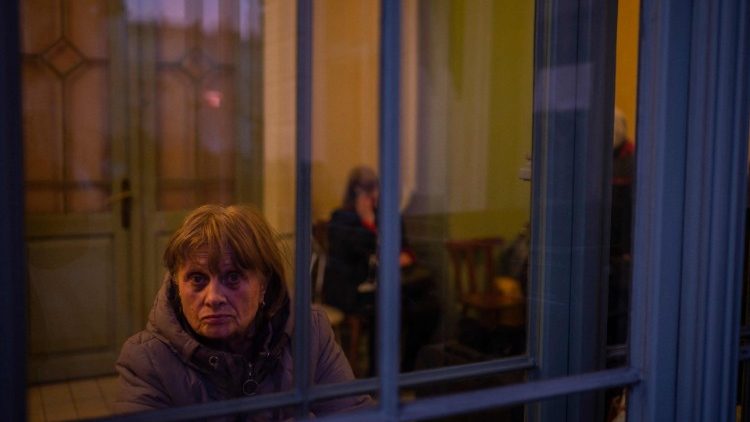
A Ukrainian refugee at a train station near the Polish-Ukrainian borderA Ukrainian refugee at a train station near the Polish-Ukrainian border  (AFP or licensors)

Pope thanks Polish Bishops for massive welcome of Ukrainian refugees

Pope Francis meets for 45 minutes with President of the Polish Bishops Conference, Archbishop Stanislaw Gądecki, where they discussed the functioning of the Church in Poland during the ongoing war in Ukraine.

By Deborah Castellano Lubov

As the war continues to wage on in Ukraine into its second month, the Church in Poland is continuing to welcome refugees displaced by the devastating invasion of Russian forces and is grateful to Pope Francis for his solemn consecration of Russia and Ukraine to the Immaculate Heart of Mary last Friday evening in the Vatican.

These were among the main themes discussed Monday morning during the 45-minute encounter between the Holy Father and the President of the Polish Bishops’ Conference, Archbishop Stanislaw Gądecki, in the Vatican.

Concern for refugees

According to a statement from the Bishops’ Conference (PBC), the Archbishop of Poznan and Pontiff reflected on the Church in Poland during the ongoing war in the neighboring nation, and the country’s welcoming some 2.3 million refugees since the start of the war according to latest figures.

Moreover, it stated, how Archbishop Gądecki along with the Eastern European nation’s bishops condemned Russia’s attack on Ukraine, and expressed their gratitude to the Pope for his recent solemn consecration of all of humanity, and especially of Russia and Ukraine, to Mary’s Immaculate Heart.


During the audience, the Holy Father thanked for all the actions taken by the Church in Poland and assured them of his spiritual support.

Archbishop Gądecki also presented to the Pope the aid activities undertaken by the Church in Poland since the war’s outbreak, especially for the refugees from Ukraine, who found themselves on Polish ground, as well as support for those who, despite the war, remained in their country.

Parish mobilization

The Church’s assistance is provided through Caritas Polska and diocesan Caritas, the PBC Team for Assistance to the Church in the East, religious communities, priests, and seminarians.

The PBC President highlighted the enormous grassroots mobilization and the commitment of Polish parishes, which, at the local level, organize food, lodging, transportation, medical and psychological assistance, legal support, education for children, and a variety of other aid activities, depending on current needs.

In addition, Archbishop Gądecki also presented his efforts to intensify joint actions of Christians of different denominations.

Toward the end of the encounter, the Pope in a special way asked that Poland’s clergy and seminarians to remain close to the faith of the People of God and bestowed his apostolic blessing.

Pope Francis meets members of Canadian indigenous peoples in spirit of healing


Pope Francis meets with representatives of Canadian indigenous peoples

On Monday morning Pope Francis met with two delegations of Canada's indigenous peoples, the first of a series of encounters that will continue over the coming days.

By Vatican News staff writer

On Monday morning Pope Francis welcomed two groups of representatives of Canadian indigenous peoples in successive audiences, each lasting about one hour.

According to a statement released by the Holy See Press Office, the Pope met with around ten delegates representing the Métis people and eight representing the Inuit. Several Bishops from the Canadian Bishops' Conference accompanied the delegations for the meetings.

The press statement noted how Pope Francis wished "to listen and to offer space for the painful stories shared by the survivors."

Sunday, March 27, 2022

Monday Saint of the Day


St. Venturino of Bergamo


Dominican preacher and missionary crusader. A native of Bergamo, Italy, he joined the Dominicans in 1319 and soon distinguished himself as a brilliant preacher, attracting huge crowds throughout northern Italy. Pleased with his ability to reach large numbers of believers, he announced in 1335 his intention to go on a pilgrimage to Rome. When Pope Benedict XII (r. 1334-1342) learned of the pilgrimage, he feared Venturino might be planning to crown himself pope, and so forbade the friar to proceed. This decree was joined by one issued by the Dominicans themselves at the Chapter in London (1335). Ignorant of these bans, Venturino proceeded to Rome and then to Avignon where he was arrested and imprisoned until 1343. He is also known for helping to organize a crusade, at the behest of Pope Clement VI (r. 1342-1352), against the Turks who were then menacing Europe.

Today is Laetare Sunday; rejoice and rock the rose


Laetare, Jerusalem! Rejoice!

By Jennifer Gregory Miller ( bio - articles - email ) | Mar 29, 2019 | In The Liturgical Year


Easter is almost here! “With childlike joy the Church begins to count the days.” Rev. Pius Parsch describes the Fourth Sunday of Lent so perfectly! (The Church’s Year of Grace, Volume 2, p. 212). While there is not much change liturgically for the Fourth Sunday of Lent except for the option of rose-colored vestments, there is much to this Sunday to unpack. I am pondering these key words for this Sunday: Joy, Rose, Jerusalem, and Mother.

General Instructions on Rejoicing

I always am a little jolted when I see the priest walking in wearing rose-colored vestments. Since this color vestment is worn twice a year, the Mass does stand out. Yet there is very little extra liturgical instruction for this Sunday. From The General Instruction on the Roman Missal:

346 f) The color rose may be used, where it is the practice, on Gaudete Sunday (Third Sunday of Advent) and on Laetare Sunday (Fourth Sunday of Lent).

305. Moderation should be observed in the decoration of the altar.

During Advent the floral decoration of the altar should be marked by a moderation suited to the character of this time of year, without expressing in anticipation the full joy of the Nativity of the Lord.

During Lent it is forbidden for the altar to be decorated with flowers. Exceptions, however, are Laetare Sunday (Fourth Sunday of Lent), Solemnities, and Feasts.

Floral decoration should always show moderation and be arranged around the altar rather than on the altar table.

313. In Lent the playing of the organ and musical instruments is allowed only in order to support the singing. Exceptions, however, are Laetare Sunday (Fourth Sunday of Lent), Solemnities, and Feasts.

And these are the only instructions regarding this “Rejoicing” Sunday of Lent. This tradition of the Church requires further explanation to understand why we treat this Sunday differently.

Rejoice!

The Fourth Sunday of Lent is traditionally called “Laetare Sunday” or “Rejoice Sunday,” with its counterpart in Advent being Gaudete Sunday. (It’s easy to get the names confused, but remembering that Lent and Laetare begin with “L” helps me place the name in the correct season.)

The names of the Sundays come directly from the first words used in the Introit or Entrance Antiphons in the original Latin:

LAETARE:
Latin
: Lætare Jerusalem: et conventum facite omnes qui diligitis eam: gaudete cum lætitia, qui in tristitia fuistis: ut exsultetis, et satiemini ab uberibus consolationis vestræ.

English: Rejoice, Jerusalem, and all who love her. Be joyful, all who were in mourning; exult and be satisfied at her consoling breast.

GAUDETE:
Latin: Gaudete in Domino semper: iterum dico, gaudete. Modestia vestra nota sit omnibus hominibus: Dominus enim prope est. Nihil solliciti sitis: sed in omni oratione et obsecratione cum gratiarum actione petitiones vestræ innotescant apud Deum.

English: Rejoice in the Lord always; again I say, rejoice. Indeed, the Lord is near.

Both Gaudete and Laetare are Latin verbs for rejoice, but with slightly different meanings. James-Charles Noonan, Jr. in his The Church Visible separates them in this manner:

Gaudete means expressed or exuberant joy. Laetare means internal joy, a joy of anticipation felt within the solemn season of Lent (p. 209).

I found it interesting that both forms of the words are included for this Sunday’s antiphon, so we can express both forms of joy.

What are the possible reasons for the expression of joy?

  1. Lent has not always been a season of forty days. In the ancient church of Rome the first Lenten fasts began the Monday three weeks before Easter. Currently that would be Monday of the Fourth Week of Easter. So this day would have been more of a carnevale (farewell to meat) or Mardi Gras before the fasting began. Some of this “carnival” feel is still retained.
  2. This Sunday is the Second Scrutiny for the Elect or catechumens, with the exorcism focusing on the message of the Gospel of the “Man Born Blind.” This Sunday is connected to the traditional “opening of the ears.” Like a family, we are eager and rejoicing on how much closer the Elect are to enter into the family of Christ.
  3. The Fourth Sunday of Lent is truly the halfway point until Easter. This is a small preview of Easter. We are impatient in our anticipation and the Church reflects that mood. “Easter is near, rejoice!”
  4. There is an underlying nature theme, reflecting the spring season of the Northern Hemisphere. We experience a holy spring with the resurrection of Christ, and our natural season of spring reflects this new life bursting forth. The rose used as the vestment color and the tradition of the Golden Rose blessed today points to the connection of spring.
  5. We are rejoicing with our holy Mother Church, and also have this Sunday to praise our holy Mother Church, also referred to as “Jerusalem.”

A Rose By Any Other Name

Most priests get a little defensive wearing the rose-colored vestments. They often emphasize that they are wearing not pink but rose. Wikipedia defines rose as the color halfway on the RGB color wheel between red and magenta, which makes the color a lot stronger than some of these sickly pale pink or mauve vestments I’ve seen. Regardless what exact version of rose the vestment maker chose to use, the message is that it is a muted color. The softness and not full spectrum of color reflects that this is muted rejoicing. It is “a sort of compromise between the penitential purple and the lighter colors used on feasts of joy” (Rev. John Sullivan, Externals of the Catholic Church, p. 142). We are not fully into Easter, so we are joyful, but not in the full Easter joy.

The rose is also a tie to spring. Again, Rev. Pius Parsch describes so beautifully:

That our Easter festival should fall during the first weeks of spring is certainly no accident. Today, this third Sunday before Easter, is the Church’s springtime festival. All men stand in wonder before the yearly miracle of spring, but we Christians have especial cause for wonderment and awe. For us, nature is the symbol of a fairer springtime, the springtime of grace in the kingdom of our God. Grace has filled our souls, and the death, the night, the cold of winter is passed. Woodlands and meadows are gay with the blossoms of spring; the air is vibrant with the song of the bird; and in this mirror of nature we see the reflection of a higher life still, the life of grace within our souls. Spring follows winter in unfailing succession; so too we are conscious that God has raised our fallen nature from its dreary winter sleep to the springtime of grace. We cannot believe in the eternal wickedness of the human heart. The joy of spring must return, and goodness, love, peace and grace once more blossom in our hearts. Nowhere could we find a fairer image of this transition from original sin to grace. Each year confronts us with the miracle of spring; each year, then, let us look into this mirror and see the greater miracle that God works in our souls: the miracle of grace.

The Church now chooses the loveliest flower of spring, the early rose, and brings it into God’s house and into the liturgy. The rose is the image of the soul in grace. The queen of flowers, it blossoms on its stem of thorns. The soul too is surrounded with thorns, the thorns of a world that God once cursed, the thorns of original sin. Yet in spite of these it is raised up to the glory of grace; to grace that is clothed, red as a rose, in the mantle of love; to grace that blossoms forth from the greenery of hope. And as the rose in full bloom displays its countless petals, so too must the soul expand in its Christian life, emitting the sweet fragrance of its virtues. May the garden of the Church this Easter time become a garden of roses, a garden of souls in full bloom with the flowers of grace. For the rose is the symbol of grace (Seasons of Grace, pp. 167-168).

There was a Roman custom (dating at least from the tenth century) of wearing of flowers to celebrate the victory of spring over winter. This led to the tradition of the pope blessing a natural rose in the eleventh century, and later it became a crafted artificial golden rose, often ornately decorated, which after being blessed would be conferred by the pope to either distinguished persons, churches, shrines or cities. Father Francis Weiser, S.J. explains in further detail:

The meaning and symbolism of the Golden Rose is expressed in the prayer of blessing. It represents Christ in the shining splendor of His majesty, the “flower sprung from the Root of Jesse.” From this ecclesiastical custom Laetare Sunday acquired its German name, Rosensonntag (Sunday of the Rose) (The Easter Book, p. 72).

And this is the translation of the traditional Golden Rose blessing:

O Lord, on this day,
when the Church exults in Thy name and manifests her joy by this sign,
confer upon us through her true and perfect joy and accepting her devotion of today;
do Thou remit sin, strengthen faith, increase piety, protect her in Thy mercy,
drive away all things adverse to her and make her ways safe and prosperous,
so that Thy Church, as the fruit of good works,
may unite in giving forth the perfume of the ointment
of that flower sprung from the Root of Jesse
and which is the mystical flower of the field and lily of the valleys,
And remain happy without end in eternal glory together with all the saints.

James-Charles Noonan, Jr., shares the historical aspect of the Golden Rose:

...The Rose has romantic origins. A society of religious sisters in Tulle, Alsace, was granted independence from the local bishop by Pope Leo IX in 1049. In gratitude for this mark of papal respect and in natural gratitude for independence from local authority, the community sent a delegation to Rome each year to present the pope with a “golden rose.”

...Although the Rose itself has taken many forms of design through the ages, it is always made of solid gold. The original design was quite simple, but later, with the influence of the baroque period, it became quite ornate. During the modern pontificates of Paul VI and his successors, it has once again taken a more simplified design.

In the past, the Golden Rose was encrusted with sapphires, gems usually reserved for members of the Sacred College. Sapphires were chosen as a symbolic reference to the high esteem of the Golden Rose and its recipients. The base of the Rose, regardless of its design, has always had a hidden basin as a repository for balsam and musk. The Rose is bestowed on those recipients who, through the virtue of their lives, exude the fragrance of all virtues, thus the incorporation of symbolic fragrances. The basin also incorporated a reliquary for a relic of the True Cross (The Church Visible, pp. 106-107).

He describes the first time it was awarded, during the First Crusade in 1096, and highlights some who have received this gift of the Roman Pontiff. The rose is still given even in this pontificate, but less as mark of personal stature. Pope Francis has given the rose to two Marian shrines.

So those rose vestments should bring to mind the spring season, muted rejoicing, the Golden Rose, the Root of Jesse, etc., which are all much richer thoughts than the bi-annual jokes about whether the priest is or is not wearing pink.