Showing posts with label alzheimers. Show all posts

Tuesday, February 28, 2023

Citing dementia and increasing weakness, McCarrick asks for all charges of abuse be dropped

Ex-cardinal McCarrick asks for dismissal of sex abuse case against him, citing dementia


Former cardinal Theodore McCarrick, 92, filed a motion in a Massachusetts court claiming he is “legally incompetent” to stand trial for sex abuse charges, citing “significant, worsening, and irreversible dementia.”

McCarrick is charged with three counts of indecent assault and battery on a person over the age of 14 relating to allegations that he sexually abused the teenager who was a family friend at a wedding ceremony in the 1970s at Wellesley College in Wellesley, Massachusetts. 

McCarrick, laicized by Pope Francis in 2019, held one of the highest offices in the Catholic Church and has been accused of serially abusing his priestly authority by sexually abusing minors and seminarians.

The state of Massachusetts told CNA that it wants an opportunity to examine McCarrick’s competency to stand trial.

McCarrick’s motion to dismiss the charges comes about a month after his legal team said a neurological exam of him was being conducted by Dr. David Schretlen, a professor of psychiatry and behavioral sciences at Johns Hopkins University School of Medicine.

That exam remains unavailable to the public, as Schretlen’s final report includes “extensive confidential information” about McCarrick’s health and personal life, and would be “harmful” to McCarrick if it were available to the public, one of McCarrick’s lawyers, Daniel Marx, said in a separate court document.

However, there are certain details from the report that were available in McCarrick’s motion to dismiss the case, such as his consistently low performance scores on cognitive tests.

The document says that McCarrick performed “below expectation” on nearly two-thirds of the cognitive tests administered to him. Quoting the report, the document says that he performed “worse than 92% of reasonably healthy men of similar background and estimated premorbid on 38% of the cognitive measures.”

The report on McCarrick says that his “reported inability to retrieve memories of the alleged incident and potential witnesses” and “any exculpatory factors related to it” are consistent with his performance on the exams and testimony from those who know him well, according to the document.

Schretlen’s report concluded that McCarrick has a “severe cognitive disorder” and “everyday functional disability” that classifies as dementia and is most likely due to Alzeimer’s disease, the document says.

McCarrick is not legally competent to stand trial, the document says. It adds that his dementia is also “irreversible” and “likely to progress over time” with no expectation of improvement. 

The document says that although McCarrick “remains intelligent and articulate,” he is unable to stand trial because his dementia prevents him from “meaningfully consulting with counsel and effectively participating in his own defense.”

It would be a violation of McCarrick’s 14th Amendment right in the Constitution and Article XII of the Massachusetts Declaration of Rights if he were to stand trial with his dementia, his lawyers maintain in the court document.

David Traub, director of communications for the Norfolk District Attorney’s Office, which is prosecuting the case, told CNA in an email Monday that “the Commonwealth will hire its own expert to assess competency.”

Traub said that an update court hearing in Dedham District Court on the state’s examination of McCarrick is set for April 20.

McCarrick’s lawyer Barry Coburn declined comment. Marx, his other lawyer, did not respond to a request for comment.

McCarrick hasn’t been seen publicly since his arraignment in Dedham on Sept. 3, 2021, when he pleaded not guilty to all three counts of indecent assault and battery on a person over the age of 14. 

 He appeared in frail condition that day, arriving at the courthouse wearing a mask and hunched over a walker. He made no comment either inside or outside the courthouse, where a demonstrator yelled, “Shame on you!” as McCarrick slowly walked past reporters and photographers alongside one of his attorneys.

The document says that McCarrick continues to maintain his innocence on all charges. 

Wednesday, September 21, 2022

Pope remembers those with Alzheimer's disease


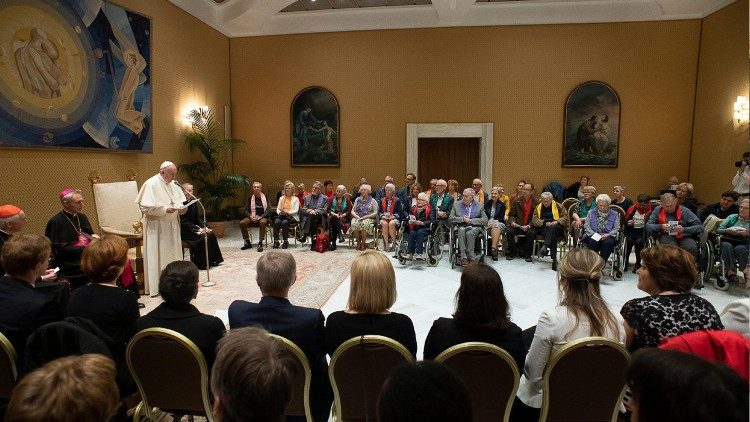
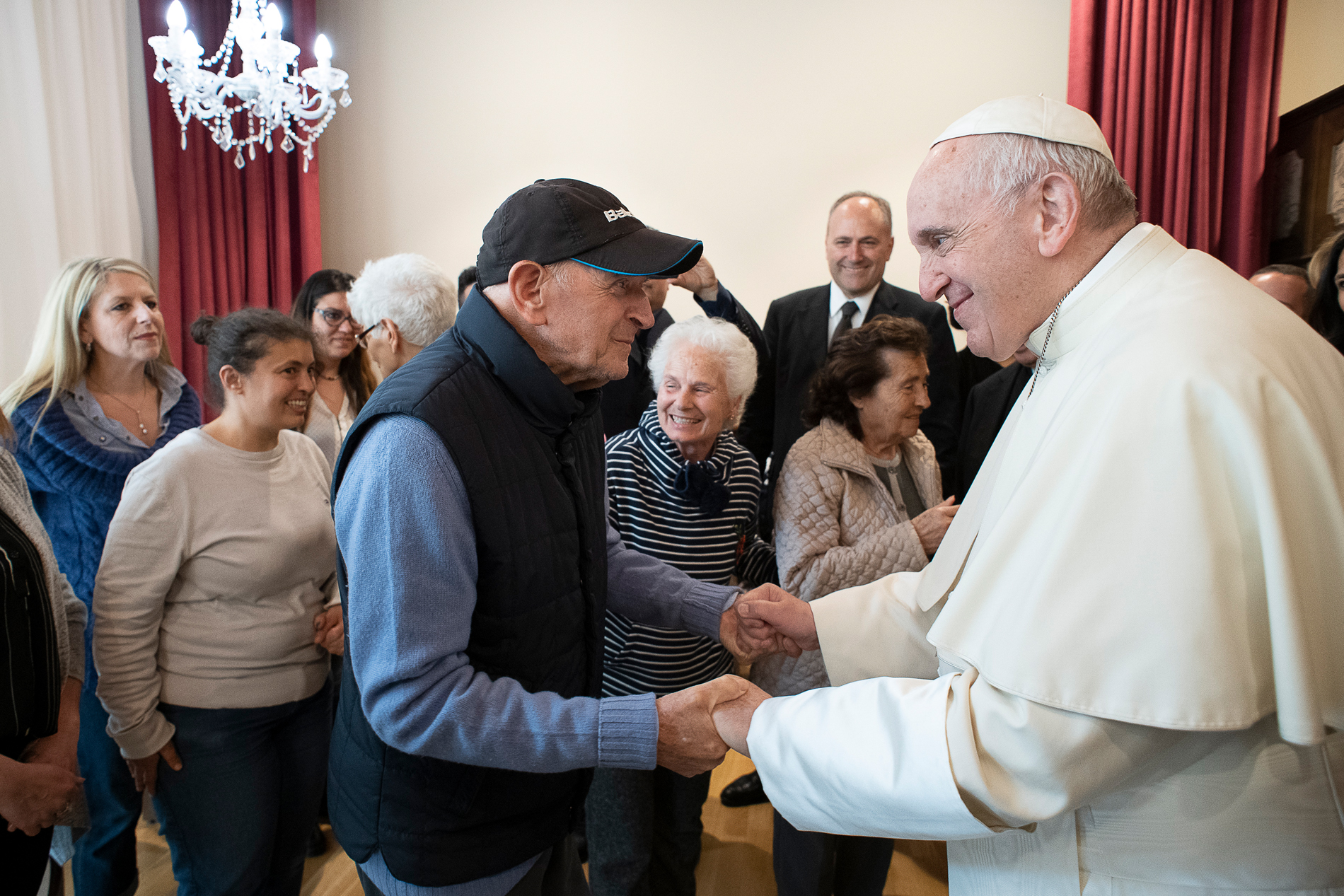
2019 archive photo of Pope Francis meeting with those with Alzheimer's from a home for elderly in Belgium2019 archive photo of Pope Francis meeting with those with Alzheimer's from a home for elderly in Belgium 

Pope: May we pray for and help those with Alzheimer’s disease

Remembering that September 21st marks World Alzheimer's Day, Pope Francis at the General Audience calls on us to pray for those suffering from the disease and to support families caring for them.

By Vatican News staff writer

Recalling the September 21st World Alzheimer's Day, Pope Francis at the conclusion of the General Audience turned his thoughts to this disease that affects so many people, who can often end up being pushed to the margins of society because of their condition.

“Let us pray for those suffering from Alzheimer's, for their families, and for those who lovingly care for them, that they may be increasingly supported and helped.”

The Pope also greeted those present at the audience representing associations assisting those with hemodialysis, dialysis, and organ transplant, assuring them as well of his prayers.

World Alzheimer’s Day takes place during the month of September, which is also World Alzheimer’s Month.

People around the world campaign to raise public awareness and challenge the stigma the disease carries with it. The goal is to better inform the public, change perceptions and attitudes, and generate greater assistance to help those suffering and their families struggling to care them.

2022 campaign efforts are giving special emphasis on how to support people and families following a diagnosis of Alzheimer’s with the latest treatments, available resources, and assistance.

According to the World Health Organization, more than 55 million people live with dementia worldwide. There are nearly 10 million new cases every year. Alzheimer's disease is the most common type of dementia, making up an estimated 60-70% of cases, while dementia in general, is the seventh leading cause of death among all diseases.

Friday, April 12, 2019

Pope Francis Mercy Friday is a visit to those with Alzheimers

© Vatican Media

Rome: Pope visits the Emanuele Village

Residence for people with Alzheimer’s

Pope Francis, as part of the Mercy Friday pastoral initiative that began during the Jubilee of Mercy, paid a visit on the afternoon of April 12, 2019, to the Villaggio Emanuele, an institution for people with Alzheimer’s, accompanied by H.E. Msgr. Rino Fisichella, president of the Pontifical Council for New Evangelization.
The Villaggio is truly organized like a village, and its inhabitants can live in normal conditions, carrying out many aspects of their daily life, necessary for those who live with this difficult disease, thus creating and maintaining a bridge of communication with the outside world. The village, named after its founder, Professor Emmanuele F.M. Emanuele, honorary professor of the Roma Foundation, an innovator in domestic care of Alzheimer’s sufferers, is the only one of its kind in Italy and arose from the awareness that Alzheimer’s has now become a social priority and necessitates a model of care that ensures a lifestyle as close to normality as possible during the often long progression of the disease.
The Villaggio Emanuele is made up of fourteen houses, each one of which is suitable for six people. There is also a mini supermarket, a bar, a restaurant, and a beauty salon. The residents can shop in the supermarket, help in the kitchen, and engage in everyday tasks, in this way conserving their sense of reality and their own identity. Each apartment is furnished in a manner as similar as possible to the home they lived in previously, and the resident does not have a “typical day”, inasmuch as each person can decide how to spend their day. Within the structure, there are doctors, psychologists, physiotherapists, and various other healthcare professionals, and assistance is entirely free of charge.
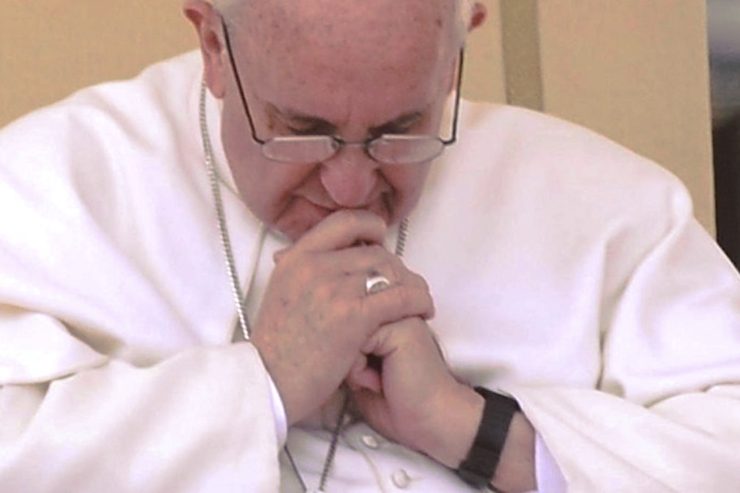
The unexpected arrival of the Pope by car in the courtyard of the village was a source of surprise and joy to the residents, with whom the Holy Father spoke – accompanied by the honorary professor of the Roma Foundation, Emanuel, and the current president Franco Parasassi – and in some cases visited in their rooms.
With this visit, the Pope wished to show his interest in the condition of social exclusion and solitude that a disease such as Alzheimer’s can cause in sufferers, as well as disorientation, discomfort, and suffering in their families.

Wednesday, September 21, 2016

Pope Francis remembers those who suffer with Alzheimers


Pope Prays for Alzheimer’s Patients

Encourages approaching patients with Mary’s solicitude and Jesus’ tenderness, so they ‘feel our closeness’
Preghiera-di-papa-Francesco-Foto-lOsservatore-Romano
@ Servizio Fotografico - L'Osservatore Romano

At the end of today’s general audience, Pope Francis turned his thoughts to those who suffer from Alzheimer’s.
“Today is the 23rd World Alzheimer’s Day, which this year focuses on the theme ‘Remember me,'” he noted.
“I invite all those present to ‘remember’ with Mary’s solicitude and the merciful Jesus’ tenderness all those who are affected by this disease and their families, to have them feel our closeness,” the Pope said. “We also pray for persons who are at the side of the sick, able to take up their needs, including the most imperceptible, because they are seen with eyes full of love.”

Monday, April 4, 2016

Resuming the Baltimore Catechism Day 66


How do prudence, justice, fortitude and temperance dispose us to lead good lives? Prudence disposes us in all circumstances to form right judgments about what we must do or not do. Justice disposes us to give everyone what belongs to him. Fortitude disposes us to do what is good in spite of any difficulty. Temperance disposes us to control our desires and to use rightly the things which please ourselves.

He that followeth justice and mercy shall find life, justice, and glory. (Proverbs 21:21)


Further reading: CCC 1810-1811

Friday, November 16, 2012

Jesus reveals God as Father

Read the Catechism: Day 36

Part1:The Profession of Faith (26 - 1065)
Section2:The Profession of the Christian Faith (185 - 1065)
Chapter1:I Believe in God the Father (198 - 421)
Article1:"I believe in God the Father almighty, Creator of heaven and earth" (199 - 421)
Paragraph2:The Father (232 - 267)
II. THE REVELATION OF GOD AS TRINITY
The Father revealed by the Son
238 Many religions invoke God as "Father". The deity is often considered the "father of gods and of men". In Israel, God is called "Father" inasmuch as he is Creator of the world. Even more, God is Father because of the covenant and the gift of the law to Israel, "his first-born son". God is also called the Father of the king of Israel. Most especially he is "the Father of the poor", of the orphaned and the widowed, who are under his loving protection.
239 By calling God "Father", the language of faith indicates two main things: that God is the first origin of everything and transcendent authority; and that he is at the same time goodness and loving care for all his children. God's parental tenderness can also be expressed by the image of motherhood, which emphasizes God's immanence, the intimacy between Creator and creature. The language of faith thus draws on the human experience of parents, who are in a way the first representatives of God for man. But this experience also tells us that human parents are fallible and can disfigure the face of fatherhood and motherhood. We ought therefore to recall that God transcends the human distinction between the sexes. He is neither man nor woman: he is God. He also transcends human fatherhood and motherhood, although he is their origin and standard: no one is father as God is Father.
240 Jesus revealed that God is Father in an unheard-of sense: he is Father not only in being Creator; he is eternally Father in relation to his only Son, who is eternally Son only in relation to his Father: "No one knows the Son except the Father, and no one knows the Father except the Son and any one to whom the Son chooses to reveal him."
241 For this reason the apostles confess Jesus to be the Word: "In the beginning was the Word, and the Word was with God, and the Word was God"; as "the image of the invisible God"; as the "radiance of the glory of God and the very stamp of his nature".
242 Following this apostolic tradition, the Church confessed at the first ecumenical council at Nicaea (325) that the Son is "consubstantial" with the Father, that is, one only God with him. The second ecumenical council, held at Constantinople in 381, kept this expression in its formulation of the Nicene Creed and confessed "the only-begotten Son of God, eternally begotten of the Father, light from light, true God from true God, begotten not made, consubstantial with the Father".

Friday, September 16, 2011

Pat Robertson: wrong again.

Christ, the Church, and Pat Robertson

— Thursday, September 15th, 2011 —
This week on his television show Christian broadcaster Pat Robertson said a man would be morally justified to divorce his wife with Alzheimer’s disease in order to marry another woman. The dementia-riddled wife is, Robertson said, “not there” anymore. This is more than an embarrassment. This is more than cruelty. This is a repudiation of the gospel of Jesus Christ.
Few Christians take Robertson all that seriously anymore. Most roll their eyes, and shake their heads when he makes another outlandish comment (for instance, defending China’s brutal one-child abortion policy to identifying God’s judgment on specific actions in the September 11 attacks, Hurricane Katrina, or the Haiti earthquake). This is serious, though, because it points to an issue that is much bigger than Robertson.
Marriage, the Scripture tells us, is an icon of something deeper, more ancient, more mysterious. The marriage union is a sign, the Apostle Paul announces, of the mystery of Christ and his church (Eph. 5). The husband, then, is to love his wife “as Christ loved the church” (Eph. 5:25). This love is defined not as the hormonal surge of romance but as a self-sacrificial crucifixion of self. The husband pictures Christ when he loves his wife by giving himself up for her.
At the arrest of Christ, his Bride, the church, forgot who she was, and denied who he was. He didn’t divorce her. He didn’t leave.
The Bride of Christ fled his side, and went back to their old ways of life. When Jesus came to them after the resurrection, the church was about the very thing they were doing when Jesus found them in the first place: out on the boats with their nets. Jesus didn’t leave. He stood by his words, stood by his Bride, even to the Place of the Skull, and beyond.
A woman or a man with Alzheimer’s can’t do anything for you. There’s no romance, no sex, no partnership, not even companionship. That’s just the point. Because marriage is a Christ/church icon, a man loves his wife as his own flesh. He cannot sever her off from him simply because she isn’t “useful” anymore.
Pat Robertson’s cruel marriage statement is no anomaly. He and his cohorts have given us for years a prosperity gospel with more in common with an Asherah pole than a cross. They have given us a politicized Christianity that uses churches to “mobilize” voters rather than to stand prophetically outside the power structures as a witness for the gospel.
But Jesus didn’t die for a Christian Coalition; he died for a church. And the church, across the ages, isn’t significant because of her size or influence. She is weak, helpless, and spattered in blood. He is faithful to us anyway.
If our churches are to survive, we must repudiate this Canaanite mammonocracy that so often speaks for us. But, beyond that, we must train up a new generation to see the gospel embedded in fidelity, a fidelity that is cruciform.
It’s easy to teach couples to put the “spark” back in their marriages, to put the “sizzle” back in their sex lives. You can still worship the self and want all that. But that’s not what love is. Love is fidelity with a cross on your back. Love is drowning in your own blood. Love is screaming, “My God, my God, why have you forsaken me.”
Sadly, many of our neighbors assume that when they hear the parade of cartoon characters we allow to speak for us, that they are hearing the gospel. They assume that when they see the giggling evangelist on the television screen, that they see Jesus. They assume that when they see the stadium political rallies to “take back America for Christ,” that they see Jesus. But Jesus isn’t there.
Jesus tells us he is present in the weak, the vulnerable, the useless. He is there in the least of these (Matt. 25:31-46). Somewhere out there right now, a man is wiping the drool from an 85 year-old woman who flinches because she think he’s a stranger. No television cameras are around. No politicians are seeking a meeting with them.
But the gospel is there. Jesus is there.

>>>This was written by Russell Moore who I believe teaches at a Baptist seminary.  He could not be more spot on as Pat Robertson, again, could not be more wrong.  In our Archdiocese we have seen and been privileged to share in the journey of a real Christian witness to a spouse loving a spouse with Alzheimer's.  I posted on this recently.  Please read:

http://abitadeacon.blogspot.com/2011/08/deacon-relies-on-his-faith-as-wife.html

Friday, August 19, 2011

Deacon relies on his faith as wife battles Alzheimer's

When a spouse no longer recognizes who you are

Published on Wednesday, 17 August 2011 20:36 | Written by Peter Finney Jr. | |

It had all the subtlety of walking headfirst into a brick wall at midnight.
Even though Deacon Dave Farinelli sensed there was something puzzling and even scary about his wife Peggy’s recent memory losses, he was able to push those anxieties to the side until December 2005 when what she said couldn’t be wished or explained away.
While Peggy was doing exercises to rehab a broken shoulder, she mentioned offhandedly to Dave, her husband of 37 years and the father of their three adult children, that she wasn’t married.
“She said that her husband had left her after they had only been married for six years,” Deacon Farinelli said. “I said, ‘I’m your husband.’ She said, ‘No, my husband left me.’”
And then Deacon Farinelli reached into his back pocket and pulled out his wallet, where he kept his driver’s license.
“Does this look like your husband?” Deacon Farinelli asked. Peggy replied: “He looks like that somewhat, but that’s not him.”
When the familiar – the absolute – becomes a mystery, a world of certainty and security spins off its axis.
“That’s when I knew for sure, we’ve got issues, we’ve got some problems,” Deacon Farinelli said.
Nearly six years into the sobering diagnosis of Peggy’s Alzheimer’s disease, the Farinellis treat every day as both a challenge and a mysterious gift. Rather than keep the heartbreak private, Deacon Farinelli regularly has shared his frustrations and joys through updates to friends using social media.
Some of his posts describe the rigors of sleep deprivation that befall the primary caregiver. The neurologists have told Deacon Farinelli that they are amazed that despite her extensive memory loss, Peggy, 71, is still walking independently and feeding herself.
Still, the journey into the unknown has turned the Farinelli family upside down.
“It’s very sad for the kids, and I think it’s more difficult than they let on,” Deacon Farinelli said. “It’s difficult to see their mother like this. They tell me, ‘I don’t know what to talk to her about. She can’t carry on a conversation.’
“It’s like having a new baby in your house forever. You just don’t know what any night’s going to bring. You don’t know when she’ll get nervous or agitated.”
Peggy was the family workhorse and prayer warrior.
“Before, she taught school, ran the house and took care of three kids and took care of me – literally, she did everything,” Deacon Farinelli said. “Now I have to hire an army to do all the things she did. She used to paint and draw and read. And she used to pray. She prayed all the time. In fact, we had a running joke that if you needed something and needed your prayers answered, just call Peg and it would happen.”
Another hint Deacon Farinelli had that something was wrong occurred when Peggy had hand-sewn over a series of weeks a set of vestments for Houma-Thibodaux Deacon Gerald Rivette’s 2006 ordination. When Rivette told the Farinellis before his ordination that he was looking forward to his big day, Peggy expressed surprise: “Oh, you’re getting ordained?”
Deacon Farinelli said he regarded that as short-term memory loss. Then there was the trip to see her daughter in Florida when she took Exit 101 on I-10 in Alabama rather than Exit 101 in Florida. “We just thought it was a common mistake, just a mix-up,” Deacon Farinelli said.
She forgot how to make coffee, something she had done for her husband every day of their married life. The memory lapses progressed from there until she no longer knew the man she loved.
“I wasn’t prepared at all, so initially it was very frightening,” said Deacon Farinelli, who has taken a leave of absence from his liturgical duties at St. Peter Parish in Reserve to spend more time with his wife. “After that it was very sad. You just have to make adaptations every day to what it is she can’t do now.”
Their shared journey has made them closer. “I have grown deeper in my faith and closer to her,” Deacon Farinelli said. “We have a stronger relationship now than we ever did, and it was good before.”
The writing, the letting go of feelings, the prayers have helped get him through.
“The times I find are the hardest are the ones that are monumental,” Deacon Farinelli said. “The 19th of July was our 43rd wedding anniversary, and she doesn’t even know we’re married. How do you deal with it? You take it like a boat in the ocean – you go over one wave at a time.”
Peter Finney Jr. can be reached at pfinney@clarionherald.org

>>>Deacon Dave helped me, and my brother classmates through our formation.  He has always been a great witness and his love and service for his dear wife is beautiful and inspirational.  I'm happy to know this amazing servant.