Showing posts with label ewtn. Show all posts

Tuesday, June 2, 2026

Pope Leo XIV appoints EWTN'S President and COO as the Prefect of the Dicastery for Communication


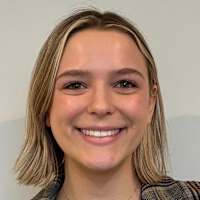
Maria Montserrat AlvaradoMaria Montserrat Alvarado 

Pope Leo XIV appoints lay woman Prefect of Dicastery for Communication

Currently President and COO of EWTN News, Maria Montserrat Alvarado will succeed Paolo Ruffini in November, continuing the path of reform and renewal initiated by Pope Francis.

Vatican News

Pope Leo XIV has appointed Maria Montserrat Alvarado, currently President and Chief Operating Officer of EWTN News, as Prefect of the Dicastery for Communication, effective from 1 November 2026.

Born in Mexico City, Alvarado earned academic degrees from Florida International University and George Washington University. From 2009 to 2023, she held leadership positions at the Becket Fund for Religious Liberty, serving in initiatives dedicated to the defense of religious freedom and the promotion of human dignity.

Since 2023, she has served as President and Chief Operating Officer of EWTN News, the news division of the Eternal Word Television Network, overseeing international media platforms producing content in seven languages across television, radio, print, digital, and social media.

With the appointment of Alvarado, Pope Leo XIV continues the path of reform and renewal of the Roman Curia initiated by Pope Francis, which has seen lay faithful, men and women, entrusted with positions of leadership and responsibility in the service of the universal Church. Alvarado is the first non-religious woman to be appointed prefect of a dicastery of the Holy See.

Established by Pope Francis on 27 June 2015 as part of the reform of the Roman Curia, the Dicastery for Communication oversees the Holy See’s communications systems, including Vatican News, Vatican Radio, L’Osservatore Romano, Vatican Media (photo, audio & video services), the Holy See Press Office, the Vatican publishing house, the Vatican Printing press, and the Filmoteca Vaticana. In addition to the operational and technological functions assigned to it, the Dicastery also deepens and develops the properly theological and pastoral aspects of the Church’s activity in the field of communication. Alvarado will succeed Paolo Ruffini, whom Pope Francis appointed in 2018 as the first lay prefect of a dicastery of the Roman Curia, who will be 70 next October.

In a statement released following the announcement, Alvarado said: “While this appointment was unexpected, I receive it with a sincere desire to serve the Holy Father as he begins his pontificate. And I am grateful to Paolo Ruffini for his leadership throughout the last years and look forward to continuing, in friendship and hope, the important work of strengthening the dicastery so it may continue to serve the Church in Rome and everywhere to communicate Christ to the world.”

Ruffini sent a letter to the staff of the Dicastery for Communication and stated: “The Dicastery has embedded in its very DNA the duty to remain constantly attuned to the rapidly changing world of communication. From the moment we were born as an institution, our guiding star has been and remains this: never to stop, to pass the baton while continuing to run, to be present in the here and now, in this very hour, as the touchstone of a communication that is the instrument of a communion that grows over time. I have entered the final lap of the race, before the moment when—in the long journey that is our working life—having reached the age of 70, the age set for retirement, I will pass the baton to Montserrat Alvarado as the next prefect. We know each other well. And in the coming months, we will work closely together, in the spirit of communion that unites us in the Church”.

“I am grateful to the big family of Dicastery – he added - for the journey we have taken together over these eight years. We are beginning now the process over the coming months for a smooth transition in order to help the Dicastery continue to grow in service to the Holy Father and in its mission of serving in a spirit of unity and openness.”

Michael P. Warsaw, Chairman of the Board and Chief Executive Officer of EWTN, said Alvarado had earned “the trust and respect of everyone privileged to work alongside her” during her years with the network. He added: “We offer her our prayers, our encouragement, and the full support of the EWTN family as she begins this important mission in service to Pope Leo XIV and his pontificate.”

Thursday, April 23, 2026

EWTN has this story on the Justice Department v Southern Poverty Law Center


Southern Poverty Law Center indicted for fraudulently paying informants inside extremist groups

The Southern Poverty Law Center labeled some traditionalist Catholic groups as hate groups over views related to gender, sexuality, and marriage. No Catholic groups were mentioned in the indictment.


A gavel rests atop a pile of hundred-dollar bills. | Credit: RomanR/Shutterstock


Tessa Gervasini

The U.S. Department of Justice has charged the Southern Poverty Law Center (SPLC), a civil rights group that has classified certain Catholic organizations as hate groups, with multiple fraud charges for alleged use of paid informants to monitor racist organizations.

SPLC, an organization that reports it fights “white supremacy and various forms of injustice,” faces charges including 11 counts of wire fraud, false statements to a federally insured bank, and conspiracy to commit concealment money laundering. SPLC did not immediately respond to a request for comment.

While there has been overlap with Catholic advocacy over the years on social and economic justice issues such as racial justice and advocacy concerning conditions in immigration detention centers, the SPLC has also taken positions that many Catholic institutions strongly dispute. SPLC has labeled some Catholic organizations as “hate groups.”

The U.S. attorney for the middle district of Alabama issued the April 21 indictment. The FBI and the Internal Revenue Service investigated.

“The SPLC allegedly engaged in a massive fraud operation to deceive their donors, enrich themselves, and hide their deceptive operations from the public," Federal Bureau of Investigation (FBI) Director Kash Patel said.

While "vowing to dismantle violent extremist groups," SPLC "actually turned around and paid the leaders of these very extremist groups,” Patel said.

According to the indictment, in the 1980s the SPLC began operating a network of individuals who were associated with, or who infiltrated, violent extremist groups at the SPLC’s direction. Donors were unaware that donations were funding the organizers of the same racist and extremist groups that the SPLC reported it was denouncing.

Prosecutors said that between 2014 and 2023, the SPLC funneled more than $3 million in donated funds to individuals associated with various extremist groups including the Ku Klux Klan, Aryan Nations, National Socialist Party of America (American Nazi Party), and United Klans of America. No Catholic groups were mentioned in the indictment.

According to the indictment, the scheme was intended to obtain money via donations through materially false representations and omissions about what the funds would be used for.

In order to pay the individuals, the SPLC allegedly opened bank accounts connected to a series of fake entities such as “Fox Photography” and “Rare Books Warehouse” that were used to send money from donors to informants. The SPLC then made a series of false statements related to the operation of the accounts, the indictment alleges.

“The SPLC is manufacturing racism to justify its existence,” said acting Attorney General Todd Blanche when announcing the indictment. “Using donor money to allegedly profit off Klansmen cannot go unchecked.”

U.S. Attorney Kevin Davidson said this "kind of deception undermines public trust and social cohesion.”

Patel added that it is an “ongoing investigation against all individuals involved.” The DOJ reported a conviction will result in the forfeiture of financial gains from the alleged illegal activities.

Labeling Catholics and Christian groups

In recent years, SPLC has been accused of unfairly labeling Christian organizations as “radical.”

In July 2025, the House Judiciary Committee found documents that revealed the FBI “put more federal law-enforcement resources into surveilling Catholics than previously known.”

The committee’s report found that several internal FBI documents used the terms “radical traditionalist catholic” or “Radical-Traditionalist Catholic” between 2009 and 2023. An FBI internal database contained at least 13 documents that used these terms that all cited the SPLC.

Also, in 2021, critics of SPLC said the organization had become extreme after it released its 2020 “census of hate groups,” which included numerous pro-life and family organizations such as the Ruth Institute.

After being classified by SPLC as a hate group, a spokesperson for the Ruth Institute said, “our credit card processing company dropped us. Businesses refused to work with us. People scattered, thinking we were radioactive.”

“What the Southern Poverty Law Center did to us was a mere inconvenience in comparison to the harm they have done to our country. The indiscriminate application of the ‘hate’ label, the ratcheting up of rhetoric — all this has contributed to the polarized and toxic atmosphere we now experience,” according to Jennifer Roback Morse, Ruth Institute president.

Along with the Ruth Institute, Christian organizations Alliance Defending Freedom, a legal advocacy organization defending religious liberty, and Family Research Council, a nonprofit promoting family values, were also both designated as “Anti-LGBTQ hate groups" by SPLC for their stances on marriage and family.

Monday, October 21, 2024

Trump tells EWTN he likes the Catholic Church, a lot...


In EWTN interview, Trump claims he likes 'the Catholic Church, a lot'


by Brian Fraga

Staff Reporter


Former U.S. President and 2024 Republican presidential nominee Donald Trump speaks during the 79th annual Alfred E. Smith Memorial Foundation Dinner in New York City Oct. 17, 2024. Just before the dinner, Trump was interviewed by Raymond Arroyo of the Eternal Word Television Network for a segment that aired later that night. (OSV News/Gregory A. Shemitz)


Describing himself as "a longtime supporter" of the Catholic Church, former President Donald Trump cast himself as a champion of religion in a short interview with Raymond Arroyo of the Eternal Word Television Network.

"I also like the Catholic Church, a lot," Trump, clad in a tuxedo, told Arroyo before taking the dais at the 79th Alfred E. Smith Memorial Foundation Dinner on Oct. 17.

During the seven-minute interview, which was broadcast on Arroyo's weekly "World Over" television newsmagazine show, Trump sought to burnish his bona fides with conservative Catholics while attacking Vice President Kamala Harris, his Democratic opponent in the 2024 presidential election.

Referring to Harris as a "Marxist," Trump claimed that Pope Francis was referring to him when the pontiff recently advised U.S. Catholics to vote for the "lesser of two evils" in the upcoming election. The pope said both candidates — Harris supports abortion rights while Trump has called for mass deportations of undocumented migrants — were "against life."

"I think [Francis] wants [Catholics] to vote for me, and I stand for everything that you stand for and that the church stands for," Trump told Arroyo.

Asked by Arroyo what he would say to pro-life supporters who feel he has turned "pro-choice," Trump likened himself to President Ronald Reagan, saying: "Exceptions are very important to me. Life of the mother, rape and incest."

Trump also falsely claimed that "everybody" — liberals, conservatives and legal scholars — wanted the U.S. Supreme Court to overturn Roe v. Wade, the high court's 1973 decision that had declared abortion to be a constitutional right. The court vacated that ruling in its 2022 decision in Dobbs v. Jackson Women's Health Organization.


"Everybody wanted it back in the states where it belongs," said Trump, who in recent months has sought to moderate his position on abortion, even taking to social media to promise women that his administration would be "great for reproductive rights."

If elected, Trump said his administration would give "a serious look" at reinstating the Mexico City Policy, a directive that would ban federal tax dollars from being given to foreign nongovernmental organizations that provide or refer people to abortion services.

Noting that Trump recently referred to himself as "the father of IVF" who has promised governmental funding of in vitro fertilization, Arroyo asked Trump if his administration would have a religious exemption to the "IVF mandate."

"I haven't been asked that but it sounds to me like a pretty good idea," said Trump, who added that "a lot of" Catholics" want IVF, which he described as "a very popular thing." The Catechism of the Catholic Church, in Paragraph 2377, condemns the use of in vitro fertilization as "morally unacceptable."

In other responses to Arroyo's questioning, Trump spoke of the need for border security, claimed that the United States has "an enemy from within," whom he described as people who espouse "radical left programs," and said he had a good record on religious liberty.

Pointing out recent Catholic content on his social media accounts, as well as the rendition of Ave Maria at some of his campaign rallies, Arroyo asked Trump if all that was "telling voters something about your spiritual journey." Trump responded: "No, it's just beautiful to me."

Monday, July 15, 2024

More Catholic reaction to the assassination attempt on President Trump


Catholic Leaders React to Trump Shooting: ‘Our Country Needs God’

‘This is a very, very sad day for our country,’ said EWTN Board Chairman and CEO Michael Warsaw. ‘We need to pray for the former president and all who have been impacted by this incident. We also need to redouble our prayers for our country.’


Republican presidential candidate and former president Donald Trump is rushed offstage by U.S. Secret Service agents after being grazed by a bullet during a rally Saturday in Butler, Pennsylvania. Butler County District Attorney Richard Goldinger said the shooter is dead after injuring Trump, killing at least one audience member and injuring at least another in the shooting. (photo: Anna Moneymaker / Getty Images)


Catholic ecclesial and political leaders across the United States offered their prayers for Donald Trump after an attempted assassination of the former president Saturday evening at a campaign event in Pennsylvania.

Among them was Bishop David Zubik of the Diocese of Pittsburgh, where the shooting took place.

“We are deeply shocked by news reports of the shooting at a political rally for former President Trump right across the street from one of our churches in Butler County,” Zubik said in a statement. 

“We are grateful for the swift actions of the Secret Service and our local first responders,” he added. “Let us join together in prayer for the health and safety of all, for healing and peace, and for an end to this climate of violence in our world. May God guide and protect us all.”

Other U.S. Church leaders echoed concern for the nation as a whole, which already was in the grips of a fever of extraordinary polarization before Saturday’s shocking events.

“Together with my brother bishops, we condemn political violence, and we offer our prayers for President Trump, and those who were killed or injured,” Archbishop Timothy P. Broglio of the Archdiocese for the Military Services, USA, and president of the U.S. Conference of Catholic Bishops (USCCB) said in a statement Saturday night.

“We also pray for our country and for an end to political violence, which is never a solution to political disagreements,” Broglio added. “We ask all people of goodwill to join us in praying for peace in our country. Mary, Mother of God and Patroness of the Americas, pray for us.”

The archbishop of Newark, Cardinal Joseph Tobin, CSSR, also called on the Mary’s intercession. He invited prayers for the recovery of Trump and all victims of the shooting: “May the family of the deceased and wounded find consolation and hope, and may this outrage lead us, as Americans, to denounce all forms of political and gun violence and the rhetoric that incites it.”

Archbishop Gustavo García-Siller, archbishop of San Antonio and a member of the Missionaries of the Holy Spirit, asked for the intercession of Our Lady of Guadalupe, whose basilica in Mexico City he visited on Saturday afternoon.

“Political conflicts cannot and must not lead to violence,” he said in a statement issued from Mexico City. “May Our Lady of Guadalupe, mother of Jesus Christ and our mother, guide us in these difficult times in our country. May we become peacemakers in our homes, our families, our workplaces, and our nation. We need peace in our world.”

Archbishop Nelson J. Pérez of Philadelphia said in a statement posted to Instagram late Saturday night that he was “deeply saddened and dismayed to learn of the shooting.”

“Americans must join in solidarity to condemn today’s act of political violence and violence in all forms. Working together, we can resolve our differences through peaceful dialogue and conquer the sin of hatred,” he said.

Earlier this summer, the USCCB issued a statement on political violence, urging all Christians and people of goodwill to abstain from political violence and instead “pursue what leads to peace and building up one another” through dialogue and seeking justice.

“Today’s events demonstrate the political tension that exists in our nation,” said Bishop Larry Kulick of Greensburg, Pennsylvania, which neighbors Butler County but does not include it.

“Violence can never be a legitimate part of the democratic process,” he said. “I ask all the faithful of the Diocese of Greensburg to join in me in prayer for those who have died, those who mourn their loss, and those who have been injured.”

Kulick added: “My heartfelt prayers go out to all of those who have been affected by this horrific event.”

Bishop Robert Barron of the Diocese of Winona-Rochester, Minnesota, posted to X, formerly known as Twitter, soon after the news of the shooting broke.

“I would like to offer prayers for President Trump and all those who were injured at the rally in Pennsylvania,” he said. “We must turn from the path of violence. May the Lord bless our troubled nation.”

Bishop Walker Nickless of Sioux City, Iowa, called Saturday’s shooting “a tragic day for our country.”

“There is no place for political violence in the United States. The events today demonstrate the great need for prayer — it is a time to pray for peace and pray for an end to violence,” he said.

“We must also pray for those who may have been killed or injured in the event, and their families, and pray for the quick recovery of former President Trump,” he added. “Moving forward, may we show love and respect for one another in this great country.”

Archbishop Paul Coakley of Oklahoma City also offers his prayers for Trump “and those killed, injured, and traumatized Saturday at the rally in Pennsylvania.”

Coakley added: “Let us remember that violence is never the answer to our differences. And may God bless our nation, at this time marked by division.”

Bishop Michael Olson of Fort Worth, Texas, expressed similar sentiments.

“Please pray for President Trump and his family and for the souls and families of those killed in this terrible incident,” he said. “Please pray for peace in our nation.”

Bishop Donald Hying, bishop of Madison, Wisconsin, also offered prayers for Trump and those injured in the shooting, adding: “Our country needs prayer and conversion. Our country needs God.”

Michael Warsaw, board chairman and CEO of EWTN, CNA’s parent organization, released the following statement: “This is a very very sad day for our country. We need to pray for the former president and all who have been impacted by this incident. We also need to redouble our prayers for our country.”

Kevin Roberts, the Catholic president of The Heritage Foundation, said the shooting was “no surprise” given years of bitterly heated rhetorical attacks against Trump.

“Today’s attempted assassination of Donald Trump is something many of us have been worried about,” Roberts said in a statement. 

“When the Radical Left spends years and millions of dollars calling Trump and every conservative ‘threats to democracy,’ it’s no surprise that today’s tragedy would happen,” he said. “We must pray for our country and all our leaders, and for an end to this inflammatory rhetoric of the Left and their media accomplices.”

This story has been updated with additional statements from Catholic leaders.

Friday, July 12, 2024

Knights of Columbus take bold, principled step regarding Rupnik artwork at KC facilities


Knights of Columbus to cover Rupnik art in DC and Connecticut


Knights of Columbus Supreme Knight Patrick Kelly speaks with EWTN News President and COO Montse Alvarado on Thursday, July 11, 2024, regarding the organization's decision to cover mosaics by the accused abuser Father Marko Rupnik in chapels in Washington, D.C., and Connecticut. | Credit: EWTN News

The Knights of Columbus announced Thursday it will cover mosaics by the accused abuser Father Marko Rupnik in Washington, D.C., and Connecticut, a dramatic move that represents the strongest public stand yet by a major Catholic organization regarding the former Jesuit’s embattled art.

The 2.1-million-member lay Catholic fraternal order said July 11 it would use fabric to cover the floor-to-ceiling mosaics in the two chapels of the St. John Paul II National Shrine in Washington and in the chapel at the Knights’ headquarters in New Haven, Connecticut — at least until the completion of a formal Vatican investigation into the Slovenian priest’s alleged abuse.

Patrick Kelly, Supreme Knight of the Knights of Columbus, told EWTN News Thursday the opaque material would be installed “very soon” but gave no firm timetable. The Knights said in a statement released Thursday afternoon that the artwork may later be more permanently hidden with a plaster covering after the Dicastery for the Doctrine of the Faith issues its ruling on Rupnik.

The decision by the Knights to cover the sprawling works, which envelop both spaces, was made at the end of a comprehensive, confidential review process that included consultations with sexual abuse victims and those who minister to them, art historians, pilgrims to the shrine, bishops, and moral theologians.

“The Knights of Columbus have decided to cover these mosaics because our first concern must be for victims of sexual abuse, who have already suffered immensely in the Church, and who may be further injured by the ongoing display of the mosaics at the shrine,” Kelly said in the statement.

“While opinions varied among those consulted,” he said, “there was a strong consensus to prioritize the needs of victims, especially because the allegations are current, unresolved, and horrific.”

Kelly reiterated that point in his interview with EWTN News.

“Our decision process really came down to multiple factors. But the No. 1 factor was compassion for victims,” Kelly said. “We needed to prioritize victims over anything, any material thing. So that was our primary consideration.”

The first segment of Kelly’s interview with EWTN News will air on “EWTN News Nightly” Thursday at 6 p.m. and 9 p.m. ET. Additional comments will air on “EWTN News In Depth” on Friday at 8 p.m. ET.

Once a renowned artist Rupnik, whose mosaics are featured in hundreds of Catholic shrines, churches, and chapels around the world, was expelled from the Jesuits in June 2023.

His expulsion followed a long review of what the society called “highly credible” accusations of serial spiritual, psychological, and sexual abuse of as many as 30 religious sisters by the priest spanning decades. Some women allege Rupnik’s abuse sometimes happened as part of the process of creating his art at the Centro Aletti, an art school he founded in Rome.

The Vatican announced in late October 2023 that Pope Francis had waived the statute of limitations in the Rupnik case, allowing the Dicastery for the Doctrine of the Faith to do a canonical investigation into the abuse allegations.

There has been no further communication from the Vatican about the inquiry, and it is unclear whether Rupnik may still be living in Rome despite having been given priestly faculties in a diocese of his home country of Slovenia last year.

Growing public outcry

What to do with Rupnik’s once widely-praised works, colorful mosaics characterized by grand, flowing figures and large eyes, has proven to be a divisive question in the wake of the numerous allegations against him, which first came to public attention in December 2022.

While some want to await Vatican judgment before dismantling and replacing Rupnik’s works, much of it made in collaboration with other artists of the Centro Aletti — a Rupnik-founded art school and theological center in Rome — the public outcry for the removal of his art has intensified.

The Knights also announced several immediate changes that would be enacted at the shrine in solidarity with abuse victims, including providing educational materials about the mosaics, making clear that their display during the consultation process “was not intended to ignore, deny, or diminish the allegations of abuse.”

Every Mass at the St. John Paul II National Shrine will now also include a prayer of the faithful for victims of sexual abuse, and saints with connections to abuse victims, such as St. Josephine Bakhita, will be specially commemorated.

The group said it became aware of the allegations against Rupnik in December 2022 — and noted that the artist, while under investigation, remains a priest in good standing in the Diocese of Koper, Slovenia. 

“This decision is rooted in a foundational purpose of the Knights of Columbus, which is to protect families, especially women and children, and those who are vulnerable and voiceless,” Kelly said in the July 11 statement.

The St. John Paul II National Shrine is a pastoral initiative of the Knights of Columbus, established in 2011, and designated a national shrine by the U.S. Catholic bishops in 2014.

Rupnik’s mosaics were installed at the shrine in 2015. The Holy Family Chapel at the Knights’ headquarters has featured Rupnik’s art since 2005.

Highlighting the John Paul II shrine’s mission of evangelization, the supreme knight said, “the art we sponsor must therefore serve as a stepping stone — not a stumbling block — to faith in Jesus Christ and his Church.”

Rupnik has not made any statements since the allegations came to light.

An eye on Lourdes

The Knights’ move to conceal the mosaics follows just a week after the bishop of Lourdes, France, said that despite his personal feelings that Rupnik’s artwork at the renowned Marian shrine there should be removed, he has decided to wait to make a final decision due to “strong opposition on the part of some.”

After forming a special commission in May 2023, Bishop Jean-Marc Micas of Tarbes announced July 2 that more time was needed “to discern what should be done” about Rupnik’s mosaics at the Marian apparition site, because his belief that they should be torn down “would not be sufficiently understood” and “would add even more division and violence” at this time.

As a “first step,” the French bishop said he had decided the mosaics will no longer be lit up at night during the shrine’s nightly candlelight rosary processions.

In his interview with EWTN News, Kelly said the Lourdes bishop’s intent to make a decision of some kind this spring galvanized the Knights to act at this time.

In his July 11 statement, Kelly thanked the Lourdes bishop for his “thoughtful decision” and said it “both informed and confirmed us in our own decision-making. Shrines are places of healing, prayer, and reconciliation. They should not cause victims further suffering.”

Emphasizing the importance of discernment based on mission and context, the supreme knight said: “Every situation is different. In the United States, Catholics continue to suffer in a unique way from the revelations of sexual abuse and, at times, from the response of the Church. It is clear to us that, as a national shrine, our decision must respect this country’s special need for healing.”

The Knights of Columbus was founded in New Haven, Connecticut, in 1882 by Blessed Michael McGivney, a parish priest. Dedicated to the advancement of the group’s key principles — charity, unity, fraternity, and patriotism — its members in 2022 provided 50 million service hours and nearly $185 million to charitable causes in their communities.

National Catholic Register Editor-in-Chief Shannon Mullen contributed to this story.

Friday, April 26, 2024

Robert F Kennedy Jr on EWTN discusses Catholic faith, and his campaign to be President


Robert F. Kennedy Jr. talks Catholic faith, abortion, Title IX in exclusive EWTN interview

Robert F. Kennedy Jr. opened up to veteran EWTN News anchorman Raymond Arroyo about his family’s strong faith growing up, how his faith helped him overcome drug addiction and how it impacts him in his day-to-day life in the travails of U.S. presidential politics. | Credit: EWTN News "The World Over with Raymond Arroyo" / Screenshot

Independent presidential candidate Robert F. Kennedy Jr. discussed the importance of his Catholic faith in his daily life, his plan to reduce abortions without federal restrictions, and his opposition to biological males playing in women’s sports during an exclusive interview on “The World Over with Raymond Arroyo” Thursday night.

Kennedy, son of the late Sen. Robert F. Kennedy and nephew of former President John F. Kennedy, is running a vigorous independent campaign to be the next president of the United States. He launched an independent bid for the White House last October after initially challenging incumbent President Joe Biden for the Democratic presidential nomination.

In the interview, the presidential hopeful opened up about his family’s strong faith growing up, how his faith helped him overcome drug addiction, and how it impacts him in his day-to-day life.

“The centerpiece of our lives [growing up] was Catholicism,” Kennedy told Arroyo.

“We said the rosary at least once a day, oftentimes three times a day,” Kennedy said. “We prayed before and after every [meal]. We read the Bible every night. We read the lives of the saints. We went to church, sometimes twice a day. We would go to the 7 o’clock Mass and 8 o’clock Mass in the summers. It was our whole family, and it was really our whole community. It was part of me growing up.”

At age 15, following his father’s assassination, Kennedy expressed that he struggled with his faith. He became addicted to drugs, including heroin, until he was 28 years old.

“During that period of time, I wouldn’t say I lost my faith, but when you’re living against conscience, which you have to do if you’re addicted to drugs, you push God out over the periphery of your horizon,” Kennedy said. “So the concept of God was, although it never was erased from me, it was just a distant concept that was not part of my day-to-day life.”

He credits “a profound spiritual realignment” for his recovery from addiction in early adulthood, which he said has been “the centerpiece of my life ever since.” 

“I had a spiritual awakening very early in my recovery, which I was lucky about because I no longer had to struggle with the compulsion to take drugs,” Kennedy explained. “That was lifted away from me. But you can’t live off the laurels of a spiritual awakening. You have to renew it every day, and you renew it through service to other people.”

He said his faith gives him peace in the midst of the storms of life and cited his favorite saints, specifically St. Francis and St. Augustine.

Reducing abortions without federal restrictions

On the issue of abortion, Kennedy said his family has been divided on the issue and that he does not see himself as a “doctrinaire on either side.”

Kennedy said he disagrees with former President Donald Trump’s plan to leave abortion policies up to the states. Although he acknowledged that “every abortion is a tragedy,” he said decisions “should be up to the mother” and that he does not “trust government officials and bureaucrats” to be involved in the issue.

Rather than implementing restrictions on abortion, Kennedy has proposed a plan to subsidize day care “to make sure that no American mother ever has an abortion of a child that she wants to bring to term because she’s worried about her financial capacity to raise that child.”

“I would like to maximize choice but also minimize the number of abortions that occur every year,” Kennedy said.

The presidential hopeful also said he would not reverse the Biden administration’s approval of expanding access to the abortion pill in stores like CVS and Walgreens. However, he added that “we ought to know what the side effects are, what the risks are, [and] what the benefits [are].”

Opposing biological males in women’s sports

Kennedy said he disagrees with the Biden administration’s recent change to Title IX, which interprets sex discrimination as including discrimination of “gender identity.”

He is opposed to biological males who identify as women being allowed to participate in women’s sports. “I don’t think it’s fair if a boy can walk off a neighboring playing field and say, I’m a girl now, and I’m going to take that spot that you worked for,” the candidate said. “I think we all need to respect people who have sexual differences and protect them, but I don’t believe that people who were born men ought to be able to compete in consequential sports.”

The 2024 presidential election

At this juncture, Kennedy is polling well behind Biden and Trump but has stronger poll numbers than any independent or third-party candidate since Ross Perot in 1992. A compilation of polls from RealClearPolling currently puts him at just under 12%. 

“All we need to do is to get to 33% to win the election,” Kennedy said in the interview. “You don’t need 50%. It’s a three-way race. It’s really a five-way race. All I need is to get to 33%, and I’m close to that in a bunch of states.”

The election is on Tuesday, Nov. 5.