Monday, July 29, 2024

Was it really an apology for the parody of the Last Supper?


Paris Olympic Committee makes soft apology for Last Supper drag parody

Elise Ann Allen


Drag queen Piche prepares to perform at the Debilly Bridge in Paris during the opening ceremony of the 2024 Summer Olympics, Friday, July 26, 2024. (Credit: Tsvangirayi Mukwazhi/AP.)

ROME – Representatives of the Paris 2024 Olympics Committee have apologized to anyone offended by a drag parody of the Last Supper during the opening ceremony, insisting that their intention was to foster inclusion and celebrate diversity.

Paris 2024 spokesperson Anne Descamps was asked about the outcry during an International Olympic Committee news conference Sunday, saying in response, “Clearly there was never an intention to show disrespect to any religious group.”

“On the contrary, I think (with) Thomas Jolly, we really did try to celebrate community tolerance,” she said, adding, “Looking at the result of the polls that we shared, we believe that this ambition was achieved. If people have taken any offense we are, of course, really, really sorry.”

Thomas Jolly, the ceremony’s artistic director, in his own remarks to the Associated Press about the event said it was meant to celebrate diversity and pay tribute to feasting and French gastronomy.

“My wish isn’t to be subversive, nor to mock or to shock,” he said, saying, “Most of all, I wanted to send a message of love, a message of inclusion and not at all to divide.”

The apology was made in response to a wave of backlash from Catholics, members of other Christian communities, atheists, and members of other faith groups to the July 26 opening ceremony for the Paris Olympics, which featured a group of scantily clad men in drag dancing provocatively while parodying the Last Supper.

At one point, the genitalia of a man wearing short black hotpants was exposed while a little girl stood in front of him, in front of what was supposed to be the table.

Catholic leaders from around the world, including the French bishops conference and two Vatican officials, condemned the incident, with at least one, Archbishop Charles Scicluna of Malta and adjunct secretary of the Vatican’s Dicastery for the Doctrine of the Faith, making a formal complaint to the French ambassador to Malta, encouraging others to do the same.

Some commentators in the wake of the controversy, including Jolly, have claimed that the performance was evocative of the feast of Dionysus, rather than the Last Supper, as a nod to the Greek roots of the Olympic games.

However, the artists who participated in the parody have confirmed in online social media posts and in comments to the press that the performance was, in fact, intended to imitate Leonardo da Vinci’s famed painting of the Last Supper.

Franch drag queen and rapper Piche from the show Drag Race France spoke to French media, saying the intention was to create a tableau of the Last Supper in the pouring rain.

“I received a lot of messages of support and people who were very happy that I was there and very surprised that there were drag queens at the opening ceremony,” he said, saying the opposition to the performance indicates that “we’ve succeeded and we’ve done what had to be done, that we’ve been fair and representative.”

“Art always divides. As long as it doesn’t move people, it’s not art for me,” he said, saying the depiction of the Last Supper “is not a provocation. It’s a biblical representation that has been reused in pop culture for decades and it’s never really been a problem.”

“There were no real provocations or anything that was truly obscene. We didn’t make fun of the painting at all … it’s really just because it’s queers and drag queens who use that representation that it bothers,” he said.

Similarly, Barbara Butch, a lesbian who donned a silver headdress and low-cut dress while portraying the figure of Jesus in the Last Supper parody, said the opening ceremony was intended to bring people together.

According to her Instagram profile, Butch is “a Love activist, Dj and producer based in Paris. My aim is to unite people, gather humans & share love through music for all of Us to dance & make our hearts beat (in unison)! Music sounds better with all of Us!”

Butch posted an image of the drag parody of the Last Supper above an image of Da Vinci’s original painting to her Instagram account with the comment, “Oh yes! Oh yes! The new gay testament!” The post was subsequently deleted.

Despite the Olympic Committee’s apology, many Catholic leaders and commentators have said it does not go far enough and fails to make amends for the offense give to the world’s 2.6 billion Christians.

In a July 28 video published on social media platform X, previously known as Twitter, Bishop Robert Barron of Winona-Rochester, Minnesota, founder of the popular Word on Fire ministry which is a benefactor of Crux, criticized the apology.

Barron, who had previously published a video condemning the Last Supper parody, said Descamps’ words were “anything but an apology.”

“In fact, it’s kind of a masterpiece of woke duplicity … If they felt this is meant to mollify Christians, I would think again,” he said.

Pointing to Descamps’s assertion that they did not intend to offend any religious group, Barron said, “Give me a break.”

“We have a group of drag queens cavorting in a sexually provocative way clearly in imitation of Da Vinci’s Last Supper, which presents to the world the Last Supper of Jesus, and no disrespect was meant? Do you think anyone takes that seriously?” he said.

He also took issue with the statement that the intention was to celebrate community and tolerance, saying there is tolerance “except for those pesky 2.6 billion Christians on the planet.”

“Everyone’s welcome, everyone’s tolerated, all this lovely diversity, until you get to anyone that disagrees with your ideology, like these 2.6 billion people. So don’t give me this business about tolerance and diversity,” he said.

Referring to Descamps’s statement that their goal of celebrating tolerance was achieved, Barron asked rhetorically, “I wonder what planet they’re living on if they think that harmony and peace and all this was achieved by this clear affront to Christians.”

Barron also condemned the wording of the apology as condescending, saying the tone does not read apologetic, but rather says, “if you’re so simple minded and stupid to have been offended by this wonderful expression of French culture, well, we’re sorry about that.”

“Christians were offended because it was offensive. And it was intended to be offensive. So please don’t patronize us with this condescending remark of, ‘well, if you had any bad feelings, we’re awfully sorry about that,’” he said.

This apology will do little to satisfy Christians who were offended by the performance, he said, saying, “A real apology would be something like, ‘this was a mistake, it should never have been done, we’re sorry for it.’”

“I don’t think Christians should be mollified, I think we should keep raising our voices,” he said.

Similarly, the German Bishops’ Conference published a statement Monday saying the argument by organizers that the scene was intended to depict Greek mythology “is not convincing,” as the sequence parodying the Last Supper “was shown around 45 minutes before the mythological scene,” in which a man dressed in a revealing blue jumpsuit appeared from a serving tray as Dionisius.

“It creates associations with the famous painting by Leonardo da Vinci, which shows Jesus Christ surrounded by his disciples. This obvious interpretation is supported by statements from the participating artists,” the German bishops said.

While they reiterated their respect for artistic freedom and creativity, the bishops voiced their belief that “critical comments are appropriate and necessary when the representations touch on central elements of our faith and other religions and the religious sensibilities of believers are seriously violated.”

“In the weeks ahead, we hope for events in the spirit of fair competition and peaceful understanding between peoples and cultures. From now on, the focus should be on sport and the athletes whose achievements are the very essence of the Olympic Games,” they said.

Disbelief continues over the mocking of the Last Supper at the 2024 Summer Olympics


Paris Olympics opening ceremony denounced by bishops and Catholics globally for mocking Christianity


Caroline De Sury — OSV News


PARIS (OSV News) — The opening ceremony of the Paris Olympic Games—a sports festival aimed to unite all nations of the world—created shock and disbelief instead as Catholics around the world felt offended by the parody of the Last Supper, which was part of the opening ceremony.

The four-hour spectacle July 26 started with a parade of athletes down the Seine River, accompanied by music and dancing scenes on top French monuments.

Notre Dame Cathedral, still under construction prior to its Dec. 8 opening, was also featured with an extensive dance segment paying tribute to the construction workers who are rebuilding the icon of Paris following a 2019 fire. Dancers appeared to do aerial work on the scaffolding. The bells of the cathedral rang for the first time since the 2019 fire that nearly destroyed the building.

However as the show progressed, television cameras showed drag queens, one of whom wore a crown, seated at a table. The shape of the crown brought to mind a monstrance.

The scene was immediately interpreted as a parody of Leonardo da Vinci’s iconic wall painting in Milan’s Dominican convent of the Last Supper.

The drag queen table scene was later complemented with a nude singer appearing in the middle of a fruit basket, to represent Dionysus, ancient Greece’s God of wine, with the Olympic Games official profile on X, formerly Twitter saying the depiction made us “aware of the absurdity of violence between human beings.”

The French bishops issued a statement July 27 deploring the scenes at the opening of the Olympic Games.

While the ceremony was a “marvelous display of beauty and joy, rich in emotion and universally acclaimed,” they said, it “unfortunately included scenes of mockery and derision of Christianity, which we deeply regret.” “We would like to thank the members of other religious denominations who have expressed their solidarity with us,” the French bishops wrote.

“We are thinking of all the Christians on every continent who have been hurt by the outrageousness and provocation of certain scenes. We want them to understand that the Olympic celebration goes far beyond the ideological biases of a few artists,” the bishops stressed.

For the bishops, the values disseminated by sport and Olympism must contribute to the “need for unity and fraternity that our world so desperately needs, while respecting everyone’s convictions, around the sport that brings us together.”

Bishop Emmanuel Gobilliard of Digne, the special representative of the Holy See for the 2024 Paris Olympics, said that he “did not watch the whole opening ceremony,” as he was praying. “It is my priority as a priest,” he told OSV News, adding he saw part of the ceremony and “found it very beautiful with the athletes (and) the Olympic flame.”

He told OSV News however that on the morning following the ceremony, when he saw the images of the controversial scene massively shared on social media, he was “deeply hurt.”

“What shocked me most is that the freedom of spirit and tone claimed by those who set this up shouldn’t be directed against others,” Bishop Gobilliard said. “You can make fun of your own ideas, laugh at yourself, why not. But to mock the faith and religion of others in this way … is very shocking. That was my first reaction.”

He further stressed that the Olympic Games are the last place to create such divisions.

“Why there?” Bishop Gobilliard asked in a conversation with OSV News. “It is contrary to the Olympic Charter, to the dimension of unity that is present in its values, to the idea of bringing everyone together, without political and religious demonstrations. Why exclude believers and Christians? It was the last place to do that. We were to respect the spirit of the Olympic Charter. We are out of it now.”

The Olympic Charter is the codification of the fundamental principles of Olympism, and the rules and bylaws adopted by the International Olympic Committee. One of its opening points says, “The goal of Olympism is to place sport at the service of the harmonious development of humankind, with a view to promoting a peaceful society concerned with the preservation of human dignity.”

Bishop Gobilliard said that “all the Christians who watched it suffered this derision,” adding that “many Christian athletes suffered it, the IOC and its president, Thomas Bach. I don’t think he knew about it.”

The parody of the Last Supper was not the only ambiguous symbol at the opening ceremony. What also stirred controversy was a horsewoman dressed in armor, perched on a metal horse and galloping down the Seine with the Olympic flag—a scene in which some recognized St. Joan of Arc, the holy warrior who fought the English in the 15th century. But according to the organizers, it represented Sequana, the Celtic divinity who inhabited the Seine, and a symbol of resistance. Another controversial scene depicted a singer impersonating the decapitated body of Queen Marie Antoinette.

One week after “we all united around Our Eucharistic Lord” at the National Eucharistic Congress in Indianapolis, the da Vinci masterpiece “was depicted in heinous fashion, leaving us in such shock, sorrow and righteous anger that words cannot describe it,” said Bishop Andrew H. Cozzens of Crookston, Minnesota, chairman of the board of the National Eucharistic Congress Inc.

“We believe that the Last Supper is united with the death of Christ on the Cross and, together with the Resurrection, these events are all one in the Paschal Mystery,” he said in a July 27 statement. “This passover, which begins at the Last Supper, is the most sacred moment in the life of Jesus.”

He called the faithful “to greater prayer and fasting in reparation for this sin,” and urged them in discussing the Last Supper depiction to do so “with love and charity, but also with firmness.”

Bishop Robert E. Barron of Winona-Rochester, Minnesota, went to social media July 27 to express his outrage over what he saw at the opening ceremony. He said after coming back home from the National Eucharistic Congress, in the city he said he loves—Paris—he saw “this gross mockery of the Last Supper.”

Bishop Barron said that France, called the eldest daughter of the church, and Paris, the city of saints, “felt evidently … the right thing to do is to mock this very central moment in Christianity where Jesus in his Last Supper gives his body and blood in anticipation of the cross.”

“Would they ever dare mock Islam in a similar way?” Bishop Barron asked, saying, “We all know the answer to that.” Bishop Barron stressed that in this “deeply secularist, post-modern society,” Christians should “resist” and “make our voices heard.”

Bishop Donald J. Hying of Madison, Wisconsin, encouraged in a post on X that “In reparation for the blasphemy in Paris, let’s fast and pray, renew our devotion to the Eucharist, the Sacred Heart and the Virgin Mary.”

Bishop Daniel E. Flores of Brownsville, Texas, posted on X July 27 that his “vocabulary is not varied enough to find a word for the feeling in the pit of my stomach.”

He said he hasn’t “watched the Olympics in decades” and that “the agendas just use the athletes; they deserve more respect. So do people of Christian Faith.”

Politicians were also disgusted by the scene, with Catholic French member of European Parliament Marion Maréchale going on X to say: “To all the Christians of the world who are watching” the Paris ceremony and “felt insulted by this drag queen parody of the Last Supper, know that it is not France that is speaking but a left-wing minority ready for any provocation.”

United Kingdom’s Christian groups Voice for Justice U.K. and She leads U.K. united to call for an immediate apology “outraged at Drag queen parody of the Last Supper,” they said in a July 27 statement.

“This is not acceptable. Yet again, the word ‘inclusive’ is used to justify behavior that is overtly exclusive. Such mockery is a deliberate attack on the person of Jesus Christ and a direct challenge to the faith that underpins, and lies at the heart of, Western society,” the joint statement said.

One scene of the ceremony, however, drew unanimous praise: the surprise concert by Céline Dion. Overcoming her illness, stiff person syndrome, she paid tribute to the French singer Edith Piaf, who died in 1963, by performing her “Hymne à l’amour” from the second floor of the Eiffel Tower.

“It was magnificent,” Bishop Gobilliard said. As he spoke to OSV News July 27, he was on his way to “Club France,” the headquarters of all French athletes in the northeast of Paris.

“We are now going to live the Olympic Games with enthusiasm despite all this!” he said, referring once again to the controversial scene. It “could have been a beautiful evening of unity, fraternity and communion between us,” the bishop said, adding that one “scene spoiled it all.”

Paris skies were illuminated by the Olympic cauldron that made a first flight at the Paris Games July 26. It is attached to a balloon and will fly more than 197 feet above the Tuileries gardens from sunset each evening until 2 a.m. Organizers say it is the first Olympic flame in history to be lit without the use of fossil fuels.

Sunday, July 28, 2024

A feast day celebration of a brother and two sisters; all friends of Jesus


Ordinary Time: July 29th

Memorial of Saints Martha, Mary and Lazarus


facebook sharing button Share
twitter sharing button Tweet
linkedin sharing button Share
pinterest sharing button Pin
email sharing button Email
sharethis sharing button

MASS READINGS

July 29, 2021 (Readings on USCCB website)

COLLECT PRAYER

Grant, we pray, almighty God, that the example of your Saints may spur us on to a better life, so that we, who celebrate the memory of Saints Martha, Mary and Lazarus, may also imitate without ceasing their deeds. Through our Lord Jesus Christ, your Son, who lives and reigns with you in the unity of the Holy Spirit, God, for ever and ever.

show

RECIPES (6)

show

ACTIVITIES (5)

show

PRAYERS (2)

LIBRARY (0)

show

BLOG & PODCASTS (2)


In the household of Bethany the Lord Jesus experienced the family spirit and friendship of Martha, Mary and Lazarus, and for this reason the Gospel of John states that he loved them. Martha generously offered him hospitality, Mary listened attentively to his words and Lazarus promptly emerged from the tomb at the command of the One who humiliated death.

The traditional uncertainty of the Latin Church about the identity of Mary--the Magdalene to whom Christ appeared after his resurrection, the sister of Martha, the sinner whose sins the Lord had forgiven--which resulted in the inclusion of Martha alone on 29 July in the Roman Calendar, has been resolved in recent studies and times, as attested by the current Roman Martyrology, which also commemorates Mary and Lazarus on that day. Moreover, in some particular calendars the three siblings are already celebrated together.

Therefore, the Supreme Pontiff Pope Francis, considering the important evangelical witness they offered in welcoming the Lord Jesus into their home, in listening to him attentively, in believing that he is the resurrection and the life, and accepting the proposal of this Dicastery, has decreed that 29 July be designated in the General Roman Calendar as the Memorial of Saints Martha, Mary and Lazarus. This feast is celebrated today both in the Ordinary Form and Extraordinary Form of the Roman Rite. Currently (2021) there is an interim Mass formulary at this time. The Entrance and Communion Antiphons from the Memorial of St. Martha found in the Proper of Saints have not been altered, but the Collect, Prayer over the Offerings, and Prayer after Communion have been newly-composed or otherwise adjusted.

According to the 1962 Missal of St. John XXIII the Extraordinary Form of the Roman Rite, today is the feast of Sts. Felix, Simplicius, Faustinus & Beatrice. Pope Felix II was martyred in Tuscany, Italy, in the fourth century. The brothers Simplicius and Faustinus and their sister, Beatrice, gave their lives for Christ at Rome, A.D. 303.


St. Martha, Mary and Lazarus

St. Martha
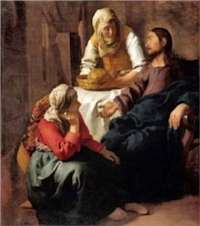
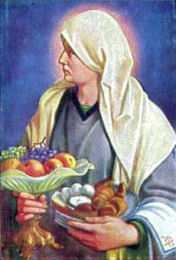
Martha was active, enterprising, careful, and given to exterior things. Our Lord, Who loved her, says Saint John, does not, in the Gospel blame her for what she did for Him; He teaches her to place those things which directly regard God and eternity above exterior works, and even in active labors, whether of obligation or of superogation, to avoid anxiety, precipitation and undertaking too much. These things would be detrimental both to interior piety and the good works themselves. Hence these words of Jesus which concern all souls, and will profit them until the end of time: “One thing only is necessary.” Martha, like a wise and prudent virgin, profited by the Divine lesson; peace grew in her soul without lessening her zeal. Exiled from Judea, thrust on board ship and miraculously guided to Provence, she was until the end, a model of the active life, as Mary was of the contemplative. Tarascon was especially privileged to behold and admire her virtues. Saint Maximin, Bishop of Aix, a disciple of Our Lord, came to see and console her at the hour of death, and received her last farewell for her beloved sister Mary. Numerous confraternities and different religious congregations have risen up under the patronage of Saint Martha, especially those following the mixed life (First Century).

—Adapted from Saints and Saintly Dominicans, by Blessed Hyacinthe-Marie Cormier, O.P.

Symbols and Representation: broom (referring to being a home maker); dragon; keys (referring to keeping the home); with a holy water sprinkler or holy water pot; ladle (reference to her home-making, cooking, etc.)


St. Lazarus
The account of Lazarus being raised from the dead by Jesus, led to his widespread veneration in Jerusalem, which was witnessed by the Spanish pilgrim Egeria in 390.

Nothing more is written about him in the New Testament. According to tradition however, the Jews of Jaffa placed Lazarus and his sisters in a leaky boat in which they somehow sailed safely to Cyprus. He said to have become a bishop on the island and died there peacefully 30 years later.

Another legend tells how he was placed in a boat which did not have oars or a rudder. Nevertheless, together with his sisters, he landed safely in Gaul. That story claims he was martyred under Domitian and buried in a cave under the Abbey church in Marseilles.

Tradition says Lazarus became a missionary to Gaul, the first bishop of Marseilles, France, and a martyr in the persecutions of Domitian.

The Order of Lazarists founded by St Vincent de Paul took its name from the church in Paris dedicated to Saint Lazare.

Chichester Cathedral has an 11th century sculpture depicting the Raising of Lazarus.
—Excerpted from Independent Catholic News

Symbols and Representation: Sometimes vested as an apostle, sometimes as a bishop. In the scene of his resurrection, he is portrayed tightly bound in mummified clothes, which resemble swaddling bands.


St. Mary of Bethany
The great and holy myrrh-bearer Mary of Bethany is one of the women disciples of Jesus. She and her sister Martha are celebrated as saints on their shared feast day of June 4. They are also commemerated on the Third Sunday of Pascha or Sunday of Myrrh-bearing Women. Martha and Mary were believers in Christ even before Jesus Christ raised their brother St. Lazarus (October 17) from the dead. After the Ascension of our Lord and Savior Jesus Christ and the murder of the holy Archdeacon Stephen a persecution against the Church of Jerusalem broke out, and Righteous Lazarus was cast out of Jerusalem. The holy sisters then assisted their brother in the proclaiming of the Gospel in various lands. They reposed in Cyprus, where their brother became the first Bishop of Kition after his resurrection from the dead. We do not know how they died.

Keeping the various Marys of the Bible straight can be a challenge. For centuries, St. Mary of Bethany was considered by many to be the same as Mary Magdalene. Deeper study and consideration have prompted most now to consider them to be two separate women.

Mary of Bethany was the sister of Martha and Lazarus of the town of Bethany, just a few miles away from Jerusalem. At some point, Jesus had developed a special friendship with these three siblings and had gone to their house for a visit. During the visit, Mary became engrossed in all Jesus had to say. She sat at his feet, listening attentively, apparently oblivious to her sister, Martha, who scurried about with serving duties. The frustrated Martha complained to Jesus that Mary was not being helpful. Profoundly, Jesus replied that it was Mary who had made the better choice — that spiritual matters have a much higher priority than household chores.

Later on, Mary’s brother Lazarus became deathly ill. Mary and her sister sent word to Jesus to let him know of Lazarus’s condition, hoping for a visit. Jesus did go to Bethany; however, he delayed the visit by two days, and by the time he arrived, Mary’s brother had been dead for four days.

When Mary saw Jesus, she sorrowfully spoke of her disappointment, claiming that if he had been there, Lazarus could have been saved. Jesus then stunned Mary and her sister by going to the dead body of Lazarus, praying fervently to God, and then commanding the deceased man to rise. Mary’s confidence in Jesus surely soared as she witnessed her brother return to the living — still wrapped in his burial cloths!

According to the Gospel of John, not long after Lazarus was raised from the dead, Jesus was again in Bethany. This time, Mary anointed Jesus’s feet with oil and then dried them with her hair. The Gospels of Matthew and Mark present similar stories, which many sources consider to be based on the same incident. However, the sinful woman in Luke’s seventh chapter who bathed Jesus’ feet with tears is considered to be a different person.
—Excerpted from Saints, Feast, Family

Pope Francis adds Ethiopia to his list of prayers; marks World Day for Grandparents, elderly


Aftermath of the landslide following heavy rains that buried people in Gofa zoneAftermath of the landslide following heavy rains that buried people in Gofa zone 

Pope prays for victims of Ethiopia landslides, recalls war always a defeat

Pope Francis prayers for victims of the landslides in Ethiopia. He laments that while calamities and hunger continue worldwide, the manufacture and sale of weapons fuel wars and human suffering. He also recalls today's World Day for Grandparents and the Elderly, appealing to all to always remember and assist them.

Vatican News

Speaking at the conclusion of the Sunday Angelus, Pope Francis offered his prayers for the victims of the large landslide that swept through a village in southern Ethiopia. He said he is close to the suffering people and to those rescue workers providing assistance. The death toll of 257 victims continues to rise following the two devastating landslides in Gofa Zone, Southern Ethiopia, while the population affected is in desperate need of humanitarian aid. The first landslide in the remote mountainous locality of Kencho Shacha Gozdi was triggered by heavy rains on 21 and 22 July, and the second engulfed those who had gathered to rescue people.

War always a defeat

The Pope pointed out how so many people in the world are suffering from calamities and hunger, yet the manufacture and sale of weapons continues, fueling wars large and small and consuming global resources. He called it a "scandal" the international community should not tolerate, as well as a contradiction to the the spirit of fraternity characterizing the Olympic Games that just opened in Paris. He underscored that "war is a defeat" for humanity. 

Remembering grandparents and the elderly

The Pope then recalled that Sunday, July 28 this year marks the World Day for Grandparents and the Elderly, that has as its theme "Do not cast me off in my old age" from the Book of Psalms. He decried how the abandonment of the elderly is a sad reality that must be addressed, especially during the summer when loneliness often becomes a heavy burden to bear. 

He asked everyone to hear the voice of the elderly who say: ‘Don't abandon me!’ and to answer them ‘I will not abandon you!’ He also encouraged a strengthening of the alliance between grandchildren and grandparents, young and old, adding that we all say ‘no’ to the loneliness of the elderly, as our future also depends on how grandparents and grandchildren learn to live together. In conclusion he asked everyone to remember the elderly always and give a round of applause to all grandparents.