Friday, September 2, 2022

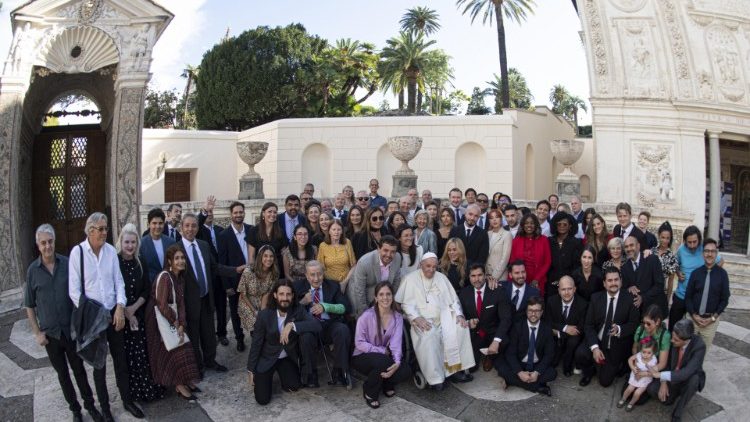
American actress Patricia Heaton meets Pope


Pope Francis meets artists of VITAE SummitPope Francis meets artists of VITAE Summit  (ANSA)

Catholic actress Patricia Heaton discusses her faith and time with Pope

American actress Patricia Heaton, famous for her roles in film and television - including her Emmy-award-winning turn in the American sitcom "Everybody Loves Raymond" - speaks with Vatican News about her Catholic faith, meeting with Pope Francis at the recent VITAE Summit in the Vatican, and being a Catholic actress in Hollywood.

By Deborah Castellano Lubov

American actress Patricia Heaton is grateful to Pope Francis for encouraging their work and feels empowered to continue living out her day-to-day Hollywood endeavours with authentic Catholic values.

These were some takeaways expressed to Vatican News by the actress, who had participated in the two-day Vitae Summit in the Vatican's Casina Pio IV on Thursday.


Very Catholic family

“My sister is a Dominican nun. My grandparents met Pope John Paul I. My mom was one of 15 children. I have some 100 first cousins on my mom's side. So, we're a very Catholic family. Meeting the Pope is such an incredible honor that I never thought I would have.”

She described her time with the Holy Father as incredibly special.

Asked whether she finds it challenging to be a Catholic actor in Hollywood, Ms. Heaton said, “God has been very gracious to me", noting she never had to to be "morally compromised" in her shows.

Being a Catholic in Hollywood

“As much as people want to paint Hollywood as a sort of anti-religious place, I have found that going into work, we're all there to do a job. We're all there to be professional. We all respect each other. We share opinions, different opinions. And because we love each other and we have a common goal of creating something wonderful for people to enjoy, the differences in our religion or politics or whatever, in my experience on a set, have not been a problem.”

“I've always felt that I've been able to be open about who I am and what I believe.”

Reflecting on her time in the Vatican, she recalled the privilege of having a private tour of the Sistine Chapel, and being constantly surrounded by beauty within the Vatican walls.

She was particularly moved by her and the other actors’ time with the Pope on Thursday afternoon.

Bringing message of God's love for all

“Pope Francis talked about bringing beauty and truth to the world. And we are privileged to be creators, as God is Creator and has gifted us, in a small way, for each of us to be able to hopefully bring some truth and beauty to the world, to a world which is very divided right now, a world that is filled with trouble and poverty and war.”

“We need this message of God's love for all of us, of His beauty and His truth and the love that Christ has for all of us. We need that even more.”

She suggested how worthwhile it is to have Pope Francis acknowledge that, to be all together in the room, encourage each other, and make those connections.

“Hopefully, out of this," she said, “we will be creating shows and music and art that will lift people up and open their hearts to the belief that God cares about them.”

Christ does the work

Ms. Heaton concluded by expressing how she entrusts her work to Christ.

“And that at the end of the day, as Christ said, 'It is finished.' He's done the work. We are going toward victory. We just have to get through these battles and we can do it together.”

Pope Francis urges all Christians to work for unity and reconciliation


Christian unity is at the heart of the Pope's Message to the World Council of ChurchesChristian unity is at the heart of the Pope's Message to the World Council of Churches 

Pope to WCC: Christian mission is to bring reconciliation to world

In a message to the 11th Assembly of the World Council of Churches, Pope Francis calls on all Christians to work for unity and reconciliation among themselves, in order to bring God’s reconciliation to a world still plagued by division and conflict.

By Christopher Wells

“Our mission as Christians is to bring the fulfilment of this reconciliation to the world, with the Church being the instrument and visible sign of the unity to which God calls all people,” says Pope Francis in his Message to the 11th Assembly of the World Christian of Churches.

The Pope’s message was read by Cardinal Kurt Koch, the Prefect for the Dicastery for Promoting Christian Unity, who is leading the Catholic delegation to the meeting.

The Holy Father notes in his message that the Catholic Church has been sending observers to the Assemblies since 1901, and says the presence of the delegation at this Assembly is a sign of the “strong relationship” between the Church and the WCC.

A timely invitation

In his message, Pope Francis focuses on the theme of the Assembly — “Christ’s love moves the world to reconciliation and unity” — which he calls “a timely invitation” for Christians to work for even greater unity among themselves, and to foster reconciliation around the world.

He emphasizes that the “search for reconciliation and unity has, above all, a vertical dimension,” recalling that it is ultimately directed to God, who has reconciled humanity to Himself through Christ.”

At the same time, he warns of the “perennial temptation to accommodate the evangelical message to worldly ways of thinking,” and reminds Christians that they can bear convincing witness to reconciliation only if they are faithful to the Lord.

Ecumenism and mission belong together

This also requires a commitment among Christians to work for unity among themselves: “Reconciliation among Christian is the fundamental prerequisite for the credible mission of the Church,” he says, adding, “Ecumenism and mission belong together and are interrelated.”

Pope Francis concludes his message with the hope that the “reconciled diversity” of the Assembly of the WCC might strengthen and deepen communion among all, so that Christian unity may be an ever more radiant sign of hope and comfort for humanity."

And he prays that the Assembly might “bring the world closer to reconciliation and unity, with the power and light of the Holy Spirit.”

Thursday, September 1, 2022

Friday Saints of the Day


Martyrs of September


A group of 190 martyrs who were massacred on September 2 and 3, during the French Revolution. The most prominent martyrs of this group were John Mary du Lau, the archbishop of ArIes; Francis de la Rochefoucauld, bishop of Beauvais; Louis de la Rochefoucauld, bishop of Saintes; Benedictine Augustine Chevreux, last su­perior general of the Maurists; Charles de la Calmette, the count of Valfons; Julian Massey: Louis de la Touche; and Carmes. One hundred twenty were martyred at the Carmelite Church on the rue de Rennes in Paris. They were all beatified in 1926.

September Devotion: Our Lady of Sorrows/ The 7 Sorrows of Mary

Devotion for September: The Seven Sorrows of the Blessed Virgin Mary

Devotion for September:
The Seven Sorrows of the Blessed Virgin Mary

The Seven Sorrows of
the Blessed Virgin Mary

1. The prophecy of Simeon
2. The Flight to Egypt
3. Loss of Child Jesus for 3 days
4. Meeting Jesus carrying His Cross
5. The Crucifixion of Jesus
6. The Pieta – receiving Jesus’ Body
7. The Burial of Jesus

Each month of the liturgical year is devoted to a particular Catholic tradition, usually centered on a Feast during that month. As August is the Month of the Immaculate Heart of Mary, September follows as the Month of Our Lady of Sorrows.
We see this theme of joy followed by affliction mirrored in the liturgical calendar in two September Feasts – the Exaltation of the Holy Cross on September 14 and the Feast of Our Lady of Sorrows on 15 September. Happy the heart of the blessed Virgin Mary! She, without dying, earned the treasure of martyrdom beneath the Cross of our Lord for her anguish.
The name of Our Lady of Sorrows centres on the extraordinary and bittersweet suffering the Blessed Mother experienced during Christ’s Passion. As seen in the artwork below, her agony is composed of “The Seven Dolors,” that pierced the Heart of Mary.
During this month of September, we are drawn into the spiritual martyrdom that the Blessed Mother experienced during the physical martyrdom of Jesus. The evils of sin are manifest but conquered through intense suffering. The Blessed Mother’s tears of anguish reflect God’s washing away of sin. If you haven’t ever prayed the Seven Sorrows chaplet, you might want to consider exploring this devotion.

Praye

Special Papal Prayer Intention for September


The Pope's Monthly Intentions for 2022


September

Abolition of the Death Penalty
We pray that the death penalty, which attacks the dignity of the human person, may be legally abolished in every country

Knights of Columbus produces new movie about St. Mother Teresa


New film on Mother Teresa seeks to put 20th-century saint back in spotlight


VATICAN CITY (CNS) — With St. Teresa of Kolkata’s death 25 years ago, there is an entire generation of young men and women who did not see much about her life and legacy, serving “the poorest of the poor.”

That meant it was time to put her back in the spotlight, said a panel of those who were promoting a new documentary about the life of this saint, known popularly as Mother Teresa, who founded the Missionaries of Charity.

At her beatification in 2003, St. John Paul II called her a “courageous woman whom I have always felt beside me.”

Mother Teresa was “an icon of the good Samaritan” who went “everywhere to serve Christ in the poorest of the poor. Not even conflict and war could stand in her way,” the late pope said.

Supreme Knight Patrick Kelly said at a news conference hosted at Vatican Radio Aug. 31 that the Knights made this film “to reach a new generation with the witness and example of Mother Teresa” and to inspire them.

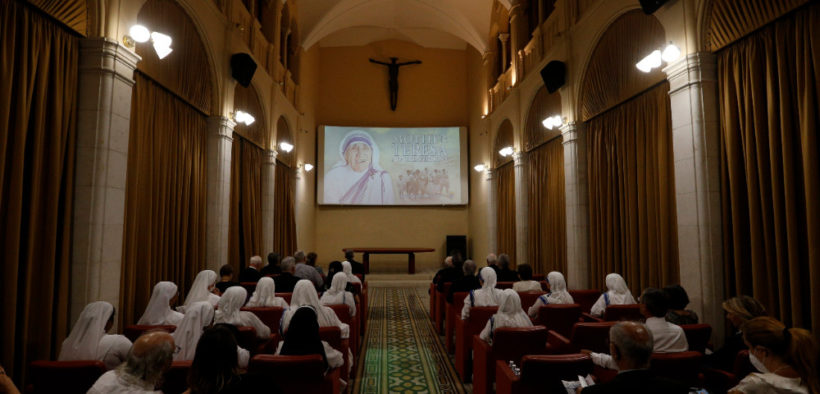
Produced by the Knights of Columbus, “Mother Teresa: No Greater Love,” had its Vatican premiere Aug. 31, ahead of its release to more than 900 theaters Oct. 3 and 4.

“Thank you for all the efforts made to capture the life of this saint, whose life and testimony have borne much fruit,” wrote Pope Francis, who canonized her at the Vatican in 2016.

“Thank you for promoting this type of initiative that helps, in a creative manner, to make accessible the zeal for evangelization, especially for the young generations promoting the desire to follow the Lord who loved us first,” the pope said in an Aug. 25 letter written to Kelly, replying to news of the Vatican premiere.

Mother Teresa was born Agnes Ganxhe Bojaxhiu to Albanian parents in Skopje, now capital of North Macedonia, on Aug. 26, 1910. On Sept. 5, 1997, she died of cardiac arrest at the motherhouse of the Missionaries of Charity in Kolkata, India.

The documentary, by Emmy award-winning filmmaker, David Naglieri, features archival footage and interviews with dozens of commentators who knew Mother Teresa personally. It was filmed on five continents, providing interviews with many Missionaries of Charity and offering on-the-ground images of their work following in Mother Teresa’s footsteps, serving in what Cardinal Seán P. O’Malley of Boston called “the most hellish places” on earth to “bring the light and the love and the mercy of God.”

The cardinal was overcome with emotion at the news conference, recalling attending a talk Mother Teresa gave in the 1960s before her work was widely known and when he was still a young brother preparing for ordination as a priest of the Order of Friars Minor Capuchin.

He said, “this was one of the most inspiring talks I ever heard in my life.” He and the small number of people who had come to hear her speak, he said, “we were all weeping after a while, we were aware that we were in the presence of holiness.”

The documentary shows the work Mother Teresa inspired and, “when she was feeding the hungry or holding the hands of someone as they lay dying, she was treating them as she would the most important person in her life, Jesus Christ himself,” Kelly said in a media release.

“She was teaching us to have a heart that sees, and if we can learn to see as she did, the world would be a radically different and, I would say, better place,” he said.

Head of Vatican liturgy wants to chat with actor Shia LeBeouf


Vatican's liturgy head to Latin Mass convert Shia LaBeouf: Let's talk

8.31.22 PADRE-PIO-photo-by-Christian-Mantuano.jpeg

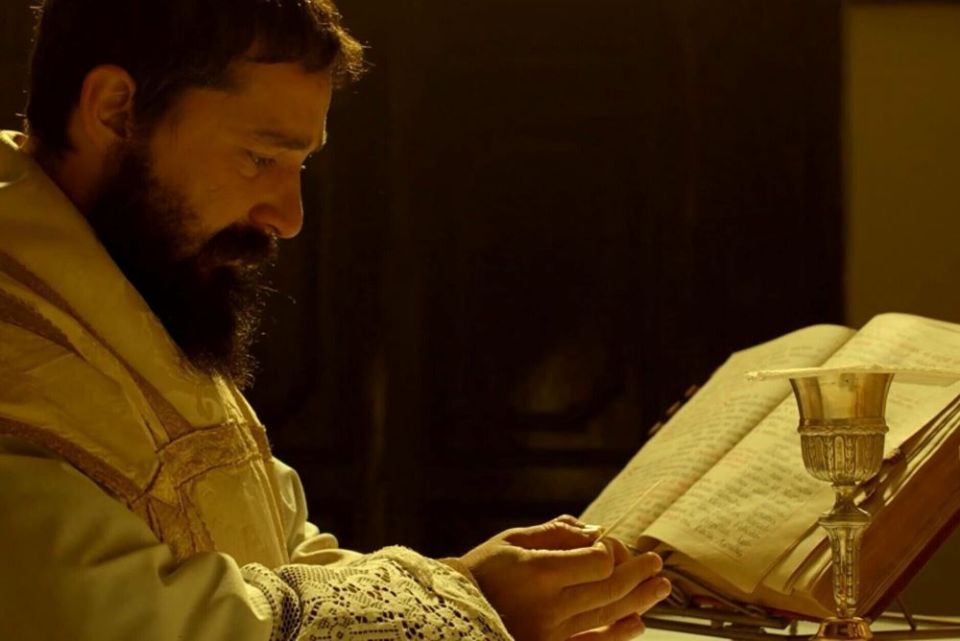
Shia LaBeouf stars as the Italian monk Padre Pio in a film that will screen Sept. 2 at the Venice Film Festival's independently run Giornate Degli Autori. The American actor credits practicing Latin scenes for the film to his conversion to Catholicism.
Shia LaBeouf stars as the Italian monk Padre Pio in a film that will screen Sept. 2 at the Venice Film Festival's independently run Giornate Degli Autori. The American actor credits practicing Latin scenes for the film to his conversion to Catholicism. (Giornate Degli Autori/Christian-Mantuan)

ROME — The head of the Vatican's liturgy office says he would welcome a conversation with Hollywood actor Shia LaBeouf, who recently cited the traditional Latin Mass as motivation for his conversion to Catholicism.

"I'd like to know why he thinks that, what is his experience of the celebration of the Mass," said English Cardinal Arthur Roche. "That's what priests do; we try to talk to people."

Roche is one of 20 new prelates elevated to the College of Cardinals by Pope Francis on Aug. 27. He has spearheaded the pope's liturgical reforms, which have included restricting the traditional Latin Mass to limited times, places and celebrants in an effort to facilitate a more unified form of church worship.

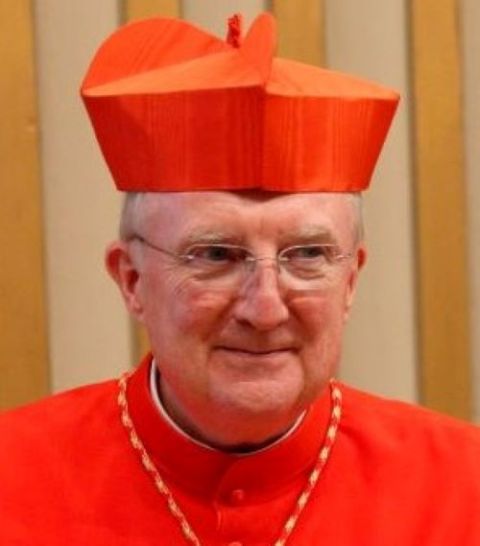
8.31.22 Cardinal Arthur Roche.jpg

New English Cardinal Arthur Roche, prefect of the Dicastery for Divine Worship and the Sacraments, is pictured at a reception after a consistory for the creation of 20 new cardinals at the Vatican Aug. 27. (CNS/Paul Haring)

LaBeouf is currently playing the titular role in the new film "Padre Pio," which chronicles the life of the popular mystic Capuchin monk, who was canonized by Pope John Paul II in 2002. In the press promotion for the film, LaBeouf, 36, who has a history of domestic violence allegations, says he experienced "genuine emotional experiences" while practicing the Latin scenes for the film, ultimately leading him to seek conversion to Catholicism.

"The Latin Mass affects me deeply," the actor said in a recent interview. "Because it doesn’t feel like they're trying to sell me a car."

In a joint interview with NCR and the UK's The Tablet magazine on Aug. 27, Roche said he was unfamiliar with LaBeouf and the news of his conversion, but said that when it comes to high-profile Latin Mass supporters who publicly extol it as a superior form of liturgy, he hopes they will encounter the same reverence in the liturgy's ordinary form (or Novus Ordo), which has been continually updated since the Second Vatican Council, which took place 1962-1965.


"The Mass should be celebrated with great dignity," Roche said. "It isn't just something, a trait that belongs to the missal of 1962. It belongs to the reform."

During the interview, Roche also said that he believes much of the resistance to Francis, as has been expressed by a number of Latin Mass adherents, is rooted in opposition to the reforms of the Council.

Vatican II reforms included the approval of the translation of the liturgy into the vernacular, in an effort to make the Mass more accessible and involve greater participation of the laity.

"Reform of the liturgy was an enormous, long preparation prior to the council and the council is the highest legislation that exists in the church," he said. "Once that legislation comes into effect, it's a very serious matter."

"You disregard that and you're really putting yourself sideways towards the edges of the church," he added.

Roche warned against those reluctant to embrace the reforms of Vatican II, describing them as "not only dragging their feet but stubbornly opposing what the church has decreed."

"And that's a very serious matter," he continued. "In the end, people have to ask themselves, 'Am I really a Catholic or am I more of a Protestant?' "

September 1st is the World Day of Prayer for the Care of Creation


Flowers in KeralaFlowers in Kerala 

World Day of Prayer for Care of Creation kicks off Season of Creation

The Season for Creation kicks off with a World Day of Prayer for Creation, supported by the Council of the Bishops' Conferences of Europe who highlight the manmade devastation in recent times.

By Francesca Merlo

“Listen to the voice of creation” is the theme and invitation of this year’s Season of Creation, which opens on Thursday with the World Day of Prayer.

Pope Francis' message for the World Day of Prayer for Creation, marked on 1 September, was published on 16 July.

The devastation

In the lead-up to the Season, which lasts from 1 September until 4 October, the Council of European Episcopal Conferences (CCEE) released a statement, highlighting the devastation that fires have caused throughout European countries as a consequence of the mistreatment of our common home.

"Our own Europe has been faced with a genuine environmental catastrophe that, in 97% of cases, is attributable to the actions of man", reads the statement. In the 27 countries within the European Union, according to a recent estimate, fires have already devastated a total of 517,881 hectares since the beginning of the year, compared to 470,359 the previous year.

Scholars are already hypothesising the transition from our era (Anthropocene) to the next one, to which they have already given the name “pyrocene”, the effects of which are already visible considering that CO2 emissions have reached levels that the planet has not known for well over 3 million years.

The war in Ukraine

Adding to all this damage, the commission goes on to highlight the extra damage caused to the environment by the ongoing war in Ukraine, as well as all those in other areas of the planet.

The Message of the Holy Father Francis is "not a pious exhortation", but "a real challenge" launched to the powerful of the earth and to the leaders of the individual nations (be they rich or poor), each for their own part. The entire season for creation can be a time of prayer, but also a time of serious conversion of attitudes and habits.

"We, European Bishops, join the appeal launched by Pope Francis, inviting all Christians to be spokesmen for these demands of the Planet, whose voice reveals “a kind of dissonance. On the one hand, we can hear a sweet song in praise of our beloved Creator; on the other, an anguished plea, lamenting our mistreatment of this our common home”.

Finally, the statement reads, "may the Lord hear this cry and grant mankind a new heart, capable of showing compassion to the whole of creation, so that concrete gestures may be put in place to allow all creatures to return to praise the Creator and us to join in this 'grandiose cosmic choir’ made up of countless creatures, all singing the praises of God'".

Pope Francis encourages a liturgy that is directed to the Mystery of Christ


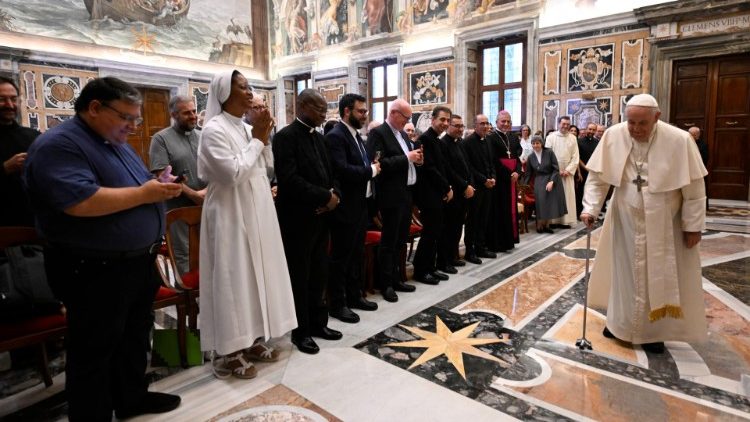
Pope Francis with members of the Italian Association of Professors and Practitioners of Liturgy Pope Francis with members of the Italian Association of Professors and Practitioners of Liturgy   (Vatican Media)

Pope: Liturgy must look to God without being worldly

In an address to an Italian association of liturgists, Pope Francis warns against “worldly” approaches to the liturgy, saying liturgy must be directed to the Mystery of Christ while remaining close to daily life.

By Christopher Wells

Pope Francis on Thursday addressed the Italian Associazione dei Professori e Cultori di Liturgia (Association of Professors and Practitioners of Liturgy) on the occasion of the 50th anniversary of the organization’s foundation.

The Pope noted that fifty years corresponds to “the ecclesial season of this liturgical reform”: following the initial phase marked by the publication of new liturgical books, "we are now in a period of deepening acceptance of the reform." This process, he said, requires not only time but also “passionate and patient care,” “spiritual and pastoral understanding,” and ongoing formation.

He encouraged members of the Association to continue to pursue their work in a spirit of dialogue.

“Theology can and must have a synodal style.”

Listening key in liturgical study

In order to ensure that their efforts “are never separated from the expectations and needs of the People of God," Pope Francis said, listening to the Christian communities is “indispensable.”

The Holy Father noted, too, that the academic work of liturgists cannot be separated from the pastoral and spiritual dimension of liturgy, saying that liturgical formation must reach the people of God. In this regard, he held up the model of Romano Guardini, a German priest and scholar who, among other notable accomplishments, was able to spread the "achievements of the liturgical movement" in a way that was accessible to the ordinary faithful.

“May his figure and his approach to liturgical education, as modern as it is classical, be a point of reference to you.”

Progress rooted in tradition

Finally, the Pope insisted that progress in the understanding of the liturgy and the art of celebrating it “must always be rooted in tradition.” At the same time, he warned of a worldly spirit of going backward (IT: “indietrismo”, literally: backwardness).

Going back to the roots, he said, does not mean going backward, but instead means allowing true tradition to lead one forward. He cautioned liturgists to carefully distinguish between tradition and “traditionalism,” warning that “today the temptation is ‘backwardness’ disguised as tradition.”

Concluding his address, Pope Francis reminded his audience that the study and promotion of liturgy “must be imbued with prayer and the living experience of the Church that celebrates, so that liturgical ‘thought’ might always flow, like a vital sap, from the lived liturgy.”

All theology, he said, but especially liturgical study – precisely because it is directed to “the act of celebrating the beauty and greatness of the mystery of God who gives Himself to us” – must be done “with an open mind, and at the same time, ‘on one’s knees’,” in prayer.