Showing posts with label Shia LaBeouf. Show all posts

Wednesday, January 3, 2024

Actor Shia LaBeouf received Confirmation on New Year's Eve


Actor Shia LaBeouf fully enters the Catholic Church New Year’s Eve


(OSV News) — An actor who recently portrayed a beloved saint on screen has now fully come into the Catholic Church in real life.

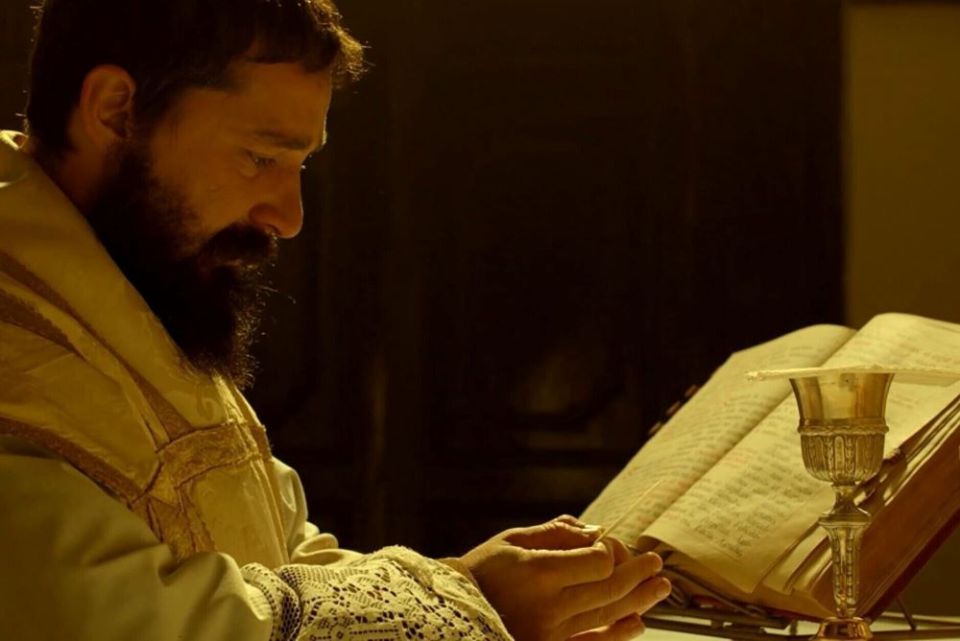
Shia LaBeouf, a Hollywood veteran and star of director Abel Ferrara’s film “Padre Pio,” received the Sacrament of Confirmation, completing his initiation into the Catholic faith, during the New Year holiday weekend, according to announcements posted Jan. 2 to Facebook and Instagram by the Capuchin Franciscans’ Western American Province.

The friars posted several pictures of a smiling LaBeouf with the friars and Bishop Robert E. Barron of Winona-Rochester, Minnesota, who had previously interviewed the actor through his Word on Fire apostolate.

Capuchin Father Joseph Seraphin Dederick, the provincial, told OSV News that Bishop Barron administered the sacrament to LaBeouf at the Old Mission Santa Inés in Solvang, California, on Dec. 31

OSV News has reached out to the Capuchins’ Western American Province and Bishop Barron for comment.

“We are thrilled to share that our dear friend Shia LaBeouf has fully entered the Church this past weekend through the Sacrament of Confirmation!” the friars said in their posts, adding that they “are overjoyed to welcome him into the fold and witness his deep commitment to his faith journey.”

Working and personal relationships with friars

LaBoeuf developed both working and personal relationships with the friars while researching his role in “Padre Pio.”

Speaking to OSV News in May, LaBeouf said he “wasn’t even trying to make movies” when Ferrara approached him about the role.

The acclaimed 37-year-old actor — whose Emmy-winning career as a kid on the Disney Channel blossomed into big-screen success — found himself “totally lost” after his inner demons led to partying, work conflicts and run-ins with the law.

“I was wandering around, living in my truck,” he said. “I wasn’t interested in acting anymore.”

As LaBeouf began confronting his personal issues, Ferrara tapped him for “Padre Pio,” a saint to whom the Bronx-born director — best known for his gritty cinematic takes on the underworld — felt himself “drawn.”

While researching the film, LaBeouf met Brother Alexander Rodriguez, a Capuchin Franciscan who is assistant vocation director at the order’s Old Mission Santa Inés in Solvang, California.


Soon LaBeouf was asking about more than one of the congregation’s most beloved saints.

Learning about the Faith

“Shia was looking to know about Padre Pio, and then delved into the faith,” Brother Alexander told OSV News in May. “He got into RCIA (referring to the Order of Christian Initiation for Adults). The friars and I were helping to catechize him.”

LaBeouf told OSV News at the time “(learning) how to pray the Rosary” brought a “tangible relief” that he had previously sought through drugs, alcohol and life in the fast lane.

The lessons continued as Brother Alexander accompanied LaBeouf to Italy for filming, with the Capuchin providing technical assistance for the project while appearing in the movie as Padre Pio’s fellow Capuchin and spiritual adviser.

“I fell in love with Christ,” LaBeouf told OSV News in May.

Transformative power of faith

Now the actor, “known for his incredible talent and passion in the entertainment industry, has embarked on a profound spiritual journey that has led him to embrace the teachings of the Catholic Church,” the Capuchin friars wrote in their Jan. 2 Facebook and Instagram posts. “His decision to fully enter the Church is a testament to his sincere desire to grow in his relationship with God and live out the Gospel values.”

The friars added, “As Capuchin Franciscans, we believe in the transformative power of faith and the incredible impact it can have on one’s life. We are humbled and grateful to walk alongside Shia as he takes this important step in his spiritual journey.

“We invite you to join us in celebrating this momentous occasion and to keep Shia LaBeouf in your prayers as he continues to deepen his faith and seek God’s guidance in his life,” the friars said. “May his example inspire others to explore their own spiritual paths and find solace in the loving embrace of the Church.”

Thursday, September 1, 2022

Head of Vatican liturgy wants to chat with actor Shia LeBeouf


Vatican's liturgy head to Latin Mass convert Shia LaBeouf: Let's talk

8.31.22 PADRE-PIO-photo-by-Christian-Mantuano.jpeg

Shia LaBeouf stars as the Italian monk Padre Pio in a film that will screen Sept. 2 at the Venice Film Festival's independently run Giornate Degli Autori. The American actor credits practicing Latin scenes for the film to his conversion to Catholicism.
Shia LaBeouf stars as the Italian monk Padre Pio in a film that will screen Sept. 2 at the Venice Film Festival's independently run Giornate Degli Autori. The American actor credits practicing Latin scenes for the film to his conversion to Catholicism. (Giornate Degli Autori/Christian-Mantuan)

ROME — The head of the Vatican's liturgy office says he would welcome a conversation with Hollywood actor Shia LaBeouf, who recently cited the traditional Latin Mass as motivation for his conversion to Catholicism.

"I'd like to know why he thinks that, what is his experience of the celebration of the Mass," said English Cardinal Arthur Roche. "That's what priests do; we try to talk to people."

Roche is one of 20 new prelates elevated to the College of Cardinals by Pope Francis on Aug. 27. He has spearheaded the pope's liturgical reforms, which have included restricting the traditional Latin Mass to limited times, places and celebrants in an effort to facilitate a more unified form of church worship.

8.31.22 Cardinal Arthur Roche.jpg

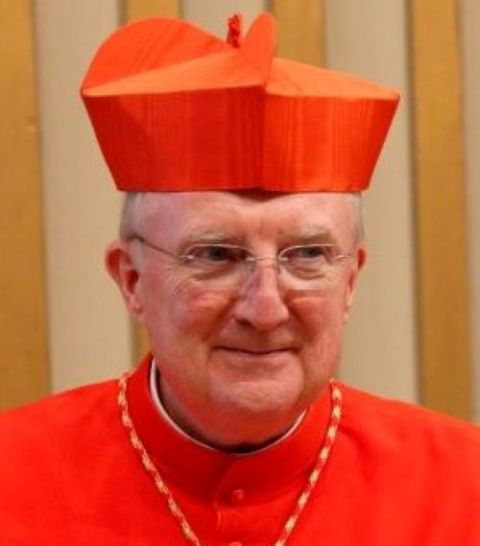
New English Cardinal Arthur Roche, prefect of the Dicastery for Divine Worship and the Sacraments, is pictured at a reception after a consistory for the creation of 20 new cardinals at the Vatican Aug. 27. (CNS/Paul Haring)

LaBeouf is currently playing the titular role in the new film "Padre Pio," which chronicles the life of the popular mystic Capuchin monk, who was canonized by Pope John Paul II in 2002. In the press promotion for the film, LaBeouf, 36, who has a history of domestic violence allegations, says he experienced "genuine emotional experiences" while practicing the Latin scenes for the film, ultimately leading him to seek conversion to Catholicism.

"The Latin Mass affects me deeply," the actor said in a recent interview. "Because it doesn’t feel like they're trying to sell me a car."

In a joint interview with NCR and the UK's The Tablet magazine on Aug. 27, Roche said he was unfamiliar with LaBeouf and the news of his conversion, but said that when it comes to high-profile Latin Mass supporters who publicly extol it as a superior form of liturgy, he hopes they will encounter the same reverence in the liturgy's ordinary form (or Novus Ordo), which has been continually updated since the Second Vatican Council, which took place 1962-1965.


"The Mass should be celebrated with great dignity," Roche said. "It isn't just something, a trait that belongs to the missal of 1962. It belongs to the reform."

During the interview, Roche also said that he believes much of the resistance to Francis, as has been expressed by a number of Latin Mass adherents, is rooted in opposition to the reforms of the Council.

Vatican II reforms included the approval of the translation of the liturgy into the vernacular, in an effort to make the Mass more accessible and involve greater participation of the laity.

"Reform of the liturgy was an enormous, long preparation prior to the council and the council is the highest legislation that exists in the church," he said. "Once that legislation comes into effect, it's a very serious matter."

"You disregard that and you're really putting yourself sideways towards the edges of the church," he added.

Roche warned against those reluctant to embrace the reforms of Vatican II, describing them as "not only dragging their feet but stubbornly opposing what the church has decreed."

"And that's a very serious matter," he continued. "In the end, people have to ask themselves, 'Am I really a Catholic or am I more of a Protestant?' "

Monday, August 29, 2022

Much ado about Shia LaBeouf conversion; Priest offers 9 lessons


9 Lessons from the Conversion of Shia LaBeouf

There’s much we can learn from how God led the troubled actor to repentance and faith.


On Aug. 25, Bishop Robert Barron released a video interview with actor Shia LaBeouf, in which LaBeouf not only announced his conversion to the Catholic faith but rivetingly described the steps of what he calls his “salvific journey.” 

LaBeouf has appeared in 40 movies, four television films, 77 episodes for various shows and three video games. Winner of multiple acting awards, the 36-year-old is most famous for his leading role as Sam Witwicky in the Transformers series.

But astride the fame, he has lived a troubled life. He appeared nude in 10 movies, with most featuring graphic sex scenes, an indication of his loss of shame and self-worth. He battled with alcohol addiction, plagiarized a script, was charged with disorderly conduct, harassment, criminal trespass, public intoxication, obstruction, battery and theft, and was accused by one girlfriend of physical abuse and by another of sexual battery, assault and infliction of emotional distress. 

In the interview with Bishop Barron, LaBeouf confessed, “My life was on fire. I was walking out of hell. … I didn't want to be an actor anymore and my life was a complete mess. I’d hurt a lot of people.” News had come out that “I’ve been abusive to women and have been shooting dogs and I’ve been willingly giving women STDs. It’s disgusting, it’s depraved, and my mother is embarrassed beyond all imagination.” 

It brought him to contemplate suicide. “I had a gun on the table. … I didn’t want to be alive anymore. … [There was] shame like I had never experienced before, the kind of shame where you forget how to breathe.” 

It was at that point that director Abel Ferrara, who was participating with him in a virtual self-help group, asked him, in view of a movie he was preparing to film, whether he had ever heard of Padre Pio. He hadn’t — and because by his point he was “nuclear” and no one wanted to work with him, he thought Ferrara’s question was his “chance to get back on the hustle.” 

To prepare for the role, he needed to learn about the Catholic faith and about the Capuchin order to which St. Pio belonged. He drove to San Lorenzo Seminary in Santa Ynez, California, where he met and was befriended by the Capuchins. 

As an actor who tries to immerse himself in the life of the characters he portrays, he also needed help learning how to convincingly “say” Mass, which was the center of St. Pio’s life. That took him to Christ the King Church in Oakland. So that he would have a better systematic grasp of the Catholic faith, the Capuchins also arranged for him to be catechized by a religious sister. 

Over the course of several months, this intense study, LaBeouf said, “stops being prep for a movie and starts being something that feels beyond all of that.” He began to feel an overwhelming urge to “let go” and “surrender for real” to God, which he did with courage and zeal. He later expressed wonder at the way, when he was at rock bottom, his ego led him to jump at the possibility of a movie role focused on Padre Pio. “It was like somebody tricked me into it,” he said. Now he worships that Trickster.  

There’s much we can learn from his conversion story, especially the elements God used to lead him from a self-described infernal life, from being “really good at attacking Catholicism because it made me feel superior” to being humble enough to repent, believe in and live the Gospel. 

Insofar as there are many today not only following the descending paths LaBeouf trod prior to his conversion, but also many who admire his work and are dumbfounded by his conversion, it’s good for the Church to know what drew him and might draw others. 

LaBeouf was, first, drawn by the way that the Catholic life is “full immersion.” It involves reason, will and feelings. As an actor, he ironically hates anything that feels like acting — his bar mitzvah at 13 felt, he said, like acting — and he refused to fake a Padre Pio accent. He sought integrity and, to his surprise, discovered it in Catholic life. 

Second, he hungered for a sense of connection and found it with the Capuchins. Their welcoming, down-to-earth, sincere fraternity — not to mention their laughter, ice cream and cats — drew him. 

Third, he was captivated by the Mass, especially the traditional Latin Mass, which he needed to learn — and immerse himself in — for the movie. For him, pretending to celebrate it and attending it made him feel that “a secret” was being shared with him. It enveloped him with a sense of the reality of God and the sacred. 

His first experiences of the Mass in English were, he lamented, as if someone was “trying to sell me on an idea,” where the preaching was not fit for the dignity of what the Mass is, but rather was an invitation “to let your hair down right before you’re asking me to fully believe that we’re about to walk through the death of Christ.” When he discovered he had been baptized by an uncle and the Capuchins allowed him to begin receiving Holy Communion, he said he could almost feel the physical effect and regeneration of entering into Christ’s death and resurrection. 

Fourth, he was moved by the fact that great converts preceded him. He spoke of the impact of St. Augustine and St. Francis of Assisi, but mainly of Capuchin Brother Jim Townsend, a con man who murdered his pregnant wife and spent 20 years in prison, but converted and ended up spending 39 years as a Capuchin. He “gave me permission as a sinner,” LaBeouf said, and if after all Townsend had done, such a man could live by faith, there was hope for him, too.  

Fifth, he had to be taught how to pray. Prior, praying felt like “memorizing someone else’s words.” But when a Capuchin brother and Bishop Barron explained how to handle quiet and pass from silence to loving thoughts and loving deeds, everything began to click. 

Sixth, he longed to meet a masculine Jesus. 

“My opinion of Christ at this point,” he said, “felt almost like I was reading about a Buddhist, a very soft, fragile, all-loving, all-listening [man] with no ferocity, no romance.” That impression was reinforced by the “art that I had seen,” which featured “very soft, more feminized” depictions of Jesus. Reading the Gospel, with the guidance of the strong paternal influence of a Capuchin, he came to understand the difference between weakness and meekness, and to grasp how meekness, like Jesus showed throughout his life, is a summit of strength. 

Seventh, he needed to discover a “purpose” in life, what Catholics would ordinarily call a vocation. 

A Capuchin taught him that discernment happens through discovering the talents God has given you and determining how you can use them to help others. LaBeouf thought his sole talent was “bleeding in front of people,” something featured in several of his films. He eventually grasped how appropriate that skill set was in depicting the modern world’s most famous stigmatist! 

Eighth, he had to learn the redemptive meaning of suffering. 

He thought that the suffering he had borne and caused until then was “pointless.” A Capuchin helped him to see how “suffering is actually a gift” — a realization that led LaBeouf even to thank the woman who had accused him of sexual abuse, who he said “saved his life,” through the shame he had to endure as a result of her accusations and the pain he had caused. 

All of these lessons were integrated, ninth, in St. Pio, whom LaBeouf came to know as “one of the most respected, beloved saints who ever graced the earth.” To immerse oneself in his life in the midst of his fellow Capuchins — trying to imitate the way he celebrated Mass, prayed, sought and dispensed God’s mercy, dealt with suffering and rejection, prayed from dawn to dusk, manfully challenged others to holiness, and lived his Capuchin vocation with immense faith, hope and charity — has been for LaBeouf a tremendous school that, likewise, “saved my life.” 

As we give God thanks for LaBeouf’s conversion and pray for his continued growth in the virtues of Catholic life, we similarly pray that his conversion might bring many others to the Catholic faith as well as help everyone in the Church to recognize the enduring attraction of the faith and the practices that make that beauty shine.