Sunday, May 2, 2021

Pope Francis offers Easter greetings to those who follow the Julian calendar and other announcements


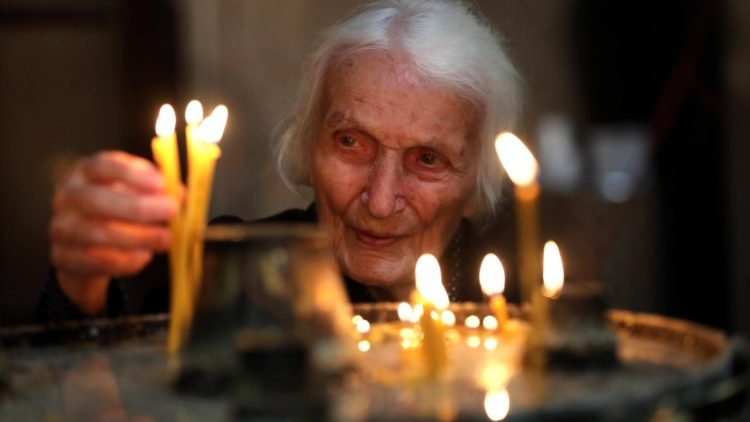
Orthodox Easter in SarajevoOrthodox Easter in Sarajevo  (ANSA)

Pope sends Easter greetings to Orthodox and Eastern Churches

Pope Francis sends his greetings to our brothers and sisters who celebrate the Solemnity of Easter according to the Julian calendar. He also expresses sorrow for an accident in Israel and recalls the beatification of a doctor in Venezuela who dedicated his life to the poor.

By Linda Bordoni

Addressing the faithful after the Regina Coeli Prayer in St. Peter’s Square, Pope Francis said he sends his Best Wishes to our brothers and sisters of the Orthodox Churches and of the Eastern and Latin Catholic Churches who today, according to the Julian calendar, celebrate the Solemnity of Easter.

“May the Risen Lord fill them with light and peace, and comfort the communities living in particularly difficult situations. Happy Easter to them!” he said.

Grief for tragic accident in Israel

Pope Francis also turned his thoughts to all those affected by an accident at a religious festival in Israel on Friday in which many people were killed and injured.


“With sadness I express my closeness to the people of Israel because of the accident last Friday on Mount Meron, which caused the death of forty-five people and numerous injuries. I assure you of my remembrance in prayer for the victims of this tragedy and for their families,” he said.

The nation is observing a national day of mourning on Sunday after a stampede at the Jewish Orthodox B’Omer festival, near Mount Meron in northern Israel killed 45 men and boys and injured some 150 others.   

Beatification of José Gregorio Hernández Cisneros

And during his words to those present in St. Peter’s Square the Pope recalled the beatification last Friday, in Caracas, Venezuela, of José Gregorio Hernández Cisneros.


“He was a doctor, rich in science and faith. He knew how to recognise the face of Christ in the sick and, like a Good Samaritan, he helped them with evangelical charity”, he said.

“May his example help us to care for those who suffer in body and spirit,” he concluded asking for applause for the new Blessed.

Regina Caeli address 05.02.2021


Pope Francis during the Regina Coeli in St. Peter's SquarePope Francis during the Regina Coeli in St. Peter's Square  (Vatican Media)

Pope at Regina Coeli: A truly Christian life bears witness to Christ

Pope Francis addresses the faithful on the fifth Sunday of Easter and reflects on how in order to bear witness to Christ, it is necessary to be united with Him and abide in Him actively,

By Linda Bordoni

Commenting on the Gospel of John (Jn 15, 1-8) in which the Lord presents himself as the true vine, and speaks of us as the branches that cannot live without being united to him, Pope Francis explained that just as we need the Lord, Jesus needs us.

Speaking during the Regina Coeli prayer in St Peter’s Square, the Pope said that “There is no vine without branches, and vice versa. The branches are not self-sufficient, but depend totally on the vine, which is the source of their existence.”

He noted that the Gospel reading of the day repeats the verb “to abide” seven times,

“Before leaving this world and going to the Father, Jesus wants to reassure his disciples that they can continue to be united with him,” the Pope explained, adding that “This abiding is not a question of abiding passively, of “slumbering” in the Lord, letting oneself be lulled by life.”

The abiding in him that Jesus proposes, he said, is abiding actively, and reciprocally.

A reciprocal need

In fact, he continued, the branches cannot grow and bear fruit without the vine, just as the vine needs branches since fruit does not grow on the trunk of the tree.

“It is a reciprocal need; it is a question of abiding reciprocally to bear fruit,” he said.

First of all, Pope Francis said, we need Him: “before the observance of his commandments, before the beatitudes, before works of mercy, it is necessary to be joined to him, to abide in him.”

“We cannot be good Christians if we do not abide in Jesus. And yet with him, we can do everything,” he said.

But Jesus too, he added, like the vine with the branches, needs us.

An audacious concept?

Noting that this, of a reciprocal need, may appear to be an audacious concept, Pope Francis invited the faithful to ask themselves “in what sense does Jesus need us?”

He needs our witness,” he said.

After He ascended to the Father, He recalled, it was the disciples' task, and it is our task, to continue to proclaim the Gospel in words and deeds.

We mujst do so, he said, by bearing witness to His love: “the fruit to be borne is love.”

Only by remaining united to Christ, the Pope explained, do we “receive the gifts of the Holy Spirit, and in this way we can do good to our neighbour and society, to the Church.”

“A truly Christian life bears witness to Christ,” he said.

The fruitfulness of our lives depends on prayer

Concluding, the Pope recalled Jesus’ words “If you abide in me, and my words abide in you, ask whatever you will, and it shall be done for you,” and explained that the fruitfulness of our life depends on prayer:

“We can ask to think like him, to act like him, to see the world and to see things with Jesus’ eyes. And in this way, to love our brothers and sisters, starting from the poorest and those who suffer the most, as he did, and to love them with his heart and to bring to the world fruits of goodness, charity and peace.”

Saturday, May 1, 2021

A Rosary Marathon all May long for an end to the pandemic


Pope Francis to Launch Rosary ‘Marathon’ for End to Pandemic

The rosary kicks off a month of daily rosaries prayed at Catholic shrines around the world for the intention of an end to the coronavirus pandemic and the resumption of work and social activities.

Pilgrims at the Sanctuary Our Lady of Lourdes in France.
Pilgrims at the Sanctuary Our Lady of Lourdes in France. (photo: Pierre Vincent / Sanctuaire ND de Lourdes)

VATICAN CITY — Pope Francis on Saturday will lead a rosary to begin a month-long prayer marathon for the end of the COVID-19 pandemic.

The pope’s rosary will be broadcast live from the Gregorian Chapel of St. Peter’s Basilica at 6 p.m. Rome time on May 1.

Situated directly to the west of the Holy Sacrament Chapel, the Gregorian Chapel contains the relics of St. Gregory of Nazianzus, a Doctor of the Church, as well as a 7th-century icon of Our Lady of Help.

The rosary kicks off a month of daily rosaries prayed at Catholic shrines around the world for the intention of an end to the coronavirus pandemic and the resumption of work and social activities. 

Families, teens, and young adults from Rome and the surrounding region will lead the rosary together with Pope Francis.

During the event May 1, Pope Francis will also bless rosaries to be sent to the 30 Marian shrines participating in the daily live-streamed prayers.

Among these are the shrines of Our Lady of Walsingham in England, the Basilica of the Immaculate Conception in the United States, Our Lady of Częstochowa in Poland, the Blessed Virgin of the Rosary in South Korea, Our Lady of Aparecida in Brazil, Our Lady of Peace and Good Voyage in the Philippines, Our Lady of Knock in Ireland, the Virgin of the Poor at Banneux in Belgium, Notre Dame d'Afrique in Algeria, Our Lady of the Rosary of Fatima in Portugal, and Our Lady of Health in India.

Participating shrines in Italy include the Holy House of Loreto and Shrine of the Virgin of the Rosary of Pompei.

The other global shrines are Jesus the Saviour and Mother Mary in Nigeria, the Basilica of the Annunciation in Nazareth, Our Lady of Lujan in Argentina, Our Lady Queen of Peace at Medjugorje in Bosnia, St. Mary’s Cathedral in Australia, Our Lady of Lourdes in France, Meryem Ana in Turkey, Nuestra Señora de la Caridad del Cobre in Cuba, Our Lady of Nagasaki in Japan, Nuestra Señora de Montserrat in Spain, Notre Dame du Cap in Canada, the National Shrine Our Lady Ta’ Pinu in Malta, Nuestra Señora de Guadalupe in Mexico, Mother of God in Zarvantysia in Ukraine, Altötting in Germany, and Our Lady of Lebanon in Harissa, Lebanon.

Pope Francis will also close the month of rosaries by leading the prayer in the Vatican Gardens May 31.

The initiative, organized by the Pontifical Council for the Promotion of the New Evangelization, is in response to a request from the pope.

“Pope Francis wishes to involve all the shrines around the world in this initiative, so that they may become vehicles of the prayer of the entire Church,” a press release said. “The initiative is being conducted in the light of the biblical expression: ‘Prayer by the Church was fervently being made to God’ (Acts 12:5).”

The Vatican’s evangelization office said it had “extended this invitation to all the shrines around the world, in order to promote the diffusion of the initiative in the relevant regions, so as to reach priests, families, and all the faithful, inviting them to join in this prayer of intercession and hope to the Blessed Virgin Mary.”

All Catholics are invited to participate in the daily rosaries however and wherever they are able, the press release said.

An important Father of the early church


St. Athanasius


St. Athanasius, also known as Athanasius the Great and Athanasius the Confessor, was a bishop and doctor of the church. He is called the "Father of Orthodoxy," the "Pillar of the Church" and "Champion of Christ's Divinity." Athanasius became one of the most dedicated opponents of the heresy of Arianism. Much of his life was a testimony to the divinity of Jesus Christ.

Born in either 296 or 298 in Alexandria, Egypt to a prominent Christian family, Athanasius received a wonderful education in Christian doctrine, Greek literature, philosophy, rhetoric and jurisprudence.

He was well studied in the Hebrew Scriptures and the Gospel accounts and the Christian texts which would later be recognized by the Church as the canon of the New Testament. He credited the confessors during the Christian persecution under the Roman Emperor Maximian as his teachers of theology.

Bishop Alexander of Alexandria became a strong influence in Athanasius' life after Alexander witnessed him playing at administering Baptism as a young boy, with other children. Alexander called the boys over and after questioning them, he determined the baptisms were valid and decided to train them for priesthood.

As he grew up, Athanasius befriended many monks and hermits of the desert, including St. Antony. He later wrote the biography of Antony.

Athanasius became Alexander's secretary in 318 after being ordained a deacon. Around this time, Athanasius wrote his first work, a theological treatise on the Incarnation which is still quoted extensively in Christian theological studies and spiritual literature.

Around 323, Arius, an ambitious priest of the Alexandrian Church, denied the Divinity of Christ, and began spreading word that Jesus Christ was not truly divine, but merely created in time by the Eternal Father.

Alexander demanded Arius produce a written statement on the false doctrine. It was condemned as heresy after two dissenting Bishops came forward. Arius and 11 other priests and deacons were deposed, or removed from their office, for teaching false doctrine.

Arius left for Caesarea, but continued to teach his false doctrine and enlisted support from the Bishop of Nicomedia, Eusebius and other Syrian prelates.

Athanasius, as Alexander's secretary, was present during the great Church debate. He may have even composed the letter that announced Arius' condemnation. Athanasius stood alongside Alexander during the famous Council of Nicaea to determine the matters of dogma.

It was during this meeting, summoned by Emperor Constantine, that Arius' sentencing was officially confirmed and the Nicene Creed was adopted as the Creed of the Church and a worthy symbol of the orthodox Christian faith.

The early Christian Church, still undivided, rejoiced at the defense of the true nature of Jesus Christ. To this day, Athanasius is considered the great defender of the Faith in both the Orthodox and Catholic Churches.

Just five months later, Alexander died and Athanasius succeeded him after being unanimously elected. He was consecrated as the new Bishop of Alexandria in 328 and continued the fight against Arianism.

In 330, Eusebius approached Emperor Constantine and convinced him to command Athanasius to allow Arians back into communion. Athanasius refused, noting the Catholic Church could not hold communion with heretics who attacked the divinity of Christ.

However, Eusebius did not give up on his cause. He wrote to Athanasius trying to justify Arius and he wrote to the Egyptian Meletians in efforts to have Athanasius impeached.

The Meletians charged Athanasius with the crimes of exacting a tribute of linen for use in his church, sending gold to Philomenus, treason against the emperor and authorizing one of his deputies to destroy a chalice being used at the altar by a Meletian priest.

He was tried and proved his innocence on all accusations.

The Arians didn't stop there though; they came forward with another charge, claiming he murdered a Meletian bishop. Athanasius was ordered to attend a council at Caesarea, but knowing the bishop was alive and in hiding, Athanasius ignored the summons.

In 335, Emperor Constantine commanded Athanasius to go to the Council of Tyre, Lebanon. The council was full of Athanasius' opponents and was led by an Arian. Athanasius realized his condemnation was already pre-decided.

Athanasius was exiled for the first time to Trier, Germany. While there, he kept in touch with his flock by letter.

Athanasius' exile lasted for two and a half years. He returned to Alexandria in 338 to find both Emperor Constantine and Arius had died. Constantine's empire was divided between his three sons, Constantine II, Constantius and Constans.

After he returned to Alexandria, his enemies continued to try to bring him to exile. They accused him of raising sedition, of promoting bloodshed, and detaining his own use of corn.

Eusebius was able to obtain a second sentence of deposition against Athanasius and get the election of an Arian bishop for Alexandria approved.

After this, a letter was written to Pope St. Julius asking for his intervention and a condemnation of Athanasius. The case for Athanasius was set forth, and the pope accepted the suggestion offered by Eusebius for a synod to discuss the situation.

Meanwhile, a Cappadocian named Gregory was installed in Alexandria, and Athanasius went to Rome to await his hearing.

Athanasius was completely vindicated by the synod, but was unable to return home to Alexandria until the death of the Cappadocian Gregory in 345.

Athanasius returned to Alexandria to scenes of people rejoicing after he had been absent for eight years.

However, in 353 Athanasius would face more condemnations by the Arians in the councils at Arles, France and again in 355 in Milan, Italy.

Persecution continued against Athanasius and escalated to physical attacks against him. While he was celebrating a vigil Liturgy in a church in Egypt, soldiers forced their way in and killed some of the congregation. Athanasius managed to escape and hid in the desert, where a group of monks kept him safe for six years.

During his years as a hermit, he wrote his Apology to Constantius, the Apology for His Flight, the Letter to the Monks, and the History of the Arians.

Athanasius returned to Alexandria after the death of Constantius in 361 and the new emperor, Julian, revoked all sentences of exile enacted by his predecessor.

This lasted only a few months though. Emperor Julian's plan for paganizing the Christian world couldn't get very far so long as Athanasius, the champion for Catholic faith, was around. Therefore, Julian exiled Athanasius and he once again sought refuge in the desert.

He stayed there until 363 when Julian died and the next emperor, Emperor Jovian reinstalled him. Jovian's reign was a short one, and Athanasius was again banished just eight months later.

Jovian's successor, Valens issued an order banning all Orthodox bishops who were exiled by Constantius.

Four months later, Valens revoked his own order and Athanasius was restored permanently.

Over the course of his life, Athanasius was banished five times and spent 17 years of his life in exile for the defense of the doctrine of Christ's divinity.

However, the last years of his life were peaceful and he died on May 2, 373 in Alexandria.

His body was transferred, first to Constantinople, then to Venice.

St. Athanasius is often shown as a bishop arguing with a pagan, a bishop holding an open book or a bishop standing over a defeated heretic. He is a patron saint of theologians, and faithful Orthodox and Roman Catholic Christians and hailed to this day as a great Defender of the Faith.

His feast day is celebrated on May 2.
The political battle staging now over Eucharistic coherence


Politicizing the Eucharist

On April 14, America magazine, as part of its ongoing series, The Conversation with America Media, published an article by Archbishop Samuel Aquila: “For the church to live in eucharistic coherence, we must be willing to challenge Catholics persisting in grave sin.”

Archbishop Aquila argued that eucharistic coherence demands that those who partake of the Eucharist, including Catholic politicians, are to be in communion with the Church. That is, they must adhere to the Church’s fundamental doctrinal and moral teaching.  Not to do so would contravene St. Paul’s exhortation: “Whoever, therefore, eats the bread or drinks the cup of the Lord in an unworthy manner will be guilty of profaning the body and blood of the Lord. Let a man examine himself, and so eat of the bread and drink of the cup. For anyone who eats and drinks without discerning the body eats and drinks judgment upon himself.” (1 Cor 11:27-30)

Within a few hours after Archbishop Aquila’s article was published, Cardinal Blase Cupich wrote a letter to him criticizing his article. The Cardinal’s critique was in no way relevant to what Archbishop Aquila wrote, though it did allow him to fabricate a criticism whereby he could express his displeasure.  Nonetheless, the letter did serve a positive end, for it enabled the Archbishop to write a “clarification” to ward off any ambiguity concerning the point he was making.  In so doing, the Archbishop was able to develop his point even more strongly.

Now, the interchange between Archbishop Aquila and Cardinal Cupich is part of a larger discussion – that of offering Holy Communion to Catholic politicians even though it is well known that they approve and promote behavior contrary to the Church’s teaching, such as abortion, contraception, euthanasia, same-sex “marriage,” and various forms of gender ideology.

Some bishops argue that such Catholic politicians should not be refused Communion, for to do so would politicize the Eucharist.  The refusal on the part of bishops or priests would indeed cause a political and media fuss, and prudence may suggest, in certain circumstances, that Communion should not be refused.  An argument could easily be made, however, that refusal should be made so as to avoid scandal and protect the integrity of the sacrament.

To refuse to give Holy Communion to dissident Catholic politicians, however, is not to politicize the Eucharist.  The politicizing of the Eucharist occurs in the act of the Catholic politician presenting himself or herself to receive Communion even though he or she is well aware that to do so is contrary to what the Church teaches.  Those who are objectively in the state of mortal sin, or who dissent from or promote contrary positions to the Church’s fundamental dogmatic or moral teaching are forbidden to receive the body and blood of Jesus, for they have made themselves unworthy to do so.

Thus, such Catholic politicians, in presenting themselves, are using – and so abusing – the Eucharist for seemingly political purposes – to present themselves as “devout” Catholics.  Therein lies a threefold irony.

First, those who are unquestionably devout Catholics do not need to identify themselves as such – it is evident to all that they are.  Everyone knows that they believe and uphold, and even promote, all that the Church teaches.  When they sin against God’s commandments as taught by the Church, they go to Confession, resolve to amend their lives, and so obtain sacramental absolution.  Such Catholics are devout without needing to trumpet it.

*

Second, when a dissident politician declares that he or she is a devout Catholic, one immediately perceives that something is awry.  Catholic politicians emphasize their devotedness – and their supporters echo the declaration – because there is something about their behavior that is suspect.

Appearances notwithstanding, it is claimed, there’s no problem here.  While they may affirm and promote abortion, same-sex relationships, etc., they are, NONETHELESS, “devout” Catholics.  How do they manifest their devotedness?   They go to Communion!  Ironically, such Catholic politicians do the very thing that no truly devout Catholic would ever do.  The very “devout” action they perform, that of receiving Holy Communion, is an enacted declaration that they lack authentic Catholic devotion.

The third irony is that no one is fooled by this charade, except maybe the self-deluded politician.  Faithful Catholics know that there is an irreconcilable disconnect between what is being held by such Catholic politicians and their receiving Communion.  And they see that it’s the dissenting Catholic politician who is politicizing the Eucharist.

The motives behind such moves may vary. Politics itself is, to some degree, an essential motivation.  To be religious in America is still a good thing – it wins votes.  Votes are also won by holding and promoting non-Catholic policies.  Of course, these stances are contradictory, but then politicians are not known for consistency.

There may, nonetheless, be a deeper motivation.  Although one may uphold and promote what is contrary to the Catholic faith, deep down within one’s heart and mind there could be the inerasable belief that Jesus is the one Savior and that the Catholic Church is the one true Church.  To be “Catholic,” then, is essential to one’s salvation, for to receive Jesus in the Eucharist is to be truly in communion with he who saves.

Thus, one claims to be a devout Catholic and receives Communion in the hope that, somehow, someday, it will all work out. This comes dangerously close to a sentimental “Catholic” superstition – which is the most charitable interpretation of why dissident Catholic politicians insist on receiving Holy Communion.

What should most concern the Church is that such Catholic politicians do not simply hold many things that are in opposition to the Catholic faith, but they also actively attack, through the laws they propose and enact, the Catholic Church, the very church to which they claim devotion.

In the end, what cannot be denied in all this deception, is the work of the devil.  He, above all, wishes to politicize the Eucharist – to reduce it to political marketing. Nothing could be more deceptive than “devout” Catholic politicians wreaking havoc on the Catholic Church and Catholic bishops approving such devilish behavior.

The Catholic faithful must pray, therefore, not only for the conversion of so-called “devout Catholic” politicians, but also for the Lord’s protection of his Holy Church.


*Image: The Institution of the Eucharist by Ercole de’ Roberti, c. 1490s [National Gallery, London]

May 1st also remembers the patron Saint of those with cancer


St. Peregrine Laziosi


Peregrine Laziosi was born of a wealthy family at Forli, Italy, in 1260. As a youth he was active in politics as a member of the anti-papal party. During one uprising, which the Pope sent St. Philip Benizi to mediate, Philip was struck in the face by Peregrine. When Philip offered the other cheek, Peregrine was so overcome that he repented and converted to Catholicism. Following the instructions of the Virgin Mary received in a vision, Peregrine went to Siena and joined the Servites. It is believed that he never allowed himself to sit down for thirty years, while as far as possible, observing silence and solitude. Sometime later, Peregrine was sent to Forli to found a new house of the Servite Order. An ideal priest, he had a reputation for fervent preaching and being a good confessor. When he was afflicted with cancer of the foot and amputation had been decided upon, he spent the night before the operation, in prayer. The following morning he was completely cured. This miracle caused his reputation to become widespread. He died in 1345 at the age of eighty-five, and he was canonized by Pope Benedict XIII in 1726. St. Peregrine, like St. Paul, was in open defiance of the Church as a youth. Once given the grace of conversion he became one of the great saints of his time. His great fervor and qualities as a confessor brought many back to the true Faith. Afflicted with cancer, Peregrine turned to God and was richly rewarded for his Faith, enabling him over many years to lead others to the truth. He is the patron of cancer patients.

New invocations added to Litany of St. Joseph by Pope Francis


#BreakingNews Pope Francis Adds 7 New Invocations to the Litany of Saint Joseph Including Reference from St. John Paul II


Vatican News reports that Pope Francis adds Seven new invocations for Joseph's litany

On the 150th anniversary of the elevation of St. Joseph to the patron saint of the whole Church, Francis has added seven new invocations to the litany in honor of St. Joseph. The Congregation for the Order of the Sacraments announced this in a letter to all presidents of the Bishops' Conferences this Saturday.

The new additional invocations of St. Joseph in the litany are thus in German as follows: "Protector of the Redeemer", "Servant of Christ", "Servant of salvation", "Support in difficulties", "Patron of the refugees", "Patron of the suffering "and" Patron of the Poor “.

The background is the apostolic letter Patris corde from Pope Francis, which he published on the occasion of the Joseph year. It was about “promoting love for this great saint and giving him an impetus to appeal to him for his intercession and to imitate his virtues and his energies”, as it says in the letter of the Vatican Congregation. This Saturday's letter is signed by Archbishop Arthur Roche, Secretary of the Congregation and Fr. Corrado Maggioni, Undersecretary.

The Joseph litany, which has existed since 1909, is intended to highlight those writings of Popes "who have thought about aspects of the figure of the Patron of the Universal Church" through the new invocations. It is about “Custos Redemptoris”, which is inspired by the Apostolic Exhortation Redemptoris custos of Pope Saint John Paul II; "Serve Christi" through a sermon by Pope Saint Paul VI. from March 19, 1966; "Minister salutis", as it is called by St. John Chrysostom; “Fulcimen in difficultatibus”, inspired by the Apostolic Letter Patris corde of Pope Francis and “Patrone exsulum, afflictorum, pauperum”, also from Patris corde.

The new invocations were submitted to Pope Francis, who approved their inclusion in the litany of St. Joseph, as the letter goes on to say.

Task for Bishops' Conferences

It is now up to the Bishops' Conferences to “arrange for the litany to be translated into the languages ​​of their jurisdiction and to publish it”; these translations do not need to be confirmed by the Apostolic See. According to their prudent judgment, the Bishops' Conferences could insert other invocations at a suitable place "while preserving the literary genre, with which St. Joseph is particularly honored in their countries", it concludes.


The litany of St. Joseph is a liturgical alternating prayer with invocations based on various patronages and virtues of St. Joseph. It was approved for liturgical use in 1909 by Pope St. Pius X.

Source: Vatican News (German ed.)

Deacons from 13 countries ordained today at St. Peter's in Rome


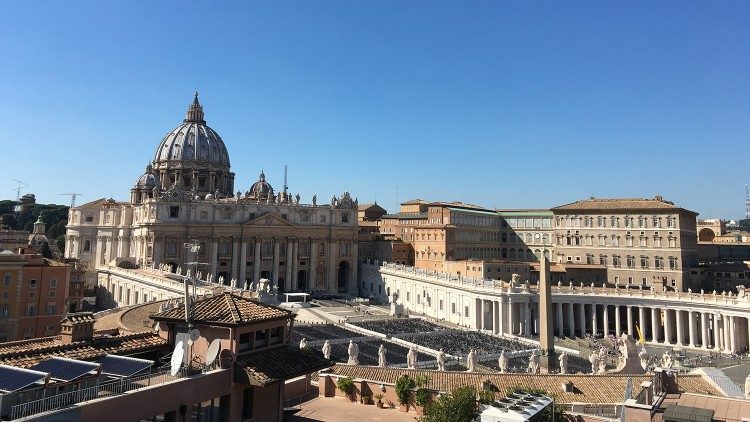
Saint Peter's BasilicaSaint Peter's Basilica 

Cardinal Tagle: Deacons are called to be living signs of Jesus

Cardinal Luis Antonio Tagle ordains 24 deacons from 13 countries during Mass in Saint Peter’s Basilica

By Vatican News staff writer

Early Saturday afternoon Cardinal Luis Antonio Tagle presided over Mass where he ordained 24 deacons studying at Rome’s Pontifical Urban College, a major seminary under the care of the Congregation for the Evangelization of the Peoples headed by him.

Congratulating and thanking them for their affirmative response to the Lord’s call, he also paid tribute to the support and formation received from family, their home dioceses, their teachers and seminary community. The 24 deacons come from Camerun, Benin, Senegal, Nigeria, Tanzania, Uganda, South Sudan, Zimbabwe, India, China, South Korea, Indonesia, and Papua New Guinea, and give "witness to the universality of the Church and its mission”.

In his homily, Cardinal Tagle recalled the Vatican II constitution Lumen Gentium which describes the role of the deacon “in service of the liturgy, of the Gospel, and of charity”, and quoting Saint Polycarp that they "be merciful, diligent, walking according to the truth of the Lord, who became the servant of all."  He underscored that “deacons are called to be living signs of Jesus, whose lordship is expressed in humble service to all”. With the grace of God, they remind Christians of “our common call to serve as Jesus did.”

Recalling the Gospel reading, where Jesus says,"Remain in me, as I remain in you...I am the vine, you are the branches...without me you can do nothing", Cardinal Tagle noted the special meaning this has today for the new deacons. He said it is not enough to know that Jesus lives in us, but that "we must choose to live and remain in him", so we may “become like him in love and service”. He encouraged the new deacons to “show the world the greatness of humble service, which is the fruit of living in Jesus.”.

In conclusion he, entrusted them to the care and protection of Mary, our Mother, and of Saint Joseph, “both humble servants, who lived for and in Jesus.”