Showing posts with label Diocese of Providence. Show all posts

Thursday, August 21, 2025

America's nicest judge and devout Catholic dead at 88


Frank Caprio, famed judge known for showing mercy, dies at 88

Judge Frank Caprio served for decades as chief municipal judge in Providence, Rhode Island. | Credit: StephanieRPereira, CC BY-SA 4.0, via Wikimedia Commons


By Amira Abuzeid

Frank Caprio, who served as a Providence, Rhode Island, municipal court judge for nearly 40 years and came to be known as “America’s nicest judge,” passed away on Aug. 20 from pancreatic cancer.

“Beloved for his compassion, humility, and unwavering belief in the goodness of people, Judge Caprio touched the lives of millions through his work in the courtroom and beyond. His warmth, humor, and kindness left an indelible mark on all who knew him,” read a statement posted on his official Facebook page.

Rhode Island Gov. Dan McKee ordered flags in the state to be flown at half staff at all state agencies and buildings until the day of Caprio’s internment, and he also asked Rhode Island residents to lower their flags out of respect.

Caprio gained worldwide fame for a lenient judicial style that blended justice, extreme empathy, and mercy when his courtroom was televised in a program called “Caught in Providence.” The program began in 1999 and went viral in 2017, achieving hundreds of millions of views since then. The show was nominated for a Daytime Emmy Award in 2021 and has a YouTube channel with nearly 3 million subscribers.When handing down judgments for low-level offenses like parking and speeding tickets, Caprio told EWTN News correspondent Colm Flynn on “EWTN News In Depth” in February that he always kept in mind something his father, a hardworking Italian immigrant with a fifth-grade education, had impressed upon him: “What might seem like a small fine to some was something that many couldn’t afford.”

“That’s why I would always inquire: ‘Tell me a little bit about what’s going on in your life,’” Caprio said.

“Your case is dismissed” became Caprio’s signature phrase.

When other judges asked him why he would be so lenient, he said: “I would just place myself in the shoes of the person before me.” 

Caprio dismissed the case of a 96-year-old man, Victor, who had an outstanding unpaid speeding ticket, the first one in his life, which he received while taking his disabled son to a doctor’s appointment. Four years later, Caprio celebrated the man’s 100th birthday with him.

“Watching my father, I learned how to treat people with respect and dignity,” Caprio said.

Early life and education

Caprio was born in 1936 in Providence, Rhode Island, the second of three sons of Italian immigrants Antonio Caprio and Filomena Caprio, who emigrated from Naples. 

Caprio attended Providence public schools, winning a state title in wrestling when he attended Central High School, and later graduating from Providence College in 1958. While teaching American government at Hope High School, he pursued a law degree at Suffolk University School of Law, attending night classes and passing the bar in 1965. He became a judge in 1985 and served until his retirement in 2023.

Caprio said that his father, a fruit peddler and milkman, used to wake him and his brothers at 4 a.m. to accompany him on his milk delivery rounds. 

“I had the most privileged childhood you could imagine,” Caprio told Flynn. “I had the privilege of being brought up poor.”

He described living in a “cold water flat,” an apartment that had no hot water. 

Caprio’s father told his sons if they “didn’t want to stay on this milk cart for the rest of your life, you better stay in school.” 

One day when he was around 12 years old, Caprio said, his father put his hand on his shoulder and said: “You’re going to be a lawyer someday, and you can’t charge poor people like us.”

The elder Caprio showed his sons how to be compassionate even as a poor milkman, refusing to stop milk deliveries when customers could not pay.

Caprio’s father continued to be a powerful presence in his life even after he became a judge. On his first day on the bench, Caprio required a belligerent, rude woman with multiple parking tickets to pay the full amount she owed and impounded her car. At the end of the day, he asked his father, who had been watching: “How’d I do?” 

His father told him he was too harsh with the woman, even if she did have a bad attitude. He told him she had three kids and might not be able to feed them that night.

“Because you’re in a position of power doesn’t mean you have to use it against people who don’t have power,” Caprio’s father said to him.

It was a lesson he would never forget.

“I was just trying to be decent with everyone. I never sat on the bench and thought I was better than anyone else or that I was superior to them in any way,” Caprio told Flynn.

Cancer diagnosis

Caprio was diagnosed with pancreatic cancer in 2023. 

A devout Catholic, Caprio’s faith sustained him during a pilgrimage to Lourdes, France, in 2024, where he sang “Ave Maria” at the grotto, describing it as a profound spiritual moment.

He told Flynn he hoped his fans would pray for him after his cancer diagnosis because “I have a deep and abiding faith in the Catholic Church, in Jesus, in the power of prayer.” He said his faith in God and the prayer from all his fans kept him going.

He asked for prayers again on Aug. 19, posting a video on Facebook. He passed away the next day.

Career, legacy, and honors

Caprio, a Democrat, served on the Providence City Council for six years, from 1962 to 1968, and lost the general election for Rhode Island attorney general in 1970. He served as a delegate for five Democratic National Conventions. Caprio also served in the Rhode Island Army National Guard.

He was actively involved in several community organizations, including the Boys Town of Italy and the Rhode Island Food Bank. He co-chaired the Rhode Island Statue of Liberty Foundation, raising funds for the restoration of the Statue of Liberty and Ellis Island. Additionally, he served on the Rhode Island Board of Regents for Elementary and Secondary Education. Caprio was also a member of the President’s Council at Providence College.

At Suffolk University School of Law, Caprio established the Antonio “Tup” Caprio Scholarship Fund, named after his father, to support Rhode Island students dedicated to enhancing access to legal services in the state’s poor, urban neighborhoods. Caprio also created scholarships at Providence College, Suffolk Law School, and for Central High School graduates, all honoring his father’s legacy.

Caprio received two honorary doctorates and a Producer’s Circle Award at the Rhode Island International Film Festival along with the Daytime Emmy nomination. His former municipal courtroom was renamed “The Chief Judge Frank Caprio Courtroom” in 2023. 

An avid Boston Red Sox fan, Caprio threw the ceremonial first pitch at Fenway Park in 2019.

In 2025 he published his memoir, “Compassion in the Court: Life-Changing Stories from America’s Nicest Judge.”

Caprio is survived by his wife of 60 years, Joyce, with whom he had five children: Frank T. Caprio, David Caprio, Marissa Pesce, John Caprio, and Paul Caprio. The couple had seven grandchildren and two great-grandchildren.

He described living in a “cold water flat,” an apartment that had no hot water. 

Caprio’s father told his sons if they “didn’t want to stay on this milk cart for the rest of your life, you better stay in school.” 

One day when he was around 12 years old, Caprio said, his father put his hand on his shoulder and said: “You’re going to be a lawyer someday, and you can’t charge poor people like us.”

The elder Caprio showed his sons how to be compassionate even as a poor milkman, refusing to stop milk deliveries when customers could not pay.

Caprio’s father continued to be a powerful presence in his life even after he became a judge. On his first day on the bench, Caprio required a belligerent, rude woman with multiple parking tickets to pay the full amount she owed and impounded her car. At the end of the day, he asked his father, who had been watching: “How’d I do?” 

His father told him he was too harsh with the woman, even if she did have a bad attitude. He told him she had three kids and might not be able to feed them that night.

“Because you’re in a position of power doesn’t mean you have to use it against people who don’t have power,” Caprio’s father said to him.

It was a lesson he would never forget.

“I was just trying to be decent with everyone. I never sat on the bench and thought I was better than anyone else or that I was superior to them in any way,” Caprio told Flynn.

Cancer diagnosis

Caprio was diagnosed with pancreatic cancer in 2023. 

A devout Catholic, Caprio’s faith sustained him during a pilgrimage to Lourdes, France, in 2024, where he sang “Ave Maria” at the grotto, describing it as a profound spiritual moment.

He told Flynn he hoped his fans would pray for him after his cancer diagnosis because “I have a deep and abiding faith in the Catholic Church, in Jesus, in the power of prayer.” He said his faith in God and the prayer from all his fans kept him going.

He asked for prayers again on Aug. 19, posting a video on Facebook. He passed away the next day.

Career, legacy, and honors

Caprio, a Democrat, served on the Providence City Council for six years, from 1962 to 1968, and lost the general election for Rhode Island attorney general in 1970. He served as a delegate for five Democratic National Conventions. Caprio also served in the Rhode Island Army National Guard.

He was actively involved in several community organizations, including the Boys Town of Italy and the Rhode Island Food Bank. He co-chaired the Rhode Island Statue of Liberty Foundation, raising funds for the restoration of the Statue of Liberty and Ellis Island. Additionally, he served on the Rhode Island Board of Regents for Elementary and Secondary Education. Caprio was also a member of the President’s Council at Providence College.

At Suffolk University School of Law, Caprio established the Antonio “Tup” Caprio Scholarship Fund, named after his father, to support Rhode Island students dedicated to enhancing access to legal services in the state’s poor, urban neighborhoods. Caprio also created scholarships at Providence College, Suffolk Law School, and for Central High School graduates, all honoring his father’s legacy.

Caprio received two honorary doctorates and a Producer’s Circle Award at the Rhode Island International Film Festival along with the Daytime Emmy nomination. His former municipal courtroom was renamed “The Chief Judge Frank Caprio Courtroom” in 2023. 

An avid Boston Red Sox fan, Caprio threw the ceremonial first pitch at Fenway Park in 2019.

In 2025 he published his memoir, “Compassion in the Court: Life-Changing Stories from America’s Nicest Judge.”

Caprio is survived by his wife of 60 years, Joyce, with whom he had five children: Frank T. Caprio, David Caprio, Marissa Pesce, John Caprio, and Paul Caprio. The couple had seven grandchildren and two great-grandchildren.

Tuesday, April 8, 2025

Bishop/Archbishop assignments today in Baltimore and Kansas City


Pope Francis Appoints Bishop Bruce Lewandowski as Bishop of Providence

Pope Francis has appointed Most Reverend Bruce A. Lewandowski, CSsR, auxiliary bishop of the Archdiocese of Baltimore, as Bishop of Providence.


WASHINGTON - Pope Francis has appointed Most Reverend Bruce A. Lewandowski, CSsR, auxiliary bishop of the Archdiocese of Baltimore, as Bishop of Providence. The appointment was publicized in Washington, D.C. on April 8, 2025, by Cardinal Christophe Pierre, apostolic nuncio to the United States.

The Diocese of Providence is comprised of 1,085 square miles in the State of Rhode Island and has a total population of 1,097,379, of which 598,990, are Catholic.


Pope Francis Accepts Resignation of Archbishop Joseph Naumann of the Archdiocese of Kansas City in Kansas; Appoints Bishop W. Shawn McKnight as Successor

Pope Francis has accepted the resignation of Archbishop Joseph F. Naumann, 75, from the pastoral governance of the Archdiocese of Kansas City in Kansas, and has appointed Bishop W. Shawn McKnight of Jefferson City, as his successor.


Saturday, August 24, 2024

Getting to know the soon-to-be Archbishop of Boston


Boston’s new archbishop leans into transparency, trust in God’s grace to face challenges ahead


By


Archbishop Richard G. Henning speaks at press conference in the Archdiocese of Boston's Pastoral Center in Braintree, Mass., with Boston Cardinal Seán P. O'Malley Aug. 5, 2024, after Pope Francis accepted Cardinal O'Malley's resignation and named then-Bishop Henning of Providence, R.I., as his successor. The Boston Archdiocese announced Archbishop Henning will be installed Oct. 31. (OSV News photo/Gregory L. Tracy, The Pilot)


(OSV News) — It was during a session for priests at the 10th National Eucharistic Congress in Indianapolis in July when Archbishop Richard G. Henning, who will be installed as archbishop of Boston Oct. 31, made peace with what was to come.

“God finally broke me, in the best of ways,” he shared with OSV News a couple of weeks later during a lengthy and refreshingly candid Zoom conversation.

It was two talks that stopped him cold: one by Daniel Cellucci of the Catholic Leadership Institute, who shared a moving testimony of his child’s cancer diagnosis and how he hadn’t “signed up for” that as a father — and relating it to the many struggles facing priests that they, too, might not have expected when they first “signed up for” seminary. And the second by Bishop Daniel E. Flores of Brownsville, Texas, who articulated the poverty of priesthood — how Jesus Christ embodied a poverty “of not being able, in the end, to control everything,” as Bishop Flores put it.

“It was then that I finally came to peace with things internally,” Archbishop Henning said in the OSV News interview.

What he was coming to peace with was a fact that no one else in the room knew: that not long before, he had been told that he would soon be leaving the Providence, Rhode Island, Diocese he had been leading for just 15 months and then heading an hour north-northeast to a city with more than three times the Catholic population.

While he is looking forward to getting to know his new home and flock, the appointment to Boston came as “a shock,” Archbishop Henning said — a fact that he shared with almost remarkable honesty and candor. Those characteristics were present throughout our recent wide-ranging conversation, indicating an authenticity that many have described as a trademark characteristic.

Particularly concerned about leaving his Providence flock so soon, Archbishop Henning pointed to his episcopal ring and spoke of the nuptial imagery between a bishop and the local church entrusted to him. “This symbolism means a great deal to me,” he said — and it was borne out over the past years in Providence where he was busy “throwing myself into the work.”

“But I’m a man under authority,” he added, and, understanding this, it didn’t take him long to accept his new appointment.

After the formal announcement was made on Aug. 5, Archbishop Henning has been the subject to a great deal of scrutiny from secular and religious media sources, and he seems to relish that pundits can’t figure out what to make of his appointment to such a significant see. Neither outwardly liberal or conservative, he appears to embrace what the late Cardinal Francis E. George of Chicago famously described as living “simply Catholicism” — which the late cardinal articulated as the Catholic faith “in all its fullness and depth, a faith able to distinguish itself from any cultures and yet able to engage and transform them all, a faith joyful in all the gifts Christ wants to give us and open to the whole world he died to save.”

In fact, Archbishop Henning is almost allergic to making any kind of foray into political activism, describing himself not as a politician but a pastor in the first interview he gave representing his new role. Nor is he eager to fire up the social channels and weigh in at a moment’s notice on the latest cultural brouhaha, though he admires many who do.

Rather, the Long Island native moves to another new city in another new state ready to give his all. “I realize my life is not my own now,” he said. “I’ll be completely theirs.”


Much of Archbishop Henning’s short tenure in Providence was spent in parishes, and The Boston Globe reported that he put 30,000 miles on his car during his short tenure. As he traveled, he listened and learned, or was simply present. He also was on the cusp of undertaking a pastoral plan to help the local church navigate the ramifications of shrinking resources and the need to downsize its institutional footprint — as have many dioceses in the U.S. — a task now awaiting his unnamed successor.

Archbishop Henning is not getting a pass, though; he will face similar challenges regarding governance and reform on a greater scale in Boston. And he brings to those challenges a unique background — both as a Scripture scholar and as a former seminary professor and administrator — that could serve him well, in addition to the perspective of his own life experience.

The now-archbishop was ordained an auxiliary bishop of his home Diocese of Rockville Centre, New York, in the summer of 2018, about a month after revelations that former Cardinal Theodore E. McCarrick had lived a double life as a notorious sexual predator and a couple of weeks before the release of the damning Pennsylvania grand jury report that chronicled decades of sexual abuse and coverup in most of that state’s dioceses. Within his first month as a bishop — as if a whole bushel of apples is made rotten by a few — then-Bishop Henning had requests for his own resignation.

Archbishop Henning acknowledged that “it was very difficult” to become a bishop amid those scandals. But he learned some important things. One was the need for bishops “to be willing to take criticism” when it’s warranted and even when it’s not. Even when someone “is irrationally critical or angry and hostile and maybe wrong … I still have to love that person. I still have to find a response that does not dismiss them or give up on them,” he said.

He also learned, during that difficult time in the church, the importance of being straight with the people of God. “One of the high values of the people of God and the clergy is transparency, you know, of being just honest with people,” he said.

The 2018 experience also taught Archbishop Henning the importance of being “direct” in leadership. “I don’t want to make the mistake of trying to manipulate people, nor, in some sense, waste time,” he said. “So when I meet with a priest and there’s something, some difficulty, I will tend to be, I try to be compassionate, but I’m direct.”

That summer of 2018 — which Cardinal Timothy M. Dolan of New York referred to as the “summer of hell” — was “a wake-up call” for bishops, Archbishop Henning said — “that we really have to be authentic.”

“That’s a struggle of every day, every month, every year,” he said. “I don’t live in abject poverty, but I try to live, you know, simply and oriented toward mission.”

With the Archdiocese of Boston having been ground zero for the clergy sexual abuse crisis in the United States, following The Boston Globe’s revelatory “Spotlight” reporting in 2002 that sent shockwaves through the church, it follows that Archbishop Henning will be scrutinized in his approach to clergy abuse and to victims. Critics are increasingly vocal that bishops should continue to improve upon both abuse prevention and on the handling of allegations — including those of adult misconduct, as boldly stated by outgoing National Review Board chair Suzanne Healy at the U.S. bishops’ June general assembly in Louisville, Kentucky.

Archbishop Henning, who said he has taken a special interest in abuse prevention work long before he was a bishop, said that in Providence he was “already thinking about those things,” and having conversations with the diocese’s priests both “to make sure the people entrusted to our care are physically, spiritually, emotionally safe” and to emphasize that “clear and conscious boundaries are just good order” for priestly ministry.

“The challenge for us as ministers is that we do have to interact with people often on a very emotional level and frequently at moments in their lives when they are vulnerable, right?” he said. “So if we stop doing that, you know, what’s the point?”

One concrete insight offered by Archbishop Henning relates to confession. “The reconciliation room is a problem,” he said, suggesting a return to old-style confessionals where a screen separates priest and penitent. The “reconciliation rooms” and their face-to-face style introduces a vulnerable situation, Archbishop Henning explained, “and it certainly is a risk that a predator could exploit that, right?”

Acutely aware of the many issues facing priests today, the archbishop also said that another key question in preventing abuse by priests is how to keep priests “from going off the rails.”

“Our authenticity, you know, is our best prevention,” Archbishop Henning said, “because we are human.”

“If you raise a child in a polluted city, that child’s gonna end up with asthma, right?” he reasoned. “We are all affected by the environment in which we live, and it’s an environment that is hedonistic, it is hyper-sexualized, it’s constantly telling us to do what feels good and to avoid anything that challenges us or is difficult.”

“This is not a healthy environment for priests,” he added. “And then throw on top of that all the challenges of ministry in our own age, and the fewer numbers of priests, and that they are living mostly by themselves — it’s a perfect storm of difficulties that requires, I think, a return to the most basic foundations of the faith, of spiritual direction, of daily prayer, of good, solid friendships (with each other), of good, solid friendships with lay faithful that don’t have an agenda.”

Archbishop Henning has certainly made that a priority.

“One of my most important strengths are some really fine married couples that have been a part of my life for decades and whose own kind of faithful witness strengthens me in my chastity, you know, to see them kind of being with one another and being faithful to that whatever comes, that’s an inspiration for me,” he said.

As more cases revealing adult vulnerability to abuse continue to come to light, Archbishop Henning acknowledged that it’s difficult to handle adult misconduct or abuse cases in the same fashion as the abuse of minors, particularly since law enforcement often will not get involved. As of 2024, only 13 states and the District of Columbia have laws criminalizing clergy sexual misconduct perpetrated on adults under their pastoral or spiritual care. Massachusetts is not among them.

“When you have individuals that engage in what at least appears to be a consensual sexual relationship, there isn’t a crime that’s committed,” he said. “I know that’s not a good enough answer because that was the kind of answer people might have given in the 1970s. But I think it is a little bit more complex.

“It’s not like you can just simply say, ‘We report everything to the police,'” he continued. “I don’t know that the response in those circumstances can or should be the same. But I understand that that also brings with it a risk that, as the goalposts move, in 10 years, someone’s gonna look back and say, ‘That was a cover-up.'”

These more complex cases, he said, should be addressed on an individual basis — with the “key element” being whether or not “coercion or undue influence” in the form of “abuse of authority” took place, he said. And who, he wondered, should address them?

“We haven’t done this in Providence, but I know a number of dioceses have introduced some version of a review board — again, distinct from the child review board,” he said. “I think that’s a helpful development, and one that I will be kind of observing others do. Because I think that gives us at least some way to do a more objective, transparent examination, even if names are not revealed, and we don’t humiliate people in public.”

Another challenge for bishops today is a growing number of priests leaving ministry within the first few years of ordained ministry. Archbishop Henning is a former seminary formator and administrator at the Immaculate Conception Seminary — which served the Brooklyn, New York, and Rockville Centre dioceses for 80 years — and oversaw its transformation to a retreat and conference center, after a merger with the New York Archdiocese’s St. Joseph’s Seminary.

Priests are burning out very fast with increasing obligations being placed on them, many for which they are not necessarily prepared. Coming changes in formation might be necessary to respond to the challenges for priests today, especially as more institutional decline looms for the Catholic Church in the U.S. — something Archbishop Henning admits is a sort of “apocalypse,” for which he tried to prepare his former seminary students as far back as 2011.

In regard to this, Archbishop Henning — ordained in 1992 and reticent to claim any particular expertise — regarded seminary formation as having improved from his own time as a seminarian, crediting Pope St. John Paul II’s apostolic exhortation “Pastores Dabo Vobis” (“I Will Give You Shepherds”).

“The seminary formation I experienced, I would say, was too shallow, and it was insufficiently kind of faithful to the church’s own teaching at times,” Archbishop Henning said. Recent changes made following the 2002 and 2018 priestly scandals have put a greater emphasis on spiritual formation, which the archbishop called “a good thing.”

“I think that getting men to develop a robust interior life and prayer life in the seminary is a really important thing,” he said. “I think right now, in light of the Holy Father’s kind of influence in this, there is a tremendous focus on human formation, responding, I think, to the reality that so many of our men in formation are coming from unhealthy family environments or experiences that really need a lot of healing. Sometimes they just need help to kind of function.”

Archbishop Henning believes we will see “happier priests and bishops” when greater communion is facilitated with laity. “In the life of the Catholic Church, if you look at where some of the most vibrant faith life and leadership is occurring, it’s coming from the laity,” he said.

“For me, the thing that has made me happiest as a priest has been that connection to people,” he said. “I certainly have good relationships with peers in priesthood and in episcopacy, and those are very important relationships, but it’s that real connection with regular folks in the parish, I think, that also brings another element.”

While recognizing the increased number of priests living alone due to necessities of ministry today and a greater awareness of boundaries can be a catch-22 in this regard, Archbishop Henning also underscored the importance of seeing the cleric’s connection with his people as something of a nuptial bond.

“Obviously there’s differences, but the Eucharist itself is the icon of what it means to be a priest. It’s also the icon of what it means to be married. This is my body, blood given for you, right? So I think maybe that’s an area that could help men cope better with the challenges and demands they’re gonna face when they get out of the seminary,” he said.

Archbishop Henning also said he knows that bishops cannot maintain a status quo with a business-as-usual approach to pastoring.

“We have parish after parish that has a plan that was created for mission in a different age. And that now becomes a burden rather than a tool of mission,” he said. “But, of course, a burden that is emotionally fraught and so very difficult to change, right?”

As Archbishop Henning tackles those challenges, working in the self-described academic’s favor is that he is unafraid to theorize and ask questions — and that he also “tries to figure out how to get from the theory to some kind of expression of reality.

“So how do we figure out how to come alive with discipleship and mission and a true sense of community in kind of the ruins of that prior age?” he said. “How do we take that plant (of the past) and bring it alive? I don’t have these answers. These are questions that I can’t answer.”

And he will bring these questions with him to Massachusetts.

“I’m not gonna go (to Boston) and tell them what to do or even necessarily start this conversation, but I think this is the conversation of the next decade or two for the church,” he said.

But he stressed that, despite that decline, despite the challenges with governance, despite the abuse that the church continues to wrestle with, hope remains.

“I think that’s, again, why Indianapolis is important because I think that’s pointing us to this truth: The church is still alive,” he said. “There may be institutional decline, but it is not a decline in the Gospel or in the Eucharist or the Lord himself, right? That is all well and good and alive, and will be as long as there are people who will surrender themselves and trust in his grace.”


Which brings us back to Archbishop Henning’s Saturday morning at the National Eucharistic Congress — the one that “broke” him. That experience gave him an opportunity to truly practice — and model — what he preaches.

That’s especially evident when the Scripture scholar identified the 13th chapter of St. Paul’s First Letter to the Corinthians as his favorite Pauline passage — what is called St. Paul’s ode to love.

Archbishop Henning might not have wanted to leave his Rhode Island flock after investing himself so much in such a short amount of time. He might not have relished the idea of the burdens of office awaiting him in Boston. But it’s clear that he has surrendered himself to God and trusts in his grace. And because of this, as he comes to know and love his new flock, there’s a good chance the feeling will be mutual.

Michael R. Heinlein writes for OSV News from Indiana.

Monday, August 5, 2024

The new Archbishop of Boston, successor to Cardinal O'Malley


Who is Bishop Henning? What to know about Cardinal O'Malley's successor

Portrait of Katie LandeckKatie Landeck
USA TODAY NETWORK


After just over a year as the  bishop of Providence, Pope Francis has appointed Bishop Richard G. Henning at the Archbishop of Boston.

Henning will take over for Cardinal Sean P. O'Malley, 80, who served as the bishop of Fall River from 1992 to 2002 and was appointed as the archbishop of Boston on July 1, 2003. Three years later, he was elevated by Pope Benedict XVI to cardinal. Pope Francis selected Cardinal O’Malley as the only North American member of his Council of Cardinal Advisors.

Cardinal O'Malley was well-known, in part because he kept a personal blog, cardinalseansblog.org, which he's updated weekly for years.

Henning, with his short tenure in New England, is less known. Here's what to know about him.

Where is Bishop Henning from?

Henning was born in Rockville Centre, New York, in 1964 to Richard and Maureen Henning, the first of five siblings. He grew up in Valley Stream and attended Chaminade High School in Mineola, New York.

He studied Licentiates in Biblical Theology at The Catholic University of America in Washington, D.C., and University of St. Thomas Aquinas in Rome, according to his biography.

Before coming to Rhode Island, he was the auxiliary bishop for the Roman Catholic Diocese of Rockville Centre, which covers Long Island and has about 154 parishes for a population of more than 1.5 million Catholics. It was also his home dioceses, "a place where I knew everyone and everything," Henning told The Providence Journal last year.

Does Bishop Henning speak Spanish?

Henning is fluent in Spanish, as well as Italian. He is able to read French, Greek and Hebrew.

When he was ordained in 1992, he first served for five years as an associate pastor at the Church of St. Peter of Alcantara, Port Washington. That assignment included serving a large population of El Salvador immigrants, migrants who had fled the bloody and lengthy civil war, where they had seen Catholic leaders such as Archbishop Oscar Romero assassinated and the deaths of “lay men and women who had stood up for the oppressed in the face of violence and mistreatment.” 

“It was a community that had suffered a lot … that was stressed and poor and traumatized and yet full of joy and family and faith,” Henning told The Providence Journal in 2023. “It was so formative for me.” 

To better serve them, he learned to speak Spanish.

So four days a week, a group of four women from this community tutored him, each taking one afternoon a week. Then on Saturdays, he would attend their prayer group meeting and just sit in the back and listen. This went on for a year, until he could preach and hear confessions in Spanish.  

Why did Henning choose the priesthood?

Henning knew in 5th grade that he wanted to be a priest.

At the time, he was attending a Catholic grammar school in suburban Valley Stream, New York. He recalled in a press conference last year that a priest visited to speak about vocations, and afterward he had turned to a classmate and said, "I think I want to a be a priest."

Henning's father worked as a firefighter and his mother was a nurse who later become a homemaker, he said.

"Really, my vocation was born in the home with my parents," he said. "Both chose paths in life that were devoted to others."

What's Bishop Henning's views of gay marriage?

In April 2023, Bishop Henning told The Providence Journal that same-sex marriage “doesn’t work in Catholic theology.” 

“The sacrament of marriage has always been theologically linked to procreation,” he said. “Culture has basically defined marriage in terms of affection between two people. It’s about how you feel about the other person. That’s what defines marriage. But for us, marriage was never actually only about the two people. That was a key element of it ... but for us, that’s only ever been one dimension of marriage. Ultimately, the gift of marriage is about a participation in God’s life and the power of the conception and the raising and educating of a child. The idea of expanding marriage beyond that doesn’t work in Catholic theology.“ 

“That doesn’t mean that the church hates people who have same-sex attraction,” he continued. “That doesn’t mean that they’re somehow evil or anything like that, right? All of us are sinners, in fact, in need of grace. I certainly am. It’s not a condemnation to say we can’t do that. … I do understand the argument that that somehow marginalizes or makes people feel that they’re rejected, but that’s certainly not the intention.” 

Every life, he said, is sacred and deserving of dignity.  

What's Bishop Henning's views on abortion?

On the subject of abortion, Henning told The Providence Journal in April 2023 again that believes that all lives are sacred and deserving of dignity.

“The question I always have to ask is, if the child in the womb is not human, then what is it?” he said. “There’s a truth here that needs space at the table, too, and for us, as Catholics, it’s really important that we keep standing up for that, and I will certainly do that.  

“Now, I know that in Rhode Island the laws are going to be highly permissive. It occurs to me, though, why in Rhode Island can’t we give women a genuine choice?” he said, speaking directly of the state he had just moved to. “We do our best to help women have their baby, if that’s what they wish, and we have limited resources to do that. I wonder why, in a state that strikes me as so human and so welcoming, there isn’t more room in our hearts for the most vulnerable among us?” 

These concerns, he said at the time, also apply to assisted suicide and cloning and gene editing, which all raise questions about “how we understand human dignity.” 

“As much as people may be angry or disagree with the church, I wish they could find it in their hearts to at least say, ‘Well, it’s a voice that needs to be heard in the debate,'” he said. “And certainly, whether people want to hear us or not, we will be speaking that voice.” 

Bishop Henning has a Labrador retriever, Agnes (named after St. Agnes, the patroness of the Diocese of Rockville Center on Long Island). He likes to pray while walking her.

Antonia Noori Farzan contributed to this report.

Powerful Catholic American Cardinal resigns


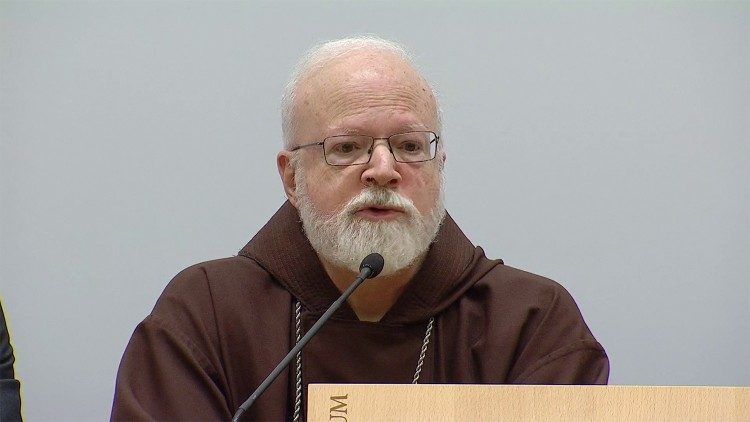
Cardinal Sean Patrick O'Malley (archive photo)Cardinal Sean Patrick O'Malley (archive photo) 

Pope accepts resignation of Cardinal O'Malley, appoints new Archbishop of Boston

Pope Francis accepts the resignation of Cardinal Seán Patrick O'Malley, Archbishop of Boston, USA, and also president of the Pontifical Commission for the Protection of Minors. He appoints Bishop Richard Henning of Providence as Cardinal O'Malley's successor.

Vatican News

After more than two decades, Cardinal Seán Patrick O'Malley has concluded his leadership of the Archdiocese of Boston, the fourth largest in the United States. On 5 August Pope Francis accepted the resignation from pastoral leadership of the Capuchin Cardinal, who turned 80 last June.

The Pope appointed Bishop Richard G. Henning, until now heading the US Diocese of Providence, as Cardinal O'Malley's successor.

Archbishop of Boston since 2003

After having served in Florida, the US Virgin Islands, and Fall River since 1992, John Paul II appointed him on 1 July 2003 Metropolitan Archbishop of Boston, an archdiocese at the centre a few years earlier of the "Spotlight Investigation" on clergy child abuse cases. The fight against this scourge has been and still is a major commitment of Cardinal O'Malley, who since 2014 has served as President of the Pontifical Commission for the Protection of Minors and also a member of the Council of Cardinals (C9).

The new archbishop

In his place Pope Francis appointed Bishop Richard G. Henning, 59, originally from Rockville Centre where he was ordained a priest in 1992. He has covered various posts in recent years: parochial vicar of Saint Peter of Alcantara, Port Washington (1992-1997); Associate professor of Sacred Scripture, then professor and formator at the Seminary of the Immaculate Conception, Huntington (2002-2012); Rector of the Seminary of the Immaculate Conception and Director of the Sacred Heart Institute for Ongoing Formation of the Clergy (2012-2018); Episcopal Vicar of the Central Vicariate (2017); Vicar for Parish Evangelization and Pastoral Planning (2018); Vicar for Clergy (2021).

After receiving a Baccalaureate and a Master of Arts in History from Saint John's University, Queens (New York) and ecclesiastical studies at the Seminary of the Immaculate Conception in Huntington, Archbishop-elect Henning obtained a Licentiate in Biblical Theology from the Catholic University of America, Washington, in 2000 and a Doctorate in Biblical Theology from St. Thomas Aquinas University in Rome in 2007. 

Appointed Titular Bishop of Tabla and Auxiliary of Rockville Centre on 8 June 2018, he received episcopal ordination the following 24 July. He was appointed Bishop Coadjutor of Providence on 23 November 2022 and began leadership of the Diocese on 1 May 2023.

Archbishop-elect Henning will be installed as Archbishop of Boston on 31 October 2024 at the Cathedral of the Holy Cross in Boston.