Sunday, June 29, 2025

Papal Sunday Angelus on Solemnity of Sts. Peter & Paul06.29.2025


Pope Leo XIV during AngelusPope Leo XIV during Angelus  (@VATICAN MEDIA)

Pope Leo XIV at Angelus: May unity be forged in witness and forgiveness

On the Feast of Saints Peter and Paul, Pope Leo XIV highlights the enduring call to Christian unity, grounded in the shared witness of martyrdom and the transformative power of forgiveness.

By Linda Bordoni

On the Solemnity of Saints Peter and Paul, Pope Leo XIV greeted pilgrims gathered in St Peter's Square for the Angelus prayer and reflected on Christian unity, conversion, and the witness of martyrdom that binds the Church in a deep and often hidden communion.

The Pope began by recalling the roots of the Church of Rome, founded on the testimony and blood of the Apostles Peter and Paul. He honoured their enduring legacy, linking it to the ongoing sacrifice of Christians around the world who suffer, and even die, for their faith in Christ.

“We can speak of an ecumenism of blood,” the Pope said, describing a unity forged not through theological agreements alone, but through the shared suffering of believers across confessional lines.

“This unseen yet profound unity among Christian Churches that are not yet in full and visible communion,” he added, is at the heart of his episcopal mission. “The Church of Rome,” he reaffirmed, “is committed by the blood shed by Saints Peter and Paul to serving in love the communion of all Churches.”

Jesus is the true rock

Reflecting on the Gospel and the foundational role of Peter, the Pope pointed to Jesus as the true rock: “He is the rock rejected by the builders, whom God made the cornerstone.”

He observed how the grandeur of the Papal Basilicas of Peter and Paul, now central to Christian identity, once stood at the margins of society. “Outside the Walls,” he said, using the traditional Roman expression, is where their witness began, a reminder that Gospel greatness often begins in places the world deems insignificant.

Pope Leo warned that those who follow Christ walk a difficult path, the path of the Beatitudes. He noted that poverty of spirit, meekness, and a thirst for justice are often met with opposition. Yet, it is precisely along this path that God’s glory is revealed. “God’s glory shines forth in his friends and continues to shape them along the way, passing from conversion to conversion.”

Sainthood is born of forgiveness

He explained that sainthood is not born of perfection, but of forgiveness. “The New Testament does not conceal the errors, conflicts and sins of those whom we venerate as the greatest Apostles,” the Pope said, adding that “their greatness was shaped by forgiveness.”

Just as Christ reached out to Peter and Paul time and again, he continues to call each person, not once, but repeatedly. “That is why we can always hope. The Jubilee is itself a reminder of this,” he said.

Concluding, the Pope called the faithful to become artisans of unity, beginning within families and local communities. “Unity in the Church and among the Churches is fostered by forgiveness and mutual trust,” he said, "If Jesus can trust us, we can certainly trust one another in his name.”

Finally, he prayed to the Virgin Mary and the Apostles Peter and Paul, with a call for the Church to be “a home and school of communion” in a world still marked by wounds and division

Pope Leo XIV presides over Mass and the imposition of the pallium on this Solemnity of Peter & Paul


Pope Leo XIV: Peter and Paul, examples of communion and harmony

Presiding over the Mass on the Solemnity of the patron Saints of the Diocese and City of Rome, with the blessing and imposition of the pallium on the new Metropolitan Archbishops — Leo XIV invites the faithful to contemplate the two Apostles. Though different in their gifts and approaches, they lived “a fruitful harmony in diversity.”

By Edoardo Giribaldi

Pope Leo XIV presided over the celebration of Sunday's Solemnity of Saints Peter and Paul, patrons of the Diocese and city of Rome, in St. Peter’s Basilica. The Mass included the blessing and imposition of the pallium on 54 new Metropolitan Archbishops.

Pallium is the Latin word for mantle or cloak. It is a woolen band that is bestowed by the Pope upon the shoulders of Metropolitans or Primates as a testimony of their communion with the Bishop of Rome and their mission to spend their lives for the flock, imitating the Good Shepherd carrying His sheep on their shoulders. The pallium also signifies the power which the metropolitan, in communion with the Roman Church, has by law in his own province.

The Pope said we honor the two brothers in faith, Peter and Paul, “pillars of the Church.”

Martyrdom in common

“Peter and Paul were both ready to lay down their lives for the sake of the Gospel.”

A brotherhood in the Spirit

This communion, sealed by martyrdom, is reached through differing approaches to faith and distinct apostolic experiences. "Their brotherhood in the Spirit did not erase their different backgrounds."

Peter, the humble Galilean fisherman, responded without reservation to the Lord’s call and directed his preaching primarily to the Jews. Paul, by contrast, belonged to the “party of the Pharisees,” and began as a persecutor of Christians before his “life-changing encounter with the risen Christ” and call to bring Good News to the gentiles.

Evangelical frankness

“The history of Peter and Paul shows us that the communion to which the Lord calls us is a unison of voices and personalities that does not eliminate anyone’s freedom. Our patron saints followed different paths, had different ideas and at times argued with one another with evangelical frankness. Yet this did not prevent them from living the concordia apostolorum, that is, a living communion in the Spirit, a fruitful harmony in diversity.”

Recalling the words of Saint Augustine: “The feast of the two Apostles is celebrated on one day.  They too were one.  For although they were martyred on different days, they were one.”

A variety of gifts

This communion is made possible by the Spirit, who "unites differences and builds bridges of unity thanks to the rich variety of charisms, gifts and ministries."

“It is important that we learn to experience communion in this way — as unity within diversity — so that the various gifts, united in the one confession of faith, may advance the preaching of the Gospel.”

Differences into a workshop of unity

“[ Let us make an effort, then, to turn our differences into a workshop of unity and communion, of fraternity and reconciliation, so that everyone in the Church, each with his or her personal history, may learn to walk side by side.]”

The vitality of our faith

The second theme of his homily concerned the "vitality of our faith” as we remember the examples of Peter and Paul. With the risk of falling into "a rut, a routine, a tendency to follow the same old pastoral plans without experiencing interior renewal and a willingness to respond to new challenges," the two Apostles can inspire in us an openness to change, one that leads to questions and encounters with the “concrete situation" in the life of communities. They sought new paths for an evangelization that started with people’s questions and experiences.

Renewing vitality of faith

The question posed by Jesus in the Gospel reading at the Mass — “But who do you say that I am?” — echoes across the centuries, challenging each believer to discern whether their journey of faith maintains the “energy” and “vitality” — the “flame” — that sustains “our relationship with the Lord.”

“Every day, at every moment in history, we must always take this question to heart. ”

Church of Rome as a sign of unity

Answering these questions enables the renewal of the Church’s proclamation and mission. In particular, the ecclesial community of Rome is called to be — more than any other — a “a sign of unity and communion, a Church on fire with vibrant faith, a community of disciples who testify to the joy and consolation of the Gospel wherever people find themselves.”

The pallium as a sign of communion

The Pope then greeted the “brother Archbishops” called to receive the pallium — a vestment that signifies unity with the Pope himself — so that, in the communion of faith, each one may build up the local Churches entrusted to them.

Pope Leo also offered his warm greetings to the Delegation of the Ecumenical Patriarchate sent by His Holiness Bartholomew, expressing his "heartfelt gratitude." Metropolitan Emmanuel of Chalcedon (Ecumenical Patriarchate of Constantinople) was present at the celebration, as designated by the Ecumenical Patriarch.

He greeted members as well of the Synod of the Ukrainian Greek Catholic Church, thanking them for their presence and "pastoral zeal" praying that the Lord may grant peace to their people.

Intercession of the Saints

The Pope concluded the homily by expressing the hope for a shared journey “in faith and communion,” invoking the intercession of Saints Peter and Paul “upon ourselves, the city of Rome, the Church, and the whole world.”

Blessing and imposition of the pallium

Following the Eucharistic celebration — concelebrated by Cardinal Stephen Brislin, Archbishop of Johannesburg, South Africa, and Cardinal Robert Walter McElroy, Archbishop of San Diego, USA — the rites of the blessing and imposition of the pallium were carried out. Deacons retrieved the vestments from the Confession of Saint Peter and presented them to the Pope. The Cardinal Proto-Deacon, Dominique Mamberti, introduced the new Metropolitan Archbishops, who then took the oath of fidelity to the Pope and the Church of Rome.

Archbishops from around the world

From the United States to Peru, from Italy to the farthest reaches of the world — Papua New Guinea, Guam, New Caledonia, the group of 54 metropolitan Archbishops featured a rich diversity, and on each one’s shoulders the Pope personally placed the pallium, exchanging with each an embrace and a few words.

Saturday, June 28, 2025

Solemnity of Saints Peter & Paul


Sts. Peter and PaulFeast day: Jun 29


On June 29 the Church celebrates the feast day of Sts. Peter & Paul. As early as the year 258, there is evidence of an already lengthy tradition of celebrating the solemnities of both Saint Peter and Saint Paul on the same day. Together, the two saints are the founders of the See of Rome, through their preaching, ministry and martyrdom there.

Peter, who was named Simon, was a fisherman of Galilee and was introduced to the Lord Jesus by his brother Andrew, also a fisherman. Jesus gave him the name Cephas (Petrus in Latin), which means ‘Rock,’ because he was to become the rock upon which Christ would build His Church.

Peter was a bold follower of the Lord. He was the first to recognize that Jesus was “the Messiah, the Son of the living God,” and eagerly pledged his fidelity until death. In his boldness, he also made many mistakes, however, such as losing faith when walking on water with Christ and betraying the Lord on the night of His passion.

Yet despite his human weaknesses, Peter was chosen to shepherd God's flock. The Acts of the Apostles illustrates his role as head of the Church after the Resurrection and Ascension of Christ. Peter led the Apostles as the first Pope and ensured that the disciples kept the true faith.

St. Peter spent his last years in Rome, leading the Church through persecution and eventually being martyred in the year 64. He was crucified upside-down at his own request, because he claimed he was not worthy to die as his Lord.

He was buried on Vatican hill, and St. Peter's Basilica is built over his tomb.

St. Paul was the Apostle of the Gentiles. His letters are included in the writings of the New Testament, and through them we learn much about his life and the faith of the early Church.

Before receiving the name Paul, he was Saul, a Jewish pharisee who zealously persecuted Christians in Jerusalem. Scripture records that Saul was present at the martyrdom of St. Stephen.

Saul's conversion took place as he was on his way to Damascus to persecute the Christian community there. As he was traveling along the road, he was suddenly surrounded by a great light from heaven. He was blinded and fell off his horse. He then heard a voice saying to him, “Saul, Saul, why do you persecute me?” He answered: “Who are you, Lord?” Christ said: “I am Jesus, whom you are persecuting.”

Saul continued to Damascus, where he was baptized and his sight was restored. He took the name Paul and spent the remainder of his life preaching the Gospel tirelessly to the Gentiles of the Mediterranean world.

Paul was imprisoned and taken to Rome, where he was beheaded in the year 67.

He is buried in Rome in the Basilica of St. Paul Outside the Walls.

In a sermon in the year 395, St. Augustine of Hippo said of Sts. Peter and Paul: “Both apostles share the same feast day, for these two were one; and even though they suffered on different days, they were as one. Peter went first, and Paul followed. And so we celebrate this day made holy for us by the apostles' blood. Let us embrace what they believed, their life, their labors, their sufferings, their preaching, and their confession of faith.”

Saturday yields another Saint of the Day


St. Paul I, Pope


Pope from 757-767. The brother of Pope Stephen 11 and a Roman, he was educated in the Lateran Palace, became a deacon under Pope Zachary, and wielded considerable influence in his brother’s administration. Elected to succeed Stephen, he took as his primary concern the threat posed to Rome and the Papal States by the Lombards. Paul secured an alliance with the Frankish king Pepin the Short, thereby cementing the relationship between the Holy See and the Frankish Empire which culminated with the historically significant alliance between Pope Leo III and Charlemagne. Paul also opposed the Iconoclast policies of the Byzantine emperor Constantine V, thereby exacerbating further the deteriorating relationship between the papacy and the Byzantine Empire. He died on June 28 at St. Paul’s Outside the Walls, in Rome.

Pope Leo XIV meets with the Orthodox committed to restoring full communion


Pope Leo XIV receives the delegation of the Ecumenical Patriarchate of ConstantinoplePope Leo XIV receives the delegation of the Ecumenical Patriarchate of Constantinople   (@VATICAN MEDIA)

Pope reaffirms commitment to full communion with Orthodox Church

Addressing a delegation from the Ecumenical Patriarchate on the Solemnity of Saints Peter and Paul, Pope Leo XIV reiterates his commitment to respectful dialogue and collaboration aimed at restoring full visible communion.

By Linda Bordoni 

Meeting a delegation from the Ecumenical Patriarchate of Constantinople on the Solemnity of Saints Peter and Paul, Pope Leo XIV on Saturday reaffirmed the Catholic Church’s commitment to the path of reconciliation and unity with the Orthodox Church.

During the audience that marked the first such encounter since the beginning of his pontificate, he reflected on the “profound communion already existing between us,” and noted that the traditional exchange of delegations for the respective feasts of the Apostles Peter and Andrew is “a reflection of the fraternal bond that united the Apostles Peter and Andrew.”

Milestones of ecumenism

Tracing the steps of rapprochement between Rome and Constantinople, Pope Leo recalled with gratitude the “courageous and farsighted” efforts of Pope Paul VI and Ecumenical Patriarch Athenagoras, whose historic meeting in 1964 set the foundations for modern ecumenical dialogue. He noted that their successors have “pursued with conviction the same path of reconciliation,” highlighting in particular the presence of Ecumenical Patriarch Bartholomew at the funeral of Pope Francis and again at the Mass inaugurating his own pontificate.

“I assure you of my desire to persevere in the effort to restore full visible communion between our Churches,” he said, and he underlined that such unity “can only come about, with God’s help, through a continued commitment to respectful listening and fraternal dialogue.”

Open to collaboration

Pope Leo expressed his openness to ideas and collaboration, stating: “I am open to any suggestions that you may offer in this regard, always in consultation with my brother Bishops of the Catholic Church who… share with me the responsibility for the complete and visible unity of the Church.”

Concluding his address, the Pope offered heartfelt thanks for the delegation’s presence in Rome and asked them to convey his greetings and gratitude to Patriarch Bartholomew and the Holy Synod.

Entrusting their shared journey to the intercession of Saints Peter and Paul, Saint Andrew, and the Holy Mother of God, he prayed that “they may accompany and sustain us in our efforts in the service of the Gospel.”

Pope Leo XIV offers prayers, encouragement and support to Ukranian Greek Catholics


Pope Leo XIV meeting with members of the Jubilee Pilgrimage of the Ukrainian Greek-Catholic ChurchPope Leo XIV meeting with members of the Jubilee Pilgrimage of the Ukrainian Greek-Catholic Church  (@Vatican Media)

Pope to Ukrainian Greek Catholics: 'Your faith is being put to the test'

Pope Leo XIV acknowledges that the faith of Ukrainian Greek Catholics is being put to a severe test, "amid this senseless war," but stresses that the Lord will have the final word and life will triumph over death.

By Deborah Castellano Lubov

Even if your faith is being put to the test, trust in God, Pope Leo XIV told Ukrainian Greek Catholics on Saturday in the Vatican.

The Pope began saying he extends a heartfelt greeting to the dear faithful of the Ukrainian Greek-Catholic Church, who have come to the tomb of the Apostle Peter on the occasion of the Jubilee Year, and greeting, in particular, His Beatitude Sviatoslav Shevchuk, Major Archbishop of Kyiv-Halyč, the bishops, priests, consecrated men and women, and lay faithful.

Welcoming the delegation, Pope Leo said, "I wish to express my closeness to the martyred Ukraine—to the children, the youth, the elderly, and especially to the families who mourn their loved ones," adding, "I share in your sorrow for the prisoners and for the victims of this senseless war."

Keep eyes on Christ

The Holy Father also reassured that he entrusts to the Lord their intentions, your daily struggles and tragedies, and above all, their longing for peace and serenity, noting, "I encourage you to walk together—pastors and faithful—keeping your eyes fixed on Jesus, our salvation."

"Your pilgrimage," he said, "is a sign of the desire to renew the faith, to strengthen the bond and communion with the Bishop of Rome, and to bear witness to the hope that does not disappoint, because it is born from the love of Christ poured into our hearts through the Holy Spirit," highlighting, "The Jubilee calls us to become pilgrims of that hope throughout our lives, despite the adversities of the present moment."

Many questions for the Lord

"The faith of your people," Pope Leo recognized, "is now being put to a severe test." "Many of you, since the war began," he acknowledged, "have surely asked yourselves: Lord, why all this? Where are you? What must we do to save our families, our homes, and our homeland?"

Faced with this dramatic scenario, Pope Leo stressed that, "Believing does not mean already having all the answers, but trusting that God is with us and grants us His grace, that He will have the final word, and that life will triumph over death.

Learning from the Virgin Mary

The Pope urged them to draw strength and courage from the Blessed Mother.

"The Virgin Mary, so beloved by the Ukrainian people, who with her humble and courageous 'yes,'” he said, "opened the door to the world’s redemption, assures us that our own “yes,” simple and sincere, can also become an instrument in God’s hands for accomplishing something great."

"Saying “yes” today," he said, "can open new horizons of faith, of hope, and of peace, especially for all those who are suffering."

Hope that the Lord will wipe away every tear

The Pope urged them to share that faith with their loved ones, fellow countrymen and women, and all those the Lord places in your path, reminding that the Jubilee calls all faithful to become pilgrims of hope throughout our lives, despite the adversities of the present moment.

Their journey to Rome, with the passage through the Holy Doors and the stops at the tombs of the Apostles and Martyrs, he also suggested, is a symbol of this daily path, oriented toward eternity, "where the Lord will wipe away every tear, and there will be no more death, nor mourning, nor crying, nor pain."

Pope Leo concluded by praying that the Virgin Mary, Mother of Hope, guide and protect them, and imparting his heartfelt Apostolic Blessing to their families, Church, and people.

The Holy Father also greeted and blessed some mothers of soldiers who had fallen at the front who were participating in the pilgrimage.


Pope Leo XIV blesses mothers of fallen Ukrainian solders.   (@Vatican Media)

Friday, June 27, 2025

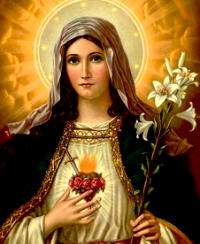
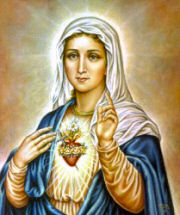
Saturday is the Memorial of the Immaculate Heart of Mary


Ordinary Time: June 28th

Memorial of the Immaculate Heart of Mary

facebook sharing button Share
twitter sharing button Tweet
linkedin sharing button Share
pinterest sharing button Pin
email sharing button Email
sharethis sharing button

MASS READINGS

June 28, 2025 (Readings on USCCB website)

PROPERS [Show]

COLLECT PRAYER

Memorial of the Immaculate Heart of Mary: O God, who prepared a fit dwelling place for the Holy Spirit in the Heart of the Blessed Virgin Mary, graciously grant that through her intercession we may be a worthy temple of your glory. Through our Lord Jesus Christ, your Son, who lives and reigns with you in the unity of the Holy Spirit, God, for ever and ever.

show

Recipes (3)

show

Activities (10)

show

Prayers (3)

show

Library (12)

show

Blog & Podcasts (7)


In the midst of the World War II, Pope Pius XII put the whole world under the special protection of our Savior's Mother by consecrating it to her Immaculate Heart, and in 1944 he decreed that in the future the whole Church should celebrate the Memorial of the Immaculate Heart of Mary. The Memorial is celebrated on the Saturday following the Solemnity of the Sacred Heart.

This is not a new devotion. In the seventeenth century, St. John Eudes preached it together with that of the Sacred Heart; in the nineteenth century, Pius VII and Pius IX allowed several churches to celebrate a feast of the Pure Heart of Mary. Pius XII instituted today's feast of the Immaculate Heart of Mary for the whole Church, so as to obtain by her intercession "peace among nations, freedom for the Church, the conversion of sinners, the love of purity and the practice of virtue" (Decree of May 4, 1944).

Religious Freedom Week, June 22-29, continues.


The Immaculate Heart of Mary
The attention of Christians was early attracted by the love and virtues of the Heart of Mary. The Gospel itself invited this attention with exquisite discretion and delicacy. What was first excited was compassion for the Virgin Mother. It was, so to speak, at the foot of the Cross that the Christian heart first made the acquaintance of the Heart of Mary. Simeon's prophecy paved the way and furnished the devotion with one of its favourite formulae and most popular representations: the heart pierced with a sword. But Mary was not merely passive at the foot of the Cross; "she cooperated through charity," as St. Augustine says, "in the work of our redemption."

It is only in the twelfth, or towards the end of the eleventh century, that slight indications of a regular devotion are perceived in a sermon by St. Bernard (De duodecim stellis).

Stronger evidences are discernible in the pious meditations on the Ave Maria and the Salve Regina, usually attributed either to St. Anselm of Lucca (d. 1080) or St. Bernard; and also in the large book De laudibus B. Mariae Virginis (Douai, 1625) by Richard de Saint-Laurent.

In St. Mechtilde (d. 1298) and St. Gertrude (d. 1302) the devotion had two earnest adherents. A little earlier it had been included by St. Thomas Becket in the devotion to the joys and sorrows of Mary, by Blessed Hermann (d.1245), one of the first spiritual children of St. Dominic, in his other devotions to Mary, and somewhat later it appeared in St. Bridget's Book of Revelations.
St. Ambrose perceived in her the model of a virginal soul. St. Bernardine of Siena (d.1444) was more absorbed in the contemplation of the virginal heart, and it is from him that the Church has borrowed the lessons of the Second Nocturn for the feast of the Heart of Mary. St. Francis de Sales speaks of the perfections of this heart, the model of love for God, and dedicated to it his Theotimus.

In the second half of the sixteenth century and the first half of the seventeenth, ascetic authors dwelt upon this devotion at greater length. It was, however, reserved to St. Jean Eudes (d. 1681) to propagate the devotion, to make it public, and to have a feast celebrated in honor of the Heart of Mary, first at Autun in 1648 and afterwards in a number of French dioceses.

In 1799 Pius VI, then in captivity at Florence, granted the Bishop of Palermo the feast of the Most Pure Heart of Mary for some of the churches in his diocese. In 1805 Pius VII made a new concession, thanks to which the feast was soon widely observed. Such was the existing condition when a twofold movement, started in Paris, gave fresh impetus to the devotion. The two factors of this movement were first of all the revelation of the "miraculous medal" in 1830 and all the prodigies that followed, and then the establishment at Notre-Dame-des-Victoires of the Archconfraternity of the Immaculate Heart of Mary, Refuge of Sinners, which spread rapidly throughout the world and was the source of numberless graces. On 21 July 1855, the Congregation of Rites finally approved the Office and Mass of the Most Pure Heart of Mary without, however, imposing them upon the Universal Church.
—Excerpted from Catholic Encyclopedia, 1913 edition

Saint of the Day for Saturday


St. Irenaeus


The writings of St. Irenaeus entitle him to a high place among the fathers of the Church, for they not only laid the foundations of Christian theology but, by exposing and refuting the errors of the gnostics, they delivered the Catholic Faith from the real danger of the doctrines of those heretics.

He was probably born about the year 125, in one of those maritime provinces of Asia Minor where the memory of the apostles was still cherished and where Christians were numerous. He was most influenced by St. Polycarp who had known the apostles or their immediate disciples

Many Asian priests and missionaries brought the gospel to the pagan Gauls and founded a local church. To this church of Lyon, Irenaeus came to serve as a priest under its first bishop, St. Pothinus, an oriental like himself. In the year 177, Irenaeus was sent to Rome. This mission explains how it was that he was not called upon to share in the martyrdom of St Pothinus during the terrible persecution in Lyons. When he returned to Lyons it was to occupy the vacant bishopric. By this time, the persecution was over. It was the spread of gnosticism in Gaul, and the ravages it was making among the Christians of his diocese, that inspired him to undertake the task of exposing its errors. He produced a treatise in five books in which he sets forth fully the inner doctrines of the various sects, and afterwards contrasts them with the teaching of the Apostles and the text of the Holy Scripture. His work, written in Greek but quickly translated to Latin, was widely circulated and succeeded in dealing a death-blow to gnosticism. At any rate, from that time onwards, it ceased to offer a serious menace to the Catholic faith.

The date of death of St. Irenaeus is not known, but it is believed to be in the year 202. The bodily remains of St. Irenaeus were buried in a crypt under the altar of what was then called the church of St. John, but was later known by the name of St. Irenaeus himself. This tomb or shrine was destroyed by the Calvinists in 1562, and all trace of his relics seems to have perished.