Showing posts with label Vos estis lux mundi. Show all posts

Tuesday, October 29, 2024

The Church publishes it's first Annual Report on Church Policies and Procedures for Safeguarding Minors


Tutela Minorum annual reportTutela Minorum annual report 

Safeguarding Minors: First Report calls for ‘rigorous’ response

Ten years since its establishment, the Pontifical Commission for the Protection of Minors releases a report compiled by a dedicated study group that conducted extensive research across five continents. The report identifies progress in best practices as well as steps to be taken, calls for increased transparency in data collection, and highlights imbalances in local Churches regarding the availability of reporting structures and support services for victims.

By Salvatore Cernuzio

I would like you, on an annual basis, to prepare for me a report on the Church’s initiatives for the protection of minors and vulnerable adults. This might be difficult at the beginning, but I ask you to begin where necessary, in order to furnish a reliable account on what is presently being done and what needs to change, so that the competent authorities can act.”

Responding to this request made by Pope Francis, in his address to the Pontifical Commission for the Protection of Minors, at the end of its Plenary in April 2022, the Commission – established by the Pope in 2014 to propose the most appropriate initiatives for preventing abuse within the Church – has responded to the Pope’s call and today, October 29, publishes its first Annual Report on Church Policies and Procedures for Safeguarding.

The report, approximately 50 pages in length and divided into four sections, gathers numerous data from across the continents, as well as from various religious institutes, congregations, and even the Roman Curia, which is encouraged to pursue greater transparency regarding its procedures and processes.

Victims’ pain and healing

The document was prepared by a working group led by Maud de Boer-Buquicchio, a member of the Commission with extensive experience in child protection. Its cover features a baobab tree. It is a symbol of “resilience” that reflects the resilience shown by thousands of victims in speaking out and striving to make the Church a safer place, while also working to regain the trust lost due to these crimes. The entire Commission’s work and the Report itself are centred on the victims, their suffering, and their healing.

Risks and progress

The Report aims to promote the Church’s commitment to provide a “rigorous” response to the scourge of abuse, grounded in human rights and victim-centred, in line with recent reforms to Canon Law’s Book VI, which condemns abuse as a violation of human dignity. The document highlights both risks and progress in the Church’s efforts to protect children, gathering resources and best practices to share across the universal Church. It serves as a tool for the Commission to systematically report findings and recommendations to the Pope, victims, local Churches, and the People of God.

Increased access to information

Among the needs identified, the report emphasizes the need for better access for survivors to information to prevent additional trauma. “Measures should be explored that provide the right of any individual to any information relating to him/her,” while respecting data protection laws and requirements, the text states. It also stresses the need for “consolidation and clarity around the jurisdiction held by dicasteries of the Roman Curia, to ensure the efficient, timely, and rigorous management of cases of abuse referred to the Holy See.” It also suggests streamlining processes, “where justified,” for dismissing or removing those in positions of responsibility. The report calls for further development of Church teachings on safeguarding and for studying damage and compensation policies to promote a rigorous approach to reparations. Additionally, it encourages academic opportunities and adequate resources for aspiring safeguarding professionals.

Analysis of local Churches

The second section of the Annual Report shifts focus to local Churches, presenting an analysis of several ecclesial institutions. The Commission acknowledges the importance of accompanying local Church leaders in the responsibility to implement preventive and responsive policies. It also promises “standardised data exchanges with the local bishops and religious superiors,” explaining that the review of safeguarding policies and procedures by bishops occurs through the ad limina process or at the special request of an Episcopal Conference or one of the Commission’s Regional Groups.

The Commission reviews between 15 and 20 local Churches each year, aiming to examine the entire Church over the course of 5-6 Annual Reports. Each report also includes an analysis of selected religious institutes. This year’s Episcopal Conferences include Mexico, Papua New Guinea and the Solomon Islands, Belgium, and Cameroon. Conferences that had ad limina visits during the period include Rwanda, Ivory Coast, Sri Lanka, Colombia, Tanzania, Democratic Republic of Congo, Zimbabwe, Zambia, Ghana, Republic of the Congo, South Africa, Botswana, e-Swatini, Togo, and Burundi. Religious institutes covered in the report are the Consolata Missionaries (female) and the Congregation of the Holy Spirit (male).

Lack of structures and services

In its analysis of local Churches, the Commission notes that “while some Church entities and Church authorities demonstrate a clear commitment to safeguarding, others are only at the beginning of undertaking the Church’s responsibility” to address abuse. In some cases, the Commission finds a “troubling lack of reporting structures and victim/survivor accompaniment services, as required by the Motu Proprio Vos estis lux mundi.

Imbalances across regions

Data collected within continental regions reveal certain imbalances. While parts of the Americas, Europe, and Oceania benefit from “substantial resources available for safeguarding,” many areas in Central and South America, Africa, and Asia have “inadequate dedicated resources.” The Pontifical Commission considers it essential to “increase solidarity between Episcopal Conferences,” “mobilize resources for a universal standard in safeguarding,” “create centres for victims/survivors reporting and assistance,” to “develop a true culture of safeguarding.”

The Roman Curia

The third section focuses on the Roman Curia, which, as a “network of networks,” can serve as a hub for sharing safeguarding best practices with other local Churches. “The Church,” the Report states, “in advancing her mission to promote human rights in the broader within society, engages an array of populations to which she must ensure proper safeguarding standards.”

Transparency and Information Gathering

The same pontifical body seeks to promote a shared vision and gather reliable information to foster greater transparency in the Curia’s procedures and case law concerning abuse cases. The report notes that the Disciplinary Section of the Dicastery for the Doctrine of the Faith has publicly shared limited statistical information about its activities and calls for increased access to information. Other actions include “communicating safeguarding responsibilities of the various Dicasteries,” “promoting shared standards across the Roman Curia,” and “incorporating trauma-informed, victim-centered approaches to dicasterial work.”

Focus on Caritas

The Annual Report also presents case studies on Caritas organizations: Caritas Internationalis at the universal level, Caritas Oceania at the regional level, Caritas Chile at the national level, and Caritas Nairobi at the diocesan level. The report acknowledges the “great complexity” of Caritas’ mission and recent progress in safeguarding, while also noting “significant variations in safeguarding practices across different institutions,” a matter of concern for the Commission.

The Memorare initiative

The report also highlights the Memorare initiative, which has raised funds over the past ten years from Episcopal Conferences and religious orders to assist Churches with limited resources. Memorare’s goal is to develop reporting and assistance centres, local training competencies, and a network of safeguarding professionals in the Global South. In 2023, the Commission received an initial annual donation of 500,000 euros from the Italian Episcopal Conference (with a total commitment of 1.5 million euros); 35,000 euros from religious orders; and a first annual donation of 100,000 dollars from the Papal Foundation (with a three-year commitment totaling 300,000 dollars). Additionally, the Spanish Episcopal Conference pledged to support projects selected by the Commission, contributing 300,000 dollars per year (totalling 900,000 dollars over three years).

Friday, May 5, 2023

Pope Francis emphasizes perseverance in Commission's work to protect minors


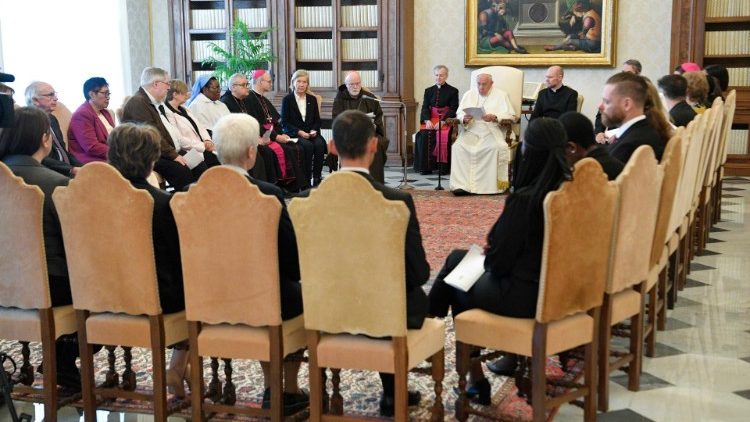
Pope Francis addressing the Vatican Commission for the Protection of Minors Pope Francis addressing the Vatican Commission for the Protection of Minors   (Vatican Media)

Pope encourages Commission for Protection of Minors to persevere

Pope Francis addresses the members of the Pontifical Commission for the Protection of Minors, and encourages them to persevere in their work despite difficulties and the unfounded impression “that little is changing for the better”.

By Lisa Zengarini

Efforts to improve guidelines and standards for the conduct of clergy and religious to safeguard against sexual abuse in the Church "must continue", Pope Francis told members of the Pontifical Commission for the Protection of Minors on Friday.

The Commission, which was created in 2014, is meeting this week for its second plenary assembly since the Apostolic Constitution ‘Praedicate Evangelium’ formally established it within the Dicastery for the Doctrine of the Faith in June 2022.

The session’s agenda includes a review of the Commission's task to provide annual audits of safeguarding reports by Bishops' Conferences, a review of its five-year strategic plan, and an "open discussion on how to better define working methods, roles and responsibilities" of the body, among other listed items.

The failure to act properly has sullied our witness to God’s love

In his address, Pope Francis reaffirmed once again that the sexual abuse crisis is “particularly serious for the Church”, because “it undermines her ability to fully embrace and bear witness to God’s liberating presence”.  “The failure to act properly to halt this evil and to assist its victims has sullied our witness to God’s love”, he said.

In this context, the Pope emphasized, the “sins of omission” though they seem “less real”, are not less grave than the actual sins committed by abusers.

Indeed, the failure, especially on the part of the Church’s leaders, to do what should have been done, “has been a cause of scandal for many”.

Church has not remained silent or inactive in the face of the abuse crisis

At the same time the Church has “not remained silent or inactive”, the Pope noted, recalling his recent confirmation of the Motu Proprio 'Vos Estis Lux Mundi' (VELM), that calls for setting aside places in which to receive accusations and care for those who report that they have been harmed,  and holds bishops and religious superiors accountable for the abuse that they commit or cover-up. Those rules, he said, are now permanently in place. 

“No one today can honestly claim to be unaffected by the reality of sexual abuse in the Church”

Persevere and keep moving forwards

As the Commission continues its work in addressing the crisis, Pope Francis invited its members to bear in mind three principles.

He first exhorted them to “persevere and keep moving forwards” and not to “grow discouraged when it seems that little is changing for the better”, keeping in mind “God’s creative power to make hope emerge from despair”.


Dialogue with survivors

The Pope then asked the members of the Commission to help repair the many lives that have been broken by sexual abuse, including families and friends of the victims, by dialoguing with survivors and encouraging them to open up and share their pain so they can reconcile with the Church.

“Recently I met with a group of survivors of abuse, who had asked to meet with the leadership of the religious institute that ran the school they attended around fifty years ago. I mention this because they discussed it openly. All of them were elderly and some of them, realizing that time is passing quickly, expressed their wish to live out their remaining years in peace. For them, peace meant resuming their relationship with the Church that had hurt them.”

A moment of reparation for the Church 

Thirdly, Pope Francis invited the members of the Commission to be “gentle” in their actions, “bearing one another’s burdens, without complaining, but considering that this moment of reparation for the Church will give way to a further moment in the history of salvation”. 

“Now – he insisted - is the time to repair the damage done to previous generations and to those who continue to suffer”. 

Recalling the expertise they have offered in the past decade to assist the various particular Churches in addressing sexual abuse, the Pope again reaffirmed that “the importance of safeguarding minors and vulnerable persons must be the rule for everyone” and that “the principles of respect for the dignity of all, for right conduct and a sound way of life must become a universal rule, independent of people’s culture or economic and social condition". 

“All the Church’s ministers must respect this rule in the way they serve the faithful, and they in turn must be treated with respect and dignity by those who lead the community.”

Cooperation with the Roman Curia

Bringing his address to a close, Pope Francis acknowledged the Commission’s plans for addressing inequalities within the Church through extending its training programmes and assistance to victims in Africa, Asia and Latin America, and expressed  his appreciation for the recent cooperation agreement with the Dicastery for Evangelization, heeding his encouragement to share its expertise in addressing this complex issue with the Roman Curia.

Saturday, March 25, 2023

Archbishop expert fighting abuse speaks on new Vos estis lux mundi


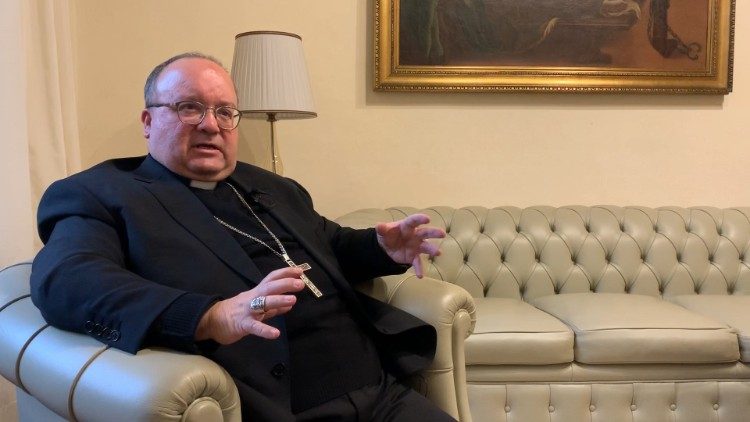
Archbishop Charles SciclunaArchbishop Charles Scicluna 

Archbishop Scicluna on 'universal law' to protect minors

Archbishop Charles Scicluna, Adjunct Secretary of the Dicastery for the Doctrine of the Faith and an expert in the fight against abuse, shares his thoughts on Pope Francis' updates to "Vos estis lux mundi," and says one important change is a "detailed procedure for reporting and investigating allegations against lay people at the head of international associations."

By Salvatore Cernuzio

Archbishop Charles Scicluna, the Archbishop of Valletta, Malta, since 2018, serving as Adjunct Secretary of the Dicastery for the Doctrine of the Faith, has always been involved in combating the scourge of abuse by clergy.

In the following interview with Vatican News, he illustrates the importance of the changes introduced on Saturday by Pope Francis in his update of 'Vos estis lux mundi,' the motu proprio promulgated in 2019 with which the Pope introduced procedural rules to combat sexual abuse and ensure that bishops and religious superiors are held accountable for their actions. 

Q: Archbishop Scicluna, what is the main change brought to Vos estis lux mundi in order to promote its better application almost four years after its entry into force? 

The first fundamental point is the very fact that the Pope confirms the law promulgated in 2019 and confirms it as a universal law of the Church, no longer ad experimentum. It is a very important law because, among other things, some new elements are introduced in the history of Canon Law, such as the criminal relevance of the abuse of a vulnerable adult.

Among the changes is a further clarification of who the victims of abuse are. Previously, we spoke of minors and vulnerable persons, now we also speak of 'vulnerable adults' and 'persons who habitually have an imperfect use of reason'. What does this specification mean? 

It is a harmonisation between two laws of 2021. Two years ago, Pope Francis promulgated a new version of the Particular Law that lists the rights reserved to the competence of the Dicastery for the Doctrine of the Faith and also a Motu proprio by which he revised the Chapter in the Code of Canon Law that speaks of penal sanctions. So, there is a harmonisation between these laws that speak of a very painful, but also very important, subject for pastoral care.

Q: The norms now apply not only to clerics and religious, but also to lay people who, we read, are, or have been, moderators of international associations recognised by the Apostolic See. Does this also refer to movements and ecclesial realities?

Definitely. This is one of the strongest changes in this version of Vos estis lux mundi. We are in the second part that gives the Church a detailed procedure on the reporting and investigation of allegations against persons in the Church leadership. In the 2019 document, this leadership included cardinals, patriarchs, bishops, and clerics appointed as pastors in the particular Churches, while in today's text, the Pope introduces two new categories: clerics who have been at the head of a public, clerical, incardinated association, and then lay faithful who have been moderators of international associations recognised by the Holy See.

Q: How much did recent news cases involving leaders of ecclesial realities influence this further specification? 

It must be said that some things in the public domain have already been reported and proceeded to trial... This law concerns the future and makes it very clear that when it comes to an allegation against a lay person in the leadership of an international association, reference must be made to this particular law which has become universal.

Q: The document specifies that dioceses and eparchies must be provided with organizations and offices which must be easily accessible to the public for reporting cases of abuse. This, too, is a further step. What is it due to?

It is the request for a widespread presence as a sign of the attention of the particular Church but also of the universal Church that wants to make it easier to report and feasible what is indicated in Article 5 on the care of persons.

In fact, the Article in question establishes that the Church authorities must commit themselves so that those who claim to have been offended, together with their families, are treated with dignity and respect and are offered welcome, listening and accompaniment through specific services of spiritual assistance, medical, therapeutic and psychological assistance according to the specific case. Hence, not only listening centres where people can make a report, but also places where people can be cared for.

Q: What changes with regard to the accountability of bishops? 

The law is a procedure that the Pope offers for the reporting and investigation of abuses affecting the leadership, but it does not in itself change the attitude, mentality and capacity to react.

The law remains an opportunity and also a tool, but it is up to us to assimilate the values engraved in these regulations and apply them. Behind the law, therefore, there must be the will, so often encouraged and advocated by Pope Francis, for feasible solidarity.

The Pope very often repeats this phrase: 'When one of us suffers, we all suffer'. If there is this attitude of solidarity, if there is the thirst for justice of which Jesus speaks, but also the will to do good, then the law becomes a living instrument, otherwise, like all laws, it could remain a dead letter.

Q: We see in the news, as well as from various investigations carried out within dioceses, with the help of independent commissions appointed by the Bishops' Conferences themselves, that unfortunately the scourge of abuse in the past as in the present is not extinct. With this fight carried out by the Pope, has there been any progress? 

First of all, there is now a highly evolved legislative framework. Now there is a need for the training of people in leadership, as well as widespread training to make it easier for people to speak out if there is a problem.

Besides the legal instruments, there is also the very clear, transparent and beautiful magisterium of Pope Francis, which we must all treasure.

Cardinal Cupich interview on Vos estis lux mundi


File photo of Pope Francis meeting with Cardinal Blase CupichFile photo of Pope Francis meeting with Cardinal Blase Cupich  (Vatican Media)

Cardinal Cupich: Pope’s ‘Vos Estis’ update seeks to give justice to abuse victims

Cardinal Blase Cupich, Archbishop of Chicago, welcomes Pope Francis’ promulgation of an updated version of ‘Vos estis lux mundi’, and says it confirms the Church’s desire to root out sexual abuse and give justice to abuse victims.

By Devin Watkins

Pope Francis has released an updated version of his 2019 motu proprio Vos estis lux mundi, which offers specific procedures to regulate the Church’s actions to counter sexual abuse.

The Holy See Press Office published the new text on Saturday, which enters into force on 30 April and replaces the version released in May 2019.

In the following interview with Vatican News, American-born Cardinal Blase Cupich describes a few of the important changes made to the original text of Vos Estis.

The Archbishop of Chicago, who also serves as a member of the Vatican’s task force for the protection of minors, says the updated document shows the Pope’s desire to protect victims of abuse and to give them justice.

Q: What are the main changes made to the motu proprio Vos estis lux mundi to promote its "better application" almost four years after its entry into force?

I first of all would observe that it is not a new document, but it is a confirmation of what the Holy Father did in the original motu proprio, and it takes advantage of the experience of the Church throughout the world as the norms of Vos Estis have been applied.

So, I think it's important to realize that this now is permanent. It's not ad experimentum. It confirms what the Holy Father did originally.

I think that the other thing that needs to be understood here is that the document is the result of broad consultation and learning from the experience of other Churches. That is why there have been some developments; for instance, the addition of laypeople in lay associations that now are also under the guidelines of Vos Estis.

It also makes sure that it's very clear that those who are vulnerable adults also would include those who lack the mental capacity and would be taken advantage of in such circumstances. The document itself, I think, reflects that the Church has taken this seriously and is learning from its own experience.

Q: The norms now apply not only to clerics and religious but also to "lay people who are or have been moderators of international associations of the faithful recognized or created by the Apostolic See". What does this signify?

It means that we recognize that abuse of people who are underage or who are vulnerable adults can happen in those lay associations. So, they also have to be protected.

The point is not to zero in just on a certain group of people in the Church, but to make the victims of abuse the primary focus of attention. And so, anytime there is an action against someone who is vulnerable or a young person, the Church is taking that seriously, whether it comes by virtue of the actions of a cleric or a layperson.

Q: The text also specifies that Dioceses and Eparchies must operate an "organisation or office" (the earlier version spoke in general about a "stable system") which is easily accessible to the public in order to receive reports of cases of abuse...

That's right. Of course, in the United States, all of the dioceses already have those. But that's not the case worldwide.

Again, learning from the experience of other Churches, not only do bishops have to act in such cases, but there should be a way that makes it user friendly for anyone to come forward, and that is through the establishment of an actual office, a means by which it's very public that people would be able to approach in the case of abuse.

Q: It is specified that "it is the duty of the Ordinary of the place where the events allegedly occurred to proceed in accordance with the law as provided for each specific case". What changes with this?

I think that just re-emphasizes what we saw in the original Vos Estis, and that is that the Church puts a priority in cooperating with local law enforcement and following the laws of the land. So, if there are reporting protocols like there would be here in the United States, it emphasizes that those laws have to be observed.

This is not just a Church matter. This is not just a matter of a sin. This is a crime. And it recognizes that these crimes have to be adjudicated by law enforcement in each locality.

Q: What progress—thanks to this motu proprio—has been made in recent years in the fight against abuse in the Church?

I think that you have seen, at least in the United States and elsewhere, the scandal of abuse surely involved the violation of young people and vulnerable adults. But that scandal was greatly compounded by the irresponsible way some leaders in the Church handled these matters.

And I think that this document is a clear indication that the Holy Father is saying that people in authority in the Church are going to be held responsible for how they handle this. And there are specific requirements that they have to observe, but also they have been required to provide their own guidelines for their own country that also involves their own dioceses.

So, it's a clear indication that the Holy Father is going to hold people responsible, not only those who have committed abuse, but those in authority who have responsibility for handling them in a way that protects victims and gives justice to victims.