Showing posts with label Fatima. Show all posts

Wednesday, May 13, 2026

May 13, 1981: The assassination attempt on Pope John Paul II; Our Lady of Fatima protected him


Archive photo of the attack on Pope John Paul II on 13 May 1981Archive photo of the attack on Pope John Paul II on 13 May 1981 

13 May 1981: The day the attack on John Paul II shocked the world

45 years from the attack on Saint John Paul II during a General Audience in St Peter’s Square, the memory of the event continues to be linked to themes of prayer, forgiveness, and trust in God reflected in the words of the Pope and his successors.

Vatican News

Forty-five years have passed since the attack on Pope John Paul II in Saint Peter’s Square on 13 May 1981, an event that marked the history of the Church and dramatically drew the attention of the international community.

The memory of that day remains linked not only to the images from Saint Peter’s Square, but also to the words of prayer, forgiveness, and trust in God pronounced in the years that followed by the Pope and his successors.

In May 1981, the international socio-political context was marked by renewed tensions between East and West. The Soviet invasion of Afghanistan had intensified the Cold War climate, while concern was growing in Eastern Europe over the emergence of the independent trade union Solidarność in Poland. In Italy, years of terrorism and extremist political violence known as the Anni di Piombo – Years of Lead – rocked society to the core.

On Wednesday, 13 May 1981, Saint Peter’s Square was filled with pilgrims gathered for the weekly General Audience. Pope John Paul II was greeting the faithful from the white jeep traditionally used to circle the square when shots were fired at close range. The Pope was seriously wounded and immediately transported to Rome’s Gemelli Hospital.

Among those reporting on the event live was Vatican Radio journalist Benedetto Nardacci, whose voice conveyed the confusion and silence that followed the attack.

Observing the crowd in the square, he described people standing in silence and waiting for news, while bishops and clergy invited the faithful to pray for the Pope’s recovery.

A statement released by the Holy See Press Office later confirmed that the Pope had been struck in the abdomen and was undergoing surgery at the Gemelli Hospital. The communiqué added that, although his condition was serious, there were “founded hopes for recovery.”

Four days later, during the Regina Caeli message from the hospital, John Paul II addressed the faithful and spoke publicly of forgiveness for Mehmet Ali Ağca, the man responsible for the attack.

He assured his prayers for the attacker and entrusted himself once more to the Virgin Mary with the words: “Totus tuus ego sum.”

Suffering transformed through love

In the years that followed, the events of 13 May 1981 became closely associated with the Pope’s devotion to Our Lady of Fatima. John Paul II repeatedly expressed his conviction that his life had been preserved through her intercession.

During the funeral Mass for John Paul II on 8 April 2005, Cardinal Joseph Ratzinger reflected on the late Pope’s witness of suffering and faith. Referring to passages from John Paul II’s final book, Memory and Identity, he spoke of suffering transformed through love and united to the mystery of Christ.

Pope Francis also recalled the attack during the General Audience of 12 May 2021, on the eve of the anniversary. Referring to the connection between the date of the attack and the liturgical memorial of Our Lady of Fatima, he said the event reminds humanity that “our life and the history of the world are in God’s hands.”

The memory of Saint John Paul II continues to resonate in the life of the Church. On 11 May 2025, shortly after his election to the See of Peter, Pope Leo XIV addressed young people during the Regina Caeli, repeating the words closely associated with the pontificate of Pope Wojtyła: “Do not be afraid! Accept the invitation of the Church and of Christ the Lord.”

A week later, on 18 May 2025, the anniversary of the birth of Karol Wojtyła, Pope Leo XIV presided at the Mass marking the beginning of his Petrine ministry.

Tuesday, May 12, 2026

On May 13th we remember Mary's appearances in Fatima, Portugal


Easter: May 13th


Tuesday of the Fourth Week of Easter


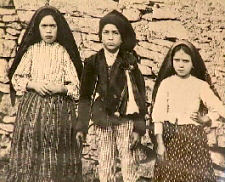
Today the Church celebrates an Optional Memorial of Our Lady of Fatima, which is a title of the Blessed Virgin Mary following apparitions to three shepherd children — Lucia, Jacinta and Francisco — in Portugal in 1917. The message of Fatima includes a call to conversion of heart, repentance from sin and a dedication to the Blessed Virgin Mary, especially through praying the Rosary. This optional memorial is new to the USA liturgical calendar and is inscribed on May 13.


Our Lady of Fatima
The famous apparitions of the Virgin Mary to the children of Fatima took place during the First World War, in the summer of 1917. The inhabitants of this tiny village in the diocese of Leiria (Portugal) were mostly poor people, many of them small farmers who went out by day to tend their fields and animals. Children traditionally were assigned the task of herding the sheep.

The three children who received the apparitions had been brought up in an atmosphere of genuine piety: Lucia dos Santos (ten years old) and her two younger cousins, Francisco and Jacinta. Together they tended the sheep and, with Lucy in charge, would often pray the Rosary kneeling in the open. In the summer of 1916, an Angel appeared to them several times and taught them a prayer to the Blessed Trinity.

On Sunday, May 13, 1917, toward noon, a flash of lightning drew the attention of the children, and they saw a brilliant figure appearing over the trees of the Cova da Iria. The "Lady" asked them to pray for the conversion of sinners and an end to the war, and to come back every month, on the 13th.

Further apparitions took place on June 13 and July 13. On August 13 the children were prevented by local authorities from going to the Cova da Iria, but they saw the apparition on the 19th. On September 13 the Lady requested recitation of the Rosary for an end to the war. Finally, on October 13, the "Lady" identified herself as "Our Lady of the Rosary" and again called for prayer and penitence.

On that day a celestial phenomenon also took place: the sun seemed to tumble from the sky and crash toward earth. The children had been forewarned of it as early as May 13, the first apparition. The large crowd (estimated at 30,000 by reporters) that had gathered around the children saw the phenomenon and came away astounded.

Official recognition of the "visions" which the children had at the Cova da Iria came on October 13, 1930, when the bishop of Leiria - after long inquiry - authorized the cult of Our Lady of the Rosary at the site. The two younger children had died: Francisco (who saw the apparition but did not hear the words) on April 4, 1919, and his sister Jacinta on February 20, 1920. Sister Lucia died on February 13, 2005, at her Carmelite convent in Coimbra, Portugal, after a long illness.
—Excerpted from Dictionary of Mary, Catholic Book Publishing Company


The Message of Fatima

The public message of Fatima recalls that of Lourdes. Through the children Mary urges prayer for sinners, recitation of the Rosary, and works of penance. On October 13 she said: "I have come to exhort the faithful to change their lives, to avoid grieving Our Lord by sin; to pray the Rosary. I desire in this place a chapel in my honor. If people mend their ways, the war will soon be over."

But Mary also confided several "secrets" to the children, some of which Lucy subsequently transmitted. Presumably there was prediction of another war in the near future and a request for special veneration of the Immaculate Heart of Mary. The final secret Lucia is thought to have entrusted to Pope John XXIII.

As at Lourdes, the "apparitions" of Fatima have brought crowds of visitors. Pilgrimages, which began in the summer of 1917, have experienced growing success, not only among the Portuguese themselves but also among people from other countries, including the United States. The national pilgrimage following ecclesiastical recognition of the apparitions (May 13, 1931) is said to have drawn more than a million participants.

Popes have shown exceptional favor toward Fatima, Pius XII, Paul VI, and John Paul II in particular making a visit to the shrine. The papal interest and the basilica built at the site of the apparitions has helped to swell the summer pilgrimages to Fatima. Crowds comparable to, and sometimes larger than, those at Lourdes are not uncommon. In a rustic setting, pilgrims hear the message repeated that Mary spoke to the children: prayer, works of penance, recourse to her Immaculate Heart.
—Excerpted from Dictionary of Mary, Catholic Book Publishing Company

Monday, May 12, 2025

May 13th: The Feast of Our Lady of Fatima


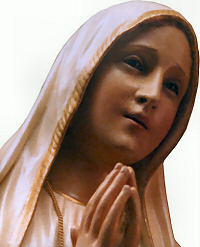
Our Lady of FatimaFeast day: May 13


May 13 is the anniversary of the apparition of Our Lady to three shepherd children in the small village of Fatima in Portugal in 1917.  She appeared six times to Lucia, 9, and her cousins Francisco, 8, and his sister Jacinta, 6, between May 13, 1917 and October 13, 1917.

The story of Fatima begins in 1916, when, against the backdrop of the First World War which had introduced Europe to the most horrific and powerful forms of warfare yet seen, and a year before the Communist revolution would plunge Russia and later Eastern Europe into six decades of oppression under militant atheistic governments, a resplendent figure appeared to the three children who were in the field tending the family sheep. “I am the Angel of Peace,” said the figure, who appeared to them two more times that year exhorting them to accept the sufferings that the Lord allowed them to undergo as an act of reparation for the sins which offend Him, and to pray constantly for the conversion of sinners.

Then, on the 13th day of the month of Our Lady, May 1917, an apparition of ‘a woman all in white, more brilliant than the sun’ presented itself to the three children saying “Please don’t be afraid of me, I’m not going to harm you.” Lucia asked her where she came from and she responded,  “I come from Heaven.”  The woman wore a white mantle edged with gold and held a rosary in her hand. The woman asked them to pray and devote themselves to the Holy Trinity and to “say the Rosary every day, to bring peace to the world and an end to the war.”

She also revealed that the children would suffer, especially from the unbelief of their friends and families, and that the two younger children, Francisco and Jacinta would be taken to Heaven very soon but Lucia would live longer in order to spread her message and devotion to the Immaculate Heart.

In the last apparition the woman revealed her name in response to Lucia’s question:   “I am the Lady of the Rosary.”

That same day, 70,000 people had turned out to witness the apparition, following a promise by the woman that she would show the people that the apparitions were true. They saw the sun make three circles and move around the sky in an incredible zigzag movement in a manner which left no doubt in their minds about the veracity of the apparitions.  By 1930 the Bishop had approved of the apparitions and they have been approved by the Church as authentic.

The messages Our Lady imparted during the apparitions to the children concerned the violent trials that would afflict the world by means of war, starvation, and the persecution of the Church and the Holy Father in the twentieth century if the world did not make reparation for sins. She exhorted the Church to pray and offer sacrifices to God in order that peace may come upon the world, and that the trials may be averted.

Our Lady of Fatima revealed three prophetic “secrets,” the first two of which were revealed earlier and refer to the vision of hell and the souls languishing there, the request for an ardent devotion to the Immaculate Heart of Mary, the prediction of the Second World War, and finally the prediction of the immense damage that Russia would do to humanity by abandoning the Christian faith and embracing Communist totalitarianism.  The third “secret” was not revealed until the year 2000, and referred to the persecutions that humanity would undergo in the last century: “The good will be martyred; the Holy Father will have much to suffer; various nations will be annihilated'”.  The suffering of the popes of the 20th century has been interpreted to include the assassination attempt on Pope John Paul II in 1981, which took place on May 13, the 64th anniversary of the apparitions. The Holy Father attributed his escape from certain death to the intervention of Our Lady: “... it was a mother's hand that guided the bullet's path and in his throes the Pope halted at the threshold of death.”

What is the central meaning of the message of Fatima? Nothing different from what the Church has always taught: it is, as Cardinal Ratzinger, now Pope Benedict the XVI,  has put it, “the exhortation to prayer as the path of “salvation for souls” and, likewise, the summons to penance and conversion.”

Perhaps the most well known utterance of the apparition of Our Lady at Fatima was her confident decalaration that  “My Immaculate Heart will triumph”. Cardinal Ratzinger has interpreted this utterance as follows: “The Heart open to God, purified by contemplation of God, is stronger than guns and weapons of every kind. The fiat of Mary, the word of her heart, has changed the history of the world, because it brought the Saviour into the world—because, thanks to her Yes, God could become man in our world and remains so for all time. The Evil One has power in this world, as we see and experience continually; he has power because our freedom continually lets itself be led away from God. But since God himself took a human heart and has thus steered human freedom towards what is good, the freedom to choose evil no longer has the last word. From that time forth, the word that prevails is this: “In the world you will have tribulation, but take heart; I have overcome the world” (Jn 16:33). The message of Fatima invites us to trust in this promise.

Sunday, May 12, 2024

The Memorial of Our Lady of Fatima

Easter: May 13th

Monday of the Seventh Week of Easter; Optional Memorial of Our Lady of Fatima


facebook sharing button Share
twitter sharing button Tweet
linkedin sharing button Share
pinterest sharing button Pin
email sharing button Email
sharethis sharing button

MASS READINGS

May 13, 2024 (Readings on USCCB website)

PROPERS [show]

COLLECT PRAYER

Monday of the Seventh Week of Easter: May the power of the Holy Spirit come to us, we pray, O Lord, that we may keep your will faithfully in mind and express it in a devout way of life. Through our Lord Jesus Christ, your Son, who lives and reigns with you in the unity of the Holy Spirit, God, for ever and ever.


Optional Memorial of Our Lady of Fatima: O God, who chose the Mother of your Son to be our Mother also, grant us that, persevering in penance and prayer for the salvation of the world, we may further more effectively each day the reign of Christ. Who lives and reigns with you in the unity of the Holy Spirit, God, for ever and ever.

show

RECIPES (2)

show

ACTIVITIES (9)

show

PRAYERS (8)

show

LIBRARY (11)

show

BLOG & PODCASTS (5)


Today the Church celebrates an Optional Memorial of Our Lady of Fatima, which is a title of the Blessed Virgin Mary following apparitions to three shepherd children — Lucia, Jacinta and Francisco — in Portugal in 1917. The message of Fatima includes a call to conversion of heart, repentance from sin and a dedication to the Blessed Virgin Mary, especially through praying the Rosary. This optional memorial is new to the USA liturgical calendar and is inscribed on May 13.


Our Lady of Fatima
The famous apparitions of the Virgin Mary to the children of Fatima took place during the First World War, in the summer of 1917. The inhabitants of this tiny village in the diocese of Leiria (Portugal) were mostly poor people, many of them small farmers who went out by day to tend their fields and animals. Children traditionally were assigned the task of herding the sheep.

The three children who received the apparitions had been brought up in an atmosphere of genuine piety: Lucia dos Santos (ten years old) and her two younger cousins, Francisco and Jacinta. Together they tended the sheep and, with Lucy in charge, would often pray the Rosary kneeling in the open. In the summer of 1916 an Angel appeared to them several times and taught them a prayer to the Blessed Trinity.

On Sunday, May 13, 1917, toward noon, a flash of lightning drew the attention of the children, and they saw a brilliant figure appearing over the trees of the Cova da Iria. The "Lady" asked them to pray for the conversion of sinners and an end to the war, and to come back every month, on the 13th.

Further apparitions took place on June 13 and July 13. On August 13 the children were prevented by local authorities from going to the Cova da Iria, but they saw the apparition on the 19th. On September 13 the Lady requested recitation of the Rosary for an end to the war. Finally, on October 13, the "Lady" identified herself as "Our Lady of the Rosary" and again called for prayer and penitence.

On that day a celestial phenomenon also took place: the sun seemed to tumble from the sky and crash toward earth. The children had been forewarned of it as early as May 13, the first apparition. The large crowd (estimated at 30,000 by reporters) that had gathered around the children saw the phenomenon and came away astounded.

Official recognition of the "visions" which the children had at the Cova da Iria came on October 13, 1930, when the bishop of Leiria - after long inquiry - authorized the cult of Our Lady of the Rosary at the site. The two younger children had died: Francisco (who saw the apparition but did not hear the words) on April 4, 1919, and his sister Jacinta on February 20, 1920. Sister Lucia died on February 13, 2005, at her Carmelite convent in Coimbra, Portugal, after a long illness.
—Excerpted from Dictionary of Mary, Catholic Book Publishing Company.


The Message of Fatima
The public message of Fatima recalls that of Lourdes. Through the children Mary urges prayer for sinners, recitation of the Rosary, and works of penance. On October 13 she said: "I have come to exhort the faithful to change their lives, to avoid grieving Our Lord by sin; to pray the Rosary. I desire in this place a chapel in my honor. If people mend their ways, the war will soon be over."

But Mary also confided several "secrets" to the children, some of which Lucy subsequently transmitted. Presumably there was prediction of another war in the near future and a request for special veneration of the Immaculate Heart of Mary. The final secret Lucy is thought to have entrusted to Pope John XXIII.

As at Lourdes, the "apparitions" of Fatima have brought crowds of visitors. Pilgrimages, which began in the summer of 1917, have experienced growing success, not only among the Portuguese themselves but also among people from other countries, including the United States. The national pilgrimage following ecclesiastical recognition of the apparitions (May 13, 1931) is said to have drawn more than a million participants.

Popes have shown exceptional favor toward Fatima, Pius XII, Paul VI, and John Paul II in particular making a visit to the shrine. The papal interest and the basilica built at the site of the apparitions has helped to swell the summer pilgrimages to Fatima. Crowds comparable to, and sometimes larger than, those at Lourdes are not uncommon. In a rustic setting, pilgrims hear the message repeated that Mary spoke to the children: prayer, works of penance, recourse to her Immaculate Heart.
—Excerpted from Dictionary of Mary, Catholic Book Publishing Company

Patronage: diocese of Leiria–Fátima, Portugal

Friday, October 13, 2023

Incredible witness of faith as 180,000 gather at Fatima to pray for peace


Thousands at Fatima Shrine pray for peace in the Holy Land and Ukraine


Walter Sanchez Silva

A crowd of more than 180,000 pilgrims packed the shrine of the Our Lady of Fatima in Portugal to pray for peace in the Holy Land and Ukraine and "for all the places where peace is lacking."

The shrine’s website reported that on Oct. 12, on the eve of the commemoration of the “miracle of the sun” which took place on Oct. 13, 1917, the candlelight event was presided by Cardinal Américo Aguiar, the bishop-elect of Setúbal and president of the organizing committee for World Youth Day (WYD) 2023, held in August in Lisbon.

In his reflection before the faithful from 35 different countries, the cardinal encouraged them to pray to the “Mother of Heaven” for “the gift of peace” for Ukraine, for “the Land of Jesus and for all places where peace is lacking.”

“When we talk about Fatima we talk about peace, and unfortunately this is a gift that is lacking: it is lacking in our beloved Ukraine and in our beloved Land of Jesus. Therefore, we want to ask our Mother for peace for these places and the world.”

The cardinal then asked: “Why is there war in the world? I don’t know how to explain it. (…) But I do know that it means losing children, young people, women, the poor, the least...”

“The drama of the war in Ukraine and now the drama of the war in the Holy Land, in Israel and in the Palestinian territories, in the Gaza Strip, there are situations that concern us and to which we cannot be indifferent. These are situations that mark our pilgrimage,” Aguiar said.

The apparitions at Fatima took place in the context of World War I but Our Lady warned that “if people do not cease offending God, a worse one will break out” which was fulfilled by World War II. Our Lady also asked for “the consecration of Russia to my Immaculate Heart '' and warned that Russia would “spread her errors throughout the world” if her call for repentance went unheeded. After Russia invaded Ukraine on Feb. 24, Pope Francis consecrated Russia and Ukraine to the Immaculate Heart on March 25, an act that his predecessors had carried out in various ways.

The rector of the Fatima Shrine, Father Carlos Cabecinhas, also noted that a “great ecclesial prayer intention” is “the General Assembly of the Synod of Bishops” which is taking place at the Vatican.

The Synod on Synodality was announced in October 2021 under the theme “For a synodal Church: communion, participation, and mission.” Participating in the session taking place in Rome this October are 363 people including bishops, religious, priests, deacons, and laypeople. For the first time, non-bishops — including 54 women — will have the right to vote.

The miracle of the sun at Fatima

On Oct. 13, 1917, while thousands of pilgrims were in Fatima, Portugal, the “miracle of the sun” occurred, where the sun could be seen moving, doing a kind of “dance.”

The event lasted about three minutes and happened after the last apparition of the Virgin Mary to the little shepherds Jacinta, Francisco, and Lucía.

A journalist for the Portuguese newspaper O Século, Avelino de Almeida, estimated that at the time of the miracle, there were about 40,000 people present, but the professor of natural sciences at the University of Coimbra, Portugal, Joseph Garrett, calculated that about 100,000 people witnessed the miraculous phenomenon.

Tuesday, August 8, 2023

Miracle at Fatima: WYD pilgrim recovers her sight after receiving Communion at Mass on August 5th


Miracle at Fátima? World Youth Day pilgrim receives her sight after Communion at Mass


“I opened my eyes and I could see perfectly,” said Jimena, a 16-year-old Spanish World Youth Day pilgrim who said she miraculously recovered her sight after receiving the Eucharist at Fátima, Portugal, during a Mass there.

This possible miracle has moved hearts and filled with hope all those who have been following the events at WYD, which brought together more than a million young people in the Portuguese capital last week.

Jimena traveled to Lisbon from Madrid with a group from Opus Dei. During the days prior, relatives and acquaintances of the young woman organized a novena to pray to Our Lady of the Snows, whose feast day is commemorated Aug. 5, the same day she recovered her sight.

For two and a half years, Jimena has suffered a loss of sight due to a myopia problem that left her with a 95% vision loss. On the morning of Aug. 5, when the Holy Father was also praying the rosary at the Fátima shrine, Jimena received what she herself describes as a “great gift” from the Virgin Mary.


Not long after having recovered her sight, Jimena told the Spanish radio station COPE that she woke up that morning “as I have been getting up for two and a half years, seeing super blurry, very badly.”

She explained that she had gone to Mass with her friends “because we are at WYD and after receiving Communion I began to cry a lot, because it was the last day of the novena and I wanted to be cured and I had very much asked God please [cure me].”

“When I opened my eyes, I could see perfectly,” the young woman continued, “it was overwhelming; very many thanks must be given for the miracle, because I saw the altar, the tabernacle, my girlfriends were there, and I could see them perfectly.”

In addition, she said that she was able to read the novena prayer that she was praying and that she still reads “quite well” — she hadn’t forgotten at all how to read.

The young woman said she is “super happy” and thanked all those who were part of the prayer group. “This has been a test of faith; the Virgin has given me a great gift that I will not forget,” she said.

In an Aug. 6 statement to ACI Prensa, CNA’s Spanish-language news partner, Cardinal Juan José Omella, the archbishop of Barcelona and president of the Spanish Bishops’ Conference, referred to the possible miracle as “a grace from God” during the press conference at the end of WYD held at Eduardo VII park in Lisbon.

The cardinal said he was able to speak with Jimena on a video call and that she explained what happened in a natural and unaffected manner. “The girl was very excited; she had been blind for a while and she had been learning the Braille method for two or three years,” he said.

The prelate also noted that Jimena “had to read the prayer of thanksgiving at Mass that day with the Madrid group” and that, after receiving Communion, she was able to read it without any problem.

The young woman also told the cardinal that they had been praying for “nine days asking the Virgin for her healing.”

Omella encouraged the faithful to “give thanks to God” and explained that “this doesn’t lead to the cause of beatification for anyone, because the Virgin is already a saint, but it is indeed a grace from God.”

He pointed out that “then the doctors will have to assess it, what it was like, if it existed, if it could be cured or not. But for now for the girl that has been a major event. Let’s say a miracle. She didn’t see and now she sees. Now the doctors will be able to say the rest, but she has gone home seeing. Well, she sees, blessed be God.”

Omella said he was “really struck” by other testimonies that took place during WYD from young people who “have also recovered their interior vision.”

This story was first published by ACI Prensa, CNA’s Spanish-language news partner. It has been translated and adapted by CNA.

Monday, August 7, 2023

Pope Francis wide-ranging interview aboard Papal plane ride home from WYD


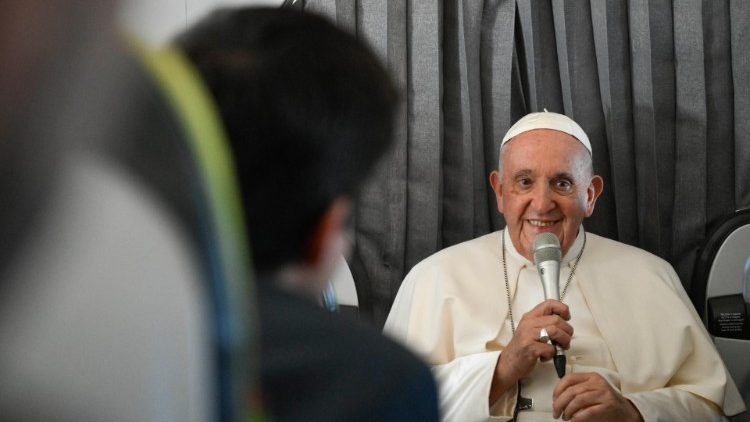
Pope Francis holds a press conference aboard the return flight from PortugalPope Francis holds a press conference aboard the return flight from Portugal  (VATICAN MEDIA Divisione Foto)

Pope Francis: 'I prayed for peace in Fatima without publicity'

Pope Francis speaks to journalists traveling with him on the return flight to Rome from his Apostolic Journey to Portugal for World Youth Day 2023, speaking about his health, his silent prayer for peace in Fatima, and his assertion that the Church is open to all, even those who cannot receive certain sacraments.

By Vatican News

In his customary press conference aboard the return flight to Rome from Lisbon, Pope Francis spoke to reporters about a range of issues.

The Director of the Holy See Press Office, Matteo Bruni, invited the reporters to put their questions to the Pope, but first gave the microphone to Pope Francis. The Pope offered the journalists a short message of thanks for their coverage of the just-concluded World Youth Day experience, and gave his “Happy Birthday” greetings to Rita Cruz, one of the journalists present on the flight.

Here follows a working English transcription and translation of the press conference

Q: Aura Maria Vistas Miguel - Rádio Renascença:
Your Holiness, first of all thank you for your visit to Portugal. Everyone already considers it a success. Everyone is very happy, thank you for coming. I met a high-ranking police officer who told me that he had never seen such an obedient and peaceful crowd. It was beautiful. My question is about Fatima: We know that you went there and prayed in silence in the little chapel. But there was this great expectation, in the very place where Our Lady had made a request to pray for the end of the war (and we are at war at the moment, unfortunately) and the expectation was that the Holy Father would publicly pray for peace; the eyes of the whole world were fixed on you yesterday morning in Fatima. Why did you not do it?

Pope Francis:

I prayed, I prayed. I prayed to Our Lady, and I prayed for peace. I did not advertise this, but I prayed. And we must continually repeat this prayer for peace.

She [Our Lady] made this request during the First World War. And this time I appealed to Our Lady and I prayed. I did not advertise.

Q: João Francisco Gomes - Observador:

Thank you very much Holy Father, I will speak in Spanish, I think it is easier for me. And if you could also answer in Spanish, it would be easier for Portuguese readers to understand. I would like to ask a question about the abuse of minors in the Church in Portugal. In February this year, a report published on the reality of abuse in Portugal said almost 5,000 children have been victims in the last decades. My question is: are you informed about this report that was handed over to the bishops? What do you think should happen with the bishops who knew about the cases of abuse and did not communicate them to the authorities? Thank you very much.

As you all know, in a very private setting, I received a group of people who had been abused. As I always do in these cases, we talked about this plague, this terrible scandal. In the Church, we followed more or less the same behaviour that is currently followed in families and neighbourhoods: we cover it up... We think that 42% of abuse takes place in families or neighbourhoods. We still have to mature and help discover these things. Since the Boston scandal, the Church has become aware that one could not go down random paths, but that one had to take the bull by the horns.

Two and a half years ago there was a meeting of the Presidents of the Bishops' Conferences, where official statistics on abuse were also provided. And it is serious, the situation is very serious. In the Church there is a phrase we are using all the time: ‘zero tolerance, zero tolerance’. And the pastors who, in some way, have not taken responsibility have to take responsibility for this irresponsibility... The world of abuse is a very harsh one, and I urge everyone to be very open about it. Regarding the question of how the process is going in the Portuguese Church: it is going well. It is going well and with serenity; seriousness is being sought in cases of abuse. The numbers sometimes end up being exaggerated, a bit for the comments we always like to make, but the reality is that it is going well and this gives me a certain tranquility.

I would like to address one point and I would like to ask you journalists to collaborate on this. Do you have a phone today? A phone. Well, on any of these phones, for a fee and with a password, you have access to child sexual abuse. This comes into our homes and child sexual abuse is filmed live. Where is it filmed? Who are the perpetrators? This is one of the most serious plagues, next to the whole world (...) but I want to emphasise this because sometimes you don't realise that things are so radical. When you use a child to make a spectacle of abuse, it draws attention. Abuse is like 'consuming' the victim, isn't it? Or worse, hurting them and leaving them alive.

Talking to people who have been abused is a very painful experience, which is also good for me, not because I like to hear it, but because it helps me to deal with this drama. That is, to your question I would say what I said: the process is going well, I am informed about how things are going. The news may have exaggerated the situation, but things are going well as far as that is concerned. But also, with that, I would say, in some way: Help out. Help so that all types of abuse can be resolved, sexual abuse, but it is not the only one.

There are also other types of abuse that cry out to heaven: the abuse of child labour, the abuse of child labour, and it is used; the abuse of women, no? Even today, in many countries, surgery is still done on little girls: their clitoris is removed, and that is today, and it is done with a razor, and goodbye... Cruelty... And the abuse of labour, that is within sexual abuse, which is serious, and all that: there is a culture of abuse that humanity must review and must undergo a conversion.

Q: Jean-Marie GUÉNOIS - Le Figaro
Holy Father, how are you? How is your health, how is your convalescence? You have not read, or have read only small parts of five speeches. It's unprecedented in a journey: why? Have you had eye problems, tiredness? Are texts too long? How do you feel feel? And allow me a small question about France. You are coming to Marseille, but you have never visited France. The people don't understand, maybe it's too small or do you have something against France?

My health is fine. The stitches have been removed; I lead a normal life; I wear a band that I have to wear for two or three months until my muscles get stronger.

My sight. In that parish I cut off the speech because there was a light in front of me and I couldn't read, the light was in my eyes and that's why I cut it. Some, through Matteo, have asked why I shortened the homilies that you have. When I speak, I don't do academic homilies, but I try to make it as clear as possible. When I speak I always seek communication. You have noticed that even in the academic homily I make some jokes, some laughs to control communication. With the young people the long speeches had the essential of the message, the essential of the message, and I selected according to how I felt the communication.

You noticed that I asked a few questions and immediately the feedback showed me where it was going, whether it was wrong or not.

Young people don't have a long attention span. Think about it: if you make a clear speech with an idea, an image, an affection, they can follow you for eight minutes. Incidentally, in Evangeli Gaudium, my first Apostolic Exhortation, I wrote a long, long chapter on the homily. Here there is a parish priest (referring to Don Benito Giorgetta, parish priest of Termoli, ed:) he knows that homilies are sometimes a torture, torture, that they talk blah, blah, and people…

In some small towns, I don't know about Termoli, men go out for a cigarette and come back. The Church must convert to this aspect of the homily: short, clear, with a clear message, and affectionate. That's why I check how it goes with the young people and I make them speak. But I shortened it because… I need to leave the idea with young people.

Let's move on to France. I went to Strasbourg, I will go to Marseilles, but not to France. There is a problem that concerns me, which is the Mediterranean. That's why I'm going to France.

The exploitation of migrants is criminal. Not here in Europe, because it’s fine, we are more cultured, but in the concentration camps of North Africa… I recommend a book. There is a small booklet, a small one, written by a migrant who spent, I think, three years to come from Guinea to Spain because he was captured, tortured, enslaved. Migrants in those concentration camps in North (Africa): it's terrible. At this moment - last week - the "Mediterranea Saving Humans” association was doing a job to rescue the migrants who were in the desert between Tunisia and Libya, because they had left them there to die. That book is called "Hermanito" - in Italian it has the subtitle "Fratellino" - but it can be read in two hours, it's worth it. Read it and you will see the tragedy of the migrants before embarking.

The bishops of the Mediterranean will hold this meeting, even with some politicians, to reflect seriously on the tragedy of migrants. The Mediterranean is a cemetery, but it's not the biggest cemetery. The largest cemetery is North Africa. This is terrible, read it. I go to Marseille for this. Last week, President Macron told me that it is his intention to come to Marseilles and I will stay a day and a half: I arrive in the afternoon and staying the following day.

(Matteo Bruni repeats the question: You have nothing against France?)

No. No, on this it's a policy. I am visiting small European countries. The big countries, Spain, France, England, I'll leave them for later, at the end. But as an option I started with Albania and so I did with other small ones. It's nothing. France, two cities: Strasbourg and Marseille.

Q: Anita Hirschbeck - KNA
Holy Father, in Lisbon you told us that in the Church there is room for everyone, everyone, everyone. The Church is open to everyone, but at the same time not everyone has the same rights, opportunities, in the sense that, for example, women, homosexuals cannot receive all the sacraments. Holy Father how do you explain this inconsistency between an open Church and a Church not equal for all? Thank you.

You ask me a question that concerns two different points of view: the Church is open for everyone, then there is legislation that regulates life inside the Church. He who is inside follows the legislation. What you say is a simplification: “They cannot participate in the sacraments.” This does not mean that the Church is closed. Everyone meets God on their own way inside the Church, and the Church is mother and guides everyone on their own path. That's why I don't like to say: everyone comes, but you, this one, but the other one... Everyone, everyone in prayer, in inner dialogue, in pastoral dialogue, looks for the way forward.

That's why I ask the question: Why not homosexuals? Everybody! And the Lord is clear: the sick, the healthy, old and young, ugly and beautiful… the good and the bad!

There is a kind of gaze that doesn't understand this insertion of the Church as mother and thinks of it as a kind of "corporation" that you have to do this, or do it in this way and not another way, in order to get in to.

The ministeriality of the Church is another thing. [It is] the manner of carrying forward the flock. And in ministeriality, one of the important things is patience: accompanying people step by step on their way to maturity. Each one of us has this experience: that Mother Church has accompanied us and accompanies us in our own path of maturation.

I don't like reduction. This is not ecclesial; it is gnostic. It is like a Gnostic heresy that is somewhat fashionable today. A certain Gnosticism that reduces ecclesial reality, and that doesn't help. The Church is “mother” receiving everyone, and everyone makes their own way within the Church, without publicity, and this is very important. Thank you for the courage of asking this question. Thank you.

Matteo Bruni: The Pope would like to share a thought about WYD.

I would like to say one thing about how I experienced WYD. This is the fourth one I've experienced. The first one was in Rio de Janeiro which was monumental, Brazilian-style, beautiful! The second was in Krakow, the third in Panama; this is the fourth. This is the most numerous one. The hard, concrete data said there were more than a million. More. In fact, at the Vigil at night, yesterday, it was estimated to be one million four hundred or one million six hundred thousand people. These are the government figures. The number is impressive. Well prepared, eh! Of the ones I have seen, this is the best prepared. 

The young people are a surprise. Young people are young, they act youthful, life is like that. But they are seeking to look forward. And they are the future. The idea is to accompany them. The problem is knowing how to accompany them. And that they shouldn’t detach themselves from their roots. That’s why I insist so much on dialogue between old and young, between grandparents with grandchildren. This dialogue is important, more important than the parent-child dialogue. With grandparents, because it is precisely there that you find the roots. Then young people: they are religious, they are looking for a non-hostile, non-artificial, non-legalistic faith, an encounter with Jesus Christ. And this is not easy. 

They say, “But young people don't always live life in accordance with morality....” Who among us has not made a moral mistake in our lives? Everyone has! With the commandments or with someone, each of us has our own downfalls in our own history. Life is like that. But the Lord is always waiting for us because He is merciful and [He is] Father, and mercy goes beyond everything. 

For me the WYD was beautiful. Before I caught the plane, I was with the volunteers who were 25,000! [It was] a mystical experience, an engagement that was really beautiful, beautiful, beautiful. That's what I wanted to say about Youth Day.

Q: Justin McLellan - Catholic News Service (CNS)
You spoke about World Youth Day. We have heard during these days testimonies of young people who have struggled with mental health, with depression. Have you ever struggled with this? And if someone decides to commit suicide, what would you say to the family members of this person who, given Catholic teachings on suicide, suffer in thinking this person has gone to hell?

Youth suicide is a major issue today, the numbers are major. The media does not often say so much or inform (about the issue). I have been - not (in the context of) confession, no - in dialogue with young people, taking up occasions for dialogue.

A good young man said to me: Can I ask you a question? What do you think about suicide? He did not speak our language, but I understood well and we started to talk about suicide. And finally he said to me: Thank you, because last year I was undecided whether to do it or not to do it.

So many young people are anxious and depressed but not only psychologically. Then in some countries that are very very demanding at the university, young people who do not succeed in getting a degree or finding a job, (and) commit suicide because they feel great shame. I'm not saying it's an everyday issue but it's a problem. A problem of our day. It's something that happens.

Matteo Bruni:
Thank you, Your Holiness, for your answers.

Thank you for what you have done and remember (the book) "Hermanito" or "Little Brother," the book on the migrant. Thank you.

This is a working translation and transcription. Words and expressions in parenthesis are provided for clarity.