
With 66 seminarians in formation, Archdiocese of Baltimore sees vocations surge

By
Catholic Review
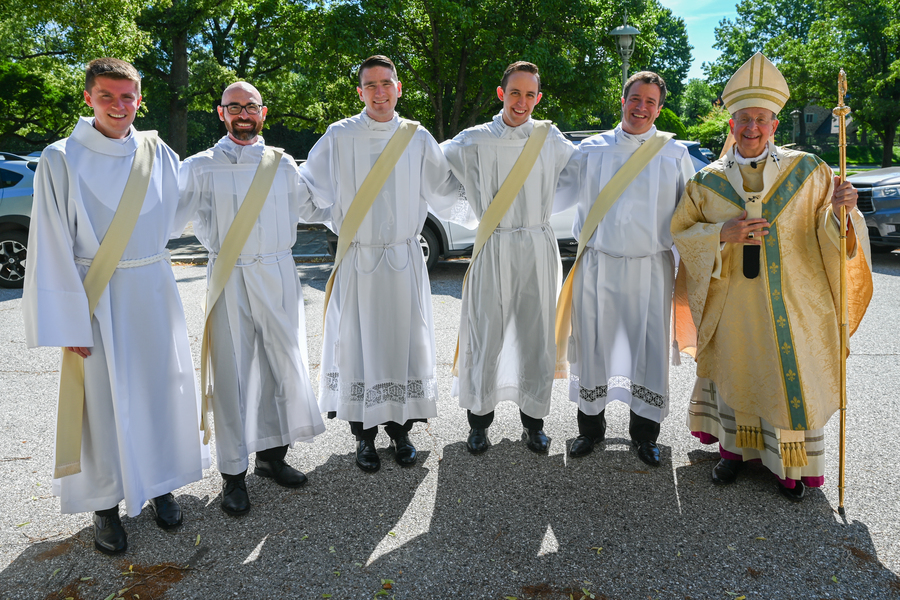
The Archdiocese of Baltimore is preparing for a milestone not seen in more than half a century: the ordination of 12 new priests in a single year.
One seminarian is expected to be ordained in January and 11 more in June, as the archdiocese’s number of men in priestly formation continues to climb.
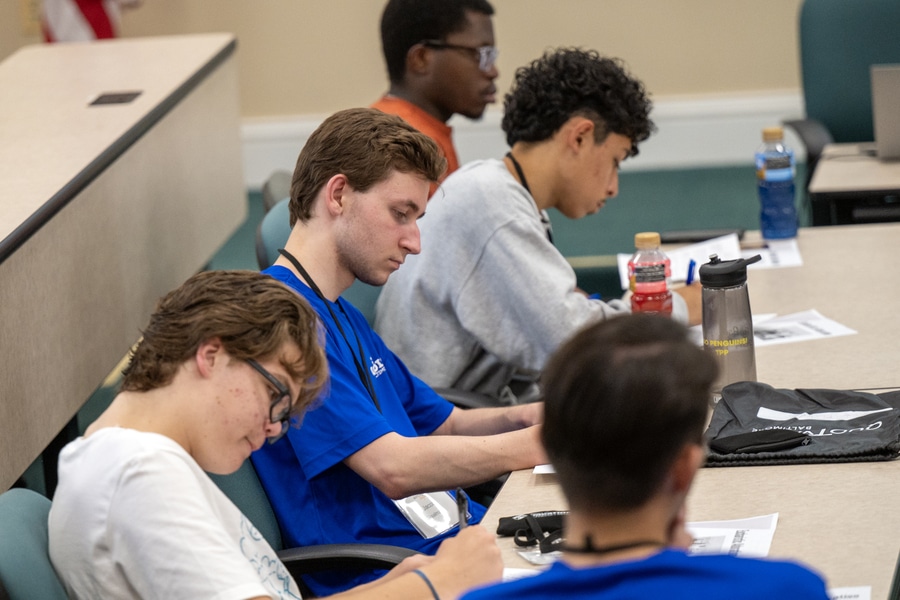
The archdiocese now has 66 seminarians in formation, with 14 men entering this year alone. Representing 14 different parishes and ranging in age from 17 to 36, the newest seminarians are part of a yearslong increase that Church leaders attribute to prayer, intentional vocational outreach and stronger support from parishes.
The total number of seminarians is up from 28 in 2007 and 52 in 2020.
For Archbishop William E. Lori, who has led the archdiocese for 14 years, the growth is among the great joys of his tenure.
“This has not been sudden,” said Archbishop Lori, who ordained five men to the priesthood this year. “It’s been building every year, and this is due to a lot of people praying before the Blessed Sacrament. It’s due to a good vocations team. It’s also due to pastors who are encouraging vocations in their parishes – and to parents who are generously open to the possibility that their son might have a priestly vocation.”
The surge has filled both of the archdiocese’s propaedeutic houses, in Emmitsburg and Baltimore, to capacity. Three of this year’s new seminarians will spend their propaedeutic year – a foundational period of prayer, discernment and human formation – at the Basilica of the National Shrine of the Assumption of the Blessed Virgin Mary in Baltimore instead, taking part in the Source of All Hope urban missionary program serving people experiencing homelessness.
Father Steven Roth, vocations director and associate vicar for clergy for the archdiocese, said the growing number of men discerning the priesthood is encouraging, but he’s even more proud of the caliber of those stepping forward.
“These are hardworking, talented guys who really could do anything else, and they’re freely choosing to discern whether the Lord is calling them to be a priest,” Father Roth said.
The influx is already changing pastoral life in the archdiocese, allowing new placements in ministries that have gone without priests for years – including high school and college chaplaincies and parishes that haven’t had an associate pastor in a generation.
Depending on a man’s educational background, formation for the priesthood can take up to nine years, Father Roth said. The lengthy process reflects the Church’s desire to form the whole person.
Alongside academic studies, seminarians receive spiritual direction, gain experience in parish ministry and meet regularly with priests and formators as they discern their vocation. They undergo background checks before being accepted into the program.
Formation is also a time of discernment, Father Roth explained, both for the Church and for the seminarians. The goal is to give men the time and support they need to understand God’s call and prepare for ministry.
“We don’t rush it,” Father Roth said. “By the time that the Lord is calling them to be a priest, they’re ready and capable and able to say yes to that call.”
Father Roth is assisted by Father Lenin Suarez, associate director of vocations, whom Father Roth said has been building up the office’s online resources. In an increasingly digital age, the goal is to make essential information available to men discerning a vocation before they ever sit down with a priest – giving them a way to work through questions they might be hesitant to raise in person.
Veimar Martinez, 18, a parishioner of St. John in Westminster and a graduate of Westminster High School, is among the archdiocese’s newest seminarians.
Serving as an usher at his home parish was “life-changing,” he said, giving him an inside look at both the parish’s inner workings and the liturgy itself. He later became involved with the Boys and Girls Club, working with young people from a range of backgrounds.
“A full circle for me was that my mom taught me my faith, and then here I am teaching other kids the faith,” Martinez said.
He traces his first step toward discernment to 2024, when a confession led to a penance of an hour in eucharistic adoration.
“I felt I was in a relatively rough spot at the time, and then when I stepped in there, everything I felt was like a weight was lifted off me,” he said. “It felt lighter. I felt warm. I felt loved in that room, and eucharistic adoration is something that’s very important to me.”
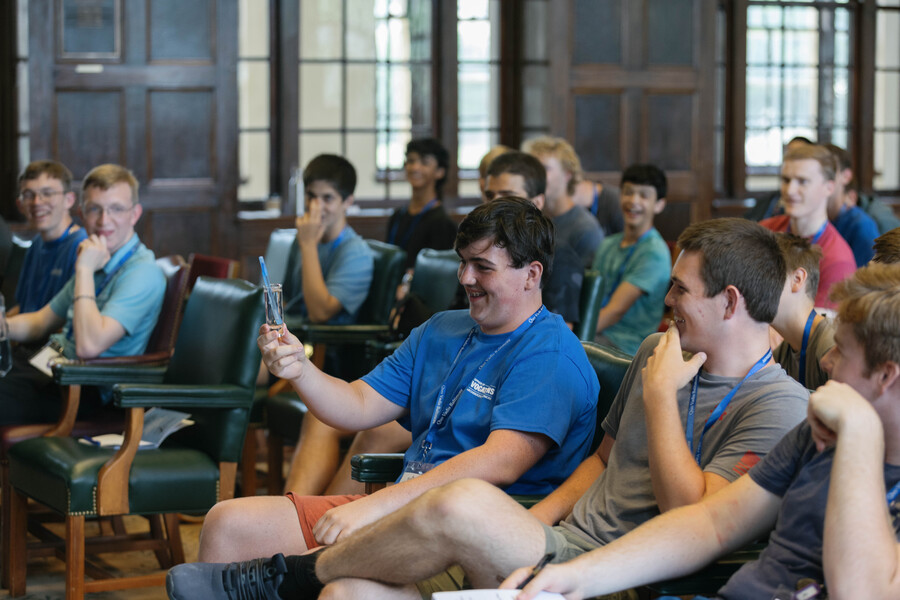
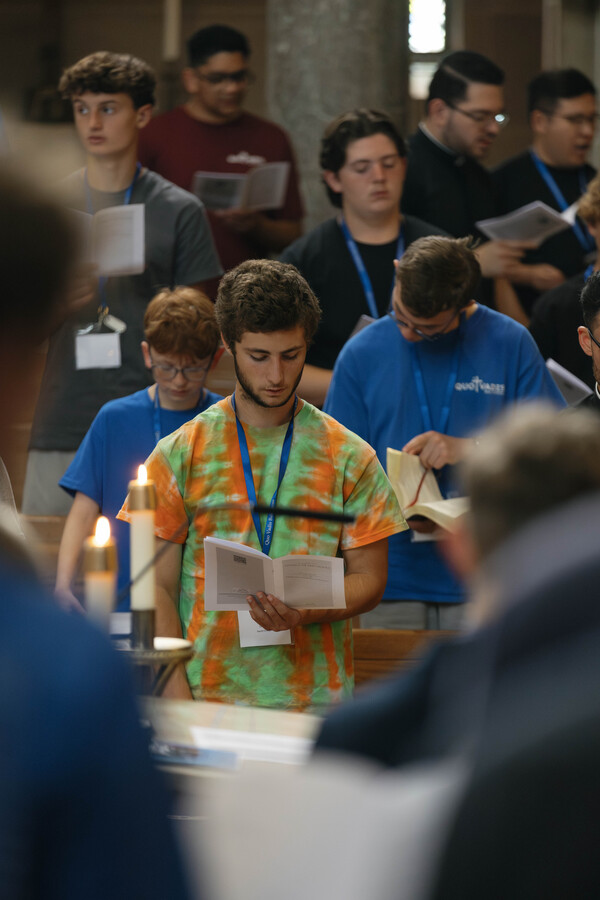
Father Roth pointed to archdiocesan programs including the Quo Vadis retreat, designed to help young men listen for God’s voice, and a new offshoot introduced this year, Quo Vadis Beyond, aimed at recent high school graduates.
Those efforts are reaching an increasingly diverse group of young men.
For the first time in many years, two African Americans have entered priestly formation. While several Black men from Africa have been ordained to the priesthood for the Archdiocese of Baltimore in recent years, it has been more than three decades since an African American was ordained for the archdiocese.
Father Roth recalled a visit with young African American parishioners years ago. They told him they hadn’t realized they were needed and they didn’t know they were wanted.
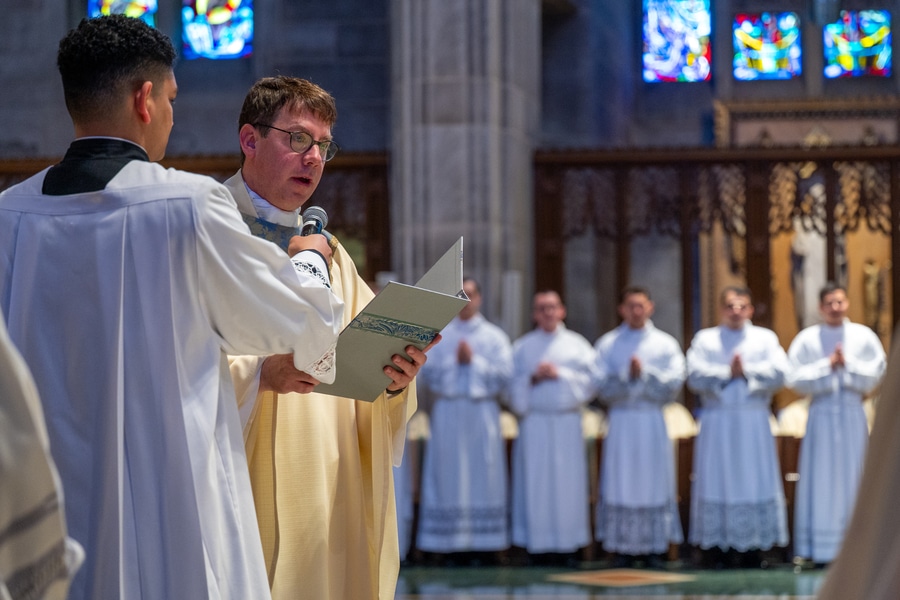
“I thought we really need to fix this,” he said. “We have such a diverse archdiocese that we celebrate, and I just want to be sure that our clergy reflects that diversity.”
Despite the growth, Father Roth warned that now is not the time to “rest on our laurels.” He encouraged constant prayer for religious vocations and said he sees every Catholic as a vocations director.
“I would encourage people that when they’re at church, at Mass or different events, and they see a young person who they think has the qualities that they like – that they see in their pastor as well – to not be afraid to go up to the person and say, ‘Have you ever thought about becoming a priest?'” he said.
Jenna Mattern contributed to this story.

No comments:
Post a Comment